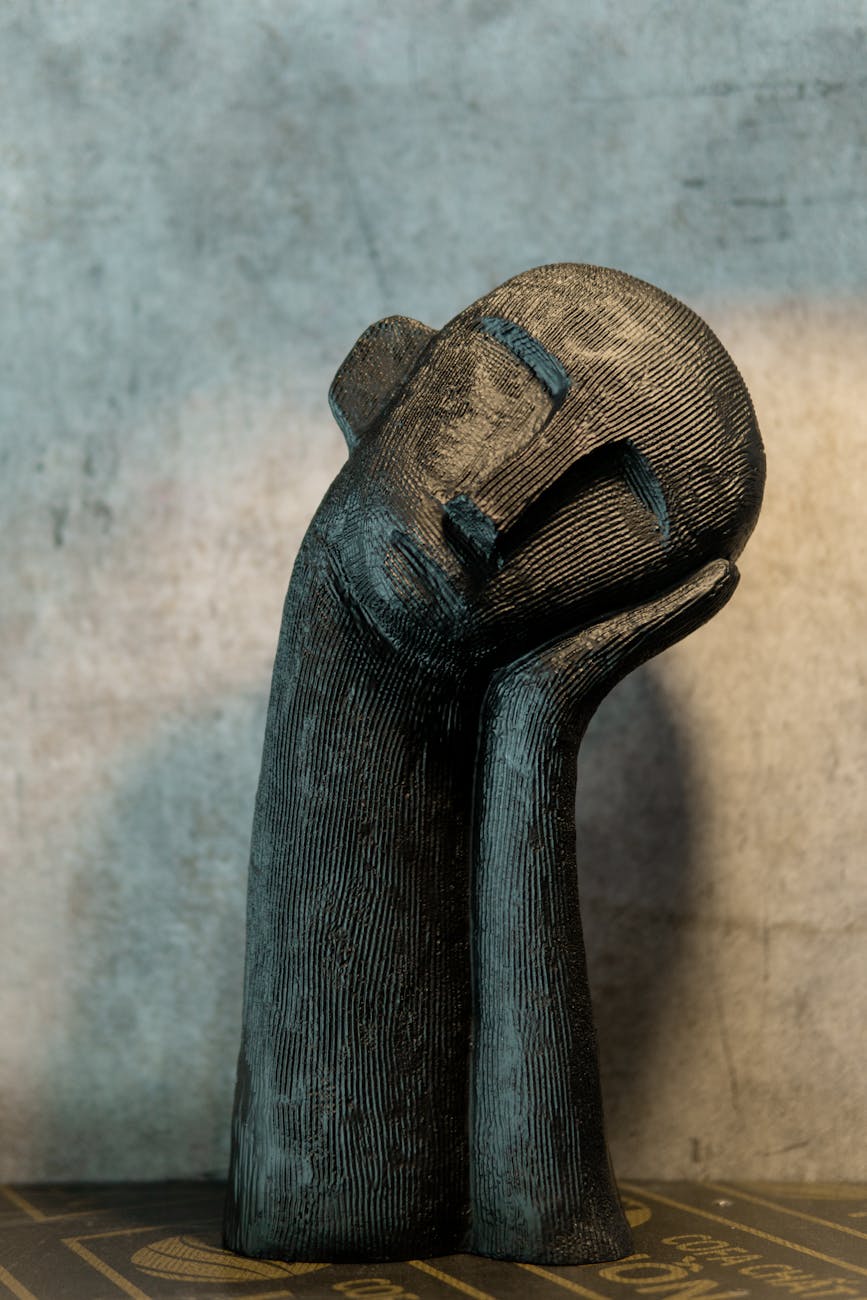
In Michel Houellebecq’s novel Submission, François is a man who has already filed his best years under “returned goods.” A writing professor in his early forties, he surveys his life with the cool detachment of a critic reviewing a book he didn’t enjoy but can’t quite put down. He blames, with some justice and more convenience, the moral economy of Western social democracies—systems that canonize money and status while leaving meaning to fend for itself. In this world, desire has been simplified to a shopping list. The only sanctioned faith is consumption; the only liturgy is acquisition. You study, you specialize, you exit the university with a résumé and a pulse, and then you prove your seriousness by acquiring things—objects, experiences, signals—until the performance of satisfaction becomes indistinguishable from satisfaction itself. François finds the spectacle tedious, but tedium does not grant immunity. He is as lonely, as unmoored, as anyone else—another citizen of an Ennui Infrastructure that delivers comfort with the enthusiasm of a sedative.
His chosen saint is Joris-Karl Huysmans, the Catholic convert who traded decadence for doctrine and found, in surrender, a structure strong enough to hold a life. François studies him the way a starving man studies a menu. He recognizes the appeal—order, ritual, a metaphysical address where one might finally receive mail—but recognition is not conversion. He remains stalled in Agnostic Paralysis, admiring belief as a piece of architecture he cannot inhabit. Literature becomes his compromise: books as companions, authors as lanterns. Yet even a luminous guide cannot substitute for a destination. Huysmans can light the road; he cannot make François walk it.
The job does not save him. Teaching, for François, is a cleanly run sham—a system that reproduces diluted versions of itself with industrial patience. A handful of students catch fire; the rest learn to approximate. He participates in Replicant Pedagogy with professional competence and private contempt, earning a salary in exchange for maintaining a machine that produces echoes and calls them voices. He is good at it. He is paid for it. He is not sustained by it.
His relationships are equally provisional—brief alliances with pleasure that end as soon as the lights come on. Women are not partners so much as intervals, pauses between bouts of the same familiar boredom. Bitterness seeps in, not as a dramatic outburst but as a steady, low-grade leak. The pattern is reliable: a spike of sensation, a trough of meaning. François lives on Dopamine Subsistence Living, a diet of small thrills that keep the organism moving while starving the person.
He envies the faithful with a precision that hurts. They possess what he lacks: structure that does not dissolve, families that do not negotiate their own existence, communities that do not expire at closing time. They are, in the most irritating sense, steadier. This steadiness reads to him as advantage, and advantage breeds resentment. He knows, in a way that knowledge cannot help, that they have found a grammar for living that he cannot conjugate.
Nothing in his life bends toward change. There is no arc, only duration. He suffers the quiet violence of Spiritual Disinheritance—cut off from inherited meanings without the courage or capacity to invent replacements. The days proceed; the man does not.
In this, François is less a character than a diagnosis. He is a cautionary specimen of Liquid Modernity—a life conducted without anchors in a culture that mistakes motion for progress. He has choices but no commitments, roles but no center, pleasures that evaporate on contact. He sees the hollowness of the system and lacks the will to exit it; even his longing for faith stalls at the threshold like a guest who won’t knock. What remains is not catastrophe but drift: a consciousness fully aware of its own directionlessness, proceeding anyway. It is the most modern tragedy—nothing collapses, and therefore nothing changes.


Leave a Reply