Category: Confessions

  • The Great 70s Oyster Feasts at Pt. Reyes

    The Great 70s Oyster Feasts at Pt. Reyes

    Every summer from 1975 to 1979, my family and a small oyster-guzzling army—ten other families and a battalion of friends—made the pilgrimage to Pt. Reyes Beach. Our sacred mission? To consume shellfish on a biblical scale.

    Johnson’s Oyster Farm supplied us with what felt like truckloads of oysters—so many that if the ocean had suddenly run dry, we wouldn’t have batted an eye. From noon to sunset, we devoured an obscene amount of barbecued oysters, each one bathed in garlic butter and an irresponsible amount of Tabasco. Thousands of loaves of garlic bread disappeared as though vaporized by our gluttony. The meal concluded with slices of chocolate cake so enormous they could have doubled as structural support beams.

    We punctuated this orgy of excess with reckless ocean dives, dismissing dire warnings of great white shark sightings because, in our teenage arrogance, we assumed the sharks would respect our dominance. Emerging from the waves, our pecs glistening with rivulets of saltwater like bronzed demigods, we returned to the picnic tables to resume our assault on the oyster supply.

    By the summer of ‘78, I had evolved into full teenage hedonist mode. That year, rather than going home with my parents, I hitchhiked in the back of a truck with a bunch of people I’d just met—because, clearly, nothing bad ever happened to sweaty, sunburned teenagers full of shellfish riding in the open bed of a moving vehicle. We were feral, fearless, and slightly delirious from a day of unchecked indulgence.

    Stuffed to the gills and feeling like King Neptune in a food coma, we stared at the stars with the vacant, glazed expressions of reptiles digesting a large meal. We swapped wild stories, unconcerned with documenting a single moment. No selfies. No calorie counting. No checking the time. Just a glorious, unrecorded blur of feasting, friendship, and youthful delusion.

    Those were happy days indeed—a time before food guilt, before social media, before adulthood ruined everything. And like all golden eras, it is gone forever.

  • Something Strange Happened to Me When I Saw My Childhood Home on Zillow

    Something Strange Happened to Me When I Saw My Childhood Home on Zillow

    When I was a kid, my dad worked at IBM in San Jose, and we lived at the very end of Venado Court—a cul-de-sac so serene it felt like a cosmic loophole in suburban chaos. I loved everything about it, especially the absence of cross-traffic.

    Cross-traffic was anarchy—it was second base in Little League, where the game unraveled into sheer bedlam: runners stealing, coaches screaming, fielders panicking. But Venado Court? It was home plate. Safe. Untouchable. The kind of place where nothing bad could happen—unless you count the existential horror of eventually having to leave it.

    The analogy reminds me of George Carlin’s classic bit contrasting baseball and football: Baseball is a pastoral dream, all about going home. Football is military conquest, where you march into enemy territory and get your spine realigned by a 300-pound lineman. Venado Court was baseball. It was safety. It was home.

    Recently, I stumbled onto a real estate site featuring my childhood house—5700 Venado Court, San Jose, California, where I lived from 1968 to 1971. The photos were unsettlingly familiar. My old bedroom. The bathroom where Mr. Bubble and Avon’s Sesame Street shampoo bottles once stood like sentinels of childhood innocence. The backyard, still lush with fruit trees—apricot, peach, plum, and walnut—a miniature Garden of Eden where my mother and the neighbor ladies, in some kind of euphoric domestic alchemy, canned preserves like their lives depended on it.

    The kicker? That house, my sacred childhood sanctuary, is now worth $1.3 million—the same price as my current home in Southern California. A deranged part of me toyed with the idea: sell my house, buy my childhood back, step through the front door like some time-traveling prodigal son.

    But then sanity prevailed.

    I know exactly how that story would end. Not in horror, but in ennui. I’d be trapped in a slow-moving nightmare of banality, watching my enchanted memories dissolve under the fluorescent hum of reality. The house wouldn’t feel like home. It would feel like a set piece in a dismantled dream.

    Thomas Wolfe was right—you can’t go home again. Not because it’s scary. But because it’s boring.

  • The Day I Failed the Ishihara Color Blindness Test

    The Day I Failed the Ishihara Color Blindness Test

    For years, I harbored a vague but nagging suspicion that peanut butter was green. Why? No clue—until 1971, when the grim truth revealed itself under the fluorescent doom of Independent Elementary’s nurse’s office.

    It was the day of the Ishihara Color Blindness Test, a supposedly routine exercise in humiliation where each fifth grader took turns peering into an illuminated contraption to identify numbers and shapes hidden in a field of colored dots. My classmates breezed through it like game show contestants, rattling off answers with the breezy confidence of children who’d never questioned their own eyesight.

    Then it was my turn.

    I stared into the glowing abyss. Saw nothing. Blinked. Still nothing.

    The nurse grew impatient. “Well? Can’t you see anything?”

    I could not.

    The room erupted in laughter. Congratulations—I was officially hopelessly color-blind, a medical outcast, a social leper. For the remainder of the morning, my classmates regarded me like a rare museum specimen. This boy thinks peanut butter is green. Proceed with caution.

    But fate, as it turns out, is not without a sense of humor.

    During lunch recess, the hierarchy of fifth-grade cruelty shifted. Kickball—a sport where raw physical dominance could overwrite even the most damning personal defect—offered me an unexpected shot at redemption. As the ball rolled toward me, I summoned the might of my tree-trunk leg, swung with the force of a caffeinated mule, and launched that red rubber sphere over everyone’s heads. It sailed past the outfield, past the schoolyard, and over the fence—finally splashing down into the backyard swimming pool of a bewildered suburbanite several blocks away.

    For a brief, glorious moment, I was no longer the kid who saw peanut butter in the wrong spectrum. I was a legend. The freakishly strong fifth grader with the foot of an Olympian and the trajectory of a human cannon.

    Lesson learned: You may be ridiculed for believing peanut butter is green, but if you channel your inner Herman Munster and kick a ball into another ZIP code, nobody gives a damn about your defective eyeballs. Heroism comes in many shades—even if you can’t see them.

  • The Forgotten Song of Misfit Island: My Long, Bitter Feud with Rudolph the Red-Nosed Reindeer

    The Forgotten Song of Misfit Island: My Long, Bitter Feud with Rudolph the Red-Nosed Reindeer

    The most exhausting piece I have ever composed—the one that wrings my soul dry after playing its three relentless movements—is called “The Forgotten Song of Misfit Island.” This sonata, a labor of love and obsession spanning forty years, began as something else entirely: my childhood fury at the televised nightmare known as Rudolph the Red-Nosed Reindeer.

    Like millions of children before me, I was supposed to cherish this 1964 Christmas special as a heartwarming tale of holiday spirit and triumphant underdogs. Instead, I watched it with horrified disbelief, my small, traumatized brain barely able to process the cruelty inflicted upon the most tragic figures in holiday television: the Misfit Toys.

    These weren’t just defective playthings with minor quirks. They were abandoned children, exiled to an arctic hellscape, sentenced to a slow death on a barren glacier. They were ill-equipped for survival, dressed in flimsy rags with no food, no warmth, no shelter from the Abominable Snowman, a giant carnivorous beast stomping the ice sheets with the inevitability of fate itself. Who knows how long they had suffered? Years? Decades? An eternity? And for what crime? Simply being different. The authorities of Christmas had spoken: an ostrich-riding cowboy, a Charlie-in-the-Box, and a melancholy doll were abominations, unfit for the joys of holiday consumerism.

    Defenders of Rudolph will no doubt remind me of the “joyous rescue” at the film’s climax, when Santa Claus swoops in to distribute the Misfit Toys to “good homes.” But let’s examine that so-called rescue. These toys, who had only survived through their deep bond and shared trauma, are now forcibly separated and flung into random households. Santa, in his infinite wisdom, has decided that what these emotionally shattered creatures need is total isolation from the only community that has ever accepted them.

    Santa Claus, the supposed symbol of holiday cheer, is, in fact, an unapologetic tyrant—a man who exploits child labor, forces elves into unregulated factory work, and belittles an aspiring dentist for daring to dream beyond toy-making. My paleontologist friend, Dr. Zachary J. Rasgon, once pointed out another moment of unhinged brutality: the scene where Yukon Cornelius casually yanks out every tooth from the mouth of an endangered hominid—and we’re all supposed to be a-okay with that.

    For over fifty years, this grim portrait of abuse and forced assimilation has been celebrated as a beloved Christmas tradition. And yet, I alone seem to recognize its horrors. I have made my case countless times, but the world continues to revere Rudolph as an “iconic” holiday classic. My protestations fall on deaf ears, branding me as something of a misfit myself.

    And so, I have learned to let go of my rage. Or, at least, I have tried.

    Turning Rage into Music

    As a child, unable to rewrite history, I began rewriting Rudolph. I imagined the Misfit Toys as restless insomniacs, huddled together for warmth, singing a song to ease their suffering. It was a song born of necessity—a celestial hymn of comfort, a melody so powerful that it could momentarily trick them into believing they were loved.

    But in my revised ending, their exile ends only to bring a new torment. Ripped away from each other and cast into separate homes, the toys struggle to recall the song that once gave them solace. They catch fragments of it in dreams, in whispers on the wind, but the full melody is lost to them. The song—the very essence of their shared survival—could only exist when they were together.

    The only solution? A reunion.

    In the version that played in my head for years, an older, wiser, and absurdly wealthy Rudolph, finally understanding the true cruelty of Santa’s decree, takes it upon himself to find and reunite the Misfit Toys. He brings them to a sprawling Tuscan villa, where they can feast under the warm Mediterranean sun and, at long last, remember the song in its full glory. The world hears their melody once more, and it becomes legendary—a song of defiance, resilience, and enduring love.

    This imaginary song, the one that saved the Misfit Toys from oblivion, became the foundation for my most demanding piano composition. It took decades—forty years of reworking, revising, and searching for the perfect sequence of notes.

    A Lifelong Symphony of Misfits

    Even now, I cannot shake my affinity for misfits. My mind is overrun with them: Sidney the Elephant, Kermit the Frog, Tooter Turtle, Beaver Cleaver, Kwai Chang Caine (a.k.a. Grasshopper), Mr. Peabody, George of the Jungle, Milton the Monster. They, too, deserve their own melodies, their own compositions, their own forgotten songs.

    Until I write those songs, I will imagine them all gathered together, sipping wine in that Tuscan vineyard, basking in the company of Rudolph and his long-lost misfit family. And in that imagined paradise, I, too, find a place to belong.

  • Claustrophobia Reveals Your True Soul to the World

    Claustrophobia Reveals Your True Soul to the World

    There are many ways to expose your raw, unfiltered self to the world. Some people achieve this through a near-death experience, a public meltdown, or a bout of food poisoning on an international flight. For me, claustrophobia is the great revealer, an unrelenting force that strips away every ounce of composure and leaves me flailing like a man trapped in quicksand. It doesn’t matter if I’m in a dentist’s chair or strapped into a sadistic amusement park ride—when the walls start closing in, I become the star of my own public humiliation showcase.

    The first great revelation of my soul came at Universal Studios, where I made the tragic miscalculation of sacrificing my personal comfort for my wife and twin daughters. A father’s love is boundless, but so, unfortunately, was my terror. The very air of the place reeked of Las Vegas grift, stale churros, and desperate cash grabs. Every corner had some overenthusiastic performer in mothball-scented epaulets or a handlebar-mustached imposter butchering a French accent for a paycheck. But nothing could have prepared me for the medieval horror that awaited on the Harry Potter Forbidden Journey ride.

    After standing in line for an eternity, I found myself wedged into an airplane seat designed for a malnourished Victorian child. A heavy metal harness slammed down on my 52-inch chest like a bear trap, and within seconds, my body entered full-blown rebellion mode. My lungs went on strike, my heart pounded out an emergency evacuation order, and my brain whispered, You are about to die in the most embarrassing way possible. As the conveyor belt dragged me toward a dark, swirling vortex of Hogwarts-themed doom, I did what any reasonable person would do—I began screaming like a man being lowered into a pit of snakes.

    “STOP THE RIDE! I’M HAVING A HEART ATTACK!” I wailed, flailing like an air dancer outside a used car lot.

    At first, no one in charge seemed to care, but the fellow prisoners trapped beside me picked up on my panic and began chanting my cause like a medieval mob: “STOP THE RIDE! STOP THE RIDE!” Finally, a burly security officer in an FBI-grade sport coat emerged, walkie-talkie in hand, and surveyed my meltdown with the practiced patience of a man who had seen worse. I looked up at him, sheepish and sweaty, and asked, “Do you need to take me to a debriefing room?” He chuckled, helped me out of my restraints, and sent me shuffling out of Universal Studios, a broken man.

    But the universe was not done exposing my fragility.

    The Dentist’s Chair: A Torture Chamber Disguised as Healthcare

    Around the same time as the Universal Studios fiasco, I had a similarly catastrophic loss of dignity at Dr. Howard Chen’s dental office. The appointment started out fine—numbing shots, ear-splitting drills, the usual dance with mortality. But then the bite block came out. For those blissfully unaware, a bite block is a rubber wedge designed to keep your mouth open during dental procedures, but in my case, it may as well have been a medieval jaw clamp designed by Torquemada himself.

    The second it locked my mouth open, my brain fired off the same claustrophobic distress signal as it had on the Harry Potter ride. I couldn’t swallow, which meant I couldn’t breathe, which meant I was about to die, right there, in a flannel shirt, under a fluorescent light, to the soft rock stylings of The Carpenters.

    Before I could stop myself, I ripped off my shirt, launched myself out of the dental chair, and began gasping like a shipwreck survivor.

    “Are you going to be okay, Jeff?” Dr. Chen asked, his voice dripping with the calm patience of a man who has dealt with neurotics before.

    “I CAN’T HAVE THIS RUBBER THING IN MY MOUTH,” I announced, holding the bite block aloft like a relic from an exorcism.

    Dr. Chen nodded, his eyes a mix of concern and professional detachment. “Okay, we’ll do it without the bite block.” He gestured toward the chair. “Go ahead and sit back down.”

    I obeyed, heart pounding, and the rest of the drilling continued without further catastrophe. But the damage to my dignity was irreversible.

    Sensory Hell: The Dentist’s Office Smells Like Death

    The claustrophobia is bad enough, but what really pushes me over the edge is that I am what some might call a “super smeller.” Lying in the dental chair, I am forced to marinate in an unholy stew of:

    • Clove oil
    • Formaldehyde
    • Acrylic
    • Glutaraldehyde
    • Latex gloves
    • The lingering decay of other patients’ tooth dust

    It is the aroma of death itself. I am not a dental patient—I am a cadaver in the early stages of embalming.

    And while I fight off nausea, my mind spirals into a full existential crisis. Something about lying prone, mouth pried open, surgical tools scraping at my enamel, makes me contemplate my soul more than any other moment in my life. The sheer vulnerability of the position mimics some prelude to the afterlife, and I am left with only my own morbid thoughts for company.

    Morbidity Hits Different with 1970s Soft Rock

    As if my anxiety needed any further provocation, Dr. Chen’s office plays 1970s easy listening on a continuous loop. The Carpenters, Neil Diamond, John Denver—songs that transport me straight back to my early years as a melancholic prepubescent. Suddenly, I am ten years old again, scribbling dramatic diary entries about my unrequited love for Patty Wilson, the rosy-cheeked blonde girl from fourth grade who never knew I existed.

    But before I can fully dissolve into a puddle of nostalgic despair, Dr. Chen interrupts.

    “You’re brushing too hard,” he warns. “You’re murdering your gum line.”

    “But I don’t trust the Sonicare to do the job!” I protest.

    “You need to have faith in the Sonicare, Jeff.”

    “But I am a man of doubt.”

    Dr. Chen sighs, shaking his head. “I can see that.”

    Final Humiliation: The Dentist Knows I’m Crazy

    During my latest visit, he threw a new horror into the mix: the possibility of a root canal.

    “What can I do to avoid it?” I asked, racked with dread.

    “Relax, Jeff,” he said. “All this stress is hurting your immune system. You need a strong immune system to fight decay.”

    Great. Now I have to worry about stress-induced tooth rot.

    As I staggered out of the office, I nearly reversed into an angry SUV driver, who honked with the force of a nuclear siren. But what truly shattered me was the sight of Dr. Chen, peering through his office window, watching the entire debacle unfold.

    And in that moment, as our eyes met, I knew—I was, without a doubt, the most unhinged patient he had ever seen. There would be no coming back from this.

    Claustrophobia, once again, had revealed my true soul to the world.

  • I Was the Worst College Student Ever

    I Was the Worst College Student Ever

    I was the worst college student ever. But before we get to that, let’s start at the beginning. I attended the university in the fall of 1979. I was seventeen. I was an Olympic Weightlifting champion and a competitive bodybuilder with aspirations of going big–winning the Mr. Universe and Mr. Olympia titles and leveraging my fame to open a gym in the Bahamas. My goals were as clear as they were simple: I would have a beautiful body and my work environment would optimize my ability to maintain my beautiful body. As an added perk, I was comforted by the thought that living in the tropics would ensure that I would never have to wear clothes, only Speedos. Clothes made me so claustrophobic that the first thing I wanted to do after getting dressed was to rip my clothes off. The solution? Spend the rest of my life on an island in bodybuilder briefs with tanning oil slathered all over my shaved body. 

    Whenever I’d share my dream with my recently-divorced mother, she would say, “Don’t be a nincompoop. You can’t isolate yourself from the world on some tropical island.”

    And I’d say, “Don’t worry, Mom. I’ll be well connected. I’ll invite my friends–Frank Zane, Tom Platz, Robbie Robinson, Kalman Szkalak, Danny Padilla, Ron Teufel, Pete Grymkowski, and Rudy Hermosillo–to hang out with me. I’ll give them pineapple protein shakes and tell them how bodybuilding became a catalyst for my personal metamorphosis.”

    “You sound ridiculous. For one thing, those aren’t your friends. They’re from your muscle magazines. I’m not stupid.”

    Contradicting the stereotype of being a musclehead, I got straight As in high school, but my high school, like most public schools, was dumbed down to the point that getting a 4.0 GPA was meaningless. One of my classes, for example,  was called “Money Matters.” We learned how to balance a checkbook and plan a budget so that we were saving more than we were spending. At best, you’re looking at first-grade math, a workbook full of simple percentages and fractions. Busy work like this was proof that our school didn’t want to educate us so much as keep us contained all day in an institution so our parents could take a breather from us. Public schools were part of society’s unwritten social contract with adults. Send your children to our schools so you can work enough to live in the suburbs and get a break from the headaches of parenting.

    Another class was called “Popular Lit.” There were no lectures or tests. For the semester, we read any three books we wanted from the library and wrote three one-page book reports. You didn’t have to read the book. You could present chicken scratch on the book report form or make up some crazy dream you had. It didn’t matter. As long as you turned in the book report, you got an A. The teacher was a woman in her sixties who seemed determined to never engage with us. She told us to do “quiet reading” while she sat at her desk reading magazines, paying her bills, and clipping her fingernails. She was ghoulishly pale, she had long, uncombed dyed black hair, overly dark lipstick, and puffy bags under her eyes. No matter the weather, she wore wool coats that smelled of old sweat and bodily decay. Had you not told me she was a teacher, I would have assumed she was a homeless person scavenging the school for discarded cafeteria food from the high school’s trash cans.

    My classes were so dumb I felt like I was in continuation school for juvenile delinquents. Clearly, the teachers weren’t preparing us to become members of the professional class. They wanted us to learn to follow rules so we’d stay out of prison and be satisfied with a blue-collar job or some minimum-wage gig in the service industry. As I heard one teacher say out of the side of his mouth in the corridor to one of his colleagues: “We’re training them to become burger-flippers.”

    The teachers’ contempt for us and their pessimistic belief that only a small remnant of us would attend college meant nothing to me because college was not part of my master plan. Becoming an international bodybuilding sensation and operating a lucrative health club in the Bahamas was. 

    Signs of my imminent success were abundant. Not only was my muscular physique well developed for a seventeen-year-old, but I also had extraordinary networking skills that spoke well of my future business prospects. For example, at The Weight Room in Hayward, I was working out with NFL defensive end star John Matusak who had taken a liking to me. Between sets of bench presses, T-Bar rows, and seated behind-the-neck presses, we would sing along with the songs blaring from the gym’s radio. Watching the Tooz and I sing along with Nicollette Larson doing a cover of Neil Simon’s “Lotta Love” was a sight to behold. People spoke of the defensive end’s ill temper, but when Matusak and I trained, it was a constant Kumbaya moment. 

     You may have seen Matuszak on TV many times, but that would not have prepared you for what you would have seen in person. He was close to seven feet and 300 pounds. His long limbs made him appear slender yet huge at the same time. He had a beard, wild long hair, and the predatory eyes of a hawk. 

    One afternoon, Matuszak was sitting on the bench while the gym’s speakers played England Dan and John Ford Coley’s “Love Is the Answer.” Matuszak seemed offended by the song’s sentimentality. He curled his lips, looked at me, and said, “Bullshit,” before proceeding to rep 400 pounds while repeating his curse as if energized by it.

    In addition to networking with Matuszak, I established a strong bond with fitness salesman and local legend Joe Corsi. In addition to being the number-one salesman of bodybuilding supplements and fitness equipment in the San Francisco East Bay, Corsi had appeared with Arnold Schwarzenegger on an episode of Streets of San Francisco. Corsi’s fitness store was next to The Weight Room and he would often stop by to pay his respects to me. He was in his late sixties. He wore a black single-piece Jack Lalanne-style jumpsuit with no sleeves and a gold zipper, unzipped to reveal his black hairy chest. His biceps were full, round, and veiny for a man his age though showing a bit of sagginess. His hair was dyed jet black. His eyebrows were black, thick, and shiny. His overall appearance was that of a former bodybuilder who had aged into a geriatric Dracula. Whenever he saw me training with the Tooz at the gym, he praised my amazing potential, said I had exceptional physical structure, and was a young man who clearly had the drive to become a world champion. I imagined it would not be long before Corsi would sponsor me the way Joe Weider sponsored Arnold Schwarzenegger. Soon, Corsi would have his people deliver an array of supplements, protein powders, and butcher-paper-wrapped T-bone steaks to my front door. When that happened, my mother would know that I wasn’t joking about becoming a professional bodybuilder for whom going to college was a big waste of time. 

    After I graduated high school, my mom bugged me every day about what I was going to do with my future. I told her I had a clear plan and that Joe Corsi would be my sponsor. She’d say, “This morning I got up, opened the front door to get the newspaper and I didn’t see a bunch of T-bone steaks on the front porch. You sure you’ve got a lock on this?”

    In August, I came home one afternoon from my workout. I entered the  kitchen and saw on the counter a yellow, slimy chicken. The plucked bird looked forlorn, a leper sulking on the cutting board. Mother was standing next to the chicken holding a cleaver. She scowled at the chicken like it was an adversary that needed to be put in its place. 

    “You need to learn to clean out this chicken,” she said, puffing on a cigarette.

    “I don’t want to touch it. It’s disgusting.”

    “You better learn to handle a raw chicken. Otherwise, you’ll never be able to achieve intimacy with a woman.”

    “That’s the most disgusting thing I’ve ever heard, Mother.” 

    “You can worry about that later. Have you made plans for the fall?”

    “What do you mean?”

    “College. I’m thinking that’s your best option.”

    I stormed out of the kitchen, walked into my room, turned on my clock radio full blast to the rock station, KYA-FM, and did some finishing-touch dumbbell curls.  Listening to Roxy Music’s “Love Is the Drug,” I visualized myself being a world-famous bodybuilder living on a tropical island and drinking mango juice from halved coconuts while surrounded by hordes of beautiful women helplessly drawn to my masculine allure. 

    I was bathed in sweat when Mother walked into the room with an envelope. 

    “Your high school counselor sent you something. I think you should open it.”

    She tossed the letter on my bed. I wiped off my sweat and tore open the letter. My counselor Mrs. Toscher congratulated me for my 4.0 GPA during my senior year and said it was a certainty that I could attend one of the local Cal States. I told Mother and she said, “Unless you’ve got other options, this is all you got.”

    “What about Joe Corsi?”

    “What about him?”

    “He could be my ticket to bodybuilding greatness.”

    “Unless you’ve got something in writing, you’ve got nothing.”

    I figured I had one last chance with Corsi. The next day after my workout with Matusak, I paid Corsi a visit at his fitness store. He was sitting at his desk when I approached him. 

    “I hear you offer professional guidance to up-and-coming bodybuilders,” I said.

    “Yes, I offer the best supplements in Northern California. I’ve got everything you need.”

    “I’m only seventeen and I’ve come a long way.”

    “You’re big for your age.”

    “When Arnold Schwarzenegger moved from Austria to America, Joe Weider promoted him. They essentially made each other famous.”

    “Yes, it’s a great story. I know both of them, by the way. Great guys.”

    “Well, that’s where you come in. I’m available for promotion.”

    “I see. I’ll tell you what I can do. Young man, do you have a valid California driver’s license?”

    I nodded.

    “Excellent. Here’s the deal. My brother Louie runs a meat business. Best cuts of meat you can get. Steaks, ground sirloin, turkey legs, Cornish game hens, prime rib, all-beef hot dogs. He even sells Philadelphia cheesecake, a big hit with customers. You sell them door to door, and you typically get a fifteen percent commission, but because you know me and because I want to support the local bodybuilding community, I’ll have Louie jack up your commission to twenty percent. I can say with the utmost confidence that if you show some hustle, you’ll pocket close to five hundred a week. You’ll have all the money you need for supplements and then some.”

    “That’s a lot of money,” I said.

    “Yes, but bear in mind, you’ll have to pay for the meat up front. But with profits being what they are, you’ll double your money in a week.”

    “Did you say upfront costs?” 

    “You’ll need to come up with a grand to get into this opportunity. But because I like you, I may be able to talk Louie down to seven hundred. Mind you, he’s providing the van and the meat freezers.” Corsi leaned toward me and whispered, “I’d essentially be helping you to steal my brother’s money, but, hey, you’re young. I’d like to lend a helping hand.”

    “I’ll have to think about it.”

    “Let me know soon. My brother is interviewing several people who already have sales experience. This opportunity isn’t going to last much longer. And remember, everyone eats meat. Everyone loves barbecue. This is an opportunity of a lifetime.”

    As I drove home, I was thinking that going to college would be less taxing physically and less of a financial burden than selling butchered meats door to door. The cost of attending college at Cal State in 1979 was seventy-eight dollars a quarter. That was far cheaper than paying Joe Corsi’s brother a minimum of seven hundred dollars. In addition, I could use my title as a “college student” as a front while I continued my bodybuilding. Going to college would essentially be a delay tactic I could use until I achieved bodybuilding greatness. I would capitulate to Mother’s demand to attend college, but I knew I didn’t belong there. I knew I would be the worst college student ever. 

    I was a terrible student in part because I could not regardless of their achievements admire my professors. I envied them because they were so educated and appeared to have everything I didn’t. They had impressive credentials, world travels, including African safaris, to provide scintillating stories while lecturing; nice clothes, not store-bought but made by celebrity tailors; a well-curated persona enhanced by professional voice lessons; an impressive zip code that made them neighbors of politicians and socialites; membership to various tennis, bird-watching, and yoga clubs and intellectual committees; literacy in multiple languages, mastery of at least three musical instruments, and fluency in gourmet cooking. During lectures, they talked about how they prepared extravagant meals that required lemon zest, capers, and ice baths, and they beamed with pride as they rhapsodized over the pleasures of making homemade puttanesca. I had never met a group of people from one profession who were so in love with themselves. 

    My Ethics professor, who was also the Dean of Philosophy, had recently dumped his wife for his young secretary. He seemed rather oblivious to the rich irony of his life choices and rode his Porsche convertible over the faculty parking lot, apparently unaware of the way his toupee would flop off his bald head like a flying squirrel every time his Porsche caromed over a speed bump. A lack of self-awareness seemed to serve my Ethics professor rather well. I despised him. 

    My bitter envy for my professors was only matched by my spectacular ignorance. I was deemed so illiterate that the university was not content with demoting me from Freshman Composition class into the remedial class, more commonly referred to at the time as Bonehead English. To let me know my place in this world, the university made it clear that even Bonehead English was too advanced for a pariah like myself. I was quickly demoted from Bonehead and placed in the Pre-Bonehead class, a level held in such contempt that the classroom was in the Humanities Building basement next to the boiler room. Broad-shouldered maintenance men wearing denim overalls would frequently peek into the room and cackle at us for being at a level of remediation that was such an embarrassment as to be the equivalent of leprosy. 

    Being envious of my professors and feeling like a college outcast, I was in a constant state of depression and demoralization. This did not bode well as a predictor for my academic success. To add another nail to my coffin, I may have just been plain stupid. I was stupid to judge my professors for having everything I lacked. Had I been smart, I would have humbled myself before them and looked at them as role models so that someday with lots of hard work I would become just like them. I was also stupid for feeling insulted for being placed in the Pre-Bonehead English class. Had I been smart, I would have been grateful for the fact that the university had provided resources for hopeless cases like mine rather than expel me from the university altogether. 

    There were also signs that I was stupid, not just on an academic level but in terms of lacking common sense and what would later be known as “emotional intelligence.” A case in point is that during my first two years of college, there was a lot of distressing news about AIDS and its devastation throughout the world. As a straight person who had not yet entered the world of dating and romance, I was not exactly what you would call high-risk, but that did not stop me from being terrified of getting AIDS. One afternoon, a neighbor’s Siberian Husky greeted me by licking me all over my face and I remember the dog’s wet tongue brushing over my lips. Could I get AIDS from a dog’s kiss? For several days, I couldn’t get the thought out of my mind. Then a week later, KGO Talk Radio had a segment in which a doctor would answer callers’ questions about AIDS. I think I was the first caller. I told the doctor about my neighbor’s dog kissing me on the lips. Was I in danger of getting AIDS? In a very sweet voice, the doctor told me that I was completely safe and that I could kiss dogs to my heart’s content. 

    After the call, I stood in the kitchen almost in tears with a great sense of relief. But then shortly after, my mother came out of her bedroom and said, “Was that you on the radio?”

    I nodded.

    She said, “You thought a dog licking your face could give you AIDS? You need to cool it, buster.”

    Hearing my mother admonish me allowed me at that moment to see how hopelessly stupid I was. I couldn’t believe I had survived so long on this planet. I couldn’t believe I had gotten accepted into a university. Clearly, I was on my way to becoming the worst college student ever. 

    My failings as a college student were rooted in part in my inability to find a major, and my indecision made me miserable. I took a criminal justice class, but the books were mired in lawyer-speak. As a result, the sentences were larded with provisos, caveats, and contingencies reflected in elongated sentences in which I had to wade through several dependent clauses before I reached the independent clause. These sentences were so tedious and convoluted that I felt I had to go through the obstacle course on American Gladiators before I got to the sentence’s main idea. This drove me into a state of madness.

    Then I tried sociology and psychology, but the books were immersed in self-satisfied academic jargon in which self-evident observations were made to look sophisticated and authoritative by virtue of the indecipherable, pretentious and self-indulgent verbiage. Being forced to read these textbooks, I imagined brandishing a machete and slashing through a jungle thick with words like positivity, codependency, external validation, inner child, interconnectivity, facilitate, mindset, marginalization, multi-faceted, dichotomy, and contemporaneously. Hacking my way through this forest of phony language made me tighten my body with so much hostility that I feared I would suffer a self-induced inguinal hernia. 

    Then I gave history a crack. The sheer volume of facts, dates, and places seemed to have compelled the authors to write in a mundane, almost remedial prose style with no distinctive point of view. The result was that I was bored out of my mind. 

    Oceanography was mildly interesting; however, the oceanography professor seemed to have a pathological fixation on the words “denitrification,” “liminal zone,” and “viscosity” so that it reached the point that every time he repeated those words I would skyrocket off my seat like a lab rat receiving an electrical shock. 

    Accounting was even worse. On the first day, the professor bombarded us with algebraic equations, the Index Matrix, the Nullspace, and homogeneous linear systems. Within ten minutes, I made an exit for the door. The professor asked me my name.

    “That won’t be necessary,” I said at the doorway. “You’ll never see me again.”

    In my first year of college, I dropped accounting, criminal justice, and sociology. I also failed a remedial algebra class. In the late spring of my first year, the university sent me a letter explaining that I was officially on academic probation. I could not drop any more classes and I would need to improve my GPA. Otherwise, I would be expelled.

    For me, the letter was more than just a warning. It was an indictment of my entire existence. You hear about struggling writers bearing the repeated pain of rejection slips as they are told their stories and books cannot be, for a variety of reasons, published. The academic letter of probation was a sort of rejection slip, but not for something I had produced. Rather, it was a censure against me as a dysfunctional human being. The university had handed me my ass on a stick. 

    In moments of hitting rock bottom, we must find some kind of strategy or other to climb out of our hole, but my prospects were bleak. I had no college major, no purpose, and no self-confidence. I wasn’t making any money as a bodybuilder. I did not have any romances on the horizon so I could not be energized by the hope of be transformed by the powers of love. I was a young man who, having nothing, was eager for a quick solution. I found myself grasping for straws. I could get a tech degree in refrigeration, become a piano mover, or join the military. There was also a guy at the gym whom we jokingly referred to as The Garbologist who said he could get me a job as a garbage man. The way he described the job to me, working from 5 to 10:30 in the morning, becoming a garbage man seemed like my best bet. 

    I was eager to tell my father about my new plan. He had moved into an apartment about a half-hour away from our home since the divorce, and once a month he’d pick me up, take me to his apartment, and make me a barbecued steak dinner. One evening, we were eating on his patio, and he asked me how I was doing in college. I told him about the probation letter and my lack of interest in higher education. What I wanted was a job that paid well and had good hours so I’d have time to go to the gym.  I had made friends at the gym who worked in sanitation, and one guy said he could get me full-time work as a sanitation engineer.

    My father laughed at me and said, “You can’t be a garbage man.”

    “Why not?”

    “Because you’re too vain.”

    “What’s that supposed to mean?”

    “Imagine this. You’re at a cocktail party and everyone is introducing themselves. Doctor, engineer, lawyer, computer programmer, business executive. Then they get to you. You’re going to tell them you’re a garbage man? Bullshit.”

    “I’m vain?”

    “Of course you are. I’ve never seen a kid check himself out in the mirror as often as you do.”

    “Oh my God, I’m driven by vanity and social status.”

    “You’re finally waking up to the obvious. Now finish your steak and make things right with your college before they expel you.”

    Driving home, it occurred to me that I had rejected criminal justice, sociology, psychology, and history because the books I had to read in those classes were so poorly written that they offended me. It occurred to me that I hungered for a certain quality of writing and that this hunger pointed me to the English major.

    It also occurred to me that my fidgety personality did not learn well in the classroom. My anxieties made it impossible for me to sit inside a classroom with thirty-five other students and comprehend the professors’ lectures. I knew that I would have to be self-taught if I were to get any kind of meaningful education. Therefore, the best thing to do was to purchase my own grammar handbook. From that day on, I resolved to teach myself grammar. 

    Once I learned the basics of grammar, it seemed as essential to life as breathing. I considered that small children without any formal learning were already fluent in the most elaborate sentences. Grammar was proof that life had a clear structure, order, and harmony. To learn all the names of the grammatical parts was to understand the harmony of the universe. When I thought of grammar, I saw rivulets flowing into the streams, streams flowing into the great rivers, and the great rivers flowing into the ocean. 

    For the first time, I understood what Nietzsche meant in Twilight of the Gods where he writes that “I am afraid we are not getting rid of God because we still have faith in grammar.” What he meant is that by studying grammar, I could find order and convalescence from nearly two decades of mainlining the glorification of selfish pleasure-seeking and chaos. Part of my recovery as a probationary student was enlisting in a Twelve-Step Program, and one of the steps was grammar. 

    My recovery was swift and relentless with my GPA spiking to close to 4.0. The university seemed impressed with my reformation. Shortly after hiring me in the Tutoring Center, they offered me teaching positions for freshman composition. The university that had once threatened to expel me had now hired me to teach. I was on my way to becoming the worst college professor ever. 

  • Wrestling with an especially virulent case of “Influenza A”

    Wrestling with an especially virulent case of “Influenza A”

    In I’m Dysfunctional, You’re Dysfunctional: The Recovery Movement and Other Self-Help Fashions, Wendy Kaminer lays waste to the therapeutic fads of the 1990s, particularly the trend of “reclaiming the inner child”—a ritual that took infantilization to near-religious extremes.

    She describes John Bradshaw’s workshops, where grown adults with respectable careers arrived clutching teddy bears like traumatized toddlers, preparing to embark on a guided journey into the mansion of their past. There, as Bradshaw whispered encouragements, lower lips trembled, tears streamed, and a congregation of emotionally overqualified professionals sobbed into the polyester fur of their stuffed animals.

    What floored Kaminer wasn’t the unhinged emotionalism—it was the sheer, shameless conviction. These people weren’t just indulging in a saccharine, self-indulgent spectacle—they were true believers, convinced that squeezing a doll and reliving some long-buried playground trauma was nothing short of a spiritual awakening.

    Kaminer was not impressed. What others saw as self-reflection and healing, she saw as an infantilizing orgy of narcissism, a self-help séance in which grown-ups tried to resurrect their inner kindergartener, only to be possessed by a ghost that refused to leave.

    Now, I’d like to say that my bullshit detector is too finely tuned for me to cradle a stuffed animal and regress into baby talk. But the bitter irony is that writing this memoir has forced me into my own brand of infantilization—just without the teddy bear and group cry session.

    Nothing made this clearer than the pathetic spectacle of my post-Thanksgiving downfall, which started with a game of Russian roulette—except instead of a revolver, I played with rotting cabbage.

    It all began when I decided to make chicken tacos—a wholesome, adult dinner choice. Unfortunately, the bag of shredded cabbage I retrieved from the fridge had been marinating in its own decay for two weeks, slowly transforming into hell’s compost pile.

    The moment I tore open the bag, my wife recoiled with the dramatic flair of a crime scene detective stumbling upon a long-decomposed body. She clutched her nose, waved her hands like an exorcist warding off a demon, and issued a forensic report:

    “That smells like a mix of a latrine and a horse’s taint.”

    A normal person would have taken this as a warning. But, fueled by misplaced confidence and the hubris of someone who had survived worse, I dumped the cabbage on my tacos and dug in.

    Hours later, my immune system, weakened by the Thanksgiving marathon of forced hospitality, collapsed like a debt-ridden empire. The virus that had been lurking in the shadows seized its moment, and by the next morning, I was a feverish, shivering wreck, contemplating my life choices between bouts of violent gastrointestinal reckoning.

    It seems that you don’t need a stuffed animal and a therapy circle to regress into infancy. Sometimes, all it takes is spoiled cabbage and a ruinous lack of self-preservation.

    Naturally, instead of exercising common sense, I channeled my inner cheapskate prophet. “Cabbage by its very nature has a funky scent,” I proclaimed with the confidence of a man who regularly courts disaster. “A little fermentation won’t hurt anyone.” My wife frowned and said, “It’s smelling up the entire kitchen.”
    “We’ll be fine,” I insisted, scooping copious amounts of fetid-smelling cabbage onto my tacos like I was auditioning for a daredevil cooking show.

    At dinner, I was the only one brave—or foolish—enough to eat it. Within an hour, my body issued a resounding, “You absolute moron.” No GI issues, but I felt like I’d been hit by a truck, reversed over, and then hit again. My head throbbed, my eyes were so sensitive to light I had to drape a T-shirt over my face just to listen to a Netflix show, and my energy flatlined by eight p.m. I crawled into bed, feeling like a half-baked zombie.

    The next morning was worse. Still no GI problems, but the 101 fever and crushing fatigue made me question my will to live. I tried to eat some oatmeal and grapefruit, the culinary equivalent of punishment food, but even that felt like too much effort. 

    By day three, no improvement. I’d become a cautionary tale, researching induced vomiting and discovering it was far too late. Apparently, if you don’t purge immediately, the toxins settle in like an unwanted houseguest who insists on staying for five to seven days.

    Being sick in my family makes everyone else suffer. Our teenage twins require constant care, frequent snacks that generate endless dirty dishes, and someone breathing down their necks to ensure homework gets done. My wife had to shoulder it all while I languished in my misery. I apologized profusely for my reckless hubris and promised, at the age of sixty-three, to turn over a new leaf—or at least stop eating ones that reek like death.

    For decades, I’d treated eating old, moldy food like a badge of honor, quoting my dad’s immortal wisdom: “Pilgrims who ate blue cheese on the Mayflower survived disease while the mold-avoiders died.” It was as if I’d been brainwashed into believing spoiled food was a superfood. But this cabbage debacle—this hellish, cabbage-induced reckoning—put the fear of God in me. Never again would I be the fool who eats something that smells like a medieval torture chamber. This time, I mean it. The next funky bag of cabbage? Straight to the trash. May it ferment in peace.

    As the alleged food-borne illness dragged on and my fever turned my brain into a swamp, I found myself pondering a morbid yet painfully stupid thought: What if I died because I was too cheap to toss a two-dollar bag of cabbage? Imagine the headline: “Man Perishes Over Discount Vegetables.” How could I ever forgive myself for such world-class idiocy? Worse, how could my wife ever forget that I lectured her with the smug confidence of a food-safety guru right before scarfing down a fatal dose of rotting produce? I’d be immortalized as the kind of hapless buffoon who wouldn’t even get a name in a Chekhov short story—just “The Idiot Who Ate the Cabbage.”

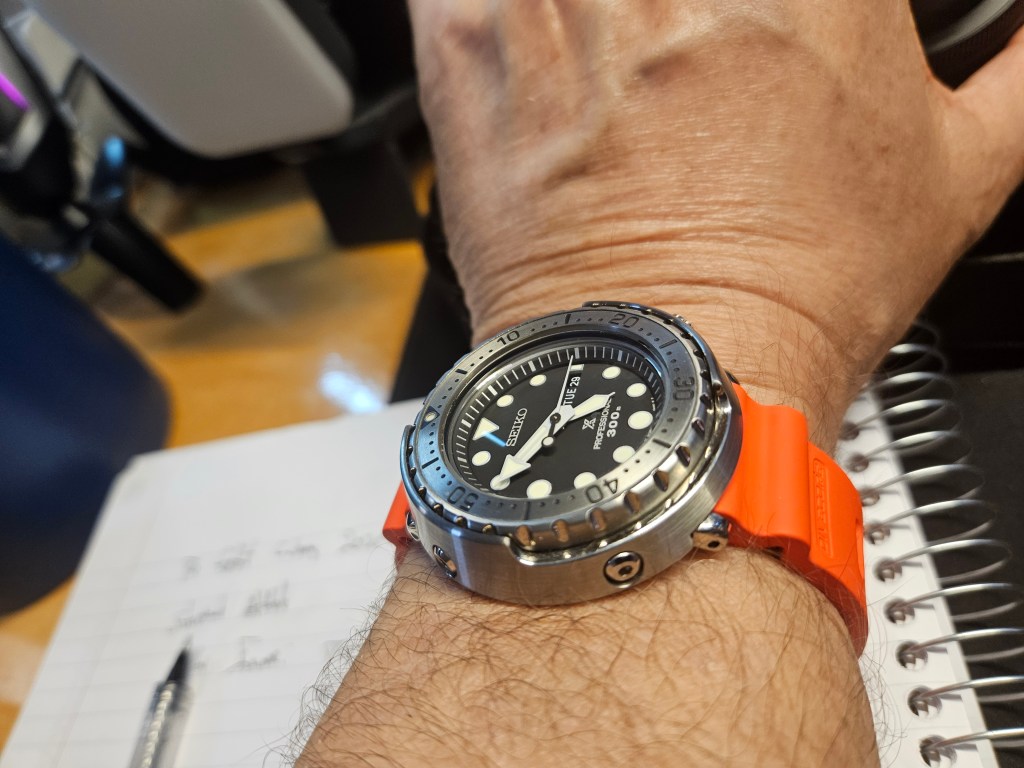
    Then, because fever dreams and existential crises go hand in hand, another absurd thought hit me: How would my YouTube subscribers and Instagram followers know what happened to me? I’d be gone, but my accounts would still sit there, ghostlike, leaving them to wonder why the witty guy with the diver watches and snack obsession suddenly went dark. What a tragedy—I wouldn’t even get the chance to create a final piece of content documenting my own demise in comedic glory. A video titled, “How Cabbage Killed Me (And Why You Should Toss Yours)” would surely have gone viral.

    This realization struck me as profoundly twisted: content creators care more about producing “engaging material” than their own mortality. Forget self-preservation—I was more upset that my audience might miss out on the hilarity of my self-inflicted cabbage-related downfall. The pathology runs deep: we’re so hooked on being performative, we’d probably narrate our own deaths if we could. Imagine me, breathless and feverish, croaking out, “Don’t forget to like, comment, and subscribe—assuming I make it to tomorrow.” The absurdity of it all made me laugh, which hurt, because even my ribs were exhausted from this cabbage-induced purgatory.

    It was apparent I was so desperate to be relevant on social media that I had become a Gravefluencer–an influencer who extends his reach six feet under, ensuring even death is on-brand.

    After five days of relentless illness, I had a phone consultation with my doctor about what I was sure was self-inflicted food poisoning. I laid out the symptoms with the kind of detail you’d expect from someone auditioning for a medical drama. My doctor listened patiently, then unceremoniously popped my bubble of absurdity. “This isn’t food poisoning,” she said. “You’ve got the flu. It’s going around.”

    Just like that, my grand narrative of culinary hubris—the man who dared to defy rancid cabbage and paid the ultimate price—was dead. Instead, I was left with something far less glamorous: virulent flu. Part of me was relieved that I wasn’t poisoning myself with poisoned produce, but another part of me felt cheated. I’d lost the absurd, darkly comedic morality tale about a man so cheap he nearly killed himself over a two-dollar bag of cabbage. What a waste.

    The doctor wasn’t exactly brimming with solutions, either. “Rest and stay hydrated,” she advised, the way you might tell a child to eat their vegetables. That night, my fever spiked close to 104, launching me into a kaleidoscope of fever dreams where my brain decided to give me the full surrealist experience. Words from my podcasts took on physical forms—spiky, sticky, grotesque shapes—and suddenly, I was inside them. I wandered through caves of conversation, waded through cocoons of dialogue, and got tangled in thick spider webs spun from language. Each sentence wrapped around me, trapping me in its endless loops of nonsense.

    When I woke up, drenched in sweat and feeling like I’d wrestled a linguistically gifted tarantula, I realized the flu wasn’t just an illness—it was a full-blown avant-garde art installation happening in my own head. So no, I didn’t have food poisoning. I had performance art fever. And while it wasn’t the cabbage apocalypse I’d hoped for, it was plenty weird in its own way.

    For six days, I had been wrestling with the so-called “Thanksgiving Flu,” a charming little virus that kept my fever bouncing between 101 and 104, as if my body were auditioning for a medical melodrama. Being that sick wasn’t just about physical misery—it was a battering ram smashing through the cozy little mental structures I had built around my life. Aspirations? Pointless. Health goals? A cruel joke. My reading list? Forget it. Even my hunger for social belonging and validation had been knocked flat. What remained was a stripped-down nihilism so bleak it made Nietzsche look like an optimist.

    Sickness dragged me to a dark place where life felt like a cosmic prank. I could almost hear my 14-year-old self rolling his eyes as I remembered my Grandma Mildred’s wise words from one of her letters: “Illnesses bring out the doldrums.” No kidding, Grandma. That particular flu had brought out more than the doldrums—it had conjured a maudlin cocktail of despair and self-pity.

    In that state, I found myself spiraling into melodrama, muttering things like, “What’s the point? Just end the torment and let me meet my Maker already!” It was ridiculous, of course, but I couldn’t help but notice how flu-induced misery fed into a distinctly male flavor of narcissism. Egotism, after all, was a hallmark of the man-child: the guy who thought the universe should pause when he didn’t get his way.

    Men, it seemed, were uniquely gifted at turning minor discomforts into existential crises. While women powered through illness with a mix of stoicism and practicality, men turned their sickbeds into thrones of self-pity, proclaiming their impending doom to anyone who would listen. And me? I was no exception. With every feverish shiver, I became the star of my own overwrought drama, raging against the cruelty of a world that dared to continue spinning while I wallowed in flu-induced existential despair.

    Sure, Grandma Mildred, the doldrums were part of the package—but why did it feel like men turned those doldrums into an art form? Perhaps the real flu virus wasn’t in my body; it was in my ego, throwing a tantrum because life wasn’t bending to my fevered will.

    I appeared to be languishing in the Flu-tile State—a fever-fueled realization that all human endeavor was futile.

    On day 8 of this flu from hell, my doctor emailed me a cheerful little grenade: “Your symptoms are concerning. I need to see you today.” Fabulous. At 11 a.m., feverish, grouchy, and radiating the energy of a half-cooked zombie, I dragged myself to her office for the usual poking and prodding. COVID? Negative. Influenza? Oh yes, Influenza A—the viral overachiever of the season. My nurse, who’d had it two weeks earlier, gave me the kind of pep talk you’d expect from someone who survived a minor apocalypse. “Seven days of fever,” she chirped, “so you’ve probably got two more to go!” Like I’d won a spa weekend in purgatory.

    But the flu wasn’t the real sucker punch. No, that came when I stepped on the scale. At a soul-crushing 252 pounds, with blood pressure at 166 over 92, Dr. Okada laid it out with the dispassion of someone reading a menu: “You’re at high risk for a massive stroke or heart attack.” She might as well have handed me a shovel and a map to my future grave. Then, just to twist the knife, she added, “You need to lose fifty pounds in six months. Otherwise…” She trailed off, but I got the point: dead man waddling.

    Her final blow came with a steely gaze and a guilt grenade: “If not for yourself, lose weight for your wife and daughters.” Translation: stop being selfish and get your act together before they have to plan your funeral.

    Desperate for a cheat code, I asked about Mounjaro or Ozempic, those miracle weight-loss injectables I’d read about. She barely stifled a laugh. “We prescribe those for people with exclusive employer benefits.” I muttered something about how my college likely doesn’t cover luxury drugs, and her thin smile confirmed it. I’d be fighting this battle the old-fashioned way: with the DASH diet and restricted calories, not cutting-edge pharmaceuticals.

    And then there was the Motrin ban. Apparently, my go-to painkiller was a blood-pressure ticking time bomb. “No more Motrin. Tylenol only,” she said, with all the enthusiasm of a waiter recommending the tofu option. So now, my fevers would be accompanied by a dull, Tylenol-soaked march toward mortality. Fantastic.

    I thanked her—sincerely, I swear—because she wasn’t wrong. But the whole thing felt like I’d been blindsided by a particularly grim episode of The Biggest Loser: Medical Edition. On the drive home, Miley Cyrus’s “Flowers (Demo)” came on, and I—feverish, bloated, and thoroughly defeated—actually cried. Miley crooned about resilience and self-love, and all I could think about was how laxity, that slow, sneaky killer, had been working me over for years. Skipped workouts, mindless snacks, every excuse—it had all led to this: a middle-aged man sobbing in his car, mourning his dignity while stuck in traffic.

    Dr. Okada’s tough love landed like a wrecking ball. This was my moment—the kind where you either turn your life around or start drafting your obituary. Time to put down the Motrin, pick up some discipline, and drag myself back from the brink before I became the subject of one of those tragic lessons everyone ignores until it’s too late cautionary tales.

    I had entered the clinic expecting to get a quick flu diagnosis and maybe a lecture about rest and fluids. Instead, I walked out with the realization that my life wasn’t just off-track; it was an unmitigated dumpster fire rolling downhill. How had I missed it? The creeping wreckage of my existence had been unfolding right under my nose, like a slow-motion train derailment I refused to acknowledge. Denial, thy name is me.

    Dr. Okada, bless her clinical professionalism, had held up a mirror and forced me to see what I’d been expertly avoiding for years: that my life, much like my blood pressure, was a ticking time bomb. I’d been blind to my own unraveling, and now the blinders were off. The view wasn’t pretty, but at least now I knew what I was working with—a fixer-upper existence in desperate need of a renovation.

    My visit to the doctor turned into an unplanned catalyst for a long-overdue moral metamorphosis. I left not just diagnosed, but afflicted by a new condition I can only call the Scales of Justice (and Shame)—that peculiar state where the doctor’s scale transforms into the ultimate moral arbiter. Each number glaring back at me didn’t just measure pounds; it weighed my life choices, my discipline, my worthiness as a functioning adult. It was less a medical device and more a courtroom, and let’s just say I was found guilty on all counts.

    I was convinced that had I been ten years older, this bout of influenza would have finished me off. The first week felt less like an illness and more like the aftermath of a roadside bombing, with me as the unfortunate bystander left mangled in a ditch. My body was a buffet for phantom wolves and mosquitoes—every nerve ending seemed to host its own ravenous pest. Mentally, I spiraled into fever-induced madness, complete with hallucinatory jungle scenes: Gumby-esque AI bodybuilders, sculpted and sinewy yet gelatinous, painted the revolting hue of yellow sea slugs, slithered around me in an Amazonian hellscape.

    By Week Three, the influenza had mercifully downgraded its malevolence, though “mild” feels like an insult to language. I still shivered like a Victorian orphan in a snowstorm, my body temperature yoyoing between inferno and tundra. Aches gnawed at me persistently, like bad houseguests who don’t get the hint. And mentally? I was underwater—grasping at reality as it floats just out of reach. My brain felt stripped of a few critical screws, rattling around and threatening to unscrew the rest.

    At some point, I recalled, in the hazy, fevered way of someone stranded in a desert, that my daughter had lozenges in her room. Fueled by desperation, I shuffled to her door, knocked weakly, and thrust my trembling hands forward as if auditioning for a Dickens adaptation. “Please,” I croaked, my voice barely above a whisper, “fill my hands with lozenges for your poor ailing father.”

    The response? Hysterical laughter. Both of my daughters, cozied up watching TV, howled with the kind of delight usually reserved for viral cat videos. I caught a glimpse of myself in the hallway mirror: pajamas wrinkled like a bad alibi, beanie perched jauntily askew, my face the pallor of a sickly sailor. I was every bit the tragicomic figure they saw—a fevered street urchin begging for cough drops.

    My wife, ever the realist, stormed in to restore order. “We have plenty of lozenges in the kitchen,” she barked, clearly unimpressed by my Oscar-worthy theatrics. She led me, limping and pathetic, to the cupboard, where she proceeded to dump several bags of lozenges onto the table with all the ceremony of Santa Claus unloading his sleigh. My daughters, tears of laughter streaming down their faces, declared me Oliver Twist reincarnated.

    I retreated to bed clutching a handful of lozenges, humiliated but momentarily soothed, only to lie awake wondering when this fever would break—or if the AI bodybuilders would show up again to finish the job.

    Four weeks into my bout with influenza, I emerged bleary-eyed, fever-wrecked, and staring down my old nemesis: addiction. Not the sexy kind you’d brag about in a memoir—just the creeping, mundane kind that comes with a tendency to overindulge in things like self-pity, compulsive behaviors, and yes, an irrational attachment to writing books.

    And so, I emerged from this fever-ridden odyssey not as a transformed man, but as someone who had simply suffered enough to pause and reflect—until the next catastrophe beckoned. If John Bradshaw were leading my recovery workshop, he’d likely hand me a stuffed animal and instruct me to embrace my inner child, soothing my cabbage-traumatized soul with affirmations of self-love. But after weeks of sweating, hallucinating, and contemplating my own obituary over a bag of rotting vegetables, I didn’t need a teddy bear. I needed a referee, a financial adviser, and possibly an exorcist.

    The true lesson here? My inner child doesn’t need rescuing. He needs a restraining order. Because left to his own devices, he’ll continue to eat spoiled food out of spite, spiral into existential despair at the first sign of adversity, and demand that every brush with mortality be converted into premium content. So if I’m to move forward as a recovering writing addict, I have to acknowledge this truth: The inner child is not a sage. He’s a lunatic. And I should probably stop taking his advice.

    CHAPTER FORTY-SIX

    As part of my rehabilitation from writing novels I have no business writing, I remind myself of an uncomfortable truth: 95% of books—both fiction and nonfiction—are just bloated short stories and essays with unnecessary padding. How many times have I read a novel and thought, This would have been a killer short story, but as a novel, it’s a slog? How often have I powered through a nonfiction screed only to realize that everything I needed was in the first chapter, and the rest was just an echo chamber of diminishing returns?

    Perhaps someday, I’ll learn to write an exceptional short story—the kind that punches above its weight, the kind that leaves you feeling like you’ve just read a 400-page novel even though it barely clears 30. It takes a rare kind of genius to pull off this magic trick. I think of Alice Munro’s layered portraits of regret, Lorrie Moore’s razor-sharp wit, and John Cheever’s meticulous dissections of suburban despair. I flip through my extra-large edition of The Stories of John Cheever, and three stand out like glittering relics: “The Swimmer,” “The Country Husband,” and “The Jewels of the Cabots.” Each is a self-contained universe, a potent literary multivitamin that somehow delivers all the nourishment of a novel in a single, concentrated dose. Let’s call these rare works Stories That Ate a Novel—compact, ferocious, and packed with enough emotional and intellectual weight to render lesser novels redundant.

    As part of my rehabilitation, I must seek out such stories, study them, and attempt to write them. Not just as an artistic exercise, but as a safeguard against relapse—the last thing I need is another 300-page corpse of a novel stinking up my hard drive.

    But maybe this is more than just a recovery plan. Maybe this is a new mission—championing Stories That Eat Novels. The cultural winds are shifting in my favor. Attention spans, gnawed to the bone by social media, no longer tolerate literary excess. Even the New York Times has noted the rise of the short novel, reporting in “To the Point: Short Novels Dominate International Booker Prize Nominees” that books under 200 pages are taking center stage. We may be witnessing a tectonic shift, an age where brevity is not just a virtue but a necessity.

    For a failed novelist and an unapologetic literary wind-sprinter, this could be my moment. I can already see it—my sleek, ruthless 160-page collection, Stories That Eat Novels, four lapidary masterpieces gleaming like finely cut diamonds. Rehabilitation has never felt so good. Who says a man in his sixties can’t find his literary niche and stage an artistic rebirth? Maybe I wasn’t a failed novelist after all—maybe I was just a short-form assassin waiting for the right age to arrive.

  • First Love in Leningrad, Circa 1984

    First Love in Leningrad, Circa 1984

    The following evening found me slouched in a Leningrad discotheque, still nursing the kind of sore backside only a Soviet bus seat could deliver. I was stationed at a high-top table, reading A Clockwork Orange, trying to project an air of literary detachment while simultaneously avoiding eye contact with the throng of dancers twisting under the flickering neon lights.

    Then she appeared.

    Short, elfin, bespectacled—like an intellectual sprite who had wandered in from some parallel universe where bookish charm trumped disco fever. Her sandy-blonde hair framed a delicate face, and her gaze, sharp and assessing, landed squarely on me. “A very famous book,” she observed, nodding toward my well-worn copy.

    She introduced herself as Tula, a Finn on vacation, and without hesitation, slid into the seat across from me. We launched into a conversation that flowed as naturally as vodka at a Russian wedding—literature, music, the intoxicating allure of Russian novelists who knew how to suffer properly. I rattled off every book I had read, every philosophical revelation I had gleaned, and, with the reckless bravado of a twenty-something, confessed my grand ambition to write a novel.

    “You will be famous,” she declared with absolute certainty, as if she had peered through the murky fog of the future and spotted my name emblazoned on book covers. “I can feel it. You must visit me at Lake Saimaa. We will celebrate. Who knows. Perhaps I too will be a published novelist again. We can live together and be each other’s muse.”

    Flattered, I let my guard down. For two hours, we spoke like old friends who had simply taken too long to meet. Our mutual love for Russian literature, the music of Rachmaninoff, and the strange magnetic pull of doomed genius bound us together in a bubble of conversation. Then, as if she had been waiting for just the right moment, she reached into her purse, retrieved a small scrap of paper, and wrote down a title.

    “This,” she said, sliding it toward me, “is the book you must read.”

    I picked it up and saw the name—The Master and Margarita by Mikhail Bulgakov.

    She looked at me with the intensity of a woman who had just handed over a sacred text. 

    As we conversed under the glittering gold disco ball, the Bee Gees’ “Too Much Heaven” blared across the club. It became apparent through our self-revelations that neither of us had any romantic experience.  Tula At one point, she said, “I will never marry. I have, what do you say in English? Melancholy. Yes, I have melancholy. You know this word?”

    “Yes, I am no stranger to melancholy.”

    “I am so much like that,” she said.

    “That explains your love of Rachmaninoff.”

    She clasped her hands and almost became teary-eyed. “How I love Rachmaninoff. Just utter his name, and I will break down weeping.”

    I thought I was a depressive, but in the presence of Tula, I had the perkiness of Richard Simmons leading an aerobics class. 

    She asked me what I was doing in Russia. I explained that my grandfather was a card-carrying communist, a friend of Fidel Castro, and a supporter of the Soviet Union. He used a shortwave radio in his San Pedro house to communicate with Soviet sailors in nearby ships and submarines. He visited Cuba as often as he could to bring medical supplies that were in need there. One of his friends, a Hollywood writer, lived in exile in Nicaragua after being arrested in France by Interpol for driving a Peugeot station wagon filled with illegal weapons. My grandfather wanted me to fall in love with the Soviet Union and become a champion of its utopian vision, so he paid for me to go on a peace tour. Had I fallen in love with Russia as my grandfather had hoped? Not really. So far, I had been approached at the Moscow Zoo by a striking woman dressed in black and pearls who my tour guide Natasha warned me was a KGB agent trying to have me arrested for soliciting a prostitute. I was washing my hands at the newly built Olympic Hotel in Moscow when the bathroom sink fell out of the wall and against my torso, causing a bloody cut on my abdomen. I got a fever in Novgorod prompting a beautiful female doctor with a severe face to come into my hotel and give me a shot in the butt.  I was, as my fellow traveler Jerry Gold warned me, approached by young men on the subway who wanted to know if I had any American blue jeans to sell as a way of having me arrested for illicit black-market trading.  Everywhere I went in Russia–hotels, trains, restaurants–there were speakers playing grim chamber music as if the authorities were saying, “Try not to be too happy during your stay here.”

    Tula listened to me talk for a couple of hours with a wide gaze while touching my shoulder. “I need to see you again,” she said.

    We agreed to meet the next day at the Peterhof Royal Palace by the Samson Fountain. There is this giant garden the size of several football fields with monuments, gold statues, and fountains shooting streams of water straight into the blue sky. We sat on concrete steps around the fountains. It was close to ninety degrees as statues of gold naked bodies stood in various poses next to jets of erupting water in a spectacle called The Grand Cascade. Tula wore a short white dress and we sat on the steps. In the heat, we decided I would get us some ice cream.

    While I was walking toward the ice cream bar, a gypsy tried to hand off a baby to me the way a quarterback would hand off a football to a running back. It all happened so quickly. Before the baby was cradled in my chest, a fast-acting Russian police officer grabbed the baby, returned the baby to the gypsy, and shouted at her. I thought she would be arrested, but the officer appeared content with scolding her. She withered at his remarks and slumped away with the child in her arms.  

    I returned with the ice cream and told Tula about the incident with the gypsy. She said things like that happen all the time here.

    “But what was I supposed to do with the baby?”

    “Perhaps adopt it? Buy it? Save it from a life of misery? There is so much tragedy here.”

    “So I was supposed to fly back to the States with a baby? Go through customs and everything else?”

    “I know. It’s crazy.”

    “I don’t think I could be a parent. I don’t have the hardwiring for it.”

    “Me either. I’m too sad to be a parent. Sadness is a full-time job that leaves me with little energy for much else.”

    She finished her ice cream and smiled at me, then said, “You and I are like two kindred spirits meeting each other in this strange world.”

    “It’s hotter than hell out here.”

    “So will you marry someday?”

    I shrugged, then said, “I doubt anyone will take me.”

    “Don’t be so hard on yourself. If I were the marrying type, I would come to America and spend my life with you. We could live in California and be sad together. Wouldn’t that be lovely?”

    It actually sounded rather appealing. Tula and I living a life of sadness, writing novels together, marinating in Rachmaninoff’s Second Symphony while discussing the existential torment of Tolstoy and Dostoyevsky. What other kind of life was there?

    She stood up and said she had to catch her plane back to Finland and gave me a chaste kiss on the cheek.

    “I really hope you find happiness. You are such an outstanding person.”

    “Outstanding?”

    That adjective used to describe me was a bit hard to take. It was like a real estate agent trying to describe a decrepit property by the train tracks as palatial. I repeated the word outstanding with perhaps a trace of sarcasm and said goodbye to her. I never saw her again, but I still remember the vanilla ice cream–the best I’ve ever tasted. 

    Nine months later while back in my routine of working out, playing piano, and doing my college studies in the Bay Area, I received a letter from Tula. I was living with my mother and standing by our front yard’s loquat tree while holding the envelope and staring with fascination at the Finnish return address. Nearby some Mexican parrots were making a ruckus in a neighbor’s dogwood tree. It was a warm May. I walked under the porch light by the front door entrance and read Tula’s letter.

    Dear Jeff,

    So much has happened since I met you. I took your recommendation and read A Confederacy of Dunces. I laughed my ass off, but the book was so sad. I keep the book on my shelf and always think of you when I see it. Now for some big news. Brace yourself. You won’t believe this. I’m getting married! I have you to thank for this. I never thought I was the marrying type, but those two days I spent with you in Russia changed me. When I got back to Finland, I was restless, I thought about you constantly, and even at one time I had this mad idea that I should arrange to visit you, but a high school friend Oliver came into my life, and we began seeing each other, not as friends but as lovers. I have you to thank for this. Meeting you awakened a part of my soul that I had never known before. I hope that you don’t forsake love, as I had planned to do, that you too will find someone special in your life. You deserve it. You are an amazing man!

    Love Always,

    Tula

    I stood at the entryway and listened to the shrill cackles of the nearby parrots. 

    So I was the guy who had helped a sweet-souled depressive fall in love. No, I wasn’t the recipient of that love. But I was the lighter fluid to get the grill going. I was the spark, the catalyst, and the kindling to get Tula on the road to Loveville. I had made a difference.

    I went inside the house, walked into the living room, and played something sad at my ebony Yamaha upright.  I tried to imagine Tula as my sole audience, but she was replaced by the Russian Commander and I could see him mocking me. 

    “You are a charlatan,” I could imagine him saying. “You are an American charlatan in Russia. You must always be put in your place. You must drink warm beer till you puke your guts out. Only then can you find redemption for your vain self.”

    Over the years, I attempted to channel the absurdities of the totalitarian police state into my fiction, convinced I could capture its paranoia and bureaucratic lunacy in novel form. Herculodge depicted a dystopia where physical fitness was the highest moral virtue—where to be svelte was to be righteous, and to carry an extra pound was to invite public shaming and possible exile. Gym-Nauseam imagined a society where citizens willingly surrendered their freedom, not to a dictator, but to the tyranny of endless, punishing workouts, their lives consumed by squats, protein intake calculations, and the pursuit of an ever-elusive “goal weight.”

    As short stories, they worked—a sharp jab of satire, a bitter laugh at the madness of it all. But as novels? They were so catastrophically bad, they deserved their own show trial. Any competent literary tribunal would have sentenced me to hard labor in a Siberian gulag, where I could atone for my crimes against narrative structure by stacking bricks in the permafrost and reconsidering my life choices.

  • The Day My Piano Playing Annoyed a Russian Commander

    The Day My Piano Playing Annoyed a Russian Commander

    After breakfast inside the newly-constructed Moscow Olympic Hotel, I spotted a grand piano in the lobby, and I began to play a sad piece that I had composed myself. My fellow tourists surrounded me and when I was done with my short piece, they asked me to play another song. Being a ham with an insatiable appetite for attention, I was happy to oblige.

    I could tell by my audience’s response that they were impressed, but to be honest, I am technically a subpar pianist, and worse I compensate for my lack of technical prowess by playing my compositions in a style that tends to be mawkish, self-indulgent, and lugubrious. 

    As my fellow tourists and other hotel guests surrounded me, there were at a distant table several Soviet military men sitting down to breakfast and room-temperature beer. They were watching me with curiosity. Most notably, the Commander, a tall husky man in his forties with thick eyebrows, dark hair, and a broad chin, was staring at me. I turned from him and continued to play my drawn-out piano ballade.

    In the middle of the piece, I saw out of the corner of my eye the same woman from the Moscow zoo, and like the day before she was dressed in the same elegant black outfit. She was standing over the piano’s soundboard and smiling at me. I was thinking of cutting my piece short so I could converse with her, but before I could do so, the slack-jawed Commander, his uniform festooned with medals and epaulets, approached the woman and gave her a lurid stare. His presence seemed to spook her. She abruptly exited the hotel, and the Commander was now staring at me with an amused smile. To make sure I knew that he was mocking me for my ham performance, he puckered his lips and placed his hand next to his chest, and waved his hand up and down while wiggling his fingers in an exaggerated fashion. His military subordinates at the nearby table were laughing. 

    When I was finished playing my composition, he invited me to sit with him and his fellow soldiers at the distant table. Listening to his heavy black military boots squeak as he walked, I followed him to the table and scanned the faces of jeering soldiers. The commander outstretched his arm toward an empty chair, his way of ordering me to sit. He then poured me a tall glass of warm beer. I was trying to construct a polite way of telling him that I didn’t care for any type of beer, especially warm beer, but before I could get out the words, the Commander shouted, “Drink!”

    Noticing my reluctance to take the warm beer, he repeated this command two more times. I could see now that I was being punished for being a piano dandy. I am convinced that the Commander knew that my piano playing was both vulgar and inferior. I say this because I know enough about musicianship to know that I am more of a piano poseur than a true musician. I also know that in Russia many children are forced to take rigorous piano and violin lessons with strict supervision so that the average Russian eight-year-old has better technical acquisition than I do. So I am convinced the officer and his fellow soldiers knew that I was a musical fraud. Also because I was deeply immersed in the novels and essays of Russian emigre Vladimir Nabokov, I knew that in Russia there was the concept of poshlost, the affectations and vulgarities of a charlatan who aspires to be grand but merely flops and reveals himself to be crass and pretentious. In other words, I was an American charlatan in Russia, and I would have to pay the penalty. The price I would pay would be to be forced to drink a pint of Russian warm beer at the behest of the Soviet military. The Commander surely knew that as an American I was accustomed to ice-cold beverages and that warm beer in the morning would not be to my liking. 

    I forced the entire glass of bitter hoppy beer down my throat. My grimacing sour face and my being overcome by nausea elated the soldiers who engaged in thigh-slapping laughter. Witnessing the American Charlatan reduced to size was cause for triumph and celebration. 

    After I was done with my beer, I thanked them for the refreshment and returned to my hotel room. I undressed, showered, then prepared to brush my teeth. When I twisted the cold-water knob, the entire sink came out of the wall and the sink’s sharp edge cut me in the chest so that I had a three-inch-long vertical cut down my torso. I was bleeding. A sink from a newly-constructed hotel in Moscow had just fallen out of the wall and cut me. 

    The cut wasn’t that deep, but I was angry that I had missed two opportunities with the mysterious Russian woman and that the Russian Commander and his soldiers had mocked me, so I spent the rest of the day lifting my shirt and showing my fellow travelers the “ugly cut” I had received as a way of venting my resentment at my perceived adversaries.

    That wasn’t the last I saw of the Commander and his coterie of soldiers. They were in a nearby cabin on the train to Novgorod. When the Commander was putting his duffel bag above his cabin bunk bed, he saw me, gave me a familiar nod, and laughed as if still feeding off my humiliation from drinking warm beer at the Moscow Olympic Hotel. Part of me was grateful that he found me to be a source of joyful entertainment because I could imagine worse alternatives. 

    Inside my own cabin, which I was sharing with Jerry Gold, I told him the Commander was nearby. 

    “He’s probably trailing us,” Jerry said.

    “Why?”

    “We’re on their radar. Or it just might be the protocol for them to keep close tabs on us.”

    “We’re just American tourists.”

    “That’s not what they think. For all they know, we’re CIA. Not to mention they saw you with a copy of A Clockwork Orange at the airport. Thanks to you, we’re all being followed.”

    “You’re paranoid.”

    “We’ll see.”

    By the time we got to Novgorod and Jerry and I were settled in our hotel room by Lake Ilmen, I had what felt like either a cold or the flu. Natasha came in to ask if I felt good enough to go on the tour of the museum. 

    “I’m not sure,” I said while lying on the bed.

    “We’ll get you a doctor,” Natasha said. 

    “I don’t need one,” I said.

    “But I insist.”

    Barely a half-hour had passed when a beautiful doctor with her light brown hair in a bun and a white medical coat came into my hotel. She was accompanied by two nurses holding leather apothecary bags. My fellow travelers, all twelve of them, were so curious they inched their way into the small hotel room to watch my examination.

    The unsmiling doctor had me sit in a chair and take off my shirt. She listened to my chest, looked inside my mouth, and proclaimed that I had a cold. 

    “Just a cold,” I announced to everyone standing in the room.

    But at that very moment, the doctor ordered me to lie face down on the bed and to pull down my pants. I was going to get a shot in the ass. 

    “In my country, we don’t get shots for the common cold,” I protested.

    “Shut up and do as you’re told,” Natasha said. 

    “If you insist.”

    No one cleared out. Watching me get a shot in the right butt cheek was apparently something everyone felt entitled to see. A Soviet-style shot in the ass was too good of an opportunity to miss, I guess. The shot hurt like hell as if some thick viscous molasses was being injected into my flesh.  

    Afterward, I went to the museum, and for some reason, we were standing in a barn surrounded by overgrown grass and weeds and Natasha was giving us a lecture about farming and trade routes in Russia. It was close to a hundred degrees, we were miserable, hungry, and impatient for Natasha to end her lecture. That’s when the Commander and his subordinates approached. They stood next to Natasha and watched us. The message was clear. We were to listen attentively to our tour guide.

    As Natasha walked around the barn and found a place that was in the shade, Jerry Gold found a long stalk of dried hay and positioned himself behind the Commander. Slyly, Jerry brushed the dry straw against the back of the Commander’s neck causing the officer to think he was besieged by a mosquito, and he gave his neck a mighty slap. After Jerry performed the prank three times successfully unnoticed by the Commander, about a half dozen of my fellow tourists had caught on and we were doing our best to stifle our laughter. 

    On one hand, I was terrified that Jerry would get caught. On the other, I was enjoying the spectacle of the Commander’s vexation.

    My good spirits were gone the next day when I woke up with a bruised ass from the mysterious “cold” shot. The pain and swelling were so bad that I had to walk with a severe limp. My fellow travelers said I walked like a Soviet soldier with a war injury.   

    Part of our itinerary that day was to visit a toy factory, which was located on the edge of a forest. I don’t know why it was so important to walk around a factory full of cheap plastic figurines. The factory was uninhabited by employees except for the attendant, but I looked out the factory window and saw several buses full of children between the ages of ten and fourteen. Some of the children were getting out of the buses and approaching the factory. I asked Natasha if the children were about to start a work shift at the factory. She consulted with the factory attendant and he whispered something into the ear of the security guard. The guard, a silver-haired man in his fifties, rushed outside and shepherded the children back into the buses. I even saw the guard give one boy a kick in the rear. It was clear to me and some of the others that Natasha and her cohorts didn’t want to create the impression that the Soviet Union violated child labor laws. 

    We returned to the hotel by the lake and had dinner in an affixed dining area that was crowded with other tour groups. The staff was so busy they had to stagger us inside the restaurant based on our status. We were at the bottom. The first tier was a group of North Korean children and teenagers dressed in blue uniforms with hats. They looked happy and confident that in the Soviet Union they were special and belonged. Their meals came first, were larger, and served by the staff with more enthusiasm. 

    We on the other hand were looked at as a painful obligation. Our portions were smaller, our food colder, and our service more perfunctory. They were throwing scraps to dogs. I was ready to leave Novgorod and go to Leningrad.

  • The Mysterious Woman at the Moscow Zoo

    The Mysterious Woman at the Moscow Zoo

    The morning after landing in Moscow—still basking in the relief that no grim-faced customs officer had pried A Clockwork Orange from my hands—I found myself standing with a dozen other jet-lagged Americans at the Moscow Zoo, led by our perpetually chipper tour guide, Natasha. The air was thick with a mix of animal musk and cigarette smoke, and somewhere in the distance, a public speaker crooned a heart-wrenching Rachmaninoff piano piece, as if the entire city were in a state of elegant despair.

    I stood transfixed before the silverback gorilla, watching as he pounded his enormous, muscle-corded chest inside his moated enclosure, the very embodiment of brute strength and existential boredom. That’s when she appeared—an elegant woman in a black dress so perfectly tailored it looked painted onto her body, a matching black hat perched at a rakish angle, and a string of pearls glistening like a final touch of old-world sophistication. She moved toward me with an effortless grace, her dark eyes alight with something between mischief and intrigue.

    Not only was she stunning—she was smiling. At me. As if we were long-lost confidantes about to dive into a tête-à-tête of world-altering significance. My sleep-deprived, jet-lagged brain struggled to process this impossible scenario: a beautiful Russian woman, dressed for a rendezvous at Café Pushkin rather than a casual afternoon at the zoo, suddenly deciding that I was worth her time. I had come to Moscow expecting bureaucracy, bad food, and a surplus of dour expressions—not this. It was as if I had stumbled into the first act of a Cold War spy thriller, and I had absolutely no idea what my lines were supposed to be.

    “I can tell you’re American,” she said with a sharp accent that sent chills down my spine, “but you look very Russian.”

    This was true. My mother’s family was from Poland and Belarus, and I had dramatic Eastern European features. Even the other tourists on our tour said I looked Russian.

    “Russian men are very strong,” she said. “And you are a weightlifter, of course.”

    Indeed, I was. In fact, before I pivoted to bodybuilding in my mid-teens, I was an award-winning Olympic Weightlifter, and I was very fond of the great Soviet world record breaker Vasily Alekseyev. 

    “Russian women love strong men,” she said, smiling at me.

    I was too flattered by her attention to be suspicious of her ulterior motives, but Natasha saw what was going on, and the goody-two-shoes tour guide with thick spectacles grabbed me by the arm with her strong grip, walked me to some nearby bushes, and warned me that the woman was probably KGB attempting to ensnare me into some kind of kompromat or other. What the trap was Natasha did not say, so it was left to my prurient imagination. 

    While the reality was that Natasha had probably saved me from a lot of grief, I was too enticed by this elegant woman to get her out of my mind. In college, I was too socially awkward and absorbed by my bodybuilding, piano playing, and reading of “dark literature” to date or have what people considered normal socializing, but thousands of miles away from my mundane environment in the San Francisco Bay Area and now in the forbidden Soviet Union, I found myself feeling emboldened around the opposite sex, and I was hungry for a memorable encounter of some kind. What I’m trying to say is that I found myself feeling unusually lusty. My desires compelled me to believe that I had a grand opportunity with this lovely Russian woman at the zoo, and the fact that Natasha had ruined my chances pissed me off in ways that got me in touch with my Inner Silverback. Contrary to Natasha’s warnings, there may have been an outside chance that this mysterious woman simply found me attractive and wanted to get to know me, but her opportunity, and mine, had been repelled by my no-nonsense busy-body tour guide.