Category: Confessions

  • Bland Is My Brand: Confessions of a Simplicity Addict

    Bland Is My Brand: Confessions of a Simplicity Addict

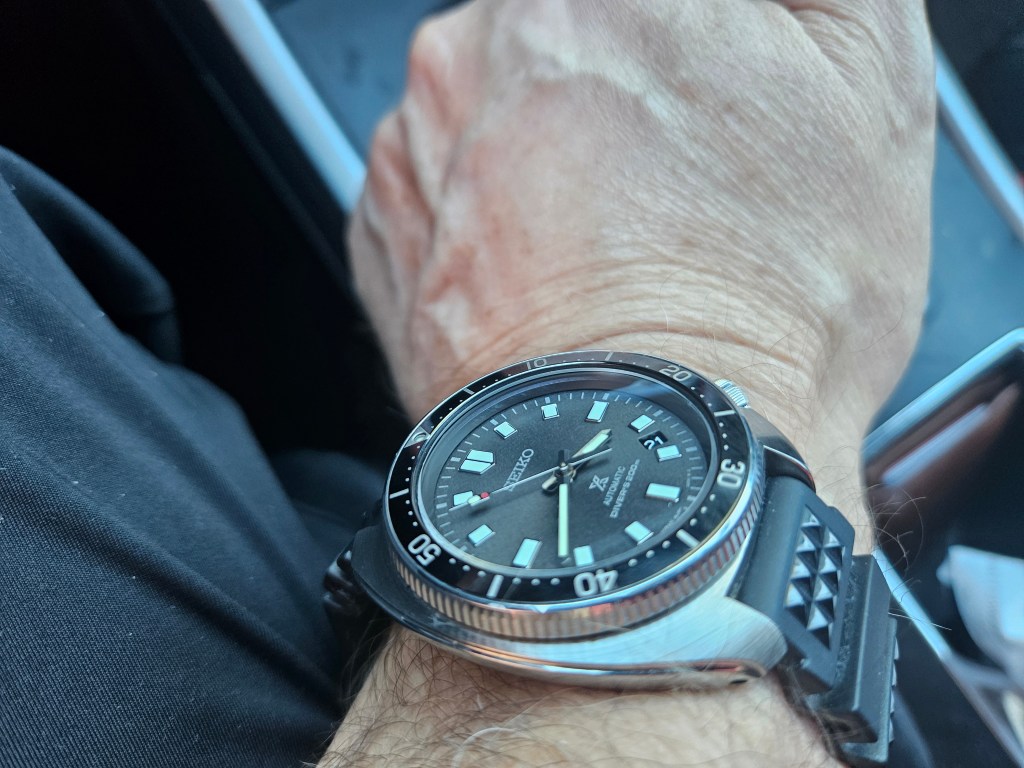
    All I want is a simple life. Not monk-on-a-mountain simple—just orderly, disciplined, and quietly adult. The kind of life where the tools around me signal that I’ve stopped auditioning for chaos. My shaving ritual is a 1959 Gillette Fatboy and cheap double-edge blades. My coffee comes from freshly ground dark roast, brewed slow enough to qualify as a character-building exercise. On my wrist: a diver on rubber, because I value function over flash. My workouts happen in the garage with kettlebells. My wardrobe is a uniform—black athletic pants, dark T-shirts, sherpa sweatshirts when the temperature drops. My car is a Honda Accord: bland, boring, and unkillable. People mock its white-bread styling. I embrace it. Bland is my brand.

    Food, however, is where simplicity turns into a group project. My own diet dreams of sweet potatoes, steel-cut oats, buckwheat groats, millet, tofu sautéed in Trader Joe’s curry or peanut sauce, nutritional yeast sprinkled like the Parmesan of moral superiority. I’ll toss in tuna or salmon a few nights a week for variety. My family, meanwhile, wants chicken tenders and taco meat—organic, sure, but flown in from Australia and Argentina like first-class beef. I made a sincere pitch for a mostly plant-based household. It failed spectacularly. Democracy has spoken, and it wants ground beef.

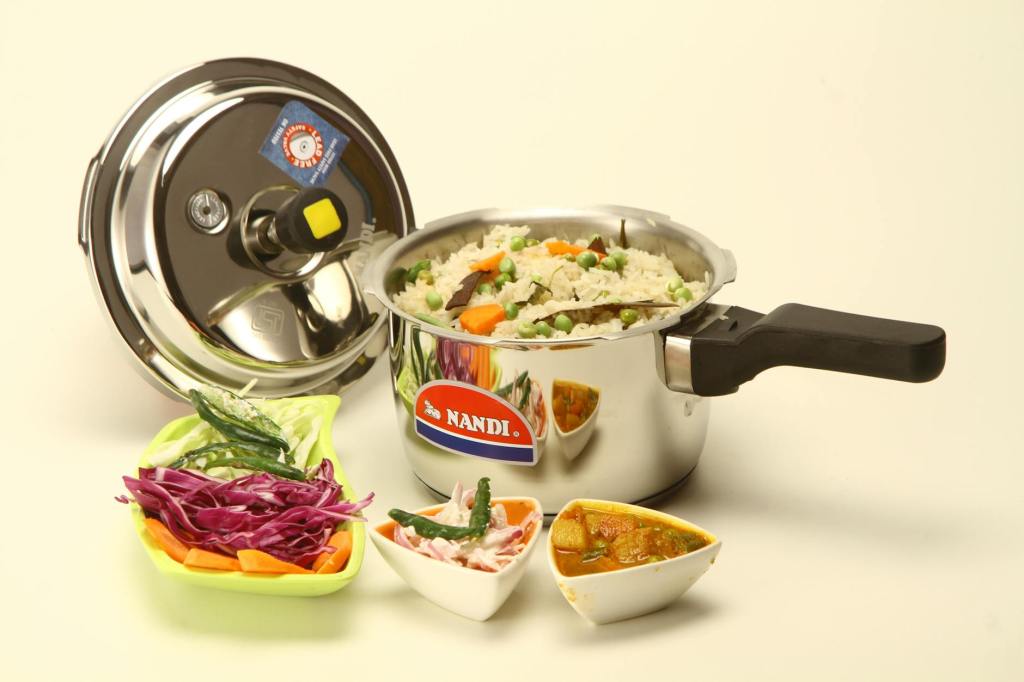
    Appliance-wise, I’m at a crossroads of excess. I own a rice cooker I never use and a giant Instant Pot I never use. They sit there like bulky monuments to abandoned ambition. I could use them for oats, groats, rice, and millet—or I could do what my soul really wants: get rid of both and buy one small pressure cooker that doesn’t hog the counter. Two out, one in. The math thrills me. My wife has approved the purchase. Now comes the real drama: do we donate the old machines, exile them to the garage, or perform the ritual drive to Goodwill? These are the kinds of ethical dilemmas that define modern minimalism.

    Of course, I feel a pang of guilt every time I buy something in the name of owning less. Nothing complicates a simplicity quest like consumer remorse. Forgive me my first-world angst. I suspect this whole project—paring down razors, beans, watches, and appliances—is really a coping mechanism. It’s easier to optimize your oatmeal workflow than confront the madness of the world. So here I am, scrolling Reddit, reading debates about rice cookers versus pressure cookers, pretending that the right appliance might finally bring me peace. Spoiler: it won’t. But it might make better millet.

  • The Masculinity of Noise: How I’m Learning to Retire Anger

    The Masculinity of Noise: How I’m Learning to Retire Anger

    I was born in 1961, late enough in the Boomer generation to miss its mythic highs, but early enough to inherit its emotional weather. In the houses many of us grew up in, male anger wasn’t treated as a problem; it was treated as policy. Fathers were allowed to be unhinged. Discipline arrived with belts and eruptions, not explanations. If you disappointed him—by being slow, gloomy, or merely inconvenient—you didn’t get correction; you got rage dressed up as authority. And if your father was military, as mine was, that rage came with extra starch and sharper edges. Of course, he could also be funny, generous, even heroic in flashes, which made the whole experience confusing. You loved him. You feared him. You absorbed him.

    Now I’m in my sixties with teenage daughters and a wife fourteen years younger than me. I have to stay awake to the fact that I was raised in a culture where anger passed for masculinity. Today, I see anger differently—not as a right, not as a release, but as a liability. Anger is not power. It’s panic. It’s what happens when you mistake control for dignity and then lose both. The world refuses to cooperate. People remain unpredictable. You don’t get to be calm only when conditions are “frictionless.” That bargain never existed.

    Lately, after finishing a semester’s worth of teaching and another book that will probably never see a publisher’s desk, my mind feels oddly clear. In that clarity, one old companion stands out: inherited anger. I no longer treat it as a personality trait. I treat it as a relic—something to be handled carefully and put away for good. 

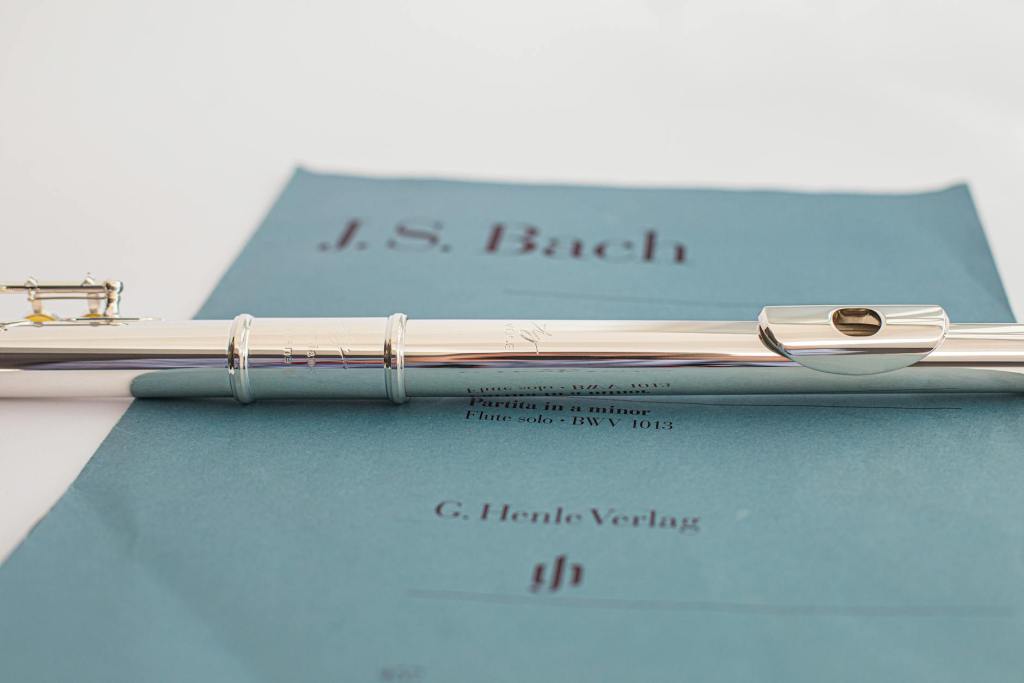
    I say this because I’ve spent most of my life marinating my brain in anger, and I can report back from the experiment: it’s like being trapped on a radio station that only plays sonic punishment. Call it Death Metal—endless noise, endless tension, no silence to think in. When I make a disciplined effort to meet my family and the world with humility instead of heat, the dial shifts. Suddenly it’s Bach. Space. Order. Breathing room. And here’s the practical wisdom I’ve earned the hard way: if you’re living with people you love, or steering a three-thousand-pound vehicle through public space, you want your mind tuned to Bach, not Death Metal. One soundtrack makes life survivable. The other just makes everything louder while you quietly fall apart.

    Growing up, real growing up, means choosing one radio station over another and accepting that you don’t run the variables of life. You don’t command outcomes. That is the default setting. Anger should not be. Anger belongs to toddlers and tyrants. Maturity begins when you retire it.

  • The Watch I Want vs. the Life I Actually Live

    The Watch I Want vs. the Life I Actually Live

    For the past month I’ve been circling the black titanium Citizen Attesa CC4055-65E the way a moth circles a very handsome, very unnecessary flame. It’s not even obscenely priced—roughly the cost of a Lenovo mini business PC with an Ultra 7—so my brain keeps pitching it as “reasonable.” I picture it on my wrist: sleek, dark, stealthy, broadcasting a silent message of confidence, competence, and maybe a little controlled menace. The fantasy version of me wears it everywhere. The honest version of me pauses and asks a less flattering question: where, exactly, am I going that requires this level of cinematic wrist presence?

    That’s when the self-audit begins. Would I really wear it, or would I merely own it—like one of those tasteful paintings people hang in their living rooms to prove they have a soul, then never look at again? But that analogy collapses on contact. A painting is for the wall. A watch is for the wrist. One is meant to be admired from across the room; the other is meant to live on your body, accumulating scuffs and stories. When I buy watches, what I’m really buying is a version of myself in motion—someone who leaves the house, enters public life, and performs a coherent aesthetic identity in the wild. The problem is that most days, I don’t need a public uniform. I need something comfortable while I work, run errands, and live in my own cave like a reasonably civilized hermit.

    That’s why my divers live on straps and not bracelets. Straps belong to real life—coffee runs, grocery aisles, desk time. Bracelets belong to fantasy life—the version of me who is being interviewed on late-night TV or starring in a tasteful indie film about male regret. Since those scenarios remain stubbornly fictional, the idea of strapping on a glossy black titanium showpiece starts to feel like costume drama. And here’s the punchline I can’t dodge: even if I became that public figure tomorrow, it wouldn’t make me happier or more whole. That life is a mirage. Which means the Citizen Attesa, for all its beauty, risks becoming one too—a chimera in black titanium, promising a transformation I no longer believe in.

  • “Raindrops Keep Fallin’ On My Head” and the Art of Being Nine

    “Raindrops Keep Fallin’ On My Head” and the Art of Being Nine

    When I was nine, in the summer of ’71, my family and three others camped on a tiny island near Mount Shasta—an experiment in frontier optimism that involved water skiing, fishing, and waging daily war against yellow jackets. We built traps from jars and funnels, which is what passes for science when you’re a child and the enemy has wings. Whenever the social noise became too loud, I retreated into a tent with Archie comics and a portable radio, my private bunker of paper jokes and AM static. Outside, the sun blazed and my friends howled with laughter. Inside, I lay on my stomach, flipping pages, while two songs drifted through the thin canvas walls—“Riders on the Storm” and “Uncle Albert/Admiral Halsey.” They were gorgeous. They were devastating. Their beauty did nothing to soften their sadness. They didn’t cheer me up; they baptized me into melancholy.

    I survived that summer gloom by clinging to the holy trinity of comic-book escapism: X-ray vision glasses, Sea Monkeys, and Charles Atlas promising to turn scrawny boys into beach legends. But I had known a better kind of sadness before that—eighteen months earlier, in fourth grade, when B.J. Thomas’s “Raindrops Keep Fallin’ on My Head” became the soundtrack to a winter of biblical rain in San Jose. That rain didn’t feel like inconvenience; it felt like permission. We walked in it. We built forts in it. We sang in it. Wet sneakers were badges of honor. Mud was a small price to pay for enchantment.

    After school, we took the longest possible route home, not because we were lost, but because we didn’t want the day to end. I think children are natural pantheists. We don’t worry about tracking dirt through the house; we worry about missing the miracle. One afternoon, in a downpour that looked like it had been personally arranged by the weather gods, I saw two middle school girls walking arm in arm, kicking their legs and singing like they were auditioning for joy itself. They weren’t performing happiness. They were inhabited by it. I don’t think I’ve seen human beings that unselfconsciously alive since.

    We eventually reached the edge of Anderson Elementary, where a park spilled into trees and bushes and, hidden like contraband, our cardboard fort waited. I crawled underneath it, stared through a gap in the walls at the rain-swollen sky, and sang “Raindrops Keep Fallin’ on My Head” to no one in particular. I remember feeling drunk on the depth of that sky, stunned by the sheer extravagance of being alive. I wasn’t happy because something good had happened. I was happy because everything had happened—and I was inside it. For a moment, I felt infinite. And, at nine, infinite felt the same as immortal.

  • Optimized to Death: When Improvement Outruns Personal Growth

    Optimized to Death: When Improvement Outruns Personal Growth

    Optimization without integration produces a lopsided human being, and the AI age intensifies this distortion by overrewarding what can be optimized, automated, and displayed. Systems built on speed, output, and measurable performance train us to chase visible gains while starving the slower capacities that make those gains usable in real life. The result is a person who can execute flawlessly in one narrow lane yet falters the moment the situation becomes human—ambiguous, emotional, unscripted. The body may be sculpted while the self remains adolescent; the résumé gleams while judgment dulls; productivity accelerates while meaning evaporates. AI tools amplify this imbalance by making optimization cheap and frictionless, encouraging rapid improvement without requiring maturation, reflection, or integration. What emerges is not an unfinished person so much as an unevenly finished one—overdeveloped in what can be measured and underdeveloped in what must be lived. The tragedy is not incompetence but imbalance: strength without wisdom, speed without direction, polish without presence. In an age obsessed with optimization, what looks like progress is often a subtler form of arrested development.

    To encourage you to interrogate your own tendencies to achieve optimization without integration, write a 500–word personal narrative analyzing a period in your life when you aggressively optimized one part of yourself—your body, productivity, grades, skills, image, or output—while neglecting the integration of that growth into a fuller, more functional self.

    Begin by narrating the specific context in which optimization took hold. Describe the routines, metrics, sacrifices, and rewards that drove your improvement. Use concrete, sensory detail to show what was gained: strength, speed, recognition, efficiency, status, or validation. Make the optimization legible through action rather than abstraction.

    Then pivot. Identify the moment—or series of moments—when the imbalance became visible. What failed to develop alongside your optimized trait? Social competence? Emotional maturity? Judgment? Confidence? Meaning? Show how this lack of integration surfaced in a lived encounter: a conversation you couldn’t sustain, an opportunity you mishandled, a relationship you sabotaged, or a realization that exposed the limits of your progress.

    By the end of the essay, articulate what optimization without integration cost you. Do not reduce this to a moral lesson or self-help platitude. Instead, reflect on what this experience taught you about human development itself: why improving a single dimension of the self can create distortion rather than wholeness, and how true growth requires coordination between capacity, character, and context.

    Your goal is not confession or nostalgia but clarity. Show how a life can look impressive on the surface while remaining structurally incomplete—and what it takes to move from optimization toward integration.

    Avoid clichés about “balance” or “being well-rounded.” This essay should demonstrate insight through specificity, humor, and honest self-assessment. Let the reader see the mismatch before you explain it.

    As a model for the assignment, consider the following self-interrogation—a case study in optimization gone feral and integration nowhere to be found.

    At nineteen, I fell into a job at UPS, where they specialized in turning young men into over-caffeinated parcel gladiators. Picture a cardboard coliseum where bubble wrap was treated like a minor deity and the only sacrament was speed. My assignment was simple and brutal: load 1,200 boxes an hour into trailer walls so tight and elegant they could’ve qualified for Olympic Tetris. Five nights a week, from eleven p.m. to three a.m., I lived under fluorescent lights, sprinting on concrete, powered by caffeine, testosterone, and a belief that exhaustion was a personality trait. Without meaning to, I dropped ten pounds and watched my body harden into something out of a comic book—biceps with delusions of automotive lifting.

    This mattered because my early bodybuilding career had been a public embarrassment. At sixteen, I competed in the Mr. Teenage Golden State in Sacramento, smooth as a marble countertop and just as defined. A year later, at the Mr. Teenage California in San Jose, I repeated the humiliation, proving that consistency was my only strength. I refused to let my legacy be “promising kid, zero cuts.” Now, thanks to UPS cardio masquerading as labor, I watched striations appear like divine handwriting. Redemption no longer seemed possible; it felt scheduled.

    So I did what any responsible nineteen-year-old bodybuilder would do: I declared war on carbohydrates. I starved myself with religious fervor and trained like a man auditioning for sainthood. By the time the 1981 Mr. Teenage San Francisco rolled around at Mission High School, I had achieved what I believed was human perfection—180 pounds of bronzed, veined, magazine-ready beefcake. The downside was logistical. My clothes no longer fit. They hung off me like a visual apology. This triggered an emergency trip to a Pleasanton mall, where I entered a fitting room that felt like a shrine to Joey Scarbury’s “Theme from The Greatest American Hero,” the soundtrack of peak Reagan-era delusion.

    While changing behind a curtain so thin it offered plausible deniability rather than privacy, I overheard two young women working the store arguing—audibly—about which one should ask me out. Their voices escalated. Stakes rose. I imagined them staging a full WWE brawl among the racks: flying elbows, folding chairs, all for the right to split a breadstick with me at Sbarro. This, I thought, was the payoff. This was what discipline looked like.

    And then—nothing. I froze. I adopted an aloof, icy expression so effective it could’ve extinguished a bonfire. The women scattered, muttering about my arrogance, while I stood there in my Calvin Kleins, immobilized by the very attention I had trained for. I had optimized everything except the part of me required to be human.

    For a brief, shimmering window, I possessed the body of a Greek god and the social competence of a malfunctioning Atari joystick. I looked like James Bond and interacted like a background extra waiting for direction. Beneath the Herculean exterior was a hollow shell—a construction site abandoned mid-project, rusted scaffolding still up, a plywood sign nailed crookedly to the entrance: SORRY, WE’RE CLOSED.
  • Crossing the Line: A Dream About Authority, Fear, and Painted Boundaries

    Crossing the Line: A Dream About Authority, Fear, and Painted Boundaries

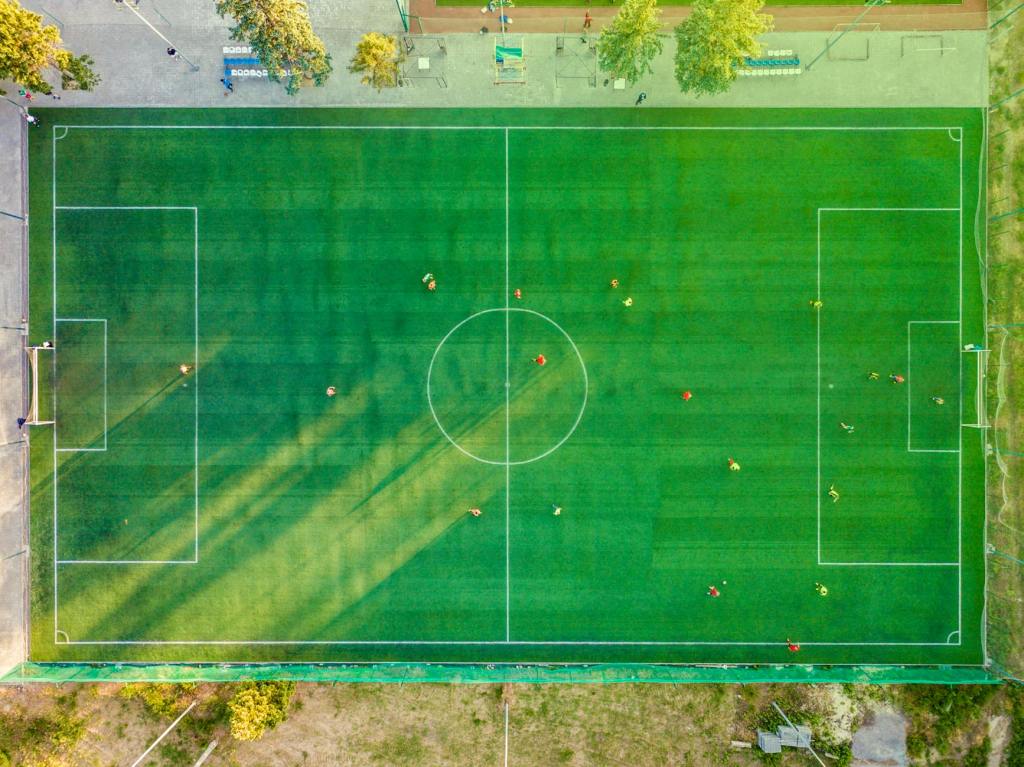
    Last night I dreamed I was part of a procession—about a hundred people, uniformly drab, dressed in the colors of resignation. Their faces carried the dull serenity of those who had long ago outsourced judgment. We moved in silence toward a high school, then funneled onto the soccer field like obedient data packets. At the painted boundary lines, the crowd stopped as one body, lifted their arms, and pointed north.

    There, planted beside the goalpost like a sanctioned myth, stood the figure they feared. He was Zeus-shaped—early sixties, six feet tall, silver beard, posture stiff with authority. His eyes were sharp, avian, and distinctly unwelcoming. The crowd murmured instructions without turning around: Do not cross the line. Do not approach. This is as close as you’re allowed to get.

    Naturally, I crossed it.

    I wasn’t hostile. I didn’t charge or shout. I walked toward him calmly, the way someone does when they want to verify whether a warning is wisdom or superstition. I told him I meant no harm. I only wanted to test the claims made on his behalf. He responded tersely. He ordered me back behind the line and, to clarify his sincerity, lobbed a few lightning bolts in my direction—carefully calibrated to miss, close enough to educate but not annihilate. The message was precise: curiosity would be tolerated once; persistence would be punished.

    That was enough. I had learned what I came to learn—not from the crowd’s trembling consensus, but from direct encounter. The boundary wasn’t imaginary. It had teeth. I stepped back across the painted line and rejoined the mass, now wiser, now compliant, waiting quietly for the next instruction to arrive from the sky.

  • Bezel Clicks and Sentence Cuts: On Watches, Writing, and the Discipline of Precision

    Bezel Clicks and Sentence Cuts: On Watches, Writing, and the Discipline of Precision

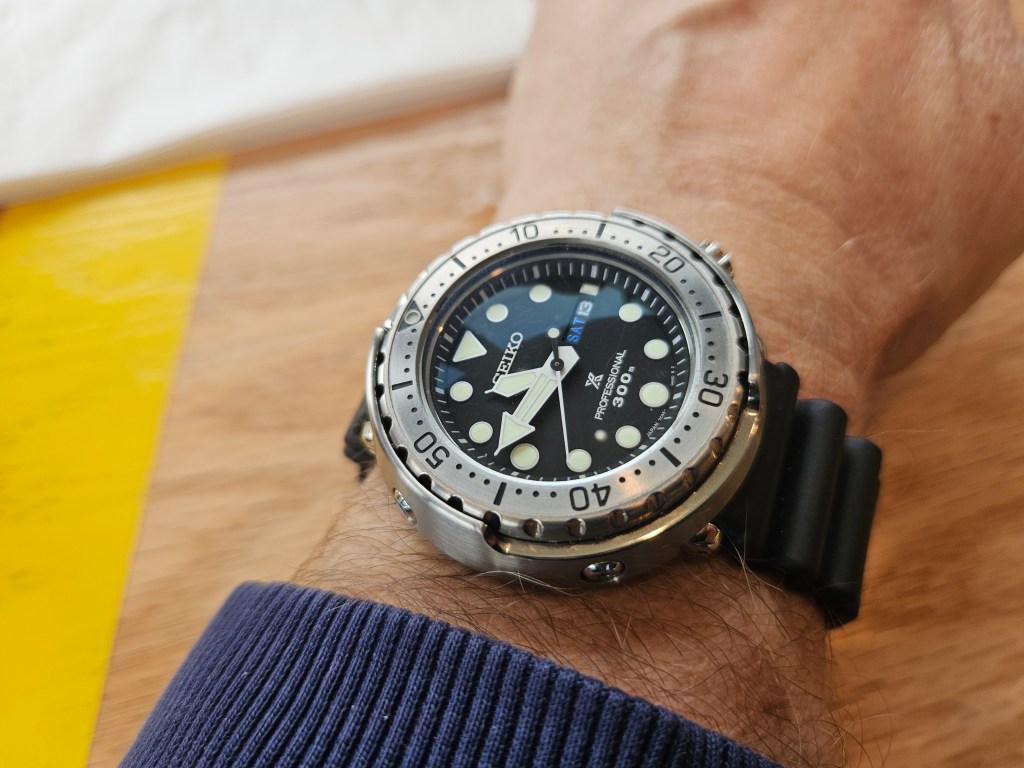
    I am a connoisseur of fine timepieces. I notice the way a sunray dial catches light like a held breath, the authority of a bezel click that says someone cared. I’ve worn Tudor Black Bays and Omega Planet Oceans as loaners—the horological equivalent of renting a Maserati for a reckless weekend—exhilarating, loud with competence, impossible to forget. My own collection is high-end Seiko divers, watches that deliver lapidary excellence at half the tariff: fewer theatrics, just ruthless execution. Precision doesn’t need a luxury tax.

    That same appetite governs my reading. A tight, aphoristic paragraph can spike my pulse the way a Planet Ocean does on the wrist. I collect sentences the way others collect steel and sapphire. Wilde. Pascal. Kierkegaard. La Rochefoucauld. These writers practice compression as a moral discipline. A lapidary writer treats language like stone—cuts until only the hardest facet remains, then stops. Anything extra is vanity.

    I am not, however, a tourist. I have no patience for writers who mistake arch tone for insight, who wear cynicism like a designer jacket and call it wisdom. Aphorisms can curdle into poses. Style without penetration is just a shiny case housing a dead movement.

    This is why I’m unsentimental about AI. Left alone, language models are unruly factories—endless output, hollow shine, fluent nonsense by the ton. Slop with manners. But handled by someone with a lapidary sensibility, they can polish. They can refine. They can help a sentence find its edge. What they cannot do is teach taste.

    Taste precedes tools. Before you let a machine touch your prose, you must have lived with the masters long enough to feel the difference between a gem and its counterfeit. That discernment takes years. There is no shortcut. You become a jeweler by ruining stones, by learning what breaks and what holds.

    Lapidary sensibility is not impressed by abundance or fluency. It responds to compression, inevitability, and bite. It is bodily: a tightening of attention, a flicker of pleasure, the instant you know a sentence could not be otherwise. You don’t acquire it through mimicry or prompts. You acquire it through exposure, failure, and long intimacy with sentences that refuse to waste your time.

    Remember this, then: AI can assist only where judgment already exists. Without that baseline, you are not collaborating with a tool. You are feeding quarters into a very expensive Slop Machine.

  • Too Much RAM, Not Enough Transcendence

    Too Much RAM, Not Enough Transcendence

    At sixty-four, time no longer strolls; it sprints, and I feel myself shrinking as it passes. Not dramatically—no tragic collapse—just a steady narrowing. Fewer friends than before. A smaller social orbit. My internal clock drifting farther out of sync with my wife’s and daughter’s, who are younger, livelier, and still tuned to daylight. They love me and make heroic efforts to lure me out of my cave, but by eight o’clock I’m asleep in the back seat, hibernating like a cartoon grizzly bear who misunderstood the invitation.

    Part of the shock is how badly my expectations were mis-set. I grew up marinated in television commercials that catechized me into a childish theology of consumerism: play by the rules, buy the right things, and you’ll be lifted onto a magic carpet of perpetual happiness and glowing health. The American Dream, as advertised, looked frictionless and eternal. Paradise was a purchase away. Then generative AI arrived and supercharged the fantasy. I didn’t just get a magic carpet—I became the magic carpet. Like Superman, I could optimize myself endlessly. If immortality wasn’t on the table, surely a close approximation was.

    And yet here I am. The house is nearly paid off in a premium Southern California neighborhood. My computer has more SSD, RAM, and CPU than I could have imagined as a kid. AI tools respond instantly, obedient and tireless. And still—no glory. No transcendence. Even my healthcare provider got in on the myth, emailing me something grandly titled “Your Personal Action Plan.” I arrived at the doctor’s office expecting revelation. He handed me a cup and asked for a urine sample.

    The gap between the life I was promised by the digital age and the life I’m actually living is soul-crushing in its banality. So I retreat to a bowl of steel-cut oats, drowned in prunes, molasses, and soy milk. It’s not heroic. It’s not optimized. But it’s warm, predictable, and faintly medicinal. “At least I’m eating clean,” I tell myself—clinging to this small, beige consolation as proof that even if the magic carpet never showed up, I can still manage a decent breakfast.

    Like millions before me, I have allowed myself to fall into Optimization Afterlife Fantasy–the belief that continuous self-improvement, technological upgrades, and algorithmic assistance can indefinitely postpone decline and approximate transcendence in a secular age. It replaces older visions of salvation with dashboards, action plans, and personalized systems, promising that with enough data, discipline, and tools, one can out-optimize aging, finitude, and disappointment. The fantasy thrives on the language of efficiency and control, encouraging the illusion that mortality is a solvable design flaw rather than a human condition. When reality intrudes—through fatigue, misalignment, or the body’s quiet refusals—the fantasy collapses, leaving behind not enlightenment but a sharper awareness of limits and the hollow ache of promises made by machines that cannot carry us past time.

  • Stir-Free Peanut Butter and the Slow Death of Self-Control

    Stir-Free Peanut Butter and the Slow Death of Self-Control

    Frictionless Consumption is the pattern by which ease replaces judgment and convenience overrides restraint. When effort is removed—no stirring, no waiting, no resistance—consumption accelerates beyond intention because nothing slows it down. What once required pause, preparation, or minor inconvenience now flows effortlessly, inviting repetition and excess. The danger is not the object itself but the vanished friction that once acted as a governor on behavior. Frictionless consumption feels like freedom in the moment, but over time it produces dependency, overuse, and decline, as appetite expands to fill the space where effort used to be. In eliminating difficulty, it quietly eliminates self-regulation, leaving users wondering how they arrived at excess when nothing ever felt like too much.

    ***

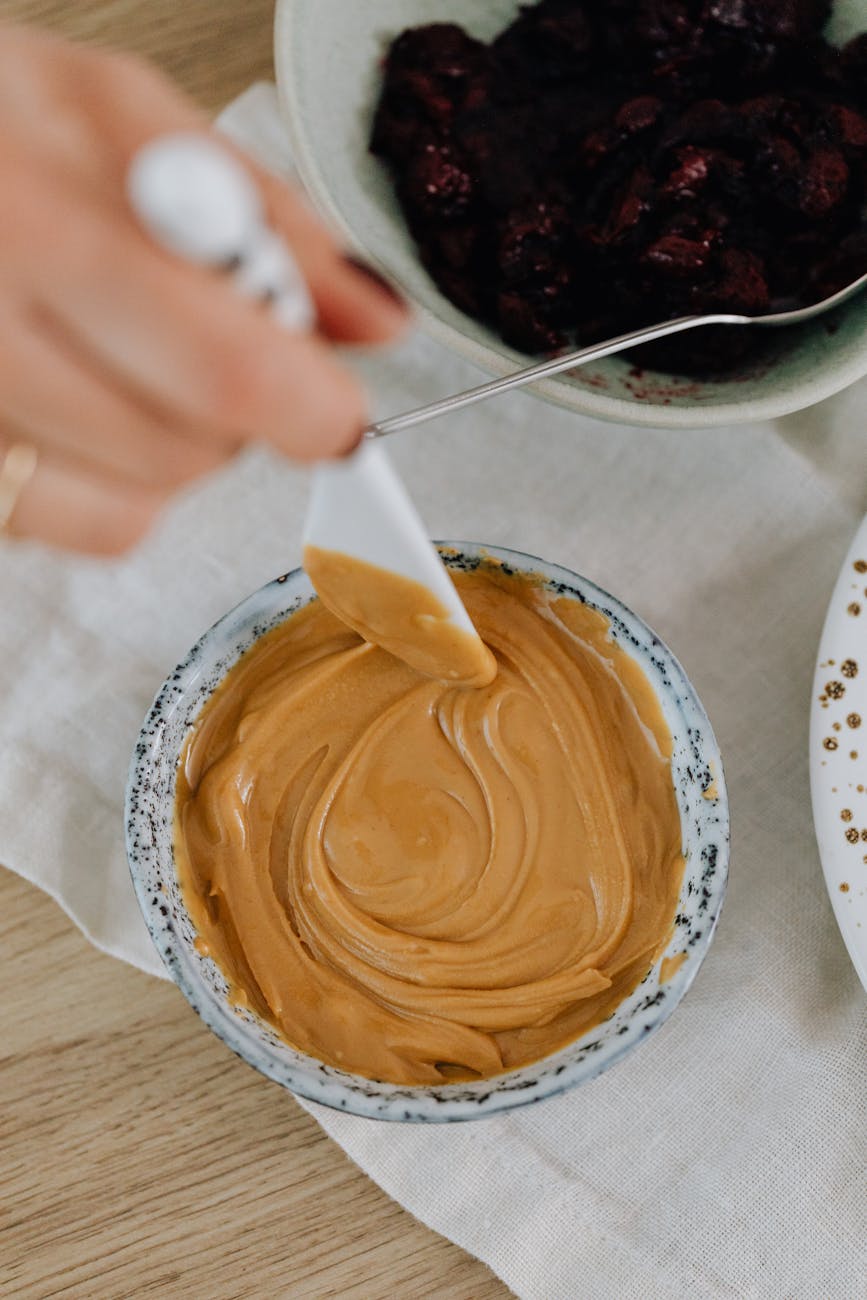
    For decades, I practiced the penitential ritual of mixing organic peanut butter. I wrapped a washcloth around a tablespoon for traction and churned as viscous globs of nut paste and brown sludge slithered up the sides of the jar. The stirring was never sufficient. No matter how heroic the effort, you always discovered fossilized peanut-butter boulders lurking at the bottom, surrounded by a moat of free-floating oil. The jar itself became slick, greasy, faintly accusatory. Still, I consoled myself with the smug glow of dietary righteousness. At least I’m natural, I thought, halo firmly in place.

    Then one day, my virtue collapsed. I sold my soul and bought Stir-Free. Its label bore the mark of the beast—additives, including the much-maligned demon, palm oil—but the first swipe across a bagel was a revelation. No stirring. No resistance. No penance. It spread effortlessly on toast, waffles, pancakes, anything foolish enough to cross its path. The only question that remained was not Is this evil? but Why did I waste decades of my life pretending the other way was better?

    The answer arrived quietly, in the form of my expanding waistline. Because peanut butter had become frictionless, I began consuming it with abandon. Spoonfuls multiplied. Servings lost their meaning. I blamed palm oil, of course—it had a face, a name, a moral odor—but the real culprit was ease. Stir-Free was not just a product; it was an invitation. When effort disappears, consumption accelerates. I didn’t gain weight because of additives. I gained weight because nothing stood between me and another effortless swipe.

    Large Language Models are Stir-Free peanut butter for the mind. They are smooth, stable, instantly gratifying, and always ready to spread. They remove the resistance from thinking, deliver fast results, and reward you with the illusion of productivity. Like Stir-Free, they invite overuse. And like Stir-Free, the cost is not immediately obvious. The more you rely on them, the more your intellectual core softens. Eventually, you’re left with a cognitive physique best described as a pencil-neck potato—bulky output, no supporting structure.

    The promise of a frictionless life is one of the great seductions of the modern age. It feels humane, efficient, enlightened. In reality, it is a trap. Friction was never the enemy; it was the brake. Remove it everywhere—food, thinking, effort, judgment—and you don’t get progress. You get collapse, neatly packaged and easy to spread.

  • Feedback Latency Intolerance

    Feedback Latency Intolerance

    Feedback Latency Intolerance is the conditioned inability to endure even brief gaps between action and response, produced by prolonged immersion in systems that reward instantaneous acknowledgment. Under its influence, ordinary delays—seconds rather than minutes—register as emotional disturbances, triggering agitation, self-doubt, or irritation disproportionate to the circumstance. The condition collapses temporal perspective, converting neutral waiting into perceived absence or rejection. What is lost is not efficiency but patience: the learned capacity to exist without immediate validation. Feedback latency intolerance reveals how algorithmic environments retrain emotional regulation, replacing mature tolerance for delay with a reflexive demand for constant confirmation.

    The extent of my deterioration revealed itself recently at a new pancake house. I took my daughter, asked the server what he actually liked on the menu, and obediently ordered the fried chicken biscuit sandwich. Then—already overplaying the moment—I texted my wife to announce my choice, as if this were actionable intelligence. I stared at my phone, waiting for the small red numeral to appear, the sacred 1 that would certify my existence. Forty seconds passed. Forty. I refreshed my screen like a lab rat pressing a lever, convinced something had gone wrong with the universe.

    In that absurd interval, it dawned on me: I had entered a state of pathological impatience, the natural byproduct of prolonged residence in the dopamine swamp of algorithmic life, where self-worth is measured by speed and volume of response. The sensation felt disturbingly familiar. My mind snapped back to stories my mother told about feeding me as a baby. The spoon, freshly loaded with mashed potatoes, would leave my mouth for a brief, necessary refill—and I would erupt in fury, unable to tolerate the unbearable injustice of the spoon’s absence. I screamed not from hunger, but from interruption. Sitting there in the pancake house, refreshing my phone, I realized I had simply upgraded the spoon. This is what too much time inside these machines does to a person: it doesn’t make you faster or smarter—it makes you an adult who can’t survive a forty-second gap between bites.