Category: Health and Fitness

  • The Loneliness Crisis: Social Isolation and the Rise of American Hostility (college essay prompt)

    The Loneliness Crisis: Social Isolation and the Rise of American Hostility (college essay prompt)

    Read David Brooks’ essay “How America Got Mean” and Derek Thompson’ essay “The Anti-Social Century.” Then watch Roy Wood Jr.’s comedy special Lonely Flowers.

    In the comedy performance Lonely Flowers, Roy Wood Jr. argues that increasing loneliness and social disconnection are contributing to rising anger, hostility, tribalism, and violence in American culture. Brooks and Thompson similarly describe a society that is becoming more fragmented, isolated, distrustful, and emotionally brittle. Together, these works raise an important question: What happens to individuals and societies when meaningful human connection begins to collapse?

    Write a 1,200-word argumentative essay analyzing the claim that social isolation is a major cause of America’s rising hostility, cruelty, and social dysfunction. Your essay may support, challenge, or complicate Roy Wood Jr.’s argument, but you must engage deeply with the ideas presented by Brooks and Thompson as you develop your position.

    As you develop your argument, consider how these writers and performers describe the psychological and cultural effects of loneliness, alienation, and declining social trust. How do social isolation, digital life, political tribalism, economic pressure, social media, declining community institutions, and weakened friendships contribute to anger and resentment? To what extent do modern Americans increasingly experience one another not as neighbors or fellow citizens but as abstractions, enemies, audiences, or online avatars?

    You should also consider competing explanations for cultural hostility. Is loneliness truly the central problem, or are broader forces—economic inequality, political polarization, consumer culture, technological addiction, family breakdown, declining religion, or social media algorithms—more responsible for rising social tension? Does loneliness cause hostility, or does hostility itself drive people further into isolation?

    In addition to analyzing the ideas presented in these works, examine how each creator communicates their message. Consider the differences between Brooks’ social criticism, Thompson’s cultural analysis, and Roy Wood Jr.’s use of comedy, storytelling, exaggeration, and observational humor. Why might comedy be an especially effective way to address painful subjects such as loneliness, disconnection, and social fragmentation?

    You must include at least one counterargument and rebuttal. For example, some critics may argue that modern technology and online culture have actually expanded social connection rather than weakened it. Others may argue that Americans are not truly isolated but are instead forming new kinds of communities online. Respond to these objections by evaluating the quality and depth of modern social relationships.

    As you conclude your essay, consider the larger implications of these works. What do they suggest about the future of friendship, community, empathy, and civic life in America? If loneliness and social fragmentation continue to grow, what might happen to the culture, politics, and mental health of the nation?

    Requirements:

    • 1,200 words minimum
    • MLA format
    • Use evidence from all three works
    • Include a clear thesis with mapping components
    • Include at least one counterargument and rebuttal
    • Analyze specific examples, scenes, or passages rather than merely summarizing
    • Develop a focused argument about loneliness, social fragmentation, and cultural hostility
  • The Sin of Outsourcing Humanity

    The Sin of Outsourcing Humanity

    For Tyler Austin Harper, there is only one word that captures the gravity of dehumanization: sin. And to be clear, dehumanization is rampant—in the form of robot companions, digital girlfriends, and AI therapists. To call these developments merely wrong is an understatement. He writes, “They feel to me like something deeper and darker.” In his essay “There Is Already a Word for the Deep Moral Failures of AI: It’s Sin,” Harper argues that to understand the depths of what is happening to us, we need Christian guides because Christianity provides a framework for understanding dehumanization. You cannot understand dehumanization unless you first understand what it means to be fully human. Harper turns to Christian critics of AI to trace this trajectory from human to subhuman through the misuse of technology.

    These misuses emerge when people overemphasize the business, pragmatic, and utilitarian uses of AI at the expense of humanity, a Faustian bargain as old as sin itself. To champion technology and “outsource the most interesting aspects of our life and labor to machines” without considering the effects on the human soul is to threaten human dignity and meaning.

    Christianity frames us as fallen creatures who long to return to our Maker. The burden of being human is struggling with our fallen nature and seeking grace through God. When we look to machines for salvation, we outsource the burden of what it means to be human. In doing so, we forget that this burden entails suffering and that suffering itself can be a gift from God, pointing us toward humility and the true path. In Harper’s words, “Christianity has a clear ‘anthropological vision,’ asserting that the purpose of the human species is to exist in the image of its creator, to love God and one another, and to spread life on Earth and steward its creatures.” To move toward this purpose is to become fully human. We conform to God and fulfill our humanity. Conforming ourselves to machines, by contrast, becomes a desecration of what it means to be human.

    Harper argues that outside the Christian framework, we become confused about what it means to be human in the first place. He writes, “Many secular thinkers can struggle to articulate a clear definition of what humanity is.” He points to Christian writer Carl Trueman, who observes that the term dehumanization loses its force if the secular definition of humanization remains an “empty cipher.” Secularists and techno-believers have reduced humanization to a narrow set of superficial behaviors that fail to capture what it truly means to carry the burden of having a soul.

    Harper describes himself as “a not especially observant Presbyterian” and is not arguing that we must embrace religious orthodoxy to “fully appreciate the challenge posed by the rise of AI.” However, he insists that we “must start from the premise that humans have some kind of universal nature or essence that must be safeguarded from technological encroachment.”

    Harper’s article reminds me of the dangers of Liquid Modernity, a concept developed by Zygmunt Bauman. Bauman describes a social condition in which stable institutions, identities, relationships, careers, moral frameworks, and communities dissolve into constant flux, instability, and adaptation. In the context of dehumanization and the rise of AI, Liquid Modernity refers to the transformation of human beings from rooted persons with durable social bonds into endlessly flexible, data-driven consumers and performers who must continuously reinvent themselves to survive technological and economic disruption.

    Societies that lack a tradition defining humanization may ultimately surrender to the doctrine that Liquid Modernity is both desirable and inevitable—a condition in which human beings outsource the burden of being human to machines.

  • The Warrior Waiting Outside My Classroom

    The Warrior Waiting Outside My Classroom

    You can begin with the proposition that helping others is one of the few reliable antidotes to the degrading swamp of self-pity. Human beings are not designed to sit motionless inside their own grievances indefinitely. If you possess intelligence, talent, strength, or charisma, those gifts demand meaningful expression. They are not decorative features. They are forms of energy.

    That energy animates your being like electrical current running through a machine. It must move outward toward purpose, discipline, service, creation, or struggle. If it cannot find meaningful release, it turns inward and begins poisoning the person who contains it. The result is psychic rot: floundering, festering, curdling resentment, compulsive behavior, addiction, rage, nihilism, and self-consumption. The gifted person without purpose often becomes a danger to himself. He drinks greedily from the trough of self-pity until he sinks into a stagnant emotional mire.

    I have been thinking about this principle of repressed talent for the last month or so.

    When I walk to teach my classes at the college, I often pass a group of four young men gathered outside the classroom next to mine, waiting for their instructor to arrive. Among them is a young man I will call Lance. Even standing still, Lance commands attention with the gravitational pull of someone built for collision rather than passivity.

    He is in his mid-twenties, about six foot four, perhaps 230 pounds, heavily muscled and covered in tattoos. His blond hair is shaved close against his skull, emphasizing a sculpted jaw that looks almost mythic in proportion. Behind thick black-rimmed glasses are serious eyes carrying the alertness of a man who has spent years expecting conflict. Lance possesses the unmistakable physical presence of someone who could either lead men into battle or get thrown out of a casino at three in the morning for fighting three bouncers simultaneously.

    He told me he moved to California from Michigan after years of self-destruction that resulted in several felony convictions. He admitted openly that he struggles with aggression and anger. He appears to possess almost no tolerance for stupidity, dishonesty, or weakness. Yet despite the volatility simmering beneath the surface, he also projects unusual charisma and intelligence. He is studying business now and trying, in his own words, to “get his life together.”

    From my limited conversations with him, I suspect Lance possesses what I would call a Warrior Personality.

    Some people are psychologically constructed for intensity. They thrive on challenge, competition, danger, pressure, confrontation, and high-stakes environments that demand disciplined aggression. These individuals often deteriorate in passive, stagnant, emotionally neutered settings. They require struggle the way racehorses require motion. If they fail to find meaningful outlets for their intensity, the energy mutates into self-destruction.

    I can easily imagine Lance succeeding as an athlete, coach, entrepreneur, counselor, firefighter, or leader in some other high-pressure field requiring resilience and force of will. But I can equally imagine him drifting toward destruction if that energy remains undirected.

    What concerns me is what I would call Warrior Displacement Syndrome: a condition in which highly aggressive, competitive, high-intensity individuals fail to discover purposeful outlets for their temperament and therefore redirect those impulses toward addiction, criminality, rage, compulsive behavior, or nihilism. The warrior instinct, denied honorable expression, mutates into chaos.

    Modern society often misunderstands such people. We frequently pathologize intensity itself rather than helping channel it constructively. But strength without direction becomes volatile. A powerful temperament deprived of purpose becomes psychologically radioactive.

    Lance still has rough edges that he will likely need to soften as he adapts to adult life. Yet I suspect much of his struggle comes not from an excess of strength but from the absence of a worthy battlefield upon which to deploy it.

    There are two weeks left in the semester. If I see Lance outside my classroom again, I may tell him some version of what I have written here. Perhaps the idea of the Warrior Personality will resonate with him. Perhaps not.

    But increasingly I suspect that in another version of my life, I would not have become a college writing instructor at all.

    I would have become a counselor for lost men trying to redirect the dangerous energy burning inside them before it consumed them whole.

  • Mackenzie Shirilla: The Girl Who Became Her Feed

    Mackenzie Shirilla: The Girl Who Became Her Feed

    It was difficult to watch the Netflix documentary The Crash, which chronicles the horrifying case of two young men killed in a car crash after prosecutors argued that the driver, Mackenzie Shirilla, deliberately floored the gas pedal of her Toyota Camry to nearly one hundred miles per hour in an act deemed premeditated murder. The documentary is disturbing not merely because of the violence of the crash, but because of the portrait it paints of a young woman whose identity had become inseparable from her online performance. Mackenzie appeared trapped inside the exhausting machinery of self-curation, sculpting and broadcasting her existence with the kind of manic persistence social media now rewards as normal behavior. Her digital persona no longer seemed like an accessory to her life. It had metastasized into her life.

    Today, while listening to the podcast Blocked and Reported, I heard Jesse Singal and Katie Herzog discuss Gen Z’s eerie fluency for turning existence itself into a livestream. Both millennials sounded genuinely alienated by the phenomenon, as though they were describing a species only slightly adjacent to their own. Jesse referenced Mackenzie Shirilla’s relentless online presence as depicted in The Crash, pointing to the unsettling ease with which younger generations curate themselves for permanent digital exhibition. Yet one of the influencers discussed on the podcast commands nearly a million followers—a level of attention powerful enough to hijack almost any fragile human nervous system. Social media platforms have effectively industrialized validation, converting attention into a neurochemical slot machine that pays out in intermittent bursts of relevance, envy, and simulated affection.

    Attention itself is not the enemy. Human beings need recognition. Writers, artists, teachers, comedians, philosophers, and musicians all seek an audience because they are attempting to contribute something meaningful to the ongoing argument about what it means to be alive. But attention detached from substance becomes false gold. It glitters, intoxicates, and ultimately leaves the soul spiritually bankrupt. The dopamine cycle masquerades as significance while quietly hollowing out the self.

    The danger comes when a person can no longer distinguish between authentic identity and algorithmic performance. The online persona begins as branding, then evolves into compulsion, and finally hardens into pathology. It becomes louder, crueler, more narcissistic, and more detached from ordinary human proportion. The person starts living not for reality itself, but for its documentation. Meals become props. Relationships become content. Suffering becomes theater. Even grief gets optimized for engagement metrics. At that point, the self is no longer steering the machine; the machine is steering the self.

    Mackenzie Shirilla appears to have crossed that line. She allowed the curated self to consume the actual self. What remained was not individuality but a kind of digital possession—a consciousness warped by attention addiction, performative intensity, and emotional exhibitionism. The tragedy of The Crash is not merely that lives were destroyed in a violent instant. It is that modern culture increasingly trains young people to confuse visibility with meaning, performance with identity, and online relevance with human worth. Mackenzie lost that distinction entirely. In the end, the algorithm did not merely shape her personality. It devoured it.

  • This Is No Country for Old Men in Lycra

    This Is No Country for Old Men in Lycra

    No one warns you that approaching your mid-sixties feels less like aging and more like becoming technologically obsolete while still conscious enough to notice it. One day you are a functioning member of civilization; the next you are standing in a Costco parking lot wondering whether you already bought twelve gallons of trash bags or merely fantasized about buying them. You begin dropping references to Danish Go-Rounds, Screaming Yellow Zonkers, Tooter Turtle, and Super Chicken only to receive the same vacant stares one might reserve for a Civil War reenactor muttering battlefield coordinates.

    Meanwhile, your body begins quietly renegotiating its contract with reality.

    As a lifelong bodybuilder whose recovery now resembles a bankrupt public-works project—slow, inefficient, and riddled with delays—I understand how difficult it is to relinquish the fantasy of permanent vitality. Spend a week in Maui and the fantasy returns with tropical force. Hawaii is not merely a vacation destination. It is a pharmaceutical hallucination disguised as geography. You board a four-hundred-million-dollar jet, dry yourself into salted beef jerky for five hours, and land convinced that mortality itself has suffered a clerical error.

    Within twenty-four hours you are marinating in mai tais, vaporizing lilikoi pie with devotional intensity, and sitting beneath sunsets so offensively beautiful they seem personally designed by God to restore your self-esteem. Time dissolves. Deadlines vanish. Your phone feels vulgar. Maui whispers into your ear like a luxury hypnotist: Relax. Death can’t locate you here.

    Which is why leaving the island feels psychologically violent.

    You are not simply returning to California. You are returning to spam emails, lower-back stiffness, Costco receipts, cholesterol panels, and the humiliating realization that gravity remains undefeated. For weeks afterward you wander through suburbia in a tropical narcotic haze while your neighbor’s leaf blower screams through the morning air like dental equipment excavating a wisdom tooth from your skull. Maui is less a place than a controlled substance for affluent aging people desperate to suspend disbelief.

    It is also a theater of curated immortality.

    Old men roam the beaches in tiny Lycra swim briefs with the confidence of Roman emperors who somehow survived into the Ozempic era. Their skin resembles expensive leather luggage abandoned too long in the sun, yet they strut beside trophy wives young enough to think dial-up internet was a Bronze Age inconvenience. Wealth, GLP-1 drugs, testosterone clinics, cosmetic dentistry, peptide injections, and Hawaiian sunlight collaborate to create the illusion that biology has become negotiable.

    I remember one grotesque specimen vividly from the summer of 2019: a compact man in his mid-seventies parading through Maui in dark-blue Speedos beside a Mediterranean twenty-something so beautiful she looked less like a spouse and more like an acquisition. He moved with the frantic confidence of a hedge-fund satyr convinced that constant motion itself could keep death wheezing several yards behind him. He dove into the surf not like a swimmer but like a man bargaining with Time.

    You could smell his wealth before you could smell the salt air.

    The strange thing was not the age gap. Human vanity has always outsourced dignity whenever money allows it. No, what fascinated me was the unmistakable misalignment of the tableau. The forced smiles. The awkward touches. The overcompensating strut. It did not feel like youth preserved. It felt like youth taxidermied.

    And this, I increasingly realize, is the central agony of aging in modern America: not decline itself, but visible misalignment with the surrounding culture.

    You can fight it. God knows I do. You can swallow vats of omega-3 fish oil, consume two hundred grams of protein a day, swing kettlebells in the garage, and polish yourself into the rough approximation of a man twenty years younger. But eventually biology leaks through the cracks. Your night vision deteriorates. Downtown Los Angeles traffic begins to resemble a psychedelic military simulation. Google Maps betrays you into six-lane intersections populated by homicidal scooters, distracted pedestrians, and pastel-lit Waymo vehicles gliding through the streets like cheerful robot hearses escorting you toward irrelevance.

    That realization hit me hardest while driving my wife and twin daughters to Camp Flog Gnaw, a music festival whose title sounds less like an entertainment event and more like a medieval punishment device. Downtown Los Angeles unfolded before me like a gladiatorial arena engineered specifically to eliminate men my age. The traffic signals appeared designed by schizophrenic graphic designers. Pedestrians hurled themselves into intersections like feral pigeons auditioning for lawsuits. By the time I dropped my family off, I leaned toward my wife and quietly informed her that I was considering retirement from driving altogether.

    They did not laugh.

    Because they’ve begun noticing the cracks too.

    And this is where the Speedo delusion enters the story.

    Give a man enough money, enough Ozempic, enough oceanfront property, and enough panic about aging, and eventually he will parade across a Maui beach in Lycra briefs convinced he has conquered time itself. But the spectacle never communicates triumph. It communicates fear. The tighter the Speedo, the louder the desperation.

    You can optimize the body. You can chemically suppress appetite. You can biohack your sleep, inject peptides into your abdomen, freeze your face, laser your skin, and marry someone young enough to regard Nirvana as “classic rock.” But eventually the truth arrives anyway: youth culture is moving in one direction while you are moving in another.

    No amount of Hawaiian sunlight can conceal the gap forever.

  • Lost in the Cerealverse

    Lost in the Cerealverse

    I am a recovering Baby Boomer, a man spending his adult life in slow convalescence from my generation’s excesses, delusions, appetites, and spectacular lapses in judgment. We were a gullible people, easily hypnotized by charisma, pseudoscience, and televised absurdity. We watched self-proclaimed psychic Uri Geller bend spoons on The Merv Griffin Show while audiences reacted as though Moses himself had just parted the Red Sea with silverware. We read The Secret Life of Plants by Peter Tompkins and became convinced our begonias possessed emotional needs and that our geraniums required not merely sunlight and water but emotional affirmation and perhaps a little Barry Manilow. We devoured comic-book advertisements promising Charles Atlas physiques, X-ray vision, and Sea Monkeys sophisticated enough to establish maritime republics. Television commercials showed eager blondes like Farrah Fawcett rubbing shaving cream onto the cheeks of Joe Namath while exhausted housewives suffered public humiliation for failing to remove “ring around the collar.” Even bad breath became a moral catastrophe. One whiff of halitosis and television implied your marriage, career, social standing, and perhaps your begonias would collapse simultaneously.

    Then came the great cultural psychedelicization of suburbia. We witnessed Woodstock, ogled at Hugh Hefner’s satin-lined Pleasure Palace, and absorbed the full narcotic force of Hair. I can personally testify that once “The Age of Aquarius” entered the bloodstream of my San Jose neighborhood, things deteriorated rapidly. One moment neighbors were making peach preserves while drinking Florence Henderson-approved Tang beneath respectable patio umbrellas. The next moment those same backyards had been transformed into hot-tub diplomacy zones populated by nudists, swingers, divorcees, and mustachioed men named Skip discussing transcendental meditation beside tiki torches. Divorces multiplied like mushrooms after rain. Wheat germ became mandatory. Tanning without sunscreen evolved into a civic religion. Entire adults developed an inexplicable longing to go on tour with The Partridge Family. We were sold a vision of freedom defined almost entirely by consumer pleasure-seeking, and like gullible Labradors chasing a tennis ball off a cliff, we lunged after it enthusiastically.

    To this day, Boomers remain burdened by what can only be described as a Hydra-headed collection of addictions, nostalgias, and narcissistic compulsions. We benefited from affordable housing, cheap college tuition, generous job markets, and an economy that still allowed mediocrity to purchase a respectable ranch home with avocado-colored appliances. Yet instead of building ladders for future generations, many of us climbed upward and kicked the rungs away behind us while lecturing younger people about “hard work.” Retirement only intensifies the pathology. Rather than volunteering or developing civic virtue, many Boomers retreat into nostalgia pageants. They attend fantasy baseball camps where aging Hall of Famers teach sixty-eight-year-old insurance salesmen how to bunt. They go on African safaris and return home narrating their adventures in the booming voice of Commander McBragg. They attend The Rolling Stones concerts hoping the pelvic gyrations of octogenarian rock stars will somehow exempt them from mortality itself. Culture critics have noticed all this and responded with flamethrowers. Bruce Cannon Gibney portrays Boomers as empathy-deficient sociopaths in A Generation of Sociopaths. Lyman Stone argues we ruined everything. Jim Tankersley accuses us of devouring resources and fleeing responsibility like drunken Vikings looting the treasury. Meanwhile Joe Queenan observed that Boomers possess the supernatural ability to transform even the most banal activities into monumental spiritual “events” requiring extensive planning, emotional reflection, and enough data analysis to launch a moon mission.

    As someone born near the tail end of the Baby Boom in 1961, I would now like to contribute my own testimony to the prosecution. My story concerns cereal. But the word cereal is hopelessly inadequate for describing the psychological labyrinth into which my generation willingly wandered. Cereal sounds harmless, like something discussed by dietitians or dentists. No, what consumed us was something far larger and more immersive: the Cerealverse. To become lost in the Cerealverse is to undergo a form of infantilization in which the rituals, mascots, sugar rushes, and comforting repetitions of childhood cease being temporary pleasures and instead become an entire operating system for adult life. You believe you are moving forward, maturing, evolving. In reality, you are merely orbiting the same tiny constellation of appetites and nostalgic comforts over and over again like a trapped satellite incapable of escape. The Cerealverse does not merely feed you. It suspends you in a permanent state of emotional adolescence while convincing you that your stagnation is happiness.

    I can’t talk about infantilization without mentioning Cap ‘N Crunch. My mother indulged my appetite for this sugary cereal and bought me all its variations: Cap ‘N Crunch with Crunch Berries, Peanut Butter Cap ‘N Crunch, and then the renamed versions of the same-tasting cereal: Quisp, Quake, and King Vitamin. Quaker cereals took their winning formula of corn and brown sugar flavors and sold several variations with different mascots and names. 

    As a kid watching these cereals being advertised on TV, it was clear that too much of a good thing was not a problem. On the contrary, I felt compelled to taste-test all these cereal varieties the way a sommelier would taste dozens of Zinfandel wines from the same region or a musicologist would listen to hundreds of different versions of Rachmaninoff’s Second Symphony.

    Eating six versions of Cap ‘N Crunch afforded me the illusion of variety while eating the same cereal over and over. I was a preadolescent boy who wanted to believe I had choices but at the same time didn’t want any choices. 

    You will sometimes hear about the man who is in his sixth marriage, and his wives in terms of appearance, temperament, and personality are all more or less the same. The man keeps going back to the same woman but wants to believe he has “found someone new” to give him the hope of a new life. 

    What you are witnessing is infantilization, the illusion that you are moving forward when in fact you are trapped in a Moebius strip. A Möbius strip creates the illusion of movement while trapping you inside the same continuous surface forever. You keep traveling forward, yet mysteriously return to the exact psychological point where you began. The horror of the Möbius strip is not that it stops you from moving. The horror is that it allows you to move forever while never truly arriving anywhere.

    To illustrate this horror properly, allow me to transport you back to the late 1970s when I worked as a bouncer at Maverick’s Disco in San Ramon, California. The job paid the princely sum of three dollars an hour—roughly ten cents above minimum wage—which at the time felt like entrance into the capitalist elite. The compensation package also included unlimited soft drinks and nightly exposure to enough polyester jumpsuits, platform shoes, and chemically fortified feathered hairdos to trigger multiple fire-code violations simultaneously. At first I considered the job a masterstroke of efficiency. I was killing two birds with one stone: earning money while prowling the disco floor performing involuntary lat spreads in tight shirts, all while socializing with an endless parade of beautiful women marinated in Jean Naté, cigarette smoke, and disco lighting. Like Cap’n Crunch, the disco promised nonstop excitement, sugar-rush pleasure, and cartoon happiness. But beneath the glitter and bass lines lurked something much darker than depression. It produced anhedonia—the condition in which the brain becomes so overexposed to stimulation that pleasure itself begins to short-circuit. When I think of anhedonia now, I think immediately of Maverick’s Disco.

    Because every night at the disco was supposedly “another exciting night,” yet every night was exactly the same. The same swaggering men in open-collared satin shirts. The same women adjusting their mascara beneath bathroom mirrors. The same Bee Gees songs vibrating through nicotine fog. The same desperate hunt for validation disguised as fun. Over time, the repetition became spiritually suffocating. Humanity itself began to look repetitive, fraudulent, vain, and emotionally trapped inside a giant behavioral loop. Working there reminded me strangely of the moment I stopped enjoying The Flintstones as a child. One afternoon I noticed that while Fred and Barney drove their stone-age car down the highway, the background scenery—trees, rocks, buildings—repeated endlessly in a looping cycle. Once I saw the wraparound background, the illusion collapsed permanently. I was no longer watching prehistoric adventure. I was watching cost-cutting animation techniques. The magic died instantly. Maverick’s Disco produced the same revelation. Every Friday and Saturday night I watched customers arrive radiating grand expectations of glamour, romance, transcendence, and reinvention. Then at closing time I watched those same faces stumble toward the parking lot glazed over with exhaustion, disappointment, loneliness, and stale gin. Yet the following weekend they returned to repeat the ritual all over again like worshippers trapped in a polyester Möbius strip. At some point I realized the disco itself had become the wraparound background of my own life, and that realization terrified me. I understood dimly that I did not merely need to quit the job. I needed to escape an entire stagnant mode of existence before I calcified inside it permanently.

    Sadly, escaping the Cerealverse—or any form of infantilized comfort addiction—is never so simple. The programming begins early. The imprinting runs deep. Even now, navigating my sixties, I remain vulnerable to the gravitational pull of bowls filled with sugary mush and edible nostalgia. Much of the blame belongs to Euell Gibbons, the patron saint of crunchy Boomer mysticism. Gibbons presented himself as a woodland prophet—a bearded naturalist survival guru who appeared in commercials for Grape-Nuts explaining with dead-serious authority that many parts of a pine tree were edible. This bizarre botanical trivia somehow qualified him, in the minds of millions of Boomers, to lecture the nation about nutrition and moral virtue. The subliminal message was unmistakable: eat Grape-Nuts and you too could survive alone in the wilderness wearing nothing but a loincloth and carrying a buck knife. Never mind that the cereal itself possessed the texture of roofing gravel and was responsible for enough chipped molars to enrich the American dental industry for decades. Eating Grape-Nuts produced a crunch so violent it could drown out the kitchen radio. Yet none of that mattered because the Boomer generation elevated cereal consumption into a kind of spiritual discipline. Granola, wheat germ, and gravel-like fiber clusters ceased being mere breakfast foods and evolved into moral performances, edible declarations that one was enlightened, natural, spiritually purified, and metabolically superior to the unwashed masses whose kitchen cabinets were not overflowing with mason jars of buckwheat groats, flaxseed meal, carob powder, and steel-cut oatmeal dense enough to patch potholes in municipal highways.

    It is impossible to contemplate the Cerealverse without returning to the early 1970s when my family shopped at a San Francisco Bay Area grocery store called Co-Op, a market proudly advertised as “owned by the people,” which gave the place the atmosphere of a food store crossed with a minor political uprising. The employees were unnervingly friendly. Many of the men had beards thick enough to shelter migratory birds and wore wilderness gear purchased from the store’s adjoining “Wilderness Supply Store,” a retail annex catering to customers who wished to survive both societal collapse and a weekend camping trip near Mount Tamalpais. Everyone at Co-Op seemed to exist somewhere on the Hippy Spectrum, ranging from mellow acoustic-guitar environmentalist to full-blown anti-capitalist survival mystic. The store boasted the town’s first daycare center for children while parents shopped and the first recycling center long before suburban America learned to pretend it cared about the planet. Alongside bins of organic produce sat a modest but influential bookstore stocked with sacred countercultural scripture: Zen and the Art of Motorcycle Maintenance, The Secret Life of Plants, Chariots of the Gods?, The Peter Principle, and towering above them all like the Vegetarian Torah itself, Diet for a Small Planet. The food inventory looked less like groceries than supplies for an agrarian uprising: carob honey ice cream, wheat germ, granola, brown rice, tofu, Japanese yams, and alfalfa-sprout cultivation kits complete with mason jars so suburbanites could grow revolutionary vegetation beside their kitchen sinks.

    Co-Op was therefore more than a grocery store. It was a sanctuary for people rebelling against what they ominously called The Man. Eating granola drenched in organic honey was not merely breakfast but a political declaration, a crunchy repudiation of corporate America performed with wooden spoons and sandals. Every overflowing bowl of wheat germ signaled moral superiority over the poor unenlightened masses still eating Wonder Bread and Frosted Flakes beneath the fluorescent tyranny of Safeway. Yet the movement possessed a glaring contradiction large enough to require its own waistline. For all their rhetoric about health, moderation, and spiritual purification, many of these granola apostles suffered from a condition I came to think of as Granola Belly. They consumed calorie-dense granola, wheat germ, honey, nuts, seeds, and carob desserts with the evangelical intensity of people who believed organic calories somehow obeyed different laws of thermodynamics. As I wandered the aisles with my parents, I observed these rotund revolutionaries waddling past bins of lentils and herbal teas, their expanding stomachs bouncing beneath ponchos and safari vests while they discussed sustainable farming and the evils of processed sugar between bites of honey-coated granola containing enough caloric density to sustain minor civilizations.

    Looking back, the granola faithful of the Co-Op era were the spiritual ancestors of a distinctly Boomer contradiction: the fusion of lofty ideals with spectacular self-indulgence. They strutted through their people-owned utopia imagining themselves guerrilla warriors in the battle against corporate oppression while simultaneously consuming enough “natural” food to feed small Scandinavian fishing villages. Their granola bowls became sacramental objects, edible proof of enlightenment and rebellion. Yet like so many Boomer crusades, the movement eventually collapsed beneath the weight of its own appetites. They denounced consumer culture while buying fifty-pound sacks of artisanal oats. They preached moderation while drowning yogurt in rivers of organic honey. They fantasized about escaping modern decadence while polishing off entire tubs of carob ice cream. Their growing bellies became physical manifestations of a generation uniquely skilled at confusing indulgence with liberation. Nothing better captures the Boomer spirit than a man in hiking boots and a macramé vest lecturing others about corporate tyranny while absentmindedly eating twelve hundred calories of “healthy” granola.

    Like those self-indulgent Boomer hippies waddling through Co-Op with honey in their beards and granola in their intestines, I too became trapped inside the Cerealverse. My attraction was not merely to cereal’s sugary, infantile comfort but to its deeper promise: the fantasy of a frictionless existence. As a preadolescent boy fantasizing about growing into a baseball slugger with the heroic bulk of Reggie Jackson and Greg Luzinski, I imagined myself living as a carefree bachelor whose weekly grocery shopping consisted entirely of loading a cart with towering stacks of cereal boxes—Froot Loops, Sugar Pops, Cap’n Crunch, Count Chocula, and whatever other brightly colored sugar delivery systems the cereal industry was using to infantilize America’s youth. In my fantasy, adulthood was not about responsibility, marriage, or civic engagement. It was about ease. Convenience. Minimal friction between appetite and gratification. My spiritual guide for this philosophy was Uncle Norman from The Courtship of Eddie’s Father. In one episode, Uncle Norman explained to young Eddie that he had discovered the secret to avoiding dishes and wasting time at the dinner table: eat every meal standing over the kitchen sink. Demonstrating the method by consuming an entire head of lettuce directly above the drain basin, Norman proudly explained that his technique eliminated unnecessary cleanup, table setting, and other exhausting rituals associated with civilization itself. At that moment my brain detonated with revelation. The Uncle Norman Method became not merely a humorous TV gimmick but a governing life principle that would shape my habits, aspirations, and psychological orientation for decades.

    Aspiring to become a disciple of Uncle Norman, I began envisioning an entire lifestyle engineered around minimizing friction with reality. Why make a bed when a sleeping bag could simply be flopped across the mattress indefinitely like a tarp covering abandoned machinery? Why water plants when plastic foliage required no emotional commitment? Why learn to cook when cereal, toast, bananas, and yogurt cartons could sustain human existence with minimal labor? I planned to work within a five-mile radius of my home and only date women living inside my zip code because romance should never involve excessive driving. I saw no need for a laundry hamper since dirty clothes could be deposited directly into the washing machine drum until a sufficient mound accumulated to justify pressing START. Color coordination became unnecessary because I would own only black clothing, transforming my wardrobe into the textile equivalent of a low-budget European art film. Since bedsheets themselves struck me as unnecessary complications, the linen closet could instead house protein powder, brewer’s yeast, and protein bars. Grocery shopping would always occur during low-traffic morning hours to avoid crowds and unnecessary human interaction. Before entering restaurants, I would study menus online with military diligence so I could order instantly without burdening waiters or fellow diners with indecision. The moment the bill arrived, my credit card would already be positioned and ready for extraction like a gunslinger preparing for a duel. Most importantly, I vowed never to own a truck because trucks attract acquaintances who suddenly remember your existence whenever couches need moving.

    It is painfully clear to me now that the Uncle Norman Method emerged directly from the Cerealverse and that its deeper logic depended upon disengagement from the world itself. Infantilization, after all, is partly a yearning to return to the womb—to retreat from complexity, responsibility, unpredictability, and emotional entanglement. Depression often disguises itself as convenience. You tell yourself you are simplifying your life when in reality you are shrinking it. The Uncle Norman Method was not really about efficiency. It was about withdrawal. It was a way of quietly informing the world: “I can no longer process your noise, obligations, and chaos. I am dimming the lights, retreating into my cave, and marinating in my routines. Please do not disturb me unless absolutely necessary.” There is an episode of Seinfeld in which Jerry remarks that a man wearing gray sweatpants in public is essentially announcing that he has given up on life. Cereal as a staple food operates the same way. A bowl of cereal declares that the effort required to create a meal exceeds your emotional willingness to participate in existence. The Uncle Norman Method therefore was not enlightened minimalism. It was glorified laziness camouflaging exhaustion, melancholy, and retreat from adulthood beneath the sugary crunch of processed grain.

    I can assure you that as a man in his sixties with a wife and teenage daughters, behaviors aligned with the Uncle Norman Method are not greeted as signs of enlightened efficiency. They are treated more like symptoms requiring intervention. By Friday evening I am often so psychologically depleted from the workweek that the very idea of preparing dinner or driving somewhere for takeout feels like being assigned a humanitarian relief mission in a war zone. In these moments, the seductive logic of the Cerealverse returns with full narcotic force. More than once I have proposed what I considered a magnificent family innovation: “Oatmeal Night.” I present the concept with the enthusiasm of a Silicon Valley disruptor unveiling revolutionary technology. “Picture it,” I proclaim. “A glorious oatmeal bar! A Dutch oven filled with perfectly cooked steel-cut oats. Glass bowls overflowing with blueberries, bananas, diced sweet potatoes, walnuts, pecans, raisins, chocolate chips—an evening of rustic abundance and nutritional splendor!” My family responds as though I have proposed surviving winter inside a roadside bunker while rationing grain during the Dust Bowl. Their synchronized eye rolls contain a single unified message: Dad is once again trying to convert exhaustion into philosophy. They refuse to participate in my retreat from civilization disguised as Scandinavian peasant cuisine.

    Because to live inside the Cerealverse is ultimately a form of exile. It is separation—not merely from cooking, effort, or dishes—but from life itself. I am reminded of something Stephen Colbert once said while discussing hell with Bill Maher. Colbert remarked that hell is separation from God. That definition stayed with me because it perfectly describes the spiritual condition of the Cerealverse. To be trapped there is to become severed from vitality, intimacy, effort, sensuality, and communal joy. You become disconnected from the very things that make existence rich and earthly. Fortunately, if there exists such a condemned state, there must also exist its opposite—a glimpse of heaven. To understand that heaven, we must travel back to 1969 and the first time I tasted homemade salsa. Our neighbors, Mike and Felice Orozco, made salsa entirely from ingredients grown in nearby backyard gardens. The salsa sat upon the coffee table inside a volcanic-looking tureen as though it were some sacred artifact requiring both reverence and caution. You could smell it the instant you entered the house: chilies, onions, garlic, tomatoes—alive, aggressive, unapologetically real. The aroma alone made every jarred supermarket salsa taste like liquefied bureaucracy.

    And then there was the color. Not the synthetic red of restaurant chains or the dull industrial redness of mass production, but a deep ruby crimson possessing the vivid authority of something born directly from sun, soil, sweat, and care. I have eaten excellent salsa across decades of restaurants and dinner tables, but nothing has ever equaled the salsa Felice Orozco taught my mother to make in the late 1960s. Even now, when a Mexican restaurant serves a salsa remotely approaching that standard—even halfway—I regard it as evidence of moral seriousness in the kitchen. Because Felice Orozco’s salsa was never merely food. It was philosophy disguised as a condiment. It carried within it a quiet but radical argument about what matters in human life. Families passing down recipes are not merely exchanging ingredients; they are transmitting devotion, memory, discipline, continuity, and love. 

    Unlike the frictionless emptiness promised by the Cerealverse, this salsa required labor, patience, mess, participation, and community. There was nothing optimized about it. No shortcuts. No convenience strategy. Just human beings gathering together, giving their time, energy, and affection to produce something fleeting and beautiful. That salsa was a masterpiece not because it was authentic, artisanal, or fashionable, but because it was made by people who cared about one another deeply enough to create something unforgettable together.

    As someone who has spent decades trapped inside the Cerealverse and beholden to the Uncle Norman Method, I can assure you that Felice Orozco’s salsa was love itself, a gift from God. 

  • The Teen Who Had It All Figured Out

    The Teen Who Had It All Figured Out

    I was sure my teenage bodybuilding quest would bring me fame and fortune. Signs of my impending greatness seemed everywhere. Not only had I developed an unusually muscular physique for a seventeen-year-old, but I also believed I possessed extraordinary networking abilities that boded well for my future as a world-famous bodybuilder and tropical gym entrepreneur. After all, while ordinary teenagers worried about algebra quizzes and acne, I was training alongside professional athletes and cultivating what I considered elite social capital.

    At The Weight Room in Hayward, for example, I worked out regularly with John Matuszak, the massive NFL defensive end known to fans as “The Tooz.” For reasons still unclear to me, Matuszak had taken a liking to me, and I interpreted this as further confirmation that destiny had marked me for greatness.

    Between sets of bench presses, T-bar rows, and seated behind-the-neck presses, we sang along to whatever soft-rock ballad drifted through the gym speakers. Watching the Tooz and me harmonize with Nicolette Larson singing Neil Young’s “Lotta Love” was one of those surreal spectacles only the late 1970s could produce. There we were surrounded by clanging iron, ammonia salts, sweat puddles, and steroidal aggression while two men built like escaped Vikings serenaded one another with tender California pop lyrics.

    People often spoke fearfully of Matuszak’s temper, but during our workouts the atmosphere felt less like an NFL locker room and more like a chemically enhanced Kumbaya retreat.

    Television could not adequately prepare you for Matuszak in person. He was a biological event. Standing close to seven feet tall and weighing nearly three hundred pounds, he somehow appeared lanky and gigantic simultaneously, as though his limbs had been stretched by industrial machinery. He wore his beard and long hair with the wild authority of a mountain outlaw, and his pale predatory eyes possessed the fixed intensity of a hawk searching for movement in distant grasslands.

    One afternoon he sat beside me on a bench while the gym speakers played England Dan and John Ford Coley’s syrupy anthem “Love Is the Answer.” The sentimental lyrics appeared to offend him on a molecular level. He slowly curled his lips, looked at me with utter disgust, and muttered:

    “Bullshit.”

    Then he lay beneath four hundred pounds on the bench press and began repping the weight with terrifying force, repeating the word between repetitions as though contempt itself had become a pre-workout stimulant.

    In addition to networking with John Matuszak, I cultivated what I considered another crucial professional alliance: my relationship with local fitness legend Joe Corsi. In the bodybuilding ecosystem of the San Francisco East Bay, Corsi was practically a minor deity. He sold more supplements, weight-gain powders, and fitness equipment than anyone in the region, and his credentials appeared unimpeachable to my teenage mind because he had once appeared alongside Arnold Schwarzenegger on an episode of The Streets of San Francisco. To me, this television appearance elevated him beyond ordinary humanity and into the sacred cinematic realm of bodybuilding aristocracy.

    Corsi owned a fitness store next door to The Weight Room, and he frequently wandered into the gym to observe the lifters like a seasoned jungle naturalist inspecting promising wildlife. He was already in his late sixties, but he dressed with the flamboyant confidence of a retired nightclub vampire who had recently discovered Nautilus equipment. His uniform consisted of a sleeveless black one-piece jumpsuit in the style of Jack LaLanne, complete with a gold zipper pulled halfway down to reveal a thick mat of black chest hair. His arms remained impressively full and vascular for a man his age, though gravity had begun its slow negotiations with his triceps. His hair was dyed a shade of black so aggressive it looked chemically weaponized. His eyebrows were equally dark, thick, and glossy, giving him the appearance of a man who had personally declared war on aging and refused to surrender despite mounting evidence.

    Overall, Corsi resembled a geriatric Dracula who had traded bloodlust for protein powder.

    Whenever he saw me training with Matuszak, he showered me with praise. He said I had “world-class structure,” “exceptional symmetry,” and “champion potential.” At seventeen, these remarks struck me not as casual gym flattery but as contractual prophecy. I became convinced that Corsi would soon sponsor me in the same way Joe Weider had sponsored Arnold Schwarzenegger. Any day now, I imagined, trucks would begin arriving at my mother’s house delivering crates of supplements, industrial tubs of protein powder, and enormous butcher-paper-wrapped T-bone steaks intended to fuel my ascent to bodybuilding immortality.

    When this glorious sponsorship materialized, my mother would finally understand that I was not joking about bypassing conventional adulthood altogether. College would be exposed for the pointless detour I knew it to be.

    Unfortunately, my mother remained skeptical.

    After I graduated from high school, she badgered me daily about my future with the persistence of an IRS auditor.

    “What exactly are you going to do with your life?”

    “I already told you,” I said confidently. “Joe Corsi is going to sponsor me.”

    She would stare at me for a moment, then deliver the kind of devastating realism only a financially stressed mother can summon.

    “Well,” she said, “this morning I opened the front door to get the newspaper and I didn’t see a pile of T-bone steaks on the porch. You sure you’ve got a lock on this?”

    Of course, I was sure. What I lacked in viability, I made up for with cocky, self-righteous rectitude.

  • How I Earned a 4.0 at an Educational Daycare Center

    How I Earned a 4.0 at an Educational Daycare Center

    Contrary to the stereotype of the dimwitted musclehead grunting his way through life on canned tuna and narcissism, I earned straight As in high school. The achievement sounds impressive until one examines the intellectual rigor of the institution awarding those grades. Like many public schools of the era, my high school had been academically diluted to the point that a 4.0 GPA carried roughly the same prestige as successfully operating a vending machine.

    One of my classes was called “Money Matters,” a title suggesting perhaps a sophisticated introduction to economics, finance, or capitalist theory. In reality, we spent the semester learning how to balance a checkbook and calculate simple household budgets using arithmetic so elementary it barely rose above first-grade math. Entire afternoons disappeared into worksheets featuring percentages and fractions designed less to challenge the intellect than to sedate it gently. The class felt less like education and more like institutional babysitting with fluorescent lighting.

    Even then I sensed something unsettling beneath the surface: the school system was not especially interested in cultivating thought so much as containing adolescents for eight consecutive hours while their parents worked and briefly recovered from the psychic exhaustion of raising them. Public education functioned as part classroom, part warehouse, part state-sponsored parental relief program. The unspoken social contract seemed obvious: Send us your children all day and we will supervise them long enough for you to survive suburban adulthood.

    Then there was “Popular Lit.”

    The title itself implied engagement with literature, but the course possessed all the academic seriousness of a motel lobby magazine rack. There were no lectures, no discussions, no tests, and no evidence that intellectual life had ever visited the room. For the entire semester, we were instructed to read any three library books we wished and submit three one-page book reports. The astonishing part was that reading the books appeared entirely optional. Students scribbled incoherent nonsense onto the forms, fabricated plots outright, or submitted what looked like fever-dream hallucinations written five minutes before class. It made no difference. As long as paper changed hands, an A materialized.

    The teacher presiding over this educational necropolis was a woman in her sixties who seemed to regard student interaction as an unfortunate workplace hazard. Each day she instructed us to perform “quiet reading” while she sat at her desk reading magazines, paying bills, clipping her fingernails, and radiating terminal disengagement.

    She had the spectral appearance of someone slowly dissolving under fluorescent lights. Her skin was ghoulishly pale. Long strands of dyed black hair hung around her face in greasy disarray. Her lipstick was so dark it resembled bruising, and beneath her eyes hung swollen bags suggesting decades of insomnia, cigarettes, disappointment, or perhaps all three simultaneously. Regardless of temperature, she wore heavy wool coats infused with the stale odor of old sweat, dust, and bodily exhaustion.

    Had you encountered her wandering the campus without context, you would not have guessed she was an educator. You might have assumed she was a homeless drifter scavenging for half-eaten cafeteria burritos near the dumpsters behind the gymnasium. Yet there she sat, entrusted with shaping young minds while silently retreating from humanity one magazine clipping at a time.

    My classes were so intellectually anemic that I often felt I had accidentally enrolled in a continuation school for juvenile delinquents who had been court-ordered to remain indoors until adulthood. Nothing about the curriculum suggested that the faculty envisioned us becoming lawyers, professors, scientists, or members of any recognizable professional class. The educational ambition seemed far more modest: teach us to obey instructions, arrive places on time, avoid armed robbery, and eventually settle into some blue-collar occupation or low-wage service job without setting anything on fire.

    The atmosphere carried a quiet institutional fatalism.

    Even the teachers seemed aware that the entire operation functioned less as an incubator of intellect than as a containment strategy for restless suburban adolescents. One afternoon, I overheard a teacher mutter to a colleague in the hallway with all the weary cynicism of a defeated bureaucrat: “We’re training them to become burger-flippers.”

    The remark should have depressed me. Instead, I found it oddly irrelevant.

    The teachers’ low expectations, their contemptuous resignation, their assumption that only a tiny remnant of us might someday attend college—all of it bounced harmlessly off my adolescent delusions because higher education was never central to my grand design in the first place.

    I had no dream of becoming a respectable professional.

    I intended to become an international bodybuilding celebrity.

    While the school system quietly prepared students for shift work and manageable disappointment, I was privately envisioning a far more glorious future in which I would win Mr. Olympia, achieve worldwide fame, and operate a lavish tropical health club somewhere in the Bahamas where bronzed tourists and muscle celebrities would sip protein shakes beneath swaying palms while admiring my development under ideal Caribbean lighting conditions.

    In other words, while the school trained future burger-flippers, I was preparing to win the Mr. Olympia to set me up for a lifelong career in tanning oil and narcissistic transcendence.

  • The Heartbreak of Micky Dolenz

    The Heartbreak of Micky Dolenz

    My parents liked to remind me that before IBM rescued my father with a job offer and transplanted us from Florida to California, we were so poor they sold blood to hospitals to help feed me. This family anecdote was repeated with the solemn gravity of frontier folklore, as though I had survived the Donner Party rather than early childhood. We lived in military housing in Gainesville called Flavet Villages, a collection of dreary barracks-style tenements that seemed permanently damp, exhausted, and spiritually defeated. Cockroaches crawled openly along the walls beside my crib as though they too paid rent and felt entitled to common areas.

    Nearby sat an alligator swamp whose odor drifted across the housing complex with biblical hostility. Around dawn and twilight especially, the air became thick with a feculent stench that smelled like Satan’s compost bin after a seafood boil. The swamp seemed less a natural ecosystem than a punishment assigned to the poor. Everything about Flavet Villages communicated scarcity, mildew, resignation, and the understanding that comfort belonged to other people living elsewhere.

    Then came the phone call from IBM.

    Just like that, our trajectory changed. My father packed us into a late-1950s Mercury and drove westward toward what had not yet become Silicon Valley but was already beginning to hum with technological ambition and California mythology. We rolled down Highway 101, exited at Tully Road in San Jose, and arrived at what, to our eyes, looked less like an apartment complex than a tropical resurrection.

    The Royal Lanai apartments embodied that distinctly mid-century California fantasy in which ordinary suburban housing attempted to impersonate a Polynesian resort through sheer landscaping optimism. The place radiated the confidence of an era convinced that lava rock, palm trees, and decorative stonework could transport middle-class renters into an exotic island paradise situated conveniently between a supermarket and a freeway exit.

    Dark volcanic rocks framed the walkways. Palmettos and fan palms swayed above flowerbeds bursting with oversized sunflowers and dense tropical greenery. The buildings themselves were decorated with rough lava stone and jagged field rock embedded into the stucco, as though cooled magma had erupted directly into suburban San Jose. Sprinklers hissed across the landscaping in the evening light while the California sun reflected warmly against the black volcanic stone.

    Compared to Flavet Villages, the Royal Lanai felt impossibly glamorous.

    We had crossed from swamp funk to Polynesian fantasy.

    From cockroaches to lava rock.

    From survival to aspiration.

    And though we were still renters living in an apartment complex beside a busy road, to my parents it must have felt as though IBM had not merely offered employment but delivered us personally into the American Dream wearing a short-sleeve dress shirt and carrying a briefcase.

    The monthly pilgrimage to the manager’s office to pay the rent filled my mother with a kind of triumphant delight. She treated the occasion less like a financial obligation and more like admission into respectable civilization. Before leaving the apartment, she would proudly hold up the giant green circular keychain embossed with our apartment number, the metal house key dangling from it like a sacred relic proving we belonged at the Royal Lanai. Then she would invite me to accompany her on the journey as though we were visiting royalty rather than paying one hundred dollars for another month of tenancy.

    The rent itself seemed magical in its perfect roundness: exactly one hundred dollars. Not ninety-eight. Not one hundred and seven. One hundred dollars precisely, as if the evenness of the number confirmed the elegance of our new life beneath the palms and lava rock.

    At five years old, I found these expeditions endlessly fascinating because nearly everything at the Royal Lanai felt luxurious compared to the swampy deprivation stories my parents told about Florida. The manager’s office in particular possessed the aura of a tiny tropical embassy of abundance. Behind the desk sat Betty, the matronly apartment manager, smiling with the patient warmth of a woman who had seen thousands of tenants pass through her domain and knew exactly how much the place meant to young families trying to ascend into middle-class respectability.

    Inside the office stood a humming water cooler beside neat stacks of tiny paper cups that I treated with almost ceremonial reverence. Nearby sat a glass jar overflowing with sugar cubes, and Betty always assured me they were mine for the taking. This struck me as extraordinary generosity. To a small child raised on stories of blood-selling poverty and cockroach-infested tenements, unlimited cold water and unrestricted access to sugar felt like evidence that we had entered a realm of unimaginable prosperity.

    The Royal Lanai seemed less like an apartment complex than a perpetual vacation for ordinary people. Everything shimmered with promise: the tropical landscaping, the black lava rocks warming beneath the California sun, the palms rustling overhead, the miraculous availability of chilled water and refined sugar whenever my childish whims demanded them. In my mind, paradise was not complicated. Paradise was a paper cup of cold water, two stolen sugar cubes melting on your tongue, and a giant green keychain proving your family had finally escaped the swamp.

    The monthly rent at the Royal Lanai took my parents a while to psychologically absorb. One hundred dollars a month may sound quaint now, but to them it carried the emotional weight of financing Versailles. To diffuse their anxiety, they invented an elaborate family joke that my mother might soon have to supplement my father’s IBM salary by returning to her former career as a flaming sword swallower in the circus.

    According to the mythology they constructed for my benefit, my mother had toured the circus circuit in Alaska before meeting my father. She was apparently a celebrated performer capable of swallowing blazing sabers while balancing on elephants or dangling from trapezes over crowds of drunken laborers eating salted peanuts. To authenticate the story, my parents explained that my mother remained close friends with the circus CEO herself, a powerful woman named Mrs. Dimes, who spent her days inside a cramped trailer-office counting ticket sales with ruthless concentration.

    “Do you want to hear Mrs. Dimes counting the tickets?” they would ask me with theatrical seriousness.

    Then they would direct me toward our heavy avocado-green rotary telephone and instruct me to dial P-O-P-C-O-R-N.

    What I did not understand, of course, was that this connected me to Northern California’s famous “Popcorn Lady,” the automated time service whose calm robotic voice announced the time every ten seconds. My parents convinced me this was Mrs. Dimes tallying circus receipts somewhere deep inside carnival headquarters while deciding whether my mother needed to return to sword swallowing in order to save the family finances.

    For a while I found the whole thing mesmerizing.

    I imagined Mrs. Dimes sitting beneath a dangling light bulb in a smoky trailer counting endless piles of tickets while tigers roared outside and exhausted clowns smoked cigarettes beside cages. The fact that my mother possessed a direct line to the upper management of the circus filled me with awe. It made adulthood seem precarious and theatrical at the same time, as though our entire middle-class existence hung by a thread and one poorly considered supermarket purchase could force my mother to pack her bags and rejoin the carnival economy.

    At first, the game amused me.

    Then one evening, something shifted.

    Perhaps I had become old enough to detect the real anxiety lurking beneath the comedy. Perhaps the repeated references to money finally penetrated my five-year-old understanding. Whatever the reason, the thought of my mother leaving us to join the circus suddenly struck me as horrifyingly plausible.

    I began sobbing uncontrollably.

    The image of her disappearing into some distant caravan of sword swallowers, ticket counters, and exhausted acrobats overwhelmed me completely. My parents immediately abandoned the Mrs. Dimes routine and never played the game again.

    But by then the damage had been done.

    Even at five years old, I had absorbed the terrible adult knowledge that paradise could be lost, that money was fragile, and that somewhere beyond the lava rocks and palm trees of the Royal Lanai lurked the possibility that your mother might have to run away and join the circus to pay the rent.

    It was then that I resolved to prepare myself for the inevitable by joining the circus alongside my mother. If financial catastrophe struck and Mrs. Dimes summoned her back beneath the big top, I would not remain behind abandoned at the Royal Lanai like some emotionally shattered civilian. No. I would reinvent myself as the Strongman: a towering muscular brute in leopard tights capable of snapping chains across his chest, bending steel bars, and hoisting wild animals above his head while astonished crowds applauded beneath clouds of cigarette smoke and popcorn dust.

    My spiritual mentors were not priests or philosophers but superhero comics. The Incredible Hulk, Thor, and Prince Namor became my prophets of muscular transcendence. Their impossible physiques convinced me that strength was not merely aesthetic but salvific. Muscles could rescue families. Biceps could repel humiliation. Triceps might even keep your mother from disappearing into itinerant circus labor.

    I therefore began training with whatever equipment the apartment provided. My parents’ heavy lacquered ceramic ashtrays became dumbbells. Luggage became resistance equipment. Every object in the apartment was reinterpreted through the feverish logic of childhood bodybuilding ambition. Somewhere between the lava rocks and the sunflower gardens of the Royal Lanai, I became convinced that physical strength was the answer to economic instability, emotional terror, and perhaps existence itself.

    Then came the Charles Atlas ads.

    Those advertisements struck me with the force of religious revelation. There was always the same tragic spectacle: a scrawny weakling being publicly humiliated at the beach while some square-jawed bully kicked sand in his face and stole his girlfriend with the efficiency of a hostile corporate takeover. But then the runt discovered the Charles Atlas system, trained with evangelical discipline, and returned transformed into a muscular avenger. The bully was defeated. The girl was reclaimed. Cosmic balance was restored. Civilization itself seemed to exhale in relief.

    The moral architecture of the universe suddenly became clear to me:
    Train hard. Build yourself. Never surrender. Muscles are destiny.

    This, I believed, was the true American Dream—not suburban comfort or upward mobility, but the ability to transform fear and humiliation into brute force through relentless self-improvement.

    If things became desperate enough, I could save my family.

    I could become the Strongman.

    My mother and I would travel the circus together, inseparable beneath the glow of carnival lights. We would swallow flames, bend steel, astonish crowds, and most importantly, pay the one-hundred-dollar rent on time. We would not be poor swamp people from Florida anymore. We would be winners.

    Thanks to an early literary diet of children’s books, superhero comics, and Charles Atlas advertisements, I grew up convinced that sheer grit and industriousness could conquer virtually anything. My optimism floated through childhood with absurd buoyancy, like a kite somehow suspended in a windless sky by pure American self-help mythology. I had absorbed the sugary gospel of Captain Kangaroo and internalized the moral propaganda of The Little Engine That Could with cult-like devotion. “I think I can” was not merely a line from a children’s story. It was my private war cry. Positive thinking plus relentless effort was supposed to produce triumph, prosperity, admiration, and perhaps eventually heroic forearms.

    Or so I believed.

    Then came October 16, 1967—twelve days before my sixth birthday—the evening my worldview suffered catastrophic structural failure while watching my beloved The Monkees. The episode was titled “I Was a 99-lb. Weakling,” and it detonated inside my young psyche like a philosophical pipe bomb. Until then, I had believed life operated according to comic-book justice: work hard, improve yourself, defeat the bully, reclaim the girl, restore cosmic order. But this episode introduced me to a far darker force, one nobody had warned me about because I was still too young to grasp the terminology.

    Irony.

    Not ordinary disappointment. Not bad luck. Irony—the grinning sadist of human existence that waits until you have exhausted yourself climbing the mountain before informing you the mountain has moved.

    The episode features my slender, goofy hero Micky Dolenz being publicly humiliated by Bulk, a grotesquely muscular beach tyrant played by none other than Dave Draper, a man built less like a human being than a refrigerated side of beef. Bulk steals Brenda, the bikini-clad beach goddess, directly from Micky’s orbit while radiating the effortless confidence of a man whose chest measurements could destabilize nearby weather systems.

    Desperate to reclaim his dignity, Micky joins Weaklings Anonymous and submits himself to a punishing training regimen worthy of Cold War experimentation. He lifts weights the size of Buicks. He gulps down fermented goat milk curd, a substance that appeared to possess the texture and emotional flavor profile of liquefied despair. Worst of all, he sells his drum set to finance his transformation, placing the future of the Monkees themselves in jeopardy. Everything is sacrificed on the altar of self-improvement.

    And why?

    Because the Charles Atlas narrative promised salvation.

    Suffer now. Train hard. Become magnificent later.

    Micky returns to the beach transformed into a muscular Adonis, his arms swollen, his confidence restored, fully prepared to reclaim Brenda and reestablish moral equilibrium in the universe.

    But then Irony arrives carrying a baseball bat.

    During Micky’s transformation into Hercules, Brenda has grown bored with physical brutes. Muscles are now gauche. Predictable. Vulgar. She has pivoted dramatically toward intellectualism and now desires a frail, pencil-necked pseudo-scholar whose chief accomplishment appears to be reading In Search of Lost Time at the beach while ignoring sunlight and human joy. The new object of her affection sits there clutching Proust with all the erotic magnetism of a graduate seminar on French memory theory.

    Apparently, somewhere between Micky’s bench presses and fermented goat secretions, the cultural winds had shifted.

    Bodybuilders were out.

    Pretentious literary anemia was in.

    As I watched Micky’s heartbreak unfold onscreen, my own little heart cracked alongside his. Every lesson I had absorbed about hard work, perseverance, and self-discipline suddenly felt suspect. The universe, I realized, did not necessarily reward effort. You could labor heroically, endure humiliation, drink industrial quantities of goat sludge, and still discover that reality had changed the rules while you were busy training.

    The revelation devastated me.

    It was like discovering that Santa Claus was not merely fictional but actively mocking you from behind the curtains of existence.

    After that episode, childhood optimism no longer felt trustworthy. The clean moral geometry of comic books dissolved. From then on, I wandered through life carrying the vague existential sadness of a tiny philosopher betrayed by television comedy. Somewhere deep inside me, Micky Dolenz was still standing on that beach holding his rebuilt muscles while Brenda walked away with a man reading Proust.

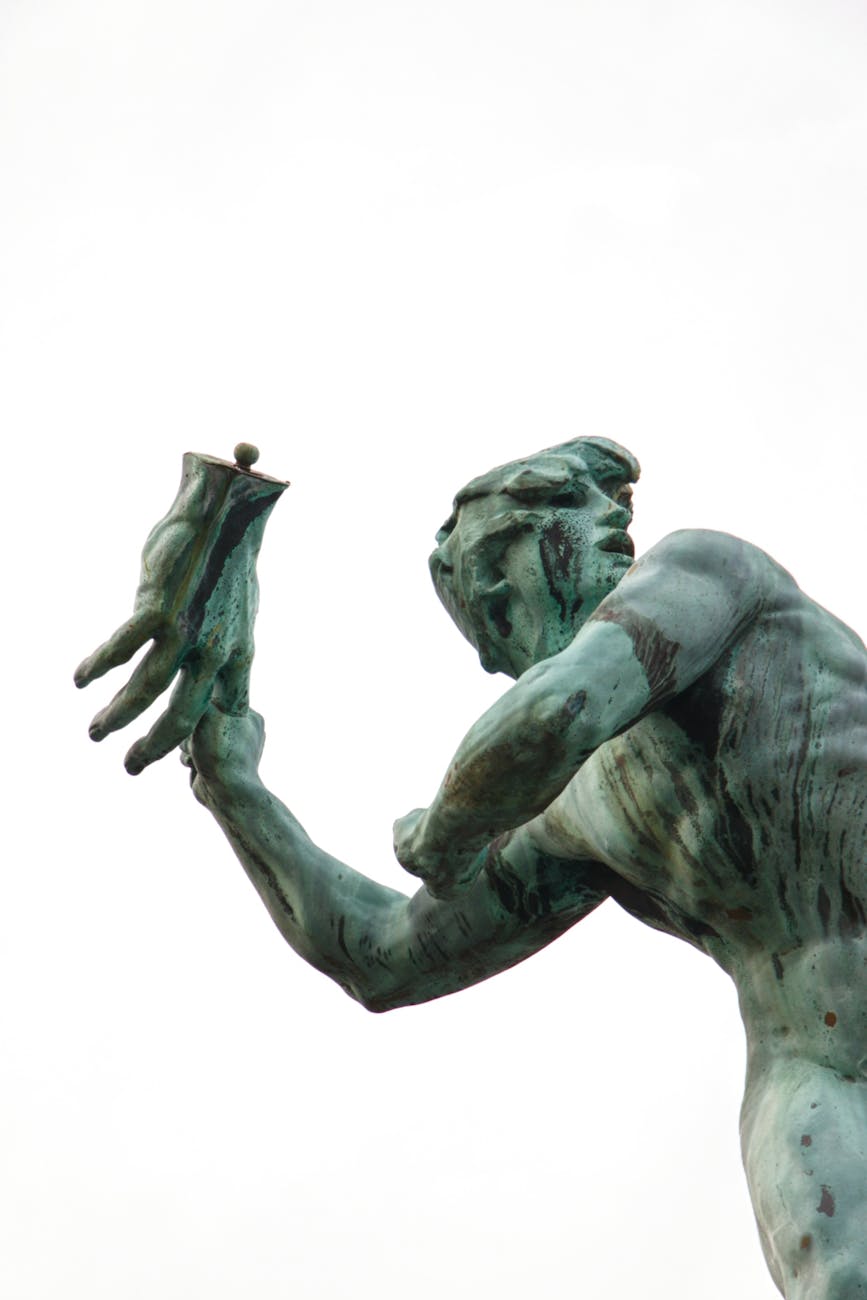
  • The Death of the Handshake

    The Death of the Handshake

    I grew up in an era that treated the handshake as a moral referendum on your character. A firm grip was not merely polite; it was a coded declaration of masculine competence. You were signaling that you possessed discipline, stamina, backbone, and enough latent violence to defend a small village if necessary. A weak handshake suggested spiritual decay, poor breeding, or a future career selling timeshares at a failing resort casino. But a strong handshake announced that you were dependable under pressure, capable of changing a tire in the rain, carrying injured comrades off a battlefield, and perhaps even grilling respectable steaks.

    I was fascinated that so much mythology could be compressed into five seconds of hand-crushing theater.

    As a teenage weightlifter in the 70s, I therefore trained my grip with almost religious seriousness. Wrist curls, reverse curls, deadlifts, heavy static holds, and Farmer’s Carries became part of my private campaign to forge hands like industrial machinery. I wanted my handshake to communicate, instantly and wordlessly, that I was not some fragile suburban larva surviving on pudding cups and self-esteem workshops. No. I was a steward of fortitude. A disciple of calluses. A young man preparing his forearms as though civilization itself might someday depend upon my ability to squeeze another person’s metacarpals into submission.

    In Tom Bartlett’s essay “Will Americans Ever Lose Their Grip on the Handshake?,” the once-sacred ritual of clasping another person’s hand is reexamined in a post-COVID society where keeping your microbes to yourself has become more socially admirable than demonstrating frontier-man virility through palm compression. Bartlett is not especially alarmed by germs. What fascinates him are the men who transform the handshake into a grotesque form of dominance theater. These are not ordinary handshakes but ambushes disguised as greetings. Bartlett gives these overzealous apostles of grip strength colorful names: “knuckle-crunchers” and “arm-wrenchers,” men who approach introductions as though auditioning for medieval combat sports.

    The irony, of course, is that the handshake originated as a gesture of trust and mutual respect, a symbolic declaration that neither party was concealing a weapon. But somewhere along the line, a certain species of male insecurity hijacked the custom and converted it into a portable power struggle. For these men, decades of frustration, competition, humiliation, suppressed rage, and unresolved father issues are compressed into one catastrophic squeeze. The handshake becomes less “Nice to meet you” and more “Submit before my forearm dominance.” One can almost imagine the recipient collapsing onto the carpet clutching shattered knuckles while the aggressor walks away believing he has established alpha status in the corporate ecosystem.

    Perhaps, as Tom Bartlett suggests, we should retire the handshake altogether. But the replacement candidates come with their own peculiar humiliations. There is the hug, of course, that sprawling gesture of compulsory warmth favored by motivational speakers, yoga instructors, and emotionally overinvested acquaintances who smell faintly of essential oils. The modern hug often feels less like affection and more like a hostage situation with scented candles. Worse still, if your embrace comes from a former wrestler, CrossFit enthusiast, or retired Marine colonel, you may leave the encounter with compressed ribs and a revised understanding of your own skeletal fragility.

    Then there is the nod, celebrated by Bill Bryson’s Notes from a Small Island in its portrait of British suburban reserve, where receiving a nod after ten years of acquaintance constitutes the emotional equivalent of a marriage proposal. Charming as that sounds, the nod remains too chilly and aloof for most societies. It lubricates social interaction about as effectively as sandpaper lubricates machinery. A civilization cannot survive on eyebrow movements alone.

    No, the superior alternative—the one I have practiced loyally for the past decade—is the fist bump.

    The fist bump is civilization refined. Thanks to generations of televised athletes, it has become the universal gesture of camaraderie, encouragement, and mutual respect. Unlike the handshake, which can devolve into a testosterone hostage crisis, the fist bump contains no hidden aggression. It is a gentle punch, a tiny collision of solidarity. Two people make eye contact, extend closed fists, and allow their knuckles to meet with the satisfying precision of perfectly aligned jigsaw pieces. Nobody dominates. Nobody submits. Nobody leaves with crushed metacarpals wondering whether they need orthopedic reconstruction.

    The handshake belongs to a more primitive era, a time when men apparently believed friendship should feel like losing a thumb in farm equipment. It invites both illness and dominance theater. The fist bump, by contrast, asks for neither surrender nor pain. It is efficient, hygienic, egalitarian, and refreshingly free of rotator-cuff ideology.

    The handshake had a good run. Let it retire with dignity before another knuckle-cruncher sends someone to urgent care.