Category: Health and Fitness

  • Buckwheat, Tofu, and Ethical Whey: My Daily Protein Math

    Buckwheat, Tofu, and Ethical Whey: My Daily Protein Math

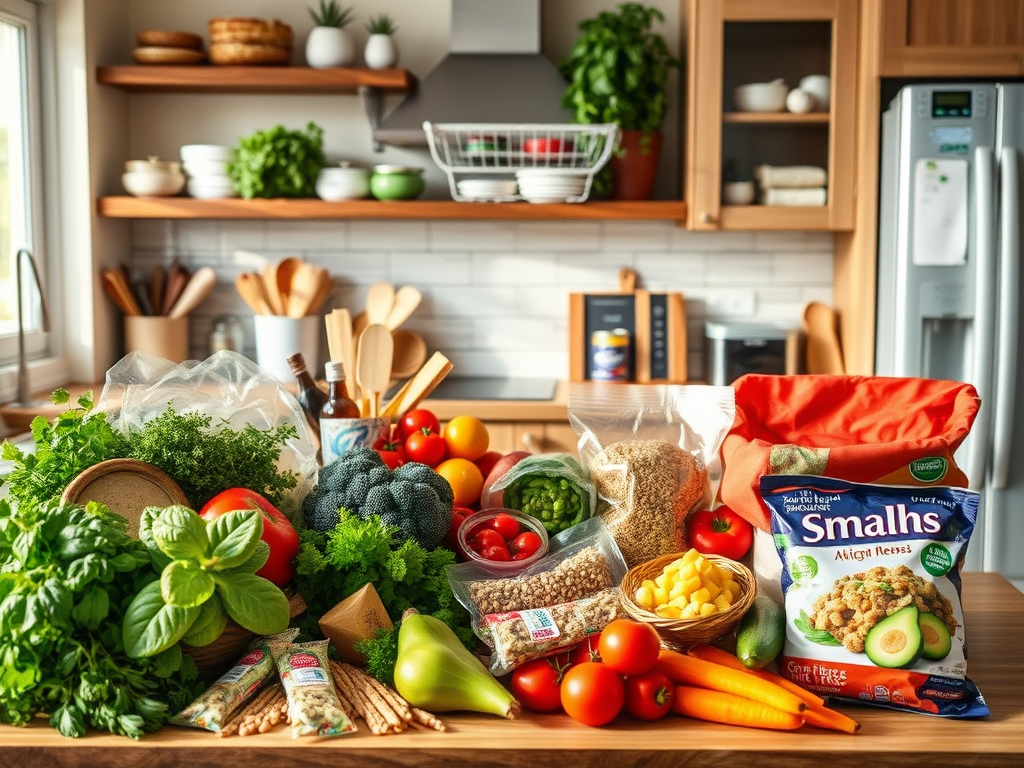
    To soften the financial blow of switching from Optimum Nutrition whey (about 65 cents an ounce) to the “humane” NorCal Organic whey (a daunting $2.03 an ounce), I’m considering a strategic compromise: one scoop instead of two. Instead of treating protein powder like a dietary life raft, I would reserve it solely for breakfast—mixed into my buckwheat groats with hemp hearts and walnuts. Lunch would shift toward an ancient-grain base like millet paired with tofu, nutritional yeast, almonds, pumpkin seeds, and a rotating cast of sauces—tomato, bruschetta, Thai curry, smoked ancho seasoning—plus a vegetable anchor of broccoli, zucchini, or arugula. Dinner could mirror lunch or simply be whatever my wife makes. 

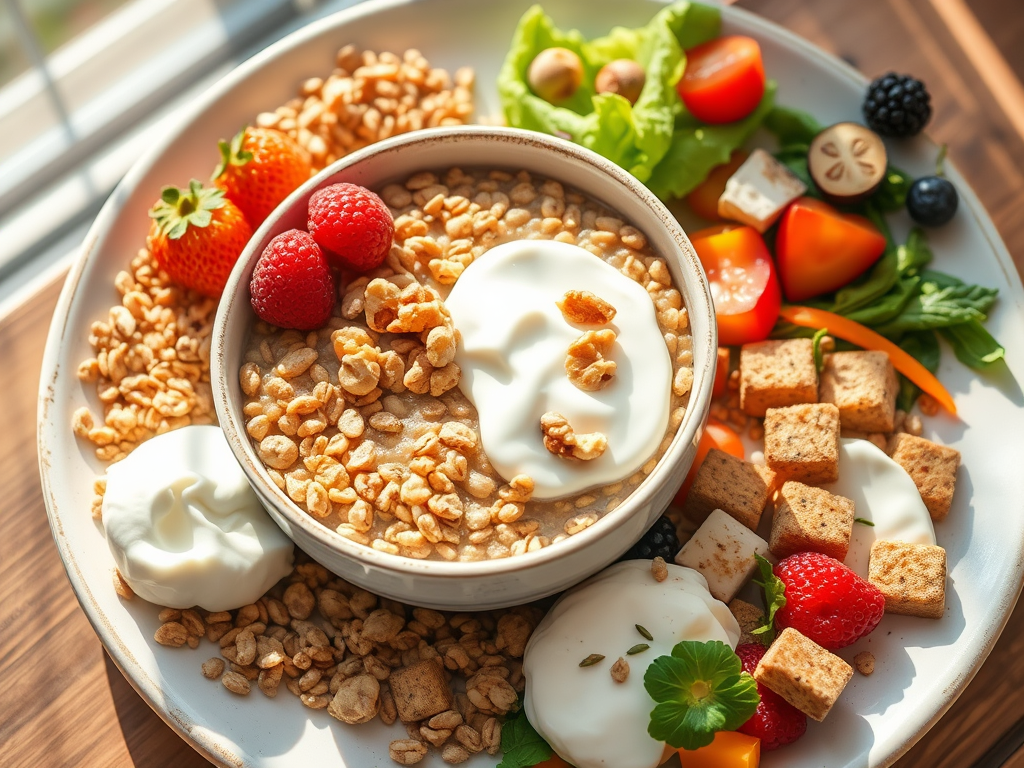
    Between those meals, I’d supplement with a cup of Greek yogurt topped with berries and walnuts. The protein math looks surprisingly robust: about 50 grams at breakfast, 50 grams at lunch, 20 grams in the afternoon snack, and another 50 grams at dinner—170 grams total. Calories sit comfortably around 2,400. 

    If the plan holds, I would hit my macros while keeping animal products to a minimum and reserving them for the two sources I actually respect: ethically sourced whey and cultured dairy. Maybe this arrangement will allow me to maintain muscle without feeling like I’m subsidizing factory-farm horrors—an uneasy détente between performance goals and conscience.

  • A “Simple Neighborhood Walk” is a Hellscape

    A “Simple Neighborhood Walk” is a Hellscape

    This morning in a desperate attempt to avoid aggravating my left torn rotator cuff, I tried to replace my Schwinn Airdyne (rowing levers are forbidden) with a morning walk. The math was simple: one hour on foot would supposedly burn 350 calories, which is laughable next to the 600 I incinerate in 55 minutes on the Airdyne. 

    But the moment I stepped outside, I realized something grim: walking is not exercise—it’s a social gauntlet. First, the bucket hat. Nothing makes a grown man feel like a middle-school tourist quite like a floppy nylon dome that broadcasts fear of UV rays and impending melanoma. Then there were the stranger-encounter dilemmas: do I wave? Pretend I didn’t see them? Stare intensely at the sidewalk like a serial killer? Cars drifted past, exhaling pollution like dragons, stray dogs threatened to lunge out of nowhere, and my lower back nagged like an unhappy union organizer. Worst of all was the boredom. I can’t sink into an Audible book because every twenty seconds I’m distracted by another irritant: barking, brake squeals, wind, a rogue sprinkler system. I need cardio for my kettlebell off-days, but outdoor walking feels like punishment—exercise mixed with psychological warfare. So I’m looking inward: step-ups on my 18-inch exercise stool, medicine ball squats, Romanian deadlifts, farmer’s carries, yoga poses that don’t summon the devil into my rotator cuff, and the rehab routine prescribed by my sports doctor. After 50 years of working out, I’ve learned one law more sacred than the Ten Commandments: if I don’t enjoy it, I won’t do it. So the walking era is dead. A new battle plan has begun.

  • A Diagnosis is a Weapon: My First Step Toward Shoulder Recovery

    A Diagnosis is a Weapon: My First Step Toward Shoulder Recovery

    Yesterday I met with a sports medicine physical therapist at Kaiser for the first time. The kind nurse took my vitals, and to my surprise my blood pressure wasn’t bad at all: 127 over 84. My blood pressure always spikes a bit at the doctor’s. 

    Then I met the sports doctor. She was affable, direct, and clearly passionate about her work. She examined my left shoulder, noted that the swelling was visible even through my T-shirt, pressed along the biceps groove, and tested my range of motion. After watching me perform several movements, she diagnosed me with rotator cuff syndrome and biceps tendinopathy. She immediately ordered an X-ray (results pending) and scheduled an ultrasound in five weeks to gather more detail. 

    Her initial verdict was cautiously optimistic: with proper rehab, she believes I can recover in three months. I told her that unlike my old gym injury—when I tore my rotator cuff doing heavy bench presses and spent nine months in purgatory—this one didn’t begin with trauma. I was simply doing my normal kettlebell chest presses, felt a little tightness, and woke up the next morning with a shoulder that felt like it belonged to someone else. That incident was three months ago. 

    She has me on Motrin three times a day to bring down the inflammation so I can tolerate the rehab movements. To my relief, she didn’t ask me to abandon muscle training; she understands the realities of aging and the need to protect lean mass. I just have to avoid chest presses, shoulder presses, and curls. My work will shift to legs, glutes, traps, and lat activation, with shoulder and pec stimulation coming indirectly through rehab. She gave a handout of exercises, some I can do and others I can’t. I also consulted some doctors who do shoulder rehab on YouTube and told her about some, and she agreed I could do them.

    So far, I have a long list of rehab exercises I can choose from: cat–cow yog pose, broomstick flexion, wall push-ups, wall flexion, planks, plank taps, narrow push-ups on the knees, light dumbbell rotations, and others. 

    Some overhead movements are currently impossible. Hanging from a chin-up bar, the internet’s magic cure, feels like medieval torture. 

    I’ll do the exercises that I can tolerate for fifteen minutes daily: integrated on kettlebell days, standalone on the rest. Also, on my non-kettlebell days, the doctor agrees I should take an hour-long walk.

    Psychologically, this appointment mattered. A diagnosis means I’m not inventing pain or collapsing mentally. It gives me a plan, an organizing principle, a weapon. When my body fails, I can live with discomfort; what I cannot tolerate is drifting in uncertainty. Seeing this doctor was the first step in taking back control.

  • Three Months of Shoulder Pain and the Art of Not Panicking

    Three Months of Shoulder Pain and the Art of Not Panicking

    This afternoon I’ll see a doctor about my three-month shoulder ordeal. I’m hoping for clarity: bursitis or a torn rotator cuff. The injury didn’t begin with a dramatic moment. I remember doing single-arm chest presses on the garage mat with a 50-pound kettlebell. There was a subtle tightness in the left shoulder—no alarm bells. The next morning I woke as if someone had rearranged the joint overnight. Side raises and reaching behind became nearly impossible. I cut out all chest and shoulder presses. Some days the pain flared after training; I blamed curls and single-arm swings, so I eliminated them too, and the pain eased.

    To make up for the reduced kettlebell volume, I doubled down on the Schwinn Airdyne, grinding through hour-long sessions that combine pedaling and lever rowing. No pain—until three days ago, when the movement set off a nerve fire down my arm. That told me I was no longer dealing with simple irritation. Something was pinched and inflamed. The bike is now retired. I’ll walk the neighborhood for cardio until further notice. I’ve experimented with rehab exercises: cat-cow yoga poses help; so do wall push-ups from shoulder rehab videos. Side lateral raises, though medically recommended, feel like sabotage. I refuse them.

    I made a video about the injury yesterday. The floodgates opened. Dozens of comments from people who had surgery, magnets, injections, or long stretches of physical therapy. One old friend emailed: he never recovered and has lived with pain and restricted motion for a decade. The road, it seems, is long and indifferent to optimism. I don’t enjoy the pain, the limited workouts, or the hypervigilance required to avoid reinjury. The mental effort—combined with physical discomfort—wears me down. Right now the shoulder aches at a low level, probably from the idiotic attempt to sling on a backpack this morning. Starting next week, I’m switching to a messenger bag over my healthy shoulder.

    When I speak to the doctor today, I’ll try to be calm, give a clear narrative, and resist letting anxiety pull me into melodrama. I want to hear the data, not force my fantasy of “no surgery” onto the facts. I had hoped to write about something else this morning—anything other than this shoulder—but obsession has its own gravity. It will not be ignored.

  • How Ultra-Processed Foods Turn Us Into Weight-Gain Machines

    How Ultra-Processed Foods Turn Us Into Weight-Gain Machines

    Julia Belluz and Kevin Hall’s essay “It’s Not You. It’s the Food.” explores the way the food industry changes our biology so that we are not at fault, in terms of a failure of moral strength or self-discipline, for our weight gain. Rather, ultraprocessed food is. Even if we try to shun the “toxic food environment,” we will find such a move difficult for several reasons. For one, what is “toxic food”? The government, at best, has given us a vague definition. Do we look to influencers? They’re trying to sell supplements more than health. 

    To make their point, the authors use this analogy: “If large swatches of the population were being sickened by a poison released from an industrial plant, no one would suggest that the solution is to just offer home filters, wearables, and supplements. The only real path to restoring health would have to include mandating the removal of the poison from the environment.” 

    The truth is simple, and it’s brutal: You’re on your own: You have to fight like hell to remove ultraprocessed foods from your diet. Kevin Hall’s study shows the more UPFs you eat, the more weight you gain. And the converse is true: The less UPFs you eat, the more weight you lose, especially fat and without effort. 

    The authors observe that when people move to America, they get fat. The common denominator is leaving a low UPFs country to a highly concentrated one. These immigrants get fat and suffer obesity-related diseases. So much for the American Dream.

    Why are UPFs the villain? Because they mess with us–our biology, our hormones, our satiety signals, our gut biome. They turn us into Fat Machines. 

    In America’s rich UPF environment, 70% of available food calories “are deemed hyperpalatable and are in foods designed for the overconsumption that chronically sickens us. They’re also heavily marketed and cheap. Chronic disease hot spots are the most socioeconomically deprived, with food environments akin to toxic waste sites.”

    Knowing the enemy before us, we have to ask ourselves: What do we do? The authors argue that self-discipline doesn’t cut it. We need government regulation. The problem is that we could be dead before anything gets done. Another problem is that the FDA and other institutions don’t seem to have a handle on sound health these days, and even if they did, they’ve lost the trust of the public, many of whom like to cherry-pick their information inside their social media silos. 

    Nevertheless, the authors are adamant about this point: UPFs that “can drive overconsumption should be treated as recreational substances to which we must apply aggressive tax policies, front-of-pack warning labels, marketing restrictions and more, especially for foods marketed to children.”

    Notice the authors didn’t say all UPFs, only the ones designed for overconsumption. Some processed foods such as canned beans, high-protein, flax-seed whole-grain bread, liquid egg whites, and whey protein powder should be spared such government labels. 

    Should we wait for the government to help us in this regard? Probably not. Researcher Kevin Hill quit the N.I.H. after his UPFs studies were censored by the current administration. Not surprisingly, money is a big factor. The authors point out that the global food industry is worth $8 trillion, more than the oil and gas industry. There’s a lot of skin in the game for lobbyists who fund a plethora of politicians. 

    But the science is out: We’re not at fault for our fatness. Food Inc., which makes 70% of their food hyperpalatable for overconsumption to line their pockets, bears much of the blame. Also, failure of government leadership. 

    Brace yourself: Regardless of your economic status, you’re on your own. No one is going to save you. Eating in America is the Wild Wild West. 

  • Not All Ultra-Processed Foods Are Alike

    Not All Ultra-Processed Foods Are Alike

    New Yorker writer Dhruv Khullar opens “Why Is the American Diet So Deadly?” with a truth so obvious it ought to be printed on cereal boxes: Americans are eating themselves into an early grave. No other nation can match our national pride in oversized portions, recreational snacking, and ultra-processed food engineered to hit the brain the way a slot machine hits a Vegas tourist. When the rest of the world wants a modest meal, Americans want something that triggers the dopamine cannon.

    Enter Guillaume Raineri, a French transplant who arrived in Maryland when his wife took a job at the National Institutes of Health. In an earnest attempt to understand American nutrition, he enrolled in a paid diet study—essentially voluntarily entering a culinary escape room. For four weeks, he lived in a controlled environment, eating three meals a day totaling about two thousand calories per meal. 

    Weekdays were gentle on the palate: minimal processing, plenty of whole foods. Fridays, however, were an ambush—UPF theme nights featuring chicken nuggets and PB&J sandwiches, the American sacrament. Raineri’s body protested immediately: bloating, sluggishness, the kind of malaise that suggests your bloodstream is pleading for diplomatic immunity.

    When Khullar visited, study designer Kevin Hall explained the challenge: lumping all ultra-processed foods together is like putting canned kidney beans and gummy bears in the same moral category. Food processing yields genuine benefits—less spoilage, wider availability, and the ability to feed millions at scale—but conflating all UPFs blurs important distinctions. Nutrition heavyweight Walter Willett argues that the focus shouldn’t be on UPFs as a monolith but on overall dietary patterns, especially those rooted in plant-forward whole foods and Mediterranean sensibilities. The core question Hall explores is simple but unsettling: why do people, consciously or unconsciously, eat more when given UPFs?

    The findings aren’t comforting. Participants consuming UPFs ate about 500 more calories a day, experienced spikes in glucose and insulin, and gained weight. Whole-food diets did the opposite: reduced intake, increased satiety, healthier hormone profiles. This complicates the simplistic calories-in/calories-out theory that refuses to die, despite evidence showing that food quality shapes metabolism, hunger hormones, and how our bodies store energy. As Tufts nutrition dean Dariush Mozaffarian puts it, “The dirty little secret is that no one really knows what caused the obesity epidemic”—which becomes even more maddening when you realize Americans now consume slightly fewer calories than they did decades ago, yet obesity continues to climb. GLP-1 drugs may soon rewrite this script entirely.

    UPFs introduce another sinister twist: they don’t just fill our stomachs, they remodel our biology. They recalibrate taste receptors, blunt satiety signals, and create a psychological and physiological FOMO for even more snacks, flavors, and novelty. Some studies, like Willett’s more granular approach, show that UPFs behave differently depending on additives—some beneficial, some neutral, some metabolic chaos grenades. 

    And yet, none of this complexity prevents Americans from gorging on the worst offenders. Doritos, the poster child of engineered hedonism, sell more than a billion bags a year. When you calculate how many collective years of life are sacrificed for that neon-orange dust, you realize our species is perfectly capable of choosing pleasure over longevity.

    Meanwhile, Food Inc. behaves exactly like Big Tech: both industries manufacture addictive junk because attention and appetite are profitable. Social media mirrors the food system: endless junk content, engineered outrage, and influencers who peddle easy purity. YouTube is now overrun by self-anointed nutrition gurus who command you to eat only whole foods and flee all processing. With algorithms breathing down their necks, they don’t dare utter anything nuanced—like the fact that UPFs come in subcategories, some nourishing, some harmless, some devastating. Nuance doesn’t get clicks. Absolutism does.

  • Against Becoming a Whole Food Absolutist

    Against Becoming a Whole Food Absolutist

    I admonish my teen daughters for their “high school” diet–80% of which is ultra-processed. I tell them to learn to prepare and enjoy whole foods, and as I speak these words, I can feel a self-righteous halo glowing over my head. My rectitude is rooted in my knowledge that whole foods are more dense, nutritious and fibrous than processed foods, and as a result whole foods help us achieve satiety–the word for feeling full, an important condition to help us avoid overeating. 

    The problem, however, with self-recitude, is that it can encourage us to become absolutists, zealous, and true believers who drink our own Kool-Aid with such relish that we fail to see how blind and rigid we have become. As whole food absolutists, we may find that our worldview and lifestyle doesn’t align with reality.

    This misalignment is discussed in Olga Khazan’s essay “Avoiding Ultra-Processed Foods Is Completely Unrealistic.” The title is followed by the parenthetical “Especially if you have kids.” 

    As a health reporter, Khazan interrogates her own food choices for her son, some of which she understands will be questionable: peanut-butter puffs, grape-jelly Uncrustables sandwich, mixed-berry oat bites–all ultra-processed. 

    She understands that “hyperpalatable” Ultra-Processed Foods (UPFs) are linked to obesity, glucose spikes, insulin resistance, type 2 diabetes, and other afflictions so serious that UPFs should be treated like cigarettes and labeled with surgeon general warnings. 

    In light of UPF’s dangers, Khazan observes there is a myriad of health mommy influencers making videos on how to make your own healthy versions of goldfish crackers and chicken nuggets and how to prepare toothsome steamed cauliflower and carrot salad for your toddlers.

    In this aspirational world, preparing whole foods may give us bragging rights, but it doesn’t align with the real world: Getting stuff done. When you consider how busy a working parent is in our ultra-competitive Hunger Games society, you realize that taking the time to prepare whole foods is an opportunity cost: Yes, you made homemade goldfish crackers, but you didn’t have time to go to the dry cleaners, drop off a return package of undersized garments to Temu, and stand in line at the pharmacy to pick up your medications. In other words, when you’re living in the real world, you have to capitulate to some UPFs regardless of the fitness mommies wagging their scolding fingers at you.

    But Khazan points out that all this food shaming is making us fail to see the complexity of the ultra-processed food category, which is “too broad and difficult” for us to understand. Bran flakes and candy bars are both considered UPFs, but are they equal? Tofu is often categorized as a UPF, but is it really? Is soy milk bad for you in the same way sugary soda is? In other words, can we put all UPFs in the same category?

    To complicate UPFs further, some are even good for you, including some yogurts, breads, and breakfast cereals. Additionally, some people have food restrictions, because of special dietary needs and food allergies, and their health benefits from some UPFs in their diet. For example, I use Splenda and liquid stevia for my coffee and tea, and my insulin thanks me for it.

    The Shaming Whole Food Mommies should stop wagging their fingers for another reason: Being a parent entails unexpected crises that create time-management problems, which can only be solved with a quick meal, such as putting chicken nuggets in the toaster-oven. To make whole foods palatable can take several hours of preparation. Unless you’re rich and home all day, the time required for this type of preparation may elude you. 

    We’re not just talking about the time to prepare whole foods. We’re talking about cognitive drain. The amount of mental energy to bake chicken nuggets and a plate of celery stalks smeared with peanut butter is infinitesimal compared to prepping for chicken Tikka masala over basmati rice followed by cleaning ten times more dishes than microwaving a quick meal.  

    If you’re rich and you can spend time shopping in the morning and the rest of the day in the luxury of your spacious, state-of-the art home, you have the money, time, and cognitive energy to make tasty whole food dishes. Congratulations, you’re a member of the one percent. The rest of us have to work for a living. Unlike you, we’ve got chicken nuggets in the freezer for emergencies. 

    Have we even talked about the cost of whole foods vs. UPFs? A jar of organic pasta sauce cost more than double the one larded with high-fructose corn syrup. The same goes for salsa, nut butters, tomato sauce, pesto, bone broth, and the list goes on. 

    The Whole Foods Mommy Influencers shamelessly lard us with toxic positivity to “educate” us on healthy eating, but what they’re really doing is a muscle flex–showing us how great their lives are and wanting us to suffer FOMO because we don’t have their time and resources. They’re rubbing our noses in their glorious lifestyle knowing deep down that we don’t have the time and resources to join their rarified tribe. They’re more toxic than a case of UPFs. 

    A saner approach is simple: choose your battles. Cook whole meals when you can. Use common sense. Avoid the truly catastrophic diet—the frappuccino-and-bear-claw lifestyle that leads straight to endocrinological ruin. And when you inevitably reach for a UPF shortcut, don’t flagellate yourself or watch a Mommy Influencer video for penance. Just eat, breathe, and move on. The real world is hard enough without adding shame to the grocery bill.
  • Anhedonia: The Teacher We Deserve

    Anhedonia: The Teacher We Deserve

    People are using GLP-1 drugs not just to manage their weight but to sculpt themselves into something that looks less like a person and more like a medical emergency waiting to happen. They’re chasing an aesthetic so gaunt it should come with an IV drip and a gurney. It’s the old human trick: take a good thing, drive it straight past moderation, and plunge it into the abyss.

    We’ve done it forever. In the 70s, we didn’t aim for a tasteful tan; we baked ourselves into mahogany idols so glossy and dark we made strangers gasp with envy—never mind that we were essentially slow-roasting our epidermis. We didn’t want cars; we wanted gas-guzzling behemoths that could outgrowl every engine on the boulevard, even if they drank fuel at 8 miles per gallon. Our bodybuilders juiced themselves into tragicomic animations—bulging, veiny caricatures who collapsed under the very mass they worshipped.

    We do it with art, too. A classical Spotify playlist that began as a polite nod to Haydn mutates into a 300-hour monster stuffed with every composer who ever touched a quill. Coffee? We don’t sip it; we mainline it until it tastes less like roasted beans and more like chemical punishment. And watches? We buy so many that the simple act of choosing one in the morning becomes a hostage negotiation with our own shame.

    Somewhere in this carnival of excess, a king once turned everything to gold and discovered he’d built himself a private hell. We’ve just updated the myth with better tech and worse impulse control.

    Thankfully, we also have a counter-teacher: anhedonia. That deadening of pleasure, that bleak emotional flatline, arrives like a stern therapist with a clipboard and informs us that the thrill is over and the chase was a lie. It tells us the secret we never want to hear: extremes always collapse. And only then—dragged back from the edge—we crawl toward equilibrium, toward something like balance, toward a life that feels human again.

  • Eating in the Real World, Not the Ideal One

    Eating in the Real World, Not the Ideal One

    Using Olga Khazan’s “Avoiding Ultra-Processed Foods Is Completely Unrealistic” as a central text and at least three additional credible sources, write a 1,700-word essay that supports, refutes, or complicates the claim that the only path to health is a diet built exclusively on whole foods—and that ultra-processed foods should be treated as the villain of modern nutrition.

    In your essay, define what counts as “whole,” “processed,” and “ultra-processed,” and analyze whether these categories are as clear—or as moral—as public discourse suggests. Examine the extent to which a modern eater can realistically avoid ultra-processed foods, and whether some of these foods can coexist with a healthy, sustainable lifestyle.

    Your argument should also address the larger forces shaping our dietary choices: economic constraints, systemic inequities, marketing, food deserts, the influence of GLP-1 medications, and the cultural narratives that determine which foods are celebrated and which are condemned. Include a counterargument-rebuttal section that engages opposing viewpoints in good faith, and conclude with an MLA-formatted Works Cited containing a minimum of four sources.

  • Confessions of a Mediocre Flosser

    Confessions of a Mediocre Flosser

    I’ve been getting my teeth cleaned for over fifty years, which means I’ve sat through half a century of post-cleaning sermons about proper brushing angles, gumline vigilance, and the sacred art of flossing. Every visit follows the same liturgy: I nod piously, vow to reform, perform my dental penance for about a week, and then relapse into plaque-friendly mediocrity. It’s a ritual as predictable as the changing of seasons—scrape, polish, scold, repent, repeat.

    After yesterday’s cleaning, I shared this confession with the office manager as she booked my next appointment. “Be honest,” I said. “Aren’t most of your patients professional bums who show up expecting you to do all the work? I mean, no one actually earns an A in brushing and flossing. We’re all dental delinquents with F averages, right?”

    She glanced at the waiting room, smiled the way a diplomat smiles before denying a scandal, and said, “No comment.”

    I pressed on. “So… that’s a yes.”
    Again, she said, “No comment,” which, of course, confirmed everything.

    Righteous and vindicated, I strutted out with my little goodie bag of guilt—floss, travel toothpaste, and the latest ergonomic toothbrush engineered to fail against human laziness. I tossed it onto the passenger seat and drove home to take a nap, exhausted from an hour of scraping, moral instruction, and the eternal truth that no one—absolutely no one—flosses as much as they say they do.