Category: Health and Fitness

  • Post-Vacation Penance: A Dietary Manifesto in Four Meals

    Post-Vacation Penance: A Dietary Manifesto in Four Meals

    There’s something bleakly comical about spiraling into despair on vacation—the kind that sets in when you’re no longer tethered to your sacred rituals of productivity, restraint, and the sweet, tight belt of routine. Out here, in this plush exile of self-indulgence, I’ve become a man who stares into a plate of hotel hash browns and thinks, This ends when I get home.

    And so, to soothe the spiritual rot that sets in after too many mornings without my normal suffering, I’ve started building a plan—a post-vacation austerity program disguised as wellness.

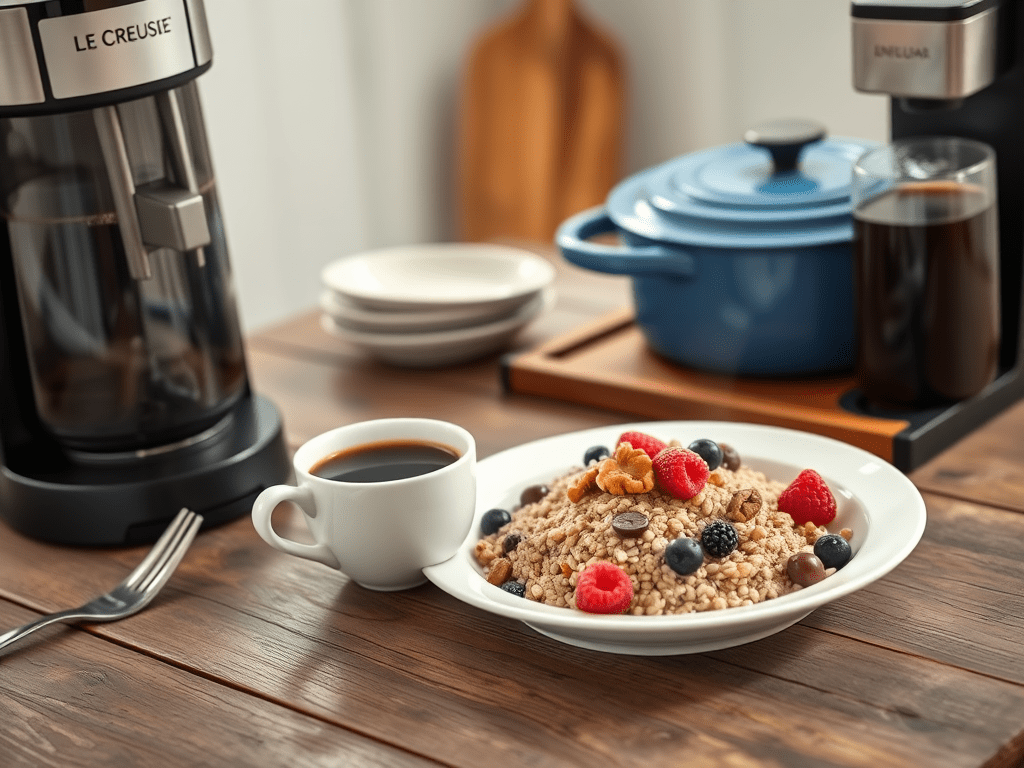
    First, the coffee. I will reclaim my morning dignity with the $89 Ninja 12-cup glass carafe coffee maker. No plastic pod disgrace. I will grind dark roast beans with the solemnity of a monk at matins, using my burr grinder like a weapon forged for righteousness.

    Breakfast will not be an act of contrition but one of redemption: buckwheat groats or steel-cut oats, topped with protein powder, berries, walnuts, and chia seeds—like an edible TED Talk on anti-inflammation.

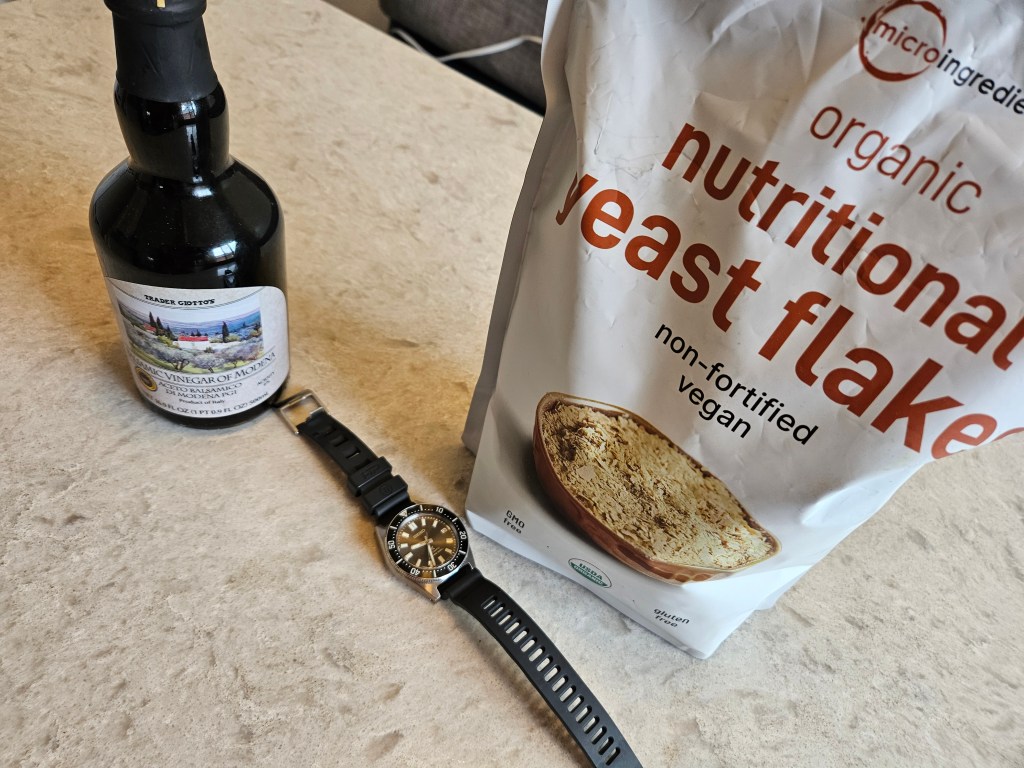
    Lunch will be a spartan affair: arugula so bitter it judges you, and tofu braised until it forgets it was once bland. Dressing? A holy trinity of balsamic vinegar, spicy mustard, and nutritional yeast. This is not food—it’s penance with flavor.

    Afternoon snack? Greek yogurt, protein powder, and berries. The combination is reliable, unexciting, and doctrinally correct.

    Dinner is where things get unhinged in a good way. I will reach for my Le Creuset Dutch oven (color: colonial blue, attitude: smug) and conjure quinoa with zucchini, fire-roasted tomatoes, nutritional yeast, and a whisper of coconut milk. I will mix in braised tofu until the pan hisses in agreement.

    And yes, there will be protein pancakes, crafted from oats, baking powder, protein powder, eggs (or applesauce, if I’m feeling woke), yogurt, cinnamon, honey, chia seeds, and vanilla extract. The batter will feel like spackle. The result will feel like victory.

    Exercise? Four days of kettlebells instead of five—because joints are finite, and ego is not a medical plan. On my “off” days, I’ll alternate between the exercise bike and power-flow yoga, both of which will mock me in their own way.

    Diet soda? Dead to me. I’ve seen what happens when it wins: a family friend guzzles it by the gallon, her health circling the drain like a cautionary fable. I will swap it out for sparkling water and the moral superiority it confers.

    This is not about orthorexia or self-hate disguised as wellness. This is about escaping confusion, that modern affliction where “healthy” means both everything and nothing. I will eat four times a day. I will consume 160 grams of protein. I will not exceed 2,400 calories. I will fight entropy with routine, bloat with balance, and preserve the image of myself I still—somehow—believe is possible.

  • I Came for Health and Left with a Halo

    I Came for Health and Left with a Halo

    I’m stubborn—pathologically so. I know full well that going full carnivore would melt the fat right off me. A steady stream of fatty meats, maybe a token vegetable or two for show, and boom—I’d be a suburban Wolverine. Ripped, lean, possibly feral. But my suspicion kicks in around the long-term effects. Sure, eating like a seal-clubbing Inuit makes sense when you live on a glacier and need 6,000 calories just to blink. But when you’re a guy driving a hybrid through Trader Joe’s parking lots, gorging on brisket with your Apple Watch monitoring your heart rate, the “ancestral diet” starts to look less like primal wisdom and more like performative caveman cosplay.

    No, my reluctant truth is this: a mostly plant-based diet is probably my best bet. I imagine a future of buckwheat groats, steel-cut oats, rainbow chard, tofu, tempeh, and beans. My meals will be slathered with artisanal dressings composed of balsamic vinegar, spicy mustard, and nutritional yeast—because apparently sainthood is now spreadable.

    Sure, I’ll fold in some salmon twice a week. Maybe Greek yogurt. And yes, I’ll backslide into Mongolian beef barbecue once a month when life feels meaningless and I want my food to fight back. But the plan is mostly monkish. And here lies the rub: the diet starts making me feel too pure. Too righteous. The kind of person who silently judges you for using ranch dressing. The glow of self-congratulation hangs around my head like a flickering LED halo.

    And then comes the cookware. You can’t cook holy grains in a peasant pot. No, this lifestyle demands French-made enameled cast iron Dutch ovens—heirloom cookware with the price tag of a minor surgical procedure. I tell myself this is an investment in my health. What it really is: a $300 declaration that I’ve joined the priesthood of quinoa.

    Worse, the whole thing becomes a personality. Plant-based meals. Exercise tracking. Morning rituals. Deep-breathing routines. It becomes its own narcissistic opera. I’m centered. I’m optimized. I’m intolerable. My life starts to feel like an Instagram reel narrated by a smug inner voice that’s always meditating.

    The real irony? I embarked on this whole food pilgrimage to escape the traps of modern life—its clutter, chaos, and chronic disease. And yet, somewhere between my third batch of millet and Googling the mineral content of nutritional yeast, I crossed into a new disorder: a lifestyle so curated it starts to feel like a museum exhibit titled Me, Trying Too Hard.

    Sometimes the cure becomes its own kind of sickness. We chase health, only to wind up imprisoned by our own kale-scented, cast iron-coated obsessions.

  • Safe at Home with Tofu: We Need George Carlin Now More Than Ever

    Safe at Home with Tofu: We Need George Carlin Now More Than Ever

    George Carlin once built a whole comedy bit around the contrast between football and baseball. Football, he said, is war—full of blitzes, bombs, and sudden death. Baseball, by contrast, is a pastoral game, a gentle journey home. Safe at home. He could’ve done an equally scathing bit on carnivores versus vegans.

    A carnivore is a Viking. He doesn’t eat dinner; he conquers it. He roasts slabs of meat over open flame, wears elk pelts in July, and believes the phrase “nose to tail” is less a philosophy than a moral imperative. He eats liver because it’s what his ancestors did, despite the fact that his ancestors also died at 38 from dysentery and wolf bites.

    The vegan? A minimalist monk who speaks in the tone one reserves for therapy dogs and endangered turtles. His kitchen smells like soaked lentils and moral superiority. He eats “greens,” plural, as though a vague handful of chlorophyll could power a biped. His hero is the neighborhood spider, which he refuses to squash. Instead, he names it Rumi, places it gently on a compostable bamboo plate, and ushers it into the wild with a whispered prayer and a single tear.

    The carnivore doesn’t own plates. He eats standing up. The vegan has three sets of reusable dishware, made from renewable bamboo and guilt. The carnivore fills his “power bowl” with yolks, red meat, and testosterone. The vegan fills his with quinoa, miso, and the sense that one day we’ll all live on floating gardens of kale, fueled by gratitude and biotin.

    The carnivore laughs when lightning strikes. The vegan winces when the microwave beeps.

    And yet—here’s the kicker—both think they’re saving the world. One by returning to primal wisdom, the other by transcending it. One believes in survival of the fittest; the other believes in surviving without harming a single sentient thing. They are, in essence, two sides of the same self-mythologizing coin: the ancient warrior and the futuristic monk, each clinging to their menu like it’s a worldview. And perhaps that’s what diet is now—a belief system, a theology served with a side of macro tracking. Eat, pray, posture.

  • Training to Failure: A Love Letter to My Broken Sixty-Year-Old Body

    Training to Failure: A Love Letter to My Broken Sixty-Year-Old Body

    I just inhaled 80 grams of braised tofu on a bed of arugula—an herbivore’s banquet—because I didn’t want any leftovers skulking in the fridge while my family disappears for a weeklong trip. The trip also means six missed workouts, which my inner gym rat is already mourning with the solemnity of a funeral dirge.

    In my infinite wisdom—or perhaps masochistic delusion—I stacked seven consecutive kettlebell workouts into my week like some demented CrossFit monk chasing transcendence through joint pain. Predictably, I torched myself. Yesterday, I hit the wall. Even after a nap, I was cooked—bone tired, foggy, the kind of fatigue that whispers pre-flu doom into your ears while your muscles quietly plan a mutiny.

    Today was my supposed “last hurrah” before vacation. I skipped the kettlebells and mounted the Schwinn Airdyne, knowing full well I was running on fumes. Usually, I scorch 700–800 calories in an hour. Today I limped to 600. Eighty percent effort. That’s what the data says. My pride says otherwise.

    This might be my new reality: controlled, measured workouts instead of cinematic Rocky montages. The problem? I came of age in the 1970s golden era of bodybuilding, when Arnold preached the Gospel of Training to Failure and warned us about becoming “paper tigers.” I took that to heart. Too much heart. The kind that skips beats when your prefrontal cortex is begging you to lie down and your inner bro yells, “One more set!”

    But now, every time I push too hard—whether it’s with kettlebells or a fevered sprint on the Airdyne—I spiral into what I’ve dubbed RAA: Rundown Anxiety Affliction. It’s not a diagnosis. It’s a curse. You feel like you’re on the verge of the flu, haunted by a twitchy dread that your immune system has thrown in the towel. And for what? To impress the ghost of Mike Mentzer?

    I’m not exercising and eating tofu like a reformed monk to become a sickly, anxious husk of a man. That’s not fitness. That’s martyrdom.

    Today I danced at the edge of RAA. I throttled back. Took my 600 calories, thanked the fitness gods for the mercy, and called it. I’ll nap. I’ll pack. I’ll go on this trip, eat as decently as possible, and try not to treat my return like a penitential Ironman.

    Because no one needs to come back from vacation needing a vacation from their vacation—especially if it starts with RAA and ends with a doctor saying, “You need to calm the hell down.”

  • The Forgiveness Trap: When Healing Becomes a Performance

    The Forgiveness Trap: When Healing Becomes a Performance

    I remember listening to Terry Gross interview Frank McCourt in 1997, right as Angela’s Ashes was climbing every bestseller list like a starving Irish ghost with a publishing deal. At one point, Gross asked the inevitable soft-serve question: had he ever forgiven his drunken, absentee father for drinking away the family’s money and abandoning his wife and children to starvation and shame?

    McCourt didn’t flinch. He dismissed forgiveness as “pompous” and “irrelevant”—as if someone had asked him if he’d made peace with bubonic plague. He wasn’t being cruel; he was being precise. Forgiveness, he seemed to argue, is often a performance—a neat, moral bow tied onto a box of horror that refuses to stay shut.

    I thought of McCourt again this morning while reading Christina Caron’s New York Times piece, “Sometimes, Forgiveness Is Overrated.” It profiles adults who survived childhoods ruled by sadists, addicts, psychopaths, and the emotionally vacant. These were not flawed parents; they were ethical sinkholes, incapable of even the most basic decency. And yet, the self-help gospel continues to hand these survivors a soft-focus script: Forgive, and you will be free.

    Enter Amanda Gregory, therapist and author of You Don’t Need to Forgive: Trauma Recovery on Your Own Terms. Gregory’s argument is refreshingly grounded: forgiveness is not a virtue badge, not a finish line, and certainly not a moral obligation. It’s a slow, private emotional process—if you choose to pursue it. You do not owe a resolution. You do not need to sculpt your rage into affection.

    Gregory’s thesis echoes Sharon Lamb’s earlier work from 2002, which cautioned that pressuring victims to forgive can cause more damage than healing. It’s not just naive—it’s cruel. There are wounds that never close, and forcing someone to say, “It’s okay now,” when it’s absolutely not okay is a kind of spiritual gaslighting. It shifts the burden of transformation onto the person who’s already been broken.

    And what about the offenders? If they’re remorseful, truly remorseful, perhaps forgiveness enters the room. But what if they’re not? What if they’re still rewriting history or refusing to acknowledge it? Then forgiveness becomes a farce—just another round of victim-blaming wrapped in therapeutic jargon.

    In many cases, forgiveness isn’t even the right frame. With time and growth, some of us develop a different emotional posture—not forgiveness, but pity. We see our abusers not as villains to be vanquished or souls to be redeemed, but as feeble, morally bankrupt husks who couldn’t rise above their own dysfunction. We stop hating them because we no longer need to—but let’s not confuse that with forgiveness. That’s not healing; it’s emotional Darwinism.

    Forgiveness has its place, but only when it rests on shared truth and genuine contrition. Otherwise, it’s a forced ritual, a bad-faith moral contract, and a way to sell books or fill up therapy time. The therapeutic industry’s insistence that forgiveness is always the holy grail? Honestly, it’s unforgivable.

  • Cling to Your Lead and You’ll Lose: A Midlife Playbook

    Cling to Your Lead and You’ll Lose: A Midlife Playbook

    I don’t take the Life Force lightly. It’s the mysterious voltage that animates us, that flicks the switch from sloth to spark. One minute you’re groggy and half-dreaming, the next you’re lacing up your sneakers, firing up the espresso machine, and attacking your kettlebell workout like you’re in a Rocky montage scored by Miles Davis. The Life Force says: Get up. Get after it. Drink, eat, laugh, lift, love, live—before the curtain drops.

    Even when we’re slumped in a funk, sulking like a teenager who just discovered Camus, the Life Force doesn’t vanish. It simply retreats, muffled beneath layers of melancholy and cheap self-pity, waiting for the clouds to lift so it can slip back in with a jolt.

    I’ve been thinking about this lately as I inch toward sixty-four. The aging brain doesn’t hide its compromises. The body offers new aches like parting gifts from yesterday’s workout. And I keep reading about public figures—my age or younger—dropping dead from heart attacks and cancer, as if the universe is whispering, “You’re next.”

    The awareness of mortality, while useful in the Stoic-philosopher sense, has a dark gravitational pull. It makes you want to swaddle yourself in self-pity, curl up with grim hypotheticals, and mentally prewrite your own eulogy. I’m no sage, but I’ve noticed: the older you get, the easier it is to start thinking about death instead of living your life.

    And that’s where the football metaphor barges in—uninvited, but apt. Picture a team nursing a small lead. Instead of playing their usual game, they start playing not to lose. They abandon boldness, creativity, and flow. They tighten up. They stall. They cling. And then they lose.

    That’s what obsessing over death becomes: Playing Not to Lose Syndrome. You stop being you. You start tiptoeing through your own damn life, hands over your eyes, praying not to fall. But life’s not won through timid pacing. You win by doing what got you here in the first place—living like hell, moving the ball down the field, trusting your strength, and swinging the kettlebell with fury and joy.

    Yes, I’ll admit it: the fearful doppelgänger lives in me too. He bites his nails and speaks in doomsday whispers. But so does the joyful lifer, the one who’s still in love with breakfast, jazz, hard workouts, and writing rants like this one. Maybe being fully human means acknowledging both—the brave and the cowardly—and choosing, as often as possible, to side with the one who gets up and dances anyway.

    Life doesn’t reward those who cling. It rewards those who play to win—until the final whistle.

  • Soy-Boy Rising: Confessions of a Reluctant Carnivore

    Soy-Boy Rising: Confessions of a Reluctant Carnivore

    I’m not a vegan, though I flirt with the lifestyle like someone dabbling in theater—call it vegan cosplay. I still eat fish a few times a week. My wife’s turkey meatballs make regular cameos. And every now and then, Mongolian beef seduces me with its glossy, MSG-laced siren song. That said, I’ve slashed my meat intake by 75%, which, by American standards, practically makes me a Buddhist monk.

    These days, I spend an inordinate amount of time pressing water out of high-protein tofu bricks like they’ve wronged me. I cube them, toss them in olive oil, and dust them with whatever spices are within reach—barbecue rub, smoked paprika, Italian herbs, chili flakes. While they sizzle, I assemble my daily temple of penance: a salad of arugula, balsamic vinegar, nutritional yeast, and a squirt of spicy mustard. Add in some herbs, and it’s a flavor riot with zero cholesterol.

    Surprisingly, it satisfies me. The texture, the tang, the crunch—I’m not suffering. I’m thriving. But I can already hear the Bro-sphere grunting with disapproval. To them, my tofu devotion is nothing short of culinary treason. The True Path, they say, is paved in ribeyes and romaine. Soy is heresy. My masculinity, they warn, is at risk of withering into oblivion if I don’t start eating liver by the pound.

    Let them growl. I don’t evangelize. If carnivore life gives them six-pack abs and existential clarity, more power to them. But my reasons for sidestepping meat are complicated. One: I find raw meat disgusting. I’ve never acclimated. Slabs of pink muscle leaking juice in my hands? No thanks. Sure, I’ll eat a well-prepared dish if someone sets it in front of me, but I don’t like the psychic gymnastics it takes to pretend nothing had to die for it.

    So yes, sometimes I give in. But most mornings, you’ll find me standing over a bowl of buckwheat groats, quietly thrilled not to be cooking a corpse. The older I get, the more that matters. Not for moral purity. Just peace of mind—and digestion.

  • Fast-Flow Kettlebell Training

    Fast-Flow Kettlebell Training

    Since I no longer need to pack on muscle like a linebacker or risk a hernia proving I still can, I’ve officially abandoned the classic kettlebell approach: go heavy, rest like royalty, and worship at the altar of hypertrophy. That style had its season. It built the frame. But now? I’ve halved the weight, tripled the reps, and slashed the rest time down to barely enough to curse under my breath. The result? My sweat output now requires a mid-workout wardrobe change. Honestly, I live for it.

    At sixty-four, I’ve traded High-Volume Kettlebell for what I now call Fast-Flow Kettlebell. It’s not about brute force anymore—it’s about metabolic chaos and graceful suffering. I should probably slap a ™ on that phrase, start a YouTube channel, and sell it to my fellow sexagenarians like it’s a classified military protocol for reclaiming youth through righteous burn.

    Train like a special ops fighter, minus the risk of blowing out your spine. Stay lean, keep the blood pumping, and switch shirts like you’re in a glam-rock concert. That’s my fountain of youth.

  • Botoxed Sphinx Cats and Other Body Dysmorphia Fables

    Botoxed Sphinx Cats and Other Body Dysmorphia Fables

    In the early ’90s, I had a student whose entire identity was shackled to the number on a stadiometer. I don’t recall the exact figure, but he was somewhere south of five-foot-five—a detail that tormented him like a Greek curse. What I do remember is that he was a strikingly handsome kid. Slender, well-proportioned, with the kind of face you’d expect to see in a Calvin Klein ad, not in a therapy session about height insecurity. But none of that mattered. He couldn’t see past the measuring tape in his head.

    It was during one of our writing lab sessions—those clattering dens of early-’90s Macintoshes, all beige and humming, where I played roving editor and motivational coach—that he confided in me. Class was winding down, students trickling out like post-cardio gym rats, and this nineteen-year-old lingered behind with something heavy to unload.

    He told me that being short felt like a life sentence. But the real damage, he confessed, came not from his height—but from the manic overcompensation it inspired. When talking in groups, he’d find the highest available perch to stand on—benches, stairs, anything to give him the illusion of height. He wore shoe lifts, which he kept hidden in his closet like a box of shame. But worst of all? He trained himself to walk perpetually on his tiptoes.

    Yes, tiptoes. Every day, every step. As if sneaking through life as a burglar of inches.

    Eventually, his spine cried uncle. The tiptoe act wrecked his back, forced him into surgery, and—here’s the gut punch—cost him an entire inch. In his effort to stretch himself, he ended up shorter. He admitted he hated himself for it, and I believed him.

    Looking at him—this good-looking, intelligent kid—it struck me just how dangerous our internal narratives can be. We live so much in our heads that our perception becomes more powerful than reality. A stray comment in middle school morphs into a life-defining trauma. A mirror becomes a courtroom. And the verdict? Never good enough.

    His story is a tragic little parable of body dysmorphia: how the seeds of insecurity, if left unchecked, sprout into weeds that choke reason, and in our desperate attempts to “fix” ourselves, we often end up disfiguring what was never broken.

    Our bodies are our canvases. And oh, how savagely the world critiques them. Some of us starve. Some inject ourselves with synthetic youth. Some spend fortunes on surgeries that leave us looking like Botoxed sphinx cats. And some, like my student, ruin their spines to gain half an inch that no one but they ever noticed.

    We’re all vulnerable to the feedback loop. When I’m lean and muscular on YouTube, the algorithm sings. I get compliments. DMs. Admiring questions about my training and my “age-defying” lifestyle. When I’m twenty pounds heavier? Crickets. I become one more bloated has-been talking into the void.

    Yes, our bodies are our canvas. But if we’re not careful, our efforts to “improve” that canvas can become self-mutilation masquerading as self-love.

  • How Losing 20 Pounds Made Me Rethink My Entire Watch Collection (and My Life)

    How Losing 20 Pounds Made Me Rethink My Entire Watch Collection (and My Life)

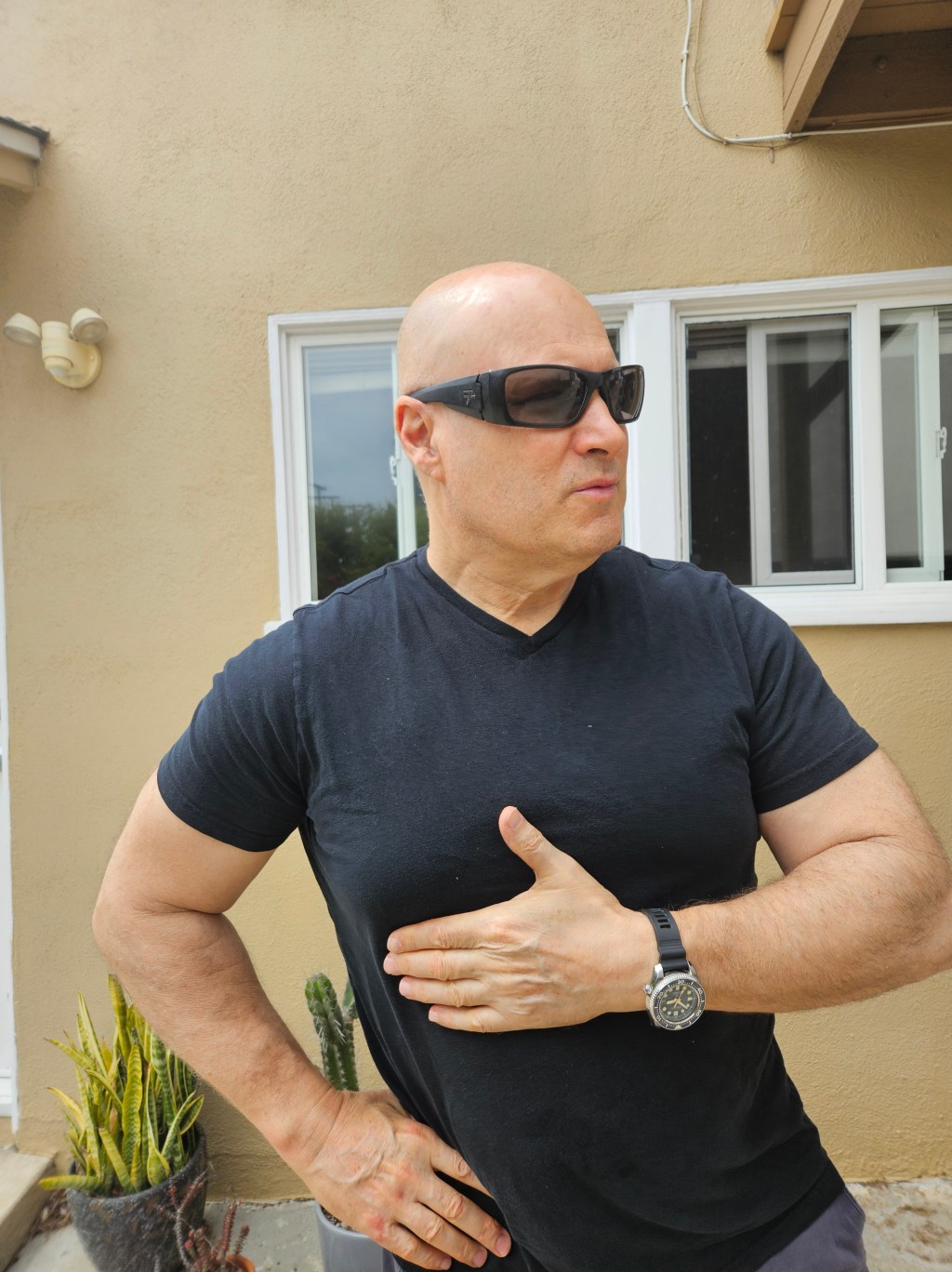
    Yesterday I filmed a 26-minute YouTube video on my main channel—ostensibly about watches. That was the bait. But somewhere between adjusting my camera and admiring my newly lean frame (twenty pounds down since April, thank you very much), I realized I wasn’t really talking about watches at all. I was talking about aging, restraint, identity, and how not to let your inner teenager run the damn show.

    The video was titled something like “My Four Watch Goals at Sixty-Four,” which sounds practical until you realize that my goals weren’t horological—they were existential. The first one? Stop being so maudlin. I actually said the word, spelled it out like a substitute teacher on a caffeine bender, and gave a definition. Maudlin: emotional excess masquerading as depth, the adolescent urge to turn life into performance art just so you can feel something.

    To illustrate, I offered up a formative trauma: being sixteen, watching Bill Bixby in The Incredible Hulk, and weeping—actually weeping—when he transformed into Lou Ferrigno’s green rage monster. It wasn’t just TV. It was catharsis. I was an Olympic weightlifter-slash-bodybuilder-slash-piano prodigy who didn’t know what to do with all the emotion I’d stuffed under my pecs and sonatas. Watching Bixby morph into a snarling demigod gave me permission to feel. In my forties, I channeled that same melodrama into wearing oversized diver watches—big, bold, and absurdly heroic, as if my wrist were auditioning for a Marvel reboot. That, too, was maudlin cosplay. Now I’m trying something radical: maturity.

    Goal two? Quit being an enabler. I admitted that, like it or not, I’m an influencer. I don’t collect in a vacuum. Every time I flex a new piece, it’s like handing out free permission slips to fellow addicts. So I’ve decided to use my powers for good—or at least for moderation.

    Goal three: Stay fit, get bloodwork, be a warrior in plain clothes. The watch isn’t the main course. It’s the garnish. If I’m going to wear something worth noticing, I should have the body and the biomarkers to back it up. Otherwise, I’m just a gilded potato.

    And finally, goal four: Minimalist watch heroes. The quiet monks of the community who own one to three watches and seem perfectly content. They’re my North Stars. They aren’t buying watches out of panic, nostalgia, or identity crises—they’re grounded, self-possessed, wise. I envy them. I aspire to be one of them. I’m not there yet, but I’m squinting in their direction.

    Honestly, I assumed the video would tank. My viewers tend to want horological eye-candy, not existential reflection wrapped in fitness updates. But to my surprise, the response was overwhelming—close to a thousand views on day one, dozens of comments. People thanked me. Some said they were booking doctor appointments. Others said they were starting diets. I’m fourteen years into making YouTube videos, and this might be the one I’m proudest of.

    Because the truth is, most watch YouTubers are just dressing up emotional poverty in brushed stainless steel. They get maudlin about bezels and bracelets, desperate to out-hype each other in a gaudy attention economy. It’s exhausting. What people really want—what they’re starving for—is someone speaking like a human being. No curation. No affectation.

    I ended my video with a confession: I’m still that sixteen-year-old kid. And if you cue up The Lonely Man theme from The Incredible Hulk, the one where David Banner walks down the rainy sidewalk in soft focus, I will—without shame—start crying. Again. Because some emotions don’t age. They just find quieter places to hide.