Category: Health and Fitness

  • The Vegan Diet That Actually Behaves

    The Vegan Diet That Actually Behaves

    Most vegan diets chase variety. This one chases something else: predictability. I wanted a plan that supports gut health, delivers about 150 grams of protein, and stays around 2,300 calories—without turning every meal into a digestive gamble. The result is not a celebration of abundance. It’s a system that behaves.

    The guiding idea is simple. Every meal is built from three parts: a stable starch, a low-residue protein, and a measured dose of fiber. The aim is not to flood the gut with “healthy” inputs, but to give it clear, consistent instructions.

    Breakfast is structured but quiet. I start with well-cooked buckwheat groats—soft enough to digest without resistance. Into that goes a scoop of pea-and-rice protein powder, half a banana, a teaspoon of psyllium husk, and a small pour of unsweetened soy milk. It’s not exciting, but it is dependable. The psyllium adds just enough cohesion, the banana binds, and the protein arrives without the usual legume side effects.

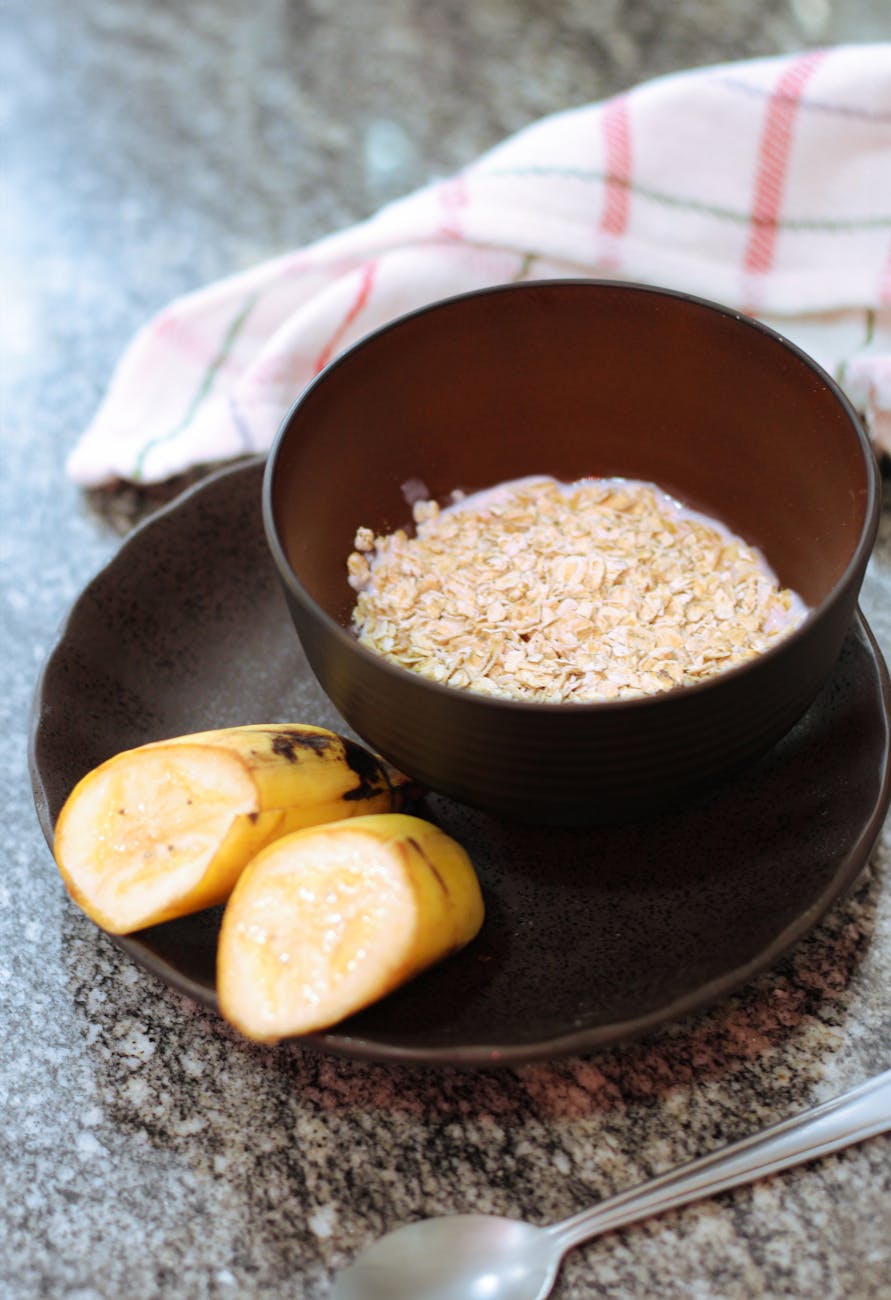
    Lunch simplifies things even further. Oatmeal becomes the base—again, in a controlled portion. I add another scoop of protein powder, then rotate between half a banana and a small serving of applesauce. A modest amount of soy milk smooths it out. That’s it. No stacking of proteins, no fiber fireworks. Lunch is designed to send a single, clear signal to the body: digest, don’t negotiate.

    Dinner does the heavy lifting. This is the anchor meal, the one that determines how the next morning unfolds. A plate of white rice and red potatoes forms the foundation—arguably the most reliable pairing for digestive stability. On top of that, I add about six ounces of extra-firm tofu and a side of sautéed zucchini or carrots. Everything is cooked soft. Everything is deliberate. A tablespoon of olive oil finishes the plate, not for indulgence, but for smooth passage.

    If I need something at night, I keep it controlled: half a banana, a tablespoon of peanut butter, and a small glass of soy milk. Enough to take the edge off, not enough to start a second digestive act.

    Across the day, the numbers line up: roughly 2,300 calories, about 150 grams of protein, and a moderate fiber intake that stays in the zone where things hold together instead of falling apart. The real achievement, though, isn’t the macros—it’s the consistency. Meals repeat. Ingredients overlap. The system stabilizes.

    There are rules. Beans and lentils are out as daily staples—not because they’re unhealthy, but because they introduce too much variability. Raw vegetables are unnecessary friction. Fiber is measured, not celebrated. Variety is limited on purpose. This is a diet built on the belief that clarity beats complexity.

    Is it boring? Often. But boredom, in this context, is a kind of luxury. It means nothing is going wrong. It means your body is no longer improvising. It means the system is working.

    Can I sustain my health and muscle on a plant-based diet? What if I feel weak? To be honest, I have two contingency plans: I may have to add a scoop of Greek yogurt a day, and replace the vegan protein powder with whey protein powder. That will be the tentative part of the journey. 
  • Social Capital and the Art of Not Being Chosen

    Social Capital and the Art of Not Being Chosen

    Not all rejection deserves to be filed under the same heading. Romantic rejection—the operatic kind—arrives with violins, moonlight, and a certain built-in alibi. You fall hard, you overestimate your odds, and when the other person declines to co-star in your fantasy, you can console yourself with the obvious: the whole thing was inflated from the start. You were auditioning for a role that rarely gets cast.

    But the quieter rejections—the ones that occur under fluorescent lighting and polite conversation—cut deeper. They lack drama but not consequence. In fact, they feel more diagnostic, as if they’ve been administered by a committee.

    Consider friendship rejection. You meet someone, exchange a few promising signals, and then—nothing. Or worse, a friendship that once had momentum slows, then stalls, then disappears entirely. This is not a stranger declining your advances; this is someone who had enough data to make a decision and chose, calmly, not to proceed. The verdict feels less like bad luck and more like a character assessment.

    Then there is colleague rejection, which operates with corporate efficiency. Alliances form. Cliques crystallize. You are not invited into the warm circle of inside jokes and informal influence. You do your work—flawlessly, even—but without the buoyancy that comes from being wanted. You become competent but peripheral, visible but not included. This is where you begin to suspect you suffer from what might be called Social Capital Deficit Syndrome: a condition marked by a shortage of the invisible currency that makes social and professional life glide instead of grind.

    And here is the uncomfortable truth: social capital is not a luxury; it is infrastructure. Without it, you are left to interpret every silence, every omission, every polite deflection. The temptation is to diagnose yourself—too blunt, too quiet, too something—and then to launch a campaign of correction. This is where things get worse. Self-blame mutates into paranoia. Self-improvement becomes performance. You start sanding down your edges in public, hoping to emerge as a more acceptable version of yourself, and end up as a less convincing one.

    At some point, a harsher but cleaner realization presents itself: your personality comes with a certain gravitational pull, and not everyone will orbit it. No amount of forcing will change that. Trying to wedge yourself into every available opening only advertises the mismatch.

    The more durable response is less theatrical and more disciplined. Accept that people respond rather than decide. They are not conducting formal evaluations of your worth; they are reacting to chemistry, timing, and preference—most of which lie outside your control. This does not excuse cruelty, but it does eliminate the fantasy that everyone owes you affinity.

    So you take the higher road—not as a moral performance, but as a practical strategy. You remain courteous when ignored, steady when excluded, and restrained when slighted. You refuse to become the bitter man who proves his critics right simply by reacting exactly as expected.

    This runs counter to a culture that treats every problem as fixable with the right toolkit. You can, of course, pursue therapy, charisma workshops, confidence training—the whole catalog of self-upgrades. Some of it may help. Some of it may turn you into a louder version of the same problem. There is a fine line between improvement and overcorrection, and many people sprint past it.

    What remains, then, is a quieter ambition: to live without rancor. To accept your limits without turning them into grievances. To maintain a sense of integrity that does not depend on applause. The chip on your shoulder may feel like armor, but it is really a signal—confirmation to others that their instincts about you were correct. Let it go.

    You may lose the small comforts of self-pity. In return, you gain something sturdier: a life not governed by who did or did not choose you.

  • The Lazy Tax in the Kitchen

    The Lazy Tax in the Kitchen

    A few years ago, my wife and I attempted a moral upgrade. We bought top-tier stainless steel pans—clean, durable, virtuous. The kind of cookware that suggests you’ve finally grown up. What we actually got was a daily demonstration of failure. Meat clung to the surface like it had signed a lease. Eggs fused themselves into modern art. Dinner became a split decision: half of it made it to our plates, the other half calcified into a crust we had to chisel off like archaeologists of our own incompetence.

    So we retreated to ceramic nonstick—the promise of safety without the suffering. And to be fair, it worked. Eggs slid. Meat behaved. For a few months, we lived in a frictionless utopia. Then the decline began. The surface lost its glide, the cleanup grew less effortless, and by the one-year mark, the pan looked like it had survived a minor war. We replaced it. Then replaced it again. Three pans in three years. Smooth sailing followed by predictable decay.

    Now I’m floating a compromise: carbon steel for meat, ceramic reserved strictly for eggs. On paper, it’s elegant. Carbon steel rewards discipline—season it, preheat it, clean it promptly—and in return, it gives you something close to permanence. But the fine print matters. Acidic sauces erode seasoning. One careless move and the pan reverts to its old habits, clinging and punishing. You can follow the rules and still lose.

    If I’m honest, I suspect this experiment will end the same way the others did: with a sigh and another $100 ceramic pan purchased in quiet resignation. I’ve started calling this cycle the Lazy Tax—not because we’re lazy in the crude sense, but because we refuse to turn dinner into a technical exercise. We don’t want to manage a pan like it’s a piece of lab equipment. And yet the alternative is paying annually for convenience that quietly expires.

    That’s the real tension. If something feels like a job and only delivers a marginal improvement, you won’t sustain it. You default to ease. But ease has a cost. It trims your skill set, narrows your tolerance for friction, and charges your credit card for the privilege. In the end, you’re not just buying pans—you’re renting competence.

  • The Price of Your Work Exit

    The Price of Your Work Exit

    Retirement was supposed to feel like a gentle descent. Instead, it arrives with an invoice. For years, your college played the role of benevolent patron: five hundred dollars a month to insure a family of four at Kaiser Permanente, with a co-pay so small it felt almost ceremonial. Now the curtain lifts. Your wife’s middle school, thrifty to the point of cruelty, hands you the real number—nearly triple. At the same time, your paycheck shrinks to about eighty-five percent of its former self. The vise tightens from both ends: less coming in, far more going out. Retirement, it turns out, is not an exit but a recalibration of anxiety.

    On a Saturday morning, under the fluorescent calm of Trader Joe’s, you confess this arithmetic of dread to the cashier who has watched you age in weekly installments for two decades. He listens, nods, and then offers a solution with the confidence of a man suggesting a new brand of hummus: get a part-time job here. Be a cashier. Let the paycheck subsidize your health insurance. You have the build, the stamina, the conversational ease. In his telling, the transition is almost heroic—a late-life pivot, sleeves rolled, dignity intact.

    But you can already see the other version. You, sixty-five, standing in a Hawaiian shirt that once signaled leisure and now reads as camouflage, being told in a quarterly review that your tone lacks “warmth.” That you cleared the line too efficiently, failed to linger, failed to affirm. That your sarcasm—once a badge of intellect—needs to be diluted into something safer, sweeter, more compliant. You imagine the language of correction: more honey, less acid. You imagine nodding while someone half your age explains emotional calibration. The phrase writes itself in your head: a Late-Life Vocational Humility Crisis—the moment when accumulated status collides with the small, bright humiliations of starting over at the bottom, where friendliness is a metric and personality is a deliverable.

    You float the idea at home. Your wife laughs—not cruelly, but decisively. The verdict is clear: you are not built for this theater. The fantasy collapses on contact with reality. It was never a plan, only a flattering daydream in which you played the rugged provider, stacking pinto beans beside water-packed albacore, funding your family’s security with cheerful competence.

    So you stand in front of the mirror and deliver the final ruling: Trader Joe’s is a no-go. The new discipline will be quieter, less cinematic. No convertibles. No Swiss watch indulgences. No Cabo timeshare fantasies dressed up as investments. Just a narrower life, lived within its means, spared the indignity of proving—too late—that you can still take orders and smile about it.

  • The Man Who Refused to Retire and Learned to Fly at Costco

    The Man Who Refused to Retire and Learned to Fly at Costco

    You will be sixty-five in less than a year—fifteen months from your last day of work—and you would be wise to bury the word “retirement” before it buries you. It is a feeble, anemic term, a linguistic sedative that disguises the collapse of identity as leisure. Nothing about what lies ahead deserves that kind of small thinking.

    What you are approaching requires a name with altitude, velocity, and a touch of myth.

    You are entering the Sovereign Phase.

    In the Sovereign Phase, you do not keep a schedule—you issue one. You do not await approval—you render decisions. This is not an ending ceremonially dressed in khakis and early dinners; it is a coronation. You are not stepping away. You are stepping above.

    Your final act has begun, and it demands a certain boldness. The first order of business is symbolic but essential: you will upgrade your Costco membership to Executive. No committees. No approvals. No memos. You will simply decide—and it will be done.

    And then, one morning, before the doors officially open to the masses, you will enter.

    The aisles are empty. The pallets stand fresh and untouched. The air itself feels newly issued. You move through this cathedral of abundance with first access, first choice, first claim. Something happens to you here—something disproportionate to the act itself. A quiet but unmistakable inflation of the self. A sense that you have not merely arrived early, but ascended.

    You feel it in your chest first, then in your stride. The strange conviction that you are no longer bound by ordinary constraints. That you have, somehow, earned this.

    You have entered Executive Aisle Rapture.

    It is a near-mystical condition in which logistical privilege is mistaken for existential elevation, where empty aisles and shrink-wrapped towers of goods produce a sensation that borders on the divine. You begin to suspect that wings—actual wings—may be forming beneath your shirt, preparing you for a short, ill-advised flight toward the sun.

    This is not a side effect of the Sovereign Phase. It is a requirement.

    So when your last day of work arrives, do not mark it with melancholy or relief. Mark it with a transaction. Upgrade the membership. Secure your access. Step into the early light of the warehouse.

    And when the doors part and the aisles open before you, walk forward without hesitation.

    You are no longer a worker.

    You are sovereign.

  • From Lecture Hall to Checkout Line: A Better Second Act

    From Lecture Hall to Checkout Line: A Better Second Act

    Over the past several years, I’ve watched a pattern unfold. A colleague retires, disappears for a while, and then—two years later—reappears in the writing center as a volunteer. On paper, it looks noble. In person, it looks something else.

    They don’t return with ease or quiet confidence. They return looking unsettled—eyes fixed forward, posture stiff, like deer caught in headlights that never turn off. I’ve seen them alone on the writing lounge couch, staring straight ahead, as if waiting for something that never quite arrives. The impression is hard to shake: retirement didn’t liberate them; it hollowed something out. And so they came back to the place where their sense of worth once had structure and witnesses.

    Students, however, are not sentimental. They don’t greet these returnees as beloved elders. They approach them the way one approaches a last option—politely, cautiously, and only when necessary. The exchange feels inverted. Instead of giving value, the retiree seems to be extracting it: a little affirmation, a little proof of continued relevance, a small ration of being needed.

    The idea of volunteering after retirement sounds admirable in theory. In practice, it reminds me of Lot’s wife—turning back, unable to release the past, even when the mandate is to move forward.

    And I say all this with some unease, because I’m about fifteen months away from retirement myself. My job has kept my mind engaged for decades—lectures, lesson plans, essays, the constant friction of thinking. I can’t pretend I’m immune to the same forces that seem to have pulled my colleagues back: the slow creep of isolation, the loss of structure, the quiet erosion of purpose. Sloth and complacency don’t arrive dramatically; they seep in.

    Still, I’m fairly certain of one thing: I won’t be returning as a volunteer tutor. I see too much of Lot’s wife in that gesture and not enough of a forward-facing project that justifies it.

    There’s also the matter of audience. Students gravitate toward youth. My own teen daughters regard “Boomers” like me with a mix of mild embarrassment and occasional alarm, as if we are well-meaning but out of date. I’m not eager to test that perception in a room where attention is already scarce.

    If pride is a vice, it’s at least an honest one here. My read on younger students, combined with my own instincts, tells me that the writing center would not be my best second act.

    There may be other roles. I’ve entertained, half-seriously, the idea of working part-time at my local Trader Joe’s. I know the staff. I could use the income for health insurance. And I have a skill set that would actually translate: I can talk to people, keep a line moving, and bag groceries without turning it into a philosophical crisis. There’s dignity in that—perhaps more than in hovering around a former life, waiting to be needed.

    One thing I do know: wherever I land, I don’t intend to sit there staring into the middle distance, hoping someone will give me back a version of myself I’ve already lived.

  • You Can’t Hack Friendship

    You Can’t Hack Friendship

    A shortage of friendship seeps into everything. It distorts your thinking, magnifies your obsessions, and turns both your work and your home life into echo chambers. What begins as a quiet absence becomes a governing condition. The burden doesn’t stay neatly contained within you; it spills outward, pressing on your family, altering the atmosphere of every room you occupy.

    Active friendship is not a luxury. It is a nutrient. Deprive the soul of it and you don’t merely feel a little off—you begin to atrophy. The comparison is almost clinical: friendship is to the psyche what protein is to muscle. Neglect it long enough and weakness follows, then dysfunction, then a kind of emotional brittleness that snaps under ordinary strain.

    Your predicament has a familiar shape. You reach out. The response is lukewarm, delayed, or politely distant. You respect boundaries—yours and theirs—so you retreat. The retreats accumulate. What began as courtesy hardens into habit. Eventually, not seeing friends stops feeling like a temporary lull and starts to resemble a lifestyle. The absence becomes routine, then normal, then invisible.

    The culture is more than happy to bless this arrangement. Adults, we’re told, naturally drift into smaller circles. Life is busy. Everyone is tired. The internet offers a thin, flickering substitute for presence. Add in economic pressure—the side hustles, the quiet anxiety about money—and friendship begins to look like a discretionary expense. Time becomes a zero-sum game, and friendship is the line item that keeps getting cut.

    Age compounds the problem. The older you get, the more fixed your habits become. The friction of meeting new people increases. The old friendships fade—some through neglect, some through conscious uncoupling, most through the slow erosion of time. Replacements don’t arrive. They rarely do.

    Then there’s pride, that silent enforcer. You don’t talk about the absence. You don’t announce your loneliness. The first rule is to pretend there is no problem. You keep your complaints internal, your need concealed. You perform composure. You suffer privately, as if dignity requires it.

    You may even suspect this was always your trajectory. You look back at your parents and see hints of the same pattern—difficult temperaments, limited circles, a tendency toward inwardness. You begin to wonder if you’re not simply repeating a script written long before you understood it.

    Over time, solitude becomes architecture. You build a small, fortified life and call it independence. It starts to resemble something like C. S. Lewis’s description of hell: a self-constructed enclosure where nothing enters and nothing leaves. You seal the doors, throw the key beyond the walls, and then convince yourself this arrangement is freedom. It is, in fact, a perfectly engineered loneliness.

    Inside the fortress, you have time—too much of it. Memory begins to intrude. You recall childhood, when friendship required no strategy and no scheduling. It was as natural as breathing. You laughed without agenda. You learned who you were in the presence of others. Those early alliances—messy, loud, unfiltered—helped shape your sense of right and wrong, belonging and identity.

    Adulthood replaces that immediacy with calculation. Time fragments. Obligations multiply. Your circle shrinks. The hunger for connection doesn’t disappear; it mutates. You turn to social media, posting curated glimpses of a life that appears connected. The response—likes, comments, brief exchanges—offers a diluted version of what you’re actually missing. It looks like friendship at a distance, but it lacks weight. Eventually, even that thin substitute fails to satisfy, and you drift away from it too.

    You try another route: creation. You write. You play music. You hope that expression will generate connection. People may admire what you produce. They may even love it. But admiration is not friendship. Applause is not companionship. A well-received paragraph cannot sit across from you at a table.

    There is no workaround. No clever substitution. No technological proxy or “life hack” that fills the gap.

    At some point, you have to say it plainly: the absence of friendship is a problem.

    What follows that admission is uncertain. There is no neat solution waiting on the other side of the sentence. But there is at least this: you are no longer pretending. You are no longer calling deprivation a preference or isolation a virtue.

    You are, finally, telling the truth.

  • How Not to Cut Out 400 Calories and Then Eat Them Back

    How Not to Cut Out 400 Calories and Then Eat Them Back

    Eleven months ago in Miami, I took stock of myself at 242 pounds and didn’t like the verdict. Back home, I pushed the number down to 230—respectable, if not heroic—then, as these things go, it drifted upward with quiet persistence. I stopped weighing myself for four months, which is another way of saying I chose not to know. When my brother asked for the number, I guessed: “238.” The next afternoon, post-workout, the scale confirmed it with irritating accuracy. I was 238 on the nose. I know my body. It keeps receipts.

    I’d like to get to 220. Not as fantasy, but as a controlled descent. The obvious move—cut my yogurt and protein powder snack—promises a clean 400-calorie reduction. The problem is just as obvious: hunger is not a passive participant. Remove those calories in the afternoon and they return at dinner, louder and less negotiable. You don’t eliminate the calories; you relocate them.

    So the adjustment has to be surgical, not theatrical. I’ll drop the whey protein from the yogurt—about 200 calories—while keeping the yogurt itself to hold the line on satiety. Then I’ll remove the hemp seeds from my morning buckwheat groats or oatmeal—another 200 calories quietly erased. No grand gestures, no hunger theatrics. Just subtraction where it won’t provoke a rebellion later.

    That’s a 400-calorie deficit without inviting a 7 p.m. mutiny. Add a weekly weigh-in—not daily obsession, just regular accountability—and the trajectory should correct itself. Not dramatic. Not heroic. But reliable, which is the only quality that matters over time.

  • Pedaling Through the Voice That Says Quit

    Pedaling Through the Voice That Says Quit

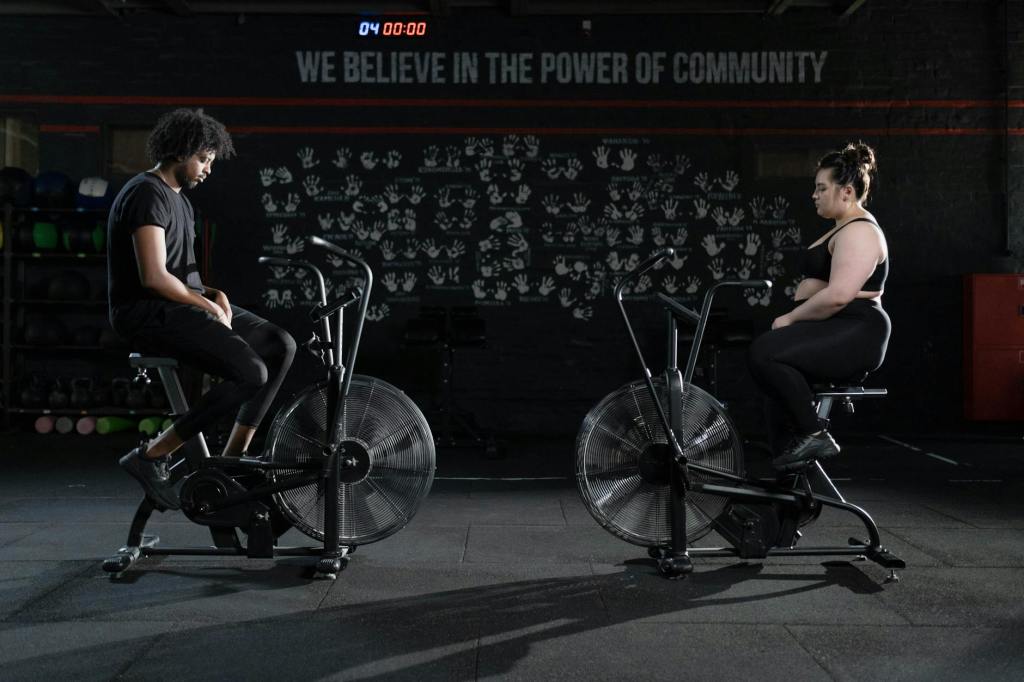
    Ninety percent of the time, the Schwinn Airdyne—known in honest circles as the Misery Machine—treats me like a competent operator. I settle into a rhythm and burn roughly 730 calories an hour, sometimes pushing past 800 over a 51–58 minute stretch. It’s hard work, but it feels governed, almost cooperative. The Rate Select hovers around 52, climbs to 58 when I press it, and rewards effort with visible progress. Numbers rise, and with them, morale.

    Then there is the other ten percent—the mutiny.

    You know it immediately. The first minute betrays you. The legs feel like they’ve been filled with wet cement. The lungs are slow to negotiate. The machine, once a willing accomplice, turns indifferent. No matter how much you push, the Rate Select stalls in the high 40s, as if it has quietly downgraded your status. Today was one of those days. Fifty-eight minutes of negotiation yielded 601 calories—an 18 percent deficit from my usual output. I clawed my way past 600 not out of strength, but out of stubborn bookkeeping: at least I could claim I burned off breakfast.

    The real struggle, of course, isn’t physical. It’s narrative. When the numbers climb, the mind becomes a cheerleader—faster, harder, more. But when they sag, a different voice takes the microphone. You’re finished. You’ve lost it. This is a young man’s game, and you’re trespassing. The body tires, but the mind drafts a eulogy.

    That’s the moment that matters. Not the calories, not the pace, but the argument. Today, I didn’t win cleanly, but I held the line. I kept pedaling. I refused the early exit. Six hundred calories is not a triumph, but it is a refusal to collapse.

    These lag days arrive like monthly audits. They expose the fault lines—the impatience, the vanity, the dependence on numbers for validation. The task is not to dominate the machine, but to manage the voice that wants to quit. The reasonable adult has to step in, take the whining child by the shoulders, and say: Not today.

  • When Writing Stops You From Lying to Yourself

    When Writing Stops You From Lying to Yourself

    Kafka called writing a form of prayer. Not as piety, but as precision. Prayer, properly understood, is the act of stepping out of ordinary time—the noisy, transactional churn—and entering a space where attention is no longer scattered but gathered. Writing does the same. It refuses the chaos of profane time and insists, however briefly, on the discipline of the sacred.

    The sacred is not mystical fog. It is clarity stripped of dopamine. It is the quiet room where you examine the state of your own soul without distraction or performance. It is where you test whether your words can survive contact with your actions. It demands humility because it exposes how often they don’t. And it offers a kind of nourishment the chronophage—the great time-eating machine—cannot provide, because it cannot be consumed passively. It must be earned.

    To live thoughtfully is to move between two worlds: the sacred and the profane. You cannot remain in either one. You must descend into the ordinary—work, errands, obligations—but carry with you the standards forged in that quieter space. Otherwise, the sacred becomes theater, and the profane becomes drift.

    So the question arrives, unwelcome but necessary: Do my actions align with my ideals? No. Not yet.

    If they did, my life would contract, not expand. I would eat with intention—three meals, no grazing—and call the absence of snacks what it is: a fast, not a deprivation. I would step away from the digital carnival that thrives on FOMO, because I know its rewards are counterfeit—brief spikes followed by longer, duller lows.

    I would stop buying watches. I already own more than I can meaningfully wear. Two G-Shocks tell perfect time. The rest sit like artifacts of former appetites. Rotation is not variety; it is indecision dressed as sophistication.

    And I would reconsider what I make. If my videos exist to chase attention, to measure my worth in clicks and spikes of approval, then they are extensions of the same problem. The medium is different; the mechanism is identical. But if a video can carry an idea forward—if it can clarify rather than agitate—then it earns its place.

    Writing, then, is not an escape. It is a reckoning. It is the act of bringing the sacred into contact with the profane and asking, without flinching, whether they agree. Most days, they don’t. The work is to narrow that distance.