Category: TV and Movies

  • Thou Shalt Remember That All First Dates End in Either Ecstasy or Insurance Claims

    Thou Shalt Remember That All First Dates End in Either Ecstasy or Insurance Claims

    It was my sophomore year, and I was about to experience that sacred American ritual—the first date. My friends, those benevolent saboteurs, set me up with Elizabeth Lane, a British exchange student whose accent alone made her sound too sophisticated for our zip code. Six of us crammed into Gil Gutierrez’s orange Karmann Ghia, a car roughly the size of a lunchbox. Rick Galia and his girlfriend, Cheryl Atkins, volunteered to ride in the trunk, which should’ve been an omen that this night would go sideways.

    Dinner was at a pizza chain—where all romance goes to die—and then we saw One Flew Over the Cuckoo’s Nest at a theater in Hayward. It took me about ten minutes to realize that a film set in a psychiatric ward wasn’t ideal for stirring teenage lust. Meanwhile, I was sweating through my shirt like a man auditioning for Fear Factor. I couldn’t stop thinking about a puberty documentary I’d seen in biology class—the one where a trembling boy on the phone with a girl exposed a massive pit stain to the audience. The thought haunted me.

    Midway through the film, Elizabeth rubbed her boot against the metal back of the chair in front of her. The sound—sticky, squealing, soda-coated—was the mating call of mortification. She did it again. Heads turned. Shushes hissed. I sank into my seat, spiritually liquefied, praying for the mercy of a stroke.

    To my left, Rick and Cheryl were making out like postwar lovers at a train station. When the credits rolled, Rick announced, “I have no idea what that movie was about, but I sure had a great time.”

    Back in the car, Gutierrez drove while Rick and Cheryl wedged themselves into the back seat with Elizabeth and me, a sardine orgy of hormonal chaos. As we climbed Greenridge Road, my heart was pounding in that dumb, hopeful way teenage hearts do. When we reached my house—an Eichler with glass walls, juniper bushes, and a kumquat tree that never bore fruit—I told Elizabeth I’d had a good time.

    She removed her gum, leaned in, and kissed me. Her tongue entered my mouth like a diplomatic envoy. The flavor was cinnamon, fierce and chemical, like a fireball candy soaked in gasoline. It was the first real kiss of my life—and possibly the last before divine punishment intervened.

    Suddenly, something primal overtook me. I emitted a guttural scream—a noise that belonged in the fossil record—and shot upright so violently that my head ripped through the fabric roof of the convertible. The others stared in awe as my torso protruded from the car like a deranged periscope.

    Gutierrez was horrified. “What the hell did you do, McMahon?”

    “I don’t know,” I said. “But I think I’m stuck.”

    Neighbors emerged, lured by my banshee howl. Thor, Cal Stamenov’s monstrous Great Dane, barked with glowing eyes like Cerberus guarding the gates of Hell.

    “You destroyed my brother’s car!” Gutierrez shouted.

    “The car can be repaired,” I said. “But my psychological damage is irreversible.”

    He glared. “What are you talking about?”

    “In what world do I come out of this with a shred of dignity?”

    The crowd laughed. My father arrived with a police flashlight, his expression hovering between despair and amusement. “Jeff, is that you?”

    “Unfortunately.”

    He extracted me from the car like a sword from the stone. I brushed flecks of torn fabric off my shirt and muttered, “Don’t worry, I’ll pay the deductible.”

    Gutierrez sighed. “Forget it. Migliore’s dad owns an auto shop.”

    Galia grinned. “That must’ve been one hell of a kiss, McMahon. Sent you straight to the moon.”

    I went inside, dignity in shreds, adrenaline still sizzling. In bed, reading a bodybuilding magazine for moral repair, I confessed my disaster to Master Po.

    “Grasshopper,” he said, “you must treat yourself gently.”

    “What the hell is that supposed to mean?”

    “You are a sacred vessel, yet you try to manhandle your emotions like barbells. Control is your idol. But The Way requires grace.”

    “Grace?” I said. “I just decapitated a convertible.”

    “Then perhaps,” he said, “next time, breathe gently and let go.”

    “I can’t,” I said. “I’m a control freak. Controlled by the need to control.”

    “That,” said Master Po, “is why you tear through roofs. You follow the path of excess, not balance.”

    I stared at the ceiling, still tasting cinnamon gum. “I’d love to ponder that,” I said. “But right now, I’m too busy chewing on the flavor of humiliation.”

  • Thou Shalt Remember That Silence Can Wound More Deeply Than Cruelty

    Thou Shalt Remember That Silence Can Wound More Deeply Than Cruelty

    It was a Friday night at Castro Valley High, that weekly pageant of teenage aggression disguised as school spirit. The bleachers were packed with hormonal thunder; the air reeked of nacho cheese and Axe body spray. And then the rain came, that democratic force that flattens everyone’s hair and dignity alike.

    Across the stands, I saw her—the girl the boys called Tasmanian Devil. I didn’t know her name. No one did. She was a broad-shouldered girl with a face that inspired the cruel kind of laughter—the kind that hides insecurity behind volume. Her twin brother was in the special ed class with her, and their father, the school’s enormous janitor, lumbered around campus in denim overalls so faded they looked ghostly. His ears were so large they could have doubled as warning flags—and he had passed them on to his children, a hereditary curse of ridicule.

    They lived in a trailer next to the football field, an eternal reminder that some people never get to leave campus. That night she sat alone in the bleachers while the rain came down in cold, merciless sheets. Her hair clung to her forehead like seaweed, and black mascara streamed down her face like ink from a wounded pen.

    She stared out at the field with a look that broke something inside me—a look that said, I know the joke, and I know I’m the punchline. I know no one will ever love me, and I will always be an outsider.

    I wanted to call her over, to hand her my jacket, to do anything that resembled decency—but I did nothing. I sat there with my friends, pretending to watch the game, while she drowned in rain and loneliness.

    That night, guilt chewed through me like battery acid. I told Master Po about it—my silence, my self-loathing.

    “Master Po, I can’t forgive myself for doing nothing.”

    He looked at me the way only the wise can—equal parts compassion and indictment.

    “Grasshopper,” he said, “being angry with yourself achieves nothing. Flogging yourself achieves nothing. Shoveling hatred over yourself achieves nothing. If you wish to help those who have no place in this world, you must first make peace with yourself. The wise help others not because they are saints, but because they are whole.”

    I lay awake that night thinking about the girl in the rain—how she seemed to know her fate, and how I had rehearsed mine: a spectator of suffering, paralyzed by self-awareness. It was the night I learned the cruelest sin isn’t mockery. It’s inaction dressed up as reflection.

  • Thou Shalt Remember That Unsolicited Advice Is a Sacred Path to Humiliation

    Thou Shalt Remember That Unsolicited Advice Is a Sacred Path to Humiliation

    It was junior year, and I was inspecting the high school football team’s weight room—a dank temple of testosterone and tobacco spit. As a self-anointed expert (and Junior Olympic Weightlifting champion, lest anyone forget), I felt entitled to critique everything: the dumbbell selection, the ergonomics, the hygiene, the very air of the place. The floor looked like it had been carpeted with sunflower shells and Copenhagen runoff.

    I had just begun my sermon on the spiritual poverty of their equipment when the team’s starting linebacker, Erik Simonson—a slab of muscle with the conversational subtlety of a freight train—paused mid–military press. His gray-blue eyes locked on me like radar.

    “Is someone paying you to be an asshole,” he said evenly, “or are you doing volunteer work?”

    The weight room erupted. Even I laughed, because the line was perfect—surgical in its cruelty, poetic in its timing. But laughter has an aftertaste, and when I got home that night, the sting of public mockery still clung to me. I turned to my spiritual advisor, Master Po.

    “Master Po,” I said, “why did I invite that kind of humiliation? My criticisms were valid.”

    “Grasshopper,” he said, sipping tea with an aggravating serenity, “you must not go through life believing people crave your opinions. You are not a paid social commentator, though I know your heart yearns to be one.”

    “But weren’t my criticisms legitimate?” I persisted.

    “Legitimacy,” said Po, “is irrelevant. The truth is like chili powder—best applied sparingly. Even those who beg for feedback rarely mean it. They desire flattery dressed as honesty. Therefore, you must learn the art of selective silence. Speak briefly, and when possible, not at all.”

    I sighed. “But I love the sound of my own voice.”

    Po smiled the smile of a man who’s been disappointed by many students before me. “Yes,” he said, “but what sounds like sweet music to your ears may strike others as the shriek of ignorance, emotional poverty, and uninvited arrogance.”

    The next day, I returned to the weight room and said nothing. The linebackers grunted and lifted. I stood in silence, spiritually enlightened and socially intact—a monk in a monastery of iron plates.

  • Thou Shalt Not Mistake Thy Biceps for Enlightenment

    Thou Shalt Not Mistake Thy Biceps for Enlightenment

    It was June, the last day of my sophomore year at Canyon High, and the temperature had staged a coup. The campus was no longer a school but a human sauna—heat shimmering off asphalt, the smell of suntan lotion and hormones hanging thick in the air. Education had fled.

    Students drifted across the courtyard in various stages of undress: shorts, bikini tops, cutoffs, tank tops. The place looked less like an academic institution and more like a rehearsal for a Beach Boys video. Even the teachers had surrendered. Lesson plans were tossed aside like molting skin; the day was given over to signing yearbooks, gossip, and the open display of what could only be called collective infatuation disorder.

    Love had broken out like a rash. Everywhere I looked, couples were holding hands, whispering into each other’s ears, stroking hair, rubbing shoulders, and gazing into each other’s eyes with the same expression of caffeinated bliss. Even the nerds—the pale, calculator-clutching tribe of outcasts—had been swept into the delirium. It was an egalitarian apocalypse of affection. Everyone was paired off, melting together in the heat.

    Everyone except me.

    Apparently, I hadn’t received the memo that June 12 was Love Day at Canyon High. While the rest of the student body was basking in hormonal radiance, I sat alone on a bench near the cafeteria, marinating in my solitude and trying to figure out how romance had managed to skip my ZIP code.

    I sighed, stared at the ground, and summoned Master Po—the inner voice of my sarcastic conscience.

    “Grasshopper,” he began, “your lonely condition should be obvious to you.”

    “To you, maybe,” I said, “but to me, it’s as mysterious as algebra.”

    “Let’s begin,” said Po. “First, you spend too much time staring into your own navel. You are self-centered.”

    “Guilty,” I said. “Next?”

    “You talk too much. You deliver speeches when you should be listening.”

    “Double guilty.”

    “If you wish to see the humanity in others, you must first see the humanity in yourself. True transformation begins within.”

    “Master Po,” I said, “I’m already transforming. Six days a week in the gym, three hundred grams of protein a day. I’m practically evolving into another species.”

    “I meant transformation of the soul,” he said.

    “Oh. Right. The invisible muscle group.”

    “Your self-deprecation is merely cowardice dressed as humility. You fear your own potential.”

    “Maybe. But I’m warning you—every time I meditate, Raquel Welch rides through my mind on horseback in slow motion. I can’t stop her.”

    “Your distractions,” said Po, “are the result of an undisciplined mind. Seek silence.”

    “You mean meditate.”

    “Yes, Grasshopper.”

    “Then prepare yourself,” I said. “Because after Raquel Welch, the whole cast of Charlie’s Angels usually shows up.”

    Po sighed, the eternal sound of a teacher realizing his student is hopeless.

    And there I sat, the only unloved, unseduced, untransformed soul on the Canyon High campus—a bench-bound philosopher surrounded by teenage Aphrodites, sweating through his solitude while Raquel Welch galloped through his brain.

  • Confessions of a Nine-O’Clock Man

    Confessions of a Nine-O’Clock Man

    Forgive me, but I’m still trying to figure out where I fit in this digitized circus we call life. I’ll be sixty-four in a few days, and you’d think by now I’d have achieved some level of ontological clarity—but no. I’m still ensnared by the shimmer of online browsing, the algorithmic promise that I might finally become “somebody” by curating a virtual persona. Mostly, the internet feels like a tease: a hall of mirrors where everyone’s reflection looks happier, thinner, and better lit.

    I tell myself I want to contribute, to engage, to share some original thought. But then I open the news and wonder what I could possibly add to the churning doomscroll—what fresh moral insight could come from a man who still double-checks whether he unplugged the toaster?

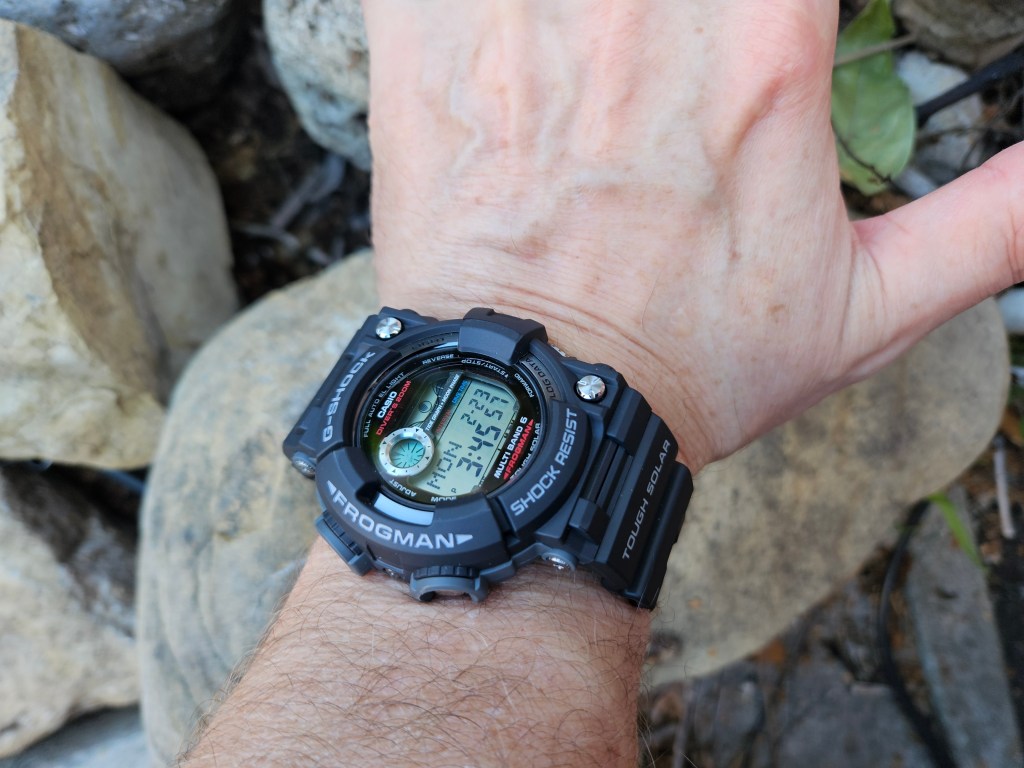
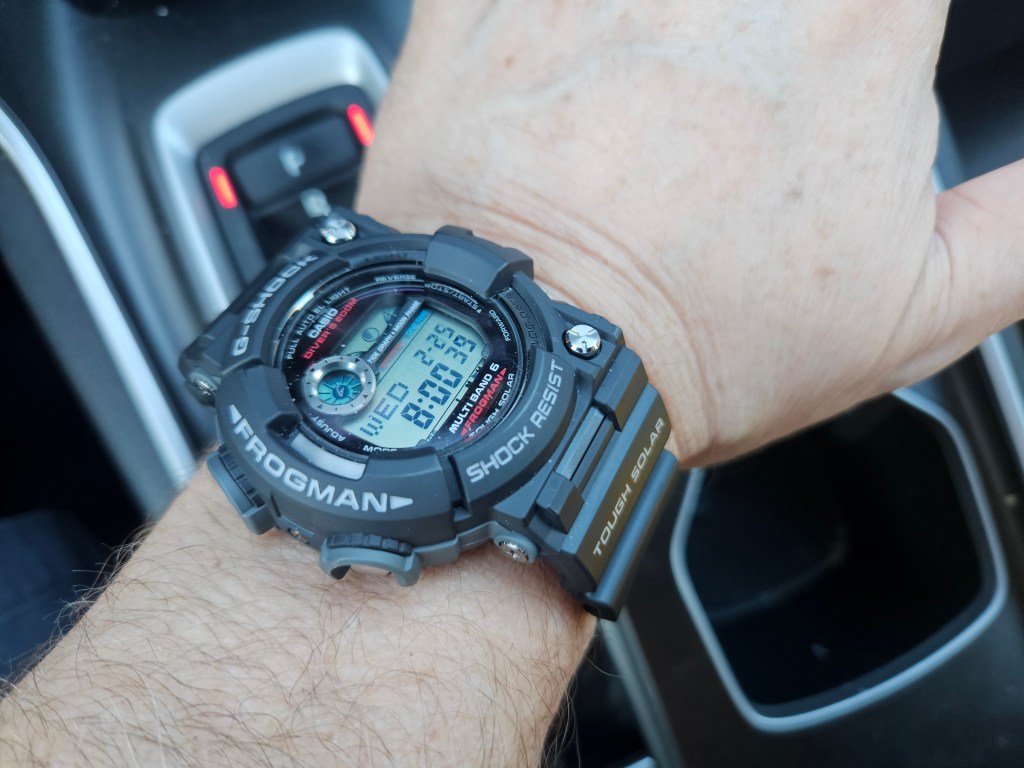
    It would be laughable for me to preach self-control. I can barely keep my own appetites in check. Apart from my morning kettlebell rituals—five days a week of grunting and penance—I’m an introverted “cozy boy.” I stay home, binge true crime docuseries on Netflix, and rotate my diver watches like a museum curator with OCD. I make my monkish meals: buckwheat groats, Japanese yams, steel-cut oats, tofu glazed in teriyaki and moral superiority. I am a herbivore surrounded by carnivores. My family mocks me gently while gnawing ribs.

    Sometimes, in a fit of ambition, I record a two-minute piano piece for my neglected YouTube channel. It receives twelve views, one of them mine, and a comment that reads, simply, “Lovely.” The algorithm yawns and moves on.

    I am obsessed with the rituals of minor luxury—fine organic whole-bean coffee that accompanies me in my morning writing jaunts, triple-milled soap redolent of rose and citrus, podcast playlists curated for insomniac philosophers. My life is the slow burn of scent and sound, a long intermission between existential crises.

    By nine o’clock, I’m done. My wife and daughters laugh as I shuffle off to bed, a middle-aged Sisyphus retiring his rock for the night. I read for twenty minutes, then fall asleep to the soothing drone of Andrew Sullivan or Sam Harris debating civilization’s decay. It’s my lullaby of reason and despair.

    Forgive me if this sounds paltry. I’m still trying to figure it all out—how to live, how to matter, how to grow up before the credits roll.

  • Thou Shalt Honor the Monster Who Shows Mercy

    Thou Shalt Honor the Monster Who Shows Mercy

    At sixteen, I thought I knew what a monster was. Then I met one—an authentic, breathing specimen of mythic proportions: John Matuszak, defensive lineman for the Oakland Raiders, the kind of man who made other men rethink their species.

    I’d seen him on TV—hulking, bearded, snarling—but television flattened him into two dimensions. In person, at The Weight Room in Hayward, California, Matuszak looked like evolution had taken a brief detour toward the gods. Nearly seven feet tall, close to 300 pounds, he was a paradox of mass and grace—slender by geometry, enormous by gravity. His hair was a feral snarl, his beard an ecosystem, and his eyes had the predatory focus of a hawk scanning for something foolish enough to move.

    One afternoon, the gym speakers played England Dan and John Ford Coley’s “Love Is the Answer”—a ballad so syrupy it could give insulin shock to a diabetic. Matuszak’s lips curled. “Bullshit,” he muttered, then grabbed the barbell loaded with 400 pounds and began to press, growling his blasphemy with each rep as if the song itself had personally insulted his testosterone.

    Between sets, he asked if I played football.
    “No,” I said, “I’m a bodybuilder—sort of.”
    He raised an eyebrow. “How old are you?”
    “Sixteen.”
    “Good for you,” he said, clapping a hand on my shoulder that felt like a catcher’s mitt made of stone. “Keep training, my brother.”

    Then he disappeared into the locker room, leaving me with the distinct impression that Zeus himself had just offered career advice.

    The kindness startled me. I’d heard the legends—Matuszak the maniac, Matuszak the ungovernable animal who devoured offensive linemen and bar fights with equal ferocity. Yet here he was, treating me, a lost, self-conscious teenager, with decency and warmth. The other pros at the gym wouldn’t even glance at me, but Matuszak talked to me like I mattered. He looked me in the eye. He saw me.

    When he emerged from the locker room later, showered and reborn as a gentleman—a sports coat, slacks, mirrored sunglasses—he’d point at me and say, “See you later, kid.” Then he’d vanish, as if returning to Mount Olympus by way of Interstate 880.

    I couldn’t reconcile it: this colossal madman known as The Tooz, destroyer of quarterbacks, showing kindness to a scrawny sixteen-year-old who barely knew what he was doing in life, much less the gym. That night, puzzled, I asked Master Po what it meant.

    “Grasshopper,” he said, “the Tooz is drawn to you for two reasons. First, your innocence. You want nothing from him. Everyone else approaches him with hidden motives—flattery, exploitation, self-interest. You are too young to be calculating, and he finds that purity refreshing. Second, you remind him of himself before he was devoured by fame and its demons. When he looks into your eyes, he sees the ghost of his younger self, a version unspoiled by appetite. The innocent, Grasshopper, give the fallen hope. They are proof that a life before corruption still exists.”

    “But Master Po,” I said, “I’m not innocent. I’m corrupt. I feel it.”

    He smiled that maddening, merciful smile. “Perhaps. But corruption is relative, Grasshopper. What feels like depravity to you may seem like mere dust on the soul to others. Never forget: even the fallen recognize light, and sometimes, they bow before it.”

  • Thou Shalt Not Cram Thine Enormous Head into Symbols of Conformity

    Thou Shalt Not Cram Thine Enormous Head into Symbols of Conformity

    The Canyon High locker room smelled like a crime scene of adolescence—dirty socks fermenting in old sneakers, wet towels decaying in piles, and the sour musk of Old Spice cologne trying to mask failure. I sat on a cold bench, wearing my junior varsity football uniform—pants, cleats, pads, and a white jersey that clung to me like a bad decision. On the bench beside me gleamed a red helmet, polished to an evil shine. It looked less like protective gear and more like an executioner’s hood with a face mask.

    Greg Migliore and Gil Gutierrez—two teammates with all the empathy of drill sergeants—were looming over me.
    “Put on the helmet,” Migliore said. “O-line drills in five minutes.”
    “Don’t rush me,” I said. “This may take a minute.”
    Gutierrez folded his arms. “We’ve got to be on the field now.”
    “Look at that thing,” I said, nodding toward the red dome. “It’s way too small.”
    “No, it isn’t,” said Gutierrez. “That’s the biggest one.”
    “But my head’s huge.”
    Migliore rolled his eyes. “My head’s bigger and it fits fine.”
    “It’s not just the size,” I said. “It’s the shape. Mine’s like a misshapen pumpkin.”
    “Put the damn thing on,” said Gutierrez, tired of my existential crisis.

    I obeyed, sort of. I placed the helmet on top of my head like a crown for a reluctant monarch. It perched there, refusing to descend.
    “I told you—it’s too small.”
    “Jesus, McMahon, are you crazy?” Gutierrez barked. “Pull it all the way down.”

    Before I could protest, Gutierrez grabbed the helmet and forced it onto my head. My skull shrieked in silence. My temples were in a vise, my ears screaming in protest, my lungs begging for oxygen.
    “Jesus, it’s tight!” I gasped. “I can’t breathe!”
    “You’ll get used to it,” Migliore said, clearly an optimist about cranial suffocation.

    I didn’t get used to it. I screamed—an unholy, primal shriek—and ripped the helmet off like it was on fire. My ears throbbed as if I’d peeled them off with the facemask.
    Gutierrez and Migliore collapsed in laughter.
    “It’s not funny!” I shouted, my face crimson. “I almost died!”
    They laughed harder, which only deepened my martyrdom.
    “You think this is funny? Great. Tell Coach Croswell I quit.”
    “Quit?” Migliore said. “You haven’t even started.”
    “Yeah, well not being able to wear the helmet kind of ruins the experience.”
    Migliore turned to Gutierrez. “The dude’s got claustrophobia.”
    “Stage three,” I said. “Can’t ride elevators. Tell the coach it’s over.”
    “You’re the biggest freshman in the school,” Gutierrez said. “He’s going to flip.”
    “Then tell him I’m a claustrophobic pacifist. I don’t even like football. I was doing this as a favor, but it’s not working out.”

    I changed back into my civilian clothes and went home, where Master Po awaited—my inner monk of bad timing.
    “Master Po,” I said, “should I feel guilty for quitting?”
    “Grasshopper,” he said, “you must know the difference between self-improvement and self-distortion. Even if you conquered your fear of closed spaces, you’d still hate football. Do not pursue what pleases others. The Way of Heaven does not strive—yet it overcomes.”
    “That’s nice,” I said. “But Coach Croswell’s going to want something more tangible than Zen paradoxes.”
    “You owe him no explanation,” Po said. “Reveal your true self. Your authentic life will speak for itself.”
    “Maybe,” I said. “But I’m pretty sure my authentic life is going to be running extra laps tomorrow in P.E.”

  • If You Spend Your Life Wanting Things, You Will be in a Constant Fever

    If You Spend Your Life Wanting Things, You Will be in a Constant Fever

    One evening, I was holed up in my room, devouring a muscle magazine like it was scripture. I’d just finished an article on “progressive resistance training,” a phrase that made my adolescent heart thump with moral clarity. The world, I decided, was divided into two kinds of people: those who were progressing—pushing, grinding, improving—and those who were stuck, rotting in the swamps of inertia. Naturally, I placed myself in the first camp, the self-anointed pilgrim of progress.

    When the article ended, I drifted into the ads—the sacred appendix of every muscle mag. Protein powders, chrome dumbbells, pulleys, powders, potions—alchemy for the ambitious. But one ad stopped me cold: the Bullworker. A gleaming, three-foot rod of plastic and steel with cables sprouting from its sides like mechanical tendons. When you pulled the cables, the thing bowed like a crossbow for Hercules. A shirtless bodybuilder—pecs like carved mahogany—was using it to crush air itself. Price tag: forty-five bucks. Steep, but wasn’t self-transformation always costly?

    I marched into the living room, magazine in hand. My father sat in his recliner, beer in one hand, football roaring from the TV like an angry god.
    “Dad, what do you think?” I said, pointing to the Bullworker.

    He barely glanced at it. Still had the infantryman haircut, the square jaw, the tattoo—MICHAEL, bold and blue—across his right bicep like a relic from some forgotten war.
    “You want big muscles?” he said. “Pull weeds. Mow the lawn. Clean the gutters. Chop some kindling. That should do it.”

    “Dad, come on, I’m serious. This would be great for my workouts.”

    He sighed, studied the ad, then set the magazine down.
    “Son, this is marketing dressed up as science. But if you want to waste your allowance, go ahead.”

    “I’m short on cash.”

    “Then save. But make sure you want it. Do your research. My guess? The more you learn, the less you’ll want it.”

    “Why do you say that?”

    He smirked. “You ever heard of Sturgeon’s Law?”

    “No.”

    “Ninety-nine percent of everything is bullshit. Including that. Remember that martial arts course you bought? The one that promised black-belt skills in six weeks? What did you get? Stick figures in a pamphlet. Bullshit. Perform your due diligence, son. It’ll save you money.”

    “What’s ‘due diligence’?”

    “It means don’t be a sucker. Look closely before you buy anything. Most things collapse under scrutiny. Always be eager to save your money and reluctant to spend it. You hear me?”

    “Yes, Dad.”

    I retreated to my room, unimpressed by football and existentially wounded by paternal pragmatism. I opened another magazine and, in a desperate act of spiritual outsourcing, asked Master Po—my imaginary monk mentor—what he thought.

    “Your father is right, Grasshopper,” he said, somewhere between my conscience and my guilt. “If you spend your life wanting things, you will stay forever busy saving for them—and it will not be a noble busyness. It will be the feverish pacing of a man hypnotized by catalogs. Simplify your life, Grasshopper, and do the work that needs to be done.”

    “And what work is that?” I asked.

    “To stop pretending the world owes you the front of the line,” he said. “Stand at the back. Wait your turn. While you wait, develop yourself. Earn your place.”

    “How long will that take?”

    “A lifetime, Grasshopper,” he said. “And when you think you’ve arrived, the journey will have only begun.”

  • Honor Your Inner Light, But Don’t Forget to Open a Window

    Honor Your Inner Light, But Don’t Forget to Open a Window

    In the early seventies, when Kung Fu flickered across American televisions, my family and our Berkeley friends spent two weeks each summer at Berkeley Tuolumne Camp—a “rustic getaway” that was really just Yosemite-adjacent squalor with better lighting. We slept in glorified tents, shared public latrines, and dined communally on food that could have been mistaken for field rations. I liked to think of myself as a young Caine, the barefoot monk of Kung Fu, wandering the wilderness in contemplative solitude. Sadly, my Zen aspirations were constantly interrupted by counselors who mistook joy for a group activity.

    Every hour they corralled us for something: forced sing-alongs, talent shows, and “athletic contests” such as tug-of-war, which was neither athletic nor a contest so much as an exercise in rope burn. One counselor resembled Bernadette Peters in both hair and chaos. Another, a sun-bleached folk singer in patched jeans and a tunic, looked unsettlingly like a California Jesus. He roamed the camp with his guitar and a homemade theology he called the Divine Point System. Every act earned or lost “Jesus Points”: ten off for littering, fifteen on for picking up trash, thirty off for talking during the talent show. He doled out morality like a camp accountant for God.

    I privately dubbed him Berkeley Camp Jesus, and his system wormed its way into my psyche like a pious parasite. Soon I was mentally awarding and deducting points from myself all day long. Back home, I picked a plum from our tree, ate it, and flicked the pit into the neighbor’s yard. Immediately, I heard the voice: “Ten points deducted, you littered.” Then came my rebuttal: “No, you planted future nourishment for your neighbors—plus twenty.” Thus began my lifelong facility for creative moral bookkeeping—a skill that would serve me well in future ethical entanglements.

    That same summer, my real education came not from campfire sing-alongs but from a contraband paperback: Herman Raucher’s Summer of ’42. While my peers hiked and swam, I stayed inside my tent reading about Hermie’s torrid affair with a married woman. I’d already seen the movie with Jennifer O’Neill, so my imagination was well supplied. Nature, with all its pines and chirping insects, couldn’t compete with adolescent desire and literary scandal.

    When I finished the novel, I didn’t rejoin the living; I began my private religion: Dice Baseball. Armed with two dice, stat sheets, and a Panasonic tape recorder, I simulated entire baseball seasons—162 games of pure obsession. I played both teams, announced every pitch in my best Monte Moore voice, conducted post-game interviews as Reggie Jackson, Catfish Hunter, and myself, and recorded it all. My church was a canvas tent, my congregation a stack of baseball cards.

    One morning, my father—having eaten steak and eggs in the communal mess hall—entered the tent, surveyed my sanctuary, and decided I was going feral. “I didn’t bring you to the wilderness to sit inside all day,” he said. Then, in a gesture that still burns in my soul, he used my Bert ‘Campy’ Campaneris baseball card to floss steak gristle from his teeth. “Get out and play,” he ordered, leaving me spiritually shattered and morally cleansed.

    I trudged to the lake in silent protest and asked Master Po, my ever-patient inner guru, why I preferred solitude.

    “Solitude, Grasshopper,” he said, “is the forge of your Inner Light.”

    “So my father was wrong to kick me out?”

    “I did not say that. The Inner Light must be balanced by the Outer Radiance of the world. You cannot discover one without glimpsing the other. Your father was right to deliver what you call a ‘kick in the pants.’ Balance, Grasshopper. Always balance.”

    And so I learned the paradox of enlightenment: seek inner peace, but occasionally go outside before your father uses your baseball cards as dental tools.

  • The Wizard of Kaiser

    The Wizard of Kaiser

    My daughter woke up with a monstrous eye stye that had slammed her eyelid shut like a faulty garage door. I called Kaiser and was immediately greeted by the robot lady—a voice engineered to sound calm while raising your blood pressure. She asked for my daughter’s birthdate and medical number, which I dutifully recited. Then, in her synthetic cheer, she said, “What else can I help you with?”

    I said, “You didn’t help me with anything, so don’t say ‘what else.’”

    We argued, man versus machine, until she promised to connect me to a human—but not before warning that the wait time could “exceed one hour.” One second later, a live representative picked up. Bureaucratic time, apparently, obeys no earthly laws.

    The human rep began a ritual of verification so thorough I expected her to ask for my high school GPA and the name of my childhood pet. She wanted my address, my medical number, my cell number, and—why not?—the phone numbers of everyone in my family.

    Dealing with bureaucracies always feels like Dorothy trying to get an audience with the Wizard. You ring the bell, and a cranky Gatekeeper appears, demanding proof that you even exist. He wants your bona fides, your credentials, your metaphorical ruby slippers—and unless you flash something that glitters, you’re condemned to wander in the waiting-room purgatory, forever on hold, listening to smooth jazz that mocks your mortality.

    Service, it turns out, isn’t granted. It’s earned—by endurance, patience, and whatever modern magic passes for ruby slippers these days: a good Wi-Fi connection and an unholy amount of persistence.