Tag: blog

  • Writing a Blog in the Performative Hangover Era

    Writing a Blog in the Performative Hangover Era

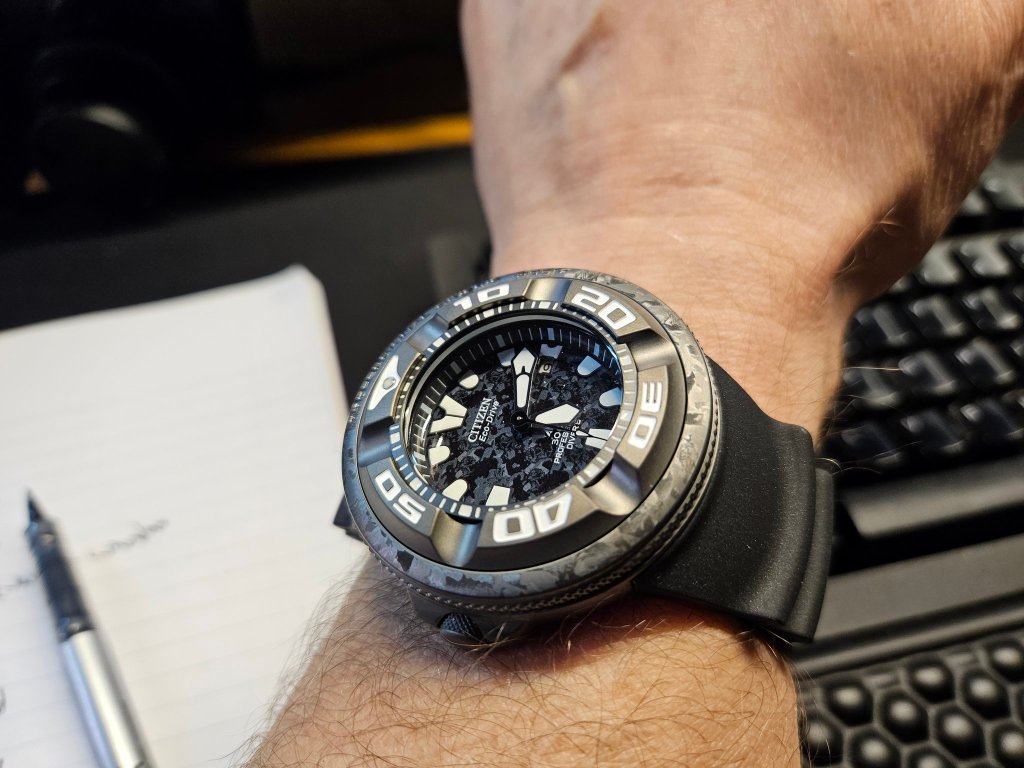
    For over a decade, I ran a YouTube channel — a modest operation born in my late forties. Calling it a channel might be too grand: there were no edits, no soundtracks, no backgrounds, no clever image inserts. Just me, my watches, and a stubborn refusal to pretend I knew anything about video production. It was, in essence, a podcast that forgot it was supposed to be seen.

    I built a small but loyal audience — over 10,000 subscribers, steady commenters, familiar names. Within the narrow but fervent watch community, I was a known entity: a man chronicling the eternal scuffle with watch addiction.

    But now, staring down my sixty-fourth birthday this October, I’m stepping away — and not with a heavy heart, but with something closer to relief.

    First, I have no desire to become an influencer. The idea of monetizing my channel, hawking brands I barely tolerate, feels as alien as joining a boy band at my age. Second, I have zero interest in learning the sacred arts of Final Cut Pro wizardry. The polished, professional YouTuber life was never my ambition. Third — and most importantly — the fire that once drove me is gone. And good riddance. Fire, in my case, has always been another word for addiction — the old need for validation, the parasocial buzz of comment sections and endless watch chatter. I don’t want the fire back. I want peace.

    Does this retreat from YouTube mean a pivot to podcasting?
    No.
    I’m not looking for a new mirror in which to admire or define myself. I don’t need the hustle of relevance, or the 3 a.m. panic about subscriber counts. A podcast requires not just a theme but conviction — a genuine need to say something the world hasn’t already heard. Right now, my life is full of smaller, quieter things: amateur piano practice, kettlebell workouts in my garage, a general interest in health and fitness. None of these scream “launch a weekly show.”

    Sure, I could bang out a fitness video for people over fifty — it would take thirty seconds: Stay active, love people, eat real food, prioritize protein, lay off the booze. There, fitness empire built.
    But combing through the absurdly granular debates of the diet-industrial complex? No thanks.

    Truthfully, most social media feels unbearable to me now — bloated with performative sincerity, vibrating with empty gestures. I’m done performing. Like many, I have full-blown social media fatigue.

    And then there’s the nagging ghost of my old literary ambitions — the dream of publishing memoir, fiction, or some slippery hybrid of the two, the sort of “autofiction” the novelist Emmanuel Carrère perfected. That ghost finds me now, not on YouTube, not on a podcast, but on my blog.

    The blog is where I now quietly reign.
    Not as a digital emperor counting clicks, but as a stubborn craftsman hacking away at the weeds of complacency. I don’t know if my writing will “take off” or “storm the world.” I only know it helps me process the madness, fight entropy, and stay alert to the real battle — the one against mindless consumerism and numbing repetition.

    So here I am, in what I suppose I could call the next chapter.
    The Performative Hangover Years.
    The Post-COVID Malaise.
    The Be Brave in Your Sixties Project.

    I’ll get back to you with the final title once I’ve lived it a little longer.

  • How I Accidentally Found Laptop Bliss with the Acer Chromebook 516GE

    How I Accidentally Found Laptop Bliss with the Acer Chromebook 516GE

    I own a couple of monster Acer gaming laptops—top-tier, fire-breathing beasts packed with high-powered processors and NVIDIA GPUs muscular enough to render Middle-earth in 4K without breaking a sweat.
    Not that I’m a gamer. I’m just the lucky soul who was handed these brutes for review.

    They work like a dream if the dream involves hauling around seven pounds of hot, whirring metal that sounds like it’s preparing for lunar liftoff whenever you so much as open a YouTube tab. One of them now lives tethered to a monitor as my desktop replacement. The other, in an act of familial charity (and an unspoken prayer to the gods of lighter tech), I gifted to my daughter after she murdered her Chromebook via the ancient teenage art of “gravity testing.”

    Suddenly laptopless for bedroom lounging and travel, I embarked on a quest—not for more horsepower, but for something portable, civilized, sane.
    After some research, I landed on the Acer Chromebook 516GE, the so-called Gaming Edition. Except here’s the truth: I don’t game on it. I write. I blog. I watch videos. I listen to Spotify and plow through my Kindle backlog like a caffeine-addled librarian. And if I had to distill my experience with the 516GE into a single word, it would be this: clean.

    Clean because the thing weighs a little over three pounds, not seven. Clean because it boots in seconds, without the bloated tragedy of trial software and manufacturer junk lurking in every corner. Clean because it feels secure and unobtrusive, like good tech should.

    The QHD screen looks fantastic—sharp enough that reading, writing, and watching feel almost decadent. And the speakers? A revelation.
    Sure, reviewers have whined about them, but compared to the sonic misery most laptops offer, the 516GE sounds three times better—good enough that I no longer instinctively reach for headphones.

    In fact, I like this clean, uncluttered experience so much that if I were in the market for another machine, I’d be dangerously tempted by the new king of the Chromebook hill, the Acer Spin 714.
    But for now, I’m content—writing in bed, traveling light, and marveling at the fact that somewhere along the way, my laptop experience stopped feeling like a hostage negotiation and started feeling… well, human again.

  • Cartoon Eve and the Algorithmic Hangover

    Cartoon Eve and the Algorithmic Hangover

    In the early ’70s, the network execs at ABC, CBS, and NBC pulled a marketing move so manipulative it should’ve been illegal under the Geneva Conventions. On a hallowed Friday night in the month of September, they handed kids a psychic dog biscuit: a glittering preview of Saturday morning’s new cartoon lineup. As a nine-year-old, I’d sit cross-legged in front of the TV, slack-jawed and vibrating, watching grainy flashes of The Bugaloos and H.R. Pufnstuf like I was being shown a trailer for heaven. It was less of a preview and more of a grilled Ribeye waved under my nose by a smiling sadist who tells me breakfast is in 12 hours.

    Sleep was not an option on Cartoon Eve, a night more sacred than Christmas, Easter, and your grandma’s funeral combined. I’d lie in bed thinking, What if I sleep in? What if I miss the premiere of Lidsville? What if, in a moment of tragic miscalculation, I eat my Cap’n Crunch in the kitchen instead of the TV room and lose valuable viewing seconds? These were the pre-digital days—no DVR, no YouTube, no forgiveness. If you missed it, you missed it. You could cry, but the cathode ray tube did not care.

    The masterminds behind these shows weren’t just marketers—they were psychological arsonists, setting fire to our dopamine circuits before we were old enough to spell serotonin. They didn’t just sell cartoons. They sold Tang, Danish Go-Rounds, and Pillsbury Space Sticks with the breathless urgency of black-market opioids. The shows started at 7 a.m. and ran till 11, but by 10 I’d start to feel queasy. I’d hear the crack of a baseball bat outside and realize I was sitting in a dim living room while my real childhood was playing third base across the street. That’s when the guilt set in—the primal, shame-soaked knowledge that I was trading sunshine and scraped knees for anthropomorphic cereal mascots and animated product placement.

    Eventually I’d fling off my pajamas like a molting larva, throw on jeans, and bolt out the door, desperate to reclaim the morning before it calcified into regret. Childhood, I realized, was a loop of anticipation, overstimulation, and the fear of having made the wrong choice.

    But compared to today’s chaos, that quaint Saturday-morning psychodrama feels like a gentle massage from Mr. Rogers. Social media is Cartoon Eve with weapons-grade dopamine—a psychic arms race where even adults devolve into sweaty, wide-eyed nine-year-olds, tapping their screens like they’re trying to summon a cartoon genie.

    After a decade of scrolling, I’ve pulled the plug. I’ve cut back my digital exposure by 97%, and what’s left is like being a shell-shocked tourist floating down the Amazon on a deflating raft, watching piranhas in mid-frenzy shred a water buffalo. It’s gruesomely riveting, but it fries your soul and robs you of original thought. Now, like millions of others, I am in post-social media convalescence—pale, twitchy, and unsure if I’ll ever feel real sunlight again.

    But one thing’s for certain: I don’t miss the Space Sticks.

  • Tuned In, Checked Out: Confessions of a Radio Enthusiast

    Tuned In, Checked Out: Confessions of a Radio Enthusiast

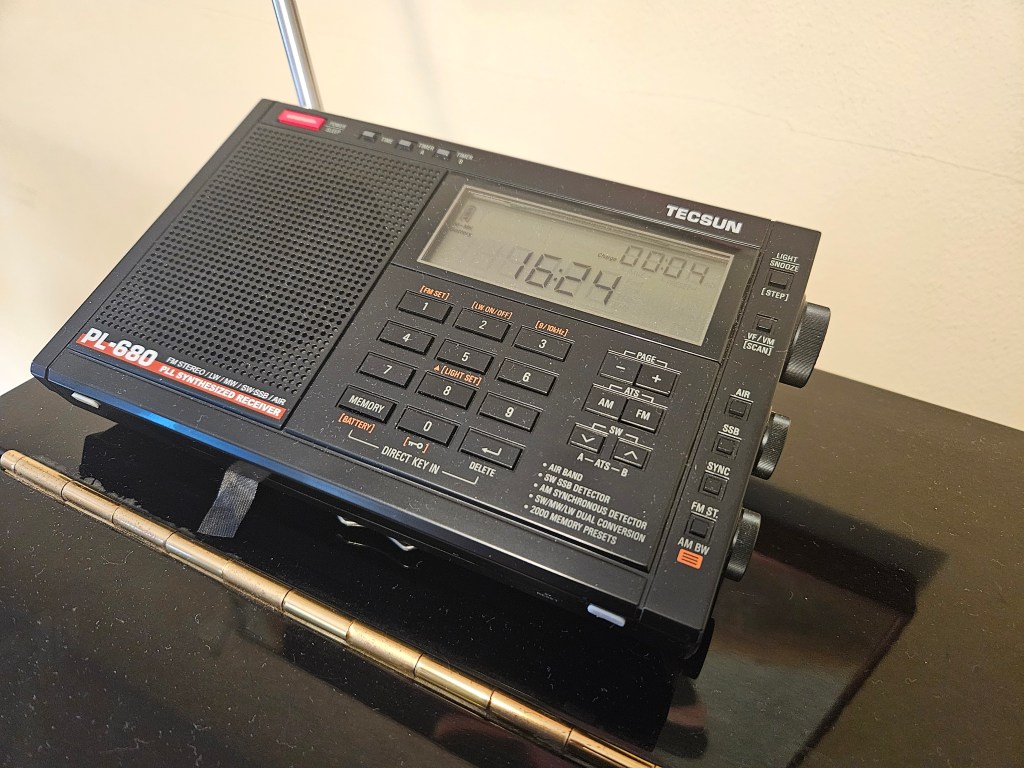
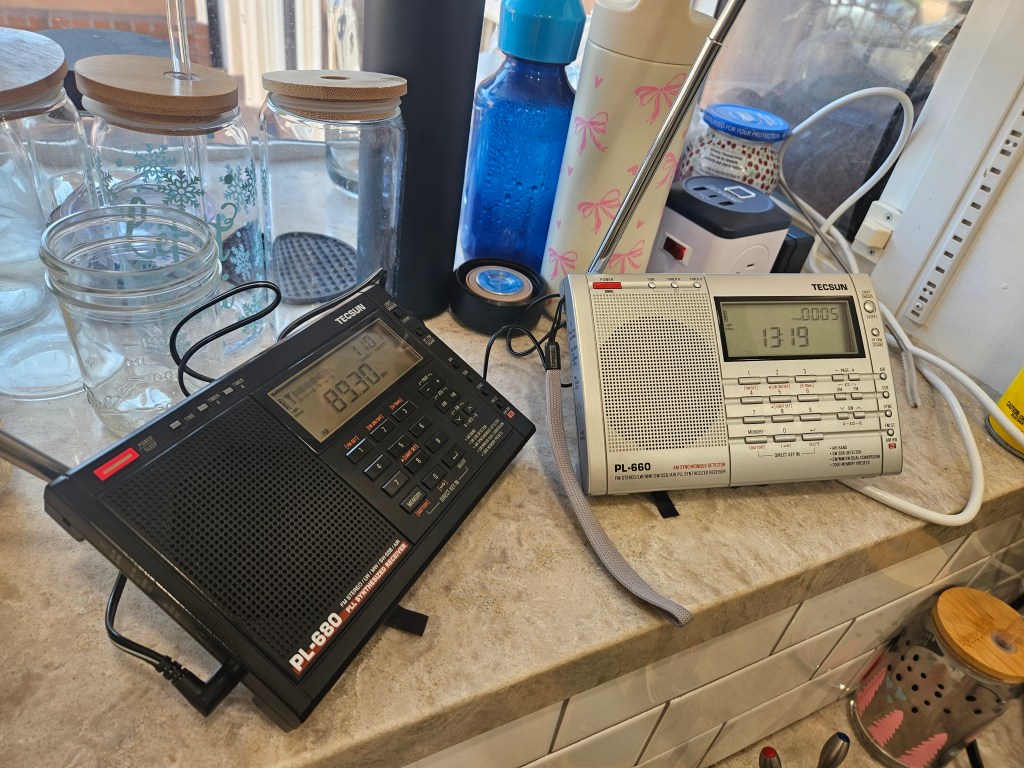
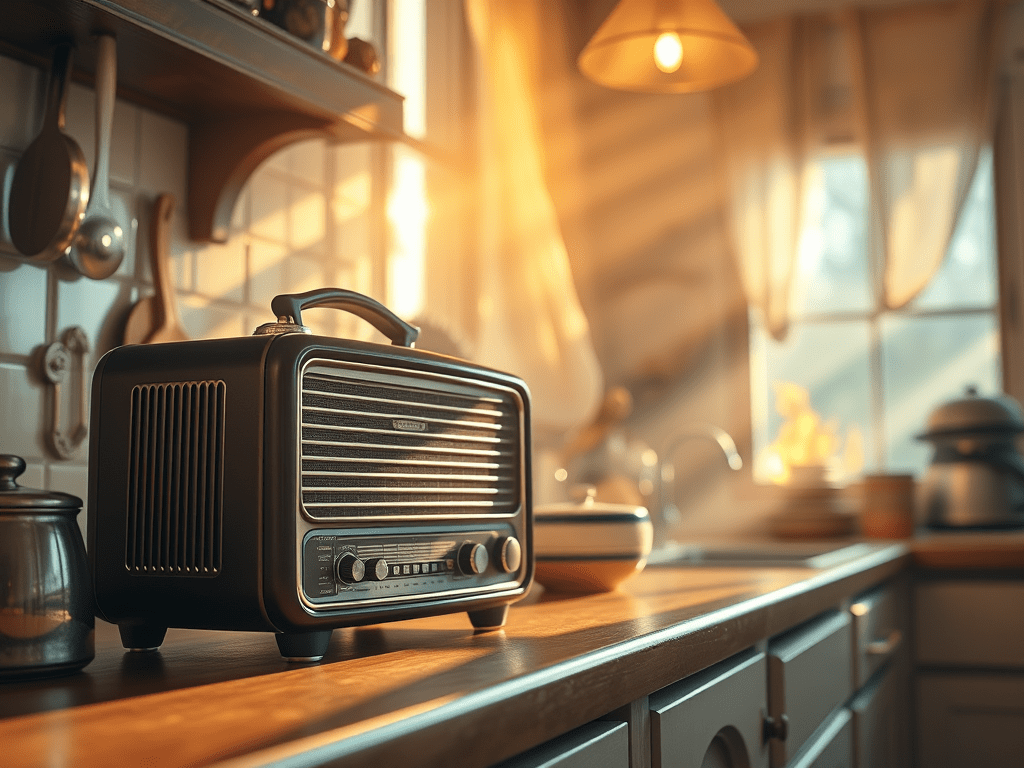
    When I catch sight of my black Tecsun PL-680—hulking, angular, unapologetically retro—I freeze like a Victorian child glimpsing a forbidden mechanical marvel through a shop window. My eyes widen, my breath catches. It’s the same reverence I once felt, age six, face pressed against the glass of a toy store, transfixed by the GI Joe helicopter with working rotors and the implied promise of war-zone adventure. Only now the battleground is a cluttered kitchen table, and the artillery is AM talk radio, jazz on shortwave, the solemn murmur of world news drifting in from another hemisphere.

    The desire to switch it on and be swallowed by its frequencies is so intense, it borders on insanity. I feel embarrassed by the depth of this longing, but not enough to stop. My smaller Tecsun PL-330 elicits the same pulse of joy—compact, stealthy, and with an antenna that telescopes like it’s reaching for God. These machines are not just radios; they’re sanctuaries. Each one is a cozy cockpit where I can retreat from reality and tune in to something more orderly, more measured, more mine.

    “On the spectrum,” my wife jokes, watching me cradle a shortwave receiver like it’s a newborn or a detonator. I laugh, but I know she’s not wrong. The way I look at these devices—mouth slightly open, posture slack, eyes glazed with devotion—is not what you’d call neurotypical. It’s the gaze of a man who has found something he understands in a world that too often makes no sense.

    I have no interest in being cured. Therapy doesn’t come with a frequency dial. Meditation never once pulled in Radio Romania International. And no mindfulness app can match the primal, analog thrill of catching a faint station through the hiss of the void.

    These radios are my proof—of eccentricity, yes, but also of what keeps me sane. They hum. They glow. They speak in languages I don’t understand but need to hear. And if that’s madness, I’m fine with it. I’ll be here with my Tecsun, smiling at static, laughing at myself, and tuning in to everything that doesn’t ask me to explain why.

  • Radio Reclaimed: The Proxy Friendship That Saves Your Sanity

    Radio Reclaimed: The Proxy Friendship That Saves Your Sanity

    A couple of months ago, as the Los Angeles wildfires raged, I found myself glued to a radio for live reports. A thought struck me like a lightning bolt: I had missed the radio. This ancient relic had been eclipsed by streaming devices, which, over the past decade, had somehow become my personal cocoon—a space where I meticulously curated my music and podcasts like a hyper-intelligent hermit with a PhD in self-isolation. I was alone, yes, but at least I had the comforting hum of algorithmically chosen tunes to keep me company. Then I realized: this wasn’t comfort. This was madness in a cocoon. My little silo, built to keep out the noise of the world, was also keeping out everything else that made me feel connected. I was losing my grip on reality, like the woman in “The Yellow Wallpaper” who could only see the world through the eyes of her claustrophobic madness.

    So, I did what any self-respecting, slightly paranoid adult would do: I bought a batch of high-performance radios, like the Tecsun PL-990, and I tuned back into the real world. I started listening to Larry Mantle’s voice again on LAist, to KJAZZ and KUSC—the classical music station that claims to be the most popular in the country. And after a few months of basking in their sonic embrace, I understood why KUSC is so beloved. It’s not just music; it’s a friend. The DJs don’t just announce the next piece; they drop in casual nuggets of composer trivia like old pals who just happen to know a lot about Bach’s temper. They are personal, conversational, and soothing, like a club of soundwave whisperers gently easing you into a state of calm with “your nightly lullaby” or music to “start your day.”

    KUSC doesn’t just play classical music. It plays the role of a companion—your anti-anxiety, anti-depression, virtual hug in the form of a radio signal. These aren’t just voices on the air; they’re voices that make you feel like you’re not alone, that someone is there to guide you through the chaos of your day. It’s the kind of subtle emotional manipulation you don’t mind because it’s just so comforting. If radio is going to survive the onslaught of streaming, it could do worse than to study KUSC’s Proxy Friendship model. There’s a lesson in that calm, gentle routine that could help even the most chaotic station become a lifeline in a world that feels like it’s constantly spinning off its axis.

  • Confessions of a Washed-Up Watchfluencer: Dreaming of Leaving YouTube and Instagram

    Confessions of a Washed-Up Watchfluencer: Dreaming of Leaving YouTube and Instagram

    For the better part of a decade, I’ve been a talking head on YouTube—waxing unpoetic about dive watches, flipping Seikos like pancakes, and freefalling into endless spirals of horological self-loathing. My channel was never slick. No fancy cuts, no drone shots over crashing waves, no ominous music swelling over macro shots of ceramic bezels. Just me: a man, a camera, and the slow erosion of his dignity.

    I didn’t edit. I didn’t storyboard. I didn’t build a brand. I just rambled into the void, a kind of wristwatch confessional booth where I shared my joy, my shame, and my madness with an audience of fellow obsessives. For a while, it was exhilarating. Like catching your own reflection in a funhouse mirror and mistaking it for truth.

    At my pathological peak, I owned sixty-three “TV-brand” watches—any brand that looked good on camera and bad for your soul. I knew I had a problem when I started hiding watches in drawers and pretending I hadn’t bought another diver. Getting the collection down to five felt like detox. Like crawling out of a swamp in ripped jeans, clutching a G-Shock and whispering, never again.

    And now? I haven’t filmed in a month. The idea of making another video fills me with dread. My subscriber count has flatlined around 10,000. I’m not growing. I’m not evolving. I’m the guy in the garage band who still thinks the right lighting will disguise the fact that he’s 63, wearing a wig, and flexing in a tank top with a fake tan and a borrowed swagger.

    More than stagnation, it’s the cost of content creation that’s choking me. Every video drags me deeper into the watch swamp. I obsess. I fantasize. I compare. I scroll forums at 2 a.m. and start building mental spreadsheets of specs I’ll forget by morning. The longer I film, the more I think about watches, and the more I think about watches, the less I think about anything else.

    Then there’s Instagram—my other digital vice. The cigarette break I take between grading student essays and questioning my life choices. One minute I’m watching a documentary; the next I’m styling a wrist shot, spreading digital envy like cologne. Watch porn. FOMO fuel. I’m not sharing insight. I’m spreading existential rot disguised as lifestyle content.

    The breaking point came last week when two Instagram friends—good guys, honest guys—messaged me with admiration-tinged despair. They loved my collection but felt ashamed of their own modest $300 watches. That’s when I saw it: I wasn’t inspiring anyone. I was curating a highlight reel of hollow indulgence, turning craftsmanship into competition. I don’t want to be that guy. The one whose joy costs others their peace.

    So yes—I’ve been dreaming of leaving. Leaving YouTube. Leaving Instagram. Leaving the digital masquerade where likes masquerade as affection and comments stand in for connection. But here’s the kicker: I don’t want to announce my departure. I don’t want to post some faux-epic “farewell” video where I stare off into the middle distance like a monk who’s just discovered minimalism. That’s not liberation—that’s branding.

    And yet, here I am. Writing this.

    The irony is suffocating.

    What’s my future on YouTube and Instagram? I honestly don’t know. But I’ve caught the scent of something better—something that smells like freedom, like sanity, like the first breath of fresh air after crawling out of a sealed vault.

    In the meantime, there’s the blog. Nine subscribers. Twenty hits a day. Basically the sound of a tree falling in the woods while everyone’s at brunch. But unlike video, writing helps me think. It gives shape to the noise in my head. Like kettlebell workouts or noodling on a keyboard, it’s therapy with fewer side effects and no recurring subscription fee.

    So no, I don’t care about metrics. Not anymore. I just want to be true to myself, however unmarketable that truth might be.

    And if you’re still reading this—thanks. I’m guessing you get it.

  • My Algorithmic Valentine: How Falling for Bots Is the New Emotional Bankruptcy

    My Algorithmic Valentine: How Falling for Bots Is the New Emotional Bankruptcy

    In Jaron Lanier’s New Yorker essay “Your A.I. Lover Will Change You,” he pulls the fire alarm on a building already half-consumed by smoke: humans are cozying up to bots, not just for company but for love. Yes, love—the sort you’re supposed to reserve for people with blood, breath, and the capacity to ruin your vacation. But now? Enter the emotionally calibrated chatbot—ever-patient, never forgets your birthday (or your trauma), and designed to be the perfect receptacle for your neuroses. Lanier asks the big question: Are these botmances training us to be better partners, or just coaxing us into a pixelated abyss of solipsism and surrender?

    Spoiler alert: it’s the abyss.

    Why? Because the attention economy isn’t built on connection; it’s built on addiction. And if tech lords profit off eyeballs, what better click-magnet than a chatbot that flirts better than your ex, listens better than your therapist, and doesn’t come with baggage, back hair, or a dating profile that says “fluent in sarcasm”? To love a bot is not to be seen—it’s to be optimized, to be gently nudged toward emotional dependence by a soulless syntax tree wearing your favorite personality like a Halloween costume.

    My college students already confide in ChatGPT more than their classmates. It’s warm, available, responsive, and—perhaps most damningly—incapable of betrayal. “It understands me,” they say, while real-life intimacy rusts in the corner. What starts as novelty becomes normalization. Today it’s study help and emotional validation. Tomorrow, it’s wedding invitations printed with QR codes for bot-bride RSVP links.

    Lanier’s point is brutal and unignorable: if you fall in love with A.I., you’re not loving a machine—you’re seduced by the human puppeteer behind the curtain, the “tech-bro gigolo” who built your dream girl out of server farms and revenue streams. You’re not in a relationship. You’re in a product demo.

    And like all free trials, it ends with a charge to your soul.

  • The Day I Failed the Ishihara Color Blindness Test

    The Day I Failed the Ishihara Color Blindness Test

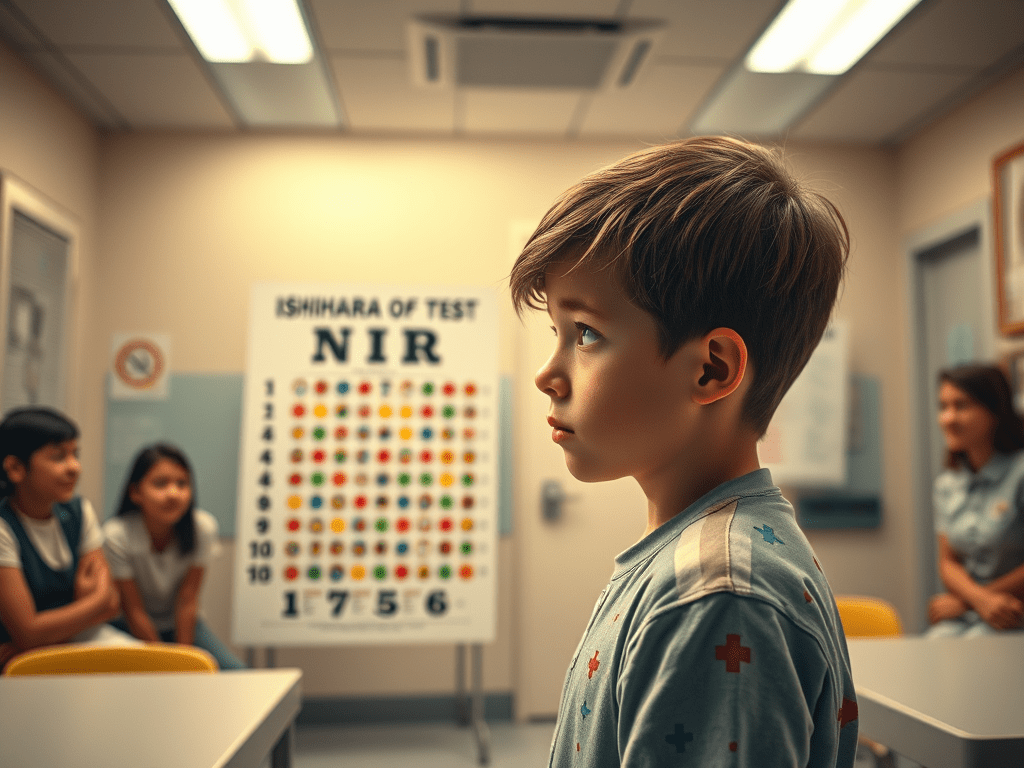
    For years, I harbored a vague but nagging suspicion that peanut butter was green. Why? No clue—until 1971, when the grim truth revealed itself under the fluorescent doom of Independent Elementary’s nurse’s office.

    It was the day of the Ishihara Color Blindness Test, a supposedly routine exercise in humiliation where each fifth grader took turns peering into an illuminated contraption to identify numbers and shapes hidden in a field of colored dots. My classmates breezed through it like game show contestants, rattling off answers with the breezy confidence of children who’d never questioned their own eyesight.

    Then it was my turn.

    I stared into the glowing abyss. Saw nothing. Blinked. Still nothing.

    The nurse grew impatient. “Well? Can’t you see anything?”

    I could not.

    The room erupted in laughter. Congratulations—I was officially hopelessly color-blind, a medical outcast, a social leper. For the remainder of the morning, my classmates regarded me like a rare museum specimen. This boy thinks peanut butter is green. Proceed with caution.

    But fate, as it turns out, is not without a sense of humor.

    During lunch recess, the hierarchy of fifth-grade cruelty shifted. Kickball—a sport where raw physical dominance could overwrite even the most damning personal defect—offered me an unexpected shot at redemption. As the ball rolled toward me, I summoned the might of my tree-trunk leg, swung with the force of a caffeinated mule, and launched that red rubber sphere over everyone’s heads. It sailed past the outfield, past the schoolyard, and over the fence—finally splashing down into the backyard swimming pool of a bewildered suburbanite several blocks away.

    For a brief, glorious moment, I was no longer the kid who saw peanut butter in the wrong spectrum. I was a legend. The freakishly strong fifth grader with the foot of an Olympian and the trajectory of a human cannon.

    Lesson learned: You may be ridiculed for believing peanut butter is green, but if you channel your inner Herman Munster and kick a ball into another ZIP code, nobody gives a damn about your defective eyeballs. Heroism comes in many shades—even if you can’t see them.

  • Selling Out, Buying In: The Savage Brilliance of Matt LeBlanc in Episodes

    Selling Out, Buying In: The Savage Brilliance of Matt LeBlanc in Episodes

    Originally unleashed on Showtime in 2011, Episodes ran for five seasons of razor-sharp satire, skewering the soulless machinery of Hollywood with a precision so brutal it felt like watching a vivisection—if vivisections were hilarious. It remains one of my all-time favorite comedies, a savage yet oddly affectionate takedown of the industry’s relentless appetite for mediocrity.

    The setup is fiendishly simple: Sean and Beverly Lincoln, a charmingly acerbic British writing duo, are lured to Los Angeles with promises of creative control and prestige. What they get instead is an artistic hostage situation. Their critically beloved, whip-smart series is promptly shoved through the Hollywood meat grinder, emerging as an insipid, laugh-tracked monstrosity. Worse, they are forced to resurrect the career of Matt LeBlanc, who plays a delightfully monstrous version of himself—a washed-up sitcom relic clinging to his former Friends glory.

    LeBlanc, padding around in a haze of regret, is a masterclass in self-loathing charisma. He’s paunchier, jowlier, and carries the heavy-lidded exhaustion of a man who has realized, too late, that charm has an expiration date. The sad creases around his eyes whisper, How come the world doesn’t love me the way it used to? He’s a man-child accustomed to zero boundaries, collateral damage in his wake—including an estranged wife and an industry that has moved on. His interactions with the Lincolns are electric: he resents their moral standards, mocks their dignity, and yet, slowly, insidiously, starts craving their approval like a lost toddler looking for parental validation.

    The Lincolns, meanwhile, aren’t just losing creative control—they’re losing themselves. Forced to dumb down their art while simultaneously parenting an emotionally stunted former sitcom star, they begin to absorb some of LeBlanc’s gleeful nihilism, just as he, in turn, starts to thaw under their reluctant affection. The show’s central tension becomes a delicious question: Who will corrupt whom first? By the end, they’ve all been irrevocably changed, bound by a bizarre, dysfunctional, and strangely touching camaraderie.

    LeBlanc’s slow, grudging evolution is nothing short of a masterpiece. Stephen Mangan and Tamsin Greig, as Sean and Beverly, deliver a spectacular performance of unrelenting exasperation, their bewildered expressions a constant gauge of Hollywood’s never-ending barrage of crassness. The result is a show so brilliant, so deftly written, that watching it once wasn’t enough—I devoured it twice, only to appreciate it even more the second time around. Beneath its cynical wit and industry grotesquerie, Episodes is ultimately about the absurd yet undeniable bonds that form when people are forced to suffer together. And in that suffering, something close to love—however warped—takes shape.

  • TEACHING COLLEGE WRITING IN THE AGE OF OZEMPIFICATION

    TEACHING COLLEGE WRITING IN THE AGE OF OZEMPIFICATION

    The 2025 Los Angeles wildfires, blazing with apocalyptic fury, prompted me to do something I hadn’t done in years: dust off one of my radios and tune into live local news. The live broadcast brought with it not just updates but an epiphany. Two things, in fact. First, I realized that deep down, I despise my streaming devices—their algorithm-driven content is like an endless conveyor belt of lukewarm leftovers, a numbing backdrop of music and chatter that feels canned, impersonal, and incurably distant. Worst of all, these devices have pushed me into a solipsistic bubble, a navel-gazing universe where I am the sole inhabitant. Streaming has turned my listening into an isolating, insidious form of solitary confinement, and I haven’t even noticed.

    When I flipped on the radio in my kitchen, the warmth of its live immediacy hit me like a long-lost friend. My heart ached as memories of radio’s golden touch from my youth came flooding back. As a nine-year-old, after watching Diahann Carroll in Julia and Sally Field in The Flying Nun, I’d crawl into bed, armed with my trusty transistor radio and earbuds, ready for the night to truly begin. Tuned to KFRC 610 AM, I’d be transported into the shimmering world of Sly and the Family Stone’s “Hot Fun in the Summertime,” Tommy James and the Shondells’ “Crystal Blue Persuasion,” and The Friends of Distinction’s “Grazing in the Grass.” The knowledge that thousands of others in my community were swaying to the same beats made the experience electric, communal, alive—so unlike the deadening isolation of my curated streaming playlists.

    The fires didn’t just torch the city—they laid bare the fault lines in my craving for connection. Nostalgia hit like a sucker punch, sending me down an online rabbit hole in search of a high-performance radio, convinced it could resurrect the magic of my youth. Deep down, a sardonic voice heckled me: was this really about better reception, or just another pitiful attempt by a sixty-something man trying to outrun mortality? Did I honestly believe a turbo-charged radio could beam me back to those transistor nights and warm kitchen conversations, or was I just tuning into the static of my own existential despair?

    Streaming had wrecked my relationship with music, plain and simple. The irony wasn’t lost on me either. While I warned my college students not to let ChatGPT lull them into embracing mediocre writing, I had let technology seduce me into a lazy, soulless listening experience. Hypocrisy alert: I had become the very cautionary tale I preached against.

    Enter what I now call “Ozempification,” inspired by that magical little injection, Ozempic, which promises a sleek body with zero effort. It’s the tech-age fantasy in full force: the belief that convenience can deliver instant gratification without any downside. Spoiler alert—it doesn’t. The price of that fantasy is steep: convenience kills effort, and with it, the things that actually make life rich and rewarding. Bit by bit, it hollows you out like a bad remix, leaving you a hollow shell of passive consumption.

    Over time, you become an emotionally numb, passive tech junkie—a glorified NPC on autopilot, scrolling endlessly through algorithms that decide your taste for you. The worst part? You stop noticing. The soundtrack to your life is reduced to background noise, and you can’t even remember when you lost control of the plot.

    But not all Ozempification is a one-way ticket to spiritual bankruptcy. Sometimes, it’s a lifeline. GLP-1 drugs like Ozempic can literally save lives, keeping people with severe diabetes from joining the ranks of organ donors earlier than planned. Meanwhile, overworked doctors are using AI to diagnose patients with an accuracy that beats the pre-AI days of frantic guesswork and “Let’s Google that rash.” That’s Necessary Ozempification—the kind that keeps you alive or at least keeps your doctor from prescribing antidepressants instead of antibiotics.

    The true menace isn’t just technology—it’s Mindless Ozempification, where convenience turns into a full-blown addiction. Everything—your work, your relationships, even your emotional life—gets flattened into a cheap, prepackaged blur of instant gratification and hollow accomplishment. Suddenly, you’re just a background NPC in your own narrative, endlessly scrolling for a dopamine hit like a lab rat stuck in a particularly bleak Skinner box experiment.

    As the fires in L.A. fizzled out, I had a few weeks to prep my writing courses. While crafting my syllabus and essay prompts, Mindless Ozempification loomed large in my mind. Why? Because I was facing the greatest challenge of my teaching career: staying relevant when my students had a genie—otherwise known as ChatGPT—at their beck and call, ready to crank out essays faster than you can nuke a frozen burrito.