Tag: books

  • When Loving Watches Starts to Feel Like a Job

    When Loving Watches Starts to Feel Like a Job

    In her darkly hilarious comedy special Father, Atsuko Okatsuka shares the origin story of her career in punchlines. Her schizophrenic mother once “kidnapped” her in Japan and whisked her away to the United States without warning, severing her ties to her father in the process. The trauma was so disorienting, so profound, that Atsuko now mines laughter for survival. She tells us, with a comedian’s grin and a survivor’s twitch, that she performs to fill an infinite hole in her soul with the validation of strangers.

    That hole is not unique to her. It’s a universal pit—bottomless and demanding. Validation comes in many flavors. For some, it’s esteem and admiration. For others, it’s expertise, artistry, the warm glow of audience approval. For Atsuko, it’s laughter. For others, it’s the faint buzz of a “like” on a post about a wristwatch.

    Let us now consider the watch obsessive, a different breed of relevance-seeker, but a kindred spirit nonetheless. He isn’t doing five-minute sets at the Laugh Factory, but he is performing—on Instagram, on forums, on YouTube, in the comment sections of strangers’ macro shots. He presents his taste, his “knowledge,” his ever-shifting collection. But underneath the sapphire crystals and brushed titanium is the same primal whisper:
    Do I still matter?
    Do they still see me?

    Here’s the tragic twist: he may already have the perfect collection. It gives him joy. It’s balanced. It fits in a single watch box. By all logic, he should stop. Buying another watch would be like adding a fifth leg to a table—wobbly and unnecessary. But he doesn’t stop. He can’t stop.

    Why? Because if he stops collecting, he stops posting. If he stops posting, he stops being seen. And in a world addicted to scrolling, disappearing feels like dying.

    Relevance is the new oxygen. And social media is a machine that runs on novelty, not legacy. The digital hive forgets fast. “Gangnam Style” is now a fossil. “Call Me Maybe” is background noise at the grocery store. To stay visible, you must be new. You must be shiny. You must offer dopamine.

    And what happens when the watch addict manages his demons, reaches peace, and stops feeding the machine?

    He becomes boring. He becomes silent. He becomes irrelevant.

    And the parasocial bonds he once had—those illusory friendships, those mutual obsessions—fade. The sense of exile is real. It doesn’t matter that the exile is self-imposed. The pain still lingers.

    That fear—that primordial fear of irrelevance, of being cast out from the tribe—can be so powerful it masquerades as passion. It convinces the watch obsessive to keep flipping, keep chasing, keep posting. Not out of love, but out of fear.

    In this crazed state, the obsessive has succumbed to Performative Collecting–the transformation of a private pleasure into a public act staged for recognition. Watches are curated less for personal resonance than for their ability to sustain audience attention. Silence is interpreted as failure.

    So the question becomes: Are we collectors? Or are we hostages? Do we love horology? Or are we simply terrified of vanishing?

  • Maudlin Grail Syndrome

    Maudlin Grail Syndrome

    As I consider Cicero’s call for self-restraint in Tusculan Disputations, my thoughts return to a story that’s haunted me for over twenty years—Anton Chekhov’s “Gooseberries.” It is, in essence, the tragic fable of a Maudlin Man, told with surgical clarity and Chekhovian cruelty.

    His name is Nicholai Ivanich, and he’s not merely pathetic—he’s morally revolting. He marries an aging, unattractive woman for her wealth and waits with predator patience for her to die. Once she obliges, he buys himself a country farmhouse ringed with gooseberry bushes, retreats from the world, and crowns himself a minor deity among the local peasants by handing out cheap liquor like some portly, provincial Dionysus.

    Chekhov doesn’t give us Nicholai’s voice. He gives us Ivan, the disgusted brother, who sees this man for what he is: a swollen, self-satisfied corpse in waiting. Ivan calls Nicholai’s farmhouse dream a “definite disorder”—not a goal, but a fixation, a fever dream dressed up as a life plan. For Ivan, his brother’s pastoral retreat is less Arcadia and more open-casket viewing. “He looked old, stout, flabby,” Ivan observes. “His cheeks, nose, and lips were pendulous. I half expected him to grunt like a pig.”

    That image sticks: Nicholai, the human piglet, grinning over his plate of gooseberries, believing he’s achieved bliss when in truth he’s just decaying in comfort.

    And then comes the moment that seals it—Nicholai’s nightly ritual: he’s brought a plate of gooseberries from his estate, and upon seeing them, he literally weeps with joy. “He looked at them in silence, laughed with joy, and could not speak for excitement.” He is consumed by the performance of happiness. It’s not the berries he loves—it’s what they symbolize. In his mind, they are proof that his life is complete.

    But it’s all delusion. Nicholai isn’t fulfilled—he’s embalmed in maudlin sentimentality, drunk on nostalgia for something that never really existed. His joy is cosmetic. He’s not flourishing. He’s fermenting.

    And this, I confess, reminds me of myself—and my fellow watch addicts.

    We, too, have our gooseberries. Ours just happen to tick.

    We post videos of our “grail watches” and glow with reverence as we hold them up to the camera like relics from a sacred shrine. We give breathless soliloquies about our “perfect” collections, our “ultimate” configurations. We praise bezels and dial textures the way Nicholai praises his berries—with trembling hands and watery eyes. And like Nicholai, we’re not convincing anyone but ourselves.

    Because deep down, we know: the drama is maudlin. We have arrived at Maudlin Grail Syndrome–a condition in which the collector performs reverence rather than experiencing peace. Tears may form, voices may soften, thumbnails may glow—but the joy is theatrical, not restorative. The grail embalms rather than liberates. The joy is hollow. The entire pageantry is just a way to distract from the torment our hobby brings us. We spend hours obsessing, comparing, flipping, tweaking, always convinced that this next watch will bring balance and peace, only to find ourselves more anxious than before.

    We are men who weep over gooseberries. And worse—we make YouTube thumbnails about them.

    If we were honest, we’d admit that one decent, mid-priced watch would offer more peace than any “holy grail” ever could. But that would mean giving up the theater. The drama. The illusion that our fixations have meaning. And that, for the Maudlin Man, is the hardest loss of all.

  • The Watch Miserabilist

    The Watch Miserabilist

    The Watch Miserabilist is a man determined—by temperament, guilt, vanity, and a punishing inner prosecutor—to turn a pleasurable hobby into a moral catastrophe. He stares at his collection as if it were evidence in a trial against him and sighs, “These watches mock me. I am unworthy. I have nowhere to wear them.” He glances down at his Omega Planet Ocean while seated in a windowless man cave and concludes, with theatrical despair, that the watch has exposed him as a fraud. Luxury, in his hands, becomes an accusation.

    He shuffles around his lair like a contemporary Gollum: threadbare robe, bloodshot eyes, four-day beard, posture of defeat. He looks vaguely unhoused. The contrast is brutal—this exhausted homunculus lugging around a six-thousand-dollar slab of Swiss engineering on his wrist. The watch gleams with purpose; the man does not. You can practically hear the object wondering how it ended up here. Whatever redemption the Miserabilist hoped the purchase would bring has failed spectacularly. The watch did not save him. It only sharpened the irony.

    Despite owning a dozen coveted Swiss watches, his YouTube channel limps along with fewer than fifty subscribers. His voice is saturated with despair—thick, damp, unventilated. Viewers last about five seconds before clicking away, not because the watch isn’t beautiful, but because the misery is suffocating. The sadness radiates through the screen. You can almost smell the robe. No lume shot can redeem a tone that sounds like it’s been steeped overnight in self-loathing.

    The uncomfortable truth is that every watch obsessive carries a trace of the Watch Miserabilist within. It’s the voice of guilt and nihilism that wants to poison enjoyment, to insist that pleasure is illegitimate, that beauty must be justified, that desire is suspect. This voice must be acknowledged—but never indulged. You laugh at it. You recognize it. You keep it at arm’s length. Because once coddled, it metastasizes. The Watch Miserabilist is not wisdom. It is a disease, and left unchecked, it will devour every ounce of joy in its path.

  • Writing the Book That No One Can Ignore

    Writing the Book That No One Can Ignore

    You don’t sit down to write a book the world wants to read by accident. At least, it feels like an act of will. You force yourself into the chair. You produce sentences. You assemble a manuscript that lodges itself in people’s heads, agitates their assumptions, rearranges their furniture. The book exerts power—but not the vulgar kind. You’re not trying to dominate anyone. You’re simply telling the truth so cleanly, so directly, that looking away becomes impossible. Your ideas don’t shout. They persist. They refuse to be ignored.

    This kind of book is not a lecture, a scolding, or a manifesto. It doesn’t traffic in nihilism, misanthropy, or fashionable despair. It doesn’t prescribe easy solutions or luxuriate in outrage. Instead, it diagnoses. And a real diagnosis cuts both ways: it is unsparing about the human predicament while still pointing—quietly but unmistakably—toward an exit. Not optimism. Orientation.

    The book earns its authority by puncturing the clichés we treat as wisdom. It exposes the mass hallucinations surrounding happiness, success, fulfillment—all the shiny quests we pursue with religious devotion and predictable disappointment. But it does this without contempt. The tone isn’t superior; it’s exact. The pleasure of reading comes from recognition, not humiliation. You feel seen, not scolded.

    The sentences do the heavy lifting. They are short, fearless, and unembarrassed by clarity. There is no ornamental fog, no academic hedging, no decorative complexity masquerading as depth. Flowery prose and pretentious diction are weeds on a neglected lawn: they obscure what matters. This language is honed, not arid. It glints. Each sentence lands cleanly and moves on.

    If a curmudgeonly edge appears, it’s a seasoning, not the main course. A book powered by pure crankiness curdles into nihilism—and nihilism is dull. It flattens stakes, erases texture, and mistakes exhaustion for insight. This book avoids that trap. It remains alive to nuance, contradiction, and consequence.

    Because the book is so bracingly clear, other writers feel it immediately. Not admiration first—envy. The good kind. The Beatles hearing Pet Sounds and realizing the bar has been raised. The book doesn’t just succeed; it rearranges the landscape.

    What ultimately distinguishes it isn’t the subject matter but the voice. To understand that voice, Emmanuel Carrère’s Kingdom is instructive. Carrère contrasts the florid ambition of Luke—his PR-friendly, overworked prose—with the sayings of Jesus, which arrive stripped, terse, and destabilizing. Jesus’ words feel both utterly familiar and entirely unprecedented. Carrère calls this a linguistic hapax legomenon: a way of speaking so singular that it leaves no doubt a real person once spoke this way.

    That is the essence of a world-changing book. Its language has no template. It cannot be reverse-engineered or taught. It doesn’t sound like anything else. It lands in the reader’s mind with a depth that imitation can’t reach. At that point, the writer looks less like a craftsman and more like an oracle—someone through whom something passes.

    Which brings us back to will. Maybe writing such a book isn’t an act of will at all. Maybe the writer is chosen—by temperament, by obsession, by affliction—to speak this way. Either way, the true desire isn’t fame or money or validation. It’s to produce language with the force of a hapax legomenon: words that could only be said once, and yet echo forever.

    That, finally, is its own reward.

  • Gunmetal, DLC, and the Case Against Babying a Watch

    Gunmetal, DLC, and the Case Against Babying a Watch

    If you’re a watch collector, you’ve probably flirted with the idea of a black watch. At some point, the monochrome seduction gets you. A black case on a matching bracelet has a severity to it—stealthy, self-contained, faintly militant. I’ve fallen for it more than once. I’ve owned some genuinely beautiful black watches.

    I no longer own any of them.

    Such is life in the fever swamp of watch addiction, where flipping is not a behavior but a temperament. Watches arrive. Watches depart. Attachments form briefly and dissolve without ceremony.

    Take me back to around 2012. I owned two PVD-coated Seiko kinetic divers: the SUN007 and the SKA427P1. They were handsome, purposeful, and—contrary to every online hand-wringing session about coatings—remarkably resilient. I never scratched them. Not once. And yet they’re gone, casualties of some forgotten bout of restless dissatisfaction.

    Here’s the dangerous part: you can still find them brand new on eBay. I know this because I went looking. The prices are tempting. I felt the familiar tightening in the chest as I typed the model numbers. Relapse always begins with “just checking.”

    Another repeat offender from my past was the Citizen Promaster Sky BY0084-56E. I owned that watch no fewer than seven times over a decade. That’s not ownership—that’s a custody arrangement. Unlike PVD, the Citizen used Super Titanium treated with Duratect—often described as DLC. Marketing aside, the material difference is real. Stainless steel sits around 200 on the Vickers hardness scale. DLC-coated Super Titanium pushes north of 1,000. That’s not invincible, but it’s not cosplay either.

    In real life, that translates to this: the clasp will show desk-diver scuffs, because clasps always do. The rest of the watch? It shrugs off normal wear with indifference.

    Which brings me to the present. In a couple of days, the Citizen Super Titanium Gunmetal Diver NB6025-59H will return to my collection. Its DLC coating reads more dark gray than true black—an advantage, frankly. I plan to take it traveling. Miami. Hawaii. Heat. Salt water. Airport bins. Sunscreen. Sweat. This watch is not entering witness protection. It’s not being boxed, babied, or preserved for a future auction. It’s being worn.

    I’m glad to have one black—or gunmetal—watch in the rotation. It’s a welcome disruption from stainless steel, a visual reset. But there’s a caveat worth stating. Black watches are all about proximity. Up close, the details are rich and seductive. From a distance, they collapse into silhouette—lume floating in darkness. If you need your watch to announce itself across a room, black may frustrate you.

    For me, that quiet severity is the point.

  • Losing My Classroom Key and Finding the End of the World

    Losing My Classroom Key and Finding the End of the World

    Twenty-six years ago, I lost my classroom key at a university. This was not treated as a minor inconvenience. It was treated as a moral failure.

    I was summoned before a college administrator whose demeanor suggested I had been caught shoplifting ideas from Plato. She informed me—slowly, with relish—that the one thing a college instructor does not do is lose his key. She scanned me from head to toe the way a customs agent inspects a suitcase that smells faintly of contraband. My carelessness, she implied, had finally revealed my true identity: a professional bum, a sloth masquerading as an educator, a man unfit to shepherd students through anything more complex than a vending machine.

    Once she had finished anatomizing my character, I asked—meekly—how one went about replacing a lost key.

    “You don’t just get a replacement,” she said. “It’s a process.”

    The word process landed like a sentence.

    She explained that I would need to drive to a remote outpost on the edge of campus called Plant-Ops. There, I would meet a locksmith. I would give him my personal information and twenty dollars in cash. No check. No receipt. The arrangement sounded less like facilities management and more like a back-alley transaction involving counterfeit passports.

    “How will I know who the locksmith is?” I asked.

    “You’ll know him,” she said. “He’s the only person there.”

    “What’s the place called again?”

    “Plant-Ops.”

    I repeated the name aloud, hoping to brand it into my memory. She looked at me as one looks at a child who has accidentally set fire to a jungle gym and informed me that I was dismissed.

    Shamed and slightly afraid, I drove east from campus. The pavement gave way to dirt, then rubble, then something that barely qualified as a road. My car bucked and rattled as I passed cow skulls bleaching in the sun and tumbleweeds drifting like omens. Buzzards circled overhead. I was no longer in Southern California. I had crossed into a grim pocket dimension where entropy had been fast-forwarded and everything was quietly rehearsing its own ending. If someone had told me I would die there, I would not have argued.

    At last, I reached Plant-Ops: a dilapidated hangar that looked one strong gust away from becoming a weather event. Inside stood the locksmith. He was short, grouchy, bespectacled, and gaunt, with a bushy mustache and a few desperate strands of black hair clinging to his bald skull. He wore a grease-splattered apron. Wind howled through the corrugated metal walls, and I half-expected the structure to lift off and spin into the sky like Dorothy’s house.

    The man stood over a battered wooden workbench, glaring at me while eating cold SpaghettiOs straight from the can. His eyes bulged with irritation. My presence had clearly ruined his meal. Worse, it confirmed his theory of the world: incompetents abound, and today one had wandered into his hangar.

    I explained that I had lost my key. I apologized as though I had personally engineered his inconvenience. He demanded twenty dollars in cash—up front—made the key, and then leaned in to warn me that he was retiring soon. His replacement, he said, was a complete idiot, incapable of making a functional key. I took this prophecy seriously.

    I fled the hangar, drove directly to a hardware store, and purchased a Kevlar keychain with a tether reel, a high-density nylon belt loop, and enough industrial reinforcement to secure a small boat. From that day forward, my keys were attached to my body like an ankle monitor.

    I have done worse things in my life—objectively worse—but for reasons I still don’t fully understand, losing that key put me briefly at odds with the universe. I had been consigned to a shame dungeon, escaped it by the skin of my teeth, and sworn never to return.

  • Living in the Bottle: A Life Spent Building Cozy Universes

    Living in the Bottle: A Life Spent Building Cozy Universes

    My parents like to remind me that I grew up poor in a cockroach-infested assisted-living situation in Gainesville, Florida. The place was called Flavet Villages—Flavet, if you lived there, which everyone did because there was nowhere else to go. These were not “villages” in any meaningful sense. They were World War II–era Camp Blanding army barracks, uprooted from Jacksonville and dropped into North Florida like surplus history.

    What I love, even now, is the audacity of the name. Flavet Villages. It’s a master class in rebranding: take a barracks crawling with roaches and give it a pastoral plural noun. It’s the real-estate equivalent of dabbing Vicks VapoRub on your neck and calling it Menthol d’Après-Minuit.

    Flavet sat near an alligator swamp and a stretch of forest that felt mythic to me, even then. A Mynah bird lived there—always on the same branch, like a sentry or an oracle—and before bedtime my father and I would walk to the edge of the woods and talk to it. At dusk, the tide dropped, and the swamp revealed itself. Alligator dung, fully expressed. The smell was feral and unmistakable. While most people would recoil, I found it oddly soothing—bracing, even. As if the universe were saying, You’re here. This is real.

    As a native Floridian, I sometimes wonder—with a perverse sense of pride—whether my early exposure to fecal alligator swamps permanently rewired my sensory thresholds in ways outsiders could never understand.

    One evening, as my father and I stood at the forest’s edge, we heard a distant radio playing Juanita Hall’s rendition of “Bali Ha’i” from South Pacific. The song is about an island paradise that seems achingly close yet forever unreachable, and it’s meant to induce longing and melancholy. But I felt none of that. Paradise was already present. I was standing in an enchanted forest with my storytelling father, a talking bird, mythical alligators nearby, and music drifting in like a siren call. This was not longing; this was habitation. I lived in a fairy tale and had no interest in leaving it.

    That same ache—for a magical enclosure—returned when I was five and living in the Royal Lanai Apartments in San Jose. The grounds were landscaped with sunflowers and volcanic rock, and as I walked to the playground I would stare at the flower beds and wish I could shrink myself down to Lilliputian size and live inside them forever. That was my first lesson in coziness: the idea that a small, bounded world could feel safer, richer, and more alive than the vast one surrounding it.

    Then came I Dream of Jeannie. Barbara Eden’s blonde goddess lived inside a genie bottle—a jewel-lined cocoon with a purple circular sofa and pink satin pillows glowing like some erotic reliquary. More than anything, I wanted to live in that bottle with her. The impossibility of that wish crushed me with the same quiet sadness as “Bali Ha’i.” That the bottle was, in reality, a painted Jim Beam decanter only deepened the metaphor. I was intoxicated by fantasy long before I understood the word.

    Flavet Village, the swamp forest, the Royal Lanai flower beds, Jeannie’s bottle—these were all variations on the same theme: cozy ecosystems that stood apart from the real world while quietly shaping how I understood it. Without those parallel universes, reality would have been flatter, harsher, less survivable.

    Now, in my sixties, I’ve built a new ecosystem: my watch world. A watch box holding seven watches that I tend like a mother hen, fretting over straps and bracelets, endlessly optimizing the rotation to extract maximum pleasure from time itself. It’s a controlled universe, one I can enter when the outside world becomes too loud or incoherent. I always come back—but I’m aware of the danger. The pull can be strong. Swapping a Tropic strap for a Waffle may calm me in the moment, but eventually I have to step out of the bottle, leave the forest, and reenter a world that demands attention, judgment, and responsibility.

    The fantasy sustains me. It just can’t replace the world.

  • Why Men Can’t Stop Writing Manifestos

    Why Men Can’t Stop Writing Manifestos

    My wife has never been one to traffic in lazy generalizations about men and women, but a few years ago she offered one observation so sharp it lodged itself in my brain. Men, she said, have a peculiar itch that women conspicuously lack: the need to write a manifesto. Not a gentle essay about waking up early to tend tomatoes and eggplant while discovering the joys of fiber and self-care. No. A manifesto is something else entirely—a doctrinal collision, an absolutist thunderclap so brimming with rectitude, so certain of its own world-historical importance, that its author feels morally obligated to broadcast it to the four corners of the earth. Silence would be selfish. Restraint would be unethical.

    A manifesto, of course, cannot emerge from a vacuum. It requires a conversion story—preferably violent. The man was once lost, deformed, wandering in a fog of ignorance. Then something happened. The cosmos intervened. He was singled out. Enlightened. Charged with a mission. His truth, having been hard-won and privately revealed, must now be universalized. To keep it to himself would be a crime against humanity. Thus the manifesto is born: part gospel, part grievance, part personal branding exercise.

    My wife was not complimenting men. She was diagnosing a particular strain of virulent egotism—one that disguises itself as sincerity and moral urgency while quietly pursuing something else: control. To impose a worldview is to dominate. To dominate is to feel powerful. Strip away the rhetoric and you find that many manifestos are not about helping others live better lives but about arranging the world so it finally stops resisting the author’s will.

    Because many men will inevitably produce many manifestos, conflict follows. Doctrines metastasize. Defenses harden. Footnotes sprout like fortifications. Converts gather. Commentaries appear. Some commentaries become so influential they eclipse the original manifesto and establish themselves as superior, corrected versions. The ecosystem expands, competitive and self-referential, like an intellectual CrossFit gym where everyone is chasing the same leaderboard.

    What my wife was really saying, I think, is that men don’t create philosophies primarily to serve others. They create them the way athletes build muscle: to compete. A manifesto is intellectual athletics—grandstanding, bluster, and chest-thumping in paragraph form. It’s less a tool for understanding the world than a way to announce dominance within it.

    Here is my confession, one I may or may not share when my wife gets home tonight: I, too, feel the pull of the manifesto. The fantasy of a grand conversion, followed by the construction of a flawless, infallible system that explains everything, is intoxicating. But if I’m honest, what draws me to that fantasy isn’t egotism so much as fear. The world is a roiling swamp of ambiguity and uncertainty. A manifesto promises certainty on a silver platter, a pacifier for the anxious adult who wants the noise to stop.

    Perhaps my wife is right. Egotism may just be fear in a tuxedo. Men, for whatever reason—biology, culture, testosterone, self-loathing—seem especially adept at projecting their inner chaos onto the world and then mistrusting it for the mess they recognize in themselves. The manifesto becomes a coping mechanism, a way to simulate control in a reality that stubbornly refuses to cooperate.

    Women don’t write manifestos because a manifesto lectures. It talks down. It closes the case. Women talk instead. Life, as they seem to understand it, is an open court—conversation, improvisation, shared meaning, surprise, trust. Men, by contrast, barricade themselves inside doctrine, shout it through a megaphone, and grow indignant when no one salutes.

    When my wife gets home, I think I’ll abandon the manifesto project. I’ll try something riskier. I’ll start a conversation. I’ll listen.

  • Why Sitting Still Is Killing Your Writing

    Why Sitting Still Is Killing Your Writing

    You can’t write all day and expect to produce anything alive. You can sit hunched in your creative cocoon for hours, but don’t be surprised when your prose comes out pale and airless. You’ve ignored your body, your need for oxygen and circulation, your need for what can only be called Otherness—a physical and spiritual encounter with the world that does not occur while you’re marinating in your own chair. I’ve always known this in my bones. Recently, Bonnie Tsui gave it language in her essay “The Writer’s Secret Weapon.” For Tsui, creativity peaks not at the desk but in the water. Swimming becomes a form of mobile meditation, a way of clearing internal static. A body in motion reroutes the brain. Kinetic energy pries open doors that inertia bolts shut. When she swims, she doesn’t skim her subjects; she descends into them.

    Tsui also makes a bracing point writers love to resist: you can’t write about something while you’re still drenched in it. When she was working on a book about swimming, she couldn’t write fresh from the pool, water still in her ears. The experience had to ferment. The mind needs distance, a change of context, a step into Otherness to metabolize meaning. This is why even writers who log eight-hour days at their desks punctuate them with long walks. You must toggle between worlds. Living in only one—especially the interior one—is claustrophobic, coercive, and hostile to genuine creativity.

    When I think of a writer who never leaves the room, I think of Nikolai Gogol’s The Overcoat. Akaky Akakievich copies documents all day, takes his copying home at night, and copies some more. Eventually, copying is all he can do. He no longer registers the world: not mockery, not humiliation, not even a horse sneezing on him. He produces mountains of text and nothing of consequence. He has become a Non Player Character. Only when winter cold seeps into his bones does he wake from his stupor, lured by a demonic tailor into an overcoat that violently reconnects him to the world. The shock is too much. His mind, underdeveloped by isolation, cannot withstand reality’s ambitions and fever dreams. He breaks. Gogol understood something essential: the writer’s task is not to hide from the physical world but to be altered by it. That radical shift in perception—the moment when the world intrudes and rearranges you—is not a distraction from writing. It is the point.

  • Captain Cancel and the Rise of Domestic Hermit Drift

    Captain Cancel and the Rise of Domestic Hermit Drift

    The other day my wife went to lunch with a longtime friend—call her A—and, as women do with admirable efficiency, they covered marriage in a single sitting. A complained that her husband had been drinking more, growing possessive, increasingly controlling. During the meal, he called her three times. By the third interruption, my wife said, the phone might as well have been sitting at the table demanding a chair. When she told me the story later, I said it reminded me of the Tears for Fears song “Woman in Chains.” She didn’t hesitate. “That’s her life exactly,” she said.

    After a pause, the conversation turned, as it inevitably does, to me. “I told A you don’t drink,” my wife said. “You’re not jealous or possessive. But you won’t leave the house. You’re a shut-in.”
    “Doesn’t he go to the gym?” A asked.
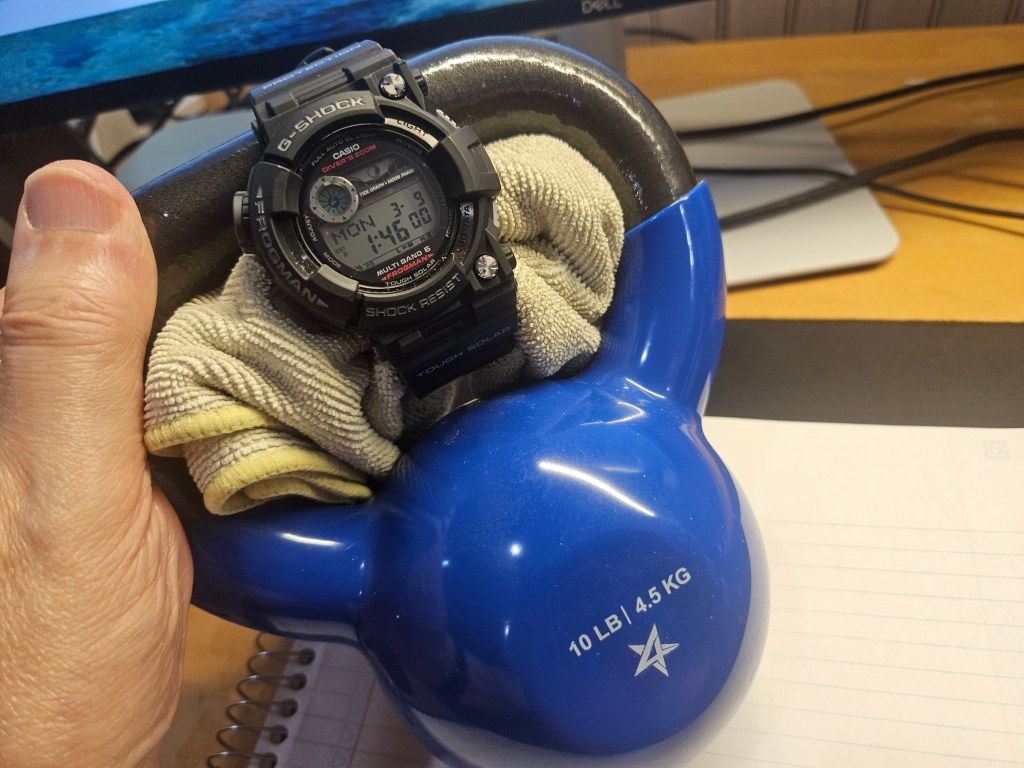
    “Not for twenty years,” my wife replied. “He does yoga and kettlebells at home. He’s been trapped in the man cave ever since. And what scares me,” she added, “is that he’s happy.”

    I’m not entirely sure I am happy. I just know my tolerance for annoyance is perilously low, and it drops another notch with each passing birthday. I also know that my friends from my formative college years now live scattered across the country, like artifacts from a previous civilization. We’ve grown apart without drama, which is to say, efficiently. Locally, I have two friends. Tom, a wrestling coach, is either teaching or in Santa Barbara with his girlfriend. I see him about once a year, usually when he drives me to Home Depot so I can transport oversized items back to my cave. My other friend, Pedro, is an engineer who is thirty years younger than I am. The generational differences are… pronounced. We have lunch about four times a year. Add it up and yes—half a dozen social encounters annually qualifies me as a shut-in. Which makes me, by default, an authority on a condition many men my age quietly acquire: Domestic Hermit Drift.

    Domestic Hermit Drift is the gradual, mostly unintentional retreat of a married man from friendships and public life into the managed comfort of home, where routine, hobbies, and solitude replace the effort and risk of maintaining relationships. It isn’t fueled by hostility or misanthropy but by convenience, irritability, fatigue, and the slow atrophy of social muscles. As his world contracts, his wife’s often expands, creating an asymmetry in which she carries the invisible labor of social connection, public presence, and emotional buffering. The genius of the drift is its stealth. No announcement is made. No door slams. The man simply mistakes peace for fulfillment and stability for sufficiency.

    As an expert in Hermit Drift, allow me to identify the warning signs.

    First, your sleepwear, gym clothes, and home clothes become indistinguishable. You sleep in gym shorts and a workout shirt, wear them around the house, exercise in them, shower, and rotate in a freshly washed identical set. You call this efficiency. You experience genuine pleasure in this loungewear optimization and feel morally superior to the sheeple who change outfits multiple times a day. Minimalism, you insist, is a virtue.

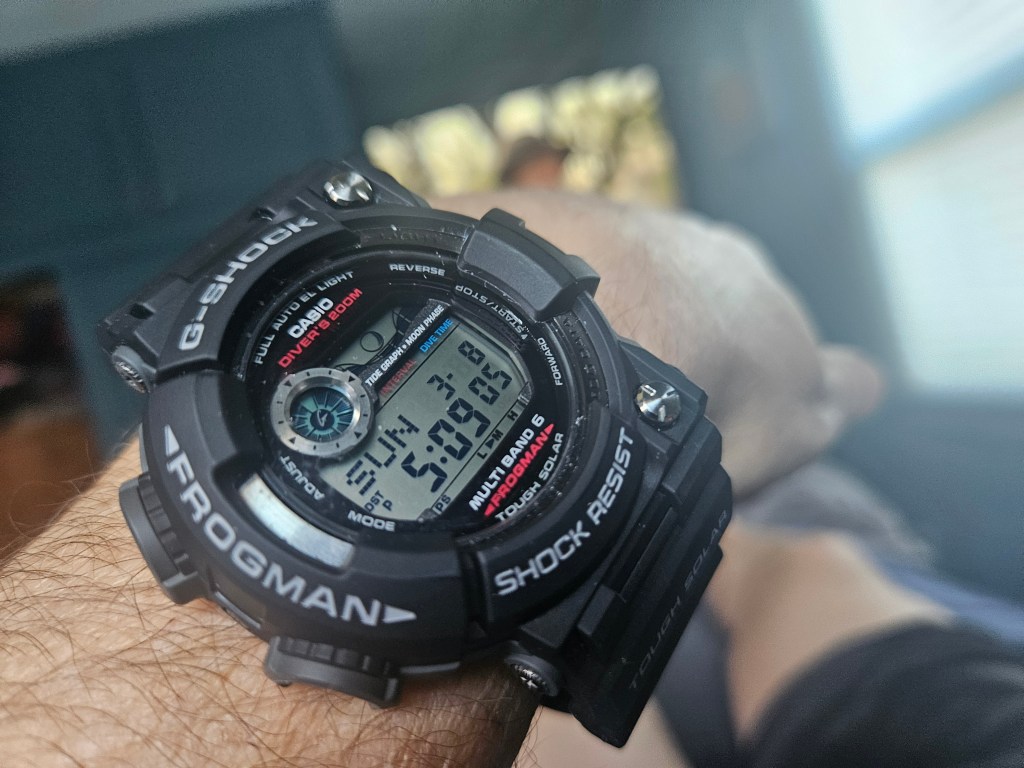
    Second, while your wife and her friends design custom T-shirts and handmade signs for rock concerts in the desert, you remain home on a Saturday night swapping straps on your diver watches. You build watch-rotation calendars. You track wrist time. You rank your collection by annual usage. The fact that you know you wore your Seiko Marine Master for exactly 863 hours last year strikes you as reasonable, even impressive. Others find it alarming.

    Third, because your tolerance for irritation is low, you shop only at dawn, when grocery stores are nearly empty and the few people present are still half-asleep—docile, unthreatening, manageable. You take pride in shopping before the rat race wakes up. This dovetails nicely with your time-management philosophy: bed at nine, up at five. By the time the world stirs, you’ve had your coffee, your steel-cut oats, your kettlebell workout, and your canvas grocery bags—your weekly macros—put neatly away. You are, in your own mind, winning.

    The rest of the day unfolds under a regime your wife has named Captain Cancel. Every proposed outing meets a veto. You can’t attend a concert because it might rain, despite cloudless skies. You can’t go to a restaurant because parking is inadequate, and when your wife reminds you of the new parking structure, you explain that it’s widely known to be contaminated with asbestos. A comedian you once loved is playing in Hermosa Beach, but you inform her he hasn’t been funny since the Reagan administration. A trip to Maui is ill-advised due to avian flu, especially dangerous during air travel. A beach picnic is canceled because of a sewage spill that, you explain, has compromised not just the water but the atmosphere. You agree to Taco Tuesday at the local brewery, but it’s too loud. You stuff toilet paper in your ears, announce you’re unwell, and Uber home. You are never invited again. This makes you smile as you drift into a deeply satisfying sleep.

    If you recognize any of these traits, congratulations. You are anti-social. You are Captain Cancel. You have chosen your isolation, locked yourself in your cage, and—most importantly—convinced yourself it was the sensible thing to do.