Tag: books

  • Blessed Are the Gluten-Free: America’s New Spiritual Elite

    Blessed Are the Gluten-Free: America’s New Spiritual Elite

    Reading Amy Larocca’s How to Be Well is like watching Gwyneth Paltrow’s ghost possess a Whole Foods employee mid-mushroom latte. Her book is equal parts riveting and scalpel-sharp, dissecting the strange mutation of fashionistas who’ve traded in Gucci for goop and now drape themselves in wellness jargon like it’s couture. These wellness evangelists don’t just eat clean—they chant it. They speak in tongues made of spirulina, lipospheric vitamin C, Cordyceps, Shilajit resin, and ho shou wu, stringing together syllables like they’re summoning the ghost of Hippocrates.

    What we’re witnessing isn’t self-care—it’s a personality cult with better lighting. The modern wellness priestess has crowned herself a demigod, armed with adaptogens instead of sacraments, waving her magic tincture dropper and pointing lesser mortals toward the True Path of purified, gluten-free, unpasteurized transcendence. It’s not just health—it’s high-performance sanctimony.

    Larocca nails the diagnosis with surgical precision: “I sometimes think of wellness as the project of buying your own body back for yourself.” Translation? Welcome to America’s chicest hostage situation, where the ransom is payable in collagen peptides and oat milk. The goal is to become the luxury-branded version of you—perfect skin, toxin-free bowels, and moral superiority radiating from every overpriced yoga mat. The side effect? It magnifies the gaping inequalities of modern life like a magnifying mirror you didn’t ask to look into.

    Because let’s be honest: none of this comes cheap. These rituals of wellness cost money—bucketloads of it. We’re not talking about a jog around the park and some tap water. We’re talking $12 green juices and $300 infrared saunas. The entire project is rigged to serve the few while gaslighting the many. The wellness priestess doesn’t just ignore that her lifestyle is unattainable for most—she markets that inaccessibility as part of the charm.

    This isn’t health—it’s spiritual cosplay for the affluent.

  • Toxins, Teas, and the Tyranny of Self-Care

    Toxins, Teas, and the Tyranny of Self-Care

    In How to Be Well: Navigating Our Self-Care Epidemic, One Dubious Cure at a Time, Amy Larocca introduces us to the “Well Woman”—an aspirational specter of affluent spirituality who floats through Erewhon aisles like a priestess of turmeric. She is non-religious but deeply “spiritual,” an educated, upper-middle-class avatar of intentional living. Her diet? Whole, organic, plant-based. Her skincare? Sourced from the tears of ethically massaged avocados. Her wardrobe? Soft, breathable cottons dyed with herbs. Her soul? Allegedly pure.

    She’s the type who throws around words like “boundaries” and “holding space” while sipping adaptogenic mushroom tea. Fluent in therapy-speak and swaddled in the cozy lexicon of mindfulness, she’s not just living—she’s curating her life, building an identity out of emollients, detoxes, and artisanal spices. And all of it—every mindful, ethically sourced drop—feeds the $5.6 trillion wellness-industrial complex.

    Larocca sees through the yoga-scented fog. The Well Woman, she argues, is just the latest installment in America’s ongoing franchise of unattainable feminine ideals: a new model to aspire to, envy, and—most importantly—buy into. Today’s purity isn’t moral; it’s material.

    Reading Larocca’s opening, I couldn’t help but think of Todd Haynes’s 1995 masterpiece Safe, in which Carol White—a vapid housewife in the chemical-glazed sprawl of the San Fernando Valley—slowly dissolves into the cult of purity. After one too many trips to the dry cleaner, Carol spirals into an obsession with environmental toxins, abandons her friends and family, and ends up exiled to a pastel-drenched wellness commune. There she lives alone in a sterile dome, staring at herself in the mirror, parroting affirmations until there’s nothing left behind her eyes but empty devotion.

    Carol White is the ghost of the Well Woman’s future—a cautionary tale in Lululemon. She doesn’t find peace; she finds a purgatory curated by Goop. And as Larocca peels back the lavender-scented rhetoric of self-care, it’s clear she sees this modern cult of wellness not as healing but as hollowing—a $5.6 trillion seduction that promises salvation and delivers scented self-delusion.

  • The Driveway Diaries: A Confession from the Curb

    The Driveway Diaries: A Confession from the Curb

    I live in Southern California’s golden triangle of suburban prestige: safe streets, sky-high property values, and public schools so highly rated they practically demand tuition. But on weekends and holidays, my block transforms into a theme park of inflatable bounce castles, fold-out chairs, and off-brand DJ booths—all courtesy of neighboring homeowners hosting backyard fiestas for their tiny heirs.

    With festivity comes the scourge: street congestion. Cars squeeze themselves into curbside crevices like sardines in a midlife crisis. They stack and cram and sidle up so tight to my house you’d think we were giving away parking validation and carne asada.

    Every so often, a guest parks with their bumper edging an inch—an inch—into the edge of my newly repaved driveway. A driveway I paid for myself because city bureaucracy shrugged and pointed to tree roots like they were an Act of God. That innocent slab of concrete cost me $5,500. Every time a Honda Pilot sniffs it without permission, I feel like I’m watching someone use my toothbrush.

    Still, I try to be Zen. I tell myself: “People want to be here. This isn’t intrusion. It’s affirmation. I am so blessed to live in a place so desirable, others will risk a petty homeowner’s wrath just to brush against my apron.”

    Then there’s the nightly ritual across the street. My neighbors, bless them, have adopted my driveway as part of their sacred reverse-entry protocol. They swing into my drive like a fighter pilot locking onto a carrier, headlights blazing through my living room window while I’m watching a true crime doc with my wife. Then they shift into reverse and back into their own driveway like they’re starring in a Ford commercial for backing-in bravado.

    Again, I resist the pettiness. I whisper: “What an honor to share my $5,500 slab of artisanal pavement. The city may have abandoned me, but I haven’t abandoned my commitment to grace.”

    But some nights, I spiral. I see my empty driveway (because my Honda is parked dutifully inside the garage like a respectable introvert) and I grow suspicious. “They’re circling,” I think. “Someone’s going to claim this space. They’re going to park smack in the middle of my private driveway, right under the basketball hoop I haven’t used since 2008.”

    In my darkest moments, I fantasize about war. “Let them try it,” I growl internally. “I’ll tow them. I’ll call the police. I’ll lawyer up. I’ll blog about it to my three dozen loyal followers and publicly shame their license plate into eternity.”

    And just when I think I’ve shaken off my paranoia, the sirens come. Always the sirens. I live wedged between two hospitals, so I’m serenaded hourly by ambulance howls and the Doppler wail of emergency response. It’s like being reminded every ten minutes that death is always trending.

    The crowded streets don’t help. It’s not just congestion—it’s existential compression. The world is full. There’s no more room. Civilization is a Jenga tower one move away from collapse.

    And still, I try to be kind. I try to be sane. “I’m not petty,” I tell myself. “I’m not paranoid. I’m just emotionally literate.”

    So I do what I’ve always done: I go to the piano. I sit and play one of the hundreds of songs I’ve written since I was sixteen. The music softens the beast. It wraps my dread in a velvet ribbon of minor chords. Unfortunately, all my songs sound vaguely identical—like clones from the same melancholy womb. But I take what I can get.

    If twenty minutes of recycled piano sadness gives me peace in the suburbs, then I’ll sit at that bench and bleed quietly into the keys. No apologies.

  • Manuscripnosis: A Vexing Tale of Self-Sabotage

    Manuscripnosis: A Vexing Tale of Self-Sabotage

    I suffer from a humiliating literary affliction: when I’m not trying to write a book—when I’m simply crafting loose, witty blog posts—my prose sings. It breathes. It struts across the page like it owns the place. In those moments, I’m not an “author,” I’m just a clever diarist with decent rhythm and a nose for irony.

    But then comes the fatal whiff—that intoxicating scent of a book deal drifting in from the distance like a mouth-watering freshly-baked coconut macaroon. Suddenly, I begin to try. I sit up straighter. I structure. I strategize. I lean into “craft.” And that’s when my prose, once alive and sinewy, collapses like a soufflé that sensed it was being watched. Gone is the energy, the voice, the mischievous verve. What remains is a flaccid husk of what could have been—something that reads less like a potential bestseller and more like a workshop handout no one asked for.

    This, dear reader, is the vicious, looping paradox I call Unintended Book Syndrome. The moment I stop writing and start authorshipping, my words die on the vine.

    The clinical term, I believe, is Manuscripnosis: a trance-like state in which blog-worthy brilliance is transfigured into joyless literary taxidermy the moment the idea of a “real book” enters the room. I have lived with this disorder for decades. I’ve tried everything—lowering expectations, denying ambition, even faking indifference. Nothing works. The moment I think this could be a book, the prose curls up and dies like a Victorian heroine too delicate for publication.

    Sometimes I fantasize about quitting writing altogether. But abstinence only makes it worse. The despair of not writing eclipses even the misery of writing badly. Which means I am doomed to live forever in this creative purgatory—hovering between genius and garbage, blog post and book, dopamine and dread.

  • Jia Tolentino Explores the Neverending Torments of Infogluttening

    Jia Tolentino Explores the Neverending Torments of Infogluttening

    In her essay “My Brain Finally Broke,” New Yorker writer Jia Tolentino doesn’t so much confess a breakdown as she performs it—on the page, in real time, with all the elegance of a collapsing soufflé. She’s spiraling like a character in a Black Mirror episode who’s accidentally binge-watched the entire internet. Reality, for her, is now an unskippable TikTok ad mashed up with a conspiracy subreddit and narrated by a stoned Siri. She mistakes a marketing email from Hanna Andersson for “Hamas,” which is either a Freudian slip or a symptom of late-stage content poisoning.

    The essay is a dispatch from the front lines of postmodern psychosis. COVID brain fog, phone addiction, weed regret, and the unrelenting chaos of a “post-truth, post-shame” America have fused into one delicious cognitive stew. Her phone has become a weaponized hallucination device. Her mind, sloshing with influencer memes, QAnon-adjacent headlines, and DALL·E-generated nonsense, now processes information like a blender without a lid.

    She hasn’t even gotten to the fun part yet: the existential horror of not using ChatGPT. While others are letting this over-eager AI ghostwrite their résumés, soothe their insecurities, and pick their pad thai, Tolentino stares into the abyss, resisting. But she can’t help wondering—would she be more insane if she gave in and let a chatbot become her best friend, life coach, and menu whisperer? She cites Noor Al-Sibai’s unnerving article about heavy ChatGPT users developing dependency, loneliness, and depression, which sounds less like a tech trend and more like a new DSM entry.

    Her conclusion? Physical reality—the sweaty, glitchy, analog mess of it—isn’t just where we recover our sanity; it’s becoming a luxury few can afford. The digital realm, with its infinite scroll of half-baked horror and curated despair, is devouring us in real time. To have the sticky-like tar of this realm coat your brain is the result of Infogluttening (info + gluttony + sickening)–a grotesque cognitive overload caused by bingeing too much content, too fast, until your brain feels like it’s gorged on deep-fried Wikipedia.

    Tolentino isn’t predicting a Black Mirror future. She is the Black Mirror future, live and unfiltered, and her brain is the canary in the content mine.

  • Love Is Dead. There’s an App for That

    Love Is Dead. There’s an App for That

    Once students begin outsourcing their thinking to AI for college essays, you have to ask—where does it end? Apparently, it doesn’t. I’ve already heard from students who use AI as their therapist, their life coach, their financial planner, their meal prep consultant, their fitness guru, and their cheerleader-in-residence. Why not outsource the last vestige of human complexity—romantic personality—while we’re at it?

    And yes, that’s happening too.

    There was a time—not long ago—when seduction required something resembling a soul. Charisma, emotional intelligence, maybe even a book recommendation or a decent metaphor. But today? All you need is an app and a gaping hole where your confidence should be. Ozempic has turned fitness into pharmacology. ChatGPT has made college admissions essays smoother than a TED Talk on Xanax. And now comes Rizz: the AI Cyrano de Bergerac for the romantically unfit.

    With Rizz, you don’t need game. You need preferences. Pick your persona like toppings at a froyo bar: cocky, brooding, funny-but-traumatized. Want to flirt like Oscar Wilde but look like Travis Kelce? Rizz will convert your digital flop sweat into a curated symphony of “hey, you up?” so poetic it practically gets tenure. No more existential dread over emojis. No more copy-pasting Tinder lines. Just feed your awkwardness into the cloud and receive, in return, a seductive hologram programmed to succeed.

    And it will succeed—wildly. Because nothing drives app downloads like the spectacle of charisma-challenged men suddenly romancing women they previously couldn’t make eye contact with. Even the naturally confident will fold, unable to compete with the sleek, data-driven flirtation engine that is Rizz. It’s not a fair fight. It’s a software update.

    But here’s the kicker: she’s using Rizz too. That witty back-and-forth you’ve been screenshotting for your group chat? Two bots flirting on your behalf while you both sit slack-jawed, scrolling through reality shows and wondering why you feel nothing. The entire courtship ritual has been reduced to a backend exchange between language models. Romance hasn’t merely died—it’s been beta-tested, A/B split, and replaced by a frictionless UX flow.

    Welcome to the algorithmic afterlife of love. The heart still wants what it wants. It just needs a login first.

  • Identifying and Coping with Neighborplexity

    Identifying and Coping with Neighborplexity

    My dear, respectable neighbors, the Pattersons have forced me to contend with Neighborplexity. Let me explain. For years, I lived in blissful harmony with these upstanding citizens—the kind of people who proudly displayed their New Yorker subscriptions and NPR tote bags like badges of intellectual honor. We had an unspoken pact, a mutual understanding that we were members of the Smart People’s Society, where the TV was reserved for documentaries, award-winning dramas, and the occasional indie film that required subtitles and a dictionary to understand.

    But then, one evening, as I casually glanced out my window—just a harmless peek, really—I saw something so grotesque, so utterly incomprehensible, that it shook me to my core. There, through the open window of my once-revered neighbors, I saw them glued to the screen—not just any screen, but one streaming a TV show so mind-numbingly lowbrow it made reality itself seem like a parody. My brain went into full-blown meltdown. Could it be? Were they actually watching Love Island?

    I blinked, hoping I’d misinterpreted the scene, but no—the horror was all too real. My neighbors, those paragons of taste and intellect, were indulging in what could only be described as televised garbage. I was struck down by a case of Neighborplexity: that gut-wrenching, mind-twisting moment when you realize you might not know the people next door at all. Suddenly, my world was flipped upside down. Had they always been this way? Were those book club meetings just a ruse, a clever cover-up for their secret love affair with trash TV? I felt like I’d just discovered that the Michelin-starred chef who lived down the block actually preferred dining on Spam straight out of the can.

    I thought we were united in our disdain for anything that wasn’t at least 95% fresh on Rotten Tomatoes. But now? Now, I wasn’t so sure. How could they betray me like this? Was every dinner party, every casual chat about the latest literary masterpiece, just a well-orchestrated charade? My mind spun as I tried to reconcile the image of these seemingly cultured, well-spoken people with the reality of them willingly watching—gasp—that show.

    What do I do now? How do I move forward? Can I ever look them in the eye again, or will I be forever haunted by this dark revelation, this unraveling of the fabric of my once-idyllic neighborhood? All because of one dreadful, unforgivable act of poor taste on TV. Love Island, of all things. The horror! The betrayal! The absolute audacity! 

    To get through this ordeal, I must have a clear definition of Neighborplexity and study the coping mechanisms to help me deal with this. So here we go.

    Neighborplexity (n.): The psychological whiplash that occurs when your carefully curated perception of your neighbors—those tote-bag-wielding, podcast-quoting, fair-trade-coffee-brewing intellectuals—is shattered by the revelation that they voluntarily watch garbage television. One moment you’re nodding in mutual disdain over a New Yorker cartoon; the next, you’re watching them binge Love Island with the hungry intensity of someone decoding the Dead Sea Scrolls. Neighborplexity induces spiritual vertigo, trust erosion, and the overwhelming sense that the social fabric of your ZIP code has been irreparably torn by sequins, fake tans, and manufactured drama. It is, in essence, a full-blown existential crisis brought on by a neighbor’s taste in television.


    7 Coping Mechanisms for Surviving Neighborplexity:

    1. Curated Amnesia – Tell yourself you didn’t see it. What open window? What TV screen? As far as you’re concerned, they were watching a Ken Burns documentary about soil.
    2. Projection Therapy – Assume it was ironic. They’re studying Love Island for a sociological thesis titled The Semiotics of Spray Tan.
    3. NPR Overdose – Immediately listen to four consecutive episodes of Fresh Air to flush out any lingering trash-TV toxins.
    4. Visual Recalibration – Replace your neighbor’s face with Tilda Swinton’s. At all times. It helps.
    5. Sarcastic Enlightenment – Convince yourself this is actually a deeper form of taste. Maybe Love Island is postmodern performance art and you’re the unsophisticated one.
    6. Emergency Sumatra Deployment – Brew the darkest, most self-righteous coffee you can find and sip it slowly while rereading Proust. This reminds you who you really are.
    7. Petty Book Club Coup – At the next meeting, accidentally bring up Love Island as a joke and watch their faces. Gauge their guilt. Proceed accordingly with social sanctions or passive-aggressive charcuterie.
  • The Vegan Martyr of Suburbia

    The Vegan Martyr of Suburbia

    This is a story soaked in irony, clucking with heartbreak. It’s the tale of Ned Pearlman, a 63-year-old man whose conscience became his personal executioner.

    Ned was a lifelong weightlifter, a barrel-chested patriarch with calloused hands and a back catalog of deadlift anecdotes. When egg prices began to flirt with the absurd, his family took the Depression-era route and bought chickens. Backyard livestock as economic strategy.

    They started with a humble flock—a few hens, a rooster, and one poorly socialized silkie that pecked at everyone’s ankles. But something shifted in Ned. The hens began following him around the yard like starstruck interns. The rooster started presenting Ned with tributes: gum wrappers, pocket change, ornamental twigs. It was clear—Ned was the alpha.

    At night, the chickens would nestle beside him in bed, each with its own green velvet pillow like feathery courtiers in a royal suite. Ned, a man once fueled by steaks and protein shakes, looked into their beady eyes and saw innocent souls. Souls that changed him. He went vegan overnight.

    Not just vegan—missionary vegan. He researched. He supplemented. He downed algae-based omega-3s and pea protein smoothies that tasted like damp cardboard soaked in guilt. He clocked in 180 grams of protein a day, but his body, unimpressed by numbers, absorbed barely a fraction. The mighty Ned began to shrink.

    He became fatigued, confused. The barbell mocked him. His once-proud biceps began to resemble disillusioned baguettes. Despite his family’s desperate pleas—“just some yogurt, Ned, or a scoop of whey!”—he remained unwavering. This was a moral epiphany, not a diet. Animal products were betrayal. Flexibility was sin.

    Soon, the man who once bench-pressed lawn furniture was bedridden and showing signs of rapid cognitive decline. His doctor called it malnutrition-induced dementia. Ned called it sacrifice.

    His family, feeling abandoned, visited him rarely—guilt-visitations sprinkled in between Facebook posts and emotional exhaustion. But the chickens stayed. Loyal. Soft. Slightly judgmental. And the geriatric facility, either out of mercy or lack of clear policy, let them roost near him.

    One sunny afternoon, Ned was wheeled onto the grass. The chickens gathered around him, forming a feathered perimeter. In a rare moment of clarity, he looked to the sky and muttered, “Why, dear God, did my health not align with my ethics? Why must my clean conscience kill me and alienate those I love?”

    He received no reply. The clouds rolled by in soft indifference. Ned closed his eyes and died, flanked by his beaked apostles, surrounded by the warm, gentle souls that had rewritten his values—and slowly drained his life.

  • The Shop Foreman of My Own Dysfunction and Other Life Chapters

    The Shop Foreman of My Own Dysfunction and Other Life Chapters

    At 63, I now divide my life into chapters—not by achievements or milestones, but by bone density, hormone decay, and the gradual hardening of the frontal cortex. Think of it as an anatomical calendar, where each page curls with protein shakes, pretension, and the occasional existential crisis.

    Chapter One: The Barbara Eden Years.
    Childhood wasn’t about innocence—it was about Cap’n Crunch. Bowls of it. Oceans of sweetened corn rubble. I dreamed not of firetrucks or baseball cards but of living inside Barbara Eden’s genie bottle—a plush, velvet-lined fever dream of satin pillows and cleavage. If Barbara Eden wasn’t beaming into my imagination, there was always Raquel Welch in fur bikinis or Barbara Hershey smoldering her way across a screen. This was hormonal awakening served with a side of sugar coma.

    Chapter Two: The Strength Delusion.
    By twelve, I was slamming Bob Hoffman’s bulk-up protein like it was communion wine. At Earl Warren Junior High, I became a Junior Olympic Weightlifter—a gladiator-in-training who wanted pecs like dinner plates and the gravitas of a Marvel origin story. This was the age of iron worship and adolescent mythology: I wasn’t building muscle—I was forging armor.

    Chapter Three: The Intellectual Flex.
    In my late teens, I realized I had all the social charm of a wet gym sock. So I went cerebral. I buried myself in Kafka, Nabokov, and classical piano, amassing a CD library of Beethoven and Chopin that could rival the Library of Congress. I worked in a wine shop where I learned to pronounce “Bordeaux” with a nasal twang and described Chablis as “crisp with notes of existential regret.” I didn’t just want to be smart—I wanted to be the human embodiment of a New Yorker cartoon.

    Chapter Four: The Shop Foreman of My Own Dysfunction.
    Marriage and employment hit like a cold bucket of reality. Suddenly, I had to function around other human beings. My inner demons—once delightfully antisocial—were now liabilities. I had to manage them like a foreman supervising a warehouse of unruly toddlers armed with crowbars. Turns out, no one wants to be married to a psychological landfill. I had to self-regulate. I had to evolve. This wasn’t personal growth; it was preventative maintenance, or what other people simply call adulthood.

    Chapter Five: Diver Cosplay.
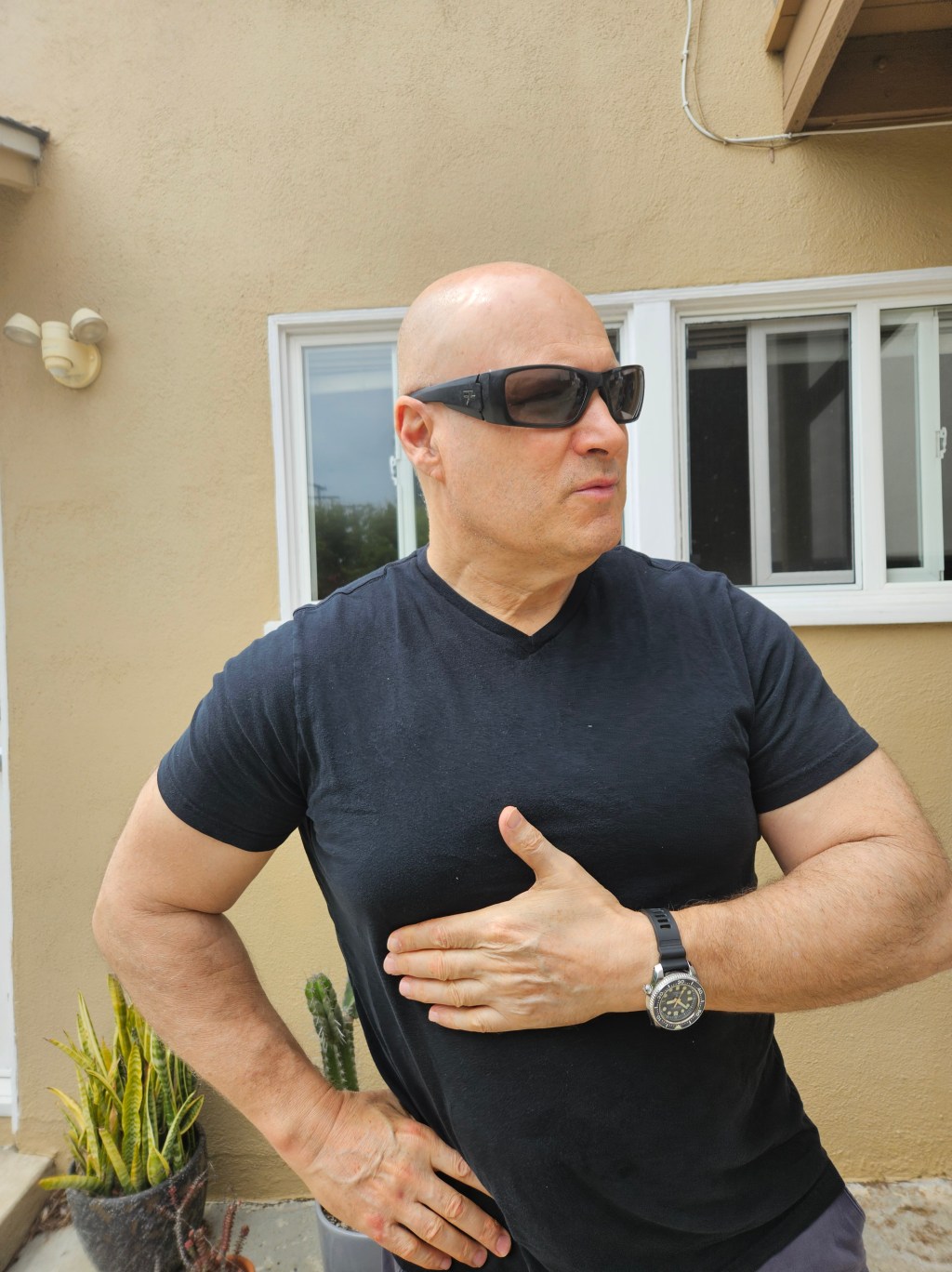
    In my forties, I had just enough disposable income and suburban ennui to start collecting dive watches. Not just one or two. A flotilla. I wanted to be the hero of my own fantasy—a rugged diver-explorer-adventurer who braved Costco parking lots with a Seiko strapped to his wrist. This was less about telling time and more about clinging to the idea that I was still dangerous, or at least interesting. Spoiler: I was neither.

    Chapter Six: The Age of Denial and Delusion.
    These days, the watches still gleam, but now I’m staring down the barrel of cholesterol, visceral fat, and the slow betrayal of my joints. I swing kettlebells five days a week like a garage-dwelling warlock trying to ward off decay. I track my protein like a Wall Street analyst and greet each new biomarker like a hostile corporate audit. Am I aging gracefully? Hardly. I’m white-knuckling my way through geriatric resistance and calling it “wellness.” If I’m Adonis, then somewhere in the attic there’s a Dorian Gray portrait of my pancreas in open revolt.

    I know what’s coming: Chapter Seven. The reckoning. The spiritual compost heap where I either make peace with my body’s betrayal or turn into a bitter relic that grunts through foam-rolling sessions like it’s trench warfare. It’ll be the chapter where I either ascend or unravel—or both.

    And while our chapters differ in flavor, I suspect we’re all reading from the same book. Different fonts, same plot twist: we start with fantasies, build identities, fight the entropy, and eventually, we all kneel before the mirror and ask, “Was that it?

  • The Abbot’s Misfits

    The Abbot’s Misfits

    I arrived at the Palos Verdes trails just before ten, and the heat was already doing its best impression of a convection oven. The mountainous trails, baking under the relentless sun, were separated from the street by a chain-link fence that looked like it had given up on life years ago. Inside the confines of this makeshift pen, several dozen goats were having the time of their lives munching on dry grass as if it were the most gourmet hay in existence. Their faces were a mix of innocent curiosity and that absurd kind of adorableness that makes you momentarily consider swearing off lamb chops forever. I made a mental note to “consider veganism” again, a notion I promptly squashed with vivid memories of my O-positive blood rejoicing every time I indulged in a perfectly seared ribeye. Hello, goats—you’re safe because it looks like I’ll stick with beef.

    By the goats, a white tent had been pitched like some sort of mirage, and under it, a circle of chairs was arranged with the precision of a cult meeting—or worse, a corporate team-building exercise. The man who had the audacity to call himself the Abbot greeted me with a grin that suggested we were about to embark on a day of carefree yachting rather than whatever bizarre ritual he had planned. Forget the flowing robes and monastic aura—I was greeted by a fitness model straight out of an overenthusiastic health magazine. Neatly pressed cargo shorts hugged his cycler’s thighs like they had been tailored for the occasion, and his olive T-shirt clung to a body sculpted by what could only be an unholy alliance with a CrossFit gym. 

    A cross-body sling bag was slung over one of his thin yet annoyingly muscular arms, which were covered in veins that seemed to be competing in an under-skin relay race. His jawline could have cut glass, and his neatly sculpted silver hair made him look like he’d stepped out of an L.L.Bean catalog. But it was his eyes that really got me—blazing blue orbs that looked like they belonged on the figurehead of a Viking ship, ready to plunder and pillage. 

    “Graham, come join us,” he said with the kind of enthusiasm that suggested we were minutes away from sipping mimosas on a luxury yacht. “We are just moments away from the interrogation.” The way he said “interrogation” made it sound like a delightful little jaunt instead of, you know, something that involved possible torture or at least a really awkward group discussion.

    The most striking thing about the Abbot wasn’t his absurdly chiseled jawline or his militant posture; it was the overwhelming stench of lavender and rose water that assaulted my senses the moment I got within a hundred yards of him. This man hadn’t just splashed himself with these fragrances—he’d practically marinated in them. It was as if he’d decided to pickle himself in a floral potpourri so potent that it probably had bees tailing him for miles. I half-expected to find petals stuck to his skin.

    As I reluctantly made my way under the tent, I was greeted by the sight of six people slumped in those classic, soul-crushing folding chairs that practically shriek, “We’re only here for the free food.” These weren’t just any ordinary folks. No, these were the future friends, foes, and backstabbers who would weave themselves into the disaster that would soon be my life—though at that moment, they all just looked like they were wondering when the punchline of this bizarre setup was going to drop. Spoiler: It never did.

    Behind them, a table stood like a beacon of false hope. A giant pitcher of cucumber water glistened in the sunlight, promising hydration that would do nothing to wash away the impending madness. But what truly caught my eye was the stack of cakes beside it. They looked innocent enough, these little golden blocks, but I would soon discover that they were the Abbot’s specialty—cornbread cakes made with applesauce, honey, and some vanilla-flavored soy protein powder that tasted suspiciously delicious. These cakes weren’t just a snack; they were a trap, a gateway drug that would soon have me spiraling into a carb-induced dependency I hadn’t seen coming. But let’s not jump ahead—there’s plenty of time to explore how these seemingly harmless cakes would drag me into the Abbot’s world of sweet-smelling insanity.

    For now, let’s just say that in that moment, my biggest mistake wasn’t walking into the tent—it was deciding to stay. But hey, who could resist free “light refreshments”?

    With one arm draped around my back like a used car salesman about to seal a shady deal, the Abbot steered me toward the motley crew assembled under the tent. He flashed a benevolent smile, the kind that makes you wonder if he’s about to offer you enlightenment or swindle you into buying a timeshare in Cancun. “My friends,” he announced with all the pomp of a second-rate cult leader, “Graham has graced us with his presence. He is a college writing instructor with many gifts, though I’ll let him elaborate on those special talents later.” His smile suggested that whatever “gifts” I possessed were about to be squeezed out of me like juice from a lemon.

    He pointed at each member of the ragtag group, starting with Abigail, a woman in her early fifties who looked like she’d been carved out of a block of pale, pasty clay by a very angry sculptor. Her squat frame and monkish haircut didn’t do her any favors, but she smiled with the kind of pride usually reserved for people who’ve just completed their first marathon, despite the fact that she hailed from Gorman—a town so small it might as well not exist—where she’d spent her youth dodging aggressive chickens on her parents’ farm. Abigail proudly raised three fingers, showcasing them as if they were battle scars, and regaled us with tales of surviving on a teeth-rotting diet of PayDay bars and orange Fanta until she discovered The Abbot’s life-altering cornbread cakes. You’d think she’d found the Holy Grail, but instead, it was just some glorified baked goods.

    Next up was Larry, a man in his late forties who had apparently modeled his look on a 1970s mafia reject. His long, slicked-back hair and tinted sunglasses made him look like he was auditioning for the role of “Skeevy Casino Manager” in an off-off-Broadway production. Dressed in black jeans and a too-tight white T-shirt that clung to his muscular upper body like a bad decision, he had the kind of physique that screamed “I skipped leg day,” with spindly legs that looked like they’d snap under the weight of his overly pumped chest. Larry had once been a professional gambler until every casino in the area wisely decided he was bad for business. Now, he managed an upscale Mexican restaurant at Del Amo Mall—a stone’s throw from my house—where he spent his days chain-drinking Red Bull and dreaming of the good old days. “I was probably killing myself drinking all those chemicals and caffeine,” he said, “but thanks to the Abbot and his cornbread cakes, I’m learning the true path.” 

    Larry’s brother Stinky, who looked like he’d just crawled out of the primordial ooze, sat next to him. With shaggy blond hair, deep pockmarks, and a forehead that could have been used as a Neanderthal fossil exhibit, Stinky was the kind of guy who seemed to wear his heartbreak on his sleeve—and his face. In his late thirties and still stuck in a dead-end job at a Costco warehouse, he was the embodiment of a bad country song. His high school sweetheart had skipped town with his engagement ring and now worked as a “hostess” at various questionable establishments in Miami. “Self-pity is my addiction,” he confessed, as if he’d just admitted to a crippling heroin habit. But don’t worry—the Abbot was going to give him a “second shot at life,” presumably with a side of cornbread cakes.

    Maurice shuffled forward, a short, wiry guy with a dark complexion. Looking much younger than his age of forty, his kid’s face was set in a permanent grimace, like he’d just stepped in something nasty and couldn’t shake the stench. He was dressed with the precision of a man who either had nowhere else to go or was meticulously planning his escape. His crisp, white-collared sports shirt and navy blue shorts looked fresh out of the package as if he had bought them specifically for this occasion, only to instantly regret his decision. The sandals on his feet were so spotless they might as well have come with a warning label: “For display purposes only.”

    Maurice radiated the enthusiasm of someone attending a surprise tax audit. If this were a beach day, he’d be the guy hunched under a too-small umbrella, clutching a lukewarm beer like it was his only friend, and glaring daggers at the carefree seagulls circling above, as if they were personally responsible for all the miseries in his life. Every inch of him screamed that he’d rather be anywhere but here, and the irony was that he looked like he was dressed for a casual day out, just not one that involved other human beings.

    To Maurice, this gathering was less of a spiritual intervention and more of a cruel and unusual punishment. His body language said, “I’m here under duress,” and his eyes, narrowed to slits, darted around the group as if calculating the quickest exit. It was clear that Maurice wasn’t here to bare his soul—he was here to endure the ordeal with as much stoic misery as possible. With a degree in computer science and the personality of a dial-up modem, Maurice was the poster child for disillusionment. Recently divorced and demoted from homeowner to condo dweller in Harbor City, he shared this nugget of personal failure with all the enthusiasm of someone recapping their latest colonoscopy. His intro was short, sour, and dripping with enough bitterness to make a lemon blush. You could tell Maurice wasn’t here to find inner peace—he was here because the thought of a one-on-one with the Abbot made him more uncomfortable than the idea of being stuck in a dentist’s chair.

    Sitting next to Maurice was Jason, the group’s designated eye candy. With his languid gray eyes, full lips, and high cheekbones, Jason looked like he’d just stepped off the set of a Calvin Klein ad. But beneath the chiseled exterior was a life insurance salesman and mixed martial arts fighter who’d spent his formative years studying jiu-jitsu and muay thai to protect his siblings from their alcoholic father. His good looks and business success were a smokescreen for the social anxieties and commitment issues that plagued him. “I’m here to find answers,” he said, his voice dripping with the kind of melodrama usually reserved for soap operas.

    Finally, there was Howard Burn, the Abbot’s right-hand man, who looked like he’d been assembled from spare parts left over from a mad scientist’s experiment. Tall and lanky with a head of perfectly coiffed black hair, Howard had the angular, contemplative face of someone who took himself way too seriously. He clutched a notebook in his lap, furiously scribbling notes like a star student at Cult Leader 101. When he introduced himself, it was with all the joy of a man who’d just been informed his house was on fire. “It has been my great pleasure to work for the Abbot for the last three years,” he said, his tone suggesting that “pleasure” was a foreign concept to him. Before joining the Abbot’s merry band of misfits, Howard’s life had been a blur, a meaningless existence spent wandering from one menial job to the next. But the Abbot had changed all that, and for the first time, Howard felt like he had purpose—presumably one that involved handing out a lot of cornbread cakes.

    The Abbot beamed at Howard like a proud father, the kind who gives his kid a pat on the back for finally tying his own shoes. “Well said, my son,” his smile seemed to convey as if the entire room was one big happy family. 

    But then the interrogation began, and any illusion of a cozy kumbaya moment evaporated faster than a politician’s promise after election day.

    The Abbot, who’d suddenly transformed from a benevolent guru into a reality TV judge on a power trip, fixed his steely gaze on Abigail. “We’ll start with you,” he declared, like a dentist about to extract a tooth without anesthesia. “Small-town girl, former fast-food overlord, now a landscaper, and you’re still spiraling from that breakup. Jennifer, wasn’t it? She moved in with someone else—someone you actually considered a friend—and now you’re wallowing in betrayal like a sad country song. All this wallowing has blinded you from your gifts.”

    Abigail blinked, probably wishing she could shrink into her cargo shorts and disappear. “I don’t have any gifts that I know of,” she muttered, clearly hoping that modesty might serve as an escape hatch.

    The Abbot’s smile was as sharp as a guillotine. “Oh, but there’s the matter of your left pinkie, now a charming little hook, thanks to your early attempts at butchering a pumpkin with a serrated knife. What were you, eight years old? Trying to carve a jack-o’-lantern or auditioning for a role in Sweeney Todd?”

    Abigail nodded meekly.

    “Show them,” the Abbot commanded as if this was the grand unveiling of some macabre art piece.

    Obediently, Abigail held out her hand, and there it was: her pinkie, eternally frozen in a grotesque hook. The finger, sliced at the joint below the knuckle, was now more calcified appendage than human flesh—a monument to bad luck and worse kitchen skills.

    “Yes, the hook,” the Abbot intoned, as if he were introducing the world’s eighth wonder. “A marvel, truly. It saved your life during that robbery in Barstow, blinded your would-be thief like a weaponized claw, and has been a godsend for lugging groceries into the house. You’ve even used it to hook tools while landscaping, but you’ve been missing out on its real potential.”

    Abigail stared at the Abbot like he’d just told her she could time travel with her toenails.

    “What you don’t realize,” he continued, his voice dripping with condescension, “is that your little pinkie isn’t just a handy-dandy grocery hook. It’s a supernatural antenna. Whenever you’re near something or someone steeped in dark secrets or supernatural energy, your pinkie will tingle, twitch, or maybe even do the macarena—whatever it does to warn you that you’re in the presence of danger. You’ve got a sixth sense attached to your hand, my dear.”

    The Abbot then motioned for her to stand up. “Go on, stand next to Maurice and wave your pinkie in front of him like you’re dowsing for water. But don’t actually touch him; just let your psychic appendage do its thing.”

    Abigail, clearly wondering what sort of circus act she’d signed up for, obliged. As she moved her pinkie around Maurice’s head, she wrinkled her nose. “There’s something off about his head,” she announced, as Maurice stared ahead with the same enthusiasm as a DMV clerk.

    “Something wrong? With Maurice’s head?” the Abbot said, feigning shock like a bad soap opera actor. “You don’t say! But you’re right. His head is literally messed up.”

    Maurice, looking like he’d just been told his dog died, barely reacted.

    The Abbot turned to Maurice, his tone shifting to that of a doctor delivering a grim prognosis. “Maurice, my boy, you suffer from migraines, but not just any migraines. No, your headaches are like the universe’s cruel joke—they’re precursors to natural disasters, the kind of catastrophes people write disaster movies about. They’re called Black Swan Events. You’ve got the power to sense them before they happen, but until you harness this gift, you’re just a walking, talking barometer of doom. Learn to control it, and you might just be able to save us from the next apocalypse—or at least predict when we’ll need to evacuate.”

    Maurice’s expression remained blank, perhaps pondering whether he’d wandered into a cult or just the world’s weirdest self-help group.

    Abigail, meanwhile, looked at her pinkie like it was a divining rod, realizing that in this absurd reality, even her freakish hook might have its own twisted kind of magic.

    The Abbot, with an air of condescending benevolence, motioned to Abigail to walk toward Stinky. She raised her pinkie—now more hook than finger—over the simian-faced warehouse worker, who stared at it like it was a deranged bumblebee. 

    “His nose,” she declared with the gravitas of someone revealing the cure for cancer. “He can smell things.”

    “Very good,” the Abbot crooned as if speaking to a particularly dim-witted child.

    “But not normal things,” she added, turning to the Abbot for reassurance. “He can smell evil!”

    The Abbot nodded, his eyes twinkling with mock seriousness.

    “He can smell it in people. He knows when they’re lying.”

    “And what does it smell like, pray tell?” The Abbot asked, leaning in as if the answer might be the meaning of life.

    “Ammonia,” she said, wrinkling her nose.

    Stinky chimed in, “I smell ammonia all the time.”

    “Of course, you do,” the Abbot said, as if this were the most natural thing in the world.

    Stinky turned to his brother Larry with a smirk. “When you said you couldn’t loan me that money, I smelled ammonia. You were lying to me!”

    The Abbot, now in full guru mode, said, “Your nose, Stinky, is a lie detector.”

    Stinky’s face twisted into a look of bewildered relief. “All my life, I thought I had some kind of medical condition. When I was a kid, they ran all these tests because I kept saying everything smelled like cleaning supplies.”

    “Of course they found nothing,” the Abbot said, taking a languid sip of cucumber water as if he were above such pedestrian concerns.

    “But if the world is full of evil, why don’t I smell ammonia all the time?” Stinky asked, clearly not understanding the subtlety of his “gift.”

    “Evil, my dear boy, comes in shades,” the Abbot said, like he was explaining quantum physics to a toddler. “You need to fine-tune your nose to detect varying levels of malevolence.”

    He then turned his attention to Larry, who looked like he’d rather be anywhere but here. The Abbot motioned for Abigail to wave her pinkie hook over him, and she did so with all the enthusiasm of someone stirring a pot of gruel. She looked baffled. “I’m not getting anything… wait, there’s a pulse, like a two-four beat.”

    Larry grinned, “That’s ‘Float On’ by The Floaters. I listen to it whenever I’m anxious. Helps me chill.”

    The Abbot’s face soured at Larry as if his disciple’s slow thinking were testing his patience. “You don’t feel pain, do you?”

    “Not really,” Larry said, shrugging. “Last year, I had a root canal. Brought my earbuds and played ‘Float On’ on repeat, and it was like I wasn’t even in the chair.”

    The Abbot sighed, clearly disappointed. “You rely too much on your phone. You must learn to summon the song within your mind. Only then can you truly suppress pain.”

    Larry’s face twisted in confusion. “But isn’t pain a good thing? Like, a warning system?”

    The Abbot’s patience wore thin. “Most humans crumble at the slightest discomfort. Your power allows you to transcend pain, to unlock your full potential. Or would you rather remain a common oaf?”

    Larry still didn’t look convinced, but the Abbot wasn’t one to be deterred by something as trivial as logic. His gaze slid over to Jason, a guy who looked vaguely familiar, like one of those retail cashiers you always see but never remember where. Jason was already fidgeting like a kid caught sneaking candy, his nerves practically screaming “Get me out of here.” 

    “Now, let’s see what our friend Abigail can sense about you,” the Abbot said, leaning in with the kind of enthusiasm usually reserved for people about to tell you you’re in for the deal of a lifetime—if you just hand over your credit card first.

    Abigail, that beacon of confidence, hovered her pinkie in the air like she was trying to tune into Jason’s internal radio. Finally, her pinkie landed somewhere near his waist. “Your back… it’s messed up,” she declared, like she was diagnosing a flat tire.

    Jason winced. “Chronic pain from a car accident two years ago. Acupuncture helps, but it’s still pretty bad.”

    The Abbot sneered like Jason had just admitted to preferring instant coffee. “Acupuncture? Weakness incarnate. Your pain is a gift, Jason. Embrace it, and you’ll become five times stronger than the strongest man alive. Ignore it, and you’ll remain the pathetic creature you are.”

    Jason blinked, trying to process the avalanche of nonsense the Abbot had just unloaded. “So, my back pain is… super strength?” He looked like he was about to ask if this whole thing was an elaborate prank.

    “Precisely,” the Abbot said, with the smug satisfaction of a man who just solved the world’s energy crisis by suggesting we all power our homes with good intentions. “But only if you stop running from it.”

    I realized, with a sudden jolt, that Jason wasn’t just vaguely familiar—I knew him. But from where? Fidgeting in my seat, I blurted out, “Jason, do we know each other?”

    Before Jason could answer, the Abbot’s gaze swung toward me with all the subtlety of a wrecking ball. His nostrils flared like a bull about to charge, and I was suddenly sure he could smell my fear. “You’ll get your turn, but do not speak out of place,” he snapped, like a third-grade teacher reprimanding a kid for talking during recess.

    He turned back to Abigail, clearly eager to get back to his performance of “Mystical Leader Extraordinaire.” “See what you can find out about Graham,” he instructed, as though I were next in line at a spiritual deli counter.

    Abigail moved her magical pinkie over me, her face twisting in confusion like she was trying to figure out a Sudoku puzzle with half the numbers missing. “I’m getting… flapping. Like wings. Bats? No… crows! Huge crows!” She said this with the conviction of someone announcing the discovery of a new planet.

    The Abbot’s eyes gleamed like a kid who just found the last Golden Ticket. “Yes, Graham has an affinity for crows—Gravefeathers, to be exact. They bring him messages from the other side, but he must learn to listen.”

    I raised an eyebrow, now officially in *what the hell* territory. “Gravefeathers? Is this some kind of joke?”

    “Far from it,” the Abbot said with a smile so condescending it could curdle milk. “The Gravefeathers have chosen you. Your task is to decode their messages, to fulfill our mission.”

    “And what exactly is this mission?” I asked, now thoroughly regretting every life choice that had led me to this tent.

    “All in good time,” the Abbot said, his tone so patronizing it was a wonder he didn’t pat me on the head. “For now, you must prepare.”

    As if on cue, Howard Burn—looking like a villainous butler from a B-movie—emerged from the shadows carrying trays covered in tinfoil, like a waiter in some dystopian restaurant. “As a token of your commitment,” the Abbot intoned, “I offer you each a cornbread cake.”

    My skepticism reached new heights. “What’s the catch?” I asked, eyeing the tray like it might contain some kind of mind-control device. “Is this cake magic?”

    The Abbot’s face twisted into that all-too-familiar condescending smirk. “Magic? No. But consuming it is a test of trust, a way to align yourselves with the universe’s energies. And it tastes pretty damn good, too.”

    Howard handed me a slice, and against my better judgment, I took a bite. To my horror, it was delicious. The cake was a golden, moist masterpiece, with a caramelized top that hinted at hidden sweetness. The flavors of honey and vanilla danced with almond and cornmeal, while a subtle cinnamon undertone lingered just long enough to make me question all my life choices up to this point.

    I devoured the cake like a starving man, only to find myself choking on my own gluttony. The Abbot, ever the gracious host, handed me a glass of cucumber water, which I gulped down as if my life depended on it. 

    “I could eat this for breakfast, lunch, and dinner,” I mumbled, wiping crumbs from my face like the classy individual I am.

    Out of the corner of my eye, I noticed a large black crow perched on the gate post, its fiery eyes boring into me with the unmistakable message: Enjoy your cake, you idiot. You’re in for one hell of a ride.