Tag: books

  • Captain Cancel and the Rise of Domestic Hermit Drift

    Captain Cancel and the Rise of Domestic Hermit Drift

    The other day my wife went to lunch with a longtime friend—call her A—and, as women do with admirable efficiency, they covered marriage in a single sitting. A complained that her husband had been drinking more, growing possessive, increasingly controlling. During the meal, he called her three times. By the third interruption, my wife said, the phone might as well have been sitting at the table demanding a chair. When she told me the story later, I said it reminded me of the Tears for Fears song “Woman in Chains.” She didn’t hesitate. “That’s her life exactly,” she said.

    After a pause, the conversation turned, as it inevitably does, to me. “I told A you don’t drink,” my wife said. “You’re not jealous or possessive. But you won’t leave the house. You’re a shut-in.”
    “Doesn’t he go to the gym?” A asked.
    “Not for twenty years,” my wife replied. “He does yoga and kettlebells at home. He’s been trapped in the man cave ever since. And what scares me,” she added, “is that he’s happy.”

    I’m not entirely sure I am happy. I just know my tolerance for annoyance is perilously low, and it drops another notch with each passing birthday. I also know that my friends from my formative college years now live scattered across the country, like artifacts from a previous civilization. We’ve grown apart without drama, which is to say, efficiently. Locally, I have two friends. Tom, a wrestling coach, is either teaching or in Santa Barbara with his girlfriend. I see him about once a year, usually when he drives me to Home Depot so I can transport oversized items back to my cave. My other friend, Pedro, is an engineer who is thirty years younger than I am. The generational differences are… pronounced. We have lunch about four times a year. Add it up and yes—half a dozen social encounters annually qualifies me as a shut-in. Which makes me, by default, an authority on a condition many men my age quietly acquire: Domestic Hermit Drift.

    Domestic Hermit Drift is the gradual, mostly unintentional retreat of a married man from friendships and public life into the managed comfort of home, where routine, hobbies, and solitude replace the effort and risk of maintaining relationships. It isn’t fueled by hostility or misanthropy but by convenience, irritability, fatigue, and the slow atrophy of social muscles. As his world contracts, his wife’s often expands, creating an asymmetry in which she carries the invisible labor of social connection, public presence, and emotional buffering. The genius of the drift is its stealth. No announcement is made. No door slams. The man simply mistakes peace for fulfillment and stability for sufficiency.

    As an expert in Hermit Drift, allow me to identify the warning signs.

    First, your sleepwear, gym clothes, and home clothes become indistinguishable. You sleep in gym shorts and a workout shirt, wear them around the house, exercise in them, shower, and rotate in a freshly washed identical set. You call this efficiency. You experience genuine pleasure in this loungewear optimization and feel morally superior to the sheeple who change outfits multiple times a day. Minimalism, you insist, is a virtue.

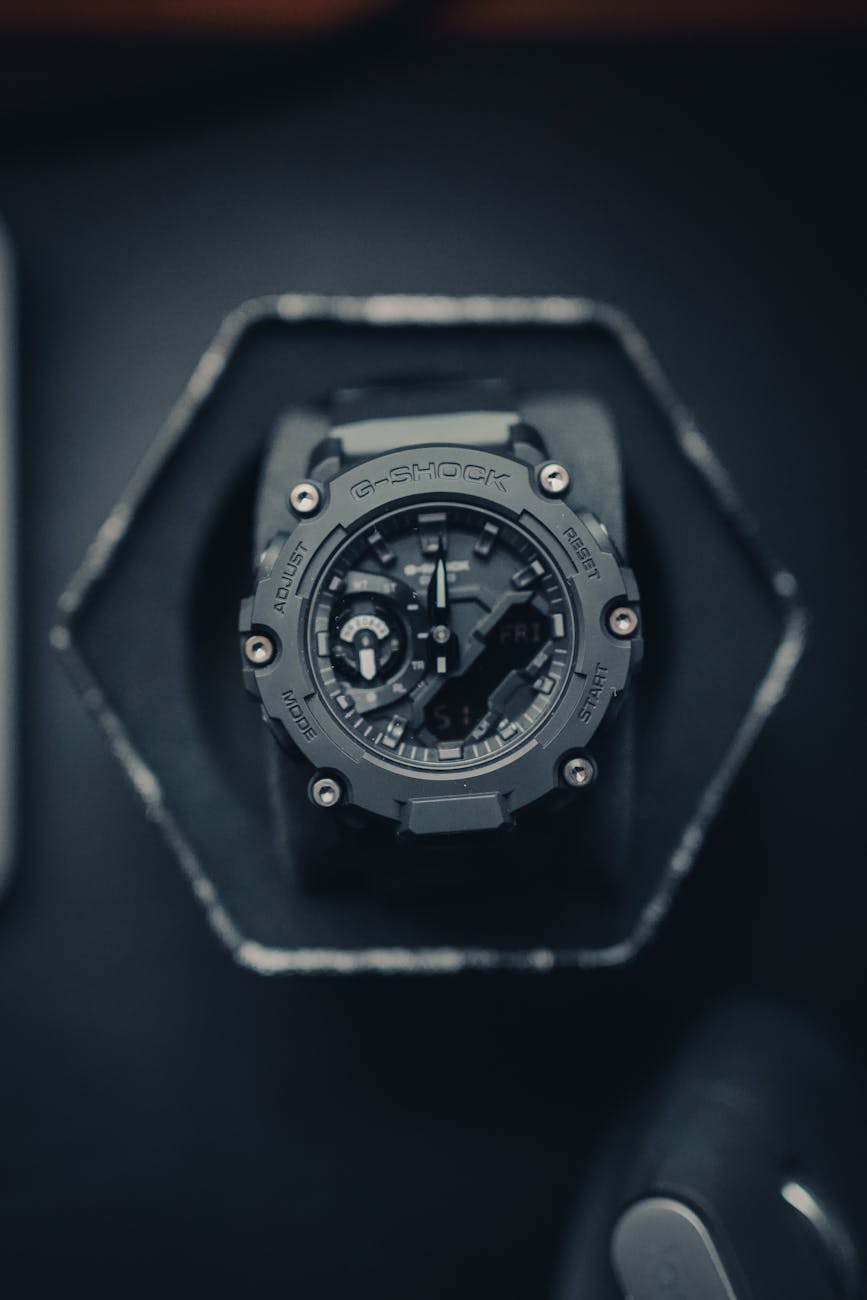
    Second, while your wife and her friends design custom T-shirts and handmade signs for rock concerts in the desert, you remain home on a Saturday night swapping straps on your diver watches. You build watch-rotation calendars. You track wrist time. You rank your collection by annual usage. The fact that you know you wore your Seiko Marine Master for exactly 863 hours last year strikes you as reasonable, even impressive. Others find it alarming.

    Third, because your tolerance for irritation is low, you shop only at dawn, when grocery stores are nearly empty and the few people present are still half-asleep—docile, unthreatening, manageable. You take pride in shopping before the rat race wakes up. This dovetails nicely with your time-management philosophy: bed at nine, up at five. By the time the world stirs, you’ve had your coffee, your steel-cut oats, your kettlebell workout, and your canvas grocery bags—your weekly macros—put neatly away. You are, in your own mind, winning.

    The rest of the day unfolds under a regime your wife has named Captain Cancel. Every proposed outing meets a veto. You can’t attend a concert because it might rain, despite cloudless skies. You can’t go to a restaurant because parking is inadequate, and when your wife reminds you of the new parking structure, you explain that it’s widely known to be contaminated with asbestos. A comedian you once loved is playing in Hermosa Beach, but you inform her he hasn’t been funny since the Reagan administration. A trip to Maui is ill-advised due to avian flu, especially dangerous during air travel. A beach picnic is canceled because of a sewage spill that, you explain, has compromised not just the water but the atmosphere. You agree to Taco Tuesday at the local brewery, but it’s too loud. You stuff toilet paper in your ears, announce you’re unwell, and Uber home. You are never invited again. This makes you smile as you drift into a deeply satisfying sleep.

    If you recognize any of these traits, congratulations. You are anti-social. You are Captain Cancel. You have chosen your isolation, locked yourself in your cage, and—most importantly—convinced yourself it was the sensible thing to do.

  • Colonel Lockjaw and the Cosplay Watches of the Soul

    Colonel Lockjaw and the Cosplay Watches of the Soul

    If I had to confess to one of my worst flaws, it would be this: I’m a virtuoso at diagnosing other people’s defects and a coward when it comes to inspecting my own. I can spot hypocrisy at fifty paces, write a character analysis of your blind spots, and deliver a withering critique of your moral laziness—while remaining blissfully obtuse about the same diseases raging in me. It’s not insight. It’s evasion. Instead of interrogating my own failures, I distract myself by putting others on trial.

    The hypocrisy deepens because I despise people who refuse self-interrogation. Over the years I’ve kept my distance from plenty of them—friends, colleagues, acquaintances—because their lack of self-awareness felt repellent. I judged them for their blindness without noticing I was practicing the same sin with better vocabulary. My watch hobby was an early case study in this delusion. I spent years buying grotesquely oversized timepieces—wrist-mounted monuments to masculine cosplay. In my private fantasy, I was Sean Penn starring as Colonel Lockjaw. In reality, I was a middle-aged man dodging a mirror. Why confront a crisis of purpose when you can drop five hundred dollars on a costume watch and call it identity?

    Eventually I sobered up—sold the ridiculous pieces, learned what real watches are, and cleared out my collection the way a dieter purges Doritos and Twinkies. But the damage was done: I’d wasted three years of a hobby because I refused to ask what my compensation phase said about me. I demanded self-interrogation from everyone else. I granted myself a permanent exemption. Do as I say, not as I do—the oldest creed of the unexamined life.

    That failure has been haunting me lately, triggered by a memory from thirty-five years ago: an English Department meeting that turned into a circus. I was a young instructor, terrified of tenure committees and power hierarchies, sitting quietly while the veterans argued about whether personal narratives belonged in college writing. One professor—let’s call him Foghorn Leghorn—was a legendary drunk who showed up to meetings in a black leather bomber jacket and a cloud of whiskey fumes. With disheveled silver hair and black horn-rimmed glasses, he declared that personal narratives were “sissy” assignments and that students needed “real-life” skills like argument and analysis. Susan, a colleague with more backbone than the rest of us combined, said that autobiographical writing gave students something called “personal enrichment.” Foghorn exploded. “What the hell does that mean?” he barked. “Personal enrichment? What the hell does that mean?” Susan backed down—not because she was wrong, but because there’s no winning an argument with a belligerent man auditioning for his own demolition.

    Back then, I kept my mouth shut. I was young. I was a lecturer on a non-tenure track. I was scared. But in the decades since, I’ve had time to think about Susan’s phrase. Personal enrichment. What does it mean—and should I, as a writing teacher, care? The answer is yes, and yes again. Personal enrichment is the cultivation of skills no standardized test can measure: moral clarity, self-honesty, the courage to look at yourself without flinching. In other words, self-interrogation.

    I learned that lesson early in my career without knowing what to call it. Around the same time Foghorn was grandstanding, I assigned a definition essay on passive-aggressive behavior. Students had to begin with a brutal thesis—passive aggression as cowardly hostility—then unpack its traits and finish with a personal narrative. I wanted them to stop admiring dysfunction as cleverness. The best essay came from a nineteen-year-old whose beauty could’ve launched a sitcom. She wrote about her boyfriend, a man who looked like life had given up on him. He was unemployed, proudly unwashed, and permanently horizontal—camped in her parents’ living room like a hostile occupier. He drank her father’s beer, ate his food, parked himself in his chair, and stank up the furniture with equal enthusiasm. Her parents hated him. Especially her father. And that was the point.

    She resented her father’s authority, so she punished him the only way she knew how—by sabotaging herself. Romantic self-destruction as revenge. When we discussed the essay, she told me something I’ve never forgotten: writing it forced her to see her behavior with unbearable clarity. She kicked the boyfriend out. Then, clumsily but honestly, she confronted her father. A personal narrative—mocked by my alcoholic colleague—did what no grading rubric ever could. It changed a life.

    Fifteen years later, I assigned another narrative, this one inspired by Viktor Frankl’s Man’s Search for Meaning. I asked students to write about a moment when tragedy forced them to choose between self-pity and courage. The finest essay came from a young mother who’d been abandoned by her own mother at two years old. She grew up with a hole in her heart, then gave birth to a daughter and decided she would be the mother she never had. In loving her child, she learned to love herself. I’ve taught for nearly forty years. Her story has moved me more than anyone’s.

    That’s why I assign personal narratives more than ever. Not just because they resist AI shortcuts, but because they demand moral inventory. And here’s the final irony: Foghorn Leghorn—the loudest critic of self-examination—was the man who needed it most. Last I heard, he’d burned down his kitchen while making dinner, lost his family, and was holed up in a cheap hotel drinking himself toward oblivion. The mansplainer who sneered at Susan ended up a tragic footnote in his own cautionary tale. I hope he found sobriety. If he did, it began where it always does—with honest self-interrogation.

    As for me, I’ll keep assigning personal narratives. I’ll keep asking students to look inward with courage. And I’ll keep reminding myself that the hardest essays to write are not on the syllabus. They’re the ones you compose silently, about your own life, when no one is grading you.

  • Are We Extras in Someone Else’s Luxury Watch Fantasy?

    Are We Extras in Someone Else’s Luxury Watch Fantasy?

    Six weeks with my fifteen-year-old twins is a better sociology course than anything you’ll find at UCLA. Their generation runs on shared experiences—amusement parks, concerts, parties—and the sacred ritual of turning those moments into cinematic TikToks. They love empathy. They love energy drinks. They love boba with the devotion earlier civilizations reserved for gods. They exchange hugs so theatrical they deserve SAG cards. They also love not driving. Why would they? They have concierge parents for that. The car is not transportation; it’s a mobile confessional booth where they talk, text, and disappear into playlists like monks retreating into sonic monasteries. Licenses can wait. I’ll be stunned if either one pilots a vehicle solo before age twenty-five.

    They dress alike, too—hoodies, high-rise jeans, baggy sweatpants. When I pick them up from school, I scan a sea of identical silhouettes and play a grim game of Where’s Waldo: Daughter Edition. It’s like they all emerged from the same fashion assembly line, stamped and released in bulk.

    Then there’s the strangest quirk of all: the generational terror of bare feet. We live in Southern California, where flip-flops are a constitutional right. But when my daughters’ friends come over, I’m ordered—ordered—to put on shoes. Feet are not feet anymore. They’re “dogs,” “grippers,” “claws,” a traveling carnival of anatomical horror. One girl saw my bare feet and reported back like she’d witnessed a crime scene. Since then, I suit up like a hazmat worker whenever teenagers enter the house.

    Watching their collective likes and dislikes has turned me into an amateur René Girard scholar. Girard argued that we don’t want things because they’re intrinsically wonderful; we want them because the tribe wants them first. Desire is social plagiarism. The tribe writes the script, and we perform it thinking it’s improvisation.

    But there’s a dark twin to mimetic desire: mimetic aversion. If the tribe hates something, we learn to hate it, too—even if we never felt a flicker of disgust on our own. Case in point: “I saw your dad’s dogs. Gross.” A moral judgment delivered about toes.

    Naturally, this has sent my twenty-year watch obsession into a philosophical tailspin. When we crave a watch, is it a private passion—or just tribal ventriloquism? Are we collectors, or are we obedient extras in someone else’s luxury fantasy? And if we’re that easily programmed, doesn’t it expose something mildly humiliating about us—our insecurities, our hunger to belong, our weakness for social approval dressed up as taste?

    Maybe understanding desire would clarify us. Or maybe it would only prove how unclassifiable we really are. Some mysteries resist labels.

    Still, in the watch world, mimetic aversion is practically doctrine. Quartz watches are treated like dietary betrayal. You used to grill rib-eyes and now you’re flipping soy burgers? Next you’ll be wearing Crocs and asking for decaf. Show up at the wrong meet-up with a quartz on your wrist and you won’t just lose respect—you’ll lose invitations, subscribers, and possibly citizenship. “Quartz?” they’ll whisper. “Traitor.”

    On the flip side, mimetic desire runs the show just as ruthlessly. Look at the waiting lists. Look at the resale prices. When you buy certain watches, you’re not buying steel—you’re buying absolution. A Rolex Sub isn’t a timepiece; it’s a baptism. The tribe anoints you with holy water and hums a choral anthem over your wrist.

    So yes, the watch hobby is soaked in mimetic desire and mimetic aversion. But here’s my heresy: if you’re a true watch obsessive, those forces barely apply to you. Because your relationship with watches isn’t tribal. It’s theological.

    A real watch obsessive is ruled by three forces.

    First, the Svengali Effect. A certain watch doesn’t attract you—it hypnotizes you. It hijacks your agency like a charming cult leader. You try to resist. You fail. The watch plants itself in your brain and grows there like an invasive eucalyptus until surrender feels like destiny. This isn’t imitation. This is possession.

    Second, Horological Fixation. At this stage, your watch stops being a timekeeping device and becomes a visual narcotic. You no longer use your watch to check the time—you commune with the object. The world fades. The wrist becomes a shrine. Eden relocates to forty-two millimeters of brushed steel.

    Third, Horological Transfiguration. You put on the watch and—boom—you’re not just dressed, you’re transformed. James Bond. Jacques Cousteau. Brad Pitt walking into a bar where the jukebox automatically switches to something heroic. The watch doesn’t accessorize you; it authorizes you.

    I’ve known watch obsessives for decades. I know the symptoms. I know the tells.

    So if you live under the Svengali Effect, Horological Fixation, and Horological Transfiguration, René Girard’s mimetic theory doesn’t really apply. The good news: you’re not a phony lemming chasing tribal approval. The bad news: you’re completely unhinged.

    Congratulations. You’re a true watch obsessive—authentic, independent, gloriously insane.

    Now put on your watch. You’ve been Clark Kent long enough. It’s time to rip open the shirt and let the cape fly.

  • Doing Everything, Feeling Nothing: The Age of Engagement Dilution

    Doing Everything, Feeling Nothing: The Age of Engagement Dilution

    In “Ebooks Are an Abomination,” Ian Bogost delivers a needed slap across the face of our collective reading habits. His charge is simple and devastating: ebooks haven’t expanded reading—they’ve hollowed it out. People believe they’re reading because their eyes are sliding across a screen, but most of what’s happening is closer to grazing. The scandal isn’t that we skim; it’s that we’ve started calling skimming “reading” and don’t even blush. Bogost nails the fraud when he points out that the word reading has become a linguistic junk drawer—used to describe everything from doomscrolling Instagram captions to actually wrestling with dense prose. If the same word covers both scanning memes and grappling with Dostoevsky, then the word has lost its spine.

    It reminds me of people who announce they’re going to the gym to “work out.” That phrase now covers a heroic range of activity—from Arnold-style flirtations with death to leaning on a treadmill while watching Jeopardy! and gossiping about coworkers. Same building, radically different realities. One is training. The other is loitering with athletic accessories.

    Reading and working out have this in common: they are not activities so much as states of engagement. And the more soaked we become in technology, the more that engagement drains away. Technology sells convenience and dependency—the kind where you feel faintly panicked if you’re five feet from a device and not being optimized by something. But being a reader is the opposite of that nervous dependence. It’s happy solitude. It’s the stubborn pleasure of being absorbed by a book, of sinking into hard ideas—the epistemic crisis, substitutionary atonement, moral ambiguity—without needing an app to pat you on the head and tell you how you’re doing. Real readers don’t need dashboards. Real lifters don’t need Fitbits. If you’re truly engaged, you feel the work in your bones.

    And yet technology keeps whispering the same seduction: optimization. Track it. Measure it. Quantify it. But what this gospel of efficiency often delivers is something uglier—disengagement dressed up as progress, laziness rebranded as smart living. The name for this decay is Engagement Dilution: the slow thinning of practices that once demanded effort—reading, training, thinking—into low-grade approximations that still wear the old labels. What once meant immersion now means mere exposure. We haven’t stopped doing these things. We’ve just stopped doing them seriously, and we’re calling that evolution.

    To help you interrogate the effects of Engagement Dilution, you will do the following writing prompt.

    600-Word Personal Narrative That Addresses Engagement Dilution

    We live in an age where everything looks like participation—but very little feels like engagement. We “read” by skimming. We “work out” by standing near machines. We “study” by copying and pasting. We “connect” by reacting with emojis. The actions remain, but the depth is gone. This condition has a name: Engagement Dilution—the process by which practices that once demanded sustained attention, effort, and presence are thinned into low-effort versions that keep the same labels but lose the same meaning.

    For this essay, you will write a 600-word personal narrative about a time when you realized you were going through the motions without being truly engaged. Your story should focus on a specific experience in which you believed you were participating in something meaningful—school, work, fitness, relationships, creativity, reading, faith, activism, or personal growth—only to later recognize that what you were doing was a diluted version of the real thing.

    Begin with a concrete scene. Put the reader inside a moment: a classroom where you nodded but didn’t think, a gym session where you scrolled more than you lifted, a relationship where you listened with your phone in your hand, a book you “read” but can’t remember, a goal you claimed to care about but never truly invested in. Use sensory detail—what you saw, heard, felt, avoided—to make the dilution visible. Don’t explain the idea yet. Show it happening.

    Next, introduce the realization. When did it dawn on you that something essential was missing? Was it boredom? Frustration? Guilt? Emptiness? Did someone confront you? Did you fail at something you thought you had prepared for? Did you suddenly notice how different real engagement feels—how tiring, how uncomfortable, how demanding it is compared to the easy version you had settled for?

    Then widen the lens. Reflect on why engagement diluted in the first place. Was it technology? Fear of failure? Desire for comfort? Pressure to appear productive? Lack of confidence? The culture of optimization? Be honest here. Avoid blaming abstract forces alone. This essay is not about what society did to you; it is about the choices you made within that environment.

    Finally, confront the cost. What did engagement dilution take from you? Skill? Confidence? Meaning? Relationships? Momentum? And what did it teach you about the difference between looking active and actually being alive inside your actions? End not with a motivational slogan but with clarity—what you now recognize about effort, attention, and the price of avoiding difficulty.

    Guidelines

    • This is a narrative, not a sermon. Let the story do the thinking.
    • Avoid clichés about “finding balance” or “doing better next time.”
    • Do not turn this into a tech rant or a productivity essay. Keep it human.
    • Use humor if it fits—but don’t hide behind it.
    • Your goal is not self-improvement branding. Your goal is insight.

    What this Essay Is Really About

    Engagement Dilution is not laziness. It is the quiet substitution of comfort for commitment, convenience for courage, motion for meaning. Your task is to show how that substitution happened in your own life—and what it revealed about what real engagement actually costs.

    Write the essay only you could write. The more specific you are, the more universal the insight becomes.

  • Experience Has Left the Building: Teaching Writing After Representational Displacement

    Experience Has Left the Building: Teaching Writing After Representational Displacement

    Christine Rosen’s The Extinction of Experience names the quiet catastrophe of our moment: experience itself has been replaced by its press release. We no longer meet the world face-to-face; we encounter its avatar—curated, quantified, filtered, and politely optimized for consumption. Reality arrives pre-processed. Life is no longer lived so much as represented. We scroll through it, measure it, track it, and somehow wonder why it feels thin. This is what I call Representational Displacement: a condition in which lived reality is steadily displaced by its mediated substitutes—screens, metrics, feeds, dashboards—until experience is filtered before it is even felt. The world is not encountered but managed, not inhabited but previewed. We live one remove away from our own lives, alienated not by scarcity but by overrepresentation.

    Rosen is clear about the cost. “Experiences,” she writes, “are the ways we become acquainted with the world. Direct experience is our first teacher.” Strip that away and education becomes a simulation of learning rather than the thing itself. And that is precisely what is happening in classrooms. Direct experience is contracting. AI-driven functions are expanding. Students are increasingly trained to manage outputs, assemble responses, and comply with systems rather than grapple with ideas, language, and uncertainty. The result is a generation at risk of becoming well-behaved functionaries—NPCs with decent syntax—rather than human beings engaged in Higher Learning as a transformative act. As a writing instructor, I refuse to let the classroom collapse into a content farm staffed by polite machines. My job now is counterinsurgency: designing assignments that restore friction, embodiment, memory, and lived encounter—work that forces experience back into the center of learning, where it belongs.

     One such counterinsurgency is the Memory-Specific Writing Prompt. It is deliberately designed to anchor writing in lived experience rather than transferable knowledge, requiring details that arise from a writer’s embodied past and cannot be convincingly generated by pattern recognition alone. It demands concrete, localized specificity—named places, obsolete objects, idiosyncratic rituals, sensory impressions, and personal contradictions—that exist only because the writer was physically present at a particular time. By tying meaning to unrepeatable memory rather than generalizable insight, the assignment makes fluency insufficient and forces authorship to matter. The result is writing that values presence over polish, consequence over coherence, and recollection over reproduction—conditions under which AI tools become at best marginal assistants and at worst obvious impostors.

    Dismissing this assignment as “merely creative writing” misunderstands both its purpose and its rigor. Memory-specific writing trains the same cognitive skills demanded by the so-called real world: sustained attention, accurate observation, causal reasoning, ethical self-representation, and the ability to translate raw experience into accountable language. Professionals do not succeed by producing generic prose; they succeed by noticing what others miss, explaining complex situations clearly, and grounding claims in evidence that can withstand scrutiny. This assignment treats memory as data, description as analysis, and narrative as a method for testing meaning rather than decorating it. In an economy saturated with frictionless text generation, the capacity to produce precise, credible, experience-based writing is not ornamental—it is a core competency, and one that cannot be automated away.

    One such prompt I’ll give you is titled “The Unlikely Happy Place”: Write an 800-word personal narrative essay about a place that was not designed to make anyone happy. The place was ugly, uncomfortable, mundane, or even faintly miserable—yet it became a genuine source of refuge or joy for you. The power of the essay should come from the contradiction between the place’s surface qualities and the deep meaning it held for you. Ground your writing in dense sensory detail and memory-specific facts: textures, smells, sounds, named people, obsolete objects, routines, and rituals that could only belong to that place at that time. Do not smooth over its flaws. Show how this unlikely happiness allowed you to escape, rehearse, or become. The goal is to show what your connection to this place said about your character, values, and personality. Here is a sample based on a gym that still haunts me from my teens:

    My Unlikely Happy Place–Walt’s Gym

    By the time I hit fourteen, my sacred sanctuary was none other than Walt’s Gym in Hayward, California—a temple of iron that had started its inglorious life as a chicken coop in the 1950s. The place was a veritable swamp of fungus and bacteria, a thriving petri dish of maladies eager to latch onto the unsuspecting. Members whispered in hushed tones about incurable athlete’s foot, the kind that made dermatologists throw up their hands in defeat. Some swore that the strains of fungus and mold festering in the corners were so exotic they had yet to be classified by the most intrepid of mycologists. Roosting among the fungal shower stalls was an oversized frog that the pro wrestlers had affectionately named Charlie. I never saw Charlie myself, but I often wondered if he was a real creature or a figment of the wrestlers’ imagination, birthed by too many concussions and late-night benders.

    The locker room was perpetually occupied by a rotating cast of characters who looked like they’d been plucked straight out of a grimy noir film. There was always some bankrupt divorcee draped in a velour tracksuit and a gold chain thick enough to anchor a ship, hogging the payphone for marathon sessions with his attorney. He’d discuss his sordid life choices and the staggering attorney fees required to sweep his past under a rug large enough to cover the entire state of California.

    Out back, an unused swimming pool lurked, its water murky and black—a cauldron of plague, dead rats, and God knows what else. Walt, the gym’s owner and part-time crypt keeper, had a peculiar ritual. Every so often, he’d saunter outside, brandishing a pool net like a scepter, and scoop up some unfortunate deceased creature. He’d hold it aloft for all to see, like a demented priest presenting an unholy sacrament. This grim ceremony was invariably met with a thunderous round of applause from the gym-goers, who treated Walt’s rodent exorcisms like a halftime show. Walt would then toss the cadaver into a nearby dumpster with all the flourish of a Shakespearean actor delivering a monologue, bowing deeply as if he’d just conquered a dragon.

    Walt’s Gym showcased a walking fossil named Wally, an octogenarian who swore he was the original model for human anatomy textbooks—perhaps ones etched on cave walls. We all loved Wally. He was a beloved gym fixture even though he could be a pain in the butt. Wally’s routine was the stuff of myth: He’d righteously correct everyone’s form whether they asked for his advice or not. He’d monopolize the gym for hours, his workout punctuated by monologues worthy of an Oscar about his deadbeat relatives who “borrowed” money, his former lovers who once graced the silver screen, and his eternal battle with arthritis. Between sets, he’d often deliver a Ted Talk on muscle inflammation and the sorry state of the national economy. He delivered these soliloquies with the gravitas of a news anchor, then spent an eternity in the sauna and shower, emerging like a phoenix from the ashes only to douse himself head-to-toe in talcum powder, turning into a spectral beacon of gym dedication. When Wally spoke, he was engulfed in such a thick talcum haze you’d swear a lighthouse was about to blare its foghorn warning.

    The radio played the same hits on a relentless loop, as if the DJ had been possessed by the spirit of a broken record. Elvin Bishop’s “Fooled Around and Fell in Love,” The Eagles’ “New Kid in Town,” and Norman Connors’ “You Are My Starship” echoed through the gym like a soundtrack to my personal purgatory. As a kid navigating this adult world, the gym was my barbershop, my public square, where I eavesdropped on conversations about divorces, hangovers, gambling addictions, financial ruin, the exorbitant costs of sending kids to college, and the soul-sucking burdens of caring for elderly parents.

    It dawned on me then that I was at fourteen the perfect age: old enough to start building biceps like bowling balls, yet young enough to be spared the drudgery and tedium of adult life. The Road to Swoleville, I realized, was all about sidestepping the real world entirely. Why bother with mortgages and 401(k)s when I could disappear into my true paradise, the gym? As Arnold himself wrote in Arnold: The Education of a Bodybuilder, the gym was the ultimate Happy Place: “The weight lifters shone with sweat; they were powerful looking. Herculean. And there it was before me—my life, the answer I’d been seeking. It clicked. It was something I suddenly just seemed to reach out and find, as if I’d been crossing a suspended bridge and finally stepped off onto solid ground.”

    My “solid ground” was the 1976 incarnation of Walt’s Gym, a germ-infested, rat-plagued wonderland where dreams of muscle-bound glory were forged—and quite possibly the greatest place I’ve ever visited on this planet.

  • Pleasure Island Goes Digital: The Rise of the Hedonist-Sapien

    Pleasure Island Goes Digital: The Rise of the Hedonist-Sapien

    Eric Weiner’s The Geography of Bliss introduces one of the great cautionary silhouettes of modern travel writing: the Farang. In Thailand, the word names a particular species of Western pleasure-seeker—less tourist than residue. He is instantly legible. White. Middle-aged. Soft around the middle and hard around the eyes. His skin has that sickly, overcooked hue of someone who hasn’t slept, eaten, or hoped correctly in years. He lurches down the beach in baggy, sweat-darkened clothes, face glazed, spirit half-evacuated, as if his soul stepped out for air and never came back. What keeps him upright is not health or purpose but a wallet swollen with cash. When the money runs out, so does the illusion. He staggers home to recover, refill, and then returns to the same tropical oubliette to repeat the cycle—debauch, deplete, disappear, reload. Pleasure, in this form, isn’t joy. It’s maintenance.

    Pinocchio offers its own version of the Farang, with less sunscreen and more clarity. Linger too long on Pleasure Island and you don’t just lose your moral compass—you sprout hooves. The boy becomes a jackass. The metaphor is unsubtle and mercifully so. Pleasure without restraint doesn’t make you free; it makes you stupid, loud, and increasingly unrecognizable to yourself. World culture is thick with such warnings. Myths, fables, scriptures, novels—whole libraries exist to explain why worshiping pleasure ends badly. And yet hedonism has never been more ascendant, because unlike virtue, it scales beautifully. It drives commerce. It sells. Entire industries are built on the catechism that pleasure is the highest good and discomfort the only sin. Billions now live as functional hedonists without ever using the word, while a more self-aware elite practices a refined variant—“mindful hedonism”—spending staggering sums to curate lives of seamless comfort, aesthetic indulgence, and moral exemption. In a culture that treats pleasure as proof of success, the hedonist-sapien is not a cautionary tale; he is a lifestyle influencer.

    If you are a hedonist-sapien, your gaze turns inward, away from society’s disputes and toward the sovereign self. The highest goods are pleasure, freedom, and the smooth, uninterrupted unfolding of personal desire. Politics is static. Transcendence is optional. What matters is feeling good, living well, and sanding down every rough edge along the way. Into this worldview step the AI machines, not as ethical dilemmas but as gift baskets. They curate taste, anticipate desire, eliminate friction, and turn effort into an avoidable inconvenience. They promise a life where comfort feels earned simply by existing, and choice replaces discipline. Of the four orientations, the hedonist-sapien greets AI with the least suspicion and the widest grin, welcoming it as the perfect accomplice in the lifelong project of maximizing pleasure and minimizing resistance—Pleasure Island, now fully automated.

  • Too Much RAM, Not Enough Transcendence

    Too Much RAM, Not Enough Transcendence

    At sixty-four, time no longer strolls; it sprints, and I feel myself shrinking as it passes. Not dramatically—no tragic collapse—just a steady narrowing. Fewer friends than before. A smaller social orbit. My internal clock drifting farther out of sync with my wife’s and daughter’s, who are younger, livelier, and still tuned to daylight. They love me and make heroic efforts to lure me out of my cave, but by eight o’clock I’m asleep in the back seat, hibernating like a cartoon grizzly bear who misunderstood the invitation.

    Part of the shock is how badly my expectations were mis-set. I grew up marinated in television commercials that catechized me into a childish theology of consumerism: play by the rules, buy the right things, and you’ll be lifted onto a magic carpet of perpetual happiness and glowing health. The American Dream, as advertised, looked frictionless and eternal. Paradise was a purchase away. Then generative AI arrived and supercharged the fantasy. I didn’t just get a magic carpet—I became the magic carpet. Like Superman, I could optimize myself endlessly. If immortality wasn’t on the table, surely a close approximation was.

    And yet here I am. The house is nearly paid off in a premium Southern California neighborhood. My computer has more SSD, RAM, and CPU than I could have imagined as a kid. AI tools respond instantly, obedient and tireless. And still—no glory. No transcendence. Even my healthcare provider got in on the myth, emailing me something grandly titled “Your Personal Action Plan.” I arrived at the doctor’s office expecting revelation. He handed me a cup and asked for a urine sample.

    The gap between the life I was promised by the digital age and the life I’m actually living is soul-crushing in its banality. So I retreat to a bowl of steel-cut oats, drowned in prunes, molasses, and soy milk. It’s not heroic. It’s not optimized. But it’s warm, predictable, and faintly medicinal. “At least I’m eating clean,” I tell myself—clinging to this small, beige consolation as proof that even if the magic carpet never showed up, I can still manage a decent breakfast.

    Like millions before me, I have allowed myself to fall into Optimization Afterlife Fantasy–the belief that continuous self-improvement, technological upgrades, and algorithmic assistance can indefinitely postpone decline and approximate transcendence in a secular age. It replaces older visions of salvation with dashboards, action plans, and personalized systems, promising that with enough data, discipline, and tools, one can out-optimize aging, finitude, and disappointment. The fantasy thrives on the language of efficiency and control, encouraging the illusion that mortality is a solvable design flaw rather than a human condition. When reality intrudes—through fatigue, misalignment, or the body’s quiet refusals—the fantasy collapses, leaving behind not enlightenment but a sharper awareness of limits and the hollow ache of promises made by machines that cannot carry us past time.

  • Feedback Latency Intolerance

    Feedback Latency Intolerance

    Feedback Latency Intolerance is the conditioned inability to endure even brief gaps between action and response, produced by prolonged immersion in systems that reward instantaneous acknowledgment. Under its influence, ordinary delays—seconds rather than minutes—register as emotional disturbances, triggering agitation, self-doubt, or irritation disproportionate to the circumstance. The condition collapses temporal perspective, converting neutral waiting into perceived absence or rejection. What is lost is not efficiency but patience: the learned capacity to exist without immediate validation. Feedback latency intolerance reveals how algorithmic environments retrain emotional regulation, replacing mature tolerance for delay with a reflexive demand for constant confirmation.

    The extent of my deterioration revealed itself recently at a new pancake house. I took my daughter, asked the server what he actually liked on the menu, and obediently ordered the fried chicken biscuit sandwich. Then—already overplaying the moment—I texted my wife to announce my choice, as if this were actionable intelligence. I stared at my phone, waiting for the small red numeral to appear, the sacred 1 that would certify my existence. Forty seconds passed. Forty. I refreshed my screen like a lab rat pressing a lever, convinced something had gone wrong with the universe.

    In that absurd interval, it dawned on me: I had entered a state of pathological impatience, the natural byproduct of prolonged residence in the dopamine swamp of algorithmic life, where self-worth is measured by speed and volume of response. The sensation felt disturbingly familiar. My mind snapped back to stories my mother told about feeding me as a baby. The spoon, freshly loaded with mashed potatoes, would leave my mouth for a brief, necessary refill—and I would erupt in fury, unable to tolerate the unbearable injustice of the spoon’s absence. I screamed not from hunger, but from interruption. Sitting there in the pancake house, refreshing my phone, I realized I had simply upgraded the spoon. This is what too much time inside these machines does to a person: it doesn’t make you faster or smarter—it makes you an adult who can’t survive a forty-second gap between bites.

  • Stop Selling Books Like Vitamins: Reading as Pleasure, Not Duty

    Stop Selling Books Like Vitamins: Reading as Pleasure, Not Duty

    Literary Vice names the framing of reading as a private, absorbing, and mildly antisocial pleasure rather than a civic duty or self-improvement exercise. It treats books the way earlier cultures treated forbidden novels or disreputable entertainments: as experiences that tempt, distract, and pull the reader out of alignment with respectable schedules, market rhythms, and digital expectations. Literary vice rejects the language of virtue—empathy-building, résumé enhancement, democratic hygiene—and instead emphasizes immersion, obsession, and pleasure for its own sake. As a countervailing force against technology-induced anhedonia, reading works precisely because it is slow, effortful, and resistant to optimization: it restores depth of attention, reawakens desire through sustained engagement, and reintroduces emotional risk in a landscape flattened by frictionless dopamine delivery. Where screens numb by over-stimulation, literary vice revives feeling by demanding patience, solitude, and surrender to a single, uncompromising narrative consciousness.

    ***

    Adam Kirsch’s essay “Reading Is a Vice” makes a claim that sounds perverse until you realize it is completely sane: readers are misaligned with the world. They miss its rhythms, ignore its incentives, fall out of step with its market logic—and that is precisely the point. To be poorly adapted to a cultural hellscape is not a bug; it is the feature. Reading makes you antisocial in the healthiest way possible. It pulls you off screens, out of optimization mode, and away from the endless hum of performance and productivity that passes for modern life. In a culture engineered to keep us efficient, stimulated, and vaguely numb, misalignment is a form of resistance.

    Kirsch notes, of course, that reading builds critical thinking, individual flourishing, and democratic capacity. All true. All useless as marketing slogans. Those are not selling points in a dopamine economy. No one scrolls TikTok thinking, “I wish I were more civically responsible.” If you want young people to read, Kirsch argues, stop pitching books as moral medicine and start advertising them as pleasure—private, absorbing, and maybe a little disreputable. Call reading what it once was: a vice. When literature was dangerous, people couldn’t stop reading it. Now that books have been domesticated into virtue objects—edifying, wholesome, improving—no one can be persuaded to pick one up.

    You don’t eat baklava because it’s good for you. You eat it because it is an indecent miracle of sugar, butter, and culture that makes the rest of the day briefly irrelevant. Books work the same way. There are baklava books. Yours might be Danielle Steel. Mine isn’t. Mine lives closer to Cormac McCarthy. When I was in sixth grade, my literary baklava was Herman Raucher’s Summer of ’42. That book short-circuited my brain. I was so consumed by the protagonist’s doomed crush on an older woman that I refused to leave my tent for two full days during a perfect Yosemite summer. While everyone else hiked through actual paradise, I lay immobilized by narrative obsession. I regret nothing. My body was in Yosemite; my mind was somewhere far more dangerous.

    This is why you don’t tell students to read the way you tell people to take cod liver oil or hit their protein macros. That pitch fails because it is joyless and dishonest. You tell students to read because finding the right book feels like dessert—baklava, banana splits, whatever ruins your self-control. And yes, you can also tell them what Kafka knew: that great writing is an ax that breaks the frozen sea inside us. Stay frozen long enough—numb, optimized, frictionless—and you don’t just stagnate. You risk not coming back at all.

  • Why I Chose Mary Ann Over Ginger

    Why I Chose Mary Ann Over Ginger

    Cosmetic Overfit describes the point at which beauty becomes so heavily engineered—through makeup, styling, filtering, or performative polish—that it tips from alluring into AI-like. At this stage, refinement overshoots realism: faces grow too symmetrical, textures too smooth, gestures too rehearsed. What remains is not ugliness but artificiality—the aesthetic equivalent of a model trained too hard on a narrow dataset. Cosmetic overfit strips beauty of warmth, contingency, and human variance, replacing them with a glossy sameness that reads as synthetic. The result is a subtle loss of desire: the subject is still visually impressive but emotionally distant, admired without being longed for.

    ***

    When I was in sixth grade, the most combustible argument on the playground wasn’t nuclear war or the morality of capitalism—it was Gilligan’s Island: Ginger or Mary Ann. Declaring your allegiance carried the same social risk as outing yourself politically today. Voices rose. Insults flew. Fists clenched. Friendships cracked. For the record, both women were flawless avatars of their type. Ginger was pure Hollywood excess—sequins, wigs, theatrical glamour, a walking studio backlot. Mary Ann was the counterspell: the sun-kissed farm girl with bare legs, natural hair, wide-eyed innocence, and a smile that suggested pie cooling on a windowsill. You couldn’t lose either way, but I gave my vote to Mary Ann. She wore less makeup, less artifice, one fewer strategically placed beauty mole. She looked touched by sunlight rather than a lighting rig. In retrospect, both women were almost too beautiful—beautiful enough to register as vaguely AI-like before AI existed. But Mary Ann was the less synthetic of the two, and that mattered. When beauty is over-engineered—buried under wigs, paint, and performance—it starts to feel algorithmic, glossy, emotionally inert. Mary Ann may have been cookie-cutter gorgeous, but she wasn’t laminated. And even back then, my pre-digital brain knew the rule: the less AI-like the beauty, the more irresistible it becomes.