Tag: fiction

  • The Day the Watch Cyborg Found Me

    The Day the Watch Cyborg Found Me

    I did not wake up one morning and decide to become a watch obsessive. No sober adult says, “My life lacks turmoil. I should find something small, expensive, and unnecessary to dominate my mental real estate.” The watch hobby did not enter politely. It arrived like a chrome-plated cyborg from the future—metallic, relentless, humorless about its mission. If you’ve seen The Terminator, you understand. Something inhuman drops from the sky, scans the room, locks onto a target, and does not blink. That was the watch addiction. It didn’t ask for consent. It assessed, targeted, and possessed.

    The possession began on an unremarkable Sunday in August 2005. My wife and I went to the mall for something innocent: a battery change. On the way out of the store, one foot inside, one foot outside, I turned my head and saw it—my first true enabler—the Citizen Ecozilla. The bezel alone looked like it had been machined for a submarine hatch: thick, L-shaped, deeply notched, unapologetically stainless. It wasn’t elegant. It was infrastructural. I was a lifelong bodybuilder raised on 1970s images of Arnold flexing under theatrical lighting, and there, in that watch case, was a wrist-mounted barbell. I wasn’t a diver. I didn’t own a wetsuit. But I could cosplay as a man who detonates underwater mines before breakfast.

    I walked five feet out of the store, stopped, executed a full U-turn like a man who had left his child behind, and returned for one final look. My inner cyborg engaged photographic memory mode. Screenshot acquired. Target locked. At home, I found it online for $205. That was the down payment on twenty years of psychological turbulence.

    For a year, I wore the Ecozilla daily. Then I committed the first of many aesthetic crimes: I drifted into the swamp of television-brand watches—oversized, gaudy, the horological equivalent of energy drinks. They accumulated in my drawers like glittering mistakes. It took a Seiko Black Monster—first generation, lume like a radioactive halo—to wake me from my stupor. Its quality was not subtle. It was the difference between steak and beef jerky. I sold the TV watches in a purge that felt like shedding adipose tissue on The Biggest Loser. Each sale was a small moral victory.

    And then the real religion began: Seiko diver devotion. Fifteen years of it. SLA models entered the collection, whispered about by influencers as if assembled in some mythic atelier. Whether they were built in a sacred Grand Seiko studio or a fluorescent-lit factory, I didn’t care. They scratched the itch. Or so I told myself.

    Friends loaned me Rolex, Tudor, Omega—fine watches, impressive watches. I enjoyed them the way one enjoys visiting a well-appointed home. But I never felt the urge to move in. Tastes, like obsessions, are not democratic. We do not vote on them. We discover them the way we discover allergies—after the reaction.

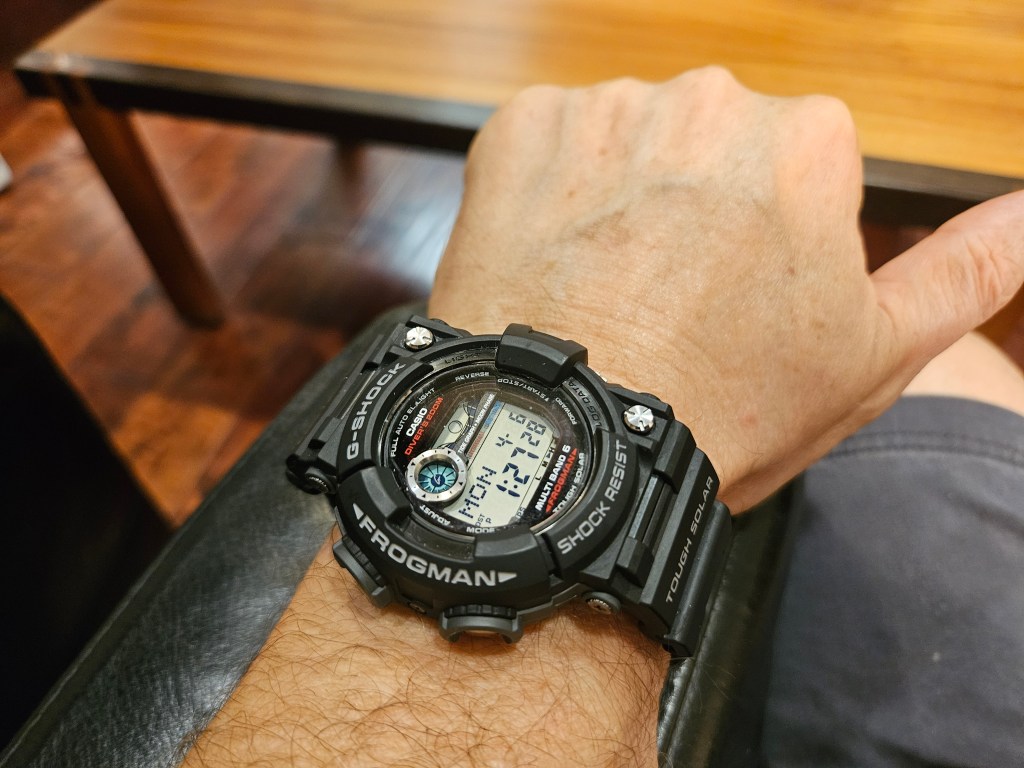
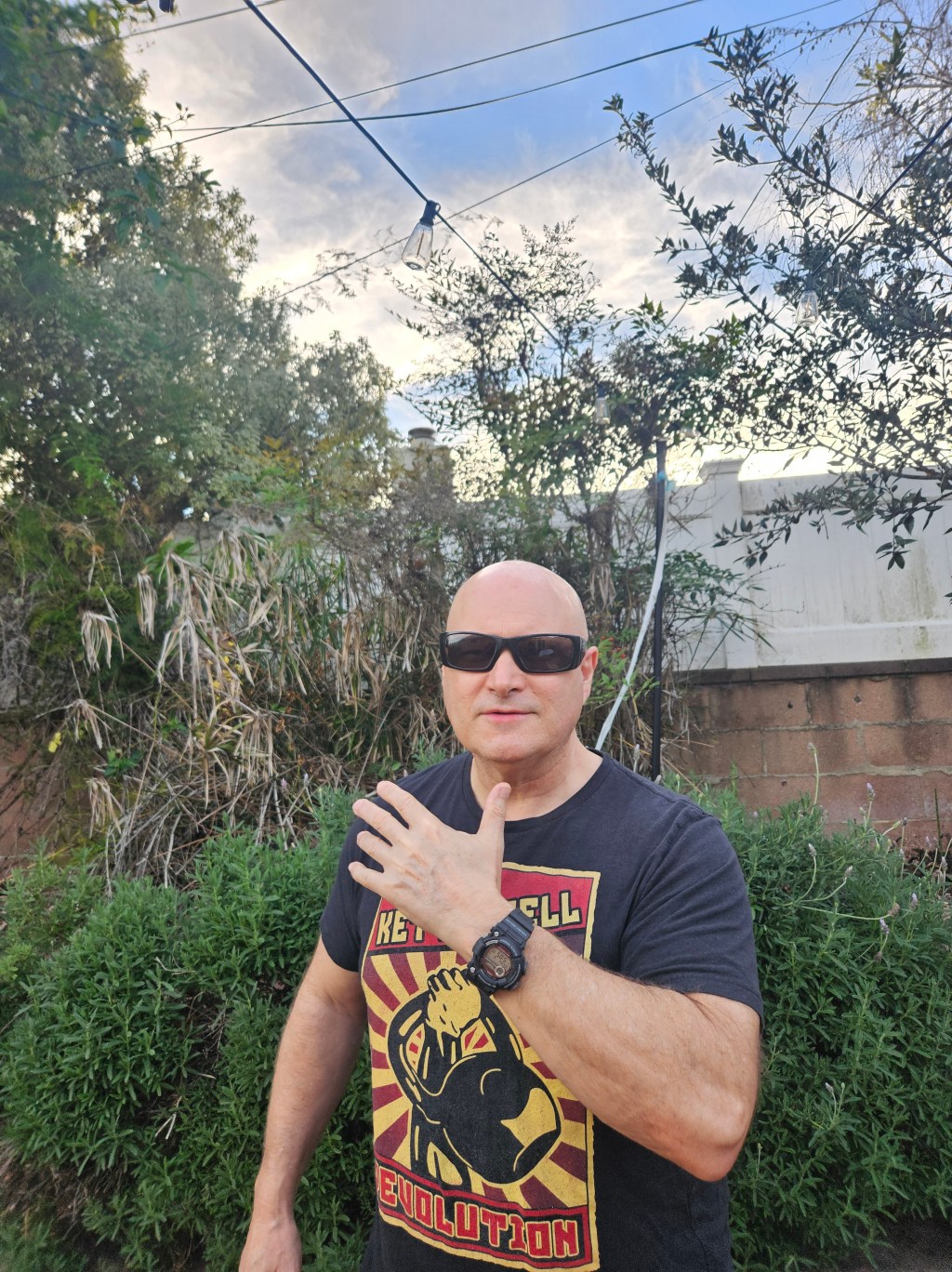
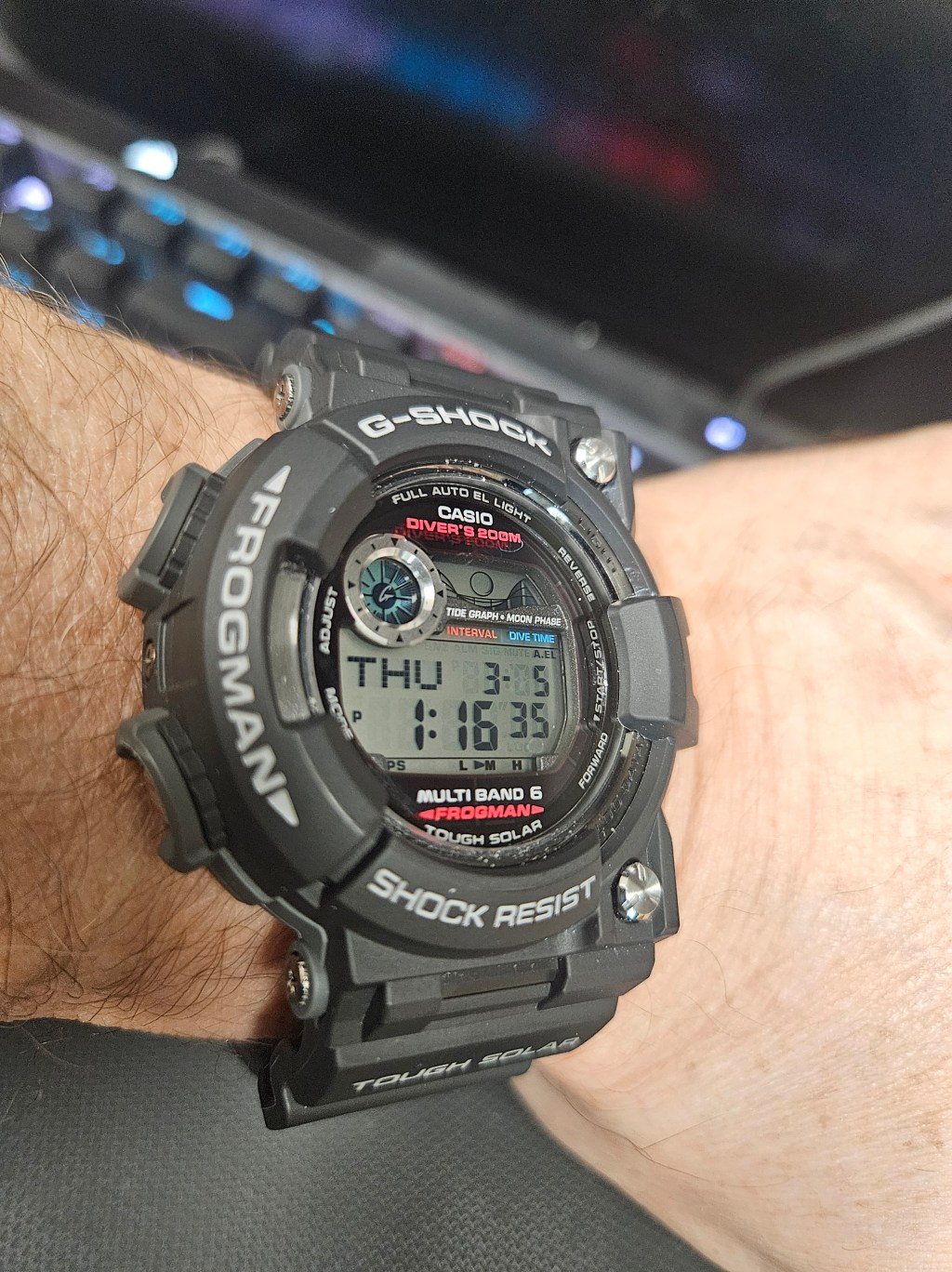
    Then came the surprise. At sixty-four, long after I thought my trajectory was fixed, I bought the watch my inner cyborg had been whispering about for a decade: the G-Shock Frogman GWF-1000. It hasn’t left my wrist. Not for ceremony. Not for nostalgia. Not even for the Seiko elders in their box, who now stare at me like retired generals. The Frogman is frictionless. Accurate. Indifferent to admiration. It feels less like a purchase and more like a jailbreak.

    This book is my attempt to understand the madness. It is personal—because the watch cyborg lives in my head—but it is also communal. Over decades, fellow travelers have confessed their anxieties, their grail delusions, their rotation guilt, their midnight research spirals. The watch obsessive speaks a dialect all his own. So I built a lexicon—a taxonomy of the strange mental weather patterns that govern this hobby. I began thinking I might squeeze out a modest essay. Instead, the terms multiplied. The categories metastasized. Sixty thousand words later, I had to concede the obvious: I am sufficiently mad to write a sufficiently long book about it.

    Even now, as I finish this introduction to The Man Who Lost His Mind to Watches, my inner watch cyborg stirs. He is suggesting sapphire upgrade versions of the Frogman. Larger numerals. Limited editions that cost twice what I paid for the one on my wrist. He is persuasive. He does not sleep.

    I protest weakly.

    He is already browsing.

  • The Cure for Function Abandonment Syndrome

    The Cure for Function Abandonment Syndrome

    You encounter a Rangeman owner who worships the stealth blacked-out model with a devotion bordering on performance art. He will tell you, calmly and without irony, that he can’t actually read the time on the negative display. It doesn’t matter. The watch stays on the wrist because it looks lethal—pure shadow, pure attitude, pure presence. Time, apparently, is now a secondary feature.

    Think about the pivot this represents. The man did not buy a timepiece; he bought an image. The geometry, the matte darkness, the tactical aura—these are the real functions. The digits exist somewhere inside the case, like a ceremonial appendix. If the light is right and the wrist is angled just so, the hour may reveal itself. But that’s incidental. The watch is no longer consulted. It is displayed.

    He resembles the fellow who once insisted he read glossy magazines for the articles, only to admit later that the articles had become irrelevant long ago. Content is gone. Only the visuals remain. In the same way, this enthusiast has crossed the line from horology to aesthetic intoxication. The watch no longer tells time. It tells a story about the man wearing it.

    Such a man is suffering from Function Abandonment Syndrome—the condition that sets in when a watch enthusiast quietly releases the expectation that the watch perform its basic task and begins wearing it purely for appearance, mood, or identity. Legibility becomes optional. Accuracy becomes theoretical. The time is technically available somewhere—under ideal lighting, at a cooperative angle—but that’s no longer the point. The owner has crossed the invisible threshold where tool becomes sculpture and utility becomes a nostalgic rumor. He doesn’t check the watch anymore; he acknowledges it. Function Abandonment Syndrome is what happens when style overwhelms purpose and the job description is politely retired without ceremony.

    Is there a cure for his condition? Yes. Imagine this: He lives happily in the glow of his blacked-out Rangeman until the day function suddenly matters again. Picture this: he’s driving a lonely stretch of highway at dusk when the fuel light comes on and the next gas station is closing in five minutes. His phone is dead. The dashboard clock is gone. All he has is the watch he chose for its “presence.” He lifts his wrist. Tilts. Squints. Rolls it toward the fading light like a man trying to read smoke signals from the wrist. The digits hover there, shy and evasive, revealing nothing but his own poor life choices. The station lights flicker off in the distance. In that moment—heart rate climbing, range dropping, darkness settling—he experiences the cold, clarifying terror that ends Function Abandonment Syndrome forever. Because style is thrilling in the showroom. But when the world gets real, the most beautiful watch on earth is the one that will tell you the time the first time you ask.

  • Avoid the Trap of Negative Display Frustration

    Avoid the Trap of Negative Display Frustration

    You saw them everywhere—YouTube thumbnails glowing with reverence, Reddit threads humming like revival meetings. The stealth blacked-out Rangeman was spoken of in near-mythic tones: the ultimate G-Shock, the watch for men who preferred shadow to spotlight. Yes, a few owners admitted the legibility could be… aspirational. But they waved off the concern with a shrug and a grin. One YouTuber confessed he could barely read the time at all, then declared it didn’t matter because he was “Mr. Rangeman.” He slipped into his convertible, wrist angled heroically toward the camera, and drove into the sunset wearing a watch he couldn’t read. He looked happy. Convincingly happy. You believed him.

    You loved the look too. This wasn’t vanity, you told yourself—it was discipline. The negative display felt tactical, restrained, professional. Less gadget, more issued equipment. On the wrist it carried authority without noise. In photos it was perfect: dark, serious, quietly dangerous. The positive display suddenly seemed cheerful, almost friendly—the wristwear equivalent of smiling too much in a job interview. You chose the darker path, convinced you were choosing character over comfort.

    At first, the illusion held. Outdoors, under strong light, the display looked sharp and purposeful. The watch projected competence. It matched the identity you’d purchased along with it: efficient, understated, immune to flash. But then the watch met real life—offices with flat lighting, restaurants with mood lighting, mornings before coffee, evenings after fatigue, quick glances from imperfect angles. The time was always there in theory. In practice, it behaved like a reluctant witness.

    This is the quiet prelude to Negative Display Frustration—the slow erosion that begins when a watch chosen for its stealthy authority requires negotiation for the basic privilege of reading the hour. It starts small: a longer glance indoors, a wrist tilt here, a button press there. Over time, the effort accumulates into low-grade irritation. The display still looks magnificent, but the relationship has shifted. The watch no longer serves effortlessly; it asks for cooperation.

    And the case studies are everywhere. Thousands of owners eventually surrender, trading their negative Rangeman for the positive version and reporting something close to psychological recovery. The lesson is not subtle. In the long run, aesthetics create admiration—but legibility creates peace. Cool impresses the eye. Clarity keeps the mind quiet.

  • You Are in the State of Watch Sovereignty

    You Are in the State of Watch Sovereignty

    Much to your surprise, you’ve fallen in love with a watch—and the evidence isn’t emotional. It’s behavioral. The watch won’t come off.

    You try to rotate. After all, there are other watches in the box—serious watches, expensive watches, watches that once occupied entire weeks of your attention. They deserve wrist time. You reach for the box.

    And then you don’t open it.

    The watch stays on.

    It isn’t a decision. It’s a quiet takeover. The watch has moved past preference and into authority. You don’t command it. It commands you. Rotation is no longer a system; it’s a memory. The rest of the collection waits like passengers at a station where the trains no longer stop.

    What surprises you most is your reaction.

    You feel relief.

    No more morning negotiations. No more outfit coordination. No more low-grade anxiety about neglecting the others. The wheel of choice has stopped spinning, and with it goes a constant, invisible mental tax. The watch is driving now, and you’re happy to sit in the passenger seat and watch the scenery.

    You have entered the realm of Wrist Sovereignty.

    This is the moment when one watch quietly dissolves the democracy of your collection and installs itself as a benevolent dictator. There is no ceremony, no dramatic declaration. One day you simply stop reaching for alternatives. The others remain—polished, impressive, expensive—but they now resemble retired generals: decorated, respected, and no longer deployed.

    The sovereign holds power for a simple reason: it never gives you a reason to remove it. It’s comfortable. Accurate. Reliable. Emotionally frictionless. It doesn’t ask to be protected, admired, or managed. It just works, and it keeps working.

    The true miracle of Wrist Sovereignty isn’t dominance.

    It’s peace.

    The endless comparison loops disappear. The rotation strategies evaporate. The hobby stops being a daily decision and becomes a settled fact. You are no longer managing your watches.

    The watch is managing you.

    And in the rare political systems of the wrist, this is the one where surrender feels like freedom—and the ruler gives you your time back.

  • The Old Man Warner in Your Watch Box

    The Old Man Warner in Your Watch Box

    Shirley Jackson’s “The Lottery” endures because every community has its Old Man Warner—the pinch-faced guardian of tradition who defends the barbaric ritual of human sacrifice not because it makes sense, but because it has always been done. When someone questions the practice, he delivers his familiar verdict: “There’s always been a lottery. Pack of crazy fools.”

    Since putting a G-Shock Frogman on my wrist and leaving my mechanical divers in their boxes, I’ve discovered my own Old Man Warner.

    He lives in my head.

    He is deeply offended that I am no longer winding, regulating, and emotionally tending to my mechanical watches. He blames outside influence. “G-Shock Nation,” he mutters darkly. “Pack of crazy fools.” He reminds me that I have always been a mechanical man. That I built an identity around springs and gears. That abandoning them isn’t a preference—it’s a betrayal.

    This condition has a name: Inner Warner Syndrome—the internal voice of tradition that condemns any deviation from established practice, even when the change makes your life better.

    And here’s the inconvenient truth.

    The Frogman has made my life better.

    When I open the watch box, the mechanical divers don’t whisper craftsmanship. They whisper obligation—winding schedules, accuracy drift, the quiet pressure to care. The Frogman, by contrast, asks nothing. It brings something I didn’t expect from a watch: serenity.

    Which leaves me in an awkward middle ground.

    My mechanical friends keep asking the same question: “How long is this phase going to last? When are you coming back to your real watches?”

    My honest answer: I don’t know. The Frogman could be on my wrist for another week, another month, another year. I really don’t know. 

    Meanwhile, Old Man Warner continues his running commentary from the background: “Pack of crazy fools.”

    This tension has a deeper structure. It isn’t about quartz versus mechanical. It’s about identity versus relief.

    I’m living through Ritual Loyalty Conflict—the uneasy state that arises when a long-cherished practice stops delivering pleasure but continues to demand allegiance. The new path is easier: no winding, no fuss, no emotional maintenance. But the old ritual carried a story about who you were—disciplined, devoted, serious.

    The discomfort isn’t practical.

    It’s ceremonial.

    I don’t miss the ritual itself so much as the identity it once confirmed. Every time the Frogman delivers quiet satisfaction, a small internal tribunal convenes to ask whether convenience has replaced character.

    Because beneath the surface, Ritual Loyalty Conflict isn’t about watches at all.

    It’s about the lingering suspicion that if something becomes easier—if it becomes peaceful—you may have abandoned not just effort, but virtue.

    And somewhere in the distance, Old Man Warner is still shaking his head.

  • The Watch Ninja and The Great Deepening

    The Watch Ninja and The Great Deepening

    If you stay in the watch hobby long enough, you must accept a hard truth: your identity will betray you.

    One morning you wake up and the mechanical divers—the watches that once defined your taste, your discipline, your personality—feel distant. Cold. Decorative. In their place sits a small, efficient triumvirate of atomic, solar G-Shocks that refuse to leave your wrist.

    You feel guilty. Disloyal. Untethered. Who are you if the romance of gears and springs no longer moves you? What kind of man replaces craftsmanship with digital certainty?

    This is not a question for forums.

    This requires the Watch Ninja.

    The fee is $1,000. Nonrefundable. Trusted members of the community blindfold you and load you into an unmarked van, because enlightenment, like limited editions, requires exclusivity.

    When the blindfold comes off, you find yourself in the stone-walled basement of a respectable hotel. Above you, restaurant workers clatter through the dinner rush. Below, time slows.

    The Watch Ninja sits on a high stool.

    He wears a white chef’s jacket, a wide-brimmed cavalry Stetson pulled low, dark aviators, and a G-Shock Frogman. The hat’s high crown gives him the posture of authority; the brim throws his eyes into shadow. He does not occupy the room. He commands it.

    Then the realization lands.

    He looks exactly like Robert Duvall as Lt. Col. Kilgore in Apocalypse Now—a man who would order helicopters for the sound alone.

    You confess your crisis. The abandonment of mechanical divers. The seduction of atomic precision. The creeping sense that you have betrayed your former self.

    He listens, stroking his chin like a man evaluating air support.

    Then he speaks.

    “There is no such thing as a single conversion,” he says. “There are only conversions within conversions. Your life as a watch obsessive is not defined by loving watches. It is defined by the subconversions that follow.”

    He leans forward.

    “A man builds a collection of mechanical divers. He exhausts their enchantment. Then he pivots—to G-Shocks, to atomic time, to solar autonomy. This is not betrayal. This is the Great Deepening.”

    He lets the words settle.

    “You did not lose your passion. You accelerated it. When one category is worn out, the serious enthusiast expands. You are not unstable. You are evolving.”

    He pauses.

    “Do not mourn the divers. Become the Expanding Man.”

    You leave the basement changed. Lighter. Forgiven. Your G-Shocks no longer feel like a betrayal. They feel like destiny.

    The Watch Ninja has taught you the central doctrine of serious collecting: The Great Deepening.

    This is the phase when the easy pleasure of broad collecting gives way to excavation. “I like dive watches” becomes metallurgy analysis, bezel resistance debates, production-year archaeology, and solemn arguments about whether the 2018 lume possessed greater emotional warmth than the 2020 revision.

    And somewhere in that tunnel, many collectors encounter an unexpected chamber: G-Shocks.

    What once looked crude now reveals its own austere beauty—atomic accuracy, solar independence, tool-first design, the moral clarity of a watch that does its job without pretending to be art.

    To outsiders, the Great Deepening looks like fixation.

    To the enthusiast, it feels like refinement.

    In truth, it is the hobby’s survival instinct.

    When breadth stops thrilling, depth takes over. When one identity fades, another emerges. And if the process works as intended, there is always one more layer to study, one more doctrine to adopt, and one more watch that finally—this time—feels exactly right.

  • The Horological Crime Scene and the Watch That Cleans It Up

    The Horological Crime Scene and the Watch That Cleans It Up

    Watch addiction is not a hobby. It’s a war zone.

    Sleep is collateral damage. Bank accounts bleed out quietly. Marriages endure the slow drip of “just one more package.” Therapy bills rise. PayPal notifications arrive like ambulance sirens. Somewhere along the way, the language of joy gets replaced by the language of damage control.

    What you’re left with is an Horological Crime Scene—a condition in which the collection no longer looks curated but looks processed. Boxes stacked like evidence. Straps multiplying without explanation. Tracking numbers memorized. A strong smell of financial regret in the air. The collector stands in the middle of it all, insisting everything is fine while whispering the classic defense: “I just need one consolidation piece.”

    To understand the mythical cure for this condition, we need to talk about a man who specializes in cleaning up messes.

    In Pulp Fiction, Winston Wolf doesn’t arrive with empathy. He arrives with order. Vincent and Jules have turned a routine morning into a biological disaster. The Wolf doesn’t discuss feelings. He doesn’t analyze root causes. He doesn’t ask what went wrong. He walks in wearing a tuxedo, drinks their coffee, and converts panic into logistics.

    Towels. Bags. Timeline. Move.

    In a movie full of loud personalities and terrible judgment, The Wolf is something rare: competence without drama. The adult in a room full of armed adolescents.

    Every watch obsessive eventually needs a Wolf.

    That’s where the G-Shock Frogman comes in.

    The Frogman doesn’t seduce. It doesn’t charm. It doesn’t whisper heritage stories about Swiss craftsmen and moon missions. It shows up like a tool that expects you to get back to work.

    Where the watch box is chaos, the Frogman imposes a checklist.

    Accurate.
    Indestructible.
    Always running.
    Nothing to think about.

    The endless internal courtroom—Should I rotate? Should I sell? Should I upgrade? Is this the one?—suddenly feels absurd. The argument collapses under the weight of blunt competence.

    Like The Wolf, the Frogman doesn’t fix your personality. It fixes your situation.

  • The Hero at Table Seven

    The Hero at Table Seven

    I was eight years old, sitting with my parents at a Shakey’s Pizza in San Jose in 1969—the kind of place where the air smelled like melted mozzarella, root beer foam, and childhood immortality. At a nearby table sat an elderly couple who looked fragile in the way old people sometimes do, as if life had worn them thin at the edges. Hovering around them was a young man in his twenties: slender, long straight brown hair, flannel shirt, jeans, a carved, earnest face, and an Adam’s apple that rose and fell like a metronome of good intentions.

    He moved with purpose and cheer, the unofficial maître d’, nurse, and morale officer for the pair. He ordered their food, adjusted their chairs, fetched napkins, cracked jokes. He radiated that rare energy that says: I am here to make things easier for you, and I’m enjoying myself while I do it.

    Then came the moment.

    He returned to the table carrying two plastic pitchers—one cola, one root beer. The elderly man squinted at them and asked the practical question of the cautious: “How will we know which is which?”

    The young man didn’t hesitate. He plunged a thumb into each pitcher, lifted them out, tasted both like a frontier chemist running field tests, and with theatrical certainty announced the results.

    The surrounding tables burst into applause.

    It was unsanitary. It was unnecessary. It was magnificent.

    At eight years old, I decided this man was a genius—not because he could identify beverages by taste, but because he had discovered a higher trick: he helped people and made the helping entertaining. He turned service into theater and kindness into a small public holiday.

    I’ve wondered about him ever since. Did he become a nurse? A teacher? A man who kept rescuing small moments from gravity and boredom? Or did life, as it often does, grind him down into efficiency and caution?

    I hope not.

    I hope somewhere there’s an older man with a pronounced Adam’s apple and a reputation for making ordinary days better. Because for one afternoon in 1969, in a pizza parlor full of noise and paper cups, he convinced a small boy that goodness could be energetic, funny, and just a little bit reckless.

    And I’ve been hoping the world didn’t cure him of that ever since.

  • Embrace the Tactical Fantasy of Your G-Shock Frogman

    Embrace the Tactical Fantasy of Your G-Shock Frogman

    I met Daniel at a few watch meet-ups at Mimo’s in Long Beach, where the conversation flows easily and everyone speaks the same peculiar dialect of references, movements, and strap choices. He’s followed my watch misadventures on YouTube and Instagram and has bought a couple of pieces from me over time. So when it came time to part with my gunmetal Citizen Fujitsubo, I was relieved it was going to him.

    The truth is, I never connected with the watch. I tried. I respected the stealthy monochrome, the super titanium, the whole tactical aesthetic. But the piece only comes alive on a bracelet, and my “no bracelets” rule is less a preference than a constitutional amendment. Flexibility was attempted. Flexibility failed. Tomorrow, the Fujitsubo ships to Daniel.

    And I’m at peace with that.

    Selling within the circle carries what might be called a Community Transfer Premium—the quiet satisfaction of knowing the watch isn’t being dumped into the anonymous churn of the secondary market but reassigned to someone who understands both the object and its history. The watch doesn’t disappear. It changes custody within the tribe. Seller’s remorse is softened. The story continues.

    Meanwhile, if the tracking page is finally telling the truth, tomorrow should also bring what will be my last acquisition for at least a year: a digital G-Shock Frogman GWF-1000. Getting here has been less a purchase than a procedural endurance test—customs holds, document requests, and a $60 import fee that felt less like a charge and more like a bureaucratic toll. The process left a sour aftertaste, and I’m choosing to read it as a message: enough. Time to stop.

    As for the watch itself, this isn’t an impulse buy. I’ve wanted this Frogman for more than a decade. In the G-Shock world, it sits near the top of the food chain, sharing legendary status with the square GW5000. The 5000 is excellent—clean, disciplined, restrained. But restraint has never been my aesthetic center of gravity. The Frogman, by contrast, leans unapologetically into bulk, asymmetry, and the faint whiff of special-operations cosplay.

    And rather than pretend that impulse isn’t part of the appeal, I’m choosing to acknowledge it. Watches are never just instruments. They’re costumes for the wrist. In this regard, I am embracing the principle of Tactical Fantasy Acceptance: the conscious decision to embrace, rather than rationalize away, the identity fantasy embedded in a watch choice. Whether the appeal suggests special operations, exploration, or rugged competence, the collector acknowledges the role of aspirational role-play as a legitimate driver of emotional connection.

    I expect to connect with the Frogman. Ten years of anticipation creates a certain emotional momentum. But experience has taught me a harder truth: anticipation guarantees nothing. Desire imagines. Ownership reveals.

    When the package finally arrives and the beast comes out of the box, I’ll know whether this is a long-term bond or just another chapter in the ongoing negotiation between expectation and reality. Either way, the report will follow.

  • How I Lost the Watch Plot

    How I Lost the Watch Plot

    Six months ago, I was living in a rare state of horological peace. My collection was small, disciplined, and complete: seven Seiko divers, each mounted on a Divecore FKM strap. Some straps were black, some orange. After twenty years of swapping straps, chasing combinations, and second-guessing myself, I had finally found alignment. The watches felt right. The system felt right. I was, for once, connected.

    Then came the study.

    Someone alerted me to a Notre Dame report suggesting that PFAS—“forever chemicals”—could leach into the skin from FKM rubber. The strap world stiffened. The finding itself was questionable; the testing conditions resembled industrial abuse, not normal wear. Still, the principle of unnecessary risk began whispering: Why expose yourself to something you don’t have to?

    So I did what anxious rational people do. I removed the FKM straps and told myself I was being prudent.

    The problem was immediate.

    The connection vanished.

    Bracelets went on. Bracelets came off. Vulcanized rubber, silicone, back to bracelets, back to rubber. The watches still told time, but the emotional voltage was gone. And when I returned to the Divecore straps, the old satisfaction flickered—until the worry returned a few days later and drove me back to something “safer.”

    I had entered a Risk Contamination Cascade—the psychological chain reaction that begins when a low-probability hazard lodges in the mind and spreads beyond its original scope. The issue was no longer PFAS. The issue was doubt. The study didn’t just question a material; it destabilized a system that had been working.

    Meanwhile, Divecore responded to the same study. Their upcoming Waffle strap, originally planned in FKM, was delayed and reformulated in hydrogenated rubber. I ordered one. It arrives in a month. If it works, I’ll retrofit the collection.

    But something else happened while I waited.

    Restless. Slightly displaced. Perhaps bored. Perhaps still addicted to motion. I added two watches: a gunmetal Citizen Super Titanium diver and a G-Shock Frogman.

    Would I have bought them if the Notre Dame study had never appeared and my Seikos had remained happily married to their Divecore straps?

    I honestly don’t know.

    The question came to me directly from a viewer on my YouTube channel:

    “McMahon, I thought you were content with your seven Seikos. What happened?”

    I could have given the collector’s answer—diversification, appreciation, aesthetic curiosity. Instead, I told the truth:

    “I lost the plot.”

    It was the only honest explanation. I had experienced a Plot Loss Event—the moment when decisions are no longer guided by enjoyment or intention but by anxiety, restlessness, and narrative drift. External triggers—a study, a forum discussion, a rumor—become convenient villains. But the deeper shift is internal: contentment gives way to motion without direction.

    To be fair, the Notre Dame study didn’t create the anxiety. It simply opened the door.

    Before the study, I lived in a Watch Happy Zone. After it, I felt expelled from a stable ecosystem. The mind shifted into precaution mode. And precaution, once activated, rarely stops at one adjustment.

    FKM to silicone.
    Silicone to bracelets.
    Bracelets back to rubber.

    Each move reduced theoretical risk while increasing psychological instability. I was caught in a Precautionary Spiral—a loop of substitutions that never restored satisfaction.

    The experience felt like wrestling a giant. The giant didn’t defeat me, but I walked away with a limp.

    Now the hydrogenated Divecore Waffle is on its way. The Frogman is somewhere between customs forms and identity disclosures. And life, which once felt clean and contained, now feels slightly overgrown.

    I know the honest accounting: my anxiety did the real damage. My tendency toward optimization, toward vigilance, toward self-interference.

    Still, I’d be lying if I said I didn’t resent that study.

    Before it, I had an oasis.

    After it, the sand started shifting again.