Tag: health

  • Confessions from Planet Soy: A Vegan’s Double Life

    Confessions from Planet Soy: A Vegan’s Double Life

    On your vegan planet—a lonely sphere orbiting light years away from your family’s meat-slicked universe—you begin the day with your ritual bowl: buckwheat groats buried under vegan protein powder, drowned in plain soy milk, jeweled with berries, peanuts, walnuts, and a dusting of cinnamon. To wash it down, you baptize your dark roast coffee with soy milk and stevia, a brew that tastes like contrition disguised as virtue.

    Next comes your supplement sacrament: creatine, magnesium, B-12, turmeric, algal oil omega-3. You don’t take pills—you swallow the illusion of control.

    After your workout, tofu takes center stage—sautéed over cucumbers, peppers, and arugula, slicked with balsamic, buried under nutritional yeast, Calabrian chili sauce, and herbs. Beans are optional, as though this carnival of legumes were still missing a clown. Alternatively, cube the tofu, simmer it in Thai peanut sauce, and pretend it’s indulgent.

    Post-nap comes the protein potion: more powder, more soy milk, leftover tofu blitzed in the blender, maybe apple slices draped in nut butter. You tell yourself this is food; your ancestors might call it penance.

    Dinner is a coin toss: tofu tacos loaded with vegetables, or the trusty oatmeal rerun—protein powder, berries, peanuts, soy milk. Meanwhile, across the table, your omnivorous family devours salmon, chicken, and spaghetti and meatballs. You watch the plates like contraband. Temptation comes later, as you clear dishes: a forkful of salmon swallowed in secret, or chicken “accidentally” folded into tomorrow’s tofu salad.

    And then? The halo slips. You tumble from vegan heaven into flexitarian purgatory, the dietary halfway house for frauds, traitors, and the morally spineless. Yet you persist. This new regimen gives you clarity, structure, and—against all reason—happiness. Whether that happiness is genuine or the first symptom of nutritional madness, we’ll investigate another day.

  • Letter of a Reluctant Vegan

    Letter of a Reluctant Vegan

    Dear Family and Friends,

    My conscience has dragged me, kicking and screaming, into veganism—at least in the realm of eating. I’m not claiming sainthood. There will still be leather on my belt and my chair, but food is the resource I consume daily until I croak, so food is where the battle line is drawn.

    Frankly, it feels absurd to have to write this letter. What am I supposed to do—show up at your barbecue with a thawed hockey puck of a veggie burger and no explanation? Consider this fair warning.

    I don’t pass judgment on those who can’t afford the luxury of organic lentils, nut butters, and vegan supplements. I judge only myself. I have the means. I have no excuse.

    For my Christian in-laws, who may brand this heresy, I’ll admit: Scripture says God gave us animals for food, and Jesus Himself ate fish. But tell me—do you really see Jesus slurping down a farm-factory tilapia raised in ammonia haze, or God green-lighting slaughterhouses where conveyor belts double as hell’s architecture? I don’t.

    Yes, animals in antiquity suffered in the kill, but the industrial scale today—the torture factories, the mass indifference to pain—requires a numbness of conscience that is staggering. Hunting is one thing. Outsourcing the deed to workers inhaling ammonia until their fingernails fall off is quite another.

    I can already hear the rebuttal: “Why fret over animals when humans suffer?” To which I reply: false dilemma. I can care about both. Just as I can walk and chew gum, I can oppose sweatshops and factory farms.

    Still, I know my silence won’t protect me. Even if I never lecture, my plate of tofu will speak volumes. My very behavior will look like an indictment. Mockery is inevitable.

    And sure, I could rationalize my way back. It would be easier to eat one family meal instead of making them salmon while I steam buckwheat groats. I could shrug and say, “The animals are doomed anyway, so I might as well enjoy them.” I could hide behind biology: “I’m an omnivore; meat is natural; animal protein is more bioavailable.” But to do this would be cowardice—a lazy suppression of conscience.

    I owe my family the best version of me, not the morally diminished one. So here I stand, vegan plate in hand. The road is awkward, lonely, and a little ridiculous, but it’s the road my conscience demands.

  • When Your Tofu Judges Your Family

    When Your Tofu Judges Your Family

    Let’s say your guilty conscience finally gets the better of you. You can no longer justify devouring Thai-glazed chicken tenders, Mongolian beef, or coconut-curry fish stew while imagining the farm-factory horror that produced them. So you make the noble pivot: buckwheat groats for breakfast, organic nut butter toast, tofu and tempeh sizzling over cucumbers and arugula, and two daily scoops of plant-based protein powder to cover your macros. Milk? Gone. Soy in your coffee now, because conscience trumps cream.

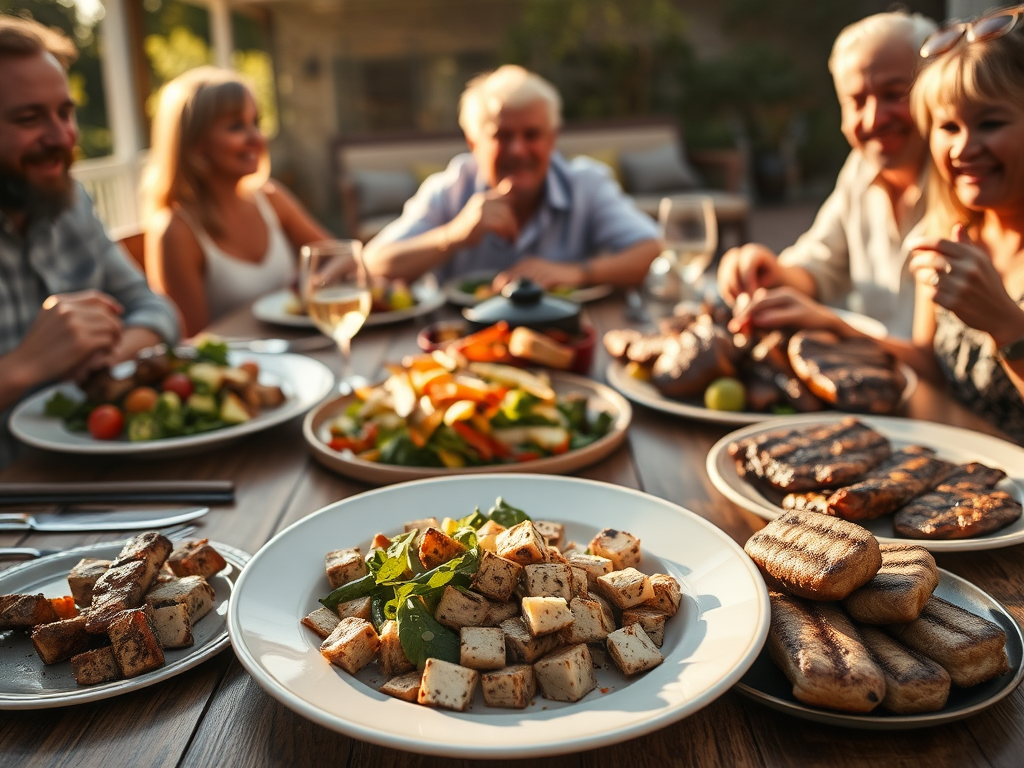
    Do you miss meat? Absolutely—especially when your neighbor fires up the barbecue and the smell of charred ribs floats over the fence like weaponized nostalgia. But you march on, telling yourself that your cousin’s cardiologist called a vegan diet the “gold standard” for heart health.

    And yet, your cravings turn out to be the easy part. The real battlefield isn’t in the kitchen—it’s in the living room, the backyard, the family reunion. Your relatives haven’t sipped the vegan Kool-Aid and don’t appreciate the implicit sermon you’re preaching with every salad. You can swear you’re not judging them, but your plate of tofu says otherwise. Moral condemnation wafts from you like incense whether you intend it or not.

    Socially, you’ve become a problem guest. You show up at a barbecue with your vegan hockey puck, and suddenly you’re the party’s designated buzzkill—part leper, part nag, part mascot of guilt. Expect to eat your soy patty alone while everyone else passes the brisket.

    Economically, you’ve got blind spots too. Sure, you can afford organic tempeh and boutique supplements, but when you hint that everyone should go vegan, you’re ignoring the single mom shopping with food stamps, or the families living where tofu costs more than ground beef. To them, your “ethical choice” sounds like aristocratic scolding.

    Culturally, you risk stomping on traditions. Grandma’s meat stew isn’t just calories; it’s love in a ladle. Lecture her about vegan virtue, and you’re not just critiquing dinner—you’re insulting her lineage. And good luck explaining your plant-based gospel to Inuit communities who rely on seals and whales for survival. You’ll sound less like a prophet and more like a nincompoop.

    So here you are, impaled on the horns of the vegan dilemma. On one side, you can’t play the sanctimonious scold without alienating everyone around you. On the other, your conscience insists that, as a well-fed suburbanite, you are morally obligated to avoid meat. The path forward is thorny, precarious, and socially awkward. But welcome to the real world: nobody said doing the right thing would come with applause.

  • Self-Interest with Sauce: Why Your Finger Isn’t Worth a Million Lives

    Self-Interest with Sauce: Why Your Finger Isn’t Worth a Million Lives

    In How Adam Smith Can Change Your Life, Russ Roberts quotes the Talmudic sage Hillel: “If I am not for myself, who will be for me? If I am only for myself, who am I?” Roberts riffs on this by pointing out Smith’s hard edge: if you would sacrifice millions of lives to save a single finger, you are “a monster of inhuman proportions.”

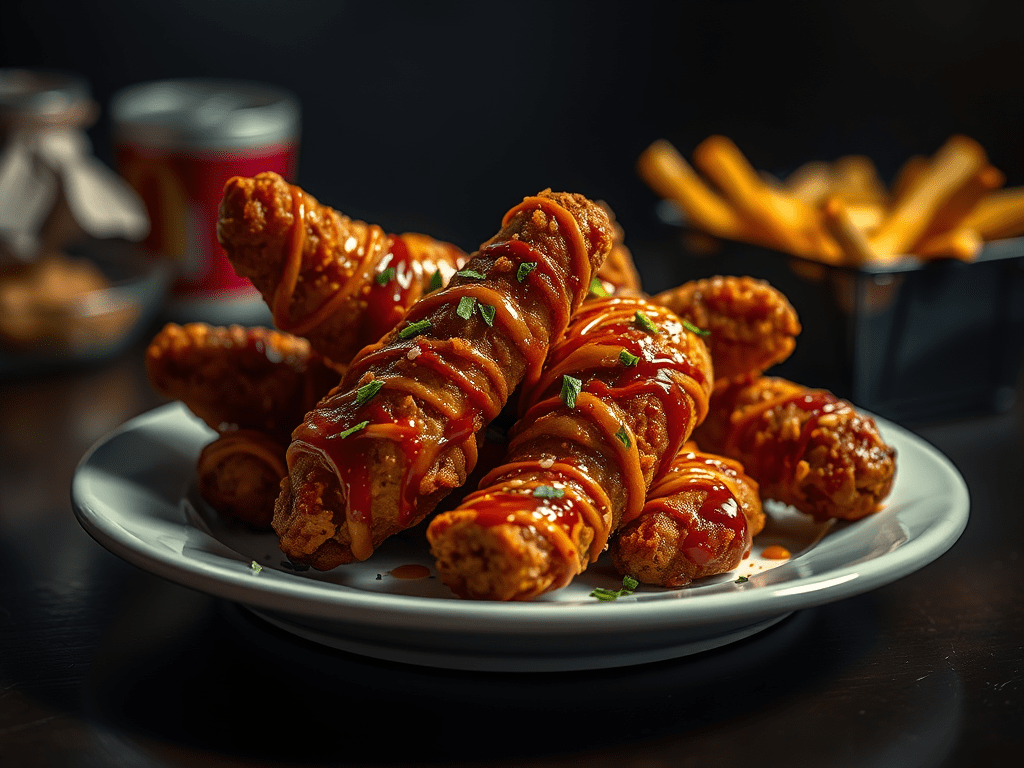
    Which, of course, made me think of chicken tenders. A few nights ago I had the Sweet Thai Glazed chicken at Starbird—fast food so transcendent it felt like a religious conversion, crispy shallots and herb aioli included. I wanted to go back the next day. And the next. My self-interest is crystal clear: eat more Starbird. The problem? My pursuit of gustatory bliss comes at the expense of chickens. Just as my hunt for bioavailable whey protein powders comes at the expense of cows.

    So—am I a monster? If I turned vegan, would that absolve me, or would I just uncover a longer list of moral failings still clinging to my name tag? Because the world isn’t eating less meat. It’s eating more, mostly factory-farmed, while pretending not to notice the conveyor-belt cruelty behind the menu. Ignore it long enough and moral numbness sets in, the kind that doesn’t just ruin animals but corrodes us too, spreading in ripples like bird flu, mad cow, or the next “mystery wet market disease.”

    And cruelty isn’t the only place where “self-interest” mutates into its evil twin. Consider America’s sacred cow: gun freedom. Other nations see mass shootings, change laws, and reduce tragedies. America, however, doubles down—choosing an idea of freedom that keeps killing us. Here, “self-interest” looks less like wisdom and more like suicide with better branding.

    That’s the trouble with self-interest. It’s a slippery little devil with at least two sharp horns. First: it lets us rationalize immoral behavior until we become monsters congratulating ourselves for our appetites. Second: it convinces us that policies which maim us—like endless guns, endless meat—are somehow in our “best interest.”

    In reality, self-interest is a hornet’s nest: buzzing passions, compulsive hungers, warped myths, and counterfeit happiness. To live in true self-interest means sorting out the destructive impulses from the behaviors that actually make us moral and happy. But most people never attempt the sorting, because the road to ruin is wide, comfortable, and paved with chicken tenders, while the road to virtue is narrow, steep, and has terrible Yelp reviews.

  • Building a Bulwark Against Dopamine

    Building a Bulwark Against Dopamine

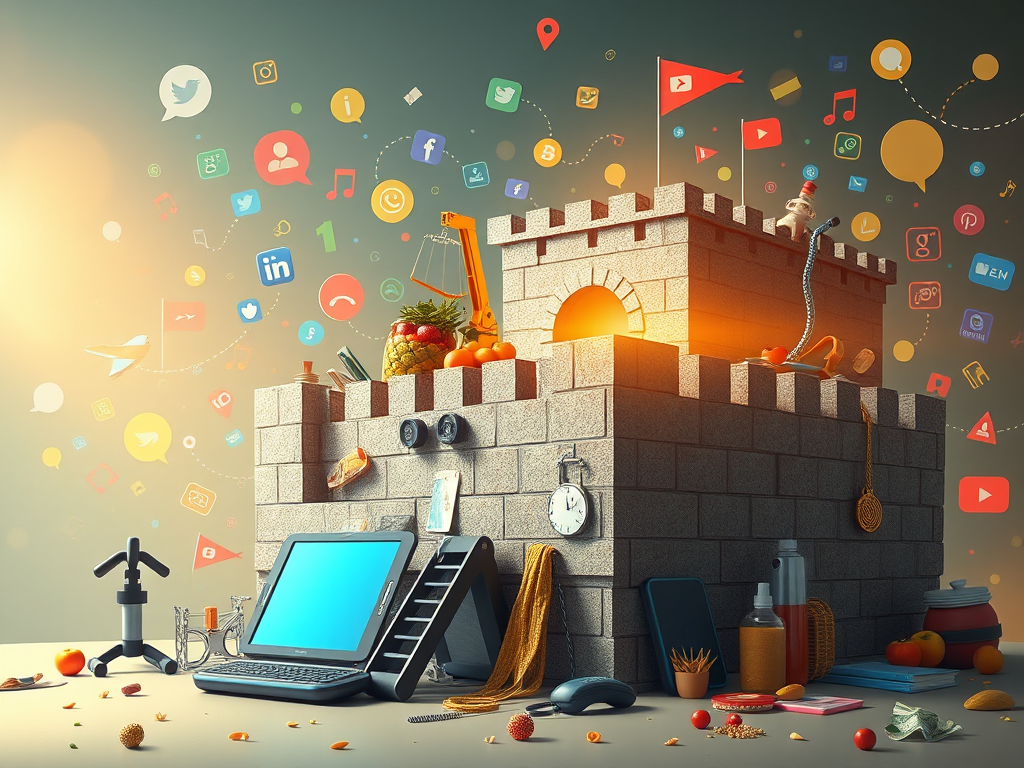
    Charles Duhigg, in The Power of Habit, insists that the real magic of self-improvement isn’t magic at all—it’s repetition, consistency, and time. Muscle memory married to good habits rewires the brain so that willpower stops being a daily knife fight. Instead, habits act as a bulwark, a fortification that keeps temptation outside the walls.

    Take my relationship with German Chocolate Cake. I adore it. But I eat it once a year because I never buy it. The thought of driving downtown, circling for parking, and elbowing through bakery lines kills the craving faster than broccoli. If people on TV are flaunting cake, I’ve trained myself to default to popcorn and an apple, which is like swapping bourbon for chamomile tea. Still, despite this culinary Maginot Line, I live fifteen pounds heavier than I want to be—proof that the fortress has weak spots.

    The Internet, however, is a stronger adversary than cake. Social media rewires the brain more ruthlessly than sugar. Twitter/X trained me to think in quips, Facebook taught me to beg for likes like a starving dog scratching at the door. I finally quit both. I post on Facebook once a month and promptly forget about it. I’m saner for it.

    But YouTube? That’s my heroin. I’ve been making watch-obsession videos for over a decade and built a modest following of 10,000. When a video pops, YouTube showers me with fireworks like a slot machine jackpot. When it flops, I get a scolding message: “This video isn’t bringing in as many of your subscribers as usual.” It’s the algorithm wagging its finger like a principal telling me I’ve failed society.

    YouTube has rewired my brain in both noble and grotesque ways. On the one hand, I’m sharper at public speaking, better at spinning essays into expositions, and more skilled at civil engagement with various personalities. On the other hand, I care too much about metrics, let them colonize my self-worth, and live half my life inside the algorithm’s funhouse mirror. I now inhabit parallel universes—the physical world and the YouTube world—fleeing one when the other displeases me.

    The problem is that the Internet’s temptations can’t be quarantined. My work machine is also my dopamine slot machine. One new tab, one click, and I’m plunging into a carnival of junk content, drenched in FOMO syrup and neon distraction. Cal Newport is right: when you toggle between focused work and dopamine junk food, the brain leaves behind a sticky residue that smothers concentration. I’ve felt that sludge firsthand, and I despise myself for swimming in it.

    As Duhigg notes, the brain is “constantly looking for ways to save effort” by making routines automatic. That’s useful for the monk who wakes at dawn to meditate, but disastrous for someone whose screen offers the New Tab to Nowhere. If only I could build a stronger bulwark against the carnival in my browser, I might actually live lighter, work deeper, and—dare I say it—be happier.

  • The Gospel of Broccoli

    The Gospel of Broccoli

    For the last two decades, I’ve gorged myself on a certain genre of book: part self-help, part pop psychology, part personal confession, and part armchair sociology. They’re all cut from the same cloth. Sometimes the title is blunt and monosyllabic—Grit, Flow, Blink. The kind of title that slaps you with FOMO and whispers: you’re missing out on the one great discovery of our age.

    The author inevitably casts themselves as an intellectual Indiana Jones, unearthing some dark corner of human frailty—our laziness, our compulsions, our doomscrolling brains—and holding it aloft like a cursed artifact. But don’t worry: they’ll swap your vice for a virtue. Where once was sloth, you’ll now install grit. Replace despair with tenacity, chaos with routine, cowardice with courage. Each quality is presented as if it were a rare mineral dug from the Earth’s molten core, not something your grandmother muttered at you over meatloaf.

    I’ll grant them this: these books are smooth. The anecdotes are lively, the arguments persuasive, the storytelling slick enough to convince you that eating your vegetables is an act of revolution. And yet—I wince. These books are built on a template so predictable you can spot the seams. They’re self-help in disguise, draped in academic robes to save the reader the shame of browsing the “Inspiration” aisle.

    Their authors remind me of medieval minstrels and troubadours, wandering into our living rooms and cubicles to hose down our cobwebbed souls with disinfectant. They don’t strum lutes anymore—they host podcasts, deliver TED Talks, and keynote conferences. We line up for their sermons because they make us feel clean. They are the secular priests of our age, baptizing us in chapter-length homilies and promising to purge our modern sins.

    The journey they lead us on is as predictable as a Disney ride: first the dark woods of dysfunction, then the bright meadows of redemption. The simplicity borders on smugness, and yet—I still buy the ticket. Why? Because sometimes I need to be scolded into eating my broccoli. These books are broccoli dressed up in filet mignon plating: familiar, obvious, slightly sanctimonious, but undeniably good for me in small, bitter doses.

  • Autopilot or Choice: The Battle Beneath Our Habits

    Autopilot or Choice: The Battle Beneath Our Habits

    In The Power of Habit, Charles Duhigg challenges the comforting illusion that we live as fully self-possessed beings. Our existence, he argues, is far more random than we’d like to admit. Take the man who staggers home from work and pours himself a gin and tonic. The drink delivers its fleeting pleasure, but the deeper harm lies not only in the alcohol—it lies in the complacency of unexamined rituals, the sleepwalking habits that shape a life. Duhigg leans on William James to make the point: “All our life, so far as it has definite form, is but a mass of habits.”

    By contrast, when I come home, I reach for sparkling water or diet 7-Up over ice. I probably get the same sensory refreshment as the martini drinker—minus the alcohol. What matters most is that I asserted a choice instead of slipping into autopilot.

    I apply this principle elsewhere. Because I know I tend to drive more aggressively than I’d like, I deliberately leave ten minutes earlier than most people would. That way, I don’t have to be a jackass on the road. Every time I make a conscious choice like this, I chip away at the pull of mindless behavior.

    Duhigg presses us to do the same: make deliberate decisions, rewire our routines, and stop letting unseen patterns run our lives. He cites a Duke study revealing that more than 40 percent of people’s daily actions aren’t conscious choices at all, but habits. From Aristotle onward, philosophers puzzled over why habits exist; now, neuroscience explains not only how they form but how they can be reshaped.

    The book’s central claim is hopeful: we aren’t doomed by our bad habits. We can change them, reprogram our brains, and redirect our lives—if we understand how the mechanics of habit work. I’d assume that anyone picking up Duhigg’s book already has the self-awareness and motivation to attempt change. In the short run, thoughtful people can transform themselves. The greater challenge comes later, when complacency sneaks back after the initial enthusiasm fades. That’s when I wonder if Duhigg’s manifesto offers not just inspiration, but a lasting answer.

  • The Keystone Habit: How One Change Rewires the Rest of Us

    The Keystone Habit: How One Change Rewires the Rest of Us

    Charles Duhigg’s The Power of Habit: Why We Do What We Do in Life and Business argues that vice, self-indulgence, and addiction operate on a neurological level. If we can deliberately rewire those pathways, we can free ourselves from much of our self-destructive behavior. Written more than a decade ago, the book anticipates the same themes that now surface in places like Reddit’s “Nofap” movement, where porn addicts admit their compulsions damage relationships and stunt growth, so they commit to abstinence—except with their partner. Anna Lembke’s Dopamine Nation makes a similar case, charting how dopamine overload leads to the inevitable crash of pleasure into misery.

    Duhigg opens with Lisa, an addict whose husband left her, likely exhausted by her behavior. When she finally saw how deranged her habits had become, she had the spark to change. She replaced her old compulsions with exercise and healthy eating. It’s the familiar “rock bottom” story: you face yourself stripped of illusions. Or as Marc Maron puts it, “Life hands you your ass on a stick.” Only when pride dissolves are you ready for answers.

    As someone who has wrestled with addictions and grown up with alcoholic parents, I read this story with recognition. The researchers studying Lisa’s brain found something striking: her old neural patterns were still visible, but they had been overridden by new ones. The impulses hadn’t vanished—they’d simply been crowded out. And while she overhauled many habits, it was quitting smoking that made the real difference. Duhigg calls this a “keystone habit.” In his words: “By focusing on one pattern…Lisa had taught herself how to reprogram the other routines in her life, as well.”

    The same principle applies to organizations: find the keystone habit, nurture it, and the ripple spreads across the whole system.

    I learned another useful term from the book: “behavioral inhibition.” It resonates painfully, because from 7 to 10 p.m. I suffer relentless food cravings. By then I’ve usually reached 2,300 calories, and eating more destroys my calorie deficit. But television sabotages my self-control—everywhere I look, people are drinking rosé, eating pizza, ice cream, carrot cake. Triggers, triggers everywhere. If I hid in an igloo, maybe I’d get ripped abs, though the view would be grim.

    Still, I’ve seen the power of a keystone habit. My mornings begin with coffee and buckwheat groats mixed with protein powder. Then I study a book and take notes, as I’m doing now. If I skip this, I get swallowed by the Internet, a dopamine carnival of watches, consumer temptations, and FOMO. I unfollow Instagram “safari” channels that inevitably mutate into half-naked influencers shaking their butts in gym close-ups. Once seen, such images can’t be unseen. Now I choose carefully.

    Replacing bad habits with good—writing, piano, exercise—changes not only my productivity but my temperament. I become friendlier, more patient with my family. But when I binge on Internet dopamine, I snap at people. I become “that guy.”

    The contrast reminds me of something Dallas Cowboys wide receiver Michael Irvin confessed in America’s Team: “We are all imperfect people. And each of us has at least two people in all of us; the person you show everybody and that person you never show to anybody.”

    We curate public personas and believe our own polished lies, all while a darker self hides in the shadows. But once life hands you your ass on a stick, integrity becomes your only way forward. Rewiring the brain isn’t just a neurological project. It’s a moral one.

  • Dopamine Nation: Self-Help Without the Fairy Dust

    Dopamine Nation: Self-Help Without the Fairy Dust

    I’ve never trusted the mythology of self-help books—the fairy tale that you identify Problem X, buy a book, read a few hundred pages, and Problem X vanishes. What I do believe is that a self-help book, at best, can make you stare harder at your demon, dull its sharper edges, and maybe hand you a strategy or two to keep it from devouring you whole.

    That’s why Anna Lembke’s Dopamine Nation: Finding Balance in the Age of Indulgence punched me in the gut. Her blunt lesson: dopamine addiction—whether through scrolling, swiping, shopping, or vaping—doesn’t lead to pleasure but to misery, pain, and the hollowing-out of your agency. Reading her, I shuddered at the years I wasted feeding my brain with Internet sugar highs.

    Lembke makes no bones about the world we live in: a digital carnival of “overwhelming abundance.” She puts it starkly: “The smartphone is the modern-day hypodermic needle, delivering digital dopamine 24/7 for a wired generation. If you haven’t met your drug of choice yet, it’s coming soon to a website near you.” Pleasure and pain, she reminds us, are processed in the same brain circuitry—and the more dopamine that flows, the stickier the addiction.

    The horror story isn’t abstract. Her case studies peel the skin off addiction’s double life: secret compulsions, corrosive shame, shattered relationships. Some people are more vulnerable—those with addictive parents, those with mental illness in the family—but Lembke insists access is the true accelerant. The Internet puts a casino in our pocket; supply breeds demand. Worse, social media monetizes outrage until we mistake 24/7 hair-on-fire hysteria for “normal.”

    Lembke’s most grotesque example is Jacob, a sex addict who literally builds himself a “Masturbation Machine.” She confesses she feels horror, compassion—and dread that she herself is not immune. Her verdict is bleak: “Not unlike Jacob, we are all at risk of titillating ourselves to death.” Seventy percent of global deaths, she notes, stem from modifiable behaviors like smoking, gluttony, and sloth. Addiction, in short, is a slow suicide dressed up as entertainment.

    Part of the problem is philosophical. As Philip Rieff noted in The Triumph of the Therapeutic, “Religious man was born to be saved; psychological man is born to be pleased.” We’ve traded the pursuit of goodness for the pursuit of good feelings. Jeffrey Rosen put it more bluntly: classical wisdom insists we should aim to be good, not simply to feel good. Instead, we’re anesthetizing ourselves with meds, therapy-lite, dopamine drip-feeds, and hedonism. And as Lembke observes, hedonism curdles into its opposite: anhedonia, the inability to enjoy anything at all.

    Her prescription? The brutal reset of a “dopamine fast.” Four weeks off your drug of choice to force your brain back to balance. She offers a framework—DOPAMINE (data, objectives, problems, abstinence, mindfulness, insight, next steps, experiment). It’s clever, but the hard truth runs underneath: most addicts, myself included, are not “moderators.” We’re all-or-nothing. For me, the Internet isn’t moderation-friendly; it’s a rabbit hole with no bottom.

    Lembke knows willpower is not enough. She prescribes “self-binding”: physical, chronological, and categorical walls between you and your poison. But in the digital economy—where work and addiction ride on the same Internet rails—such barriers are fragile. Moderation may be the fantasy; abstinence the only real survival strategy.

    So yes, I’m glad I read Dopamine Nation. It clarified the trap, exposed the double life, and framed the fight as both biological and spiritual. But let’s not be naïve. Like all self-help, it’s not a magic pill. At best, it’s a mirror, a warning flare, and a rough map out of the dopamine swamp. The walking out is still on you.

  • From Dopamine to Divinity: The Case for Transmutational Motivation

    From Dopamine to Divinity: The Case for Transmutational Motivation

    In Lessons for Living, Phil Stutz recounts his refusal to prescribe Prozac to a patient. The patient wanted the pill as he wanted everything else—romance, fame, applause, alcohol: all shortcuts to happiness. Stutz wasn’t buying it. He writes:

    “Believing that things outside you will make you happy is a false hope. The Greeks considered it the ‘doubtful gift from the gods.’ In reality, there can only be two outcomes. Either the hoped-for thing does not happen, or it does and its effect quickly wears off. Either way, you are worse off than before because you have trained yourself to fixate on outer results.”

    When the outer world filters through imagination, it becomes a chimera. We don’t pursue things for what they are, but for what we fantasize they’ll be. I feel this pull myself: I’m nearly sixty-four, inching toward retirement, and browsing real estate in Orlando—dreaming of a second life in a faux-tropical paradise. A $600K “mansion” with a community pool, an hour from the beach, safe from hurricanes (mostly). Yet what I imagine as paradise may in fact be a barcalounger-sized sarcophagus—3,000 square feet of embalmed leisure.

    Stutz warns against such chimeras. They must be replaced by action—behavior that connects us to our true nature: the spiritual self. He writes:

    “We are spiritual beings and can be emotionally healthy only when we are in touch with a higher world. We need higher forces just as we need air. This is not an abstract philosophy, it is a description of our nature.”

    But here’s the rub: staying in touch with higher forces requires constant work, and it’s in our nature to avoid work. Life, then, is a perpetual battle with ourselves. Stutz’s description amounts to the purpose of religion: the angel conquering the demon. Yet in our therapeutic age—where religion is dismissed as a fairy tale—misalignment between spiritual thirst and materialist fixation manifests as depression. Conventional psychiatry treats depression with drugs. Stutz reframes it as a teacher, a reminder that the answer is spiritual life:

    “This awareness is the first step in overcoming depression.”

    His point calls to mind Katie Herzog’s mention of Laura Delano’s memoir Unshrunk, a story of misdiagnosis and drug therapy that deepened rather than cured suffering. It also echoes Philip Rieff’s famous distinction in The Triumph of the Therapeutic:

    “Religious man was born to be saved; psychological man is born to be pleased.”

    Stutz insists that pleasing ourselves with material trinkets is a false and destructive path. Real responsibility means behaving in ways that connect us with our spiritual core. Judaism frames this as God meeting us halfway; Pauline Christianity insists we are helpless, depraved, and must be remade entirely. I’d be curious to know where Stutz lands on this divide.

    Either way, his therapy unsettles his patients. A man clinging to Prozac, money, and fame stares at Stutz as though he’s lost his mind. Why? Because society has brainwashed us into believing happiness comes from external outcomes.

    So what’s the alternative? Relentless self-monitoring. Stutz writes:

    “Taking responsibility for how you feel isn’t an intellectual decision. It requires monitoring yourself every moment. This is the most freeing thing a person can do, but also the most tedious. Your connection to the higher world must be won in a series of small moments. Each time you become demoralized, depressed, or inert, you must counteract it right then.”

    This isn’t entirely secular advice. Proverbs tells us to hang wisdom notes around our necks. Today, that might be post-its urging us to choose virtue over distraction. Still, Paul’s lament in Romans—that his darker nature sabotages his noblest intentions—remains apt. If Paul were not a Christian convert, would he be able to successfully use Stutz’s tools to connect with his Higher Powers, or would his dark side undermine the mission over and over? 

    Stutz’s counsel is pragmatic: notice when you sever your connection to the higher world, and fight back. If I’m meant to write or practice piano but instead scroll the Internet’s dopamine-drenched rabbit holes, that’s the moment to act. As Stutz puts it:

    “If your habit is to look outside yourself for stimulation or validation, then each time you fail to get it, you’ll become depressed. But if you assume inner responsibility for your own mood and take action to connect yourself to higher forces at the moment you feel yourself going deep into a hole, you will develop habits that put you on a new level of energy and aliveness.”

    In darkness, we don’t have to surrender. The “inner tools” give us armor. Stutz writes:

    “The only way to achieve this confidence is to take a tool and actually experience how it works. Only then will you be willing to do what is required, which is to use it over and over, sometimes many times within one day.”

    One such tool is “transmutational motivation.” The exercise: picture yourself demoralized after indulging temptation. Then imagine a higher power above you. Visualize yourself taking forward motion—meditation, writing, exercise—and rising into “the jet stream.” Stutz writes:

    “Now you are going to fly straight up into this picture by feeling yourself take action and imagining this feeling causes you to ascend. Tell yourself that nothing else matters except taking the action. As you feel yourself rise, sense the world around you falls away. There is nothing except the action itself. Rise high enough to enter the picture. Once inside, tell yourself that you have a purpose. You will feel a powerful energy. To end the exercise, open your eyes and tell yourself that you are determined to take the pictured action. This time you will feel the picture above you pull you effortlessly up into itself. You will feel expanded and energized.”

    With practice, the ritual takes fifteen seconds. Done daily, it rewires despair into life force.

    But is this just Part X renamed? Steven Pressfield’s Resistance? Pauline sin? Or all of the above? Does Christianity accuse Stutz of diluting prayer into self-help? Do secularists argue his method is religion without the dogma? The questions multiply.

    Anna Lembke’s Dopamine Nation frames it as neuroscience. Charles Duhigg’s The Power of Habit frames it as cognitive-behavioral reprogramming. Stutz straddles both: science and soul. And looming above it all is the Internet—the Great Temptor of our age. A bottomless pit of pornography, consumerism, and status-chasing, piped directly into our dopamine circuits.

    And here’s the meta-question: what’s the point of rewiring your habits without a greater frame of meaning? Is Stutz peddling spirituality without religion—or is he smuggling in a stripped-down religion we secretly crave? Would Sam Harris nod approvingly at this secularized toolkit? Or would Dale Allison, the careful Christian scholar, recoil and insist that while Stutz offers clever strategies for habit change, he misses the essence of true spirituality—the self-giving sacrifice patterned after Christ in Philippians?

    Unanswered questions aside, Stutz’s message is stark: life is high-stakes. We are fighting, every day, between dark and light forces. We don’t just change habits to “optimize” our brains. We change them to keep our souls alive.