Tag: health

  • Rome Wasn’t Built in a Day, and Neither Was a Better Body

    Rome Wasn’t Built in a Day, and Neither Was a Better Body

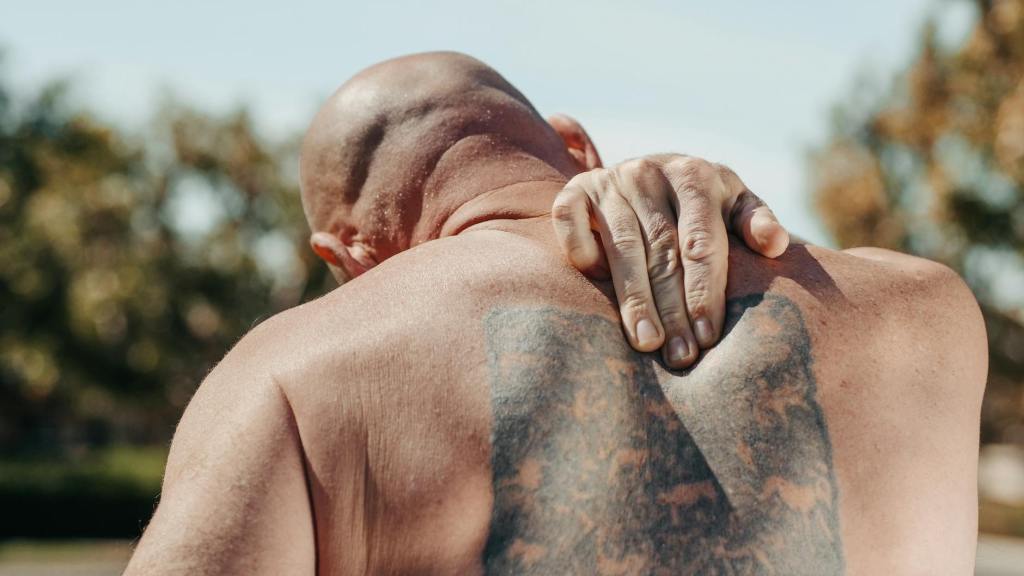
    Five months into a rotator cuff injury, my left shoulder now runs a morning protest movement. Today it was particularly militant. The arthritis pain was so loud it drowned out my writing, which is saying something, because writing is usually where I go to escape pain, not negotiate with it.

    The solution, as usual, was humility. I picked up light dumbbells and did slow lateral raises—nothing heroic, nothing Instagram-worthy. Just enough movement to get blood into the joint and remind it that we are still partners, not enemies. The pain eased. Ibuprofen helped too, but I’ve learned the hard lesson: skip it for a day, let the inflammation throw a party, and it takes hours to evict the guests.

    Rotator cuff arthritis is a mechanical problem disguised as a moral one. When the joint isn’t tracking well, the socket gets irritated, and the irritation becomes inflammation. Night makes it worse. While you sleep, the synovial fluid thickens into something closer to cold syrup. Morning arrives, and the shoulder feels like a rusty hinge. The cure is movement—gentle, persistent, unglamorous movement. Every time I loosen it up, the joint forgives me a little.

    Training now looks less like conquest and more like diplomacy. Two kettlebell sessions a week, mostly lower body, with some shrugs and narrow-stance knee push-ups—just enough upper-body work to maintain function without provoking rebellion. Power yoga is back three days a week, a return to the early-2000s era of Bryan Kest and Rodney Yee, now supplemented by the Man Flow Yoga channel. I modify poses for the shoulder, but once I settle into the rhythm, the familiar state returns—the quiet, steady current of yoga flow. At this point, the mental repair may be more important than the physical.

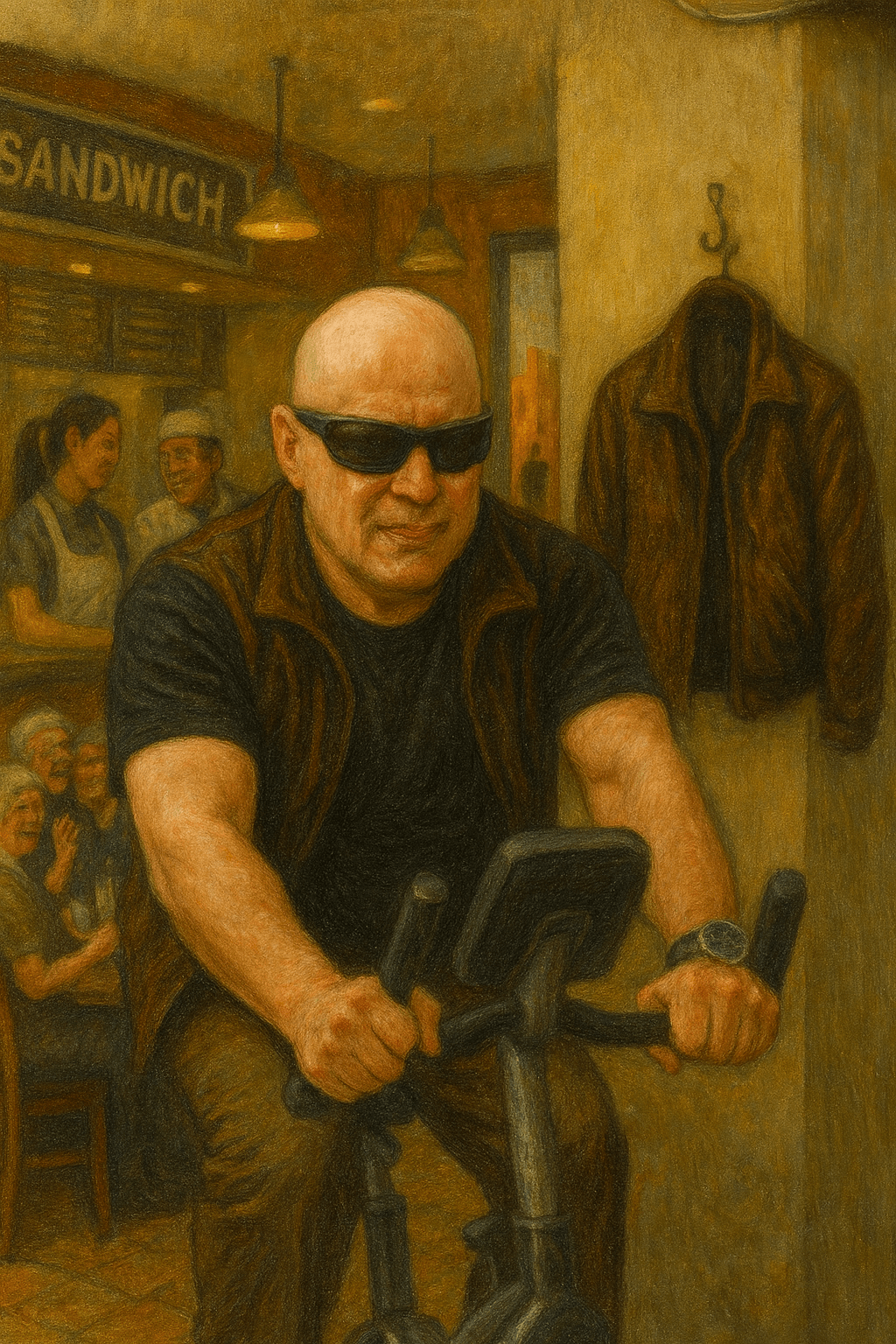
    The Schwinn Airdyne—the Misery Machine—has been demoted to one day a week. Left unchecked, I turn cardio into a courtroom, constantly trying to beat yesterday’s calorie output. Competition with yourself sounds noble until it becomes another form of anxiety.

    Underneath all of this sits the larger ambition: weight loss through appetite discipline. Easier declared than achieved. Two nights ago I dreamed I wanted to be lean again but could only get there through GLP-1 drugs (which I’ve never taken). Such a dream is what your subconscious imagines when it has lost faith in your willpower. I’m hovering around 230—solid in a T-shirt, but without the narrower waist that signals to the world (and to my lab results) that discipline has the upper hand. For me, that line is about 210.

    Physical self-improvement is rarely about aesthetics alone. It’s an attempt to become the kind of person who can choose the long-term over the immediate—the kind of person who doesn’t negotiate with every craving. Discipline isn’t punishment. It’s the architecture of a calmer life.

    This question of belief came back to me while watching the documentary Queen of Chess, about Judit Polgar, who fought her way through a male-dominated chess world. Her advice was simple: you have to believe in yourself. The line landed harder than expected.

    But belief doesn’t arrive on command. If your history includes abandoned goals and broken dietary programs, confidence isn’t a mindset—it’s a construction project. It’s built the only way durable things are built: small wins, repeated often enough that the brain stops arguing.

    Rome wasn’t built in a day. Neither is a shoulder. Neither is a waist. Neither is a self you trust.

  • Letting Go of the Bro Code

    Letting Go of the Bro Code

    My friend Lee retired at sixty-one, fled the tech industry, and landed in Santa Fe like a man stepping out of a chrysalis. The move gave him what he said his spirit had been begging for: a clean reinvention. These days he volunteers as a rescue worker at the local ski resort—hauling people out of trouble, useful again, awake in his body.

    My own retirement is eighteen months away, and I feel the same hunger for reinvention—but without the romance of relocation. My wife and kids aren’t uprooting, and neither am I. So if I’m going to change, the terrain has to be internal. I don’t need a new zip code; I need a new relationship with myself.

    Some of this craving is spiritual. Some of it is brutally practical. For the past five months I’ve been rehabbing a torn rotator cuff marinated in arthritis. I tried to negotiate with my kettlebell workouts—adjusting angles, trimming volume, pretending moderation would save me. It half-worked. What didn’t improve was the resentment. In fact, it metastasized.

    I know exactly how I got here. I overdid kettlebells—four days in a row, again and again—until my shoulder finally filed a formal complaint. Now the bells feel less like tools and more like accusations. I still want to train five or six days a week, but the thought of picking them up fills me with a low-grade fury. When resentment becomes chronic, it’s information. Ignoring it is how you end up injured and stubbornly proud about it.

    What I keep circling back to is yoga—specifically my mid-2000s era, when power yoga was my religion. Back when Bryan Kest and Rodney Yee videos taught me that yoga could be punishing, sweaty, and deeply satisfying. One hour. Total exhaustion. Muscles lit up, ego humbled, mind quiet. I want that again—not just the shape of it, but the mental state. I want to get lean. I want a diet that actually complements the practice: simple, semi-vegan, enjoyable. Yoga four days a week. The exercise bike on the others. Nothing heroic. Nothing destructive.

    Of course, underneath all of this is the same old human wish: character. I want a yoga lifestyle that reflects self-possession, self-discipline, and self-confidence—the real currencies of happiness. Not indulgence. Not macho theater. If I’m going to retire in the Southern California suburbs, fine. But I can’t be the retired guy slowly maiming himself in the garage, clinging to an identity that no longer serves him.

    Yoga never hurt me. Not once. It always left me clearer, calmer, and stronger in ways that mattered. As a lifetime weightlifter, I’m realizing I need to let go of the Bro-Coding and Bro-Signaling that once fed my pride. What is a real man, anyway? It isn’t someone chasing pump and punishment while overeating and limping through life. It’s someone fit, injury-free, and genuinely disciplined.

    Lee rescues skiers. I admire that. But before I can rescue anyone—before I can reinvent anything—I have to rescue myself first.

  • Why Your Watch Doesn’t Make You Happy Anymore

    Why Your Watch Doesn’t Make You Happy Anymore

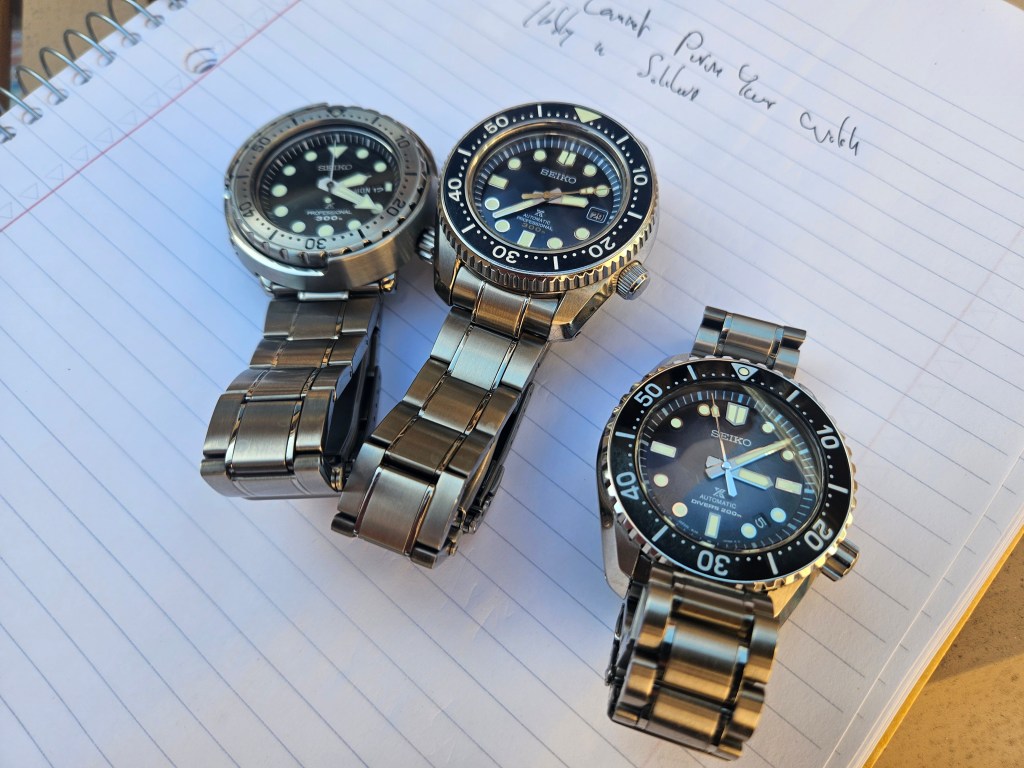
    To understand the madness of the modern watch addict, you’d do well to consult Dopamine Nation by Stanford psychiatrist Anna Lembke, a book that should be shelved somewhere between philosophy, neuroscience, and quiet screaming. Her central thesis? In an age of relentless indulgence, the line between pleasure and pain is not only blurry—it’s the same neurological pathway. You’re not escaping pain with your latest acquisition. You’re feeding it.

    “The smartphone,” she writes, “is the modern-day hypodermic needle.” And the drug? Dopamine—delivered in neat little parcels: TikToks, tweets, memes, and yes, wrist shots of watches you don’t own (yet). If you haven’t met your poison of choice, don’t worry. It’s just a click away.

    Lembke makes the uncomfortable truth clear: The more dopamine hits we seek, the more our brain adapts by reducing our baseline pleasure response. What once thrilled you—your grail watch, your Rolex Explorer, your Seiko with the Wabi-Sabi patina—now barely registers. You’re not chasing pleasure anymore. You’re just trying to feel something.

    Watch addicts, of course, understand this intimately. The pursuit of horological perfection starts out innocent enough: a G-Shock here, a vintage diver there. But soon you’re tumbling into the abyss of boutique limited editions and message board enablement, haunted by the need to stay relevant. Because here’s the twist: It’s not just about the watches. It’s about being seen. You post, you review, you flex because if you stop, you vanish. No new watches = no new content = digital extinction.

    And extinction, in a social-media world, feels like death.

    Lembke warns us that addiction thrives in secrecy, in the exhausting double life. The watch addict may present as a tasteful minimalist to family and friends, while secretly rotating 19 watches, five straps deep, waiting for the next “drop.” The addiction is fed by access, and we live in an access economy. New releases are no longer annual events—they’re hourly temptations. The vortex is bottomless. The supply creates the demand.

    Even worse, modern society normalizes this behavior. Everyone is scrolling. Everyone is upgrading. Our addiction to novelty is passed off as taste. Our frenzied consumption masquerades as identity. Lembke borrows from Philip Rieff to explain the deeper shift: “Religious man was born to be saved; psychological man is born to be pleased.” The modern watch collector doesn’t believe in salvation. He believes in configuration.

    But here’s the cruel irony: The more you seek to be pleased, the less capable you are of being pleased. In Lembke’s words: “Hedonism, the pursuit of pleasure for its own sake, leads to anhedonia—the inability to enjoy pleasure of any kind.”

    You can understand the watch addict’s feeble quest when you look at the Horological Dopamine Loop–the self-reinforcing cycle in which acquisition, posting, validation, and anticipation replace enjoyment. The watch no longer delivers pleasure; it merely resets the craving for the next hit.

    What’s the solution? A dopamine fast. Lembke prescribes it like a bitter medicine: Remove the source. Reset the brain. Let it reestablish homeostasis. For the watch addict, this means one thing: a watch fast.

    And yes—it’s brutal. I’ve been a watch obsessive for over twenty years. My longest fast? Six months. And I nearly went feral. New releases tempt. Friends enable. Algorithms whisper. Strap swaps and vintage reissues beckon like sirens. Even the FedEx truck starts to look like a personal tormentor.

    So you get creative. You stash watches in the safe and “rediscover” them. You buy new straps instead of new watches. You try to redirect the compulsion toward something productive: fitness, music, sourdough, monkish austerity. Anything but another chronograph.

    But the real cure, oddly enough, may be conversation—actual human connection. At watch meet-ups, we start out discussing bezels and spring bars, but within ten minutes we’re talking about life: real estate, parenting, knee surgeries, emotional burnout, dinner recipes. We talk for hours. But barely about watches.

    The truth slips out in these moments: we want to be free. We crave community more than we crave sapphire crystals. What began as a shared obsession has become a trap, and these conversations, paradoxically, offer relief from the very addiction that brought us together.

    Imagine a bunch of watch enthusiasts at a watch meet-up and we’re talking about everything but watches. Wrap your head around that.

  • How We Went from Breakfast Mascots to Political Tribes

    How We Went from Breakfast Mascots to Political Tribes

    A few nights ago, I watched Big Vape: The Rise and Fall of Juul, the four-part autopsy of a company that promised salvation from combustible cigarettes and instead managed to hijack a generation’s taste buds. Juul framed itself as a public-health crusader. What it actually built was a sleek delivery system for addiction, turbocharged by flavors engineered to lodge themselves deep in the dopamine circuitry of young brains.

    Former employees and users all pointed to the same thing: mango. Mango wasn’t just a flavor; it was an event. People didn’t vape mango casually. They marinated in it. Mango was the hook.

    Watching this, I was transported back to my own childhood and my first chemical romance: Cap’n Crunch.

    There was something about that unholy alliance of corn flour, palm oil, and brown sugar that short-circuited my will. I didn’t want moderation; I wanted saturation. My parents imposed limits, which only deepened my resolve to grow up as fast as possible so I could make my own enlightened dietary decisions—namely, Cap’n Crunch for breakfast, lunch, and dinner. I failed to notice the irony that a grown man subsisting on sugar cereal would represent not maturity but infantilization.

    Cap’n Crunch’s true genius wasn’t just sweetness. It was proliferation. The same cereal reappeared in endless costumes—Crunch Berries, Peanut Butter Crunch—each one offering the illusion of choice. King Vitamin was the most audacious iteration: Cap’n Crunch in a health halo, a masterclass in rebranding junk as virtue. Lipstick on a pig, poured into a cereal bowl.

    Then there were the mascots. Quisp the Martian. Quake the muscle-bound coal miner. As a child steeped in superhero comics and Hulk fantasies, I gravitated toward Quake. Strength. Power. Identity. I didn’t realize I was choosing a brand avatar, not a breakfast.

    Cereal companies were having a field day. We watched cartoons while eating the very product being advertised between scenes. It never occurred to us that we were being conditioned—trained to celebrate a non-nutritive food substance that dissolved teeth and rewired appetite. The Juul kids didn’t know it either. They thought they were buying into a sleek, adult lifestyle. What they were really purchasing was dependence, with a mango aftertaste.

    What troubles me now is that adults don’t seem any less susceptible.

    Today, many people consume political tribes the way we once consumed sugar cereal and flavored vapor. Politics has been repackaged as lifestyle branding—complete with slogans, merch, cosplay, and dopamine hits. The substance is thin. The stimulation is constant. Critical thinking is nowhere to be found.

    These aren’t political commitments; they’re identity snacks. Sugar rushes masquerading as convictions. Defense of one’s “views” consists of chanting talking points with the same reflexive loyalty I once reserved for Cap’n Crunch. No wonder the country feels like it’s in free fall. We haven’t grown up—we’ve just swapped mascots.

    We are a nation of adult children, hooked on political flavors the way kids were hooked on cereal and Juul users were hooked on mango. Politics has become a consumer product: addictive, polarizing, shallow, and wildly profitable. All dopamine. No nutrition.

  • My Rotator Cuff Injury Taught Me Patience and Restraint

    My Rotator Cuff Injury Taught Me Patience and Restraint

    I hesitate to say this out loud, for fear of angering whatever capricious deity oversees orthopedic recoveries, but my torn rotator cuff appears to have turned a corner.

    For the first time in five months, I’ve gone without ibuprofen. No chemical truce. No white tablets brokered between inflammation and denial. My range of motion has improved by more than sixty percent, and for two nights in a row I’ve slept without that familiar 4 a.m. arthritis ambush—just a bit of stiffness, the kind that registers as information rather than alarm.

    When discomfort does surface, I can quiet it with embarrassingly small interventions: lateral raises with a three-pound dumbbell, posterior-delt pulls using a resistance band anchored to a garage wall strut. Movements so light they feel like apologies. And yet—they work.

    Two weeks ago, an ultrasound revealed inflammatory fluid. The doctor promptly suggested the modern holy trinity: cortisone shot, MRI, and escalation. I declined all three. Why submit to a needle when the pain isn’t screaming? Why enter an MRI tube when claustrophobia turns it into a medieval punishment device? And why rush toward surgery when my rehab therapist, calm and unflappable, says I’ll heal just fine without it?

    So I stick with what got me here.

    Careful shoulder work. Kettlebell leg training. Trap shrugs. Slow, deliberate cleans. Reverse curls. Close-hand push-ups on my knees—humbling but honest. Anything that irritates the shoulder—dumbbell flyes, grand gestures, heroic nonsense—gets cut without appeal. I’ve become ruthless in the best way. No bargaining. No ego.

    Injury has a way of clarifying priorities. You don’t truly appreciate the orchestration of a whole body until one part goes rogue and holds the rest hostage. Healing teaches restraint. Progress rewards patience. And recovery, when it finally begins, feels less like triumph than like a quiet ceasefire—one you’re careful not to violate.

  • The Schwinn Airdyne and the Three Realms of Fitness

    The Schwinn Airdyne and the Three Realms of Fitness

    About fifteen years ago, the literary magazine Zyzzyva published one of my short stories, “Phittnut’s Progress.” It followed a workout addict who trained with the same manic devotion Martin Luther once applied to penance and self-flagellation. At the time, I thought I was being clever. In retrospect, I was being autobiographical.

    I’ve long understood exercise as a spiritual journey—less Peloton, more Dante. Every workout is a descent, an ascent, or, on rare days, a brief glimpse of paradise. I grasped this intuitively long before I had any formal exposure to theology.

    When I was about seven, I watched a 1960s TV show in which a man in a gorilla suit terrorized castaways on a nameless island. The production values were laughable; the fear was not. That night, the gorilla followed me to my room. I lay in bed convinced the beast was beneath my mattress, growling, reaching upward, eager to drag me into its lair.

    Sleep was impossible until I deployed my first metaphysical escape hatch. I imagined myself drifting on a raft along a calm river, safely beyond the monster’s reach. Above me stood a benevolent woman—a hybrid of the Statue of Liberty and Dante’s Beatrice—watching over my passage. Ahead was a luminous haze, the same gauzy heaven Fred Gwynne’s Patience the Guardian Angel inhabits in the 1969 film The Littlest Angel. Only then did peace return.

    This architecture still governs my workouts.

    When I’m out of shape, I’m back in the Monster’s Lair. When conditioning improves, I find myself floating along Beatrice’s River. And when I hit my goal—when effort dissolves into rhythm—I enter the Glory of Patience.

    My Schwinn Airdyne is the portal between these realms.

    Six months ago, my ambition was modest: 600 calories in 54 minutes. Respectable. Enough to keep the gorilla at bay. As fitness returned, so did ambition. A month ago, I raised the standard. To remain outside the inferno, I now needed 700 calories in roughly 55 minutes.

    Then reality intervened.

    Four days ago, after brutalizing my body with an ill-advised plumbing project, I plunged straight into the pit. Two days later, I slogged for 56 minutes and scraped together a humiliating 500 calories. Full inferno. The simian breathed hotly.

    Today, I clawed my way back to 603 calories in 54 minutes. Not glorious. Not close to the 810 calories I burned in 61 minutes six days ago. But it’s movement in the right direction. The river is visible again. The monster’s reach falls short.

    For now, that’s enough.

  • How a Toilet Seat Ruined My Workout

    How a Toilet Seat Ruined My Workout

    Eighteen months ago, when I tore my rotator cuff, I made the first of several reluctant concessions to age and anatomy. My one-hour kettlebell workouts dropped from five days a week to three. In their place, I resurrected the Schwinn Airdyne—a machine I trust because it does not care about my feelings. I rode it for 50 to 60 minutes, three or four days a week, and in the early going I had to work hard to burn 600 calories in 54 minutes. Progress came slowly, then grudgingly, then reliably. Soon it took only 48 minutes to hit 600. In the last month, I was regularly landing around 700 calories in 56 minutes.

    Then came yesterday.

    I burned 825 calories in 61 minutes. Nearly 800 calories per hour. That’s not training; that’s an episode. That’s one of those rare days when the body cooperates, the mind goes feral, and the machine quietly accepts its role as accomplice.

    But we need to talk about today.

    Today, I slogged. I crawled. I negotiated with myself minute by minute. I finished with a humiliating 500 calories in 56 minutes—a meager 535 calories per hour. That’s roughly a third less output than yesterday. As someone who motivates himself through numbers, benchmarks, and internal scorekeeping, this wasn’t just disappointing. It was existential.

    Gamification cuts both ways.

    There were, however, mitigating factors. Last night I spent three hours locked in mortal combat with an old toilet seat, sweating through three T-shirts while attempting to remove plastic wing nuts that had apparently fused with time itself. During this campaign, I punched myself in the face with a pair of pliers, opening a respectable gash across my nose. I woke up sore in places no exercise program claims credit for.

    I suspected today’s ride would be compromised. I just didn’t anticipate how compromised. Working out this morning after last night’s ordeal felt like an NFL linebacker playing Monday Night Football and then being asked to suit up again on Thursday night. The schedule was punitive. What I needed was rest—another full day of it.

    To console myself, I did what any reasonable person would do: I cooked the books. Surely that three-hour ordeal burned at least 400 calories. Add that to today’s 500 on the Airdyne and—there it is—900 calories. A full 200 calories over my goal.

    Victory.

    The ledger balances. My bragging rights are being processed. All that remains is a warm bathtub and the quiet satisfaction of knowing that even on an off day, I still managed to win the argument with myself.

  • While Others Fell in Love, I Was Benching

    While Others Fell in Love, I Was Benching

    In 1975, when I was fourteen and already grooming myself for eventual induction into the House of Schwarzenegger, I was struck with existential terror by an article in The San Francisco Chronicle. Futurists, it announced, were preparing us for the inevitable: Earth would soon be too crowded, too exhausted, too used up. Humanity would have to evacuate—via lunar shuttles—and establish solar-powered colonies in outer space.

    The article leaned heavily on the ideas of Gerard K. O’Neill, a Princeton physicist whose vision would later crystallize in The High Frontier. We would live, he proposed, in “artificial, closed-ecology habitats in free orbit,” powered by vast solar arrays. Don Davis supplied illustrations: cottages, rolling green hills, fountains, happy citizens strolling through a weightless Eden that looked suspiciously like a New Age brochure for upscale suburbia.

    Then I noticed something horrifying.

    Everyone in the drawings was skinny. Not lean. Not athletic. Skinny in a faint, undernourished, anemic way. It dawned on me with the force of revelation: no gravity meant no resistance. No resistance meant no gyms. No iron. No pumping. My muscles would dissolve. I would become what I most feared—a tomato with toothpicks stuck into it, drifting through space in orthopedic sandals.

    A forced relocation to an orbital colony wouldn’t just end bodybuilding. It would end me.

    That moment revealed two durable truths about my character. First, I did not like change. Even minor disruptions—replacing stereo components, finding a new health club—felt borderline traumatic. The idea of being compelled to move to space was not exciting; it was annihilating. Second, bodybuilding wasn’t a hobby. It was a containment field. Anything that threatened it threatened my psychic infrastructure.

    This may explain why girls confused and frightened me.

    A few tried, valiantly, to breach my defenses. One was Mary Claybourne, a high school sophomore who had a very obvious crush on me. One afternoon at my locker, she handed me a birthday card. On the front it read: If It Feels Good, Do It! Inside, she had written a note inviting me to ask her out.

    I remember standing by a pillar near the courtyard, reading her card, while Mary sat at a picnic table with her friends, looking at me with naked hope. The look was unmistakable. She wanted me to stride across the concrete, tear open my street clothes, emerge in a cape, and sweep her into a romance worthy of daytime television.

    Instead, I stared at her beautiful eyes and thought only this: How can I possibly love this girl when civilization is on the brink of relocating to a gravity-free space colony where I won’t be able to bench press?

    The question was absurd. Knowing it was absurd did nothing to soften the dread.

    Looking back now, it’s clear I wasn’t ready for intimacy. Some teenagers arrive relatively intact, with enough internal coherence to connect to others without panic. I was not one of them. I was fragmented. Provisional. A self still under construction. I wasn’t merely a bodybuilder—I was a builder in the most literal sense. I had to assemble myself first. An embryo cannot date.

    And yet, I sometimes wonder if that’s a convenient story. Maybe I should have waded into the shallow end of teenage romance and learned to flail. Maybe sinking a little would have strengthened muscles bodybuilding couldn’t touch. Maybe the gym wasn’t just discipline—it was refuge. A retreat from the unpredictable demands of real life.

    What I know now is this: girls represented the same threat as space colonies. I liked them too much. I sensed that if I surrendered to romance, my monastic devotion to iron would falter. I had no talent for balance. If I served one master, I would resent the other.

    So, overwhelmed by choice, I chose the one world I could control.

    On Friday night, I did not date Mary Claybourne.

    I dated the bench press.

  • The Potato Diet and the Gospel According to Mel Brooks

    The Potato Diet and the Gospel According to Mel Brooks

    Recently, I fell down a nutritional rabbit hole and emerged clutching a potato. Not just any potato, but the cooked-then-cooled kind—Idaho and sweet potatoes transformed into resistant starch, that miraculous category of food that sounds like it should be protesting something. Resistant starch, I learned, behaves like a probiotic: it feeds the gut microbiome, supports immunity, improves metabolic health, lowers cholesterol, and may reduce colorectal cancer risk. It even helps regulate appetite hormones, which is a polite way of saying it tells your brain to stop behaving like a feral raccoon.

    There’s a whole taxonomy of resistant-starch foods, but I’m a simple man. I’m focusing on potatoes. I eat them cold from the fridge or gently reheated. Lunch and dinner get a potato. Snacks get a yam blended into yogurt like some deranged Thanksgiving parfait. If it’s an Idaho potato, I dress it up with plain Greek yogurt, nutritional yeast, and a reckless amount of herbs and spices. This is what refinement looks like in 2026.

    So far, the results have been suspiciously positive. I feel energized. My gut feels calm and cooperative. I enjoy the strange pleasure of eating potatoes at all hours of the day. The real stars, though, are the yams and sweet potatoes—especially the purple Japanese sweet potatoes, which look like food designed by a medieval alchemist with a sense of humor.

    Then came today.

    On the Schwinn Airdyne, I felt… powerful. Not delusional powerful. Not “I should enter a CrossFit competition” powerful. Just quietly, inexorably strong. I burned 825 calories in 62 minutes. The last time I broke 800 calories on that bike was three years ago, back when my joints were younger and my expectations were less realistic.

    Do I attribute this personal record to my potato regimen? I don’t know. The potatoes could be a placebo. I could be committing the cardinal sin of confusing correlation with causation. More likely, I just had one of those rare days when physiology, psychology, and stubbornness line up like planets.

    I don’t expect to hit 800 calories regularly. Seven hundred is already serious business. Eight hundred requires intent. Eight hundred is a flex. It’s bragging rights territory—the kind of obsessive pursuit Howard Ratner brings to the giant black opal in Uncut Gems, except with less jewelry and more sweat pooling under a stationary bike.

    There was another factor, too. Today’s ride was a response to yesterday.

    My daughters were at Knott’s Berry Farm. My wife was out seeing Leslie Jones. I usually enjoy solitude, but yesterday it curdled. The headlines were bleak. My creative energy flatlined. The world felt slightly out of phase, like a record spinning at the wrong speed. When things get that dark, my internal soundtrack defaults to King Crimson’s “Epitaph”—a song that sounds like it was written for someone weeping against a stone wall at the end of history.

    I got through the night with two documentaries: Mel Brooks: The 99 Year Old Man! and Secret Mall Apartment. One was joyous defiance. The other was a reminder that some people respond to modern despair by secretly building illegal sanctuaries inside dead shopping centers.

    Mel Brooks said something that landed with force. Life is hard. We suffer loss. But piling misery on top of misery—indulging self-pity—only deepens the wound.

    I took that personally. I suspect the 825-calorie burn was my way of replying: I hear you, Mel. I love you. I’m choosing motion over rumination.

    And so I did.

  • How Pain Turns Writers Into NPCs. 

    How Pain Turns Writers Into NPCs. 

    Writers love to repeat this creed: writers write. Every day. They sit down, stare at the blank page, and through sheer ritual force the gears to turn. In The War of Art, Stephen Pressfield insists on this daily discipline and warns of the inevitable adversary—Resistance. Resistance whispers that your writing is vain, repulsive, predictable, and hollow. Why bother? Go online. Look at shoes. Browse wristwatches. Watch YouTube reviews of sedans you’ll never buy. Burn the day on frictionless nonsense. It’s all equally meaningless, right?

    Pressfield and therapist Phil Stutz argue that this internal battle is the whole point of being alive. Pressfield calls the enemy Resistance. Stutz calls it Part X. Different names, same parasite. Its goal is not laziness but annihilation—to grind you into a nihilist, a Non Player Character who anesthetizes himself with consumer trinkets and cheap pleasures while his self-respect quietly decomposes.

    This morning, Part X arrived early and well-fed. My left shoulder throbbed from a five-month war with a torn rotator cuff and biceps tendon. Two days ago, I committed the cardinal sin: light pec flyes. Light. Humane. Respectful. Wrong. My shoulder throbbed. Apparently my shoulder has revised the Geneva Convention. I’m furious. A pec pump feels like a constitutional right. Don’t take that from me.

    But reason—cold, joyless, correct—has entered the chat. It says: you don’t need a pec pump; you need healing. If the weight room has turned hostile, pivot. Yoga. The bike. Calisthenics that whisper instead of shout. I’ve lifted my entire life, but at sixty-four my shoulder has submitted its closing argument, and it’s persuasive.

    The real danger isn’t losing bench presses. It’s waking up sore, cranky, and vulnerable—exactly the emotional state Part X thrives on. Injury lowers your defenses. Pain invites despair. Despair opens the door to distraction, and distraction is how the demon eats.

    So today I’ll keep it modest. Trader Joe’s. Groceries. Lower-body kettlebells. Rehab work that looks unimpressive but feels like loyalty to the future. May my shoulder accept this offering. More importantly, may it keep Part X from getting its teeth in me before breakfast.