Tag: life

  • Hulk Couture: The Fashion Crimes of a Musclebound Child

    Hulk Couture: The Fashion Crimes of a Musclebound Child

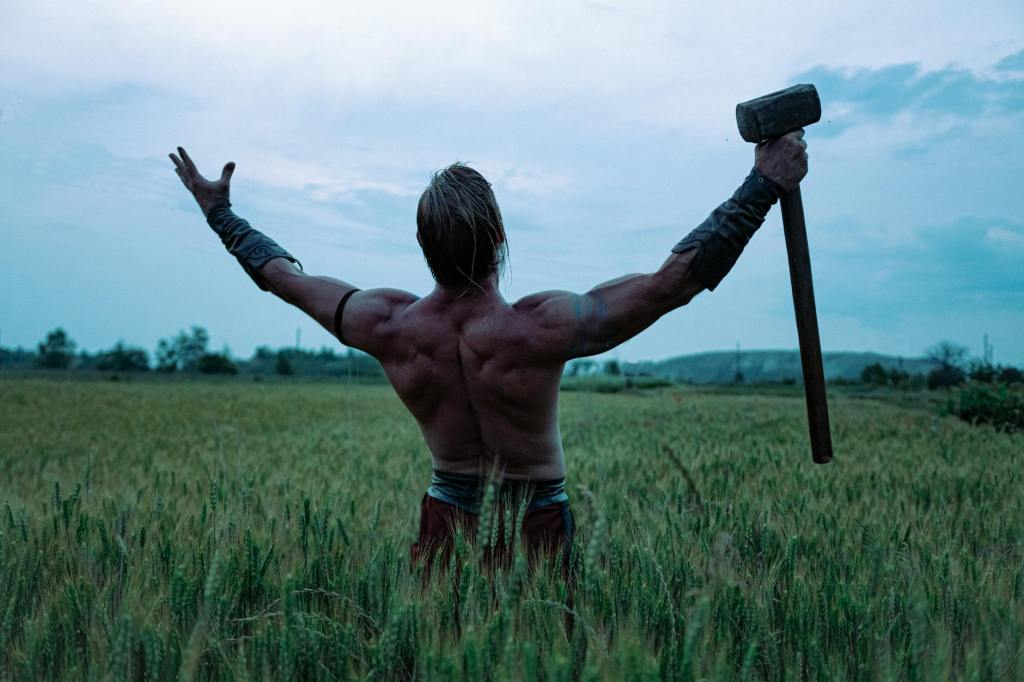
    Whether you admit it or not, a part of you still wants to Hulk out like a fever-dream escapee from a 1970s television set. Watching the gentle, tortured soul of Bill Bixby morph into Lou Ferrigno’s snarling green colossus wasn’t just entertainment—it was therapy without the deductible. You didn’t want to trudge through life as a tightly wound ball of quiet despair. No, you wanted to erupt, transcend, and become an unstoppable force against loud chewers, bullies, and the guy curling in the squat rack.

    As a budding bodybuilder, you didn’t need gamma rays—just iron. And lots of it. Your transformation wasn’t just about building muscle; it was a sartorial revolution. You hacked off your sweatshirt sleeves, butchered the legs of your sweatpants, and stomped through the gym like a deranged fashion anarchist. You weren’t lifting weights—you were channeling rage into reps, morphing into a DIY Hulk with every guttural breath and dripping bead of sweat.

    But your Hulk obsession started long before puberty. You were a pint-sized fanatic, glued to the 1960s cartoon version of the green juggernaut. What captivated you most was the metamorphosis: how Bruce Banner’s clothes tore away, leaving only ragged dignity and raw power. So one fateful Saturday morning, with a level of creative genius only a six-year-old could summon, you took a brand-new pair of slacks from Mayberry’s and turned them into Hulk couture—frayed, slashed, and ruined. Then you stomped into your parents’ bedroom flexing, growling, “HULK SMASH!” Lucky for you, your mother’s laughter outweighed her rage.

    This was your first known case of Ferrigno Fever: the compulsive need to emulate Lou Ferrigno’s Hulk physique and fashion sense, typically culminating in destroyed clothing and inflated delusions of grandeur.

    As a teenager, your obsession graduated to the live-action Incredible Hulk. After the chaos subsided and Ferrigno’s beast melted back into Bixby’s sorrowful wanderer, you were left with “The Lonely Man Theme”—Joe Harnell’s melancholic piano elegy—as your personal anthem. It became the soundtrack to your self-pity and your deeply misguided belief that the world had wronged you by not immediately recognizing your divine potential.

    You weren’t just lifting at the gym; you were sculpting a mythic figure, trapped in a fluorescent-lit purgatory of men who looked like overripe tomatoes with toothpick limbs. They didn’t understand. They didn’t see the epic. But you did. You were a tragic hero, a lone star bench-pressing against the gravity of a cruel, indifferent world.

    Eventually, you realized that self-pity is seductive—like opium, but cheaper and twice as cringe. It whispers lies, paints you the tragic lead in a play no one else is watching, and delays the actual work of growing up. It took years, maybe decades, to hush that voice. But for a long time, the Hulk was your muse, your fashion icon, and your excuse.

  • Micky Dolenz, Dave Draper, and the Death of a Boy’s Dreams

    Micky Dolenz, Dave Draper, and the Death of a Boy’s Dreams

    By the time you hit kindergarten, you were already a zealous convert to the gospel of hard work, marinated in a diet of children’s books and those absurdly persuasive Charles Atlas bodybuilding ads found in comic books. Your tiny brain was hardwired to believe that with enough elbow grease and grit, you could bend the universe to your will. You marched through life armed with Captain Kangaroo’s treacly aphorisms and the motivational war cries of The Little Engine That Could. “I think I can” became your toddler mantra, your creed, your caffeinated Kool-Aid.

    Then came October 16, 1967. The day optimism died.

    You were just twelve days shy of your sixth birthday, nestled into your evening ritual of watching The Monkees, when the episode “I Was a 99-lb. Weakling” detonated your reality. There on the screen was your scrappy hero Micky Dolenz, getting demolished on the beach by a slab of muscle named Bulk—played by none other than Mr. Universe Dave Draper. Bulk, a bleach-blonde Hercules with pecs that looked weaponized, snatched away Brenda, the beach goddess, without breaking a sweat.

    Crushed but hopeful, Micky sought salvation through Weaklings Anonymous. His training montage was nothing short of existential punishment: lifting weights the size of Volkswagens, chugging fermented goat milk curd (which may as well have been bottled regret), and pawning off his drum set—essentially amputating his soul—to finance this fever dream of redemption.

    And then came the final betrayal.

    After all that sweat, sacrifice, and putrid curd, Brenda dumped Bulk and hooked up with some Proust-reading dandy who probably thought cardio was a character in Les Misérables. Your six-year-old heart imploded. You sat there slack-jawed, betrayed by TV, by Micky, by Brenda, and most of all, by the myth that hard work would win the day. Goat curd couldn’t save you. Pop-Tarts couldn’t save you. Even a twin-pack of Ding Dongs barely numbed the existential sting.

    You wandered the next few years like a ghost of your former self, disillusioned, cynical, nursing your wounds in sugary snacks and quiet rage. Not until Arnold Schwarzenegger stormed into your life via Sports Illustrated and Pumping Iron did your faith in the bodybuilding gospel return. But by then, the damage was done. You knew the truth: sometimes, life crowns the guy reading Proust—and leaves the guy drinking protein shakes in the dust.

  • Watch Island: Where Grown Men Click Bezels and Call It Meaning

    Watch Island: Where Grown Men Click Bezels and Call It Meaning

    After twenty years tumbling down the horological rabbit hole, I’ve come to one conclusion: the watch hobby is a paradoxical fever dream held together by delusion, desire, and just enough self-awareness to laugh before crying.

    If Alec Baldwin’s mantra in Glengarry Glen Ross was “Always be closing,” then the watch nerd’s version is: “Always be laughing at yourself.” Because let’s be clear—none of this is serious. And yet, it’s also deathly serious. That’s the contradiction we live in: a tension between cosplay and existential weight.

    At its core, watch collecting is elaborate roleplay. Grown men strapping on wrist-bound fantasies, each timepiece a character costume in a rotating lineup of imaginary lives. We cosplay as deep-sea divers, fighter pilots, Arctic explorers, NASA engineers, rugged survivalists, or minimalist monks of Japanese restraint. We don’t just wear watches. We become them. Just as fans dress as superheroes at Comicon, we show up to Bezel-Palooza with Seikos and Sinns, flexing our sapphire crystals and ceramic inserts like badges of forged identity.

    And don’t get me started on the straps. We favor models named after desserts: waffles, chocolate bars, and tropic vanilla-scented rubber. We’re just high-functioning children in the horological wing of Willy Wonka’s Chocolate Factory. But instead of licking the wallpaper, we post lume shots under moody lighting and argue about clasp tolerances.

    It’s cosplay for the emotionally overcommitted.

    But the strangest contradiction? For something so clearly un-serious, we treat our collections with a kind of medical gravity. The annual “State of the Collection” post feels like a cholesterol screening—an attempt to gauge whether we’re healthy, balanced, evolving, or simply delusional. We don’t just love watches. We debate the proper ways to love them. We agonize over whether we’re rebuying the Willard out of longing or self-sabotage. We assign spiritual weight to which dial shade of blue best reflects our soul.

    This isn’t just madness. It’s structured madness. With forums.

    We are a niche tribe of adult males—many of us husbands, some of us fathers—who transform into Man-Babies the moment we utter the words “bezel action” or “ghost patina.” Our wives, bless them, want no part in our obsessive monologues about case thickness and end-link articulation. To them, we are overgrown children clinging to our G.I. Joes and Tinker Toys, slowly sprouting donkey ears like Pinocchio and Lampwick on Watch Island, while they look on with bemused pity.

    We know we’re ridiculous. That’s the beautiful tragedy. And still, we dive deeper. Because in a world that often lacks identity, silence, and meaning, we find it in brushed stainless steel and micro-adjust clasps.

    And yes—we’re probably overdue for an intervention.

  • “This Is the Other Place”: Twilight Zone Parenting and the Parking App of Doom

    “This Is the Other Place”: Twilight Zone Parenting and the Parking App of Doom

    Of all the Twilight Zone episodes that have taken up residence in my psyche, none clings more tenaciously than “A Nice Place to Visit.” A petty crook named Rocky Valentine gets gunned down during a botched robbery and wakes up in what appears to be paradise. He’s greeted by Pip, a genial, rotund guide played by Sebastian Cabot, who grants him everything his larcenous heart ever wanted: money, women, luck, luxury. No struggle, no stress. Every desire fulfilled on command.

    At first, Rocky revels in this frictionless dreamscape. It’s Vegas without losing streaks, heaven without requirements. But gradually, pleasure without purpose curdles into a thick, syrupy dread. He realizes that gratification without resistance is just another form of punishment. Bored out of his mind and desperate for meaning, Rocky pleads with Pip to send him “to the other place.”

    Pip laughs and delivers the gut punch: “Heaven? Whatever gave you the idea that you were in Heaven, Mr. Valentine? This is the other place!” And then, with glee, Pip cackles like the well-fed devil he is.

    Which brings me to paid parking.

    There is a hell, and it lives in the infrastructure of modern urban parking. It’s a realm of QR codes, license plate entries, and apps that want your soul—or at least your email and billing zip code. Some kiosks accept coins, others demand smartphone apps, two-step verification, and an MFA code just to stand still without being ticketed. My wife, tech-literate and cool-headed, usually handles this logistical hellscape while I loiter nearby, pretending to study the map of downtown like it’s a sacred text.

    But this week she’s out of town at a teaching convention, and I’m taking our twin daughters to Laguna Beach. This means I have to drive, find a parking structure, and—here’s the true horror—navigate the digital rigmarole of paid parking without her guidance. The thought of it has me sweating harder than Rocky in his silk suit.

    The absurd part? It’s not the traffic, the tides, or the teenagers that unnerve me. It’s the parking meter. The existential shame of standing in front of a digital payment kiosk, poking at it like a confused ape while my daughters wait patiently (or impatiently) beside me. I don’t fear the unknown. I fear looking like an idiot in front of my kids.

    But here’s the deeper, darker realization: this is just a symptom. My wife, through years of effort and mental load, has become the de facto logistics commander of our household. She knows which airport lines move faster. She’s the one strangers approach at terminals, sensing her Jedi-level calm. Meanwhile, I shuffle behind her like an NPC in a bad video game—directionless, frictionless, practically translucent.

    Frictionless living has a cost. It breeds detachment. It robs you of engagement, resilience, and presence. And like Rocky Valentine, I’ve grown too used to being served instead of showing up.

    Ironically, I’m obsessed with watches—those exquisite tools designed to remind you where you are in time. And yet, I’ve spent years drifting, distracted, floating outside the dial. It takes a solo day trip with my daughters—an hour drive, some shopping, a good lunch, and possibly a tantrum or two—to pull me back into the present.

    When my wife heard about my plan, she said, “You don’t know how happy this makes me.” And I believed her. She wasn’t just relieved that I was giving her a break. She was glad to see me step into the friction. To stop spectating and start parenting in real time.

    No, I don’t want to be Rocky. I don’t want a life where every parking spot is perfect, every line is short, and every meal arrives on time. I want the chaos. I want the curveballs. I want the real thing.

    Even if it means downloading the stupid parking app.

  • A Portrait of the Artist as a Sweaty Young Man

    A Portrait of the Artist as a Sweaty Young Man

    In the fall of 1979, I was seventeen years old, a freshman in college, and already trapped in the tragicomic theater of my own self-regard. My deltoids were large, my ego fragile, and my sense of fashion—catastrophic. I had shown up that day to the cafeteria in a tight black turtleneck, the kind of garment that might look sleek on a Parisian intellectual but looked positively deranged on a teenage bodybuilder seated alone under sun-drenched plate-glass windows. The sun baked through the glass like a punishment from Apollo himself, and there I sat, moping in a puddle of my own sweat and self-loathing while Jimmy Buffett’s “Margaritaville” chirped mockingly from the jukebox.

    The song, a hymn to sloth and sangria, might as well have been composed to ridicule me personally. I didn’t know how to be carefree. I didn’t sip margaritas or laugh at spilled salt. I sat there glowering at my hamburger like it owed me money.

    College wasn’t a choice; it was a parental ultimatum. My mother, newly divorced and perpetually exasperated, had threatened to eject me from the house if I didn’t enroll. My father, who fed me barbecued steak at his bachelor pad and treated my emotions like a disease he couldn’t contract, declared that my ego—his exact word—was too “delicate” for a job with the sanitation crew. “You’re not built for trash,” he said between bites. “You need a title.” I agreed. I said I needed something white-collar, something that sounded mobile—like it wore loafers and got invited to cocktail parties.

    Yet there I sat, jobless, broke, sweating through a wool turtleneck like a fool in a Russian novel. Just a few weeks earlier, I had been juggling job offers like a hustler on the make. One gig was as a bouncer at a teenage disco called Maverick’s in San Ramon, a temple of polyester and hormonal chaos where high schoolers writhed to the anesthetizing thump of K.C. and the Sunshine Band. I hated everything about that job—the music, the fake glamour, the pretense of authority as I stalked the aisles flexing my lats like I was auditioning for a sequel to Saturday Night Fever: The Security Guard Chronicles.

    My mother’s revolving door of boyfriends didn’t help. One, a Raiders defensive coordinator, had promised me a job moving pianos, which somehow never materialized. Another, Sid Briggs, was allegedly a “businessman” with Teamsters connections and the vague scent of federal indictment. He too promised me a job managing a health club. That never happened either. The only real employment I had was at Maverick’s, which came to a dramatic end during a riot. My fellow bouncer Martino and I decided we were too precious to die for three bucks an hour, so we walked out mid-melee and drove off down Crow Canyon Road. Martino repeated like a monk reciting scripture, “I’m not going to risk my life for three dollars an hour.”

    We were fired. Unceremoniously. I was left with $300 in my checking account and a 1971 metallic brown Ford Galaxy that had just drained me dry with repairs. That car had the elegance of a Soviet tank and handled like one too.

    And now here I was, sulking under the cruel sunlight, marinating in Buffet’s faux-Carribbean nihilism. “Wasting away,” he sang. No kidding.

    At six feet tall and 210 pounds of resentful muscle, I radiated a kind of lonely menace. My professors were afraid of me. People steered clear. I was a human bug zapper. But then came John O’Brien.

    He walked right up to my isolated table like he was planting a flag. Set down his tray, extended a hand, and introduced himself. A compact redhead from Boston with the kind of fast-twitch charisma that usually belongs to politicians or cult leaders. He had moxie, confidence, and a girlfriend who looked like a shampoo commercial. But unlike most people with that kind of glow, he wasn’t a narcissist. He had radar. And he picked up my signal loud and clear: lost kid, no job, no love life, no clue.

    John decided to fix me.

    First, he got me a job. He worked at Jackson’s Wine & Spirits in Berkeley and said, “They need a guy. You’re the guy.” He called me that night with the details. Two days later, I was on the floor learning about merlot and discount vodka.

    Then, with the subtlety of a Vegas magician, he decided to address my romantic failure. He looked across the cafeteria, spotted two stunning nineteen-year-olds, and summoned them with a whistle so loud and precise it could’ve herded cattle. They glided over—one blonde, one with honey-colored hair—and I immediately began sweating like a man having a cardiac episode in church. It was flop sweat, and I couldn’t stop it. I tugged at the neck of my turtleneck like it was trying to strangle me and muttered, “It’s not hot in here.”

    The girls smiled politely, and I squirmed in my own skin like a teenage werewolf caught mid-shift. John watched it all with the amused detachment of a man inspecting a fixer-upper. He had found a dilapidated house—me—and now he was assessing the structural damage.

    He had his work cut out for him.

  • Lost at the Light: A Dream of Unfinished Witness

    Lost at the Light: A Dream of Unfinished Witness

    Last night I dreamed I was flung through time to witness the Crucifixion—not once, but over and over again, as if history were caught in an eternal loop. It wasn’t a single event but a kaleidoscope of perspectives: I viewed it from the ground, from a hillside, even from above. The landscape shifted with each new angle—sometimes the sky was slate gray, sometimes scorched bronze, sometimes bruised with orange light like an eternal dusk.

    I was obsessed with seeing it clearly, as though clarity itself were salvation. But the method of execution began to morph. The Cross, once tall and stark on a mountaintop, gave way to a giant catapult. I watched as faceless figures were hurled skyward like rag dolls flung by fate. I couldn’t tell if they were victims, martyrs, or simply vanishing into the void.

    There was mention—or maybe just a sensation—of a third method of sacrifice, one hidden, unnamed, and deeply unsettling. Its very vagueness gnawed at me, filling me with a dread I couldn’t explain.

    Realizing that perfect understanding was impossible—that I would never grasp the full shape of this cosmic agony—I finally surrendered. The moment I did, I was somewhere else.

    Now I was behind the wheel of a car, trying to follow a caravan of friends along an unfamiliar road. They all made it through a green light; I didn’t. I was left behind, lost beneath a concrete overpass, disoriented and doubting whether these friends were friends at all.

    Eventually, I caught up. We arrived at our destination: a picnic by the sea. No one spoke of what had happened. We passed around barbecued trout and fresh fruit, relieved more than joyful. We were just glad to be there, to eat together in silence. The chaos of the journey was forgiven in the quiet rhythm of chewing and the sound of waves.

  • Don’t Feed the Soul-Hole: 4 Rules for Making YouTube Content Without Losing Your Mind

    Don’t Feed the Soul-Hole: 4 Rules for Making YouTube Content Without Losing Your Mind


    Here’s what I’ve learned while preparing my latest YouTube video essay—”Don’t Confuse a Watch Collector with a Watch-Hoarding Demon”—which, by the way, still sits unrecorded because I haven’t found a quiet moment required to talk to a camera.

    Lesson One: Open with Housekeeping—But Make It Deranged.
    Begin your video not with a dry agenda but with something ridiculous and revealing. Tell your viewers how a simple search for watch straps turned into a midnight rabbit hole of vintage Camry trim packages or why you contemplated buying a Tudor Pelagos just to avoid folding laundry. Let them see your obsessions in their full neurotic bloom. Self-disclosure laced with comedy is more potent than any clickbait title.

    Lesson Two: Stop Feeding the Soul-Hole.
    The point of making videos is not to audition for emotional validation from strangers on the internet. That’s a black hole with no floor and no mercy. Seeking approval from the algorithmic gods only deepens the void. Instead, aim to share something real—stories, absurdities, and small slices of insight—with humility, clarity, and a firm grip on the absurdity of it all. You’re not here to be liked. You’re here to connect.

    Lesson Three: In the Age of Dopamine Overload, Be Useful.
    We live in an attention economy that’s basically a carnival of shrieking hucksters promising eternal youth through vitamin gummies and AI lifehacks. Most of it ends up being digital noise. Your job isn’t to out-scream them; it’s to offer substance. My strength is argumentative essays, so that’s where I stake my claim. Find your strong suit, sharpen it, and share it—preferably without a TikTok dance.

    Lesson Four: Welcome Dissent Like a Grown-Up.
    The comment section should not be a food fight. It should be a place where people can politely disagree without biting each other’s heads off. We live in a culture where disagreement is taken as a personal attack—like someone spit in your oat milk latte. But real disagreement, handled well, is a gift. It forces us to clarify, refine, and rethink. Without opposition, your ideas become flabby and self-congratulatory. Iron sharpens iron—just make sure it’s civil.

  • Buy Now, Cry Later: A Watch Addict’s Morning Routine

    Buy Now, Cry Later: A Watch Addict’s Morning Routine

    This morning, I sprang from bed at 5:50 like a man trying to outrun his own restlessness. Coffee in one hand, buckwheat groats in the other—my monkish morning ritual. By 6:20, I was deep into David Brooks’ New York Times lament over the death of the novel, parsing his elegy like a coroner looking for signs of life in a genre comatose under TikTok’s reign.

    I then pivoted to writing a YouTube essay on how to discover your watch identity without torching your bank account or your sanity. This required revisiting my own horological spiral, which could be summarized as: “I bought all the watches so you don’t have to.”

    Then, somewhere between the second paragraph and the first pangs of self-loathing, a thought struck me with the force of a stale TED Talk: I despise one-word-title books. You know the type—Grit, Blink, Regret, Drive, Trust—as if a single syllable can carry the weight of human experience. These are not books; they are glorified blog posts wearing a lab coat. They stretch one mediocre insight across 300 pages like butter scraped over too much toast. Malcolm Gladwell may not have invented this genre, but he certainly weaponized it.

    To be fair, a few have earned their keep: Testosterone, Breathe, and Dopamine Nation didn’t insult my intelligence. But the rest? They’re just placebo pills for the terminally curious.

    By 8:30, my family was still asleep, and I had hit the boredom wall with a dull thud. To numb the ennui, I began configuring a Toyota Camry online—my version of sniffing glue. I checked Southern California inventory as if I were a buyer, even though I won’t be pulling the trigger for at least a year. Classic FOMO, no doubt stirred by my best friend’s recent $70K Lexus purchase. His automotive flex triggered my inner consumer gremlin.

    Next came the Seiko browsing—Astrons, King Seikos, shiny little lies I tell myself in stainless steel form. I’m a man pushing into his 60s. I should be downsizing my neuroses, not accessorizing them.

    Right on cue, a depression fog rolled in. The psychic hangover of retail fantasy. I remembered a dream I’d had the night before: I was adding tofu to someone’s salad to increase their protein. They devoured it like they hadn’t eaten in days. Later in the same dream, I was at a party, where a couple asked me to mentor their autistic daughter. I smiled politely, feeling like a fraud. Me? A mentor? I can barely manage my own dopamine addiction.

    That’s when the epiphany hit like a steel bracelet to the skull: the urge to buy a watch hits hardest when you’re bored, self-pitying, or both. In those moments, a $2,000 watch becomes emotional currency—a metal antidepressant disguised as self-expression. And like all impulsive purchases, it cures nothing but your momentary discomfort.

    I hovered over the “Buy Now” button. Then, mercy. I pulled back.

    At 9:00, one of my twin daughters wandered into the kitchen and asked what happened to the leftover buttermilk pancakes from yesterday. I told her the truth: she’d left the door open when she went to ask the neighbors about babysitting their granddaughter, and a massive fly invited itself in. I saw it licking the pancakes like a dog at a water bowl. Into the trash they went. She laughed. I suggested Cheerios with a scoop of strawberry protein powder. She agreed. In that small, domestic exchange—an absurd fly, a ruined pancake, a shared laugh—I found myself re-entering the land of the living.

    Gratitude, not consumption, had done the trick.

    So now, I prepare for my kettlebell workout, towel in hand, wondering which podcast will offer the most delicious repartee to sweat by. My soul has steadied, for now.

  • Don’t Let Brotoxification Ruin Your Watch Hobby

    Don’t Let Brotoxification Ruin Your Watch Hobby

    I’ve been both a watch enthusiast and a watch addict for over two decades—long enough to know the difference between a genuine passion and a performance art piece in a wrist-sized frame.

    Some of my collecting history is noble. Some of it’s embarrassing. I’ve chased watches for the right reasons: fascination with engineering, aesthetics, a deeply personal sense of style. But I’ve also chased them for the wrong reasons: hero cosplay, status projection, and the sad, sweaty hope that someone—anyone—might think I was cool for wearing a submersible chunk of steel on my wrist.

    Let’s call it what it is: I’ve bought watches to feel like a man. That instinct isn’t always authentic—it’s often a costume. And in the world of collecting, nothing poisons the well faster than performative masculinity dressed up as personal style.

    So I started trying to pare things down. Simplify. Get to the core of what I actually like, and keep a small, personal collection that reflects who I am—not who I want Instagram to think I am.

    Easier said than done.

    Because in today’s world, “authenticity” has become just another algorithmic trend, another pantomime we perform for likes and approval. The word phony doesn’t even do justice to the industrial-strength fakery we’re marinating in. It’s beyond phony. It’s Olympic-level insincerity with corporate backing and PowerPoint slides.

    We now live in a cultural ecosystem where people are so fake, their attempts at being authentic create new layers of fakery. It’s not just that they’re inauthentic—they’re meta-inauthentic. They study authenticity like it’s a language exam, and the harder they try to sound fluent, the more their accent bleeds through.

    Take, for example, the great frauds of my TV-watching youth.

    Eddie HaskellLeave It to Beaver’s oily teenage suck-up—mastered the art of smiling at your mother while plotting your destruction behind the garage. He didn’t just imitate politeness; he weaponized it.

    Then there was Dr. Smith from Lost in Space—the preening, verbose con man who brought zero medical skills to the spaceship but still managed to insult the robot with Shakespearean flair:
    “You clumsy, colossal clod!”
    “You insidious ignoramus!”
    “You bubble-headed booby!”

    Ironically, Dr. Smith’s insults turned me on to language itself. I owe the man my English degree. Which just proves: sometimes even a fraud can inspire something real.

    Fast-forward to today’s most delicious case of catastrophic phoniness: the political operatives who realized they had alienated the male vote. After years of condescension, virtue signaling, and high-minded lectures, they finally realized men were tuning them out—if not outright recoiling.

    So what did they do?

    They flew to Half Moon Bay, checked into a luxury resort, and held a think tank retreat to rebrand masculinity. Picture it: Ivy League consultants in cashmere sweaters eating lobster rolls and sipping Pinot Noir while spitballing ways to reconnect with the “working man.” They treated young men like they were a rare species of jungle ape. Field notes were probably taken.

    This level of cluelessness isn’t just tone-deaf—it’s operatic. If the writers of Succession pitched this as a storyline, HBO would tell them to tone it down for realism.

    We need a name for this kind of oblivious, polished, self-defeating fakery. I call it Brotoxification: the act of rebranding yourself to appeal to men—but doing it with such manicured insincerity that you repel the very people you’re trying to win back.

    I work with young men every day—college football players, ex-military students, guys grinding through school because life didn’t hand them a shortcut. They don’t want coddling. They want three things: structure, discipline, and real-life skills. The last thing they need is a smug consultant in designer sneakers telling them how to “be seen.”

    And this circles back to watches.

    A few ground rules for keeping your watch hobby clean:

    1. Don’t overthink it.
    If a watch keeps whispering to you at 2 a.m., it probably belongs on your wrist. Trust your gut. You don’t need a panel of experts or a YouTube breakdown.

    2. Never buy a watch because you think it’ll earn you applause.
    If you’re trying to impress the crowd, the crowd will sniff out your desperation and laugh behind your back. Buying a “manly watch” to look tough is like buying cologne to smell rich. It doesn’t fool anyone.

    3. You don’t need to be rich.
    A $200 G-Shock Rangeman, worn with conviction, beats a $10,000 showpiece worn like a rented tux. Living within your means isn’t just practical—it’s masculine. It’s called integrity.


    In the end, authenticity can’t be strategized. It’s not something you workshop in a resort ballroom between keynote speakers and complimentary wine pairings. It’s not a brand refresh. And it sure as hell isn’t something you can outsource to consultants.

    Whether we’re talking about politics, masculinity, or watch collecting, the minute you start performing sincerity is the minute you’ve already lost it.

    So do yourself a favor: Keep your hobby honest. Reject the Brotox. And wear your damn watch because you love it—not because you’re hoping someone else will.

  • The Fever Swamp of Watch Collecting

    The Fever Swamp of Watch Collecting

    Once upon a time—last week, to be precise—I made a YouTube video arguing that a man should not chase variety in his watch collection but instead find his signature style and whittle his hoard down to a tasteful few. Like a monk with only one robe. Or a chef with one good knife. Or a middle-aged guy who knows that buying yet another GMT won’t fix his marriage.

    Now, did I believe what I was saying? Not entirely. I was, to be honest, talking myself off the ledge. It was a kind of public self-hypnosis: say it enough times on camera, and maybe I’ll stop buying watches I never wear. But I’ll admit—the thought experiment was stimulating, like sniffing ammonia salts just to feel something. Most commenters agreed, saying peace of mind only arrived after purging the herd. But not all. Some insisted that a large, diverse collection brings them genuine joy. Fair. Not everyone needs to live like a horological monk.

    Still, I enjoyed making the video. It felt like intellectual calisthenics for the soul, even if it didn’t convert me.

    One viewer, the formidable “Captain Nolan,” asked a deceptively simple question that demands more than a quick reply:

    “How can you discover your identity without trying watches in every category—divers, pilots, field watches, dress, digital, mechanical, quartz, and so on?”

    By “identity,” he means your taste. What fits your lifestyle, your aesthetic, your internal brand. A fair question. And at first, I answered like a smug adolescent. I said, “You know what you like the same way I knew Raquel Welch was the apex of female beauty when I was nine. One glance. No need to watch Love American Style reruns or thumb through Vogue. Case closed.”

    But that answer is glib. And idiotic. Taste in watches—unlike adolescent lust—is not a hormonal thunderclap. It’s a process.

    So here’s the grown-up answer: yes, you do need to try different styles, just like trying on jackets at Nordstrom. Some are flattering, some make you look like a Bulgarian hitman. It’s tactile. Visceral. And wildly expensive. To really figure out your taste, you may end up spending $5,000 to $10,000 just to land in the right neighborhood. You might call this the Fitting Room Narrative—the idea that trying on a wide range of watches will help you find the “real you.”

    It sounds rational. Comforting, even. But I don’t believe in it.

    The problem is the human brain. It’s not a spreadsheet. It’s a haunted house full of desires, delusions, and marketing fumes. So let me propose a more honest alternative: The Fever Swamp Narrative.

    Here’s how it works:

    You fall headfirst into the hobby. You start buying watches the way a toddler grabs Halloween candy. You buy microbrand divers, G-Shocks, Speedmasters, and maybe a Rolex or two if your credit limit allows it. You tell yourself each one serves a “purpose.” You start spending a grand a month, easy. Over ten years, you’ve spent more than most people do on therapy. And God knows you need therapy.

    Eventually, the collection metastasizes. Dozens of watches, each one representing a temporary high. You stop wearing half of them. You obsess over straps, bezels, lume. Your identity fuses with your hobby. You’re no longer a man who wears watches; you’re a man being worn by them.

    Then comes the collapse: financial strain, marital tension, the vacant stare of a man wondering why he owns three identical Seikos. Maybe you go through a breakup or foreclosure. Maybe your friends stage an intervention. Maybe your dog leaves you. Think about that. Your watch obsession got so bad your dog abandoned you. 

    You finally tap out. Sell the collection. Keep three. Or two. Or one. You tell yourself you’re “cured.”

    Except… maybe you’re not. Maybe, like Bell’s palsy or a bad ex, the obsession lies dormant. All it takes is one random trigger—a stressful day, a YouTube thumbnail, a flash sale—and you relapse. Buy a Sinn. Then a Squale. Then you’re back in the swamp.

    Why do we cling to the Fitting Room Narrative when it’s so obviously false? Because it has a tidy structure. A clean arc. Beginning, middle, resolution. We’re narrative junkies. We want our Luke Skywalkers to finish Jedi school and never regress. 

    Same with watch collectors. We want the Watch Ninja to overcome his demons and live a Zen life with a single Grand Seiko. If he relapses, we unsubscribe. He becomes a punchline. Another Liver King of horology.

    Still don’t believe me? Consider Pete Rose. In the ‘70s, he was “Charlie Hustle,” the human embodiment of work ethic. But zoom out, and the myth crumbles. Pete wasn’t disciplined—he was compulsive. He gambled, lied, betrayed friends. The man was a walking cautionary tale wrapped in a Cincinnati Reds jersey.

    Or take Sedona. Supposedly a spiritual vortex. In reality, a commercialized fever dream of overpriced crystals, green juice, and pseudo-mystical hokum. You arrive expecting transcendence and leave with a maxed-out credit card and lower back pain from a “chakra realignment.”

    We love myths because they sell. But real life is more complicated. Messier. Less flattering.

    So I could tell you a satisfying tale about finding my “true self” through curating a humble collection of retro divers and minimalist field watches. I could wrap it all up with a bow. But I won’t. Because that would be fiction.

    And honestly, haven’t we had enough of that?