Tag: life

  • Why I’m Not Fully G-Shockified (Yet)

    Why I’m Not Fully G-Shockified (Yet)

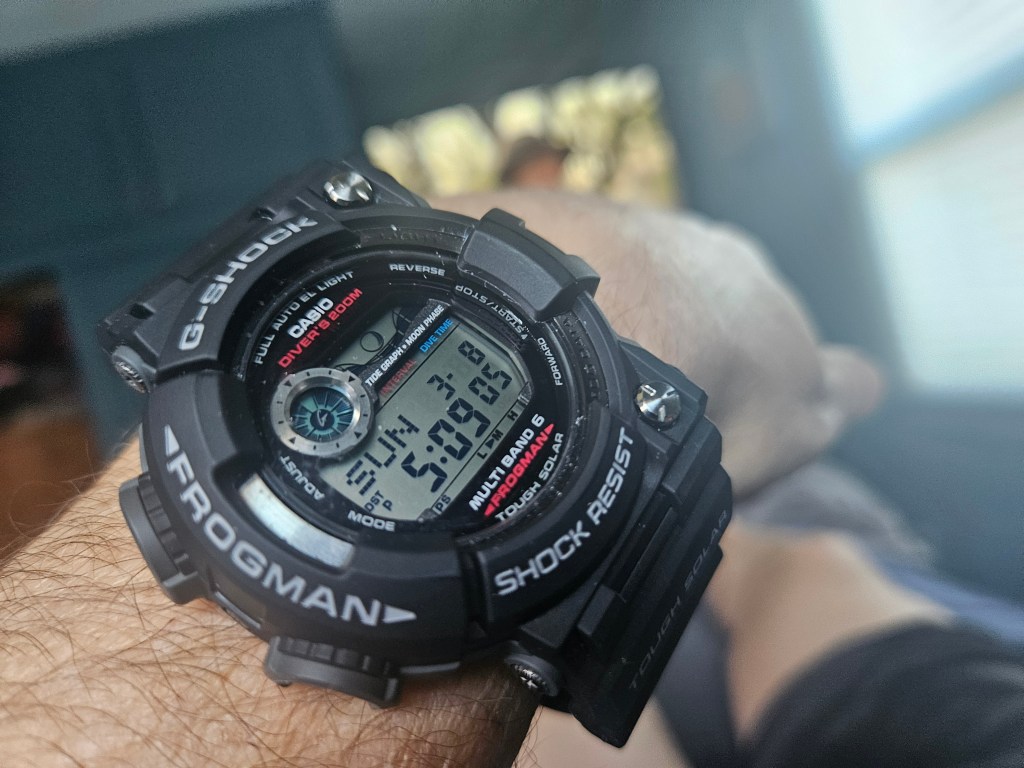
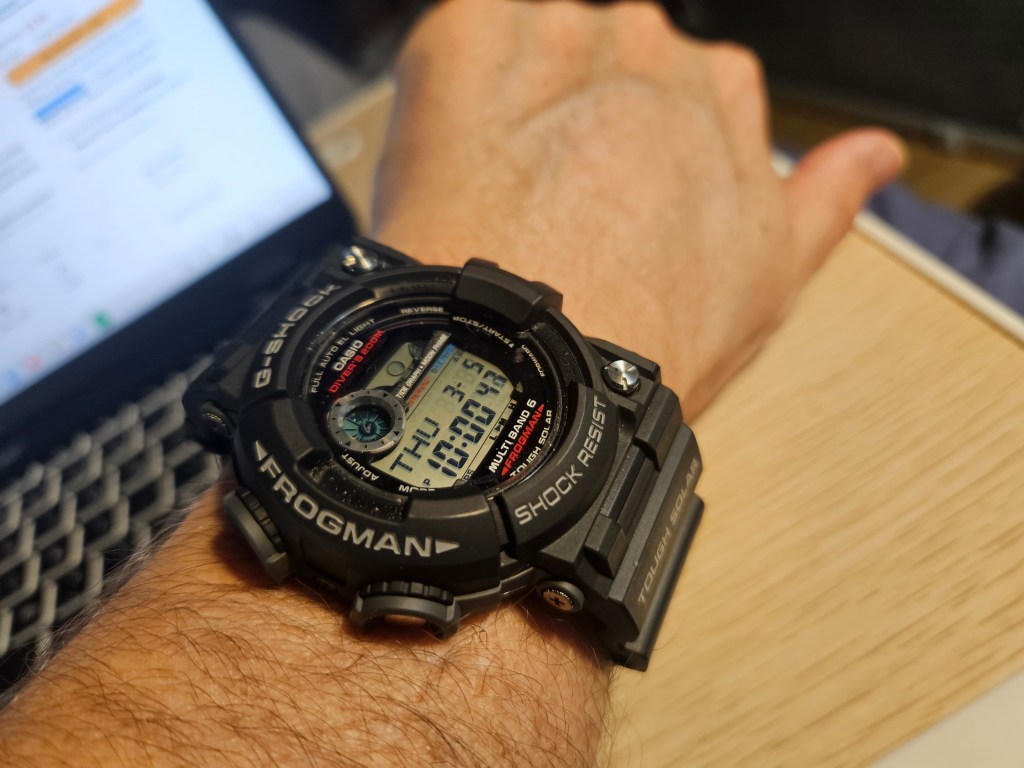
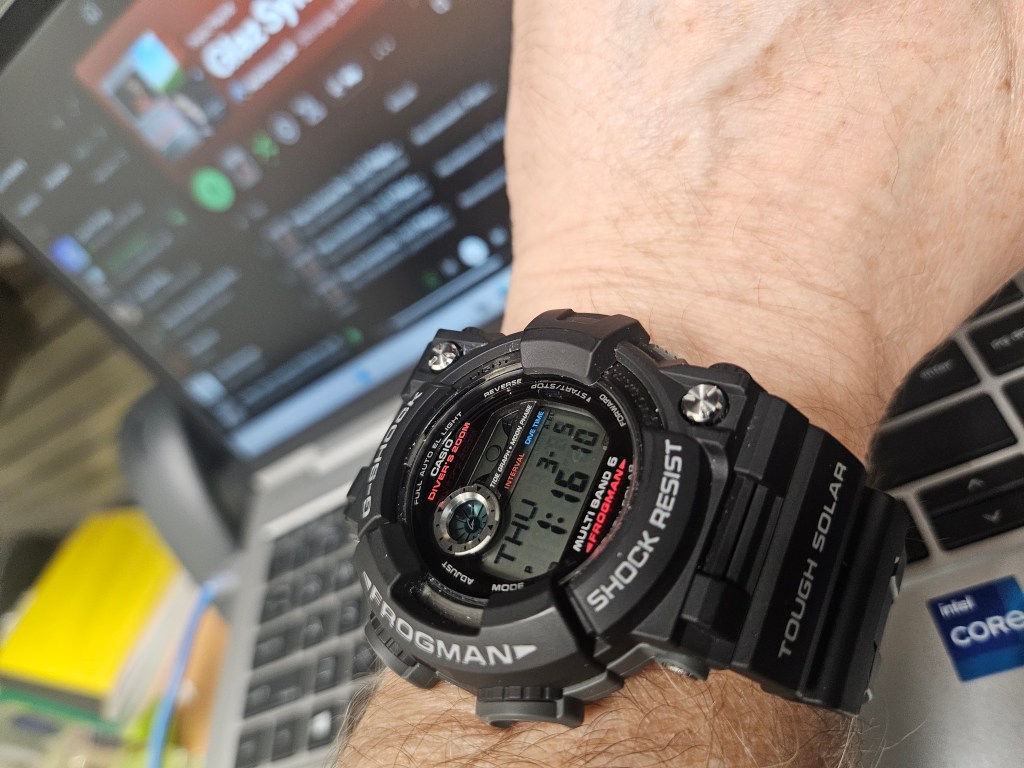
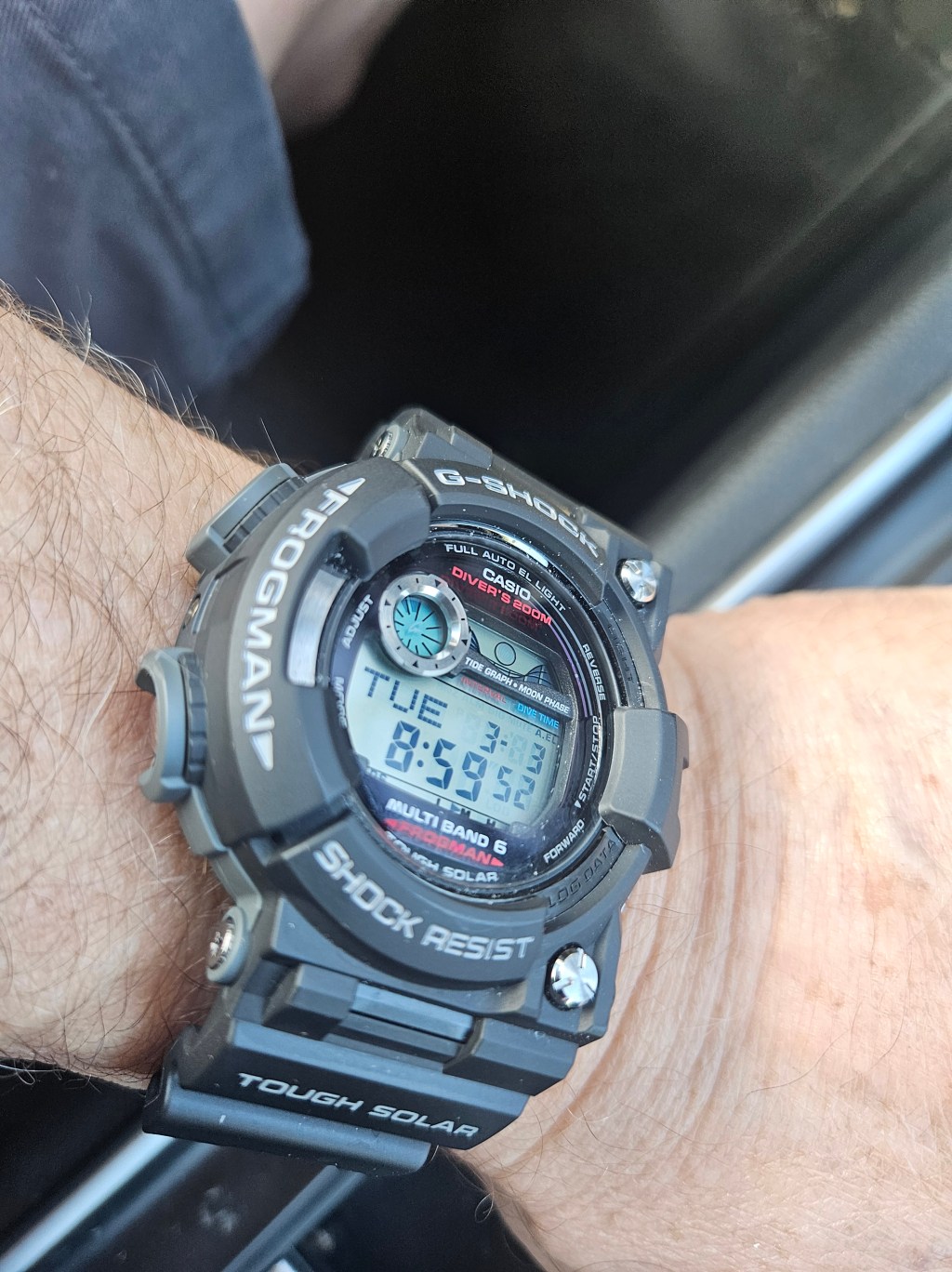
    A month ago, I fell—hard—for the G-Shock Frogman GWF-1000. Not a mild infatuation. Not a passing curiosity. A full conversion experience. Within days, I recruited two accomplices—the GW-7900 Rescue and the GW-6900 Three-Eyed Monster—and suddenly my mechanical divers, once the crown jewels of my collection, were sitting in the watch box like retired prizefighters telling stories no one asked to hear.

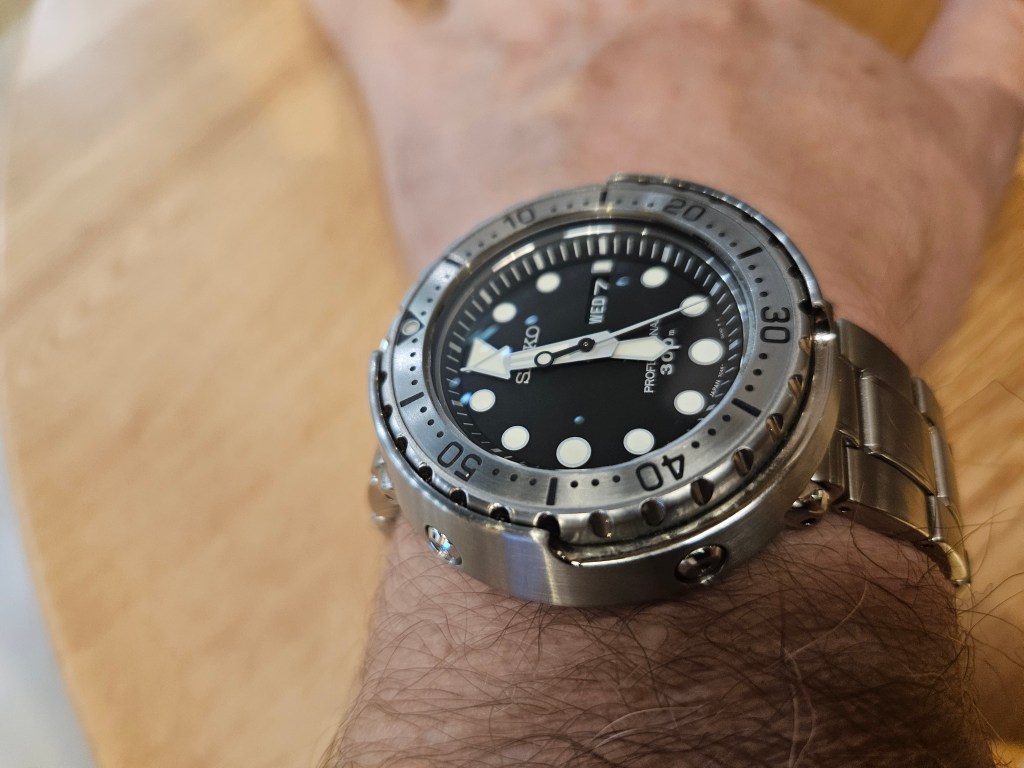
    Let me be clear: I have not renounced them. I still admire the Seiko SLA055. I still regard the quartz Tuna SBBN049 with something close to reverence. But admiration is not the same as use. Once you’ve tasted atomic time—precise, indifferent, quietly superior—it’s difficult to return to the charming imprecision of mechanical watches. You don’t switch back from filtered water to a garden hose unless nostalgia is doing the driving.

    And I’m not alone. Since confessing my condition, I’ve received a steady stream of testimonials. Men who bought a GW-M5610 or a GW-5000U and quietly stopped wearing everything else. Not because they planned to. Not because they declared war on their collections. But because the G-Shock—comfortable, accurate, frictionless—refused to leave their wrist. Their curiosity still wandered, their addiction still whispered, but the watch stayed put. Anchored. Unmoved.

    This phenomenon deserves a name: G-Shockification.

    It is the moment when a watch enthusiast, steeped in the romance of mechanical horology, is overtaken by the brute efficiency of atomic precision. At first, there is resistance. Then rationalization. Finally, surrender. Variety collapses. The rotation dies. The watch box becomes a museum, and the G-Shock becomes the only living artifact. What began as a hobby turns into a single, dominant habit—quiet, practical, and oddly liberating.

    Some resist the change. Some embrace it. Some preach it like a new religion. But they all share one outcome: the mechanical watch, once a daily companion, becomes an occasional guest.

    Which brings me to the uncomfortable question: Have I been G-Shockified?

    The honest answer is: not quite.

    I have my objections. With a G-Shock, I cannot simply glance at the time. I must present the watch to my face like an offering, or press a button and summon light—an act that triggers a faint but persistent anxiety about draining the solar charge. In a dark movie theater, the problem becomes almost philosophical. Do I illuminate my wrist and disrupt the room? Or do I behave like a civilized adult and wear something else?

    This is where the quartz Tuna reenters the story.

    Since my G-Shock conversion began, the Tuna has enjoyed a quiet renaissance. It is as if atomic time granted me permission to appreciate quartz accuracy without guilt. At night, it is flawless—constant lume, instant readability, no negotiation required. It does not ask for a button press. It does not demand a ritual. It simply tells the time, like a professional.

    And so I arrive at a compromise.

    I am not fully G-Shockified because I am not willing to tolerate certain frictions: the angle-sensitive readability, the dependence on backlight, the small social calculations about when it is appropriate to illuminate my wrist. These are minor issues, but they are enough to prevent total surrender.

    What I have instead is something more complicated: Hybridification.

    My collection is now split down the middle—four analog watches, four G-Shocks. This is not harmony. It is a negotiated settlement. The G-Shocks govern precision, durability, and daily utility. The analog watches—especially the Tuna—reclaim territory where immediate readability and luminous clarity matter.

    The result is a managed tension between two philosophies:

    • the digital world of accuracy, convenience, and indifference
    • the analog world of presence, legibility, and quiet satisfaction

    It is not a perfect system. But it is stable.

    For now.
  • The Seiko Tuna Epiphany: A Late-Night Strategy for Escaping Watch Madness

    The Seiko Tuna Epiphany: A Late-Night Strategy for Escaping Watch Madness

    Last night, while watching television with my wife in a room lit about as brightly as a submarine corridor, I made a small but unsettling discovery: I am not always in the mood to press the G-Shock light button just to see the time. Not because the button is difficult—it isn’t—but because every tap reminds me that I’m siphoning a little solar life from the battery. For a normal person, this would register as trivia. For someone like me, it becomes a moral drama about energy management.

    Earlier that day both my G-Shocks—the Frogman and the GW-7900—were sitting at the dreaded Medium charge level. Medium is technically acceptable, but emotionally intolerable. So I placed them on the windowsill for four hours like two reptiles basking on a warm rock. By evening they had risen to the only status that calms my nervous system: High.

    Wanting to give their solar batteries a night of rest—and perhaps to give my brain a rest as well—I hung the GW-7900 on the industrial T-bar stand so it could quietly chase atomic signals overnight. In its place I strapped on my quartz Seiko Tuna SBBN049. The room was dark, but the Tuna’s lume glowed like a tiny lighthouse. No button pressing. No anxiety about draining solar reserves. Just the quiet satisfaction of luminous markers doing their job without negotiation.

    And something interesting happened: I rediscovered the Tuna.

    While I’ve been cooling off from my mechanical divers, this quartz brute suddenly felt…perfect. Reliable. Legible. Calm. A watch that does not demand emotional supervision.

    Then a second realization arrived.

    The Tuna—already equipped with sapphire—might quietly occupy the exact niche I’ve been trying to justify filling with the sapphire Frogman, the thousand-dollar titanium idol currently whispering to me from the internet.

    If the Tuna fills that lane, several pleasant consequences follow.

    First, I stop the collection at eight watches, a number that still resembles discipline rather than pathology.

    Second, I avoid introducing a sapphire Frogman that would inevitably start competing with my beloved Frogman GWF-1000, turning the watch box into a small arena of amphibious rivalry.

    Third, the Tuna—currently receiving about as much wrist time as a museum artifact—gets to live again.

    Fourth, I avoid spending nine hundred dollars on what is essentially a prestige upgrade: a watch whose improvements amount to slightly clearer digits and bragging rights for social media spectators.

    Fifth, I avoid paying nearly a thousand dollars for a watch that, if I squint hard enough and tilt my head toward the light like a suspicious jeweler, looks almost identical to the one I already own.

    What I’m really saying, ladies and gentlemen, is that I’m searching for an exit ramp.

    Not an exit from watches entirely, but an exit from the compulsion to keep expanding the collection as if the next acquisition might finally calm the storm.

    Because the truth is obvious. My eight watches already do everything a watch can possibly do. Another one at this point isn’t a tool—it’s an additional weight tied to the ankle of enjoyment.

    Another watch becomes an anchor.

    Another watch becomes kryptonite.

    Another watch dilutes the potency of the ones I already love.

    Of course, this is the speech I’m giving myself this morning. Whether I remain faithful to it is another matter entirely. A watch obsessive, after all, is simply a man locked in a polite but relentless argument with himself.

    And perhaps that is the broader human condition. The very pursuits that bring us joy—hobbies, ambitions, passions—also contain the seeds of excess. Mishandled, they curdle. What began as pleasure turns into agitation.

    These are the thoughts rushing through my brain today, pouring forward like a swollen river after heavy rain.

    If it weren’t watches, it would be something else.

    That much, I know for certain.

  • Life Is Uncertain. Porridge Is Not

    Life Is Uncertain. Porridge Is Not

    For the past week my appetite has surged like a rogue wave. That could mean several things, none of them particularly flattering. Perhaps I’m medicating stress with food. Perhaps there are subterranean stress triggers rumbling beneath the surface that I haven’t identified yet. Life, after all, provides a constant background hum of anxiety, and it’s difficult to distinguish ordinary daily strain from something more corrosive.

    Retirement is hovering in the distance like a financial fog bank. I’ve been emailing HR about the price of keeping my Kaiser coverage after I retire versus moving to my wife’s more modest plan. Her school pays less than mine, which means we’re staring at something in the neighborhood of $1,500 a month once dental and vision enter the scene. Retirement, which is supposed to represent liberation, suddenly looks like a complicated negotiation with spreadsheets, identity, and self-worth. And apparently my body’s response to this existential accounting exercise is simple: eat more chicken.

    There is, at present, a dangerous quantity of takeout chicken in this house. Fried chicken. Roasted chicken. Greasy, seductive chicken lounging in the refrigerator like a gang of edible hoodlums. I open the fridge intending to take a small, respectable bite. Five minutes later I’m standing there gnawing through a drumstick like a raccoon that has discovered civilization. The aftermath is predictable: gluttony followed immediately by anxiety.

    The anxiety, unfortunately, does not arrive alone. It brings a surveillance drone. I watch myself overeating as if my consciousness has sprouted a third eye hovering above the scene like a judgmental security camera. I am both the criminal and the detective. The more I watch myself eat, the more anxious I become. The more anxious I become, the more I eat. I have achieved what behavioral psychologists might politely call a closed loop of misery.

    Action is required.

    My proposed solution is radical in its simplicity: three meals a day, no snacking. Breakfast will be steel-cut oatmeal or buckwheat groats fortified with protein powder. Lunch will be rolled oats with yogurt and more protein powder. Dinner will consist of a sensible portion of protein, vegetables, and an apple. It is not glamorous, but glamour is precisely the problem.

    Oatmeal comforts me. It possesses the mild, reassuring neutrality of something that has no ambitions beyond keeping you alive. Perhaps it is a kind of surrogate baby food. Perhaps the approach of retirement has triggered a mild regression in which my brain seeks the emotional equivalent of warm porridge and a quiet afternoon nap. As I drift deeper into my mid-sixties, it is entirely possible that my culinary philosophy is reverting to something suitable for a kindly monastery.

    Life is uncertain. Porridge is not.

    I like the predictability of three meals a day involving some form of oatmeal. I like the idea of owning a Lenovo ThinkPad, which is the oatmeal of computers. I like the Honda Accord and Toyota Camry, which are the oatmeal of the automobile world. And I like my solar atomic G-Shocks, which are the oatmeal of timepieces—durable, accurate, incapable of drama.

    If possible, I would like to swim inside a large industrial vat of oatmeal, floating peacefully while the chaos of the modern world clangs harmlessly against the outside of the tank.

    Unfortunately, hostile forces surround the vat.

    My daughters campaign relentlessly for takeout: Dave’s Hot Chicken, Wingstop, Panda Express. Holiday gatherings appear with enough pies and brownies to launch a regional bakery franchise. A man can only resist these temptations for so long before the walls of discipline begin to buckle.

    Meanwhile, medical costs continue their relentless ascent, and retirement funds tremble nervously as global markets perform their daily interpretive dance of geopolitical uncertainty.

    Under such circumstances I find myself clinging to a personal doctrine I’ve begun to call The Porridge Principle: the instinct to confront anxiety by retreating into humble, reliable technologies and routines that promise frictionless predictability. Oatmeal breakfasts. ThinkPad laptops. Honda sedans. Solar atomic watches. These objects do not thrill, but they do not betray.

    When the world becomes chaotic, the mind begins searching for tools and rituals that behave exactly the same way every day.

    So that is the plan.

    Trader Joe’s opens in an hour. I will buy groceries for my family and a heroic supply of oatmeal. The campaign against uncertainty has begun.

    Pray for me.

  • Deacon Blues Syndrome and Watch Addiction

    Deacon Blues Syndrome and Watch Addiction

    You felt a flash of embarrassment the other day when a thought arrived that should have been obvious years ago. The tension you carry around your watch collection—the way you analyze every purchase, every rotation, every sale as if it were a decisive move in a championship match—does not come from the watches themselves. It comes from loneliness. In the blunt language of the present moment: you don’t quite have a life.

    On paper, you appear responsible enough. You try to meet the expectations placed upon you. You pay attention to your finances. You maintain your fitness routine. You show up for your marriage and your children. Yet beneath these obligations runs a quieter truth: you spend most of your life inside your own head. You worry. You brood. You sometimes imagine that life has shortchanged you—that the grand parade of glory you expected never arrived. No brass band, no confetti. Just the steady hum of ordinary days.

    In this sense you resemble the narrator of Steely Dan’s “Deacon Blues,” a man who moves through one life while dreaming of another. Your version of that alternate world happens to be your hobby. Watches provide a parallel universe—one filled with purity, precision, and tidy solutions. In that world you can become the connoisseur, the signal hunter, the disciplined curator of perfect instruments. It is a carefully engineered emotional ecosystem, designed to distract you from the messy ambiguities of real life. The danger, of course, is expecting this world to deliver something it was never built to provide.

    Call this condition Deacon Blues Syndrome. Borrowing from the Steely Dan narrator who imagines himself transformed into a romantic alter ego, the term describes the habit of living an ordinary life while mentally inhabiting a heroic or purified version of oneself. The watch obsessive becomes the protagonist of this private mythology. Meanwhile, the real world remains stubbornly ordinary, leaving the hobby to absorb the emotional energy of ambitions that never quite found their stage.

    This realization may sound harsh, but harshness is not the point. It is simply honesty. Just as Rainer Maria Rilke wrote Letters to a Young Poet to encourage solitude, self-examination, and inner clarity, those of us who struggle with watch addiction might benefit from something similar—Letters to Broken Watch Addicts. The purpose of such letters would not be cruelty or ridicule. Their purpose would be clarity: to illuminate the psychological currents that drive the obsession and, perhaps, to open the door to a quieter, more deliberate way of living.

    Such explorations are in my book The Man Who Lost His Mind to Watches.

  • Collector’s Paradox

    Collector’s Paradox

    I sometimes imagine the perfect end state of my G-Shock hobby: four watches rotating peacefully through my week like planets in a stable orbit. The lineup is already clear in my mind. The Frogman GWF-1000. The Rescue GW-7900. The Three-Eyed Triple Graph GW-6900. And the Frogman GWF-D1000B. Four machines, each with a distinct personality, each capable of carrying the entire hobby on its shoulders without needing help from a dozen cousins.

    In theory, that sounds like serenity.

    But there’s a catch.

    A modest four-watch rotation brings peace, but it also brings something else: the end of discovery. And discovery is half the fun. The moment the collection becomes complete, the hunt quietly packs its bags and leaves town.

    This is where the trouble begins.

    Inside my head two different personalities are negotiating, and neither one intends to surrender easily. One personality wants order. The other wants novelty. One wants a finished system; the other wants an endless frontier.

    The first personality is the Curator. The Curator wants a tidy garage with four perfectly chosen machines parked inside. He wants familiarity. He wants mastery. He wants watches whose buttons, modules, and quirks are so well known they stop feeling like gadgets and start feeling like companions. In the Curator’s world, the hobby becomes calm. Predictable. Comfortable.

    But the Curator’s paradise has a downside: once the system is finished, the hunt is over.

    And the hunt is intoxicating.

    That’s where the Explorer enters the picture. The Explorer lives for discovery. He watches reviews. He compares modules. He learns about obscure models produced in tiny Japanese batches fifteen years ago. He imagines how each watch might fit into his life like a missing puzzle piece. The excitement is not really about owning the watch—it’s about the possibility of it.

    Discovery delivers a small dopamine rush.

    But discovery has a hidden clause buried in the contract: every discovery whispers the same seductive suggestion—You should own this.

    When that suggestion is obeyed too often, the collection begins to swell. And when the collection swells, the hobby begins to generate friction. Watches compete for wrist time. Drawers fill up. Decisions multiply. The collection slowly transforms from a playground into an inventory system.

    The very activity that made the hobby thrilling begins to make it stressful.

    This is the Collector’s Paradox.

    Discovery is the fuel that powers the hobby. But discovery also leads to accumulation. Accumulation eventually produces clutter, decision fatigue, and the creeping sense that the watches are managing the collector instead of the other way around.

    To escape that stress, the collector dreams of a small, perfectly balanced collection—four watches rotating peacefully like a well-tuned engine.

    But here’s the paradox: the moment the collection feels complete, the discovery that made the hobby exciting begins to disappear.

    Discovery creates excitement but leads to accumulation.
    Restraint creates peace but risks boredom.

    And the collector finds himself standing between two competing instincts: the Curator, who wants a finished system, and the Explorer, who wants endless possibility.

    One way out of this trap may be to admit that I’m actually practicing two different hobbies at the same time.

    One hobby is ownership—the watches I actually live with. The small rotation that occupies my wrist and my watch box.

    The other hobby is exploration—the endless universe of watches I can study, admire, and analyze without needing to buy them.

    Separating those two activities may be the key to keeping the hobby alive without letting it metastasize.

    This is not easy in the world of G-Shock. G-Shock culture is a discovery machine. Hundreds of models. Endless colorways. Limited editions popping up like mushrooms after rain. The watches are affordable enough that buying one rarely feels catastrophic, and the community itself celebrates acquisition like a team sport.

    The Explorer inside a collector can run wild in that environment.

    But the fact that I’m even imagining a four-watch rotation suggests something interesting about where I am psychologically. The Curator inside me is gaining strength. Many collectors never reach that stage. They remain permanently trapped in the thrill of acquisition.

    The anxiety I’m feeling may actually be a sign that I’m trying to bring the hobby under control rather than letting it control me.

    And that leads to a possible next stage of the hobby: Observational Collecting.

    In Observational Collecting, curiosity and acquisition finally separate. Watches are still studied. Still admired. Still discussed. But they are no longer automatic candidates for purchase.

    The central question of the hobby quietly changes.

    Instead of asking, “Should I buy this watch?” I begin asking, “Isn’t that an interesting watch?”

    The curiosity remains alive, but the compulsion to acquire loosens its grip.

    Discovery doesn’t disappear. It simply stops demanding ownership as the price of admission.

    And if that shift finally takes hold, the hobby may achieve something collectors rarely experience.

    Peace.

  • The Day the G-Shock Frogman Hired Security

    The Day the G-Shock Frogman Hired Security

    Owning a single G-Shock—the mighty Frogman GWF-1000, no less—has taught me several humbling lessons about the realities of atomic timekeeping and solar-powered heroism.

    Lesson one: one Multiband-6 watch, even a legendary one, is not enough.

    I learned this during the night of Daylight Saving Time, when my Frogman—strapped proudly to my wrist—failed to synchronize with the atomic signal from Colorado. The problem, as I later realized, was strategic error. The watch should have been resting nobly on the windowsill, antenna pointed toward the Rocky Mountains, quietly listening for the midnight radio whisper from the WWVB tower. Instead, it was trapped on my wrist like a submarine trying to receive satellite signals from inside a cave.

    Lesson two: the Frogman occasionally deserves a night off.

    The solar battery is hardy, but I have a habit of activating the backlight like a man signaling aircraft during a blackout. Letting the watch rest on the windowsill overnight gives it two gifts: sunlight recharge during the day and atomic calibration during the night.

    Lesson three: there are places where wearing the Frogman is unnecessarily risky. Airports. Crowded cities. Questionable neighborhoods. Situations where theft, damage, or simple bad luck might separate a man from his amphibious masterpiece.

    These revelations led to an unavoidable conclusion: the Frogman needed protection.

    Enter the G-Shock GW-7900, acquired for the almost suspiciously reasonable price of $110. A watch this loyal and hardworking cannot remain nameless, so I have given it a title worthy of its mission: The Protector.

    Now the system is simple. Frogman and Protector—a tag team.

    The Protector belongs to a broader category I call Bodyguard Watches: rugged backup watches deployed when the owner wishes to preserve the dignity, resale value, or physical safety of a more expensive timepiece. The bodyguard absorbs scratches, suspicion, and general abuse while the principal remains comfortably out of harm’s way.

    I briefly considered naming the GW-7900 “The Bodyguard,” but that sounded less like a watch and more like a brand of anti-perspirant.

    So the name stands.

    The Frogman commands.
    The Protector takes the hits.

  • From Muscle Monsters to Ken Doll Tyrants

    From Muscle Monsters to Ken Doll Tyrants

    When I was a teenage bodybuilder in the 1970s, the weight room was full of boys with the same secret: we were trying to fix ourselves. Our cure for insecurity was iron. We trained like men preparing for war, convinced that if we grew large enough—huge traps, bulging biceps, necks like bridge cables—we could terrify the world into respecting us. We fantasized about becoming “monsters” or “gargoyles,” grotesque statues of muscle that would scare away humiliation and banish our private doubts. Of course, the plan never worked. Just as the chronic overeater cannot outrun gluttony, we could not out-muscle low self-esteem. The demons we tried to crush with barbells simply followed us out of the gym.

    Nearly fifty years later, bodybuilding’s old delusion has been replaced by a stranger one: looksmaxxing, the obsessive attempt to engineer physical perfection through cosmetic intervention and digital-age narcissism. In Becca Rothfeld’s New Yorker essay “The Captivating Derangement of the Looksmaxxing Movement,” we meet a new breed of self-improvement fanatic embodied by an influencer who calls himself Clavicular. Testosterone injections, rhinoplasty, double-chin surgery, pharmaceutical regimens, manic diet protocols, and relentless “biohacking” have sculpted him into something resembling a laboratory-grown Ken doll. The goal is not merely attractiveness but algorithmic perfection: a human face optimized to survive the merciless scrutiny of social media.

    Yet beneath this glossy surface lies something dark. Rothfeld observes that the movement often overlaps with the internet’s most antisocial subcultures—incel forums, misogynistic grievance factories, and communities obsessed with ranking human worth according to facial symmetry and bone structure. Technology theorist Jaron Lanier warned years ago that social media algorithms reward content that appeals to our most primitive impulses, dragging public discourse downward toward the brain stem. Looksmaxxing appears to be the logical endpoint of that descent: a digital coliseum where identity, masculinity, and human dignity are reduced to metrics of jawline geometry.

    Ironically, the men who pursue this transformation claim they are trying to become more attractive to women. Instead, they often cultivate the personality of a malfunctioning action figure: narcissistic, performative, and incapable of genuine intimacy. They rehearse “alpha male” poses, brag about their surgical upgrades, and sneer at the supposedly inferior masses who lack their aesthetic discipline. What emerges is not confidence but solipsism—individuals who can admire their reflection indefinitely but seem constitutionally incapable of love.

    When broken misfit toys acquire millions of followers and begin shaping cultural and political attitudes, the spectacle stops being merely ridiculous. It becomes ominous. Movements fueled by resentment, aesthetic purity, and tribal grievance have a long and ugly history. The looksmaxxing phenomenon, with its blend of cosmetic obsession, internet radicalization, and juvenile power fantasies, bears the unmistakable scent of decadence—and perhaps something worse. A healthy society cannot thrive when its young men aspire not to become human beings but to become action figures.

  • The Digital Purist’s G-Shock Manifesto

    The Digital Purist’s G-Shock Manifesto

    When I bought my G-Shock Frogman and experienced the peculiar bond that many G-Shock owners describe, I began hearing from other enthusiasts who spoke about their watches with the same kind of fervor usually reserved for religion, motorcycles, or properly cooked brisket. Curious, I started watching G-Shock videos online. What struck me was not the technical analysis—though there was plenty of that—but the sheer affection people felt for these watches. It was humbling to see someone speak with genuine reverence about a $100 resin timepiece with the same poetic intensity that others reserve for ten-thousand-dollar Swiss luxury watches. Apparently joy does not scale with price tags.

    After enough of these videos, I discovered something about myself: my lane in the G-Shock universe is extremely narrow. My watches must be digital. They must be Tough Solar. They must be Multiband 6. And they must come on straps. The moment a watch wanders outside those borders—analog hands, shiny bracelets, smartwatch features that make it look like a Garmin auditioning for a triathlon—it falls off my radar. Limited editions that feel like marketing departments squeezing collectors for lunch money also fail to stir my soul. My tastes are simple: give me the rugged, atomic-synchronized machinery of the late-20th-century Casio imagination.

    And that is where the magic happens. Casio is the undisputed curator of the 1980s and 1990s technological mood: efficient, unapologetically digital, and blissfully free from the surveillance culture of modern smart devices. A Tough Solar Multiband 6 G-Shock does everything you ask of it without demanding attention in return. It is competent, quiet, and oddly comforting. Once you step into that retro-technical atmosphere, you discover the purest G-Shock vibe: a blend of practicality, nostalgia, and cool restraint.

    Based on this revelation, I created what I now consider my essential G-Shock quartet:

    G-Shock Frogman GWF-1000
    G-Shock Rangeman GW-9400
    G-Shock Rescue GW-7900
    G-Shock GW-5000U

    I already own the first one. The other three remain safely outside my possession—at least for the moment. My strategy for maintaining discipline is simple: I try to read books and articles like a normal person. Unfortunately, every fifteen minutes my browser opens a new tab where I begin “researching” the Rangeman, the 7900, or the GW-5000U with the dedication of a graduate student preparing a thesis on atomic timekeeping. So far the watches remain unpurchased.

    But I would not advise betting against them.

    The Man Who Lost His Mind to Watches is my book about the watch madness that many of us share. It is now on Amazon Kindle:

  • Mechanical Atrophy Prevention

    Mechanical Atrophy Prevention

    I wear my G-Shock Frogman GWF-1000 almost every day. It has become the default setting of my wrist, the horological equivalent of gravity. Twice a week, however, I stage a small act of resistance. I slip on one of my Seiko divers. If I don’t, the Frogman will quietly suffocate the rest of the collection. It already has, to a degree. The moment I first strapped that Frogman on, it felt less like a purchase and more like a declaration: this watch had my name written across it in thick permanent ink. It fit my life with such ruthless competence that every other watch in the box began to look like an understudy waiting for a call that will never come.

    So twice a week I impose discipline. The Seikos get their turn. Think of it as horological cross-training. Most days I’m on the exercise bike or doing yoga, but I still force myself to swing the kettlebells twice a week so my muscles don’t dissolve into decorative noodles. The Seikos perform the same function. They are my defense against mechanical watch atrophy.

    This ritual belongs to what I call my Mechanical Atrophy Prevention program: the deliberate act of wearing a mechanical watch just often enough to preserve one’s emotional bond with gears, springs, and that hypnotic sweeping second hand. Without this intervention, the human brain quickly adapts to the ruthless efficiency of digital timekeeping. Soon you’re living in a world of solar charging, atomic synchronization, and clinical precision, and the charming little clockwork creatures in your watch box begin to feel quaint—like writing letters with a quill.

    Wearing the Seikos twice a week is my version of lifting weights so my body doesn’t evolve into an ergonomic office chair with legs. The practice keeps alive the fragile illusion that I am still a “mechanical watch person,” not a man who has quietly surrendered to the cold efficiency of quartz.

    Does this sound crazy to you?

    Welcome to my world.

  • Dessert from the Department of Cybersecurity

    Dessert from the Department of Cybersecurity

    Yesterday I endured my college’s annual cybersecurity training program, a ritual as joyful as renewing your driver’s license at the DMV. The course came complete with a quiz—an “opportunity,” they called it—to demonstrate that I had absorbed the essential lesson of modern digital survival: pause before you click.

    The training was earnest, repetitive, and soaked in the bureaucratic optimism that a thirty-minute slideshow can transform ordinary humans into elite cyber-defense agents. The core commandment appeared again and again like scripture: use common sense and do not click suspicious emails.

    I completed the training, collected my imaginary gold star, and moved on with my day.

    The following morning the universe presented its practical exam.

    An email arrived addressed to everyone in my department. The subject line screamed with theatrical desperation: “Please! I need some assistance!” The sender was a student who had never taken my class, never spoken to me, and almost certainly had no idea who I was. Attached to the email were several transcripts, as if she had dumped a stack of paperwork onto the digital sidewalk.

    Her message contained a four-paragraph narrative describing the tragic injustice that had befallen her: she had not been admitted to the university of her dreams. She wanted me—a total stranger—to read the attachments and vouch for her qualifications. The request carried the confident tone of someone who had mistaken mass-emailing professors for a reasonable life strategy.

    My reaction was immediate and uncharitable. This was not a cry for help. This was hubris wearing sweatpants. The entire message radiated a level of absurd entitlement that made the delete key glow with moral clarity.

    So I deleted it.

    Later that day I was in the garage swinging kettlebells, grunting my way through a set, when a thought crept into my mind. What if this email had been the cybersecurity department’s final exam? Perhaps after forcing me through their mandatory training, they had decided to test whether I would actually apply the lesson.

    Pause before you click.

    Did I pass because I exercised common sense?

    Possibly.

    But if I’m honest, I passed because the email offended me. Its sheer stupidity triggered the one defensive system that never fails: irritation. Suspicion might falter. Curiosity might betray you. But righteous annoyance is a powerful cybersecurity tool.

    So thank you, Department of Cybersecurity. You were not content to burden me with a half-hour training session. You also sent along dessert.

    And I did exactly what you hoped I would do with it.

    I sent it back to the kitchen.