Tag: life

  • The Postcard Life: Why Perfection Always Rings Hollow

    The Postcard Life: Why Perfection Always Rings Hollow

    I can’t shake an interview I heard thirty years ago—an offhand confession that stuck to me like burrs on a wool coat.
    Terry Gilliam, the Monty Python animator turned fever-dream film director, was talking with Charlie Rose. Gilliam described a moment straight from a high school dream: he was walking the Santa Monica Pier on a twilight evening, a beautiful woman on his arm, the beach shimmering under a dying sun. It was the kind of moment that screams You’ve Made It! if you’ve ever been a teenage boy with a tragic imagination.

    And yet, Gilliam said, he felt nothing. Not euphoria. Not awe. Just… flatness. Like he wasn’t even in his own life but rather trapped inside one of his own cartoons—a two-dimensional fantasy drawn by someone who had seen too many movies and lived too little.
    That was his grim epiphany: we don’t chase life—we chase the idea of it.

    Gilliam’s teenage dream had come true, but it rang hollow because it wasn’t connection he had caught. It was a postcard of connection, a lifeless image polished smooth by years of expectation.

    I’ve thought about that moment a lot, especially in the slow burns of my own life, in all the arenas where the blueprint of perfection crashed hard against the walls of reality.
    Take teaching: I’ve taught college writing for forty years. More times than I care to admit, I walked into class with what I believed was a masterstroke of a lesson plan—polished, structured, airtight. And then I delivered it like a robot with tenure. The students, bless them, tried not to visibly expire.
    Only when I threw away the script and talked to them like a breathing, flawed human being did I finally see heads lift and eyes focus.

    It’s the same poison at work: that blueprint, that false idol of how it’s supposed to be.
    Therapist Phil Stutz calls it the Magical Moment Frozen in Time—a mental snapshot of ideal beauty, love, success, whatever, that we spend our lives trying to recreate. And like the cruelest mirage, it recedes the closer we get.
    Because it’s not life.
    It’s a knockoff. A counterfeit so slick, it fools even the person living it.

    It’s sobering, humiliating even, to realize how often my life has been a performance for an audience that doesn’t exist—measuring real experiences against some fantasy standard cooked up in the caves of my mind.
    Maybe Plato had it right all along: we’re prisoners staring at shadows, mistaking flickers on the wall for the blazing, complicated, imperfect mess that is actual life.
    And every time we chase the shadow instead of the fire, we walk the Santa Monica Pier at sunset, hand in hand with a beautiful illusion, and feel… nothing.

  • How I Accidentally Found Laptop Bliss with the Acer Chromebook 516GE

    How I Accidentally Found Laptop Bliss with the Acer Chromebook 516GE

    I own a couple of monster Acer gaming laptops—top-tier, fire-breathing beasts packed with high-powered processors and NVIDIA GPUs muscular enough to render Middle-earth in 4K without breaking a sweat.
    Not that I’m a gamer. I’m just the lucky soul who was handed these brutes for review.

    They work like a dream if the dream involves hauling around seven pounds of hot, whirring metal that sounds like it’s preparing for lunar liftoff whenever you so much as open a YouTube tab. One of them now lives tethered to a monitor as my desktop replacement. The other, in an act of familial charity (and an unspoken prayer to the gods of lighter tech), I gifted to my daughter after she murdered her Chromebook via the ancient teenage art of “gravity testing.”

    Suddenly laptopless for bedroom lounging and travel, I embarked on a quest—not for more horsepower, but for something portable, civilized, sane.
    After some research, I landed on the Acer Chromebook 516GE, the so-called Gaming Edition. Except here’s the truth: I don’t game on it. I write. I blog. I watch videos. I listen to Spotify and plow through my Kindle backlog like a caffeine-addled librarian. And if I had to distill my experience with the 516GE into a single word, it would be this: clean.

    Clean because the thing weighs a little over three pounds, not seven. Clean because it boots in seconds, without the bloated tragedy of trial software and manufacturer junk lurking in every corner. Clean because it feels secure and unobtrusive, like good tech should.

    The QHD screen looks fantastic—sharp enough that reading, writing, and watching feel almost decadent. And the speakers? A revelation.
    Sure, reviewers have whined about them, but compared to the sonic misery most laptops offer, the 516GE sounds three times better—good enough that I no longer instinctively reach for headphones.

    In fact, I like this clean, uncluttered experience so much that if I were in the market for another machine, I’d be dangerously tempted by the new king of the Chromebook hill, the Acer Spin 714.
    But for now, I’m content—writing in bed, traveling light, and marveling at the fact that somewhere along the way, my laptop experience stopped feeling like a hostage negotiation and started feeling… well, human again.

  • Against the Grain: My College Students’ Quiet Rebellion Against the Cult of the Self

    Against the Grain: My College Students’ Quiet Rebellion Against the Cult of the Self

    My college students, nineteen on average, stand on the jagged edge of adulthood, peering into a world that looks less like a roadmap and more like a shattered windshield. Right now, we’re writing essays about the way social media—and the exhausting performance of self-curation—has sabotaged authenticity and hijacked the very idea of a real, breathing identity.

    Here’s the surprising part: they already know it.

    Unlike the last crop of dopamine junkies willing to sell their souls for a handful of TikTok likes, these students have developed a healthy, almost contemptuous disdain for “influencers”—those human billboards who spend their days manicuring their online selves like desperate bonsai trees, hoping to monetize the illusion of a perfect lifestyle. My students don’t want to be “brands.” They don’t want to hawk collagen supplements to strangers or play the carnival game of parasocial friendships with people they’ll never meet.

    No, they’re too busy wrestling with reality.

    They’re trying to adapt to a fast-changing, frequently chaotic world where entire industries collapse overnight and finding a career feels like rummaging through a haystack with oven mitts on. They are focused—ruthlessly so—on their careers, their families, and the relationships that breathe life into their days. There’s no time for performative outrage on Twitter. There’s no energy left for airbrushed TikTok dances in rented Airbnbs masquerading as real homes.

    What’s even more heartening?
    They are learning. They’re not Luddites fleeing technology; they’re studying how to use it. They’re exploring tools like ChatGPT without fear or delusion. They’re discussing things like Ozempic, not as magic bullets, but as case studies in how rapidly tech and biotech can transform human lives—for better or for worse.

    Underneath all this practicality hums a deeper current: a hunger for something more than survival. They know life isn’t just paying the bills and uploading sanitized highlight reels. It’s also about spiritual nourishment—found in beauty, art, connection, and the sacred rituals that make the unbearable parts of existence worth slogging through.

    They understand, in a way that seems almost instinctual, that social media platforms—those carnival mirrors of human desire—don’t offer that kind of connection. They see the platforms for what they are: hellscapes of manufactured anxiety, chronic FOMO, and curated loneliness, where everyone smiles and no one feels seen.

    In their quiet rejection of all this, my students aren’t just adapting.
    They’re rebelling—wisely, stubbornly, and maybe, just maybe, showing the rest of us the way back to something real.

  • The PreSnackalithic Era

    The PreSnackalithic Era

    In the Before Snack Times of the early 70s, we didn’t have helicopter parents hovering over us, micromanaging our every move with a suffocating schedule of dance classes, gymnastics, karate, swim lessons, math tutors, writing coaches, soccer practices, chess clubs, computer coding, mindfulness meditation, and Ashtanga Yoga. We didn’t have smartphones tracking us like we were secret agents with microchips implanted in our necks. For the entire day, our parents had absolutely no clue where we were or what we were up to. We’d saunter off after breakfast, either on foot or aboard our trusty bicycles, and were expected to return only by dinner. During that endless stretch of freedom, we’d navigate through construction sites strewn with lumber, nails, electrical wires, and bottomless ditches, all of which screamed, “Adventure awaits!” We gravitated toward mud, streams, and rivers like moths to a flame, setting up wooden ramps to perform Evel Knievel-level stunts over bodies of water. The messier and more perilous the terrain, the more irresistible it became. These hazardous playgrounds were usually bordered by rusty barbed-wire fences and “Do Not Enter” signs, which not only failed to deter us but ignited our rebellious spirits to trespass with even more gusto. Inside these danger zones, we’d be chased by furious steers, territorial cows, and muscle-bound guard dogs. Occasionally, a disgruntled landowner would fire warning shots at us with a pellet gun, a token gesture that barely fazed us. In the ravines behind our homes, we crafted forts, swung from vines, ignited firecrackers, and leaped into piles of poison oak. We encountered black widows, rattlesnakes, bobcats, coyotes, and even the occasional mountain lion. After a day of flouting every conceivable health and safety code, we’d trudge home at night, our bodies caked in filth, bruises, and scratches. But our parents, bless their oblivious hearts, never inquired about our whereabouts or escapades. As long as we took a bath and cleaned up, they were content to feed us hearty helpings of turkey pot pies, meatloaf, chili, and tacos. They knew we needed the energy to wake up the next morning and dive headfirst into another day of mayhem. Back then, we had little time for snacking. Our days were filled with wilderness adventures, where our imaginations ran wild. This level of playfulness, chaos, and enchantment is as extinct as the dinosaurs in today’s Snack Age, where parents meticulously micromanage their children’s activities and pacify their appetites with chips, juice boxes, chocolate chip granola bars, fruit rolls, and Happy Meals.

    Before Snack Times is sometimes referred to as the PreSnackalithic Era–the rough-and-tumble epoch of the early 1970s when childhood ran on chaos, sunburns, and a single daily meal of meatloaf or tacos—long before the rise of the Snack Age. In the PreSnackalithic Era, children roamed unsupervised like feral philosophers, fueled not by organic apple slices or protein-packed squeeze pouches, but by sheer mischief and an occasional stolen sip from a warm garden hose. Helmets were for astronauts, schedules were a myth, and sustenance came only when the streetlights flickered on and the meatloaf hit the table. Snack culture had not yet risen from the primordial ooze, and the only “mindfulness” was making sure you didn’t get bitten by a rattlesnake while building a fort in a construction site. Parents parented with the laissez-faire wisdom of, “If he’s not home by dinner, we’ll worry.” And worry they rarely did.

  • Chewtality

    Chewtality

    Every morning during my teenage years, I’d stagger out of bed and make my daily plea to the heavens: “God, please grant me the confidence and self-assuredness to ask a woman on a date without suffering from a full-blown cerebral explosion.” And every morning, God’s response was as subtle as a sledgehammer to the forehead: “You’re essentially a walking emotional landfill, a neurotic mess doomed to wander the planet bereft of charm, romantic grace, and any semblance of healthy relationships. Get used to it, buddy.” And thus commenced my legendary odyssey in the land of perpetual non-dating.

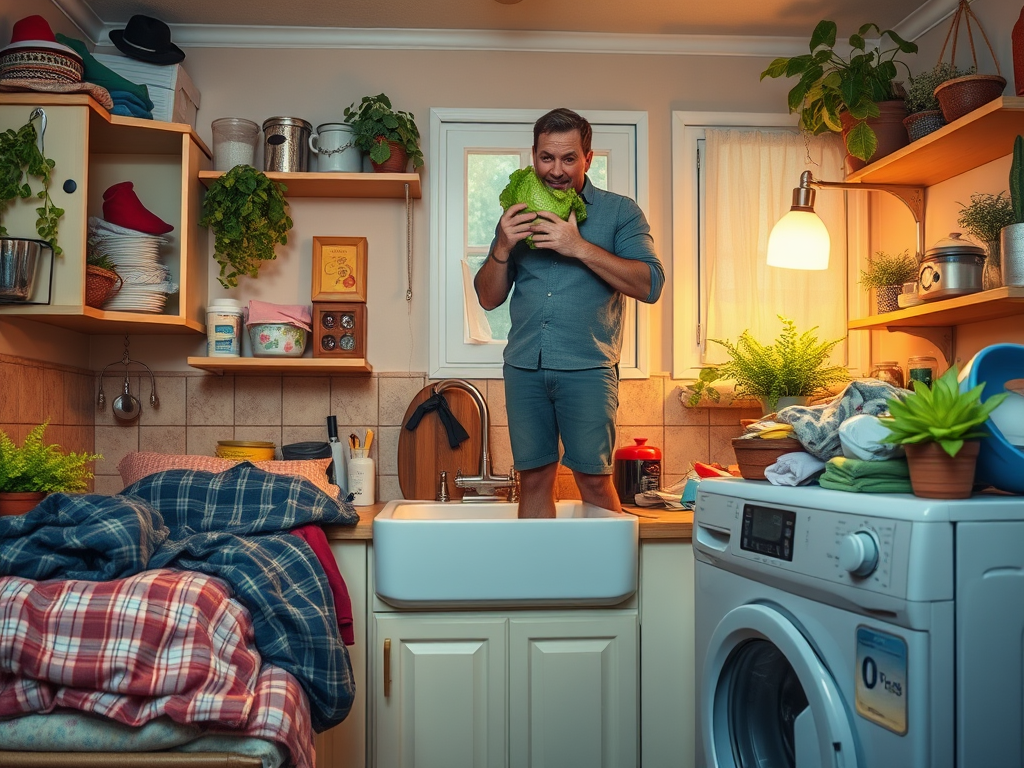
    This was not the grand design I had envisioned. No, the blueprint was to be a suave bachelor, just like my childhood idol, Uncle Norman from The Courtship of Eddie’s Father. At the ripe age of eight, I watched in awe as Uncle Norman demonstrated his revolutionary kitchen hack: why bother with dishes when you can devour an entire head of lettuce while standing over the sink? He proclaimed, “This way, you avoid cleanup, dishes, and the pesky inconvenience of sitting at a table.” In that glorious moment, I was struck with a revelation so profound it reshaped my entire existence. The Uncle Norman Method, as I would grandiosely dub it, became my life’s guiding principle, my personal beacon of satisfaction, and the defining factor of my existence for decades.

    Channeling my inner Uncle Norman, I envisioned a life of unparalleled convenience. My bed would be perpetually unmade because who needs sheets when you have a trusty sleeping bag? I’d never waste time watering plants—plastic ones were far superior. Cooking? Please. Cereal, toast, bananas, and yogurt would sustain me in perpetuity. My job would be conveniently located within a five-mile radius of my house, and my romantic escapades would be strictly zip code-based. Laundry? My washing machine’s drum would double as my hamper, and I’d simply press Start when it reached capacity. Fashion coordination? Not a concern, as all my clothes would be in sleek, omnipresent black. My linen closet would be repurposed to stash protein bars, because who needs linens anyway?

    I’d execute my grocery shopping like a stealthy ninja, hitting Trader Joe’s at the crack of dawn to dodge crowds, while avoiding those colossal supermarkets that felt like traversing a grid of football fields. 

    Embracing the Uncle Norman Way wasn’t just a new approach to dining; it was a radical overhaul of my entire lifestyle. The world would bow before the sheer efficiency and unadulterated convenience of my new existence, and I would remain eternally satisfied, basking in the glory of my splendidly uncomplicated life.

    Of course, it didn’t take long for my delusion to expand into a literary empire—or at least, that was the plan. The world, I was convinced, desperately needed The Uncle Norman Way, my magnum opus on streamlining life’s most tedious inconveniences. It would be part manifesto, part self-help guide, and part fever dream of a man who had spent far too much time contemplating the finer points of lettuce consumption over a sink. Each chapter would tackle a crucial element of existence, from the philosophy of single-pot cooking (aka, eating directly from the saucepan) to the art of strategic sock re-wearing to extend laundry cycles. I even envisioned a deluxe edition featuring tear-out coupons for discounted plastic plants, a fold-out map of the most efficient grocery store layouts, and, for true devotees, a companion workbook to track their progress toward the ultimate goal: Maximum Laziness with Minimum Effort™.

    Naturally, I imagined its meteoric rise to cultural dominance. Talk show hosts would marvel at my ingenuity, college professors would weave my wisdom into philosophy courses, and minimalists would declare me their messiah. Young bachelors, overwhelmed by the burden of societal expectations, would turn to my book in their darkest hour, finding solace in the knowledge that they, too, could abandon the tyranny of dishware and lean fully into sink-based eating. The revolution would be televised, one head of lettuce at a time.

    Uncle Norman’s “system” introduced me to Chewtality–the ruthless prioritization of caloric input over culinary pleasure, a lifestyle doctrine where taste, ambiance, and social norms are discarded like expired salad dressing. It’s the stoic efficiency of consumption that transforms meals into mechanical refueling sessions, often while hunched over a sink, shirtless, chewing with the urgency of a man on parole from dignity.

    Rooted in the gospel of Uncle Norman, Chewtality celebrates the unsentimental art of eating for sustenance and speed. Why savor when you can shovel? Why sit when you can hover? Why use plates when God invented hands and the stainless steel basin? This isn’t just a meal strategy—it’s a worldview: one where the blender pitcher is a chalice, the saucepan is a throne, and the lettuce head is both entree and ideology.

    In its highest form, Chewtality produces a false sense of superiority—an unshakable belief that your Spartan choices signify enlightenment, when in reality, you’ve just spent dinner crouched over the sink eating raw spinach like a raccoon with a library card.

  • The Curse of the Shamewich

    The Curse of the Shamewich

    I remember the day well. I was six years old as I trudged to Katherine R. Smith Elementary in San Jose, California, with three boys who would’ve made excellent talent scouts for the smell police. Usually, a Hostess Fruit Pie or pink Sno Ball made lunch a bright spot in my otherwise bleak existence, but not today. Today, the stench of rotten tuna wafting from my Captain Kangaroo lunch box was so potent it could’ve been classified as a biological weapon. My companions, gagging and accusing me of harboring a dead sea creature, demanded an explanation.

    Finally, I surrendered. We stopped in a field separating the Stop & Go Market from the school, and I opened the lunch box. There it was: the festering tuna sandwich, now a slimy, mayonnaise-coated abomination that had broken free from its plastic baggie and redecorated the inside of my lunchbox like a Jackson Pollock painting from a nightmare. We stared in horror at the black tuna juices, streaks of inky malevolence, and chunks of something unholy smeared all over the tin pail’s lining.

    “How could you eat that?” one boy asked, his voice a mix of pity and revulsion. I shrugged, resigned to my fate. It was my lunch, after all. So, I closed the lunch box, sealing the miasma inside, and we continued our grim march to school. I placed my lunch box alongside everyone else’s in the designated coat closet, a ticking olfactory time bomb among the innocent.

    Then came the Duck-and-Cover Drill. We crawled under our desks, awaiting the end-of-the-world announcement from the principal. But instead of nuclear annihilation, Mrs. Corey and the entire class were assaulted by a stench so vile it made everyone question their will to live. “Who brought a dead creature into my classroom?” she demanded, her forehead crinkling, nostrils flaring. Students squeezed their noses and made mock gagging noises, adding to the apocalyptic ambiance.

    The boys I’d walked to school with pointed at my lunch box, the source of the olfactory Armageddon. Mrs. Corey approached it like a bomb disposal expert, slowly opening the lid to reveal the horror within. She gazed at the contents as if she had just uncovered a portal to the underworld. “Did your mom pack this?” she asked, her voice tinged with disbelief and horror.

    I nodded. Mrs. Corey winced, a look of cosmic condemnation crossing her face, as if my entire bloodline was responsible for this culinary atrocity. She closed the lunch box with a finality that suggested she was sealing away a great evil, handed it to the teacher’s aide to place outside, and announced that my food was unfit for consumption. She then solicited volunteers to donate a part of their lunch to me, the pariah of the playground.

    Too mortified to eat, I sat on my blanket, avoiding the curious and horrified stares of my classmates. My appetite was dead, much like the tuna that had ruined my day. I remained on my blanket, and imagined I looked like David Draper in that Monkees episode. Rather than be a pathetic figure in need of charity, I would be a vision of glory and strength, the focal point of everyone’s admiration. My fantasy of walking like a Skyscraper among the Shacks of Mediocrity at the beach was interrupted by my stomach growling in protest at the cruel hand fate had dealt me.

    Little did I know, I had been cursed by the Shamewich–the deep, haunting sense of culinary disgrace one feels when a packed lunch goes rancid, rogue, or just plain weird—and becomes the epicenter of public ridicule. A Shamewich isn’t always a sandwich, but it’s always a moment—a sensory trauma in which your identity is temporarily replaced by the aroma of failure.

    It’s the rank stench of black tuna juice wafting from your Captain Kangaroo lunchbox. It’s the entire class gagging under their desks while your lunch gets escorted out like a radioactive crime scene. A Shamewich is not just what you eat—it’s who you become in the eyes of your peers: the one whose mother packed a biohazard in bread.

    Symptoms include:

    • Desire to sink into the floor or self-immolate
    • Permanent suspicion of mayonnaise
    • Fantasies of reinvention as a muscle-bound hero from The Monkees
    • Never bringing tuna to school again unless you’re ready to own the nickname “Fish Bomb”

    A Shamewich leaves an emotional stain long after the mayonnaise has been wiped clean. It’s not just a bad lunch—it’s a rite of passage.

  • How 60s TV Gave Us Kibblelust

    How 60s TV Gave Us Kibblelust

    As a kid in the 1960s, I was utterly mesmerized by the tantalizing dog food commercials on TV. Gaines-Burgers, those succulent patties that looked like ground hamburger, and Gravy Train nuggets, which magically transformed into rich, brown gravy with just a splash of water, had my salivary glands working overtime. It was clear that the advertisers had one devious goal: to make dog food so visually appealing that even humans would crave it. And did they succeed.

    I marched up to my dad one day, eyes wide with canine envy, and declared that I wanted to be a dog just so I could savor these advertised delicacies. His face twisted in confusion, then horror, and then a resignation that only a parent can truly master. Determined to cure me of my bizarre wish, he whisked me off to a local bistro and ordered me a French Dip with au jus sauce.

    As the sandwich arrived, dripping with savory goodness, my dad leaned in and asked, “So, how do you like your French Dip?”

    I took a bite, my taste buds doing a happy jig, but instead of expressing my appreciation like a normal human child, I couldn’t resist. I let out a guttural growl, dropped to all fours, and began scratching an imaginary itch with my hind leg, much to the mortification of my father and the bewilderment of the bistro patrons.

    Dad’s face turned a shade of crimson that would have made a ripe tomato jealous. He sighed deeply, clearly questioning his life choices, while I continued my canine performance, convinced that I had discovered the next best thing to Gravy Train. It was then that I realized: the allure of dog food had turned me into a French Dip-devouring, itch-scratching spectacle of childhood absurdity.

     The irrational, often childhood-onset hunger triggered by the hyper-curated presentation of pet food in commercials—particularly dog food stylized to look more appetizing than anything in your pantry. Kibblelust is not mere curiosity; it’s a visceral craving born from the fantasy that somewhere, out there, dogs are eating better than you are.

    Sufferers of Kibblelust may experience symptoms such as food envy toward canines, a desire to bark in public, or in extreme cases, dropping to all fours in a bistro after biting into a French Dip, convinced it’s the closest a human will come to Gravy Train transcendence.

    This condition typically begins with 1960s-70s advertising campaigns involving burger-shaped meat slabs and gravy-generating pellets and is usually cured by a parent’s panicked intervention and a stern lesson in food hierarchy.

    Kibblelust represents the first great betrayal of consumer trust: when you realize advertisers are not above making animal food look better than human cuisine—and you fell for it.

  • Cartoon Eve and the Algorithmic Hangover

    Cartoon Eve and the Algorithmic Hangover

    In the early ’70s, the network execs at ABC, CBS, and NBC pulled a marketing move so manipulative it should’ve been illegal under the Geneva Conventions. On a hallowed Friday night in the month of September, they handed kids a psychic dog biscuit: a glittering preview of Saturday morning’s new cartoon lineup. As a nine-year-old, I’d sit cross-legged in front of the TV, slack-jawed and vibrating, watching grainy flashes of The Bugaloos and H.R. Pufnstuf like I was being shown a trailer for heaven. It was less of a preview and more of a grilled Ribeye waved under my nose by a smiling sadist who tells me breakfast is in 12 hours.

    Sleep was not an option on Cartoon Eve, a night more sacred than Christmas, Easter, and your grandma’s funeral combined. I’d lie in bed thinking, What if I sleep in? What if I miss the premiere of Lidsville? What if, in a moment of tragic miscalculation, I eat my Cap’n Crunch in the kitchen instead of the TV room and lose valuable viewing seconds? These were the pre-digital days—no DVR, no YouTube, no forgiveness. If you missed it, you missed it. You could cry, but the cathode ray tube did not care.

    The masterminds behind these shows weren’t just marketers—they were psychological arsonists, setting fire to our dopamine circuits before we were old enough to spell serotonin. They didn’t just sell cartoons. They sold Tang, Danish Go-Rounds, and Pillsbury Space Sticks with the breathless urgency of black-market opioids. The shows started at 7 a.m. and ran till 11, but by 10 I’d start to feel queasy. I’d hear the crack of a baseball bat outside and realize I was sitting in a dim living room while my real childhood was playing third base across the street. That’s when the guilt set in—the primal, shame-soaked knowledge that I was trading sunshine and scraped knees for anthropomorphic cereal mascots and animated product placement.

    Eventually I’d fling off my pajamas like a molting larva, throw on jeans, and bolt out the door, desperate to reclaim the morning before it calcified into regret. Childhood, I realized, was a loop of anticipation, overstimulation, and the fear of having made the wrong choice.

    But compared to today’s chaos, that quaint Saturday-morning psychodrama feels like a gentle massage from Mr. Rogers. Social media is Cartoon Eve with weapons-grade dopamine—a psychic arms race where even adults devolve into sweaty, wide-eyed nine-year-olds, tapping their screens like they’re trying to summon a cartoon genie.

    After a decade of scrolling, I’ve pulled the plug. I’ve cut back my digital exposure by 97%, and what’s left is like being a shell-shocked tourist floating down the Amazon on a deflating raft, watching piranhas in mid-frenzy shred a water buffalo. It’s gruesomely riveting, but it fries your soul and robs you of original thought. Now, like millions of others, I am in post-social media convalescence—pale, twitchy, and unsure if I’ll ever feel real sunlight again.

    But one thing’s for certain: I don’t miss the Space Sticks.

  • The Undying Curiosity of a Reluctant Earthling

    The Undying Curiosity of a Reluctant Earthling

    About ten years ago, I found myself standing on the sun-scorched lawn outside the campus library, chatting with a colleague who was edging into his sixties. I was freshly minted into my early fifties, just far enough along to start scanning the horizon for signs of irrelevance. Naturally, our conversation slid into that black hole topic older academics can’t resist: retirement—or, as my colleague eloquently rebranded it, “a form of extinction.” According to him, the day you stop teaching is the day your name starts sliding off the whiteboard of history. You don’t just stop working—you vanish. The world changes its locks, and your keycard stops scanning.

    From there, the conversation took its next logical step—death. And that’s when I said something that was equal parts earnest and glib:
    “Even at my lowest, most gut-punched moments, I’ve always had this strange, burning desire not only to live—but to never die.”
    Why? Because I am possessed by a compulsive need to know how it all turns out.

    On the grand scale:
    Was Martin Luther King Jr. right? Does the moral arc of the universe really bend toward justice—or is it more like a warped coat hanger, twisted in a fit of cosmic indifference?
    Will humanity eventually outgrow its primal stupidity and evolve into a species guided by reason?
    Or will we just become meat-bots—part flesh, part firmware—hunched under the cold glow of the Tech Lords who now sell us grief as a service?
    Will thinking, one day, come in capsule form—a sort of Philosophy 101 chewable tablet for those who can’t be bothered?

    But my curiosity isn’t all grandiloquent and philosophical. I want to know the dumb stuff, too.
    Who’s going to win the Super Bowl?
    What will dethrone the current Netflix darling?
    Who will succeed Salma Hayek as the reigning goddess of unattainable beauty?

    Like every other poor soul conscripted onto Planet Earth, I didn’t ask to be born. But now that I’m here, uninvited and overcommitted, I can’t help it—I want to see how this mess plays out.

    Still, I sometimes wonder: Am I just a naive late bloomer clinging to a plot twist that isn’t coming?
    Is there some ancient nihilist out there—smoking hand-rolled cigarettes and muttering aphorisms in a grim little café—who would look at me and sneer, “What’s the fuss, kid? It’s all the same. Same story, different soundtrack.”

    Maybe.
    But I think there’s a stubborn ember in me that keeps expecting irony to trump monotony, that believes the cynic’s spreadsheet of life’s futility has a few formula errors. Maybe my refusal to give up on surprise is what keeps my inner candle burning.

    And maybe, just maybe, that makes me an optimist in exile—still walking the fence between wonder and weary resignation, while the true cynics stand on the other side, arms crossed, whispering,
    “Don’t worry, you’ll be like us soon enough.”

  • Field-Testing FOMO: A Preteen Cautionary Tale

    Field-Testing FOMO: A Preteen Cautionary Tale

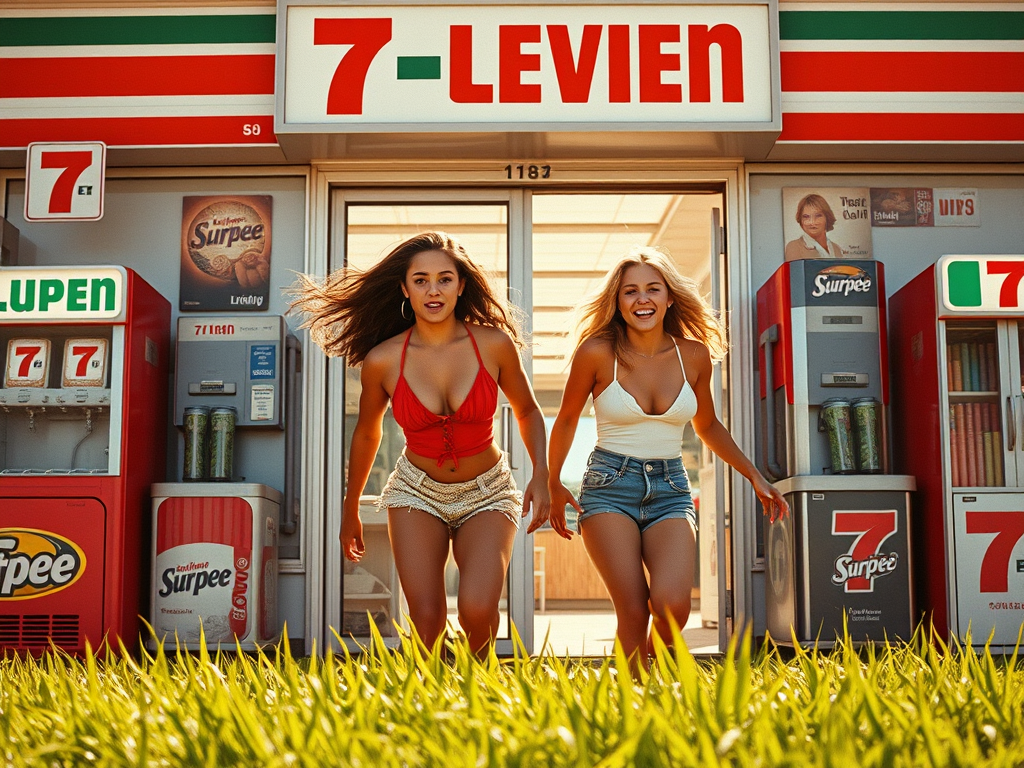
    One warm California afternoon in the spring of 1973, after sixth-grade classes had spit us out like a bad punchline and the school bus rumbled off down Crow Canyon Road, my friends and I embarked on our sacred post-school ritual: a pilgrimage to 7-Eleven to score a Slurpee before the long, punishing hike up Greenridge Road. Inside that fluorescent-lit temple of artificial flavors, “Brandy (You’re a Fine Girl)” crackled from the tinny store radio, bouncing off racks of bubble gum, jerky, and preteen dreams.

    That’s when the Horsefault sisters burst through the door like a blonde tornado.

    They were tall, freckled, sunburned Valkyries from the far reaches of suburban myth—bohemian chaos in halter tops. One was an eighth grader; the other, a high school sophomore with the kind of don’t-care confidence that could collapse a twelve-year-old boy’s worldview with a single sideways glance. They lived in a crumbling farmhouse behind the store, surrounded by the ghosts of chickens and a rumored pony.

    “Wanna see a rabbit in a cage?” the younger one asked, her grin full of bad intentions and orthodontic defiance.

    I didn’t care about rabbits. I cared about girls who looked like they had stepped out of a beer commercial set in a wheat field. And so I followed, fully aware I was marching into a trap and fully unable to care.

    The promised rabbit, of course, was a fiction. There was only a rusted cage yawning open like a rural Venus flytrap and the pungent perfume of hay, alfalfa, and whatever was left of last week’s poultry. The ambush was swift. The sisters descended with whoops and laughter, a feral tag team of dusty mischief trying to stuff me into the iron cage like I was tomorrow’s 4-H exhibit.

    I fought back. I was stocky, wired with sixth-grade testosterone and Charles Atlas dreams. We tumbled in the grass in a chaotic montage of limbs, dust, and feathers—a scene less like a flirtation and more like a deleted sequence from Deliverance if Deliverance had a laugh track.

    Eventually they gave up, giggling, breathless, their cheeks streaked with dirt and conquest. I bolted through the field, leaving behind my Slurpee and what might’ve been the preamble to an adolescence worth bragging about.

    But here’s the thing: they never kissed me.
    They never flirted. Never winked or smirked in that conspiratorial way older girls sometimes do when they’re letting you in on a secret you can’t yet handle. They tried to lock me in a cage and laughed when they couldn’t. That was it.

    And that—not the dirt, not the missing rabbit, not the poultry apocalypse—is what still lingers decades later: the almost. The sense that something wild and electric passed me by, and I walked away not transformed but merely dirty.

    That was my first real encounter with FOMO—before the word existed, before social media turned it into a lifestyle disorder. The regret wasn’t that I was almost caged. It was that I didn’t emerge with a story soaked in danger and romance. I didn’t get the wink. I didn’t get the kiss. I didn’t get them.

    I went home and turned on the TV to find Barbara Eden cooing in her harem pants, still radiant, still unattainable, still safely contained in her bottle. And I realized that day: I didn’t want to summon Jeannie. I wanted to be summoned—chosen, winked at, whispered to. But the Horsefault sisters were not granting wishes. They were disrupting ecosystems and giving boys premature nostalgia.

    And I, poor idiot, had missed my moment.