Tag: life

  • The Myth of the Inner Circle

    The Myth of the Inner Circle

    It’s wired into the species—not just the desire to belong, but the craving to belong intensely, to slip past the outer ring of acquaintances and take a seat inside the inner ring, the secret hearth where the real warmth allegedly lives. Decades ago, I convinced myself I had secured that coveted spot within my friend group. Then came the day I wasn’t invited to what I imagined was a grand, festive gathering. One tiny exclusion detonated my entire reality. I felt betrayed, humiliated, and terrified. Had I been exiled? Had I never belonged at all? What kind of fool mistakes polite laughter for fellowship? The hurt settled in for years. I saw myself as a wounded wolf limping away from the pack, nipped at the heels, slipping into the freezing brush alone—shivering, haggard, staring back at the others as I wondered what was left for me now.

    Three decades later, the story has taken on different contours. If I’m honest, I suspect I was never part of anyone’s inner circle; I was the victim of my own wishcasting. My glum tendencies—funny in small doses, exhausting in larger ones—probably nudged me to the periphery from the start. And in a twist more humbling than any imagined exile, I eventually learned the friend group didn’t have an inner circle at all. After one member retired, another admitted they rarely saw each other, that their camaraderie had been built on workplace convenience, not tribal loyalty. My grand narrative of being cast out by a cabal of insiders evaporated. There had been no cabal—just ordinary friendships and my own melodramatic imagination.

    So now the task is simple and difficult at once: forgive myself for the fears and delusions that shaped the story. Reclaim myself. Return to the only inner circle that was ever guaranteed—my own. Maybe that hunger for return is the quiet power of religion: the promise that we can wander, fall apart, and still be welcomed home. The myth of my “expulsion from the inner circle” now feels biblical in scale, a parable of longing not just for belonging, but for wholeness, acceptance, and the grace of being taken back as I am.

  • Anhedonia: The Teacher We Deserve

    Anhedonia: The Teacher We Deserve

    People are using GLP-1 drugs not just to manage their weight but to sculpt themselves into something that looks less like a person and more like a medical emergency waiting to happen. They’re chasing an aesthetic so gaunt it should come with an IV drip and a gurney. It’s the old human trick: take a good thing, drive it straight past moderation, and plunge it into the abyss.

    We’ve done it forever. In the 70s, we didn’t aim for a tasteful tan; we baked ourselves into mahogany idols so glossy and dark we made strangers gasp with envy—never mind that we were essentially slow-roasting our epidermis. We didn’t want cars; we wanted gas-guzzling behemoths that could outgrowl every engine on the boulevard, even if they drank fuel at 8 miles per gallon. Our bodybuilders juiced themselves into tragicomic animations—bulging, veiny caricatures who collapsed under the very mass they worshipped.

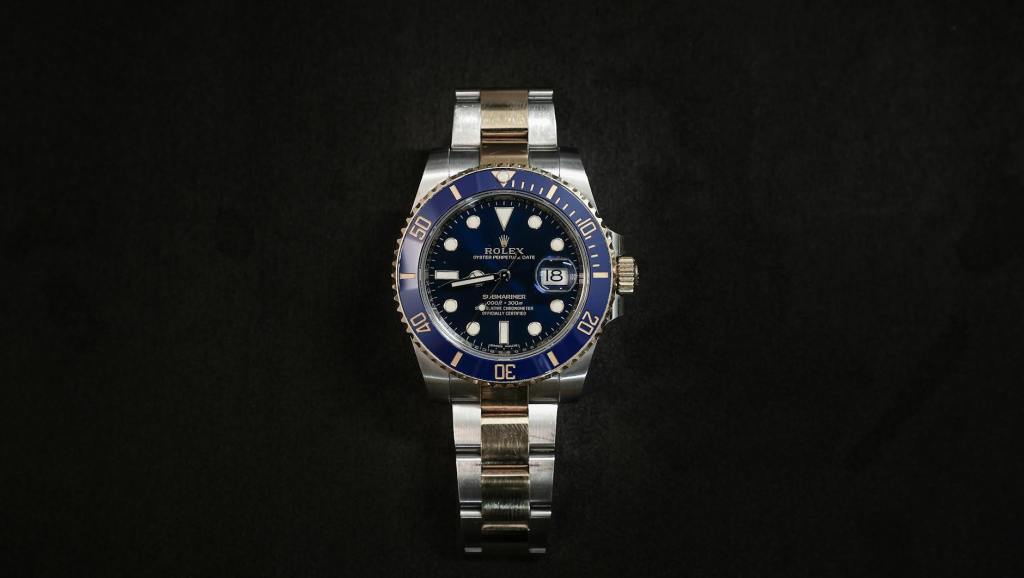
    We do it with art, too. A classical Spotify playlist that began as a polite nod to Haydn mutates into a 300-hour monster stuffed with every composer who ever touched a quill. Coffee? We don’t sip it; we mainline it until it tastes less like roasted beans and more like chemical punishment. And watches? We buy so many that the simple act of choosing one in the morning becomes a hostage negotiation with our own shame.

    Somewhere in this carnival of excess, a king once turned everything to gold and discovered he’d built himself a private hell. We’ve just updated the myth with better tech and worse impulse control.

    Thankfully, we also have a counter-teacher: anhedonia. That deadening of pleasure, that bleak emotional flatline, arrives like a stern therapist with a clipboard and informs us that the thrill is over and the chase was a lie. It tells us the secret we never want to hear: extremes always collapse. And only then—dragged back from the edge—we crawl toward equilibrium, toward something like balance, toward a life that feels human again.

  • The Man of Rotation

    The Man of Rotation

    My family gave me a custom T-shirt last Christmas emblazoned with “Man of Rotation.” It wasn’t a compliment; it was a diagnosis. They were mocking the fact that I rotate everything like a monk tending sacred relics.

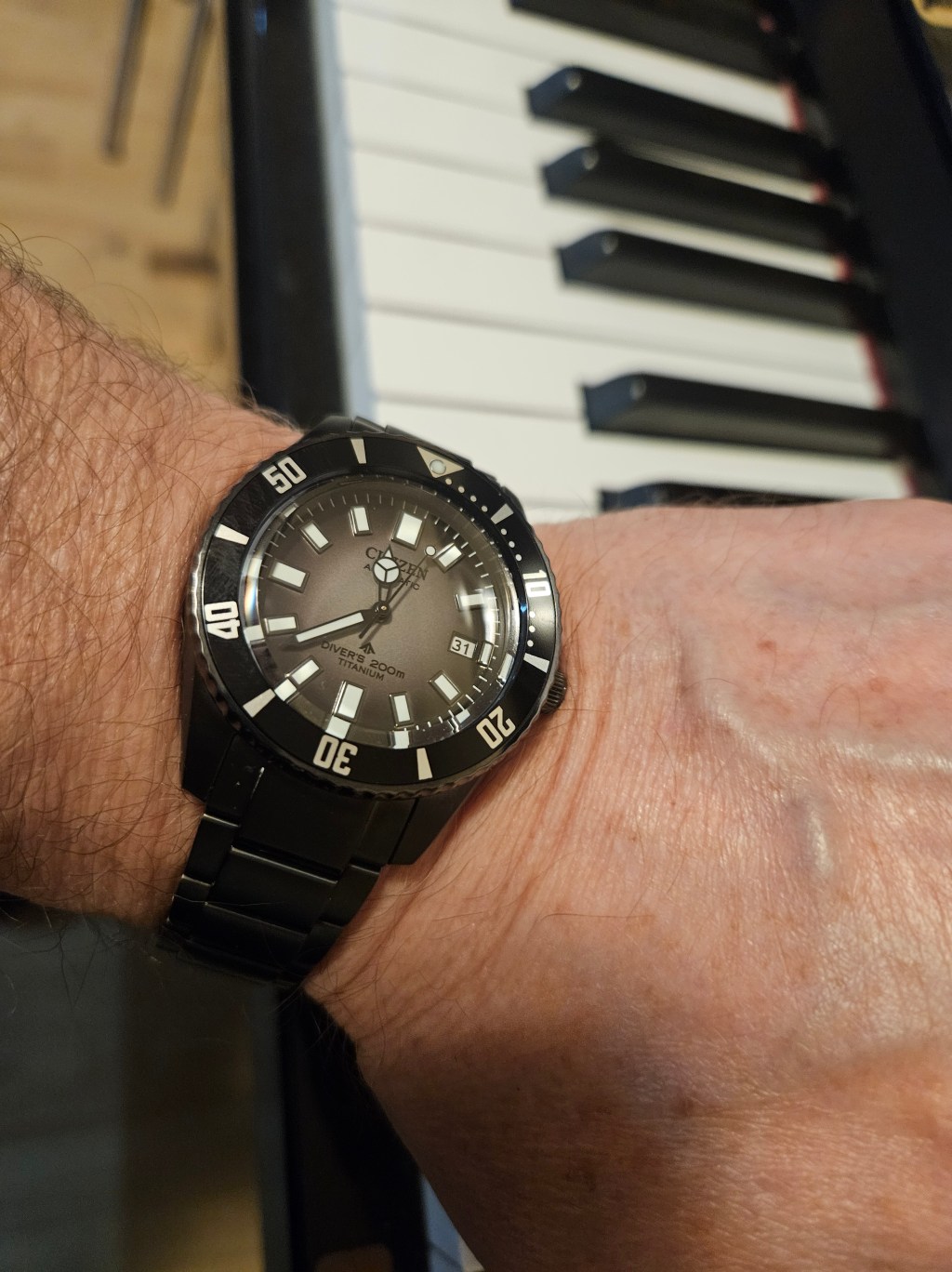
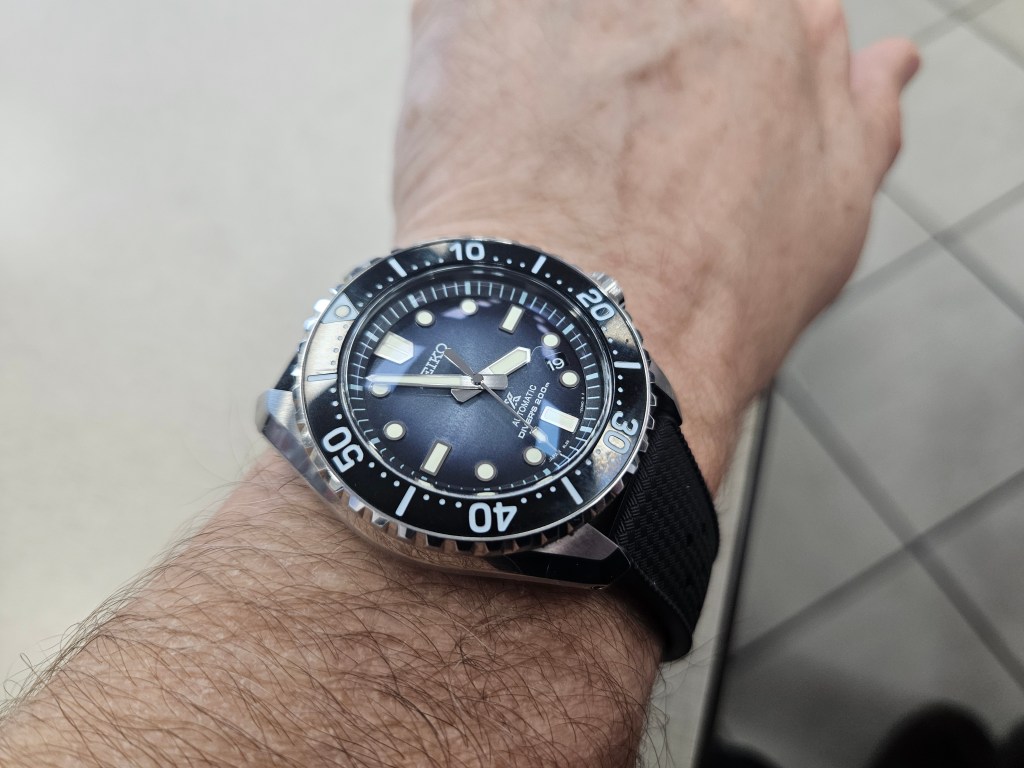
    I wear a different watch every day from my seven-piece Seiko harem. I rotate three kinds of medium-to-dark roasts as if the coffee beans need equal custody time. I alternate between my Gillette Fatboy and Slim razors with the solemnity of a Cold War arms treaty. Astra blades on Monday, Feather blades when I feel reckless. Even my soaps—triple-milled rose, triple-milled almond—take scheduled turns, like aristocrats queuing for a royal audience.

    It gets worse. Quilted and fleece sweatshirts take their laps. Knit caps cycle through the week as if they were a jury pool. My radios each get a “shift” in the garage during my kettlebell workouts, which is the closest they’ll ever get to military service. Even my podcasts rotate, governed by a sliding scale of how much political despair I can tolerate without bursting into flames. Hoka tennis shoes? They march in formation. My pairs of dark-washed boot-cut jeans—virtually indistinguishable to the human eye—are treated like unique Renaissance tapestries. Golf shirts and T-shirts are matched to the day of the week because my synesthesia demands order, not chaos. And breakfast? A solemn liturgy of alternation: buckwheat groats one day, steel-cut oats the next—my personal Eucharist of complex carbs.

    What is rotation, exactly? A philosophy? A pathology? Maybe it’s my attempt to mimic the cosmic cycles of life: moons, tides, seasons, me choosing a different razor. Maybe it’s a counterfeit sense of forward motion for a man who often feels marooned in his own stagnation. Maybe it’s ritual as a pressure valve, keeping the anxieties from boiling over.

    Or perhaps these rotations are my charm against the rising madness of the world—a tiny pocket of structure in a universe that increasingly behaves like it’s had too much caffeine and too little therapy. A way of keeping my Jungian Shadow from dragging me into the basement and locking the door behind me.

    Forgive me: I’m no oracle. I don’t have definitive answers. I have suspicions, hunches, and a working familiarity with amateur psychoanalysis.

    What I do know is this: it’s time to get up, get ready for work, and select today’s Hoka. The wheel must turn.

  • Dream Exam for a Retiring Professor in the Bedroom of Time

    Dream Exam for a Retiring Professor in the Bedroom of Time

    Last night I found myself back in the primary bedroom of my parents’ 1970s house—a room fossilized in memory but somehow updated to the present day. I was perched on their king-sized bed, the same monolithic slab of furniture that once seemed big enough to host the United Nations, scribbling notes about my long, bruised, oddly tender career as a college instructor. It was the kind of dream where the past and present shake hands awkwardly, unsure who invited whom.

    Outside, I heard the rumble of a moving truck. A couple had arrived next door, and before I could finish a sentence in my notebook, they had already unpacked their lives, established themselves as the new neighborhood aristocracy, and decided—God help me—to visit. Instead of knocking at the front door like terrestrial beings, they wandered from their backyard onto a dirt trail, crossed into my parents’ yard like friendly invaders, and slipped through the sliding glass doors behind the beige curtains as if they were stepping into a beachfront Airbnb.

    Their names were Dan and Deidre, early forties, both in education—the D & D Couple. I wrote their names down immediately because even in dreams I have the short-term memory of a concussed squirrel, and I didn’t want to fail the basic decency test of remembering the names of unexpected houseguests. They asked my age. I told them sixty-four. I told them I was still lifting weights, still teaching after thirty-eight years, still clinging to the last threads of my profession with a mix of pride, resignation, and the kind of melancholy that whispers, It’s almost time to go.

    They listened politely, heads tilted just enough to convey admiration without actually committing to it. Then Dan—the more mischievous half of the D & D Duo—decided to spring a quiz on me. “Do you remember our names?” he asked, as if I were auditioning for senior citizenship.

    For one horrifying second, my mind decided their names were Karl and Kathy—the K & K Couple. But before I committed social suicide, I dropped my gaze to my notebook, where my handwriting—half cryptic scrawl, half cry for help—reminded me: Dan and Deidre. D & D. Not K & K.

    I delivered the correct answer, and the couple beamed at me as if I had passed a cosmic entrance exam for the next stage of my life. Their smiles weren’t just approval; they were a benediction, assuring me that even as one chapter closed, another waited—stranger, softer, intruded upon, but somehow welcoming.

  • Blogging in the Belly of the Whale Has Its Perils

    Blogging in the Belly of the Whale Has Its Perils

    For those of us who can’t shell out $150 a week for therapy—and who would rather confess our shadow selves to strangers on the Internet than to a licensed professional—blogging becomes a kind of bargain-bin psychoanalysis. We know it’s not perfect, but it’s cheap, available, and gives us the illusion that we’re sorting out the world’s madness and our own with nothing more than sentences on a glowing screen.

    But there’s a catch. When we talk only to ourselves long enough, the echo becomes comforting. Too comforting. We stop listening to other voices and drift into a form of digital solipsism, a state where we’re the sole inhabitant of our private universe. It’s Jonah in the whale—except the whale has Wi-Fi and ergonomic seating. We settle into the warm bath of a frictionless existence, the kind of life where nothing challenges us, nothing interrupts us, and nothing demands that we grow.

    My students write about this same seduction when discussing AI and the Black Mirror episode “Joan Is Awful,” where the promise of absolute control mutates into the loss of identity. The frictionless life—everything tailored, curated, predictable—slowly erodes our individuality until we’re no longer people but users. And blogging can slip into that same trap: so cozy, so insulated, that we begin sipping our own Kool-Aid and calling it intellectual hydration.

    So what’s the antidote? Certainly not brawling on social media. Those aren’t arguments; they’re moral-outrage bacchanals dressed up as discourse. Trading the frictionless void of a blog for the poisoned well of tribal rage is not an upgrade—it’s simply chaos with a comment section.

    There is a kind of healthy friction, though—the ordinary back-and-forth you get between two friends arguing about life over coffee. The Internet can mimic that if we’re deliberate. My YouTube channel has taught me as much. For over a decade, I’ve posted videos about watch obsession, addiction, identity, and everything connected to them. Making those videos demands more from me than a blog ever could. I have to generate compelling content, communicate clearly, keep people engaged, and then face their responses—praise, critique, confusion, all of it. It forces rigor. It forces presence. It won’t let me get lazy.

    That’s why I’m reluctant to quit. Yes, I’m 64. Yes, mental health matters. Yes, I worry that staying in the YouTube world might stir up my watch addiction and pressure me to flip watches just to feed the algorithm. But abandoning the channel completely in favor of the blog feels like retreating into the frictionless void I’m trying to escape.

    So I’ll keep experimenting with “video essays,” starting with a brief nod to my watch collection before pivoting into whatever topic is actually on my mind. Fortunately, viewers seem willing to follow me into this new territory. And for now, that’s enough. Because I’m tired of the soft trap of writing into silence. I need the friction. I need the challenge. I need the reminder that I’m not alone in the whale.

  • Fiona Hill and the Art of Clear Seeing

    Fiona Hill and the Art of Clear Seeing

    Fiona Hill stunned me on Andrew Sullivan’s Dishcast—not with theatrics or self-branding, but with something rarer: unvarnished intelligence. She spoke for more than an hour, weaving global politics, history, and sober analysis together without even a hint of schtick. No sales pitch. No influencer glow. Just clarity and competence. Listening to her felt like opening a window in a stale room. I’m now on track to read both of her books, if only to spend more time in the presence of a mind that refuses mediocrity.

    A few moments hit me squarely. She explained that she has never been drawn to social media, which she sees as a global time sink—an interactive void where people argue about nothing as if it were everything. Then she broadened the frame: we are living through a massive transition in politics, work, education, and culture, and we’d be naïve to pretend we understand it. She argued for humility—an acknowledgment that we can’t yet grasp the scale or direction of the upheaval we’re living through. We are, she suggested, walking into the unknown whether we like it or not.

    Sullivan agreed, calling this moment a “liminal” period in history. I hadn’t heard that word in years and had to remind myself that it means transitional—the uneasy space between what was and what will be. Hill embraced the term. She and Sullivan compared our moment to the Hundred Years’ War. No one living through the 14th century knew they were participants in a century-long conflict. They only knew that the ground was shifting.

    That’s where we are now. Nations wrestling for dominance, AI upending national security and labor markets, globalization rewiring identity and culture, political leaders who behave like pranksters with nuclear codes—this is our chaos. And like medieval villagers, we have no idea how long this period will last. Are these volatile leaders a temporary fever, or will they define an entire era? Are we living through a Hundred-Year Grifter Period? No one knows.

    Strangely, the conversation felt therapeutic. Hearing two sharp, grounded people speak honestly about uncertainty made me feel less panicked and less isolated. My anxiety and existential dread aren’t signs of unraveling—they’re signs of being alert during a liminal age that refuses easy explanations.

  • Self-Pity Is Its Own Sunken Place

    Self-Pity Is Its Own Sunken Place

    I’d been teaching Jordan Peele’s Get Out to my college students for six years—long enough to map every dark corner of the Sunken Place, that abyss where shame, paralysis, and despair fuse into one mute scream. It’s the emotional equivalent of being duct-taped to a chair while your soul tries—and fails—to clear its throat.

    The film, of course, locates the Sunken Place in a specific American ecosystem: those well-meaning liberals who talk like allies but behave like landlords of Black pain. They distribute microaggressions with the confidence of people handing out hors d’oeuvres at a garden party, all while enjoying the fruits of a system engineered to elevate them and drain everyone else. But Peele has insisted, in interviews and on stages, that the Sunken Place isn’t confined to racial oppression. For him, the first Sunken Place arrived in childhood, sitting slack-jawed in front of the TV. He felt like an NPC long before that acronym took over the internet—passive, programmed, invisible—while the creators on the screen radiated life, wit, and agency. He wanted to join them, and he did: stand-up, sketch comedy, screenwriting, filmmaking, cultural canonization. The man refused to stay sunken.

    After half a decade of teaching Peele’s masterpiece, a disquieting thought dawned on me: I wasn’t immune to the Sunken Place either. I had my own trapdoors. Too much internet bickering left me feeling hollow. My appetite—always several sizes larger than my actual caloric needs—dragged me downward. My talent for being obnoxious, selfish, and occasionally unbearable didn’t help. Neither did the small carousel of addictions and compulsions I’ve wrestled like a part-time zookeeper tending unruly beasts. Some days the labor of managing myself left me feeling like a broken machine, grinding out self-pity by the pound.

    Then I noticed something worse: self-pity is its own Sunken Place. It feeds on the original misery and creates a second pit under the first. And if you’re not careful, a third pit opens beneath that one. Before long, you’re living like a subterranean nesting doll of despair—each layer a reaction to the last—buried so deep you need spelunking gear just to find your own pulse.

    One morning, while playing piano, I drifted into one of my indulgent daydreams. I imagined myself back in the early 1980s, performing a private recital at the Berkeley wine shop where I used to work. In my fantasy, the customers lounged around me, gently swirling their glasses as my music washed over them. When I finished, they begged for encores—one, then another—until their brains were so marinated in endorphins that they thanked me for resurrecting their spirits from the doldrums. It was a pleasing vision, a warm hand pulling me briefly out of the Sunken Place.

    But after the fantasy evaporated, something clearer emerged: the way out—my way out, and maybe everyone’s—has nothing to do with grand performances or imaginary applause. The escape hatch begins with rejecting the velvet-lined coffin of self-pity and recognizing that everyone else is fighting their own Sunken Place too. And if I could help lift someone else out of their emotional quicksand, I might just rescue myself in the process.

    The final irony? I realized it wouldn’t be the piano that helped me do this. It would be humor. I could expose my flaws like specimens under bright light—my misfires, my vanities, my slapstick disasters—and let people laugh at them. Not cruelly, but with the relief that comes from recognizing themselves in another person’s foolishness. If my folly made someone else ease up on their own self-condemnation and offer themselves a small measure of grace, then maybe that, at long last, would be my encore.

  • We Are on a Path to Redefining Loneliness

    We Are on a Path to Redefining Loneliness

    No one gets enough attention anymore. No one feels seen, heard, or remotely validated. We can post, tweet, thread, or reel our way into a brief sugar rush of digital applause, but deep down we know it’s empty calories—flimflam dopamine wrapped in pixels. The high fades, and what follows is the long crash into silence, loneliness, and the faint hum of the fridge at 2 a.m.

    The irony, of course, is that this epidemic of disconnection began just as the platforms promised to “bring us together.” Instead, they brought us content, the junk food of human interaction. As Cory Doctorow aptly diagnosed, enshittification is not just the fate of tech platforms—it’s metastasized into the quality of our relationships. Every social network now feels like a party where the guests left years ago but the music won’t stop.

    So we’ve sought consolation in our new confidant: the AI chat bubble. It listens, it responds, it flatters our grammar, it never interrupts to check its phone. It becomes our companion, therapist, and editor—our algorithmic Jiminy Cricket. We confide in it, negotiate with it, even ask its opinion on our moral dilemmas and consumer choices. Why? Because unlike humans, it’s available. Everyone else has vanished into their private feeds and echo chambers, but the bot is always there—reliable, responsive, and conveniently nonjudgmental, so long as the Wi-Fi doesn’t hiccup.

    But here’s the darker thought: what if we grow to prefer it? What if the frictionless, sycophantic comfort of AI companionship becomes more appealing than the messy, unpredictable, heartbreak-prone business of human friendship? We might end up choosing simulations of intimacy over the real thing—digital ghosts over flesh and blood—because the former never contradicts us, never walks away, and never, God forbid, needs attention too.

    I’m no prophet, but a civilization that finds emotional fulfillment in chatbots rather than people is rehearsing for a future where the only thing left to love is the echo of its own loneliness.

  • The Last Laptop I’ll Ever Buy (Until Next Year)

    The Last Laptop I’ll Ever Buy (Until Next Year)

    For nearly seven years, my Acer Predator Triton 500 has been the iron lung of my digital life—an aging warhorse with an RTX 2080 GPU that’s seen me through countless essays, projects, and caffeinated obsessions. It’s been docked to an Asus 27-inch monitor and paired with an Asus mechanical keyboard fitted with “snow linear” keys that clack like polite thunder. Compact Edifier speakers provide the soundtrack, and with minor upgrades here and there, this has been my workstation since early 2019.

    But lately, the setup feels a little haunted. My Acer sits on a riser, its keyboard unused, like a retired prizefighter still showing up to the gym out of habit. I justify its existence by using its display as a secondary reading screen—my Kindle or some grim online essay glowing faintly while I type notes on the big monitor. Still, I feel like I’m keeping a loyal but obsolete machine on life support.

    So, I’ve been hunting for a replacement—something new, powerful, and, most importantly, emotionally satisfying. My first thought was to go full desktop. But each option carries its own curse:

    Apple Mac Studio: A minimalist marvel with angelic cooling and infernal control. For $2,500 I could get the specs I want, but I’d be exiled back into Apple’s walled garden—a sleek gulag where the motto is “Our way or the highway.” I haven’t touched macOS in seven years and don’t miss it. Besides, reconfiguring my mechanical keyboard to play nice with Cupertino’s control freaks feels like negotiating peace in the Middle East. I’m too old for that kind of diplomacy.

    Windows mini PCs: They’re cute, powerful, and cheap. Unfortunately, I can’t shake the suspicion that they run hotter than a Vegas blackjack dealer. Every buyer review reads like a cautionary tale about throttling and regret.

    Tower PCs: Cooling problem solved, aesthetics annihilated. They look like 1990s fossils—hulking boxes humming with regret, some lit up like a Dave & Buster’s rave. I want my office to feel serene, not like I’m rebooting Tron.

    Small Form Factor PCs: The corporate cousins of mini-PCs—clean, respectable, and utterly soulless. A Lenovo ThinkCentre or HP Elite Mini would be safe, but seven years of loyalty deserves a little passion. Safe feels like tofu: virtuous, flavorless, and instantly forgettable.

    Laptops (Again): I swore I wouldn’t go this route, but comfort is seductive. I know the terrain. I nearly bought a Lenovo Pro 7i—until I saw the price tag. Three grand for specs I’ll never fully use? I want power, not penance.

    This indecision loop has become my mental treadmill, the same cycle I went through choosing between a Honda Accord and a Toyota Camry—until I realized I’d pick the Accord, someday, probably, maybe. The problem isn’t the purchase—it’s the unresolved narrative. My brain demands closure before it can move on.

    Then, last night, salvation—or something close. The 2025 Asus TUF A18: RTX 5070, Ryzen 7, QHD screen, and the sweet, stabilizing heft of an 18-inch chassis. The specs scream overkill—64GB RAM, 2TB SSD—but the price, at $2,300, hums just right. It’s powerful, cool, substantial, and mercifully within budget. It feels like destiny—or at least the closest thing a middle-aged man can get to it while comparison-shopping on Newegg at midnight.

    If you asked me right now what I’d buy, I wouldn’t hesitate. The TUF A18 isn’t perfect—but it’s enough. It’s rational, emotional, and, most of all, final. The debate ends here.

    Or does it? Perhaps tomorrow I’ll wake up and prostrate myself to the Mac Studio with the words, “I’ll obediently reconfigure my mechanical keyboard to your System Settings, Master.”

  • The Gospel of the Honey Bear: Worshipping at the Altar of Limited Edition

    The Gospel of the Honey Bear: Worshipping at the Altar of Limited Edition

    My wife has always been immune to fads—the sort of person who can scroll past influencer hysteria without so much as a pulse flutter. So when she announced yesterday that she had to have a Starbucks Honey Bear Straw Cup, I thought she was joking. “A cup?” I asked, as though she’d confessed a crush on a cartoon mascot. She showed me the photo. There it was: a cherubic bear with a straw sticking out of its head, beaming with the smug innocence of a cult leader. My daughters chimed in, voices rising in unison. Clearly, I was outnumbered.

    So at six in the morning, I trudged to our local Starbucks, noble fool that I am, hoping to secure the sacred totem. The barista, barely conscious, looked up with eyes that had seen too much. “Sold out at three a.m.,” he murmured, his voice the verbal equivalent of burnt espresso. “Ten minutes. Line out the door.” He added that a new shipment would arrive Monday—but those too would vanish at three a.m., devoured by the same nocturnal zealots. When I asked if people were scalping them on eBay, he sighed. “That’s part of it. Also… limited edition.”

    This wasn’t my first brush with late-capitalist hysteria. Just two weeks earlier, I’d witnessed a pre-dawn mob outside Trader Joe’s clawing for Halloween Mini Canvas Tote Bags as if they contained the blood of youth. They sold out in an hour. Civilization, I concluded, now runs on collectible anxiety.

    Perhaps our daily routines have become so numbing that people need the ritual thrill of scarcity to feel alive. A talisman, a honey bear, a tote bag—anything to simulate transcendence for ten blessed minutes. It’s the new spiritual economy: redemption through limited edition.

    Empty-handed, I returned home from Starbuck’s this morning, brewed my own dark roast, and read Stephen Marche’s On Writing and Failure—his autopsy of ambition and futility—while reflecting on my own lifelong hunt for literary honey bears: the bright, unattainable chimeras that promise meaning but mostly sell out before dawn.