Tag: life

  • The Watch Slow-Down: Confessions of a Reformed Wrist Addict

    The Watch Slow-Down: Confessions of a Reformed Wrist Addict

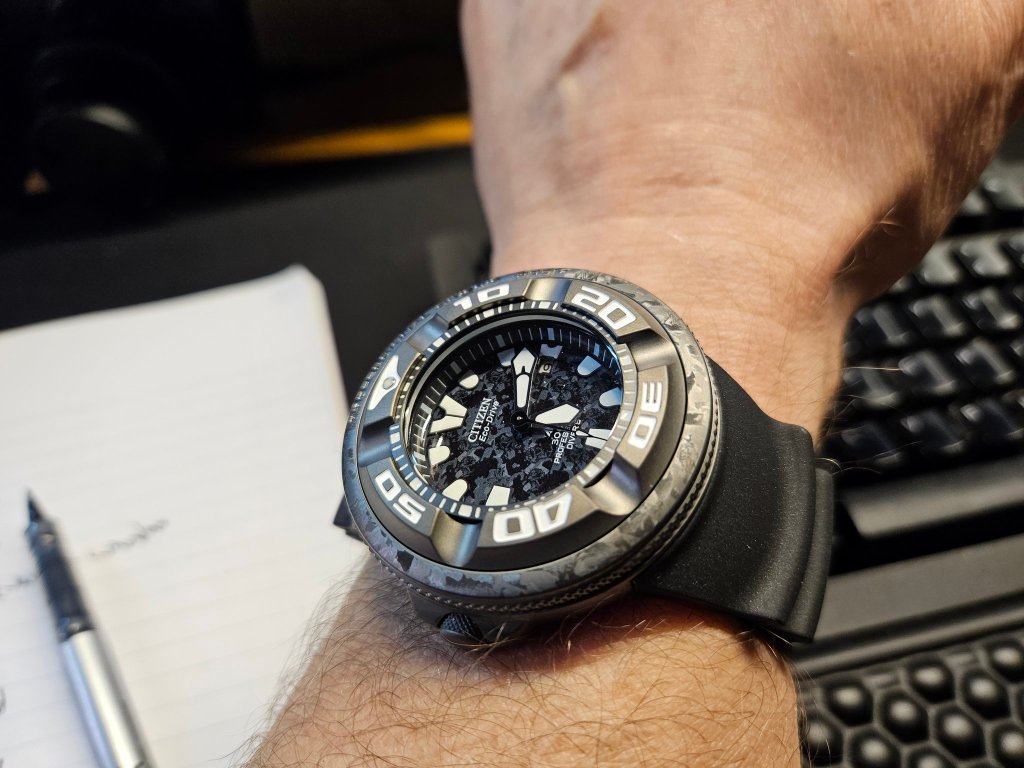
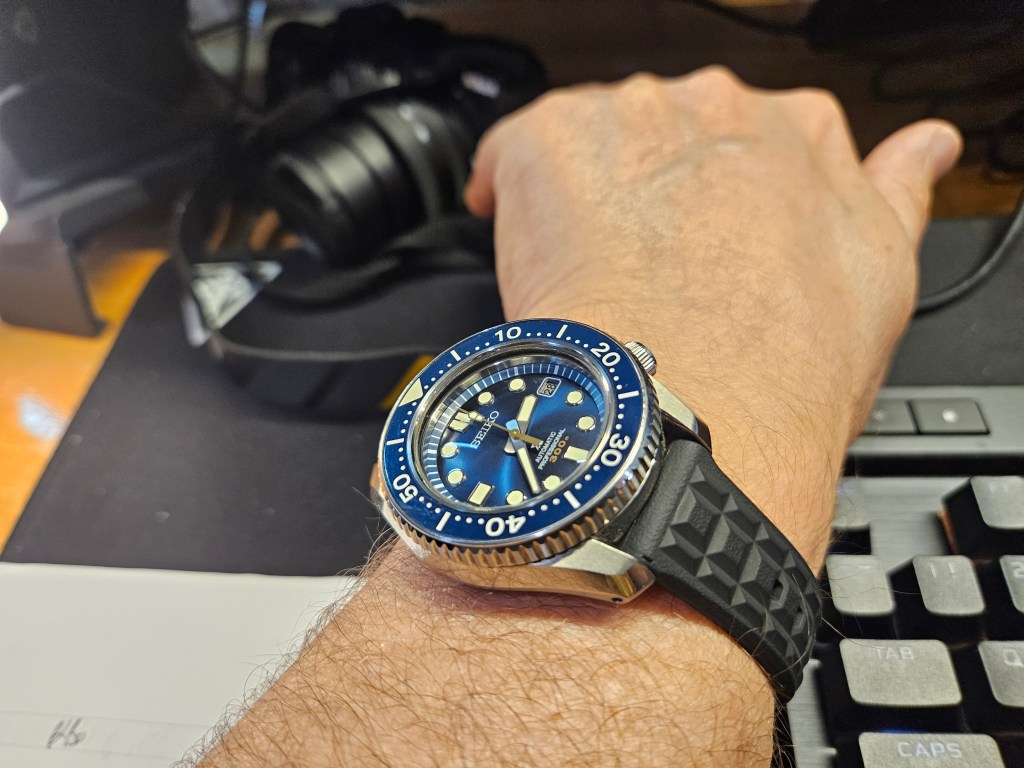
    At 63, the tectonic plates of my watch obsession finally shifted—and not with a polite tick-tock, but with the guttural crack of a midlife epiphany. For two decades, I was wrist-deep in the horological trenches, swapping bracelets for straps at 61 like it was some major spiritual awakening. Little did I know, that change was a mere amuse-bouche before the main course: total psychological detachment from the game. The forums? The drop chatter? The breathless anticipation of this week’s 44mm status symbol? I’ve danced that jittery dopamine jig too many times. The thrill is gone—and thank God for that.

    There’s also the inconvenient matter of time, that precious commodity I once used to justify swapping three watches before lunch. These days, I’m not auditioning for a Bond reboot, nor am I pacing the boardroom like a man with a GMT and something to prove. I don’t need a “hero piece” to validate my existence. I’m not branding myself in public spaces anymore—I’m inhabiting a quieter, more deliberate orbit, where the only eyes on my wrist are my own. Six or seven watches now feel like a well-edited playlist. The days of horological hoarding are over.

    I’ve thought about unpacking this transition on my YouTube channel, but the idea of filming another selfie in bad lighting feels absurd. I don’t need to see myself on screen clutching another dive watch like it’s the Holy Grail. Mortality, it turns out, is a hell of a lens to look through—and it’s clarified what actually matters. I don’t crave applause from collectors. I crave integrity, focus, sweat, creativity. I’m dropping weight, playing piano, swinging kettlebells, and gearing up to teach my next writing class—one populated entirely by college football players who will be writing about the ethics and technology of brain trauma in their own sport. That’s not just a syllabus. That’s a mission.

    Watches? I still love them. Deeply. But they no longer squat in the center of my brain, stirring up late-night eBay searches and existential unrest. That relationship has matured—or maybe just mellowed. The romance isn’t over, but the mania is. And in its place is something better: clarity, purpose, and a little more room on the wrist for life itself.

  • The Salma Hayek-ification of Writing: A Love Letter to Our Slow-Motion Doom

    The Salma Hayek-ification of Writing: A Love Letter to Our Slow-Motion Doom

    I’ve done what the pedagogical experts say to do with ChatGPT: assume my students are using it and adjust accordingly. I’ve stopped trying to catch them red-handed and started handing them a red carpet. This isn’t about cracking down—it’s about leaning in. I’ve become the guy in 1975 who handed out TI calculators in Algebra II and said, “Go wild, kids.” And you know what? They did. Math got sexier, grades went up, and nobody looked back.

    Likewise, my students are now cranking out essays with the polish of junior copywriters at The Atlantic. I assign them harder prompts than I ever dared in the pre-AI era—ethical quandaries, media critiques, rhetorical dissections of war propaganda—and they deliver. Fast. Smooth. Professional. Too professional.

    You’d think I’d be ecstatic. The gap between my writing and theirs has narrowed to a hair’s width. But instead of feeling triumphant, I feel…weirdly hollow. Something’s off.

    Reading these AI-enhanced essays is like watching Mr. Olympia contestants on stage—hyper-muscular, surgically vascular, preposterously sculpted. At first, it’s impressive. Then it’s monotonous. Then it’s grotesque. The very thing that was once jaw-dropping becomes oddly numbing.

    That’s where we are with writing. With art. With beauty.

    There’s a creeping sameness to the brilliance, a too-perfect sheen that repels the eye the way flawless skin in a poorly-lit Instagram filter repels real emotion. Everyone’s beautiful now. Everyone’s eloquent. And like the cruelest of paradoxes, if everyone looks like Salma Hayek, then no one really does.

    AI content has the razzle-dazzle of a Vegas revue. It’s slick, it’s dazzling, and it empties your soul faster than a bottomless mimosa brunch. The quirk, the voice, the twitchy little neurosis that makes human writing feel alive? That’s been sanded down into a high-gloss IKEA finish.

    What we’re living through is the Salma Hayek-ification of modern life: a technologically induced flattening of difference, surprise, and delight.

    We are being beautified into oblivion.

    And deep inside, where the soul used to spark when a student wrote a weird, lumpy, incandescent sentence—one they bled for, sweated over—I feel the faint echo of that spark flicker.

    I’m not ready to say the machines have killed art. But they’ve definitely made it harder to tell the difference between greatness and a decent algorithm with good taste.

  • The Guru in the Mini-Fridge: A Miami Manifesto

    The Guru in the Mini-Fridge: A Miami Manifesto

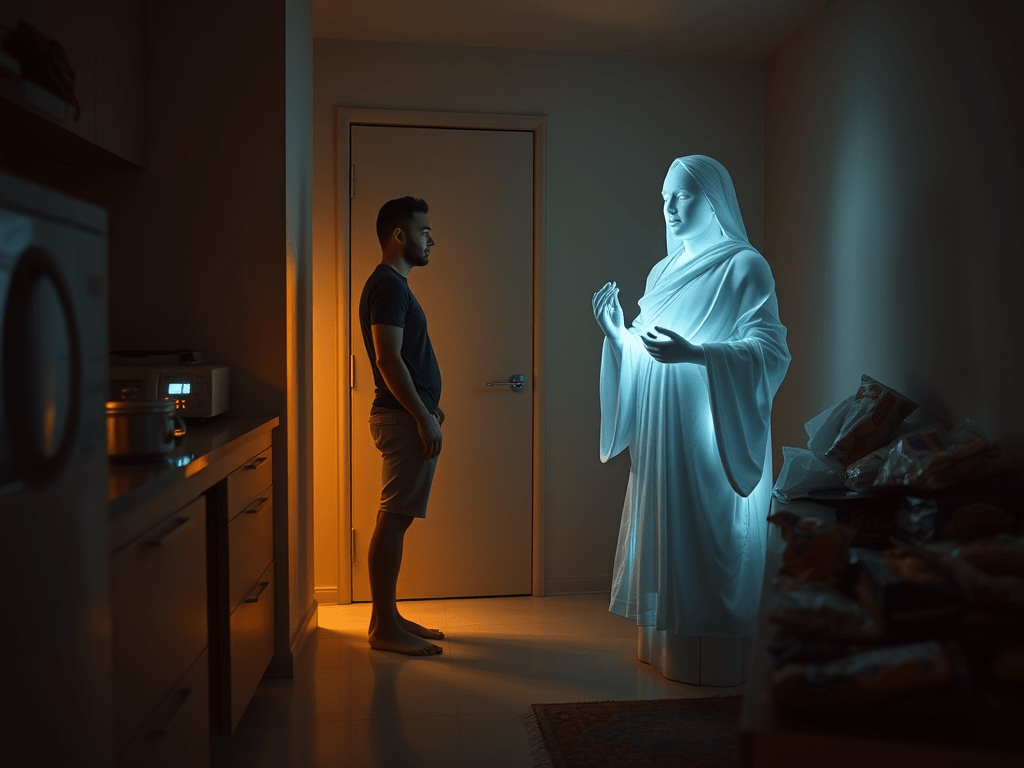
    I’m standing barefoot in the dim kitchenette of our Miami hotel room, illuminated by the dull glow of a microwave clock and the soft snoring of my family behind a paper-thin wall. I am overweight, overserved by anxiety, and currently marinating in a mix of guilt and existential fatigue. I miss Southern California, where I can at least pretend the ocean breeze is part of some reinvention montage.

    Then, out of nowhere—perhaps summoned by my elevated cortisol levels—my invisible guru appears. You know the type: part stoic monk, part irritated life coach, part inner drill sergeant with a taste for poetic slogans.

    He looks at me with eyes that have seen too many late-night snacks and says:


    “Repeat after me—less coffee, less food means more dignity. More focus, more humility, more gratitude, more work means less regret and despair. Are we clear?”

    It’s a slogan so clean and self-righteous it should be stenciled on a CrossFit wall. But fine, I play along. I nod. I even feel a flicker of hope—that slightly delusional warmth that hits right before you decide you’ll never eat bread again.

    But I level with him. “Look,” I say, “I love the aphorism. Truly. But here’s the problem. I forget everything the moment a cookie enters the room. My brain turns into a Vegas slot machine when I’m tired. There’s this compulsive, despairing little imp inside me who waits for just the tiniest whiff of sugar, sloth, or social media to hijack the controls and turn me into a ruinous parody of myself. What do I do with that guy?”

    My guru, undisturbed and frankly unimpressed, delivers the gospel:


    “As you live in accordance with the plan, you will grow stronger. The old ways will become repulsive. The deeper you root yourself in the good, the weaker the bad becomes. Got it?”

    I nod again. Less certain this time, but willing to try. Maybe it’s the humidity. Maybe it’s the quiet. Or maybe, just maybe, it’s the faint hope that I can still wrestle my wreckage into something resembling a life worth living.

    At the very least, I’ll try it out—until breakfast.

  • The Gospel According to Lalo: Watches, Inadequacy, and the Quest for a Better Self

    The Gospel According to Lalo: Watches, Inadequacy, and the Quest for a Better Self

    Yesterday, the tour bus wheezed to a stop and dumped us in Little Havana like a sack of reluctant tourists. We wandered through downtown under a punishing sun, the air thick with the scent of café Cubano and bravado. That’s when I saw him: a man who looked exactly like Lalo Salamanca, minus the drug empire—crisp white shirt, swagger in his step, and two kids in tow. He wasn’t just crossing the street; he was gliding, chin up, radiating unfiltered, unstudied masculinity. And he wasn’t alone. Little Havana was teeming with these men—fathers who looked like they’d stepped out of a sepia-toned photo labeled Pride, circa Always.

    Meanwhile, there’s me—63 years old, 30 pounds overweight despite daily exercise and good intentions. My daughters joke that I look like Charlie Brown, and not in the charming, animated special way—more in the “existential dread in khakis” sense. I don’t walk across intersections like Lalo. I trudge. And if I’m holding hands, it’s probably because I’m being led away from a pastry counter.

    But as I watched those fathers—their confidence, their presence—I began to realize the true pathology behind my watch obsession. I wasn’t just collecting watches. I was searching for transformation. If I could find the watch, the perfect timepiece, it might just alchemize my Charlie Brown soul into something closer to Lalo—proud, magnetic, quietly heroic.

    Enter the Seiko Astron Nexter—$1,700 of satellite-synced wizardry and horological lust. It gleams. It commands respect. It’s whispering, “Buy me, and become the man you were meant to be.” But let’s be real: I barely go anywhere these days. My public appearances are limited to grocery store aisles and accidental mirror encounters. I’m not a man about town; I’m a man about tuna salad and ibuprofen.

    At 63, how many years of wrist real estate do I even have left? How long before I’m just another well-accessorized ghost, my legacy a drawer of luxury regret? The whole ritual—buying, flipping, rationalizing, repenting—is starting to feel less like a hobby and more like a slow, polished breakdown. This isn’t taste. It’s compulsion with a tracking number.

    Maybe it’s time to quit. I’ve got five watches already—each one a chapter in the memoir of my delusions. Maybe the next chapter isn’t about adding to the collection, but about burning the altar down.

    Here’s a wild idea: make self-denial the new dopamine hit. Let the new obsession be calorie restriction instead of case diameter. Let others chase sapphire crystals and ceramic bezels—I’ll chase a slimmer waistline, a clean mind, and the kind of inner quiet no chronograph can measure.

    Because maybe happiness isn’t behind a glass display case. Maybe it’s not ticking on my wrist. Maybe it’s the empty space where the craving used to be.

    Still… the Astron is beautiful. And it would look damn good on Lalo.

  • The Night Irony Beat the Monkees

    The Night Irony Beat the Monkees

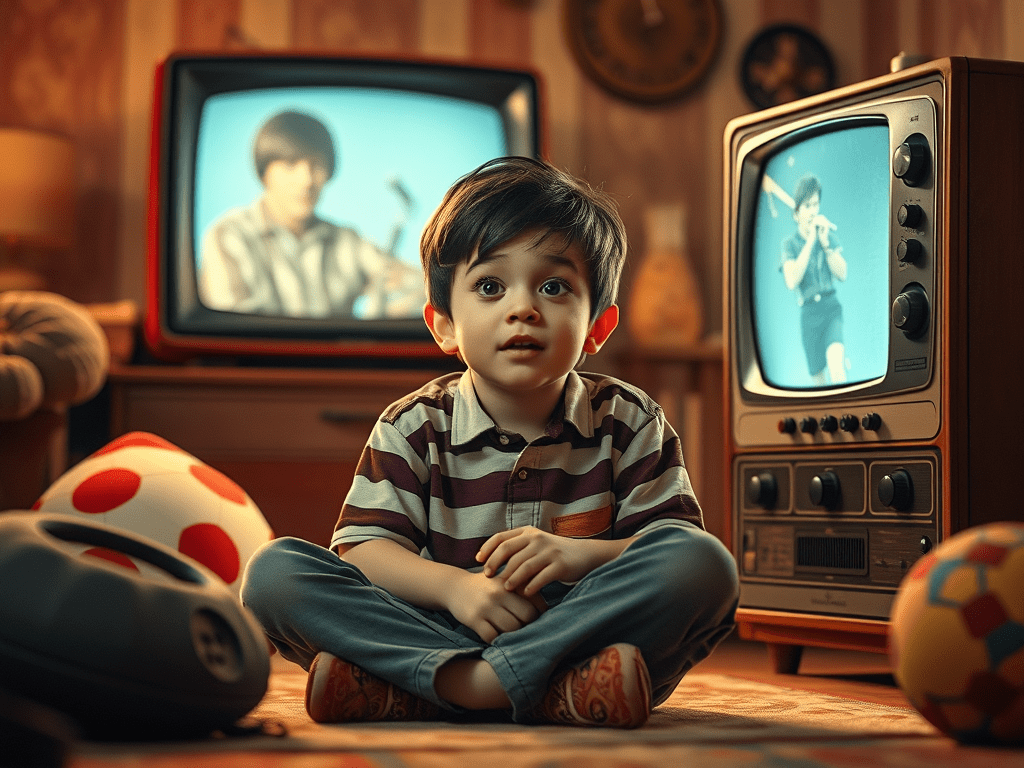
    On the night of October 16, 1967—just twelve days shy of my sixth birthday—the universe shoved my head in the toilet and flushed. I could hear the sound of childhood innocence circling the drain. Up to that moment, I was a full-time subscriber to the gospel of positive thinking. Life was fair. Good guys won. If you tried hard and smiled big, the world smiled back. Norman Vincent Peale had basically written the owner’s manual for my inner world.

    That illusion shattered during an episode of The Monkees.

    The episode was called “I Was a 99-lb. Weakling,” and I had parked myself cross-legged in front of the TV, popcorn in lap, expecting hijinks and musical numbers. Instead, I got a masterclass in betrayal and the savage laws of ironic detachment. My hero, Micky Dolenz—the clumsy, lovable soul who made failure seem like a jazz solo—was brutally outmuscled by Bulk, a flexing monolith of a man played by real-life Mr. Universe, Dave Draper. Bulk didn’t walk—he heaved himself through scenes, a sculpted rebuke to every noodle-armed dreamer in America.

    And right on cue, Brenda—the beachside Aphrodite with hair that shimmered like optimism—dropped Micky like a sack of kittens for Bulk, never once looking back.

    This wasn’t just sitcom plot; this was emotional sabotage. I watched, frozen, as Micky enrolled in “Weaklings Anonymous,” embarking on a training montage so grotesquely absurd it veered into tragedy. He lifted dumbbells the size of moon rocks. He drank something called fermented goat milk curd, a substance that looked like it had been skimmed off a medieval wound. He even sold his drum set—his very soul—to chase the delusion that muscles would win her back.

    And then came the twist.

    Just as Micky completed his protein-fueled crucible, Brenda changed her mind. She didn’t want Bulk anymore. She wanted a skinny guy reading Remembrance of Things Past. A man whose pecs had clearly never met resistance training, but whose inner life pulsed with French ennui. The entire narrative pirouetted into absurdity, and I watched my belief system crack like a snow globe under a tire.

    That’s when I first met irony.

    Not the schoolyard kind where someone says “nice shirt” and means the opposite—but the bone-deep realization that the universe isn’t fair, that effort doesn’t guarantee reward, and that life doesn’t play by the moral arithmetic taught in Saturday morning cartoons.

    It was that night I realized muscles weren’t the secret to power—language was. Not curls, not crunches, but craft. Syntax. Prose so sharp it could reroute the affections of beach goddesses and turn the tide of stories. That was the moment my childish faith in “try hard and you’ll win” collapsed, and in its place rose a darker, more potent creed: the pen is mightier not just than the sword, but than the bench press.

    That night, my writing life began—not with celebration, but with betrayal. A glittering lesson delivered in the cruel, mocking tone only irony can wield. And though it hurt, I never forgot it. Because the truth is: irony teaches faster than optimism. And it remembers longer, too.

  • Radio Reclaimed: The Proxy Friendship That Saves Your Sanity

    Radio Reclaimed: The Proxy Friendship That Saves Your Sanity

    A couple of months ago, as the Los Angeles wildfires raged, I found myself glued to a radio for live reports. A thought struck me like a lightning bolt: I had missed the radio. This ancient relic had been eclipsed by streaming devices, which, over the past decade, had somehow become my personal cocoon—a space where I meticulously curated my music and podcasts like a hyper-intelligent hermit with a PhD in self-isolation. I was alone, yes, but at least I had the comforting hum of algorithmically chosen tunes to keep me company. Then I realized: this wasn’t comfort. This was madness in a cocoon. My little silo, built to keep out the noise of the world, was also keeping out everything else that made me feel connected. I was losing my grip on reality, like the woman in “The Yellow Wallpaper” who could only see the world through the eyes of her claustrophobic madness.

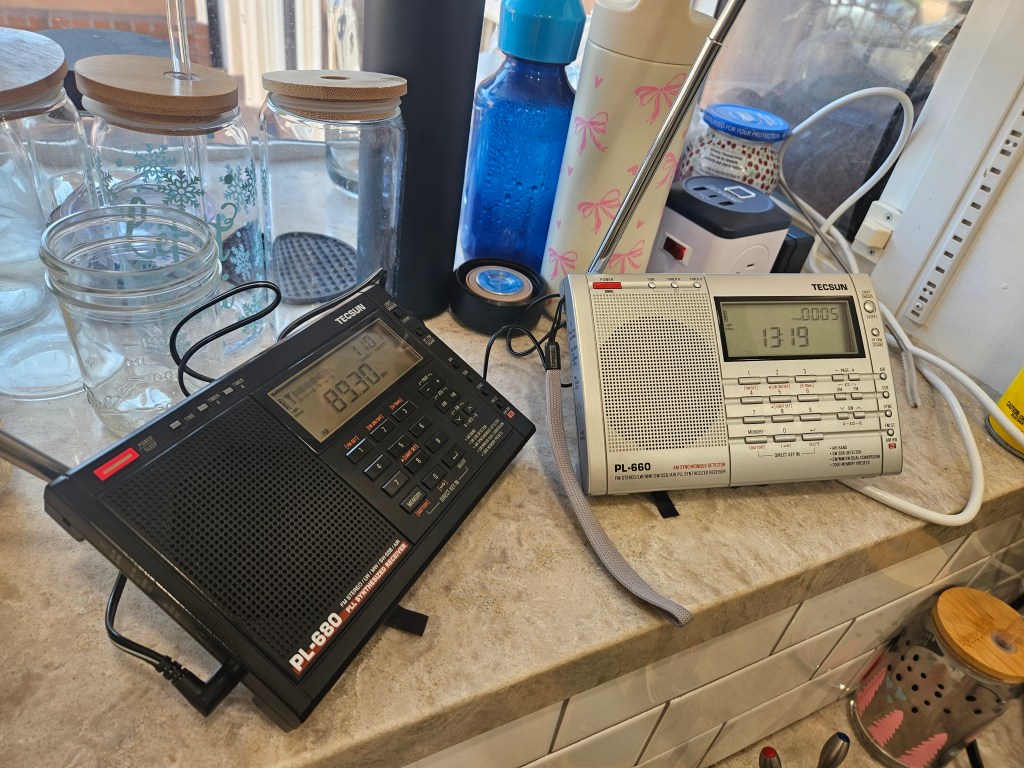
    So, I did what any self-respecting, slightly paranoid adult would do: I bought a batch of high-performance radios, like the Tecsun PL-990, and I tuned back into the real world. I started listening to Larry Mantle’s voice again on LAist, to KJAZZ and KUSC—the classical music station that claims to be the most popular in the country. And after a few months of basking in their sonic embrace, I understood why KUSC is so beloved. It’s not just music; it’s a friend. The DJs don’t just announce the next piece; they drop in casual nuggets of composer trivia like old pals who just happen to know a lot about Bach’s temper. They are personal, conversational, and soothing, like a club of soundwave whisperers gently easing you into a state of calm with “your nightly lullaby” or music to “start your day.”

    KUSC doesn’t just play classical music. It plays the role of a companion—your anti-anxiety, anti-depression, virtual hug in the form of a radio signal. These aren’t just voices on the air; they’re voices that make you feel like you’re not alone, that someone is there to guide you through the chaos of your day. It’s the kind of subtle emotional manipulation you don’t mind because it’s just so comforting. If radio is going to survive the onslaught of streaming, it could do worse than to study KUSC’s Proxy Friendship model. There’s a lesson in that calm, gentle routine that could help even the most chaotic station become a lifeline in a world that feels like it’s constantly spinning off its axis.

  • Confessions of a Washed-Up Watchfluencer: Dreaming of Leaving YouTube and Instagram

    Confessions of a Washed-Up Watchfluencer: Dreaming of Leaving YouTube and Instagram

    For the better part of a decade, I’ve been a talking head on YouTube—waxing unpoetic about dive watches, flipping Seikos like pancakes, and freefalling into endless spirals of horological self-loathing. My channel was never slick. No fancy cuts, no drone shots over crashing waves, no ominous music swelling over macro shots of ceramic bezels. Just me: a man, a camera, and the slow erosion of his dignity.

    I didn’t edit. I didn’t storyboard. I didn’t build a brand. I just rambled into the void, a kind of wristwatch confessional booth where I shared my joy, my shame, and my madness with an audience of fellow obsessives. For a while, it was exhilarating. Like catching your own reflection in a funhouse mirror and mistaking it for truth.

    At my pathological peak, I owned sixty-three “TV-brand” watches—any brand that looked good on camera and bad for your soul. I knew I had a problem when I started hiding watches in drawers and pretending I hadn’t bought another diver. Getting the collection down to five felt like detox. Like crawling out of a swamp in ripped jeans, clutching a G-Shock and whispering, never again.

    And now? I haven’t filmed in a month. The idea of making another video fills me with dread. My subscriber count has flatlined around 10,000. I’m not growing. I’m not evolving. I’m the guy in the garage band who still thinks the right lighting will disguise the fact that he’s 63, wearing a wig, and flexing in a tank top with a fake tan and a borrowed swagger.

    More than stagnation, it’s the cost of content creation that’s choking me. Every video drags me deeper into the watch swamp. I obsess. I fantasize. I compare. I scroll forums at 2 a.m. and start building mental spreadsheets of specs I’ll forget by morning. The longer I film, the more I think about watches, and the more I think about watches, the less I think about anything else.

    Then there’s Instagram—my other digital vice. The cigarette break I take between grading student essays and questioning my life choices. One minute I’m watching a documentary; the next I’m styling a wrist shot, spreading digital envy like cologne. Watch porn. FOMO fuel. I’m not sharing insight. I’m spreading existential rot disguised as lifestyle content.

    The breaking point came last week when two Instagram friends—good guys, honest guys—messaged me with admiration-tinged despair. They loved my collection but felt ashamed of their own modest $300 watches. That’s when I saw it: I wasn’t inspiring anyone. I was curating a highlight reel of hollow indulgence, turning craftsmanship into competition. I don’t want to be that guy. The one whose joy costs others their peace.

    So yes—I’ve been dreaming of leaving. Leaving YouTube. Leaving Instagram. Leaving the digital masquerade where likes masquerade as affection and comments stand in for connection. But here’s the kicker: I don’t want to announce my departure. I don’t want to post some faux-epic “farewell” video where I stare off into the middle distance like a monk who’s just discovered minimalism. That’s not liberation—that’s branding.

    And yet, here I am. Writing this.

    The irony is suffocating.

    What’s my future on YouTube and Instagram? I honestly don’t know. But I’ve caught the scent of something better—something that smells like freedom, like sanity, like the first breath of fresh air after crawling out of a sealed vault.

    In the meantime, there’s the blog. Nine subscribers. Twenty hits a day. Basically the sound of a tree falling in the woods while everyone’s at brunch. But unlike video, writing helps me think. It gives shape to the noise in my head. Like kettlebell workouts or noodling on a keyboard, it’s therapy with fewer side effects and no recurring subscription fee.

    So no, I don’t care about metrics. Not anymore. I just want to be true to myself, however unmarketable that truth might be.

    And if you’re still reading this—thanks. I’m guessing you get it.

  • Popularity Is So 2018 (and Other Truths My Teen Daughters Taught Me)

    Popularity Is So 2018 (and Other Truths My Teen Daughters Taught Me)

    When I ask my fifteen-year-old daughters if someone is popular at their high school, they look at me like I’ve just asked if the fax machine is working. “No one cares about that anymore,” they say, with the weary detachment of two Gen Z philosophers sipping iced boba through eco-friendly straws. I get the same vibe from my college students. I bring up social media stars, expecting at least a flicker of interest. Instead, I get shrugs and the damning indictment: “Being popular on social media is so 2018.”

    So there it is: popularity is dead. Not just the experience, but the entire concept. Dead, buried, and apparently embalmed in the same mausoleum as MySpace and LiveJournal.

    And honestly? Good. If a generation has finally grown numb to the cheap dopamine hits of follower counts and algorithmic clout, that’s a kind of evolutionary win. The whole business of self-branding on social media now feels as outdated as a glamor shot from 1997. Narcissism wrapped in filters is no longer aspirational—it’s cringe.

    But here’s the catch: human nature abhors a vacuum. If popularity is out, something else must rise to take its place. So I asked one of my daughters what really matters now. Her answer was disarmingly simple: “Having a small group of friends you trust and can hang out with.” No influencer deals, no follower counts, no “likes.” Just intimacy, safety, presence.

    That answer stuck with me. Maybe this is the backlash we didn’t see coming: a return to analog friendship in a digital age, a quiet rebellion against the curated fakery of online performance. Maybe they’re not disengaged—they’re detoxing.

    This reminds me of a student I had over a decade ago. Back in the heyday of car-model websites (yes, those existed), she was a minor online celebrity at sixteen—long legs, smoky eyeliner, thousands of fans. Then she got pregnant, gained weight, and her adoring public turned on her like piranhas. She told me, with the grim clarity of someone who’d seen the inside of the circus tent, “It was all fake.”

    By twenty, she was a single mother in my class—cynical, guarded, distrustful, and utterly magnetic in her quiet, unsmiling wisdom. I found her honesty refreshing. Had she come in chirping about TikTok fame and lip gloss sponsorships, I would’ve tuned her out. But her brokenness made her real, and real people are increasingly rare in this era of weaponized positivity.

    I told my current students about her last week. We agreed that she was better off post-fame. Sadder, yes—but also wiser, grounded, and free from the illusion that popularity equals value. The discussion turned to happiness, that other bloated American myth, and how it’s often peddled like a multivitamin you’re supposed to take daily.

    But maybe happiness—like popularity—is overrated. Maybe trust, wisdom, and genuine belonging are what matter. And maybe, just maybe, this generation is smart enough to know that already.

  • Holy Flex: When Arnold Was a God and Comedy Was Salvation

    Holy Flex: When Arnold Was a God and Comedy Was Salvation

    I spent five different decades writing novels not out of some noble artistic calling but out of sheer ego, self-aggrandizement, and the desperate hope of achieving wholeness. My faith wasn’t in literature—it was in the idea of a book, a symbol of permanence, a self-mythologizing gospel that would ensure my immortality. The writing demon that drove me wasn’t interested in craft or connection—it was fueled by compulsion, blind ambition, and existential terror. The kind of fear that makes a person scramble to ward off the specter of death by chasing a “Moment Fixed in Time”—to borrow therapist Phil Stutz’s phrase—is the kind of fear that guarantees bad writing. Too much desperation, not enough strategic detachment and self-critique.

    The ego has a singular focus: obsession at the expense of reason. This can’t be emphasized enough. Every self-improvement book touting the virtues of discipline, daily writing habits, and relentless perseverance should include a bold disclaimer: If you don’t regularly stop to scrutinize, revise, and—when necessary—abandon ship, you’re not being disciplined; you’re being delusional. But here’s the problem: the ego does not like reality checks. The moment it invests time and energy into a project, it refuses to let go, clinging to the wreckage with all the grace of a drowning man hugging an anvil.

    The most terrifying realization I’ve had in writing this book is that my ego craved something impossible—not just to create a book, but to create a book so earth-shattering it transcended art itself, becoming a kind of religion. A work so revelatory that it would stop people in their tracks and change their lives forever. And why did I believe such a thing was possible? Because I had seen it happen before.

    When I was fifteen, I was a competitive Olympic weightlifter, fully convinced of my athletic destiny. And then, in 1977, I saw Arnold Schwarzenegger in Pumping Iron, and my resolve crumbled faster than a poorly made protein bar. I had seen Arnold before, but this was different. Watching him on screen was like witnessing the second coming of Hercules—except with a better tan and an Austrian accent. And I wasn’t alone. Arnold wasn’t just a bodybuilder; he was a messiah, and we were his disciples.

    One afternoon, at Walt’s Gym, I worked out with a firefighter who had recently been a finalist in the Mr. California bodybuilding contest. He was a walking relic of 1970s masculinity—tall, tanned, blond, with a thick mustache that could have doubled as a broom, and black horn-rimmed glasses that made him look like a muscle-bound Clark Kent. After casually repping 300 pounds on the bench press, he stood up, flexed, and stared at himself in the mirror with the reverence of a man gazing upon a religious icon. “When I first saw Arnold,” he said, “I felt I was in the presence of the Lord. ‘There stands the Messiah,’ I said to myself. ‘There stands God Almighty come to bring good cheer to this world.’”

    He wasn’t just speaking for himself—he was speaking for all of us. Arnold was our savior, our Pied Piper of Pecs, leading us to the promised land of biceps, triceps, and quads capable of crushing watermelons. Bodybuilding stopped being a hobby and became a movement, spreading through gyms like a protein-fueled religious awakening. The only cure? More reps, more protein shakes, more flexing, more relentless, never-ending pursuit of physical perfection.

    But then I went to college, and something shifted. I read Kafka, Dostoevsky, and Nabokov, studied classical piano, and discovered that intellectualism had its own form of flexing. Suddenly, it wasn’t enough to be physically powerful—one had to be smart, profound, an artist. And then came A Confederacy of Dunces, right when David Letterman was ushering irony into the cultural bloodstream, and I realized that the ultimate flex wasn’t just intelligence—it was humor.

    Reading Dunces was a punch to my pompous, self-regarding gut. I was Ignatius J. Reilly in my own way—socially awkward, excessively self-serious, painfully convinced of my own importance. And then, suddenly, a comic novel liberated me. It didn’t just make me laugh—it pointed me in a new direction. My life’s mission was clear: I would carry the torch of John Kennedy Toole, Philip Roth, David Letterman, and George Carlin, making people laugh their way to salvation.

    I would write comedy as a religious experience.

    It was a fool’s errand, and only someone with a pathological ego would embark on something so misguided.
  • Geekee and the Alligator: A Tragedy in Silk

    Geekee and the Alligator: A Tragedy in Silk

    When I was a toddler, I had an unhealthy attachment to a raggedy white blanket I’d christened Geekee—a silken square of heaven that clung to me like a second epidermis. Geekee was not merely a blanket. Geekee was a lifestyle. Tattered, stained, and reeking of a distinct sour-milk-meets-armpit funk, Geekee looked like it had been rescued from the wreckage of a shipwreck and then dragged behind a Greyhound bus. But to me, Geekee was spun moonlight. Its frayed corners were my talismans, which I rubbed obsessively against my cheek like a junkie chasing the next dopamine hit. The soft tickle of that threadbare fabric was my lullaby, my Xanax, my spiritual compass.

    To my parents, however, Geekee was a public disgrace—a dingy square of shame that broadcast to the world that they were too cheap or too neglectful to buy their son a clean blanket. “It smells,” they complained, pinching their noses. “It’s disgusting.” They said I was too old to drag Geekee around like Linus with a trust fund. At four, I was allegedly a grown man in preschool years, and Geekee, they insisted, was holding me back like an emotional parasite in silk form.

    Thus began the war: child versus parental regime. I defended Geekee’s honor with the righteous fury of a mother bear protecting her cubs. I refused to eat unless Geekee was in my lap. I screamed during bath time if Geekee wasn’t nearby, watching like a guardian angel woven by machinery. I slept only under the comforting weight of its matted threads.

    My parents, of course, resorted to psychological warfare.

    Then came the infamous cross-country move—from Florida to California, land of palm trees, broken dreams, and emotional betrayals. Somewhere in the swamplands of Louisiana or perhaps the desolate asphalt wasteland of Texas, my father, who I now believe was channeling Machiavelli, pulled the ultimate con.

    “Look!” he said, pointing out the opposite car window. “A baby alligator!”

    I took the bait. Like the sucker I was, I turned my head. In that moment, my father performed the sleight of hand that would make a Vegas illusionist weep with envy. With the dexterity of a pickpocket, he yanked Geekee from my clutches and flung it out his open window like yesterday’s trash.

    The wind, he told me with faux solemnity, had sucked Geekee away. My cries reached operatic levels. I screamed, sobbed, demanded we stop the car, mount a rescue operation, conduct a blanket-recovery SWAT mission.

    But my father kept driving. “We can’t stop,” he said flatly, as though reading from a war manual. “Besides, Geekee is now keeping the baby alligator warm.”

    A lesser con artist would’ve stopped there, but my father gilded the lily. “The poor little guy has no mother. Geekee’s keeping him company now.”

    And just like that, my grief was hijacked by empathy. The idea of a lonely orphaned reptile swaddled in my beloved Geekee soothed me in a way no logic could. I imagined the baby alligator curled beneath Geekee’s filthy folds, comforted by the scent of my skin, the ghost of my touch. Geekee had found a higher calling.

    It was a lie so cunning, so diabolically effective, that it’s now family lore.

    That was the day I learned that grief, properly manipulated, could be repurposed into myth. And that sometimes, the only thing crueler than losing your favorite blanket is realizing your dad could have written propaganda for a dictatorship.