Tag: life

  • Captain Cancel and the Rise of Domestic Hermit Drift

    Captain Cancel and the Rise of Domestic Hermit Drift

    The other day my wife went to lunch with a longtime friend—call her A—and, as women do with admirable efficiency, they covered marriage in a single sitting. A complained that her husband had been drinking more, growing possessive, increasingly controlling. During the meal, he called her three times. By the third interruption, my wife said, the phone might as well have been sitting at the table demanding a chair. When she told me the story later, I said it reminded me of the Tears for Fears song “Woman in Chains.” She didn’t hesitate. “That’s her life exactly,” she said.

    After a pause, the conversation turned, as it inevitably does, to me. “I told A you don’t drink,” my wife said. “You’re not jealous or possessive. But you won’t leave the house. You’re a shut-in.”
    “Doesn’t he go to the gym?” A asked.
    “Not for twenty years,” my wife replied. “He does yoga and kettlebells at home. He’s been trapped in the man cave ever since. And what scares me,” she added, “is that he’s happy.”

    I’m not entirely sure I am happy. I just know my tolerance for annoyance is perilously low, and it drops another notch with each passing birthday. I also know that my friends from my formative college years now live scattered across the country, like artifacts from a previous civilization. We’ve grown apart without drama, which is to say, efficiently. Locally, I have two friends. Tom, a wrestling coach, is either teaching or in Santa Barbara with his girlfriend. I see him about once a year, usually when he drives me to Home Depot so I can transport oversized items back to my cave. My other friend, Pedro, is an engineer who is thirty years younger than I am. The generational differences are… pronounced. We have lunch about four times a year. Add it up and yes—half a dozen social encounters annually qualifies me as a shut-in. Which makes me, by default, an authority on a condition many men my age quietly acquire: Domestic Hermit Drift.

    Domestic Hermit Drift is the gradual, mostly unintentional retreat of a married man from friendships and public life into the managed comfort of home, where routine, hobbies, and solitude replace the effort and risk of maintaining relationships. It isn’t fueled by hostility or misanthropy but by convenience, irritability, fatigue, and the slow atrophy of social muscles. As his world contracts, his wife’s often expands, creating an asymmetry in which she carries the invisible labor of social connection, public presence, and emotional buffering. The genius of the drift is its stealth. No announcement is made. No door slams. The man simply mistakes peace for fulfillment and stability for sufficiency.

    As an expert in Hermit Drift, allow me to identify the warning signs.

    First, your sleepwear, gym clothes, and home clothes become indistinguishable. You sleep in gym shorts and a workout shirt, wear them around the house, exercise in them, shower, and rotate in a freshly washed identical set. You call this efficiency. You experience genuine pleasure in this loungewear optimization and feel morally superior to the sheeple who change outfits multiple times a day. Minimalism, you insist, is a virtue.

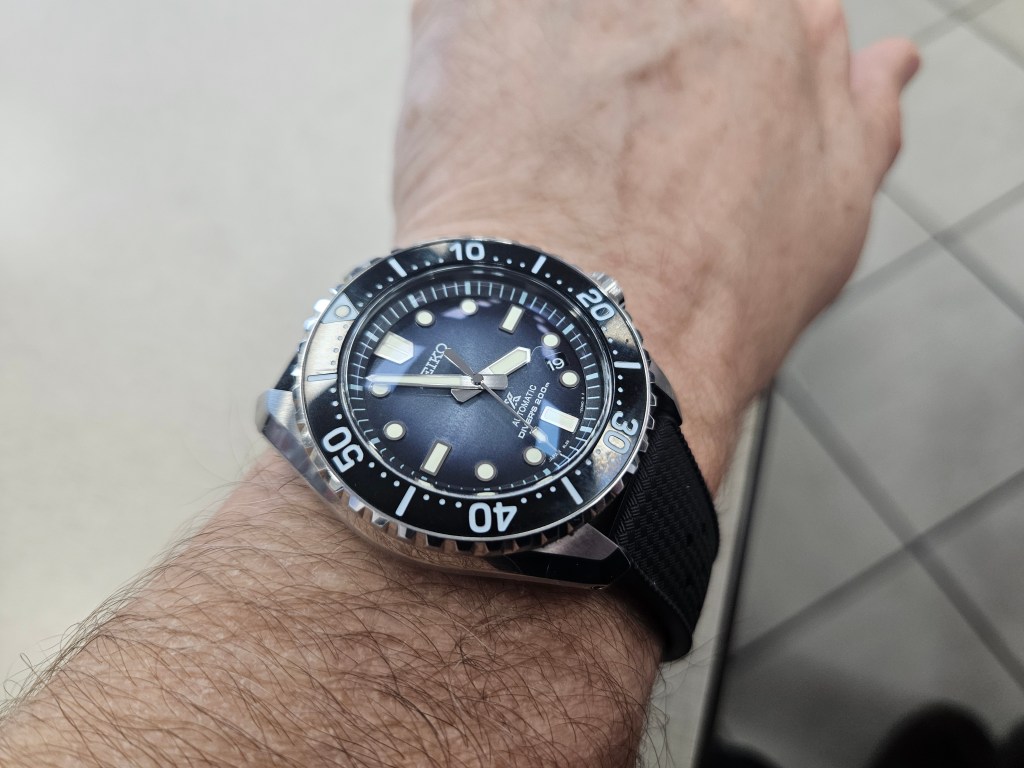
    Second, while your wife and her friends design custom T-shirts and handmade signs for rock concerts in the desert, you remain home on a Saturday night swapping straps on your diver watches. You build watch-rotation calendars. You track wrist time. You rank your collection by annual usage. The fact that you know you wore your Seiko Marine Master for exactly 863 hours last year strikes you as reasonable, even impressive. Others find it alarming.

    Third, because your tolerance for irritation is low, you shop only at dawn, when grocery stores are nearly empty and the few people present are still half-asleep—docile, unthreatening, manageable. You take pride in shopping before the rat race wakes up. This dovetails nicely with your time-management philosophy: bed at nine, up at five. By the time the world stirs, you’ve had your coffee, your steel-cut oats, your kettlebell workout, and your canvas grocery bags—your weekly macros—put neatly away. You are, in your own mind, winning.

    The rest of the day unfolds under a regime your wife has named Captain Cancel. Every proposed outing meets a veto. You can’t attend a concert because it might rain, despite cloudless skies. You can’t go to a restaurant because parking is inadequate, and when your wife reminds you of the new parking structure, you explain that it’s widely known to be contaminated with asbestos. A comedian you once loved is playing in Hermosa Beach, but you inform her he hasn’t been funny since the Reagan administration. A trip to Maui is ill-advised due to avian flu, especially dangerous during air travel. A beach picnic is canceled because of a sewage spill that, you explain, has compromised not just the water but the atmosphere. You agree to Taco Tuesday at the local brewery, but it’s too loud. You stuff toilet paper in your ears, announce you’re unwell, and Uber home. You are never invited again. This makes you smile as you drift into a deeply satisfying sleep.

    If you recognize any of these traits, congratulations. You are anti-social. You are Captain Cancel. You have chosen your isolation, locked yourself in your cage, and—most importantly—convinced yourself it was the sensible thing to do.

  • Why I Must Become the Skinny Yoga Guy

    Why I Must Become the Skinny Yoga Guy

    As the clock keeps punching holes in the calendar and I drift into the middle distance of my sixties, I’m stalked by the uneasy sense that I am not the man I’m supposed to be. I carry thirty extra pounds like unpaid emotional invoices. I cave to food temptations with embarrassing regularity. I indulge in narcissistic spirals of self-pity. My body bears the archaeological record of a lifetime of weightlifting injuries. Something has to give. The question isn’t whether I’m a complex human being—of course I am—but which single image can give me dignity, courage, and self-possession as I face my obligations, stay engaged with this lunatic world, and fend off entropy. The image that keeps returning, uninvited but insistent, is this: I am the Skinny Yoga Guy.

    The Skinny Yoga Guy eats vegan, clean, and whole, not as a performance but as a quiet discipline. He hits his protein macros with buckwheat, pumpkin seeds, peas, soy, garbanzos, and nutritional yeast, without sulking or negotiating. He cooks plant-based meals anchored in Thai, Mexican, and Indian traditions, not sad beige bowls marketed as “fuel.” He doesn’t snack like a raccoon in a pantry; he sips cucumber water and green tea and moves on with his day.

    He practices yoga six days a week, a full hour each time, sweating without complaint. The body lengthens. The spine straightens. He appears taller, calmer, less compressed by life. There’s a faint health glow—less “Instagram guru,” more “someone whose joints don’t hate him.” The discipline reshapes his temperament. The short fuse and indulgent sulks fade. In their place emerges a man who notices other people, attends to their needs without sermonizing, and discovers—almost accidentally—that service makes him sturdier, not smaller.

    In this revised operating system, the watch obsession quietly dies. No more chunky diver watches as heroic cosplay. No rotation. No drama. Just one watch: the G-Shock GW-5000. The purest G-Shock because it refuses theater. Shockproof, accurate, solar-powered, atomically synced. No Bluetooth, no notifications, no begging for attention. It does one thing relentlessly well: it tells the truth about time. It is reliability without narcissism.

    If the GW-5000 is indestructibility stripped of spectacle, then my assignment is clear: I must become its carbon-based counterpart. Less bloat. Fewer features. More uptime. Yoga becomes joint maintenance. Vegan food becomes corrosion control. No supplements that blink. No gadgets that chirp. No dietary Bluetooth pairing with guilt. Just a lean system designed to absorb impact, recover quickly, and remain accurate. GW-5000 firmware, now awkwardly attempting to run on two legs.

    The longing is real. I want to be the Skinny Yoga Guy—disciplined, light, healthy—wearing a single $300 G-Shock as a quiet marker of having stepped off the status treadmill. I no longer want validation from a $7,000 luxury watch. Wanting this man is easy. Becoming him is not. That requires character, not aspiration.

    My hunch is that I need to write my way into him. A novel titled The Skinny Yoga Guy. Not a parody, not a self-help tract, but a chronicle of real-time change rendered with mordant humor and unsparing honesty. The book isn’t the point. Transformation is. The novel would simply be the witness.

    So here I am, a larval creature trapped in my cocoon. I must emerge as a new creature. The challenge is issued. Whether the world is waiting for my metamorphosis is irrelevant. I am. And that, for once, feels like enough.

  • The Shingles Shot, the Vanishing Kettlebell Workout, and a Brief Descent Into Strap Madness

    The Shingles Shot, the Vanishing Kettlebell Workout, and a Brief Descent Into Strap Madness

    I got my shingles vaccine yesterday at noon and felt absolutely nothing afterward—so nothing, in fact, that I woke up the next morning feeling smugly invincible. I went to Trader Joe’s, bantered with the employees about the collective psychosis surrounding their limited-edition mini tote bags, came home, unloaded the groceries, and mentally penciled in a righteous kettlebell session in the garage. Then, right around 10 a.m., my immune system cleared its throat. A slow, heavy wave of fatigue rolled in, the kind that doesn’t ask permission. I took what I told myself was a “precautionary” nap. I made a deal with my body: if I felt fine in an hour, the kettlebells were back on. By 11, the aches had arrived, lethargy had unpacked its bags, and the deal was quietly voided. The iron would have to wait.

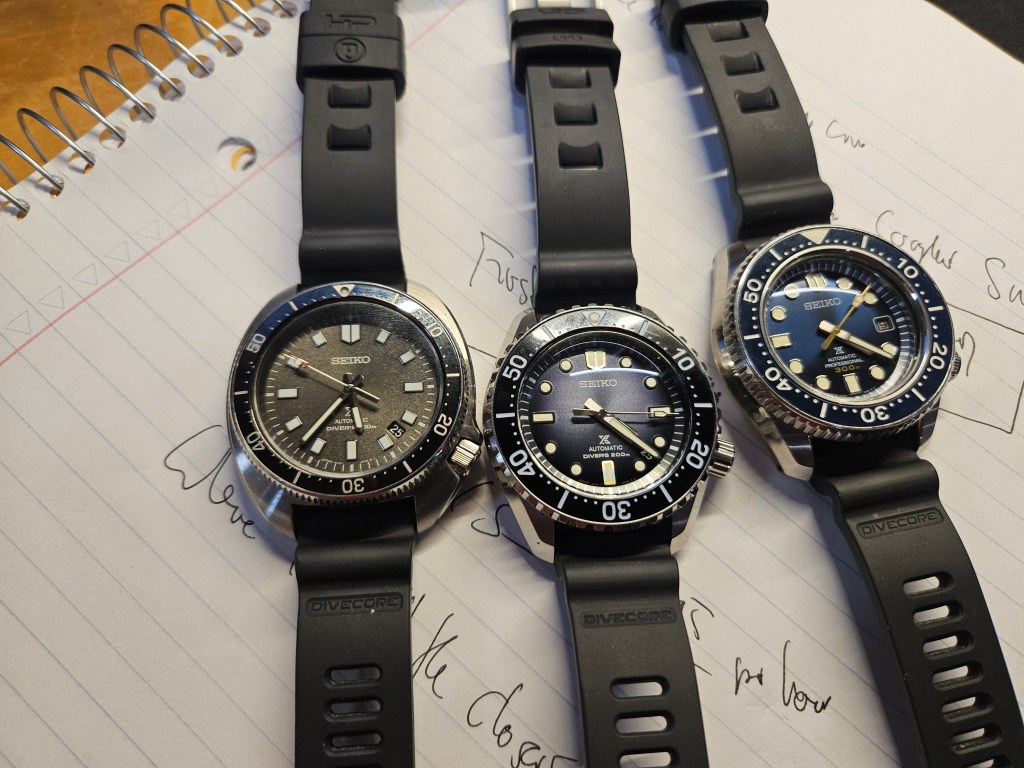
    Now, 28 hours post-shot, I’m more tired than I was this morning, which feels like a violation of some unspoken contract. In what I can only describe as a low-grade vaccine fever fugue, I apparently decided this was the perfect moment to perform strap surgery on my watch collection. The Seiko SLA051, 055, and 023 all lost their OEM waffle straps and emerged reborn on Divecore FKM. Yes, I’m aware that FKM is rumored to whisper chemical lullabies into the bloodstream. No, I’m not persuaded that wearing these watches a few hours a week is going to tip me into a Superfund site.

    In any case, I’m already planning to swap the FKMs for Divecore’s hydrogenated waffle straps in a few months. If there’s any exposure happening, it’s brief, intermittent, and vastly overshadowed by whatever biochemical fireworks the shingles vaccine is currently setting off inside me. For now, I’ll rest, hydrate, and let my immune system do its thing—apparently with a side hobby in horological rearrangement.

  • Learning About Rejection on a Flight to Miami

    Learning About Rejection on a Flight to Miami

    In the summer of 1972, when I was ten years old and convinced my destiny was to become a musclebound baseball god in the image of Reggie Jackson, I found myself on a flight from LAX to Miami, pressed against the window and staring out at adulthood like it was another continent. In the middle seat sat a blonde bombshell in her mid-twenties wearing pink hot pants with psychedelic purple-and-white stripes and legs so aggressively tanned they could have powered a citrus-processing plant. She wasn’t just attractive; she was a mood. She radiated the entire seventies—optimism, excess, invitation. I wasn’t merely drawn to her. I was drawn to the future she seemed to promise.

    On the aisle sat her conversational counterpart: a pencil-necked, dark-haired man of similar age with impeccable manners, minimal charisma, and the quiet dignity of a man who alphabetizes his spice rack. He was an accountant. She was in dental hygiene school. For five uninterrupted hours, the two of them performed their biographies live, with me as the captive audience. Mostly she spoke. He nodded, gasped on cue, and occasionally supplied a sentence fragment to prove he was still alive. She talked about school, snacks, weather, philosophy—everything. It felt like watching a reality show pilot that forgot to end. But I didn’t mind. She was animated. She was confident. She was hope in hot pants.

    At one point she announced that her ears needed to pop and offered both of us Dentyne gum, explaining that it helped with altitude. I briefly wondered if she thought we were participating in some sort of triathlon of inner-ear resilience. The accountant accepted the gum solemnly, like a man taking medical advice from destiny.

    When the plane finally shuddered to a stop at the gate, the accountant—buoyed by five hours of uninterrupted conversation and the survival glow of having endured it—asked her out on a date. She declined with practiced kindness, the sort of smile perfected by women who have said no thousands of times without ever raising their voice. He accepted the rejection gracefully, even apologetically, as if her disinterest were an inconvenience he had caused.

    My ten-year-old brain short-circuited. I felt like I’d witnessed something indecent. Rejection, I believed, was supposed to be private. Public rejection multiplied the shame. I flashed back to junior high dances where I’d cross the cafeteria, ask a popular girl to dance, watch her recoil as if I’d mistaken bravery for stupidity, then retreat to my friends’ laughter. Now I was seeing the adult version. How could this accountant—handsome, polite, numerically gifted—be rejected after such an extended airborne courtship? I sat there, my romantic assumptions collapsing like cheap sci-fi scenery. Maybe he was too bland. Maybe she had a chaotic love life waiting in Miami. Or maybe—this was the real lesson—she’d simply enjoyed a conversation to pass the time on a long flight. Whatever the reason, I absorbed his rejection as if it were my own. I remain convinced that somewhere in the universe’s permanent records, my name appears next to a small but enduring note: rejected by attractive woman. And yes, it still stings.

  • Retirement Isn’t the Problem—Entropy Is

    Retirement Isn’t the Problem—Entropy Is

    A month ago I had my first physical therapy appointment with Ken, a young man who radiated competence and emotional distance in equal measure. He handed me a list of exercises, told me to perform them three times a day, informed me that surgery was unlikely, and ushered me out like a man closing a file. Efficient. Impersonal. I assumed that was just his professional style.

    Yesterday I saw him again, and the man had apparently been replaced by his more human twin. He was warm, chatty, and openly exhausted—in the specific way that only new fathers can be. Suddenly his earlier aloofness made sense. That first session wasn’t clinical detachment; it was sleep deprivation in a polo shirt. This time he walked me through a new routine using resistance bands anchored to my bedroom door—pec flys, side laterals, posterior delts, the whole greatest-hits album of shoulder rehab. Best of all, the new program comes with mercy: once a day, four days a week. A civilized schedule for a man who has already paid his dues.

    Then came the good news. Ken tested my mobility and announced I had gained fifty percent in a month. That sentence deserves a parade. He followed it with an even sweeter story: one of his clients suffered a full “100 percent” rotator cuff tear and healed without surgery over fourteen months. I told him that sounded like gospel music to me. Hope, when you’re injured, is a performance-enhancing drug.

    While typing up my report, Ken casually asked how I felt about retiring from teaching in eighteen months. I didn’t bother with bravado. I told him the truth: I’m scared. When you spend forty years building a work persona—something that animates your days, sharpens your thinking, and gives your life narrative tension—and then you remove yourself from the stage, you don’t just lose a job. You risk losing your gravity. People love to say they’ll “stay busy” in retirement. But human beings don’t thrive on busyness. We thrive on stakes. Without them, we drift. Not into disaster—into comfort. Into pleasure. Into slow-motion decay fueled by snacks and streaming services.

    I’ve tested the volunteer fantasy already. Years ago, after adopting a rescue dog, I thought volunteering with the organization would be meaningful. Instead, I found myself sitting in front of a pet store in Redondo Beach on a Saturday, surrounded by wonderful people and feeling absolutely unnecessary. They were kind. They were earnest. I was bored out of my soul. The group’s founder, Cathy Rubin—a therapist with X-ray vision—took one look at me and said, kindly and accurately, “Jeff, this isn’t for you.” She was right. I kept donating. I never went back to volunteer. Not everyone is wired for sainthood.

    So yes, I’m scared of retirement. I’m scared of my own antisocial tendencies, my talent for isolation, my ability to rationalize entropy as “well-earned rest.” I’ll keep writing. I’ll make the occasional YouTube video. I’ll perform small acts of public presence. But I know the truth: I’m going to have to fight like hell to stay alive in the deep sense—not breathing, but burning. Because entropy doesn’t kill you in one blow. It kills you in installments.

  • Searching for Gold’s Gym While Life Sends Me to Radiology

    Searching for Gold’s Gym While Life Sends Me to Radiology

    Last night I dreamed I lost everything that usually pretends to be me. I woke up on the grass of a high school football field wearing only gray gym shorts and an empty wallet—no phone, no keys, no biography. From there I drifted into a wealthy Los Angeles neighborhood and became a kind of genteel vagrant, squatting in rich people’s basements and back cottages in exchange for handyman work. I had no idea how I knew what I was doing, but in the dream I somehow inherited the skills of an Italian drywall contractor I once knew as a teenager. My one obsession was finding Gold’s Gym, which in this fevered geography had become a holy site—Oz, Mecca, and Lourdes rolled into one. The belief was simple and insane: if I could just work out there, I would be saved.

    I never reached the gym. Instead, I wandered through mansions, luxury malls, and restaurants dripping with spectacle—giant half-naked fashion models leering from every surface like pagan idols of commerce. The excess depressed me. All that gloss, all that money, and not a shred of peace. I didn’t want the riches. I didn’t want the scenery. I just wanted enough handyman gigs to scrape together the cash to hire a guide—some benevolent Virgil—to lead me to the sacred weight room. In the dream’s logic, salvation required a spotter for the bench press and the squat rack.

    Then I woke up and reality delivered its own sermon. My left shoulder—the one recently diagnosed with a torn rotator cuff—was throbbing like a bad memory. I shuffled through the morning ritual: steel-cut oats, coffee, three ibuprofen, email. There it was—my doctor recommending an MRI and a steroid shot. So I did what every rational modern patient does: I watched YouTube videos of people being fed into MRI machines like cautious astronauts. The claustrophobia hit immediately. That narrow tube might as well have been a coffin with better lighting. I thought, there is absolutely no way I’m volunteering for this kind of psychological hostage situation. Surgery isn’t even on the table—so why stage a horror movie? I’ll pass on the MRI. I’ll take the steroid shot. I’ll stick with the practical mercy of pain relief.

  • Are We Extras in Someone Else’s Luxury Watch Fantasy?

    Are We Extras in Someone Else’s Luxury Watch Fantasy?

    Six weeks with my fifteen-year-old twins is a better sociology course than anything you’ll find at UCLA. Their generation runs on shared experiences—amusement parks, concerts, parties—and the sacred ritual of turning those moments into cinematic TikToks. They love empathy. They love energy drinks. They love boba with the devotion earlier civilizations reserved for gods. They exchange hugs so theatrical they deserve SAG cards. They also love not driving. Why would they? They have concierge parents for that. The car is not transportation; it’s a mobile confessional booth where they talk, text, and disappear into playlists like monks retreating into sonic monasteries. Licenses can wait. I’ll be stunned if either one pilots a vehicle solo before age twenty-five.

    They dress alike, too—hoodies, high-rise jeans, baggy sweatpants. When I pick them up from school, I scan a sea of identical silhouettes and play a grim game of Where’s Waldo: Daughter Edition. It’s like they all emerged from the same fashion assembly line, stamped and released in bulk.

    Then there’s the strangest quirk of all: the generational terror of bare feet. We live in Southern California, where flip-flops are a constitutional right. But when my daughters’ friends come over, I’m ordered—ordered—to put on shoes. Feet are not feet anymore. They’re “dogs,” “grippers,” “claws,” a traveling carnival of anatomical horror. One girl saw my bare feet and reported back like she’d witnessed a crime scene. Since then, I suit up like a hazmat worker whenever teenagers enter the house.

    Watching their collective likes and dislikes has turned me into an amateur René Girard scholar. Girard argued that we don’t want things because they’re intrinsically wonderful; we want them because the tribe wants them first. Desire is social plagiarism. The tribe writes the script, and we perform it thinking it’s improvisation.

    But there’s a dark twin to mimetic desire: mimetic aversion. If the tribe hates something, we learn to hate it, too—even if we never felt a flicker of disgust on our own. Case in point: “I saw your dad’s dogs. Gross.” A moral judgment delivered about toes.

    Naturally, this has sent my twenty-year watch obsession into a philosophical tailspin. When we crave a watch, is it a private passion—or just tribal ventriloquism? Are we collectors, or are we obedient extras in someone else’s luxury fantasy? And if we’re that easily programmed, doesn’t it expose something mildly humiliating about us—our insecurities, our hunger to belong, our weakness for social approval dressed up as taste?

    Maybe understanding desire would clarify us. Or maybe it would only prove how unclassifiable we really are. Some mysteries resist labels.

    Still, in the watch world, mimetic aversion is practically doctrine. Quartz watches are treated like dietary betrayal. You used to grill rib-eyes and now you’re flipping soy burgers? Next you’ll be wearing Crocs and asking for decaf. Show up at the wrong meet-up with a quartz on your wrist and you won’t just lose respect—you’ll lose invitations, subscribers, and possibly citizenship. “Quartz?” they’ll whisper. “Traitor.”

    On the flip side, mimetic desire runs the show just as ruthlessly. Look at the waiting lists. Look at the resale prices. When you buy certain watches, you’re not buying steel—you’re buying absolution. A Rolex Sub isn’t a timepiece; it’s a baptism. The tribe anoints you with holy water and hums a choral anthem over your wrist.

    So yes, the watch hobby is soaked in mimetic desire and mimetic aversion. But here’s my heresy: if you’re a true watch obsessive, those forces barely apply to you. Because your relationship with watches isn’t tribal. It’s theological.

    A real watch obsessive is ruled by three forces.

    First, the Svengali Effect. A certain watch doesn’t attract you—it hypnotizes you. It hijacks your agency like a charming cult leader. You try to resist. You fail. The watch plants itself in your brain and grows there like an invasive eucalyptus until surrender feels like destiny. This isn’t imitation. This is possession.

    Second, Horological Fixation. At this stage, your watch stops being a timekeeping device and becomes a visual narcotic. You no longer use your watch to check the time—you commune with the object. The world fades. The wrist becomes a shrine. Eden relocates to forty-two millimeters of brushed steel.

    Third, Horological Transfiguration. You put on the watch and—boom—you’re not just dressed, you’re transformed. James Bond. Jacques Cousteau. Brad Pitt walking into a bar where the jukebox automatically switches to something heroic. The watch doesn’t accessorize you; it authorizes you.

    I’ve known watch obsessives for decades. I know the symptoms. I know the tells.

    So if you live under the Svengali Effect, Horological Fixation, and Horological Transfiguration, René Girard’s mimetic theory doesn’t really apply. The good news: you’re not a phony lemming chasing tribal approval. The bad news: you’re completely unhinged.

    Congratulations. You’re a true watch obsessive—authentic, independent, gloriously insane.

    Now put on your watch. You’ve been Clark Kent long enough. It’s time to rip open the shirt and let the cape fly.

  • The Watch That Squatted in My Brain

    The Watch That Squatted in My Brain

    Six weeks ago I flirted—briefly, innocently—with an all-black Citizen Attesa. I ogled it on Sakura Watches, skimmed a few YouTube reviews, and rendered a tidy verdict: Handsome? Yes. Would I wear it in the wild? No. A museum piece for other people’s wrists. I closed the tabs and returned to my life. Or so I thought. Because the Attesa didn’t move on. It began stalking me with the devotion of a stray that has chosen its human. I’d open the Times, the Post, the Atlantic, the New Yorker—and there it was again, gleaming like a prom queen locking eyes across the gym, smiling just enough to suggest destiny and just enough to feel dangerous.

    That’s when the questions got weird. Why is this watch tailing me? Is it cosmic—my own horological North Star? A nudge from fate? Or something less celestial and more diabolical? Are marketing engineers quietly installing this thing in my skull, the way my engineer friend once installed competence on my computer during a Zoom rescue mission? I remember giving him full control and watching, slack-jawed, as he ninja-glided through my settings like a man who had memorized the machine’s dreams. Now I wonder if the Attesa has done the same to my mind—deleted entire neighborhoods of thought and rezoned them for luxury steel.

    Because let’s be honest: the watch isn’t just appearing on my screen; it’s squatting in my head. I no longer “think about” the Attesa—the Attesa thinks inside me. This is Cognitive Squatting: when a marketed object occupies prime mental real estate long after rational interest has expired. It pays no rent, ignores the lease, and refuses eviction. It replaces memory with mirage and turns coincidence into choreography. Do I still own my brain? Of course not. I’m a tenant now.

    So if one day you spot me wearing that all-black Attesa, don’t congratulate me on my taste. Call the authorities. I won’t be human anymore. I’ll be a converted unit—property of the algorithm—walking the earth as a watch-wearing android, ticking obediently to a rhythm I no longer chose.

  • Notes from a Man Who Almost Quit

    Notes from a Man Who Almost Quit

    A couple of days ago I posted a video that wandered—cheerfully and without a map—through two connected ruins: the normalization of male anger among boys raised by furious fathers in the 1970s, and the era’s larger faith in the Cult of Self. The seventies didn’t just give us flared jeans and shag carpets; they gave us a theology in which personal desire was holy and self-fulfillment was the promised land. If it felt good, it must be true. If it felt restrictive, it must be oppression. The problem, of course, is that this gospel of indulgence didn’t liberate anyone. It detached people from reality—its dangers, its obligations, its stubborn insistence that meaning comes from service, not worship of the mirror. Happiness, in adult life, is a side effect of using your talents to serve others. In adolescent mythology, it’s supposed to arrive through nonstop self-adoration. One path leads to purpose. The other leads to addiction, loneliness, and a master class in self-inflicted insanity.

    I was nervous about posting the video because it rambled like a drunk uncle at Thanksgiving. Structurally, it was a mess. Spiritually, I loved making it. Instead of delivering a pinch-faced lecture, I told stories—about my younger days as a glutton disguised as a bodybuilder, an aspiring hedonist loitering with my surfer-bro friend, both of us chasing pleasure like it owed us money. To my surprise, the audience didn’t flinch. The comments came back warm. The themes—male anger, Boomer dislocation in a world that moved on without us, the tragic comedy of self-indulgence—landed. Apparently, people still have an appetite for conversations that don’t flatter them.

    What made the whole thing sweeter is that I had been flirting with the idea of quitting YouTube altogether. My excuse was noble-sounding: I’ve already said everything worth saying. But underneath that was a quieter truth—I was retreating. Folding inward. Slipping toward a comfortable, well-furnished silence. Then a louder voice cut in: Don’t confuse retirement with wisdom. Don’t confuse exhaustion with completion. The video became a small rebellion—my living self telling my future fossilized self to take a hike. Life won the argument.

    Now I face the classic writer’s hangover: the fear that I’ve set a standard I can’t meet again. After a piece feels honest, everything that follows looks trivial, trite, or terminally lame. But that fear is the job. Writing isn’t a vending machine that spits out brilliance on command. It’s excavation. You dig and dig and learn to tell the difference between ore and dirt. If you can’t live with that grind, you’ll anesthetize yourself with Netflix and hero sandwiches until despair arrives—far uglier than the honest struggle you tried to avoid. Creation is hard. Avoiding it is harder.

  • “Yes, Kumail. Lift in anger. Lift in truth.”

    “Yes, Kumail. Lift in anger. Lift in truth.”

    On Friday night I sat in a theater watching my daughter’s dance performance—hundreds of high-schoolers, mostly girls, moving with athletic grace, precision, and fearless confidence—and I felt… bored out of my skull. Not proud of that. Not even neutral about it. Guilty bored. The worst kind. But after the fifth song with no narrative thread, no arc, no reason for existing beyond “vibes,” the whole experience started to feel like doom-scrolling a TikTok feed in human form. One glittering routine after another, all spectacle and no story. The sum effect wasn’t inspiration. It was sensory overload with a faint whiff of algorithmic numbness. Too much content. Too little meaning. Call it the aesthetic of “too much AI.” 

    To complete the sensory assault, the dry-ice fog machines gave my wife a headache—apparently carbon dioxide is not a love language. Being the saint she is, she went back for the Saturday recital while I stayed home and committed an act of mild rebellion: I made my first YouTube video in a month. I rambled about watch addiction, being a Boomer in a household that is aggressively not Boomer, and somehow braided all of it into my existential admiration for Rob Lowe’s memoir Stories I Only Tell My Friends. I assumed my subscribers would be polite and puzzled. Instead, they were enthusiastic. They seemed grateful for the mess. Which only confirms my long-standing suspicion that coherence is overrated if the tone is honest enough. Still, I hedged my bets and linked to the more disciplined essay version, just in case anyone wanted their chaos with footnotes.

    When my wife and daughters came home, I was sprawled on the couch watching the opening minute of Kumail Nanjiani’s stand-up special Night Thoughts. My wife sat down, we kept watching, and by the end I was applauding at the television like a deranged theater patron. I never do that. But there I was, fist in the air, cheering as Kumail—now built like a Marvel side quest—talked about being publicly scolded for daring to get jacked. His response? He’ll get even more jacked out of spite. I yelled encouragement at the screen as if I were his life coach. “Yes, Kumail. Lift in anger. Lift in truth.”

    I was jealous of his talent, of course. That’s part of the contract when you watch someone that good. But mostly I was happy for him. He’s just getting started, and it shows. Some people peak early. Some people arrive right on time. Watching him, I felt the rare pleasure of witnessing momentum in real time.