Tag: life

  • The Influenza of the Mind

    The Influenza of the Mind

    Last week, one of my teen daughters caught a cold. She shrugged it off with the stoicism of a soldier, and I barely noticed she was sick. Then my wife came down with it five days ago. It hit her harder, but she still managed to run errands, wrangle housework, and conquer the Everest of six laundry baskets stuffed with clothes that needed folding.

    Then there was me. Yesterday, after my afternoon nap, I felt aches and pains and immediately began writing my obituary. Sprawling out on the couch in the living room, I put on the docuseries The Kingdom on ESPN but had to close my eyes, then take another nap because I was “so unwell.” 

    Convinced I was succumbing to something sinister, I staggered into the kitchen and cooked dinner. The salmon, broccoli, and rice all came out overcooked—not because I was incapacitated, but because I was deep into Internet articles about PFAS “forever chemicals.” Nothing like a side of toxic paranoia with your charred protein.

    My family tolerated the burnt offering, attributing it to my alleged illness. But once I slumped onto the couch after dinner to watch Below Deck, I went full opera tenor: sighs, groans, complaints, the whole libretto of impending doom. My family, unimpressed, mocked me. “Illness always makes me morbid and lugubrious,” I explained, as if quoting from a Victorian diary.

    My daughters laughed. My wife rolled her eyes: “Here we go. The man flu.” I thought about citing research suggesting men actually suffer more with the flu, but even I knew I’d already overshared.

    “Maybe you’re just tired,” my wife said. “Maybe you shouldn’t work out tomorrow.”

    I declared that one missed workout would cause my muscles to shrivel like neglected houseplants. “I’m doomed,” I muttered, then retreated to bed before nine like a bereft invalid.

    This morning, I awoke braced for catastrophe—a full-blown cold, a fever, the Grim Reaper at my door. Instead, I felt…fine. Perfectly fine. My wife and daughter had been right. I wasn’t sick. I was just tired.

    The truth is, when I sense illness creeping in, I go from zero to tragic opera in seconds. I suffer from Influenza of the Mind, a performance illness that turns me into a paranoid man-baby. Last night’s theatrics were not the noble struggle of a fading patriarch, but the wailings of a melodramatic hypochondriac in need of nothing more than eight hours of sleep.

  • No Age Is for Cowards: Worry as Full-Time Employment

    No Age Is for Cowards: Worry as Full-Time Employment

    When I was six, my Grandma Mildred came to visit us at the Royal Lanai apartments in San Jose. This was around 1967. Like any neurotic little kid, I peppered her with endless questions about an upcoming event. Most of them revolved around food: what would we eat, would there be enough, and what if the deviled eggs ran out? Eventually, Grandma sighed and told me, “You worry too much.”

    Really? Another thing to worry about? Thanks, Grandma. Now I could add “chronic worrying” to my list of anxieties. Would it turn me into a puddle like the Wicked Witch? Would I self-destruct under the sheer weight of my own nerves?

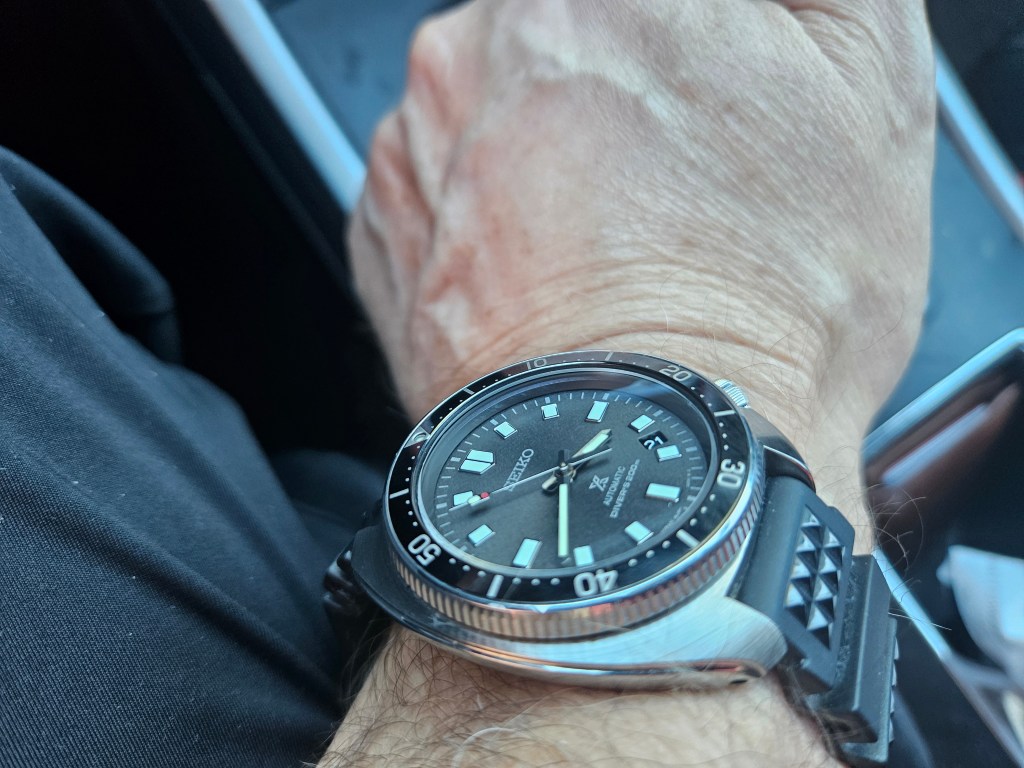
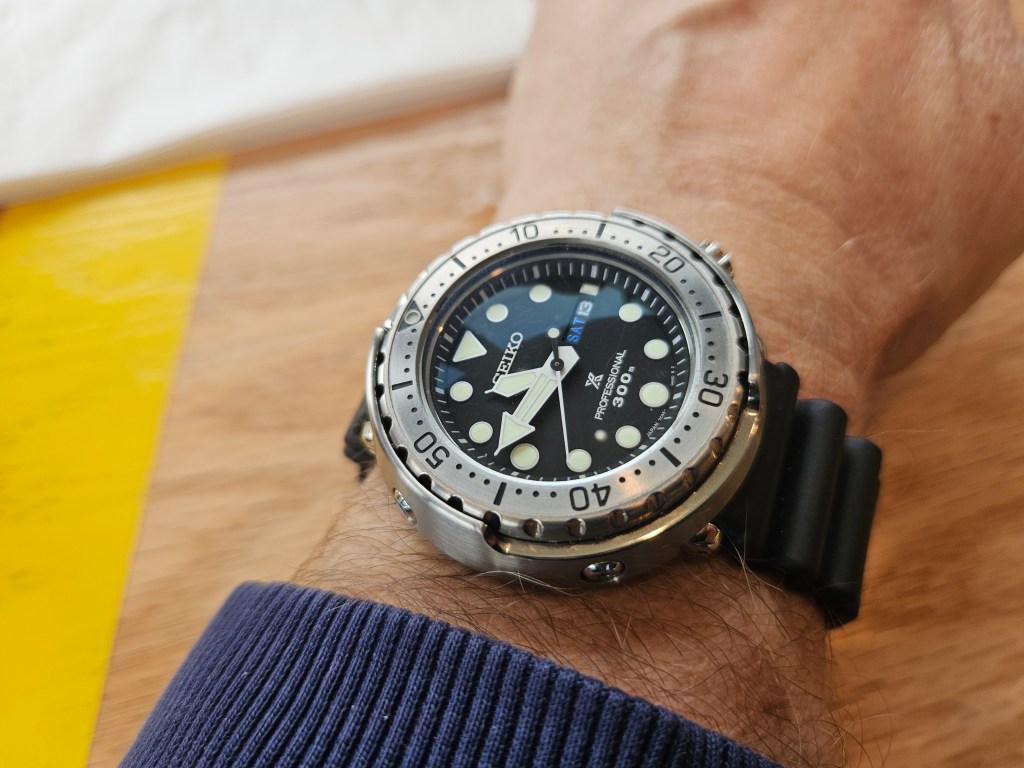
    Flash forward fifty-eight years. Spoiler: I still worry like a professional. My bandwidth jams up with the dumbest obsessions—like finding the right rubber strap for my Seiko diver. I’ll lose sleep and dive so deep into Internet rabbit holes you’d think I was chasing doctorates in linguistics and ophthalmological physics simultaneously.

    Food isn’t any easier. Reading How Adam Smith Can Change Your Life, I encountered Hillel’s famous line: “If I am not for myself, who will be for me? If I am only for myself, who am I?” Roberts added that anyone who would sacrifice millions of lives to save a finger is “a monster of inhuman proportions.” Cue existential panic: If I chow down on Greek yogurt and whey protein while ignoring the industrial torture of animals, what kind of person does that make me?

    That question dredged up a memory. Years ago, while doing valet duty at my twins’ school, I chatted with Lucianna, a Brazilian parent. She told me about growing up on her uncle’s dairy farm, where calves were torn from their mothers so humans could have their milk. She remembered the calves wailing all night, a sound so haunting she’s sworn off dairy for life. Her story still rings in my ears.

    So here I am, designing my new plant-based meal plan: buckwheat groats, tofu, tempeh, nut butter, soy milk, a stack of supplements, and protein powder. I’m ready to begin. But, of course, my inner worry machine kicks in:

    • What about my omnivore family? My tofu will feel like an accusation on their dinner table.
    • What about my friends and relatives? I’ll be dismissed as a moral buzzkill, banished to the Lonely Dungeon.
    • What about vacations? Hunting for vegan options in Miami or Oahu will turn relaxation into reconnaissance.
    • What about protein and Omega-3s? My muscles will wither, my brain will curdle, and I’ll be left a vegan husk.
    • What about cheating? What if, in a moment of weakness, I scrape a lemon-pepper shrimp into my mouth while clearing plates? Then I’ll hate myself, because I’ll have violated both my morals and my macros.

    And so the worrying goes. Yet maybe this is the point. Doing the right thing rarely comes gift-wrapped in comfort. It comes with sweat, tension, and plenty of struggle.

    My grandfather once told me when he was eighty and drowning in doctor visits: “Old age is not for cowards.” I’ll amend that. No age is for cowards. Living—really living—means confronting fears, fighting cowardice, and resisting the bondage of compulsive worrying. And if anyone has the secret sauce for escaping this mental hamster wheel, I’m all ears.

  • Building a Bulwark Against Dopamine

    Building a Bulwark Against Dopamine

    Charles Duhigg, in The Power of Habit, insists that the real magic of self-improvement isn’t magic at all—it’s repetition, consistency, and time. Muscle memory married to good habits rewires the brain so that willpower stops being a daily knife fight. Instead, habits act as a bulwark, a fortification that keeps temptation outside the walls.

    Take my relationship with German Chocolate Cake. I adore it. But I eat it once a year because I never buy it. The thought of driving downtown, circling for parking, and elbowing through bakery lines kills the craving faster than broccoli. If people on TV are flaunting cake, I’ve trained myself to default to popcorn and an apple, which is like swapping bourbon for chamomile tea. Still, despite this culinary Maginot Line, I live fifteen pounds heavier than I want to be—proof that the fortress has weak spots.

    The Internet, however, is a stronger adversary than cake. Social media rewires the brain more ruthlessly than sugar. Twitter/X trained me to think in quips, Facebook taught me to beg for likes like a starving dog scratching at the door. I finally quit both. I post on Facebook once a month and promptly forget about it. I’m saner for it.

    But YouTube? That’s my heroin. I’ve been making watch-obsession videos for over a decade and built a modest following of 10,000. When a video pops, YouTube showers me with fireworks like a slot machine jackpot. When it flops, I get a scolding message: “This video isn’t bringing in as many of your subscribers as usual.” It’s the algorithm wagging its finger like a principal telling me I’ve failed society.

    YouTube has rewired my brain in both noble and grotesque ways. On the one hand, I’m sharper at public speaking, better at spinning essays into expositions, and more skilled at civil engagement with various personalities. On the other hand, I care too much about metrics, let them colonize my self-worth, and live half my life inside the algorithm’s funhouse mirror. I now inhabit parallel universes—the physical world and the YouTube world—fleeing one when the other displeases me.

    The problem is that the Internet’s temptations can’t be quarantined. My work machine is also my dopamine slot machine. One new tab, one click, and I’m plunging into a carnival of junk content, drenched in FOMO syrup and neon distraction. Cal Newport is right: when you toggle between focused work and dopamine junk food, the brain leaves behind a sticky residue that smothers concentration. I’ve felt that sludge firsthand, and I despise myself for swimming in it.

    As Duhigg notes, the brain is “constantly looking for ways to save effort” by making routines automatic. That’s useful for the monk who wakes at dawn to meditate, but disastrous for someone whose screen offers the New Tab to Nowhere. If only I could build a stronger bulwark against the carnival in my browser, I might actually live lighter, work deeper, and—dare I say it—be happier.

  • Rising Above the Wreckage: Finding Meaning in the Broken Phase

    Rising Above the Wreckage: Finding Meaning in the Broken Phase

    For the last several years, I have been haunted by the lines of Yeats’s poem The Second Coming: the center will not hold; anarchy is loosed upon the world.” A.I., deepfakes, the social media fever swamp, and deranged populists seem to have splattered into a chaotic universe. It’s tempting to surrender to nihilism, declare it all over, and use that declaration as an excuse to live with reckless disregard—eat chocolate cake three times a day and go completely to pot.

    But I know that impulse is folly. Viktor Frankl is right: we don’t get to choose the meaning of our lives. Life presents challenges within our particular circumstances that force us to rise up, stand to attention, and embrace the meaning laid before us. To live this way is to live in kairos—meaningful time.

    So what does it mean to rise above? What are the circumstances we now inhabit? These questions animate Alana Newhouse’s essay Everything Is Broken.” Written ten months after the pandemic, in January 2021, Newhouse and her husband know something is wrong with their newborn son but cannot get answers from the medical establishment as they undergo what she calls a Kafkaesque medical mystery journey.” By sheer luck, they finally discover their son’s rare disease. When they ask a family friend, physician Norman Doidge, why so many medical “experts” failed to diagnose it, he delivers the following diatribe:

    “There are still many good individuals involved in medicine, but the American medical system is profoundly broken. When you look at the rate of medical error—it’s now the third leading cause of death in the U.S.—the overmedication, creation of addiction, the quick-fix mentality, not funding the poor, quotas to admit from ERs, needless operations, the monetization of illness vs. health, the monetization of side effects, a peer review system run by journals paid for by Big Pharma, the destruction of the health of doctors and nurses themselves by administrators, who demand that they rush through 10-minute patient visits, when so often an hour or more is required, and which means that in order to be ‘successful,’ doctors must overlook complexity rather than search for it . . . Alana, the unique thing here isn’t that you fell down so many rabbit holes. What’s unique is that you found your way out at all.”

    After diagnosing the ills of medicine, Norman pivots to journalism. Aware he is speaking to two journalists, he asks: Now, can I ask you two something? How come so much of the journalism I read seems like garbage?”

    Realizing the truth of Norman’s rant, Alana wonders if not just medicine and journalism, but everything, is broken. She resists the thought as hyperbolic, even doomsday, but after reflection she concludes: the center isn’t holding; anarchy has indeed been loosed upon the world. The institutions that once gave us sense, order, and trust are fractured.

    When did the fracturing begin? She traces it back to the 1970s, when business lowered labor costs with “labor-saving technology” and offshore jobs. The tech revolution followed, making the American Dream more precarious than ever. As workers were paid less and less, they entered what she calls a condition of flatness—a hollowed uniformity in which institutions persist yet fail in eerily similar ways.

    We now live in an age of commodified experience—flat, Uncanny Valley-like, predictable. In a state of flatness, critical thinking atrophies and people can be led to believe almost anything: that Iran is trustworthy, that there are no biological differences because gender is purely social construction, or that tech lords can transfer massive assets to themselves and polarize society without consequence. She writes, “Seduced by convenience, we end up paying for the flattening of our own lives.” Stupid ideas proliferate because flatness produces stupidity.

    Newhouse reserves most of her ire for the Woke as the source of stupidity, which to my consternation means she leaves equally idiotic Right-wing trolls comparatively unscathed. Still, her central thesis—that we are in a Broken Phase, that cycles of collapse are part of the human condition, and that our current state is not permanent—gives me a measure of comfort. It reminds me to be strong, to rise up, and to embrace a life of meaning.

  • Stepford Dreams and Other Diseases

    Stepford Dreams and Other Diseases

    “Our culture denies the nature of reality,” therapist Phil Stutz declares in one of his chapters from Lessons for Living. In denial, we drift through a fantasy world—a frictionless utopia where everything turns out perfectly with minimal effort, unpleasantness is airbrushed away, and immediate gratification flows like tap water. If you fail to thrive in this Instagram-ready Eden, well, clearly it’s your fault.

    Reading Stutz’s dissection of this mythical paradise—one that entitlement and cleverness supposedly guarantee—I’m reminded of family vacations to Hawaii. The trip’s curated perfection feels ripped straight from pop culture’s catalog of false realities. I start imagining myself as a minor Polynesian god, which makes returning home to laundry, bills, and chores feel like divine demotion.

    Stutz’s mission is to break our addiction to the idea that life is a permanent Hawaiian vacation. His blunt truth: life is pain and adversity, the future is uncertain, real accomplishments require sweat and discipline, and—brace yourself—you are not special enough to escape these rules. These principles don’t expire.

    This is not, Stutz insists, a gospel of misery. Love, joy, surprise, transcendence, and creativity are woven into life’s fabric—but so are conflict, loss, and uncertainty.

    Why, then, do we cling to the fantasy? In part, because the media keeps showing us people who appear to have escaped reality’s terms. Movie stars and influencers are lit like Renaissance portraits, perfectly curated, radiating supreme happiness. Their romances are operatic, their sex lives cinematic. They seem universally adored and gracious enough to share the “secrets” of their bliss. They look as if they’ve broken free of pain, adversity, and doubt—and they promise we can do the same if we just buy the right products and mimic their lifestyle.

    It doesn’t matter where you sit in the social pecking order; the fantasy assures you can ascend to the influencer’s Olympus.

    This is a mass delusion. Stutz writes, “When everyone acts as if a fantasy is real, it begins to seem real.” But for you, it never arrives. Your bank account wheezes. Your waistline ignores your best intentions. Your body refuses to flatter you. Your parenting is a gamble at best. Your life often feels like it’s running you.

    Because you believe in the fantasy, you think you’re defective. You look in the mirror and mutter, “Loser.”

    That’s the invoice for believing in perfection: when it inevitably collapses, you’re left with self-loathing. Stutz warns, “The problem is that the other group has become the standard, and self-esteem starts to depend on being like them. An adverse event feels like something is happening that is not supposed to be happening. The natural experiences of living make you feel like a failure.”

    His solution? Total reorientation. Replace the static images of perfection—what I call “Magical Moments Frozen in Time”—with the truth: life is a messy, moving process. Stutz explains: “The ideal world with the superior people is like a snapshot or a postcard. A moment frozen in time that never existed. But real life is a process; it has movement and depth. The realm of illusion is an image, dead and superficial. Still, these images are tempting. There is no mess in them.”

    If media has brainwashed us into aspiring to be perfect Stepford spouses, how do we reject these static ideals and embrace life in its raw, dynamic, and inconvenient fullness? Stutz says we must accept this: “Life is made up of events. The only real way to accept life is to accept the events that comprise it. And the flow of events never stops. The driving force of the universe reveals itself via the events of our lives.”

    This flow connects us to life’s energy, making us fully alive. The downside? It leaves us feeling small, exposed, and out of control. The false paradise promises to free us from that vulnerability, but in doing so, it severs our connection to life’s current and leaves us in “spiritual death.”

    Mental health, Stutz argues, depends on accepting this unstoppable flow of events. He compares it to good parenting: “It is not good enough to just show up. You need a point of view and a set of tools. It is impossible to deal with events constructively without being prepared.” If you’re clinging to Magical Moments Frozen in Time, you’re unprepared when reality slaps you.

    The preparation, he says, is a philosophy—one that lets you redefine negative events. Stutz writes, “Preparing yourself with a philosophy enables you to change the meaning of a negative event. With a specific philosophy, you can aggressively change your perception of events.” That philosophy rests on three pillars:

    • Adverse events are supposed to happen; they don’t mean you’re broken.
    • Every negative event is a growth opportunity.
    • Spiritual strength matters more than positive outcomes.

    When you accept life as a series of crises, you stop throwing toddler-level tantrums every time something goes wrong. People addicted to Magical Moments tend to overreact to challenges—often making their reaction worse than the original problem.

    Reading this, I recall when my wife and I had twins fifteen years ago. She handled meltdowns with calm; I met a child’s tantrum with one of my own. A therapist told me, “When you get angry, you go zero to ten in under a second, and your body chemistry changes in a way that fills the room with toxic energy. That escalates your children’s tantrums. Your wife, on the other hand, stays calm. She has a calming effect on the twins. You need to learn how to calm down in a crisis.”

    Stutz is right. Being a spiritual person means maturing as a parent. Being a devotee of Magical Moments Frozen in Time means being a spoiled child yourself—an extra in Idiocracy. A society enthralled by fake perfection can’t sustain itself; it’s destined for regression, chaos, and entropy.

  • The Terrarium of the Gods

    The Terrarium of the Gods

    Last night I dreamed I was prowling for beachfront property in the dead of night when I stumbled upon a terrarium the size of several football fields—an absurd, glass-walled Eden under artificial light. Some plots were shameless cons, swindler specials dressed up with tacky lawn ornaments and fake palm trees. Others, however, had loamy, dark soil that practically hummed with fertility. Over the PA system, an NPR announcer’s warm, soporific voice guided prospective dreamers like me, pointing out which plots were worth my attention.

    I claimed a plot perfect for herbs, tomatoes, and peaches, imagining future harvests under this climate-controlled dome. Then I set off to find my family, who were dining on the rooftop of a nearby hotel, high above the night and the surf. When I arrived, they were lit with merriment, clinking glasses with friends, laughter rolling across the table like a tide.

    Leo, a family friend with the generosity of a man who’s just inherited a brewery, pressed a frosty glass stein of amber beer into my hand. I’m not much of a beer drinker, but curiosity won, and I took a long pull. It was cold, crisp, and shockingly delicious—like a liquid reprieve from all earthly woes. Before I could savor the moment, a teenage boy with only the flimsiest link to Leo snatched the stein from my hand and drained it with feral efficiency. I seethed but swallowed my annoyance.

    Leo, undeterred, promised reinforcements: more beer, plus sandwiches from “the downstairs stash.” He led me to a cold-storage room the size of a cathedral. Inside, shelves groaned under the weight of sandwiches—no ordinary deli fare, but hand-crafted masterpieces assembled by World Series legends of the 1970s. Every sandwich bore a tag in looping script: Dave Winfield. Reggie Jackson. Willie Stargell. Dave Parker. Jim “Catfish” Hunter. Preserved by refrigeration so perfect, the bread seemed freshly baked, the lettuce still crisp, as though the ballplayers had just stepped away from the cutting board.

    We loaded up on sandwiches and pitchers, returned to the rooftop, and feasted under the city lights. The beer was endless, the view intoxicating. For a fleeting moment, I felt like I had not only bought the best plot in the terrarium but inherited the whole ridiculous world.

  • The Paradise Hangover

    The Paradise Hangover

    Yesterday I posted a 24-minute video on my YouTube channel about my family’s trip to Oahu—about slipping into what I call Sacred Time—and about the sullen resentment that comes when you’re yanked back into Profane Time. In Sacred Time, there are no utility bills, no kitchen repairs, no inbox choked with memos. In Profane Time, there’s nothing but.

    There’s a lag between the two realms. The body may be back at the desk, moving through the motions of Profane Time, but the mind and heart are still on an island, half-convinced they’ve found a loophole in the laws of mortality.

    In that sacred dimension, we become a mythic version of ourselves—effortless raconteurs, irresistible charmers. The hotel bartender laughs at your jokes. The maître d’ nods in worldly agreement when you talk about sunsets and seared ahi. Their warmth feels real, not transactional. And you start believing the PR you’ve written for yourself. Then you fly home, and the whiplash from god-king to bill-payer is too much to bear.

    It reminded me of a woman I met nearly twenty years ago in a frozen-yogurt shop in Torrance. My wife and I were waiting in line when she appeared: tall, angular, maybe in her sixties, the ghost of a former beauty. Short blonde hair with a whiff of style still clinging to it, smeared red lipstick, tight leopard-print pants, and high heels that had seen better decades. She carried her currency—hundreds of pennies—in a crumpled paper bag.

    She spilled them, along with her dessert, across the tile floor. I bent to help her, feeling the full weight of her story without knowing any details. I imagined her as a former starlet who once walked red carpets, who’d been adored, flattered, invited everywhere—until one day she wasn’t. She’d never made the identity shift from somebody to nobody, and that inability had swallowed her whole.

    Self-mythologizing is dangerous. Whether you’re a faded Hollywood beauty or a sun-dazed tourist just off the plane from paradise, you have to face the comedown. Adult life demands it. The mythical and the mundane need each other—without the grind, the magic loses its shine.

    So yes, I’m sulking about my return from Hawaii. Yes, I’d rather be sipping mai tais than buying new blinds and a desk for my daughter. But that’s the deal. Profane Time pays for Sacred Time. You can’t live in one without surviving the other.

  • Hawaiian Vacations Are About Stepping Outside the Clock and Cheating Death

    Hawaiian Vacations Are About Stepping Outside the Clock and Cheating Death

    Spend a week with your family in Hawaii and you slip into a parallel time zone—one that ignores clocks altogether.

    It starts the moment you survive five airborne hours in a 400-million-dollar jet. You land feeling like Superman, minus the cape and plus a mild dehydration headache. Within 24 hours, you’re barefoot, in swim trunks, marinating in mai tais, spooning loco moco into your face, and demolishing lilikoi pies. The weather is so perfect it feels like it was made to flatter you personally. Sunsets become private screenings. You have no deadlines, no alarms, no reason to measure the day except by the height of the tide or the level in your glass.

    In this dimension, you’re not just on vacation—you’ve stepped outside of time. And outside of time means outside of death. Some corner of your brain starts whispering that you’re untouchable. Immortal.

    That’s when the trouble starts.

    The thought of getting back on a plane becomes revolting. It’s not just leaving Hawaii—it’s leaving Sacred Time and returning to Profane Time. Back to the grind where schedules nag and mortality hides in every bathroom mirror.

    Even after you land at home, you’re not really home. You’re in a kind of sun-drunk denial, still hearing the ocean in your ears while the neighbor’s leaf blower whines outside. The older you get, the worse the hangover—because you know the clock is running, and the illusion of timelessness is an intoxicant more potent than any cocktail with a paper umbrella.

    And then it’s over. You reenter the machine. Days are counted in emails, not waves. The tan fades, and with it the fantasy that you’ve cheated the countdown. That’s the real brutality of reentry—not the weather, but the eviction notice from the one place that convinced you, however briefly, that you could live forever.

    So yes, I’m already searching for Big Island resorts. It’s not wanderlust—it’s a hunt for my next fix of immortality. And I know the danger. One day I might just stay.

  • Scaling the Walls of Forgetting

    Scaling the Walls of Forgetting

    Last night I dreamed I was trapped between two bodies—one fixed at nineteen, the other at sixty-three—and the hands kept swinging me back and forth. Each shift rewired me. My skin would tighten, my mind sharpen, and then in the next instant my knees ached, my thoughts clouded, and the mirror refused to settle on one face.

    In the confusion, I kept losing my keys. Not just keys—wallet, watch, phone. Every few minutes I’d pat my pockets and feel the hollow absence. I lived in a commune that was equal parts office, recording studio, and half-forgotten alumni reunion. The place was enclosed by towering steel walls, the kind that promised protection while making you wonder what you were being kept from.

    We scaled those walls to glimpse the outside world and, somehow, the higher we climbed, the further we could travel through our own memories. But altitude brought obstacles—massive gates stacked one atop another, each locked, each requiring a key.

    I had a locker at the base of the camp with everything I needed: my belongings, my one precious key. And then it was gone, lost to the dream’s careless currents. I cursed myself, replaying the loss in my mind until it stung.

    Kevin, an old friend with a voice like a warm blanket, told me it was fine. Not to worry. That I was okay. Ted, wiry and restless, was already at the top, peering over. He called down, telling us to follow his example, that freedom was just beyond the next barrier.

    Meanwhile, Charlie lounged at the compound’s base, getting his hair trimmed and his shoes polished by a contented employee, as if this walled-in world was good enough.

    The forgetting pressed in on me, thick and airless. Ted’s optimism couldn’t lift me, Kevin’s comfort couldn’t steady me. Without the key, I felt stripped of competence. I teetered there—between the clock faces, between the steel walls—on the edge of hopelessness, afraid that even if I found the lock, I wouldn’t remember what it opened.

  • The Other Place Has QR Codes

    The Other Place Has QR Codes

    Of all the Twilight Zone episodes that have taken up residence in my psyche, none clings more tenaciously than “A Nice Place to Visit.” A petty crook named Rocky Valentine gets gunned down during a botched robbery and wakes up in what appears to be paradise. He’s greeted by Pip, a genial, rotund guide played by Sebastian Cabot, who grants him everything his larcenous heart ever wanted: money, women, luck, luxury. No struggle, no stress. Every desire fulfilled on command.

    At first, Rocky revels in this frictionless dreamscape. It’s Vegas without losing streaks, heaven without requirements. But gradually, pleasure without purpose curdles into a thick, syrupy dread. He realizes that gratification without resistance is just another form of punishment. Bored out of his mind and desperate for meaning, Rocky pleads with Pip to send him “to the other place.”

    Pip laughs and delivers the gut punch: “Heaven? Whatever gave you the idea that you were in Heaven, Mr. Valentine? This is the other place!” And then, with glee, Pip cackles like the well-fed devil he is.

    Which brings me to paid parking.

    There is a hell, and it lives in the infrastructure of modern urban parking. It’s a realm of QR codes, license plate entries, and apps that want your soul—or at least your email and billing zip code. Some kiosks accept coins, others demand smartphone apps, two-step verification, and an MFA code just to stand still without being ticketed. My wife, tech-literate and cool-headed, usually handles this logistical hellscape while I loiter nearby, pretending to study the map of downtown like it’s a sacred text.

    But this week she’s out of town at a teaching convention, and I’m taking our twin daughters to Laguna Beach. This means I have to drive, find a parking structure, and—here’s the true horror—navigate the digital rigmarole of paid parking without her guidance. The thought of it has me sweating harder than Rocky in his silk suit.

    The absurd part? It’s not the traffic, the tides, or the teenagers that unnerve me. It’s the parking meter. The existential shame of standing in front of a digital payment kiosk, poking at it like a confused ape while my daughters wait patiently (or impatiently) beside me. I don’t fear the unknown. I fear looking like an idiot in front of my kids.

    But here’s the deeper, darker realization: this is just a symptom. My wife, through years of effort and mental load, has become the de facto logistics commander of our household. She knows which airport lines move faster. She’s the one strangers approach at terminals, sensing her Jedi-level calm. Meanwhile, I shuffle behind her like an NPC in a bad video game—directionless, frictionless, practically translucent.

    Frictionless living has a cost. It breeds detachment. It robs you of engagement, resilience, and presence. And like Rocky Valentine, I’ve grown too used to being served instead of showing up.

    Ironically, I’m obsessed with watches—those exquisite tools designed to remind you where you are in time. And yet, I’ve spent years drifting, distracted, floating outside the dial. It takes a solo day trip with my daughters—an hour drive, some shopping, a good lunch, and possibly a tantrum or two—to pull me back into the present.

    When my wife heard about my plan, she said, “You don’t know how happy this makes me.” And I believed her. She wasn’t just relieved that I was giving her a break. She was glad to see me step into the friction. To stop spectating and start parenting in real time.

    No, I don’t want to be Rocky. I don’t want a life where every parking spot is perfect, every line is short, and every meal arrives on time. I want the chaos. I want the curveballs. I want the real thing.

    Even if it means downloading the stupid parking app.