
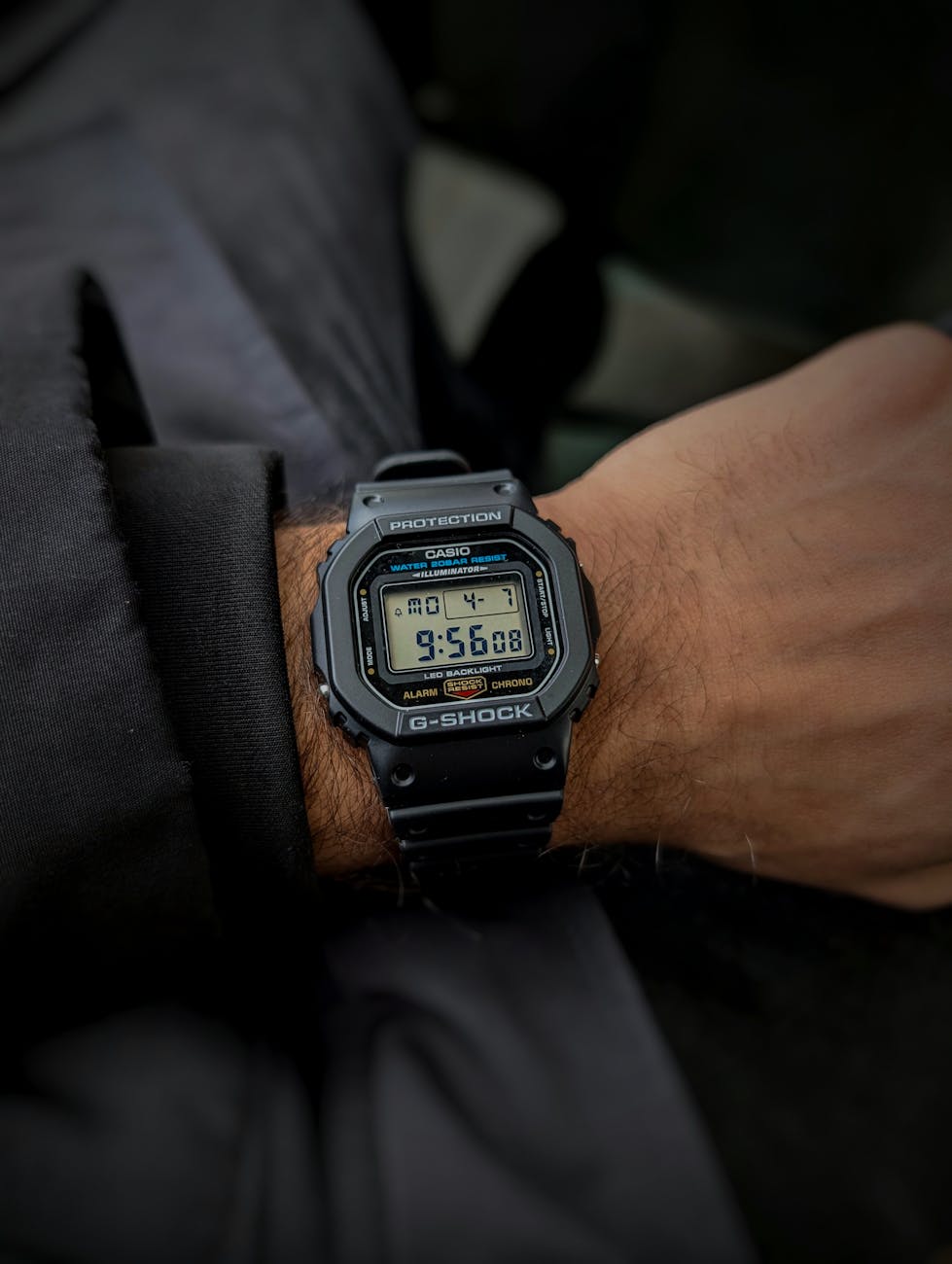
Core members of G-Shock Nation revere the GW-5000U because it represents the moment the Square stopped flexing and started aging well. It carries the 1983 blueprint, but underneath the familiar shape lives grown-up engineering: steel inner case, screwback, soft resin that disappears on the wrist, solar power, Multiband 6. No tactical cosplay. No feature inflation. No desperate attempt to look extreme. It sits there dense, quiet, perfectly accurate, and emotionally undemanding. To the initiated, that restraint signals maturity. The owner is no longer chasing the next G-Shock. He has arrived. The GW-5000U isn’t admired for excess; it’s admired for restraint. In a hobby addicted to novelty, the greatest watch is the one that makes novelty feel unnecessary.
Collectors buy the GW-5000U the way serious readers buy a hardbound classic they’ve already finished online. The object represents a principle. It is the philosophical center of the Square ecosystem—the pure form. Screwback steel, operational silence, atomic precision, no theatrics, no gimmicks. Owning it signals allegiance to a worldview: function over spectacle, permanence over churn, competence over excitement. The purchase isn’t about need. It’s about completion. Without the 5000U, the collection feels like a conversation circling its point. With it, the argument finally lands. The watch becomes less a tool than an anchor—an idea made physical, a quiet declaration that you are no longer collecting features; you are collecting coherence.
And yet, as you contemplate its greatness, a physical reality intrudes. The watch is small. Your eight-inch wrists and decades of barbell diplomacy have produced forearms that turn the Square into a polite suggestion of a watch. You no longer care about wrist presence, but wearing something that looks like a borrowed child’s timepiece crosses a line. Philosophical perfection is one thing. Visual credibility is another.
Then comes the rationalization. Your twin daughters. The GW-5000U would look perfect on them. It would teach them punctuality, discipline, operational thinking. It would introduce them to the beauty of silent precision. It would, naturally, make them chips off the old block. You present the idea with the enthusiasm of a man offering enlightenment. They respond with the facial expression normally reserved for unexpected homework. In that moment, clarity arrives. This isn’t mentorship. This is Proxy Justification—the collector’s sleight of hand, where a purchase he cannot defend for himself is reassigned to someone else while quietly serving his own emotional agenda. The language is generosity. The motive is displacement. He isn’t buying a gift. He’s buying wrist time by proxy.
The realization lands hard and fast. The box remains unpurchased. The daughters remain uninterested. And you step back, a little embarrassed, a little wiser, and briefly sober. In a hobby built on elegant rationalizations, the rarest achievement isn’t the right watch. It’s the moment you recognize a bad story—and don’t tell it to yourself.



 Cinemorphosis