Tag: life

  • The Curse of the Shamewich

    The Curse of the Shamewich

    I remember the day well. I was six years old as I trudged to Katherine R. Smith Elementary in San Jose, California, with three boys who would’ve made excellent talent scouts for the smell police. Usually, a Hostess Fruit Pie or pink Sno Ball made lunch a bright spot in my otherwise bleak existence, but not today. Today, the stench of rotten tuna wafting from my Captain Kangaroo lunch box was so potent it could’ve been classified as a biological weapon. My companions, gagging and accusing me of harboring a dead sea creature, demanded an explanation.

    Finally, I surrendered. We stopped in a field separating the Stop & Go Market from the school, and I opened the lunch box. There it was: the festering tuna sandwich, now a slimy, mayonnaise-coated abomination that had broken free from its plastic baggie and redecorated the inside of my lunchbox like a Jackson Pollock painting from a nightmare. We stared in horror at the black tuna juices, streaks of inky malevolence, and chunks of something unholy smeared all over the tin pail’s lining.

    “How could you eat that?” one boy asked, his voice a mix of pity and revulsion. I shrugged, resigned to my fate. It was my lunch, after all. So, I closed the lunch box, sealing the miasma inside, and we continued our grim march to school. I placed my lunch box alongside everyone else’s in the designated coat closet, a ticking olfactory time bomb among the innocent.

    Then came the Duck-and-Cover Drill. We crawled under our desks, awaiting the end-of-the-world announcement from the principal. But instead of nuclear annihilation, Mrs. Corey and the entire class were assaulted by a stench so vile it made everyone question their will to live. “Who brought a dead creature into my classroom?” she demanded, her forehead crinkling, nostrils flaring. Students squeezed their noses and made mock gagging noises, adding to the apocalyptic ambiance.

    The boys I’d walked to school with pointed at my lunch box, the source of the olfactory Armageddon. Mrs. Corey approached it like a bomb disposal expert, slowly opening the lid to reveal the horror within. She gazed at the contents as if she had just uncovered a portal to the underworld. “Did your mom pack this?” she asked, her voice tinged with disbelief and horror.

    I nodded. Mrs. Corey winced, a look of cosmic condemnation crossing her face, as if my entire bloodline was responsible for this culinary atrocity. She closed the lunch box with a finality that suggested she was sealing away a great evil, handed it to the teacher’s aide to place outside, and announced that my food was unfit for consumption. She then solicited volunteers to donate a part of their lunch to me, the pariah of the playground.

    Too mortified to eat, I sat on my blanket, avoiding the curious and horrified stares of my classmates. My appetite was dead, much like the tuna that had ruined my day. I remained on my blanket, and imagined I looked like David Draper in that Monkees episode. Rather than be a pathetic figure in need of charity, I would be a vision of glory and strength, the focal point of everyone’s admiration. My fantasy of walking like a Skyscraper among the Shacks of Mediocrity at the beach was interrupted by my stomach growling in protest at the cruel hand fate had dealt me.

    Little did I know, I had been cursed by the Shamewich–the deep, haunting sense of culinary disgrace one feels when a packed lunch goes rancid, rogue, or just plain weird—and becomes the epicenter of public ridicule. A Shamewich isn’t always a sandwich, but it’s always a moment—a sensory trauma in which your identity is temporarily replaced by the aroma of failure.

    It’s the rank stench of black tuna juice wafting from your Captain Kangaroo lunchbox. It’s the entire class gagging under their desks while your lunch gets escorted out like a radioactive crime scene. A Shamewich is not just what you eat—it’s who you become in the eyes of your peers: the one whose mother packed a biohazard in bread.

    Symptoms include:

    • Desire to sink into the floor or self-immolate
    • Permanent suspicion of mayonnaise
    • Fantasies of reinvention as a muscle-bound hero from The Monkees
    • Never bringing tuna to school again unless you’re ready to own the nickname “Fish Bomb”

    A Shamewich leaves an emotional stain long after the mayonnaise has been wiped clean. It’s not just a bad lunch—it’s a rite of passage.

  • How 60s TV Gave Us Kibblelust

    How 60s TV Gave Us Kibblelust

    As a kid in the 1960s, I was utterly mesmerized by the tantalizing dog food commercials on TV. Gaines-Burgers, those succulent patties that looked like ground hamburger, and Gravy Train nuggets, which magically transformed into rich, brown gravy with just a splash of water, had my salivary glands working overtime. It was clear that the advertisers had one devious goal: to make dog food so visually appealing that even humans would crave it. And did they succeed.

    I marched up to my dad one day, eyes wide with canine envy, and declared that I wanted to be a dog just so I could savor these advertised delicacies. His face twisted in confusion, then horror, and then a resignation that only a parent can truly master. Determined to cure me of my bizarre wish, he whisked me off to a local bistro and ordered me a French Dip with au jus sauce.

    As the sandwich arrived, dripping with savory goodness, my dad leaned in and asked, “So, how do you like your French Dip?”

    I took a bite, my taste buds doing a happy jig, but instead of expressing my appreciation like a normal human child, I couldn’t resist. I let out a guttural growl, dropped to all fours, and began scratching an imaginary itch with my hind leg, much to the mortification of my father and the bewilderment of the bistro patrons.

    Dad’s face turned a shade of crimson that would have made a ripe tomato jealous. He sighed deeply, clearly questioning his life choices, while I continued my canine performance, convinced that I had discovered the next best thing to Gravy Train. It was then that I realized: the allure of dog food had turned me into a French Dip-devouring, itch-scratching spectacle of childhood absurdity.

     The irrational, often childhood-onset hunger triggered by the hyper-curated presentation of pet food in commercials—particularly dog food stylized to look more appetizing than anything in your pantry. Kibblelust is not mere curiosity; it’s a visceral craving born from the fantasy that somewhere, out there, dogs are eating better than you are.

    Sufferers of Kibblelust may experience symptoms such as food envy toward canines, a desire to bark in public, or in extreme cases, dropping to all fours in a bistro after biting into a French Dip, convinced it’s the closest a human will come to Gravy Train transcendence.

    This condition typically begins with 1960s-70s advertising campaigns involving burger-shaped meat slabs and gravy-generating pellets and is usually cured by a parent’s panicked intervention and a stern lesson in food hierarchy.

    Kibblelust represents the first great betrayal of consumer trust: when you realize advertisers are not above making animal food look better than human cuisine—and you fell for it.

  • Cartoon Eve and the Algorithmic Hangover

    Cartoon Eve and the Algorithmic Hangover

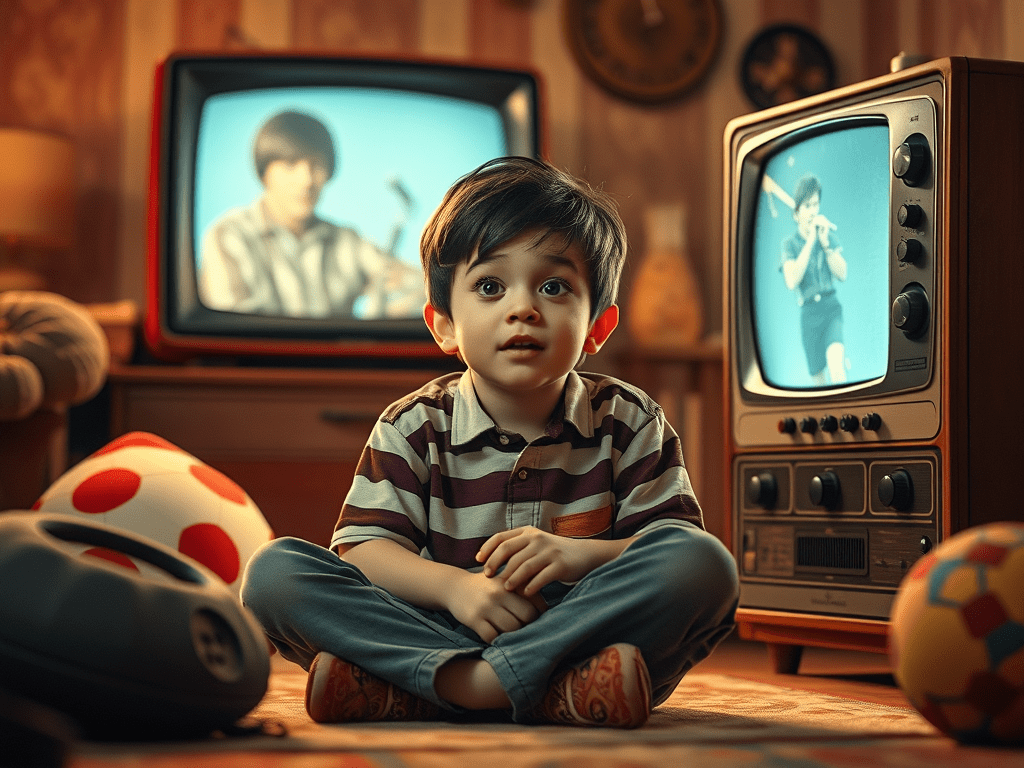
    In the early ’70s, the network execs at ABC, CBS, and NBC pulled a marketing move so manipulative it should’ve been illegal under the Geneva Conventions. On a hallowed Friday night in the month of September, they handed kids a psychic dog biscuit: a glittering preview of Saturday morning’s new cartoon lineup. As a nine-year-old, I’d sit cross-legged in front of the TV, slack-jawed and vibrating, watching grainy flashes of The Bugaloos and H.R. Pufnstuf like I was being shown a trailer for heaven. It was less of a preview and more of a grilled Ribeye waved under my nose by a smiling sadist who tells me breakfast is in 12 hours.

    Sleep was not an option on Cartoon Eve, a night more sacred than Christmas, Easter, and your grandma’s funeral combined. I’d lie in bed thinking, What if I sleep in? What if I miss the premiere of Lidsville? What if, in a moment of tragic miscalculation, I eat my Cap’n Crunch in the kitchen instead of the TV room and lose valuable viewing seconds? These were the pre-digital days—no DVR, no YouTube, no forgiveness. If you missed it, you missed it. You could cry, but the cathode ray tube did not care.

    The masterminds behind these shows weren’t just marketers—they were psychological arsonists, setting fire to our dopamine circuits before we were old enough to spell serotonin. They didn’t just sell cartoons. They sold Tang, Danish Go-Rounds, and Pillsbury Space Sticks with the breathless urgency of black-market opioids. The shows started at 7 a.m. and ran till 11, but by 10 I’d start to feel queasy. I’d hear the crack of a baseball bat outside and realize I was sitting in a dim living room while my real childhood was playing third base across the street. That’s when the guilt set in—the primal, shame-soaked knowledge that I was trading sunshine and scraped knees for anthropomorphic cereal mascots and animated product placement.

    Eventually I’d fling off my pajamas like a molting larva, throw on jeans, and bolt out the door, desperate to reclaim the morning before it calcified into regret. Childhood, I realized, was a loop of anticipation, overstimulation, and the fear of having made the wrong choice.

    But compared to today’s chaos, that quaint Saturday-morning psychodrama feels like a gentle massage from Mr. Rogers. Social media is Cartoon Eve with weapons-grade dopamine—a psychic arms race where even adults devolve into sweaty, wide-eyed nine-year-olds, tapping their screens like they’re trying to summon a cartoon genie.

    After a decade of scrolling, I’ve pulled the plug. I’ve cut back my digital exposure by 97%, and what’s left is like being a shell-shocked tourist floating down the Amazon on a deflating raft, watching piranhas in mid-frenzy shred a water buffalo. It’s gruesomely riveting, but it fries your soul and robs you of original thought. Now, like millions of others, I am in post-social media convalescence—pale, twitchy, and unsure if I’ll ever feel real sunlight again.

    But one thing’s for certain: I don’t miss the Space Sticks.

  • The Undying Curiosity of a Reluctant Earthling

    The Undying Curiosity of a Reluctant Earthling

    About ten years ago, I found myself standing on the sun-scorched lawn outside the campus library, chatting with a colleague who was edging into his sixties. I was freshly minted into my early fifties, just far enough along to start scanning the horizon for signs of irrelevance. Naturally, our conversation slid into that black hole topic older academics can’t resist: retirement—or, as my colleague eloquently rebranded it, “a form of extinction.” According to him, the day you stop teaching is the day your name starts sliding off the whiteboard of history. You don’t just stop working—you vanish. The world changes its locks, and your keycard stops scanning.

    From there, the conversation took its next logical step—death. And that’s when I said something that was equal parts earnest and glib:
    “Even at my lowest, most gut-punched moments, I’ve always had this strange, burning desire not only to live—but to never die.”
    Why? Because I am possessed by a compulsive need to know how it all turns out.

    On the grand scale:
    Was Martin Luther King Jr. right? Does the moral arc of the universe really bend toward justice—or is it more like a warped coat hanger, twisted in a fit of cosmic indifference?
    Will humanity eventually outgrow its primal stupidity and evolve into a species guided by reason?
    Or will we just become meat-bots—part flesh, part firmware—hunched under the cold glow of the Tech Lords who now sell us grief as a service?
    Will thinking, one day, come in capsule form—a sort of Philosophy 101 chewable tablet for those who can’t be bothered?

    But my curiosity isn’t all grandiloquent and philosophical. I want to know the dumb stuff, too.
    Who’s going to win the Super Bowl?
    What will dethrone the current Netflix darling?
    Who will succeed Salma Hayek as the reigning goddess of unattainable beauty?

    Like every other poor soul conscripted onto Planet Earth, I didn’t ask to be born. But now that I’m here, uninvited and overcommitted, I can’t help it—I want to see how this mess plays out.

    Still, I sometimes wonder: Am I just a naive late bloomer clinging to a plot twist that isn’t coming?
    Is there some ancient nihilist out there—smoking hand-rolled cigarettes and muttering aphorisms in a grim little café—who would look at me and sneer, “What’s the fuss, kid? It’s all the same. Same story, different soundtrack.”

    Maybe.
    But I think there’s a stubborn ember in me that keeps expecting irony to trump monotony, that believes the cynic’s spreadsheet of life’s futility has a few formula errors. Maybe my refusal to give up on surprise is what keeps my inner candle burning.

    And maybe, just maybe, that makes me an optimist in exile—still walking the fence between wonder and weary resignation, while the true cynics stand on the other side, arms crossed, whispering,
    “Don’t worry, you’ll be like us soon enough.”

  • Field-Testing FOMO: A Preteen Cautionary Tale

    Field-Testing FOMO: A Preteen Cautionary Tale

    One warm California afternoon in the spring of 1973, after sixth-grade classes had spit us out like a bad punchline and the school bus rumbled off down Crow Canyon Road, my friends and I embarked on our sacred post-school ritual: a pilgrimage to 7-Eleven to score a Slurpee before the long, punishing hike up Greenridge Road. Inside that fluorescent-lit temple of artificial flavors, “Brandy (You’re a Fine Girl)” crackled from the tinny store radio, bouncing off racks of bubble gum, jerky, and preteen dreams.

    That’s when the Horsefault sisters burst through the door like a blonde tornado.

    They were tall, freckled, sunburned Valkyries from the far reaches of suburban myth—bohemian chaos in halter tops. One was an eighth grader; the other, a high school sophomore with the kind of don’t-care confidence that could collapse a twelve-year-old boy’s worldview with a single sideways glance. They lived in a crumbling farmhouse behind the store, surrounded by the ghosts of chickens and a rumored pony.

    “Wanna see a rabbit in a cage?” the younger one asked, her grin full of bad intentions and orthodontic defiance.

    I didn’t care about rabbits. I cared about girls who looked like they had stepped out of a beer commercial set in a wheat field. And so I followed, fully aware I was marching into a trap and fully unable to care.

    The promised rabbit, of course, was a fiction. There was only a rusted cage yawning open like a rural Venus flytrap and the pungent perfume of hay, alfalfa, and whatever was left of last week’s poultry. The ambush was swift. The sisters descended with whoops and laughter, a feral tag team of dusty mischief trying to stuff me into the iron cage like I was tomorrow’s 4-H exhibit.

    I fought back. I was stocky, wired with sixth-grade testosterone and Charles Atlas dreams. We tumbled in the grass in a chaotic montage of limbs, dust, and feathers—a scene less like a flirtation and more like a deleted sequence from Deliverance if Deliverance had a laugh track.

    Eventually they gave up, giggling, breathless, their cheeks streaked with dirt and conquest. I bolted through the field, leaving behind my Slurpee and what might’ve been the preamble to an adolescence worth bragging about.

    But here’s the thing: they never kissed me.
    They never flirted. Never winked or smirked in that conspiratorial way older girls sometimes do when they’re letting you in on a secret you can’t yet handle. They tried to lock me in a cage and laughed when they couldn’t. That was it.

    And that—not the dirt, not the missing rabbit, not the poultry apocalypse—is what still lingers decades later: the almost. The sense that something wild and electric passed me by, and I walked away not transformed but merely dirty.

    That was my first real encounter with FOMO—before the word existed, before social media turned it into a lifestyle disorder. The regret wasn’t that I was almost caged. It was that I didn’t emerge with a story soaked in danger and romance. I didn’t get the wink. I didn’t get the kiss. I didn’t get them.

    I went home and turned on the TV to find Barbara Eden cooing in her harem pants, still radiant, still unattainable, still safely contained in her bottle. And I realized that day: I didn’t want to summon Jeannie. I wanted to be summoned—chosen, winked at, whispered to. But the Horsefault sisters were not granting wishes. They were disrupting ecosystems and giving boys premature nostalgia.

    And I, poor idiot, had missed my moment.

  • The Watch Slow-Down: Confessions of a Reformed Wrist Addict

    The Watch Slow-Down: Confessions of a Reformed Wrist Addict

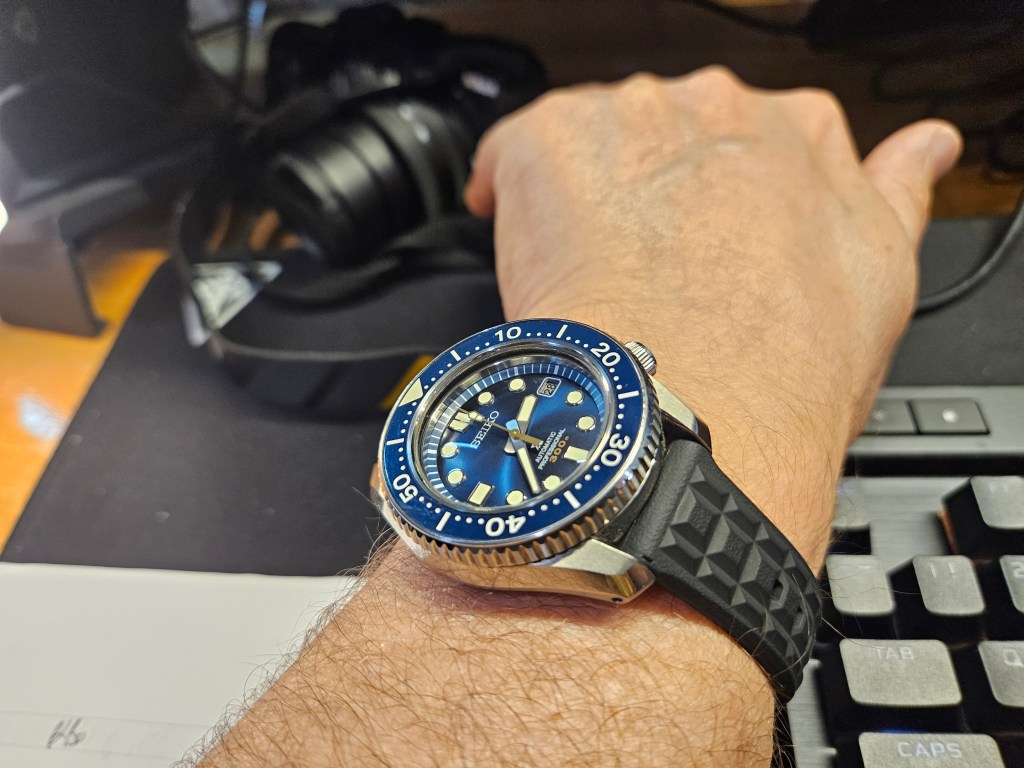
    At 63, the tectonic plates of my watch obsession finally shifted—and not with a polite tick-tock, but with the guttural crack of a midlife epiphany. For two decades, I was wrist-deep in the horological trenches, swapping bracelets for straps at 61 like it was some major spiritual awakening. Little did I know, that change was a mere amuse-bouche before the main course: total psychological detachment from the game. The forums? The drop chatter? The breathless anticipation of this week’s 44mm status symbol? I’ve danced that jittery dopamine jig too many times. The thrill is gone—and thank God for that.

    There’s also the inconvenient matter of time, that precious commodity I once used to justify swapping three watches before lunch. These days, I’m not auditioning for a Bond reboot, nor am I pacing the boardroom like a man with a GMT and something to prove. I don’t need a “hero piece” to validate my existence. I’m not branding myself in public spaces anymore—I’m inhabiting a quieter, more deliberate orbit, where the only eyes on my wrist are my own. Six or seven watches now feel like a well-edited playlist. The days of horological hoarding are over.

    I’ve thought about unpacking this transition on my YouTube channel, but the idea of filming another selfie in bad lighting feels absurd. I don’t need to see myself on screen clutching another dive watch like it’s the Holy Grail. Mortality, it turns out, is a hell of a lens to look through—and it’s clarified what actually matters. I don’t crave applause from collectors. I crave integrity, focus, sweat, creativity. I’m dropping weight, playing piano, swinging kettlebells, and gearing up to teach my next writing class—one populated entirely by college football players who will be writing about the ethics and technology of brain trauma in their own sport. That’s not just a syllabus. That’s a mission.

    Watches? I still love them. Deeply. But they no longer squat in the center of my brain, stirring up late-night eBay searches and existential unrest. That relationship has matured—or maybe just mellowed. The romance isn’t over, but the mania is. And in its place is something better: clarity, purpose, and a little more room on the wrist for life itself.

  • The Salma Hayek-ification of Writing: A Love Letter to Our Slow-Motion Doom

    The Salma Hayek-ification of Writing: A Love Letter to Our Slow-Motion Doom

    I’ve done what the pedagogical experts say to do with ChatGPT: assume my students are using it and adjust accordingly. I’ve stopped trying to catch them red-handed and started handing them a red carpet. This isn’t about cracking down—it’s about leaning in. I’ve become the guy in 1975 who handed out TI calculators in Algebra II and said, “Go wild, kids.” And you know what? They did. Math got sexier, grades went up, and nobody looked back.

    Likewise, my students are now cranking out essays with the polish of junior copywriters at The Atlantic. I assign them harder prompts than I ever dared in the pre-AI era—ethical quandaries, media critiques, rhetorical dissections of war propaganda—and they deliver. Fast. Smooth. Professional. Too professional.

    You’d think I’d be ecstatic. The gap between my writing and theirs has narrowed to a hair’s width. But instead of feeling triumphant, I feel…weirdly hollow. Something’s off.

    Reading these AI-enhanced essays is like watching Mr. Olympia contestants on stage—hyper-muscular, surgically vascular, preposterously sculpted. At first, it’s impressive. Then it’s monotonous. Then it’s grotesque. The very thing that was once jaw-dropping becomes oddly numbing.

    That’s where we are with writing. With art. With beauty.

    There’s a creeping sameness to the brilliance, a too-perfect sheen that repels the eye the way flawless skin in a poorly-lit Instagram filter repels real emotion. Everyone’s beautiful now. Everyone’s eloquent. And like the cruelest of paradoxes, if everyone looks like Salma Hayek, then no one really does.

    AI content has the razzle-dazzle of a Vegas revue. It’s slick, it’s dazzling, and it empties your soul faster than a bottomless mimosa brunch. The quirk, the voice, the twitchy little neurosis that makes human writing feel alive? That’s been sanded down into a high-gloss IKEA finish.

    What we’re living through is the Salma Hayek-ification of modern life: a technologically induced flattening of difference, surprise, and delight.

    We are being beautified into oblivion.

    And deep inside, where the soul used to spark when a student wrote a weird, lumpy, incandescent sentence—one they bled for, sweated over—I feel the faint echo of that spark flicker.

    I’m not ready to say the machines have killed art. But they’ve definitely made it harder to tell the difference between greatness and a decent algorithm with good taste.

  • The Guru in the Mini-Fridge: A Miami Manifesto

    The Guru in the Mini-Fridge: A Miami Manifesto

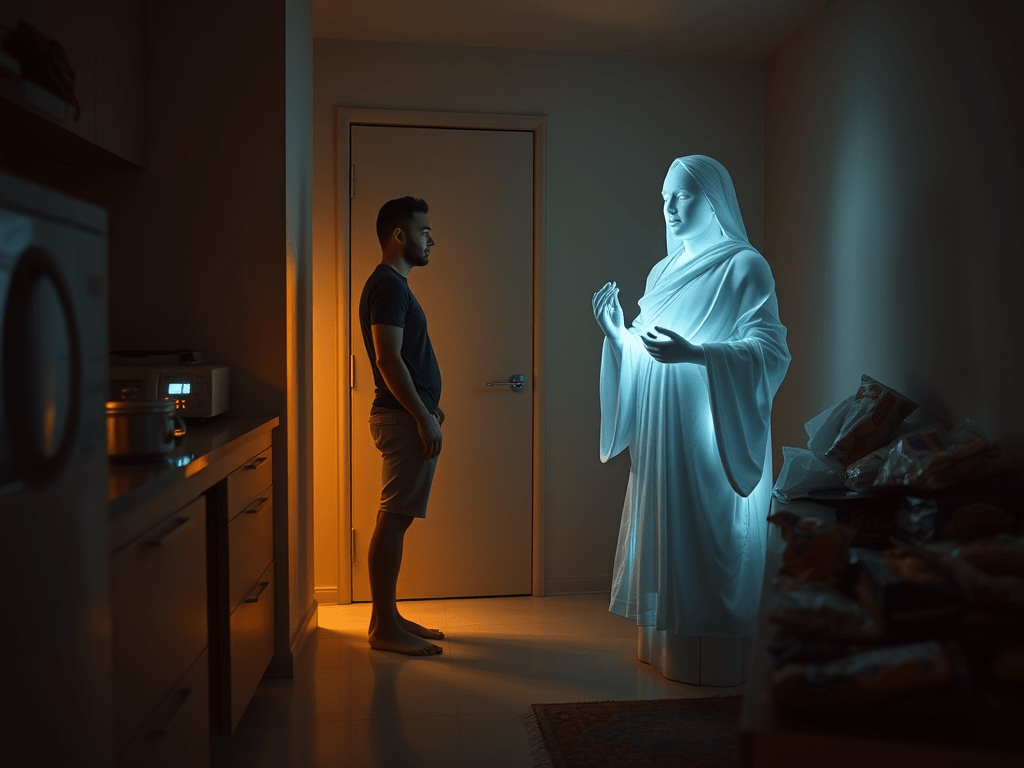
    I’m standing barefoot in the dim kitchenette of our Miami hotel room, illuminated by the dull glow of a microwave clock and the soft snoring of my family behind a paper-thin wall. I am overweight, overserved by anxiety, and currently marinating in a mix of guilt and existential fatigue. I miss Southern California, where I can at least pretend the ocean breeze is part of some reinvention montage.

    Then, out of nowhere—perhaps summoned by my elevated cortisol levels—my invisible guru appears. You know the type: part stoic monk, part irritated life coach, part inner drill sergeant with a taste for poetic slogans.

    He looks at me with eyes that have seen too many late-night snacks and says:


    “Repeat after me—less coffee, less food means more dignity. More focus, more humility, more gratitude, more work means less regret and despair. Are we clear?”

    It’s a slogan so clean and self-righteous it should be stenciled on a CrossFit wall. But fine, I play along. I nod. I even feel a flicker of hope—that slightly delusional warmth that hits right before you decide you’ll never eat bread again.

    But I level with him. “Look,” I say, “I love the aphorism. Truly. But here’s the problem. I forget everything the moment a cookie enters the room. My brain turns into a Vegas slot machine when I’m tired. There’s this compulsive, despairing little imp inside me who waits for just the tiniest whiff of sugar, sloth, or social media to hijack the controls and turn me into a ruinous parody of myself. What do I do with that guy?”

    My guru, undisturbed and frankly unimpressed, delivers the gospel:


    “As you live in accordance with the plan, you will grow stronger. The old ways will become repulsive. The deeper you root yourself in the good, the weaker the bad becomes. Got it?”

    I nod again. Less certain this time, but willing to try. Maybe it’s the humidity. Maybe it’s the quiet. Or maybe, just maybe, it’s the faint hope that I can still wrestle my wreckage into something resembling a life worth living.

    At the very least, I’ll try it out—until breakfast.

  • The Gospel According to Lalo: Watches, Inadequacy, and the Quest for a Better Self

    The Gospel According to Lalo: Watches, Inadequacy, and the Quest for a Better Self

    Yesterday, the tour bus wheezed to a stop and dumped us in Little Havana like a sack of reluctant tourists. We wandered through downtown under a punishing sun, the air thick with the scent of café Cubano and bravado. That’s when I saw him: a man who looked exactly like Lalo Salamanca, minus the drug empire—crisp white shirt, swagger in his step, and two kids in tow. He wasn’t just crossing the street; he was gliding, chin up, radiating unfiltered, unstudied masculinity. And he wasn’t alone. Little Havana was teeming with these men—fathers who looked like they’d stepped out of a sepia-toned photo labeled Pride, circa Always.

    Meanwhile, there’s me—63 years old, 30 pounds overweight despite daily exercise and good intentions. My daughters joke that I look like Charlie Brown, and not in the charming, animated special way—more in the “existential dread in khakis” sense. I don’t walk across intersections like Lalo. I trudge. And if I’m holding hands, it’s probably because I’m being led away from a pastry counter.

    But as I watched those fathers—their confidence, their presence—I began to realize the true pathology behind my watch obsession. I wasn’t just collecting watches. I was searching for transformation. If I could find the watch, the perfect timepiece, it might just alchemize my Charlie Brown soul into something closer to Lalo—proud, magnetic, quietly heroic.

    Enter the Seiko Astron Nexter—$1,700 of satellite-synced wizardry and horological lust. It gleams. It commands respect. It’s whispering, “Buy me, and become the man you were meant to be.” But let’s be real: I barely go anywhere these days. My public appearances are limited to grocery store aisles and accidental mirror encounters. I’m not a man about town; I’m a man about tuna salad and ibuprofen.

    At 63, how many years of wrist real estate do I even have left? How long before I’m just another well-accessorized ghost, my legacy a drawer of luxury regret? The whole ritual—buying, flipping, rationalizing, repenting—is starting to feel less like a hobby and more like a slow, polished breakdown. This isn’t taste. It’s compulsion with a tracking number.

    Maybe it’s time to quit. I’ve got five watches already—each one a chapter in the memoir of my delusions. Maybe the next chapter isn’t about adding to the collection, but about burning the altar down.

    Here’s a wild idea: make self-denial the new dopamine hit. Let the new obsession be calorie restriction instead of case diameter. Let others chase sapphire crystals and ceramic bezels—I’ll chase a slimmer waistline, a clean mind, and the kind of inner quiet no chronograph can measure.

    Because maybe happiness isn’t behind a glass display case. Maybe it’s not ticking on my wrist. Maybe it’s the empty space where the craving used to be.

    Still… the Astron is beautiful. And it would look damn good on Lalo.

  • The Night Irony Beat the Monkees

    The Night Irony Beat the Monkees

    On the night of October 16, 1967—just twelve days shy of my sixth birthday—the universe shoved my head in the toilet and flushed. I could hear the sound of childhood innocence circling the drain. Up to that moment, I was a full-time subscriber to the gospel of positive thinking. Life was fair. Good guys won. If you tried hard and smiled big, the world smiled back. Norman Vincent Peale had basically written the owner’s manual for my inner world.

    That illusion shattered during an episode of The Monkees.

    The episode was called “I Was a 99-lb. Weakling,” and I had parked myself cross-legged in front of the TV, popcorn in lap, expecting hijinks and musical numbers. Instead, I got a masterclass in betrayal and the savage laws of ironic detachment. My hero, Micky Dolenz—the clumsy, lovable soul who made failure seem like a jazz solo—was brutally outmuscled by Bulk, a flexing monolith of a man played by real-life Mr. Universe, Dave Draper. Bulk didn’t walk—he heaved himself through scenes, a sculpted rebuke to every noodle-armed dreamer in America.

    And right on cue, Brenda—the beachside Aphrodite with hair that shimmered like optimism—dropped Micky like a sack of kittens for Bulk, never once looking back.

    This wasn’t just sitcom plot; this was emotional sabotage. I watched, frozen, as Micky enrolled in “Weaklings Anonymous,” embarking on a training montage so grotesquely absurd it veered into tragedy. He lifted dumbbells the size of moon rocks. He drank something called fermented goat milk curd, a substance that looked like it had been skimmed off a medieval wound. He even sold his drum set—his very soul—to chase the delusion that muscles would win her back.

    And then came the twist.

    Just as Micky completed his protein-fueled crucible, Brenda changed her mind. She didn’t want Bulk anymore. She wanted a skinny guy reading Remembrance of Things Past. A man whose pecs had clearly never met resistance training, but whose inner life pulsed with French ennui. The entire narrative pirouetted into absurdity, and I watched my belief system crack like a snow globe under a tire.

    That’s when I first met irony.

    Not the schoolyard kind where someone says “nice shirt” and means the opposite—but the bone-deep realization that the universe isn’t fair, that effort doesn’t guarantee reward, and that life doesn’t play by the moral arithmetic taught in Saturday morning cartoons.

    It was that night I realized muscles weren’t the secret to power—language was. Not curls, not crunches, but craft. Syntax. Prose so sharp it could reroute the affections of beach goddesses and turn the tide of stories. That was the moment my childish faith in “try hard and you’ll win” collapsed, and in its place rose a darker, more potent creed: the pen is mightier not just than the sword, but than the bench press.

    That night, my writing life began—not with celebration, but with betrayal. A glittering lesson delivered in the cruel, mocking tone only irony can wield. And though it hurt, I never forgot it. Because the truth is: irony teaches faster than optimism. And it remembers longer, too.