When I was six, my Grandma Mildred came to visit us at the Royal Lanai apartments in San Jose. This was around 1967. Like any neurotic little kid, I peppered her with endless questions about an upcoming event. Most of them revolved around food: what would we eat, would there be enough, and what if the deviled eggs ran out? Eventually, Grandma sighed and told me, “You worry too much.”
Really? Another thing to worry about? Thanks, Grandma. Now I could add “chronic worrying” to my list of anxieties. Would it turn me into a puddle like the Wicked Witch? Would I self-destruct under the sheer weight of my own nerves?
Flash forward fifty-eight years. Spoiler: I still worry like a professional. My bandwidth jams up with the dumbest obsessions—like finding the right rubber strap for my Seiko diver. I’ll lose sleep and dive so deep into Internet rabbit holes you’d think I was chasing doctorates in linguistics and ophthalmological physics simultaneously.
Food isn’t any easier. Reading How Adam Smith Can Change Your Life, I encountered Hillel’s famous line: “If I am not for myself, who will be for me? If I am only for myself, who am I?” Roberts added that anyone who would sacrifice millions of lives to save a finger is “a monster of inhuman proportions.” Cue existential panic: If I chow down on Greek yogurt and whey protein while ignoring the industrial torture of animals, what kind of person does that make me?
That question dredged up a memory. Years ago, while doing valet duty at my twins’ school, I chatted with Lucianna, a Brazilian parent. She told me about growing up on her uncle’s dairy farm, where calves were torn from their mothers so humans could have their milk. She remembered the calves wailing all night, a sound so haunting she’s sworn off dairy for life. Her story still rings in my ears.
So here I am, designing my new plant-based meal plan: buckwheat groats, tofu, tempeh, nut butter, soy milk, a stack of supplements, and protein powder. I’m ready to begin. But, of course, my inner worry machine kicks in:
What about my omnivore family? My tofu will feel like an accusation on their dinner table.
What about my friends and relatives? I’ll be dismissed as a moral buzzkill, banished to the Lonely Dungeon.
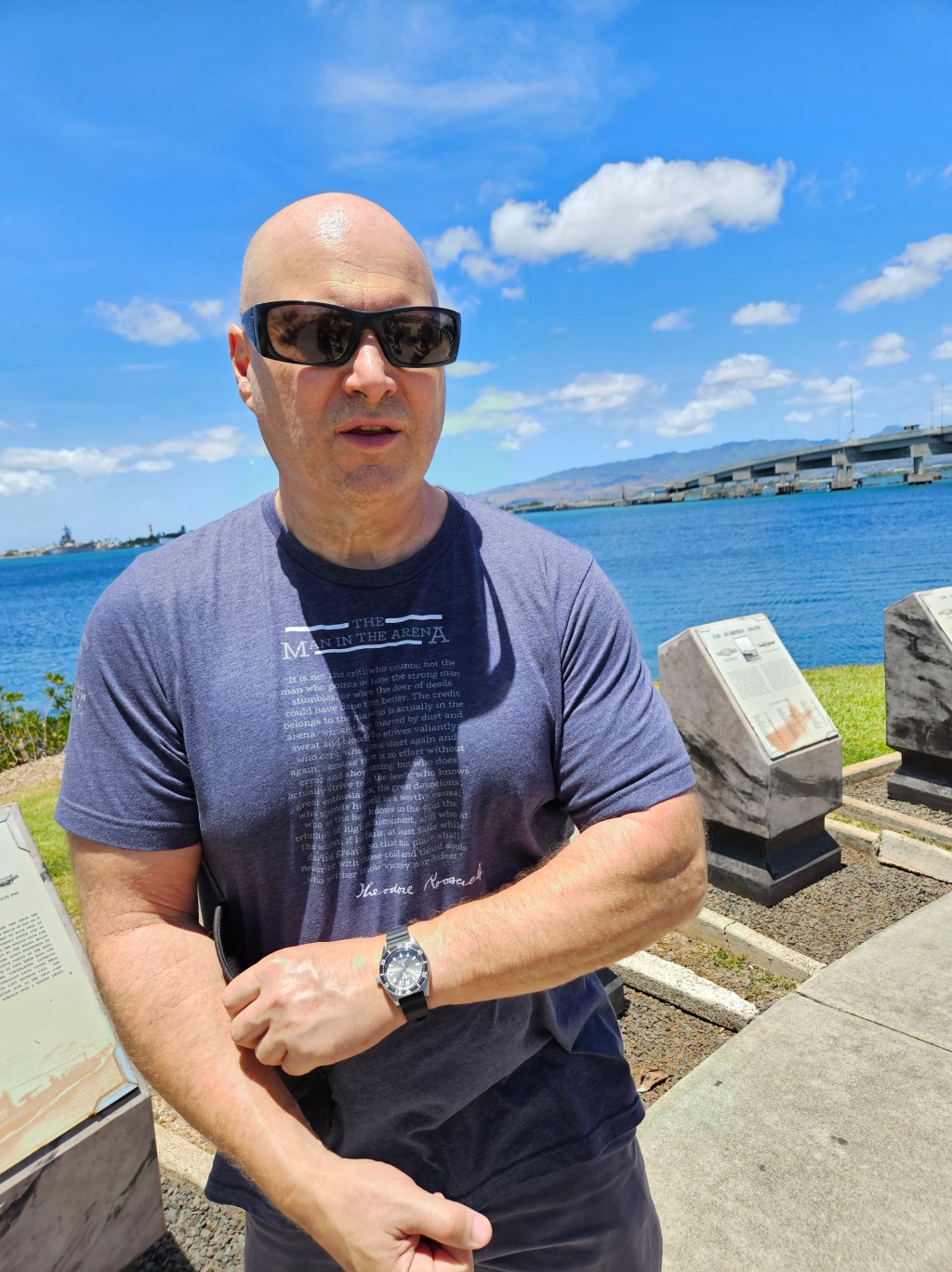
What about vacations? Hunting for vegan options in Miami or Oahu will turn relaxation into reconnaissance.
What about protein and Omega-3s? My muscles will wither, my brain will curdle, and I’ll be left a vegan husk.
What about cheating? What if, in a moment of weakness, I scrape a lemon-pepper shrimp into my mouth while clearing plates? Then I’ll hate myself, because I’ll have violated both my morals and my macros.
And so the worrying goes. Yet maybe this is the point. Doing the right thing rarely comes gift-wrapped in comfort. It comes with sweat, tension, and plenty of struggle.
My grandfather once told me when he was eighty and drowning in doctor visits: “Old age is not for cowards.” I’ll amend that. No age is for cowards. Living—really living—means confronting fears, fighting cowardice, and resisting the bondage of compulsive worrying. And if anyone has the secret sauce for escaping this mental hamster wheel, I’m all ears.
Yesterday I posted a 24-minute video on my YouTube channel about my family’s trip to Oahu—about slipping into what I call Sacred Time—and about the sullen resentment that comes when you’re yanked back into Profane Time. In Sacred Time, there are no utility bills, no kitchen repairs, no inbox choked with memos. In Profane Time, there’s nothing but.
There’s a lag between the two realms. The body may be back at the desk, moving through the motions of Profane Time, but the mind and heart are still on an island, half-convinced they’ve found a loophole in the laws of mortality.
In that sacred dimension, we become a mythic version of ourselves—effortless raconteurs, irresistible charmers. The hotel bartender laughs at your jokes. The maître d’ nods in worldly agreement when you talk about sunsets and seared ahi. Their warmth feels real, not transactional. And you start believing the PR you’ve written for yourself. Then you fly home, and the whiplash from god-king to bill-payer is too much to bear.
It reminded me of a woman I met nearly twenty years ago in a frozen-yogurt shop in Torrance. My wife and I were waiting in line when she appeared: tall, angular, maybe in her sixties, the ghost of a former beauty. Short blonde hair with a whiff of style still clinging to it, smeared red lipstick, tight leopard-print pants, and high heels that had seen better decades. She carried her currency—hundreds of pennies—in a crumpled paper bag.
She spilled them, along with her dessert, across the tile floor. I bent to help her, feeling the full weight of her story without knowing any details. I imagined her as a former starlet who once walked red carpets, who’d been adored, flattered, invited everywhere—until one day she wasn’t. She’d never made the identity shift from somebody to nobody, and that inability had swallowed her whole.
Self-mythologizing is dangerous. Whether you’re a faded Hollywood beauty or a sun-dazed tourist just off the plane from paradise, you have to face the comedown. Adult life demands it. The mythical and the mundane need each other—without the grind, the magic loses its shine.
So yes, I’m sulking about my return from Hawaii. Yes, I’d rather be sipping mai tais than buying new blinds and a desk for my daughter. But that’s the deal. Profane Time pays for Sacred Time. You can’t live in one without surviving the other.
In An Abbreviated Life, Ariel Leve recounts the shadow her mother cast across her existence—a narcissistic, volatile presence who trailed her daughter across continents. Her mother blurred boundaries, confiding adult affairs, romantic escapades, and private fantasies to her child, then lacing those disclosures with guilt trips and psychological sabotage.
At eleven, Ariel was told she was going blind—a lie without evidence, a mix of cruelty and madness. This was not an isolated cruelty but the common cadence of her mother’s speech. At six, Ariel’s caretaker, Kiki, died of a stroke mid-flight, with Ariel in the cabin. Ariel stopped speaking for six months; a psychiatrist prescribed Valium.
Her mother, often wearing a nightgown even to school functions, could deliver barbed declarations without breaking her routine. “When I’m dead, you’ll be all alone because your father doesn’t want you,” she told her young daughter, pausing only to reapply makeup. “Just remember that and treat me nicely.”
Her father, in Bangkok, refused to take her in. Ariel lived in grief that he wouldn’t rescue her from the chaos. Decades later, a therapist told her that growing up with such a mother caused neurological damage—her brain, shaped by constant stress, had developed like a tree twisted by relentless wind. Trauma was not a lightning strike; it was climate. The result: a life stripped of adventure, self-acceptance, and trust. Ariel’s default mode became hypervigilance and retreat.
Her partner, Mario, an Italian with no literary ambitions, no awareness of New York publishing, and no taste for bagels, embodies the opposite—balanced, unselfconscious, open to life. He steadies her, if only temporarily.
In one conversation, her father asked if she could let go of the past. Could she destroy her demons? Ariel was unsure. A novelist told her discipline could harden one’s “emotional arteries,” making childhood wounds less decisive. Ariel countered: some are “front-loaded with trauma,” not victims but soldiers—scarred, but still standing.
Neuroscientist Martin Teicher affirmed her point: childhood abuse alters brain wiring. Adaptive coping mechanisms in childhood turn maladaptive in adulthood, creating an adult mismatched to their world. The traumatized blunt emotion not with a scalpel, but a sledgehammer—shielding themselves from joy as well as pain.
For Ariel, this explains a life “within brackets.” She sees herself in the patterns Janet Woititz described in Adult Children of Alcoholics: mistrust, emotional volatility, self-loathing, and a skewed sense of normalcy.
Her chosen remedy: EMDR therapy for PTSD. Nine months of “the light saber”—eyes tracking a green light, headphones delivering sound, memories replayed until they lose their grip. Sessions leave her exhausted. There is progress, measured in patience with Mario’s daughters, in small openings toward joy. But she does not present herself as cured—only as a permanent convalescent.
Her memoir probes the ethics of trauma. How accountable are the wounded for maladaptive behavior? Can faith or philosophy save them, or does failure deepen self-blame? Are they sinners, soldiers, or something in between?
Leve’s life raises a tension between two extremes: the nihilist’s surrender—“nothing can be done, so I’ll live recklessly”—and the motivational credo—“discipline and positivity conquer all.” The truth lies somewhere in the messy middle.
Last night I dreamed I was trapped between two bodies—one fixed at nineteen, the other at sixty-three—and the hands kept swinging me back and forth. Each shift rewired me. My skin would tighten, my mind sharpen, and then in the next instant my knees ached, my thoughts clouded, and the mirror refused to settle on one face.
In the confusion, I kept losing my keys. Not just keys—wallet, watch, phone. Every few minutes I’d pat my pockets and feel the hollow absence. I lived in a commune that was equal parts office, recording studio, and half-forgotten alumni reunion. The place was enclosed by towering steel walls, the kind that promised protection while making you wonder what you were being kept from.
We scaled those walls to glimpse the outside world and, somehow, the higher we climbed, the further we could travel through our own memories. But altitude brought obstacles—massive gates stacked one atop another, each locked, each requiring a key.
I had a locker at the base of the camp with everything I needed: my belongings, my one precious key. And then it was gone, lost to the dream’s careless currents. I cursed myself, replaying the loss in my mind until it stung.
Kevin, an old friend with a voice like a warm blanket, told me it was fine. Not to worry. That I was okay. Ted, wiry and restless, was already at the top, peering over. He called down, telling us to follow his example, that freedom was just beyond the next barrier.
Meanwhile, Charlie lounged at the compound’s base, getting his hair trimmed and his shoes polished by a contented employee, as if this walled-in world was good enough.
The forgetting pressed in on me, thick and airless. Ted’s optimism couldn’t lift me, Kevin’s comfort couldn’t steady me. Without the key, I felt stripped of competence. I teetered there—between the clock faces, between the steel walls—on the edge of hopelessness, afraid that even if I found the lock, I wouldn’t remember what it opened.
I don’t deserve a nice vacation. Who am I to lounge in tropical paradise, sipping a Miss Sunshine on the rooftop of Tommy Bahama’s in Honolulu—a lemon-infused Grey Goose cocktail dressed up with coconut and salted honey, basically sunshine in a martini glass?
Yet that’s exactly what I did on my last night in town. My family and I ate dinner under the soft glow of string lights while a guitarist named Mark worked the crowd. He had that rare gift of making diners feel the music was just for them. My daughter requested Neil Young’s “Harvest Moon.” Mark delivered it like a love letter. I followed with The Go-Betweens’ “Streets of Our Town.” He’d never heard of it. Then I tried “Back to the Old House” by The Smiths. His eyes lit up.
“Oh, you’re one of those,” he said, as if I’d just flashed a velvet-lined membership card to the Melancholy Music Society. “Are you a musician?”
I admitted to being an amateur pianist. During his break, we talked shop. He’d been gigging since 1979, grew up on Oahu, and had soured on Maui—“negative energy,” he said, with the certainty of a man who’s read the island’s aura. His favorite? The Big Island, especially Hilo. “Hilo’s the lush side,” he told me, as if revealing a secret password.
The next day, stuck in the Honolulu airport waiting for a delayed United flight (short a flight attendant, with a substitute speeding in from home), I met Zack—a 48-year-old professional golf caddy with the leathery tan of someone who spends life between fairways and airports. He was headed to Houston, then on to Kansas City for a tournament at Blue Hills Country Club.
We talked for forty-five minutes about the job. “You have to make a world-class golfer like you, trust you, and win,” I told him. “That’s harder than being a psychiatrist.”
He grinned. “Same as being a college writing instructor.”
Touché. We agreed we were both part salesman, part psychologist.
Zack checked his watch. “If I make my Houston connection, I get Texas brisket with my family before the drive to KC.” His wife taught French at an Oahu high school; they’d lived there over twenty years. Like Mark, he loved the Big Island most. Also like Mark, he worshipped Hilo. In fact, he’d bought land there for his retirement.
On the flight, I lost myself in Jim Bouton’s Ball Four on Audible, forgetting about Zack—until landing, when the flight attendants asked passengers to clear the way for passengers with tight connections. At the back, there was Zach, looking like he’d just played eighteen holes without water.
With the authority of a man who’d just been handed the Staff of Moses, I raised my hand: “Make way for my friend Zack! He has three minutes to make his connection!” The crowd parted. As he hurried past me, I patted his back and told him to enjoy the brisket.
My wife nearly folded in half laughing at my grandiosity, my habit of turning chance encounters into minor epics. At baggage claim, she called Mark and Zack my “new friends.”
She’s right. I may never learn to truly relax on vacation. But give me a stranger with a story, and I’ll make a night of it.
The summer of 1977: I was fifteen, half-boy, half-bicep, bronzing my delusions at the Don Castro Swim Lagoon. I lay stretched across the sand like a sacrificial offering to the gods of narcissism, a dog-eared paperback of The Happy Hooker tucked inside my gym bag like contraband scripture. My nose, my skin, my hormonal soul were all baptized in the collective perfume of that era—banana-scented cocoa butter and coconut oil sizzling on sunbaked flesh.
It wasn’t just a swim lagoon; it was a sensory bacchanal. My eyes devoured the parades of bikini-clad girls, but it was the scent—the olfactory gospel of the ’70s—that tattooed itself onto my brainstem. The decade fused with my adolescence to form a perfect cocktail of lust, leisure, and delusion. That was Me Time before “me time” became a self-help cliché. This was Me Time as a birthright. An ecstatic creed. A half-naked mission statement.
I hoarded that fragment of the 70s like a holy relic, a sweaty teenage talisman that whispered, You are entitled to this pleasure. And for decades, I believed it. I ritualized it. I salted it into the marrow of my daily habits. Self-indulgence wasn’t a guilty pleasure; it was as essential as cod liver oil and calf raises.
But now, older, less tanned, and with only traces of Adonis left in my rearview mirror, I wonder if that Me Time ethos has become a prison disguised as a spa. What began as a teenage philosophy of sacred sensuality now feels like a rerun of Fantasy Island with worse lighting. The coconut oil that once anointed me has turned rancid with nostalgia.
Am I frozen like Lot’s wife, looking back too long at the sun-glazed glory of the past and turning to salt—one of the many malformed, glittering relics trapped in the Salt Mines of my own mythology? Have I confused my emotional scrapbook for a roadmap?
I don’t want to kill the boy inside me. I just don’t want him running the show.
I’m not aiming to become some dried-out stoic spouting bromides about detachment and virtue while chewing flaxseed in silence. I still want pleasure. Complexity. Shadow. Laughter. Sweat. But I want to carry my memories like a man, not drag them around like a stunted boy still snorting the ghost of Hawaiian Tropic in the Rite Aid aisle.
So I ask—how do you love the Me Time Era less? How do you put the suntan oil back in the bottle?
Last night I dreamed I was dragged, not willingly, to what can only be described as a nocturnal daycare megachurch for toddlers. A female friend insisted I come with her, and because I lack boundaries in dreams, I agreed. It was night—an odd time for finger paints and tantrums—but the daycare manager, a woman in her forties with the strained face of someone who’d long since traded dreams for wet wipes, greeted us like this was normal.
Almost immediately, a child began howling with the primal rage of someone denied a third juice box. I was conscripted to console him. My solution? A trip to a movie theater—because nothing says early childhood healing like surround sound. The child settled, spellbound by whatever played on screen. The strange part? I couldn’t see it. Or hear it. Apparently, the film was perceptible only to children. Perhaps it was Baby’s First Metaphysics. Or an encrypted Pixar feature accessible only through a purified heart.
At some point, without ceremony or explanation, I slipped away and found myself on a college campus in daylight. My brother was waiting in a parking lot that looked like a car dealership I had overfunded. I had more cars than common sense and a key ring jangling with so many keys it looked like I had robbed a locksmith. He wanted me to follow him to our mother’s house. It suddenly felt urgent. Cosmic, even.
I got in my vehicle—a car awkwardly tethered to a trailer—and, for reasons known only to dream logic, I drove from the trailer. It took me several minutes to realize I was operating a vehicle from behind, without a windshield or visibility. I was essentially piloting a missile blindfolded.
Eventually I stopped—miraculously not dead—and found myself balanced at a deadly incline on an overpass. I had parked inches from becoming a traffic statistic. Bystanders stood around, but no one was mad. No one honked. It was as if my recklessness had occurred in a different dimension of social expectation.
Near the overpass stood a shopping plaza featuring Yamaha grand pianos, each with the sticker shock of a midlife crisis: $26,000 apiece. I considered entering, comforted by the notion that I had “deep pockets”—but the moment I thought it, I realized I was naked. Fully, publicly naked. Oddly, this didn’t mortify me. I was as invisible as a ghost no one remembered to summon.
Still, I decided not to enter the piano store and sit bare-bottomed on an $8,000 piano bench. Even dream logic has hygiene limits.
I wandered into a pair of adjacent, carefully curated Edens—two burial gardens laid side by side, one Jewish, one Christian. Both were equal parts reverence and real estate, immaculately landscaped like death had hired a design team. The air was golden with sunlight, the kind that flatters grief and makes you forget about decay.
Mourners floated among the headstones in their ceremonial best—linen suits, black veils, tailored despair. The Jewish and Christian worshippers moved in peaceful parallel, as if the afterlife had negotiated a truce that the living never quite managed. Gift shops nestled among the tombstones sold tasteful souvenirs—stone etchings, pressed lilies, probably a limited-edition Torah-meets-Gospels keychain. Everything was clean, sacred, and suspiciously well-funded.
That’s when she appeared—a Quaker woman in a starched bonnet, all radiant calm and pioneer wisdom. She approached like someone who could knit an entire theological treatise while making a pot of herbal tea. Her smile was unshakeable, beatific in that unnerving Quaker way that suggests she knows something you don’t, but she’ll never say it out loud.
She asked, in a voice smooth as chamomile, why I looked so troubled.
I told her the truth: “I’m lost. I’ve been driving blind—literally—and now I’ve crash-landed in a dual-faith necropolis. Also, I’m naked. No clothes, no GPS, no plan. I think I took a wrong turn at sanity.”
She didn’t flinch. Of course she didn’t. She’d seen worse. She probably taught Sunday school to ghosts.
She smiled. Help was at hand.
She summoned a tall man in a radiant yellow tunic—somewhere between a monk and a spa manager—who told me the directions home were complicated and could only be followed on foot. What about my car? My trailer? My sprawling fleet of unnecessary transportation?
“Let it go,” he said, as if he’d read Marie Kondo for the Soul.
Suddenly, I was surrounded by Quakers. They had me sit on a wooden chair as the daylight shifted to an amber hush. They prayed in Latin, pouring syllables over me like baptismal water. It was solemn. It was sacred. It was disorienting.
When it ended, the woman in the bonnet asked if I’d been converted.
“Not exactly,” I said. “But I did have a religious phase in high school. I was a big fan of Rufus Jones. Fundamental Ends of Life—ever read it?”
She hadn’t. She was more of a George Fox girl. Fair enough.
I thanked them for the baptism but declined the full spiritual onboarding. I had priorities: get to my mother’s house, find some clothes, and maybe return for the piano if I could be properly trousered.
I descended a steep, stone staircase into dense green foliage. At the bottom, I hoped, would be pants—and clarity.
I’m three months shy of turning sixty-four, which means I’m old enough to know better and still young enough to entertain delusions. This is a warning to the under-sixties: prepare yourselves. At some point in your late fifties, strange desires start slithering into your psyche like vines through the cracks of a neglected greenhouse. With every new creak of the knees and fresh batch of funeral notices, a part of you will yearn for what I call the Return to the Womb.
No, not literally—though if you could slide back into a warm amniotic bath and unplug the Wi-Fi, you just might. I’m talking about a psychological regression: the desperate, half-sane longing to be swaddled in tropical heat, to dissolve into mango-scented breezes, and to vanish into a seaside stupor under a drizzle that feels vaguely divine. The dream? To marinate in comfort, far from the cacophony of deadlines and dental appointments, in a climate designed by God for the perpetually tired.
I was born in Gainesville, Florida in 1961, and to this day I remember the fetid perfume of alligator swamps—a heady, sulfuric funk that now strikes me as oddly comforting. Like Vicks VapoRub for the soul. Is it any surprise that I scroll Zillow listings for barrier islands in South Carolina, Georgian marshlands, and steamy Floridian enclaves? I’m not looking for a home. I’m looking for a feeling—a fetal, lizard-brained feeling that I’ve convinced myself might still be hiding in the heat.
But here’s the rub: I don’t trust this impulse. This Return to the Womb isn’t a noble call to simplicity. It’s a siren song, crooned by the dark twin of the Life Force—the same demon that tells you to skip your workout, order DoorDash, and stream ten hours of King of the Hill in a comfort-food trance. It whispers of paradise, but it’s peddling paralysis. It’s not vitality. It’s a prelude to decay, dressed in Tommy Bahama and sipping a piña colada.
Writers like Steven Pressfield and Phil Stutz have been wise to this force for years. Pressfield calls it the Resistance. Stutz names it Part X. Adam Smith, bless his powdered wig, simply called it the need for “self-command”—the daily decision to wrest meaning from entropy, to choose virtue over sloth, action over inertia.
During the pandemic lockdown, I got a taste of this regression. Sitting masked in my accountant’s office in February 2021, she asked if I was thinking of retirement. Was I thinking of it? Lady, I was living it—in pajamas, in slow motion, surfing real estate listings for stilt houses on Key Biscayne while sipping overpriced Nespresso and pretending buckwheat groats were the secret to immortality. My body had synchronized with the rhythm of a hot tub. I wanted nothing more than to stay submerged.
Four years later, I still want it. I still want the warm drizzle, the midnight ocean swims, the faint smell of coconuts mingled with chlorine and sea rot. And yet—I know. I know. I know that the moment I submit to this dream of endless hammock-lounging is the moment the soul begins to curdle.
Phil Stutz, in Lessons for Living, writes about Father Time as a pitiless, judgmental figure—not the kindly old man of greeting cards, but a stern cosmic accountant. He doesn’t care how many steps you walked or how clean your macros were. He wants to know: Did you spend your time on Earth doing something that mattered?
As someone who’s worshipped at the altar of diver watches for two decades, who has pondered the geometry of bezels and the metaphysics of lume, I took this personally. Time is not just money. Time is judgment. Time is an indictment.
And the Return to the Womb? It’s a slow lobotomy in paradise. It’s “brain rot” dressed as a beach vacation. It’s the comforting lie that you’ve earned an escape from purpose. But the truth is, the older I get, the stronger this impulse grows. And that, frankly, terrifies me.
Still—and here’s the kicker—as I type this, I want it. I want the coconuts. I want the warm rain. I want the mangoes. I want the beach walks at twilight where nothing hurts and no one needs anything from me.
We are mad creatures, aren’t we? Our intellect sees the trap. Our soul feels the pull. And some part of us, no matter how wise or weathered, still wants to disappear into the dream.
One of the bitter ironies of the watch addict is that he seeks a “manly watch” with “bold wrist presence,” yet much of his behavior as it pertains to his hobby is similar to that of a thirteen-year-old girl crying effusively as she leafs through her journals and scrapbooks in which she chronicles her “lost loves” and tries to mend her “broken heart” with the excessive self-regard one would expect from a thirteen-year-old. However, the watch addict, a man somewhere between his thirties and sixties, perhaps even older, is going down the same rabbit hole of melodrama as the thirteen-year-old. When he does a watch unboxing on his YouTube channel and trembles with tears running down his cheeks with anticipation, or does a YouTube rant about the regrets for all the prized watches that he “let get away” and left him with irreparable heartbreak, or stands before his YouTube watchers like a five-star-general as he announces with maniacal self-regard his “plans” to create his “ultimate collection,” or agonizes over the black and orange strap on his diver and goes back and forth over and over because he “loves both but can’t decide,” he probably doesn’t know that he is committing an act of colossal folly: He is embodying the Maudlin Man.
To understand the Maudlin Man and the folly he partakes in, we are well advised to consult Jeffrey Rosen’s book The Pursuit of Happiness. Rosen discovers that major American thinkers such as Benjamin Franklin draw their wisdom from Cicero’s Tusculan Disputations, which state that the soul must be “tranquilized by restraint and consistency.” In such a state, the soul “neither pines away in distress, nor is broken down by fear, nor consumed with a thirst of longing in pursuit of some ambition, nor maudlin in the exuberance of meaningless eagerness–he is the wise man of whom we are in quest, he is the happy man.”
There is much to unpack here. Perhaps the best way to do so is to divide man into two types: Restrained Man and Maudlin Man. Restrained Man is the type we should aspire to be. He is tranquilized by his own restraint, consistency, and self-agency and does not pine after things that cause him distress, anxiety, and FOMO.
Just reading the above words makes the addict inside me rebel. As a watch addict, I enjoy pining after watches and being caught in the melodrama of distress, FOMO, and desire for watches as shiny new objects my greedy little fingers can get a hold of. Wrap your head around that: I’m addicted to the very maudlin drama of my watch hobby. To be the Maudlin Man, therefore, is to be addicted to addiction.
But what Cicero is arguing is this: This melodramatic state that causes us to froth at the mouth for the things we desire is a form of “meaningless eagerness.”
Again, my inner addict rebels. It rages and counterargues, “Cicero, watches are my hobby. The very point of this hobby is that it is a benign and meaningless pastime that gives me enjoyment and relaxation.”
Of course, I am in denial. As I write this, I have a very beautiful diver watch with a wave-blue dial to be delivered from Singapore today from a DHL carrier. I’ve tracked the package six times since five this morning, and I couldn’t sleep last night because I agonized over whether I should keep it on the stock bracelet, put a sedate black Divecore on it, or put a loud orange Divecore on it. The stress is almost causing me to have a nervous breakdown.
I’m acting just like Maudlin Man. I’m experiencing effulgent emotions over something that is basically meaningless. As a result, I’m investing way too much energy and emotion toward my “watch situation,” and as a result, I am showing a lack of contact with reality.
Cicero’s point is that when we lack self-possession because we are in the maudlin state, we cannot be happy. Happiness is the byproduct of having self-agency and self-control.
I wince at Cicero’s words. Do I even want self-control? Do I not enjoy the drama of a watch strap “dilemma”? Do I not enjoy being an exuberant man-child?
Cicero would argue otherwise. He would argue that the “pleasures” I experience from my maudlin indulgences are at the root of my unhappiness. To understand Cicero’s argument better, let us look at the entire quotation:
Therefore the man, whoever he is, whose soul is tranquilized by restraint and consistency and who is at peace with himself, so that he neither pines away in distress, nor is broken down by fear, nor consumed with a thirst of longing in pursuit of some ambition, nor maudlin in the exuberance of meaningless eagerness–he is the wise man of whom we are in quest, he is the happy man.
My inner pessimist, which I call Glum, scoffs at Cicero’s words of wisdom and gives me a litany of my failures, which prove me unworthy of Cicero’s portrait of a happy man. Glum says to me the following:
“Regarding restraint, your appetites for tacos, spaghetti, garlic bread, homemade sourdough loaves stuffed with kalamata olives, semi-sweet chocolate chunk peanut butter cookies, chocolate cake, and pineapple cheesecake are so monstrous, you don’t have a chance in hell of exercising restraint when it comes to your appetites. Your very self is defined by your excesses, so good luck talking about restraint and moderation. You’re doomed.”
“Regarding ambition, it is only repeated failure of many decades, not humility, that abates your grandiose designs and fantasies of being famous and ubiquitous on television as a talking head whose opinions everyone greedily consumes as if your every word is a delicious morsel to be savored. So don’t go around bragging about your modesty and humble aspirations. Old age and an eye for the inevitability of your failure are your only salves, so you have no bragging rights.”
“Regarding maudlin exuberance and meaningless eagerness, you are the worst violator of these infractions, gushing with lame euphoria as you curate your watch collection to your YouTube viewers. Your entire enterprise of incorporating the wisdom of the Stoics and other classical thinkers is the biggest joke I’ve ever heard of and may qualify you for a life in comedy.”
My rebuttal to Glum is this. “With your keen insight into my wretched being, you have helped me see the very depth of my pathology. So thank you, Glum, you have helped me with an unflinching diagnosis of my spiritual dissolution, and thanks to you, this accurate diagnosis marks the beginning of my long road to recovery.”
I am grateful that I am both honest and smart enough to offer rebuttals to Glum, but having an intellectual grasp of what I should do and actually doing it are two vastly different things. For now, I have a clear grasp of Cicero’s notion of Maudlin Man. The seeds have been planted. I now hope that with those seeds, a counter self can grow that will put the Maudlin Man inside of me out of business.
The TV show Loudermilk is part sitcom, part group therapy, and part existential smackdown. Ron Livingston plays Sam Loudermilk, a grizzled music critic and recovering alcoholic with the face of a hungover basset hound and the social graces of a man allergic to kindness. He barrels through life offending everyone within a five-foot radius, insulting his fellow addicts with toxic flair. But beneath the wreckage lies a strange tenderness—a story not just about addiction, but about people trying to survive themselves.
Loudermilk lives in a halfway house with a cast of human tire fires, and the comedy burns hot: irreverent, profane, and deeply affectionate. The show loves its damaged characters even as it roasts them alive. Naturally, I love Loudermilk. Love it like a convert. I’ve become a low-key evangelist, promoting it to anyone within earshot—including the assistant at my local watch shop.
This isn’t just any watch shop. I’ve been going there for 25 years. The Owner and the Assistant know me well—well enough to have witnessed the slow, expensive progression of my watch addiction, including the day I came in twice because the first bracelet adjustment “didn’t feel quite right.” It’s my barbershop. My confessional. My dopamine dispensary.
So one afternoon, I’m there getting a link removed from my Seiko diver and I bring up Loudermilk. I describe the show’s gallery of screwups—addicts clawing toward redemption by way of insults, setbacks, and semi-functional group hugs. The Assistant looks up from his tools and tells me something personal. He watches Loudermilk too. And he gets it. He’s thirteen days sober and goes to five meetings every morning—not because he’s a morning person. He tells me that in his culture, drinking into one’s eighties is just called “living.” But for him, it was a slow-motion self-immolation. Now, he’s trying to claw his way back.
Before I can respond, a woman with a chihuahua tucked under her arm chimes in from across the shop. She too is a Loudermilk fan. “What a shame it got canceled after three seasons,” she laments. The Assistant counters—there’s still hope for a revival. They argue lightly, both fully engaged, two strangers momentarily bonded over their shared love of a comedy about pain.
I say goodbye and step out of the store. That’s when it hits me.
I love Loudermilk because I see myself in it. I am an addict. Not just of watches, but of distraction, validation, control—whatever lets me delay the moment when I must confront the snarling voice inside me.
Writers like Steven Pressfield and Phil Stutz describe this inner saboteur with chilling clarity. Pressfield calls it Resistance, the destructive force that undermines your better self. Stutz names it Part X, the anti-you that wants you to abandon meaning and pursue comfort. Both insist the enemy must be fought daily.
And I know that voice. It’s lived in my head for decades.
Once, at an English Department Christmas party, a colleague called me “Captain Comedown.” I don’t remember what I said to earn the nickname, but it tracks. I’ve got that bleak edge, the voice that sees futility everywhere and calls it wisdom. But a better name than Captain Comedown comes from my childhood: Glum, the joyless little pessimist from The Adventures of Gulliver, whose go-to phrase was: “It will never work. We’ll never make it. We’re doomed.”
That’s my inner monologue. That’s my Resistance. That’s my Glum.
Every day I wrestle him. He tells me not to bother, not to try, not to hope. That joy is a scam and effort is for suckers. And some days, I believe him. Other days, I don’t. But the battle is constant. It doesn’t end. As Pressfield says, the dragon regenerates. My job is to keep swinging the sword.
And maybe, just maybe, buying a new watch is my way of telling Glum to shut up. It’s a shiny, ticking middle finger to despair. A symbolic declaration: The world still contains wonder. And precision. And brushed stainless steel.
But there must be cheaper ways to silence Glum. A walk. A song. A friend. A laugh. Even a half-hour with Loudermilk.
Because, irony of ironies, what addicts like me really want isn’t the next hit. It’s relief from the craving.





 Cinemorphosis