Tag: love

  • Thou Shall Not Skip Gravity Day

    Thou Shall Not Skip Gravity Day

    When I was fourteen, I read in The San Francisco Chronicle that the future of humanity was apparently doomed to unfold inside a giant space terrarium. The article, steeped in optimism and mild insanity, described how overpopulation and resource depletion would eventually force us to evacuate Earth aboard lunar shuttles and live in “closed-ecology habitats in free orbit.” The prophet of this plan was Princeton physicist Gerard K. O’Neill, whose forthcoming book The High Frontier promised solar-powered utopias floating blissfully through the void.

    The paper ran lush illustrations by Don Davis: rolling green hills, placid lakes, couples in flowing white linen strolling past solar panels, all living in a pastel Garden of Eden. But something about those inhabitants unsettled me. They all looked frail—thin, pale, gravity-deprived stick figures with the musculature of boiled linguine. That’s when the horror struck me: in space, there would be no gyms. No dumbbells. No pumping up. No gravity—no gains. My future would be a floating hell of atrophied muscles and existential despair. The very thought made my biceps twitch in protest.

    At the same time, a girl at school named Jennifer slipped me a birthday card with hearts on the envelope. Inside, she’d written that she liked me and wanted me to ask her out. But how could I ask her out when civilization was on the brink of being exiled to a zero-gravity tofu colony? What was the point of romance when dumbbells were about to become obsolete?

    I tore up the card, retreated to my room, and did what any hormonally charged doomsday philosopher would do: I consulted Master Po.
    “Master Po,” I said, “how can I go on living if bodybuilding dies in orbit?”
    “Grasshopper,” he said, “you live too much for yourself. You must empty yourself of self-interest.”
    “But I’m obsessed with myself.”
    “Exactly. And it shows in your quest to make your body beautiful.”
    “But bodybuilding is my life.”
    “And that,” he said, “is your curse. You train your body but let residue accumulate in your soul.”
    “So I should quit working out?”
    “Not quit. But see your body as not belonging to you. It is part of something larger.”
    “You mean, like the universe?”
    “Yes, Grasshopper. The body of the world.”
    “So, what—you want me to start picking up trash on the freeway? That’s your cosmic wisdom?”
    “Once again,” he sighed, “you are far from The Way.”

    I looked at my reflection in the mirror that night—fourteen years old, terrified of zero gravity—and realized that maybe Master Po was right. I wasn’t afraid of space. I was afraid of floating away from myself.

  • Your Tears Won’t Change the World

    Your Tears Won’t Change the World

    When I was thirteen, I decided the path to popularity ran straight through Soul Train. I spent months studying the dance troupe Captain Crunch and the Funky Bunch, who could pivot from the robotic precision of the Funky Robot to doing splits so fast you’d think they were animated. I practiced every night in front of my bedroom mirror until my limbs clicked like clockwork and my expression was as vacant as a mannequin’s. I was ready to unleash my Funky Robot at the Earl Warren Junior High dance.

    The playlist that night was pure chaos. Whoever the DJ was, he seemed to be drawing songs from a hat. “Free Bird” dragged like a eulogy, “Walk This Way” felt like cardiac arrest, and “Midnight at the Oasis” was exactly what it sounded like—a languid romp in the desert. But when Stevie Wonder’s “Living for the City” came on, I sprang into motion. My body jerked and popped with righteous purpose. I was a mechanical deity in Adidas, a human jukebox powered by insecurity.

    By some miracle of social physics, I ended up dancing all night with Cheryl Atkins—the prettiest girl there—because her boyfriend Rick hated to dance. While we funked and twirled under the mirrored ball, I noticed the misfits pressed against the gym walls like condemned prisoners. They’d ask for dances, get shot down, and limp back to their corner of despair. Watching them, I felt an unexpected pang—an ache sharper than any muscle burn.

    Meanwhile, the popular eighth-graders were perfecting a ritual called “getting wasted,” which apparently involved puking and maintaining high social standing at the same time. As a Junior Olympic weightlifter, I found this baffling. I could clean and jerk my body weight, but I couldn’t comprehend how vomiting could make you cool.

    By the end of the night, Cheryl and I won the dance contest. Vice Principal Gillis handed me a trophy, but instead of basking in my Funky Robot glory, I felt hollow. The faces of the wallflowers haunted me. That night, I dreamed of a beach where a giant elephant seal handed each lonely misfit a beautiful radio, and as they tuned it, they glowed and vanished into the horizon. I woke up certain of one thing: radios were holy.

    “Master Po,” I said, “the world is cruel. I can’t be happy knowing people like those misfits suffer.”
    “Spare me your tears, Grasshopper,” he said. “Sadness feels noble, but it’s an addiction. It comforts the ego while changing nothing.”
    “But what can I do?” I asked. “Darwin was right—the strong thrive, and the weak pay the price.”
    “Indeed,” he said. “And in case you haven’t noticed, you’re one of the weak. So tend your own garden, Grasshopper. The misfit must save himself before he can save the world.”

  • It’s Better to be Smart Than Right

    It’s Better to be Smart Than Right

    Sitting in the classroom at Independent Elementary, I’d burned through Mrs. Eckhart’s reading questions and had an hour to kill, so I launched a silent mutiny on a sheet of white art paper. I drew a submarine the size of a small nation—portholes lined up like pearls, each framing a tiny soap opera. In one, a guy flipped pancakes and invited the crew to “swing by my cabin.” In another, a woman in curlers refused to be seen “in this condition.” A cereal enthusiast raged about a missing prize. A hammock napper protested the racket. A girl clutched a shred of apple skin like it was a ticking bomb in her molar. A dozen noisy lives, each complaining, boasting, living. My plan was obvious: practice now so I could write for Mad Magazine later.

    Enter Mrs. Eckhart, patrolling the aisles like customs at the border. Red bouffant immaculate, eyebrows stepped out of a Hitchcock film. She stopped at my desk and stared down at the sub—my U.S.S. Bad Timing.

    “Is this how you spend your time in my class?”

    “I finished the assignment. I’m working quietly.”

    She read my dialogue bubbles aloud, pitch-perfect sarcasm, the kind that knives you with your own words. The class erupted. I was roast beef, she was the carving knife. Then the verdict: “Your parents should know this is how you spend classroom time.”

    She scrawled a note on the back of my masterpiece and demanded signatures before I returned it. At home, Dad examined the evidence like a prosecutor smelling a plea bargain.

    “You pissed off your teacher,” he said.

    “I don’t know why. I finished my work. I was quiet.”

    “It doesn’t matter. You insulted her.”

    “How?”

    “By finishing early and doodling, you told her the work was too easy. You disrespected her.”

    “I kept quiet. That’s hardly a crime.”

    “In life, it’s better to be smart than to be right.”

    “I thought they were the same thing.”

    “Not always. Today you were technically right and strategically stupid. Go to your room and think about it.”

    In exile, I summoned my emergency therapist: Master Po, Shaolin sage of my imagination.

    “Master Po, why am I the villain for drawing a submarine? And what does ‘be smart, not right’ even mean?”

    “Grasshopper,” he said, voice like wind across stone, “the world is full of educated people who know nothing. Wisdom is entering another’s mind, seeing as they see. Your father is correct. Choose smart over right.”

    “If being right doesn’t count, why learn right from wrong at all?”

    “Model yourself on Heaven’s righteousness,” he said, “but travel the earth with tact. Know what you do not know.”

    “Know what I don’t know? That feels like a riddle you give to people you want to confuse.”

    “You strain at my words as muddy water through a sieve. Clarity will come.”

    “Meanwhile, I’m grounded and missing Hogan’s Heroes.”

    “Unfortunate,” he said, not sounding remotely sorry.

    “Life is a riddle I can’t solve.”

    “You try too hard. Relax. Let go. Answers fall like rain.”

    “I could relax more if Dad paroled me to the television.”

    “Sitting quietly is perfect. With no intention and no movement, you will, like the perfect traveler, arrive.”

    I stared at the ceiling, the paint a milky ocean, my submarine rolled into evidence on the desk. Maybe Dad was right. Maybe Mrs. Eckhart wasn’t grading my drawing so much as my social intelligence—and I’d failed the pop quiz. The adult world prized two currencies: accuracy and tact. I had exact change for the first and lint for the second.

    Still, some small part of me refused to shred the sub and plead guilty to artistic misconduct. Those porthole people—pancake guy, curler lady, apple-skin girl—were ridiculous, yes, but they were also alive, chattering in their cramped circles under a thousand fathoms of routine. Maybe the problem wasn’t that I drew a submarine; maybe the problem was I’d launched it in the wrong harbor.

    Fine. Next time I’d finish late, or pretend to. I’d ask one question with the tone of a pilgrim seeking wisdom. I’d keep the submarine for after school, where editors at Mad Magazine would understand that sometimes the only way to survive a classroom is to build your own vessel and sail beneath the noise.

    For now, I sat still, practicing the advanced art of “no intention, no movement.” If arrival meant living through this night without losing my sense of humor—or my drawing—I could live with that. Smart over right, sure. But right over silent? Not always. Sometimes you keep the submarine.

  • Comparison Is the Mother of Misery

    Comparison Is the Mother of Misery

    The mother of misery is comparison. In fourth grade I plunged into despair because I couldn’t draw like Joseph Schidelman, the illustrator of Charlie and the Chocolate Factory. About the same time, baseball humbled me: my bat speed wasn’t in the same galaxy as Willie Mays, Dick Allen, or Henry Aaron. In my teenage bodybuilding years, I had muscles, but nothing like that of Arnold Schwarzenegger, Sergio Oliva, and Frank Zane; I wisely retired the fantasy of becoming Mr. Universe and managing a gym in the Bahamas. In college, as an aspiring intellectual, I flogged myself for lacking Vladimir Nabokov’s wit and velocity. My chances of becoming a famous novelist were equal to my odds of winning Mr. Olympia. Later, when I flirted with composing and singing, I heard Jeff Buckley’s soul pour through the speakers and realized my voice would mainly trigger a neighborhood dog-barking contest and a chorus of angry neighbors. Decades passed. My classroom persona faced a generation handcuffed to smartphones and ChatGPT. I scrambled for “edutainment” tricks to dodge irrelevance, but the gap widened no matter how I danced.

    The sting doubled when I watched Earthquake (Nathaniel Stroman) flatten an audience with a preacher’s cadence and bulletproof wisdom. His special Joke Telling Business left me muttering, “If I had Earthquake’s power, I could resuscitate my teaching career and stroll into old age with a shred of dignity.”

    Meanwhile, fresh incompetencies arrived like junk mail. I broke two Samsung TVs in one day. I failed to sync my new garage door opener to my phone. My wife had to rescue me from my own maladroit tech spiral. The result was predictable: I was condemned to the Shame Dungeon.

    Down in the basement of depression, I noticed another casualty: my YouTube channel. I usually post once a week and have for over a decade—mostly about my obsession with diver watches. But as sanity demanded I stop flipping watches, I ran out of new divers to discuss. I tried pivoting—open with a little watch talk, then segue to a wry misadventure with a morsel of human insight. If I nailed the landing, I’d get a few thousand views and enough comment energy to believe the enterprise mattered.

    But with my sixty-fourth birthday closing in, the doubts got loud. I don’t want to do “watch talk,” and I’m too mortified to perform a perky, self-deprecating monologue about my misalignment with the universe.

    I keep hearing Mike Birbiglia in my head: you must process your material before you present it; the set has to be a gift, not your live catharsis. The healing happens before you step onstage. You speak from the far shore, not mid-drowning. Otherwise, you’re asking the audience to be your therapist.

    So I’m stuck at a fork: Will this current fear and anxiety about age and disconnection pass through the refinery of my psyche and emerge as something worthy? Or will I remain in the Shame Dungeon, comparing myself to Earthquake, and decide that with talent like his prowling the earth, my best move is to hide under a rock?

    Here’s the dilemma plain: Hiding isn’t viable; it starves the soul. But serving the world a plate of unprocessed mediocrity is just as unforgivable. If I’m going to tell a story about breaking two TVs and my garage-opener meltdown, I have to deliver it with Earthquake’s power and confidence. Otherwise I’ll stay home, mope on the couch, and binge crime documentaries—losing myself in bigger, cleaner tragedies than my own.

  • Death by Clean-and-Jerk: a TV Tragedy

    Death by Clean-and-Jerk: a TV Tragedy

    In the span of five minutes yesterday, I managed to destroy not one but two Samsung QLED smart TVs, each a 55-inch, three-year-old, $700 reminder of my own idiocy.

    Samsung Number One had been sulking in the bedroom, untouched for a week. I had banished it there after splurging on a $1,500 LG OLED for the living room. Last night I flicked it on and found half the screen swallowed in black vertical lines, like a funeral shroud. The culprit? Most likely my own heroic attempt to hoist it solo onto a dresser—an Olympic clean-and-jerk without the chalk or the applause. The impact probably jarred the LCD panel, cracking delicate circuits invisible to the eye but fatal to the image. Maybe a ribbon cable came loose from the T-Con board, which can sometimes be reseated if you’re the kind of person who enjoys performing surgery with tweezers and a magnifying glass. I am not. That Samsung was escorted to my office, where it joined the growing eWaste Waiting Area, a sort of graveyard for gadgets that lost their duel with me.

    Undeterred, I marched into my daughter’s room for Samsung Number Two—the TV I’d lent her after moving things around the previous week. She was at Knott’s Berry Farm with her friends, which seemed like a merciful stroke of timing. My plan: reclaim the Samsung, and let her inherit the old 43-inch LG, a relic from 11 years ago that weighs twice as much as the newer, bigger Samsungs.

    But hubris is a loyal companion. Samsung Number Two sat high on her dresser, and I went at it like a gorilla in a hurry. I spread my arms wide to span its edges, but my right thumb betrayed me—it dug into the panel with a sickening crackle, leaving a dent in the digital flesh. In a feat of magical thinking, I told myself, “The panel probably bounced back.” Reality arrived the moment I powered it on: fresh black lines stood exactly where my Hulk thumb had pressed, like a signed confession of my clumsiness.

    Two lessons were carved into my soul in those catastrophic five minutes. First, modern TVs are absurdly fragile, delicate to the point of parody compared to their beefy ancestors. Second, I am unspeakably stupid.

    Now I must cram two cadaverous Samsungs into my car for their last ride to the eWaste center and figure out how to replace my bedroom screen. My daughter, surprisingly pliant, agreed to keep the old LG. As for my bedroom, I’m buying cheap: a $259 Roku 50-incher with deliberately low expectations. And from now on, I will follow the Prime Directive of Television Handling: any set larger than 40 inches must be carried upright by two people, no exceptions. This is not a powerlifting meet. There is no medal stand. A modern TV is a wafer-thin, brittle-screened diva.

    So: velvet gloves. And no grunting.

  • Pleasure Island with Humidity: My Obsession with It’s Florida, Man

    Pleasure Island with Humidity: My Obsession with It’s Florida, Man

    I find myself embarrassingly smitten with It’s Florida, Man on HBO Max, a six-episode documentary romp that most critics dismiss with a shrug. The Hollywood Reporter’s Daniel Fienberg summed it up with clinical indifference: “The premise is very straightforward. Each half-hour recounts a real-life mishap of the kind that helped Florida develop its national reputation as a meme in state form . . .”

    Fienberg is right about the meme, but he undersells the spectacle. Florida isn’t just weird—it’s a hallucinatory soup pot where the heat never turns down. A bubbling Bouillabaisse of runaways, con artists, half-baked dreamers, and humidity-pickled misfits; the broth gets richer, stranger, and more intoxicating by the hour. Novelists like Carl Hiaasen dip their ladles in and remind us with glee: “You couldn’t write this if you tried.” Comedian Marc Maron, who has roamed the continental madhouse, concurs: there is no asylum wing quite as deranged as the Sunshine State.

    The final episode, “Mugshot,” is my favorite. A wanted man from Pensacola turns into a social-media celebrity after his mugshot detonates across Instagram. The local police, suddenly auditioning for daytime television, turn their manhunt into a Jerry Springer-style circus, complete with suspect-shaming and moral squalor masquerading as civic duty. You couldn’t script it unless you were drunk, desperate, and willing to risk being fired by HBO for turning in satire disguised as reportage.

    As a college writing instructor, I confess I watch shows like this with an ulterior motive: I’m always looking for essay prompts hidden in the wreckage. It’s Florida, Man practically delivers one to my desk, gift-wrapped in neon: “Freedom and its Discontents.” Not the noble kind of freedom—what philosophers used to call “freedom for”—where self-discipline leads to self-agency, flourishing, and mastery, the Cal Newport variety of cultivated freedom. No, Florida, Man wallows in the basement: “freedom from.” Freedom from the Id, from restraint, from consequence, from sobriety. It’s Pleasure Island on a peninsula, and the longer you stay the faster your ears sprout into donkey ears, your voice degenerates into animal brays, and your dreams curdle into swamp gas.

    It’s Florida, Man isn’t just entertainment. It’s anthropology of the grotesque, a front-row ticket to America’s most unruly carnival, where freedom is mistaken for license and the monsters are very much real.

  • On Watches, Aging, and Invisibility

    On Watches, Aging, and Invisibility

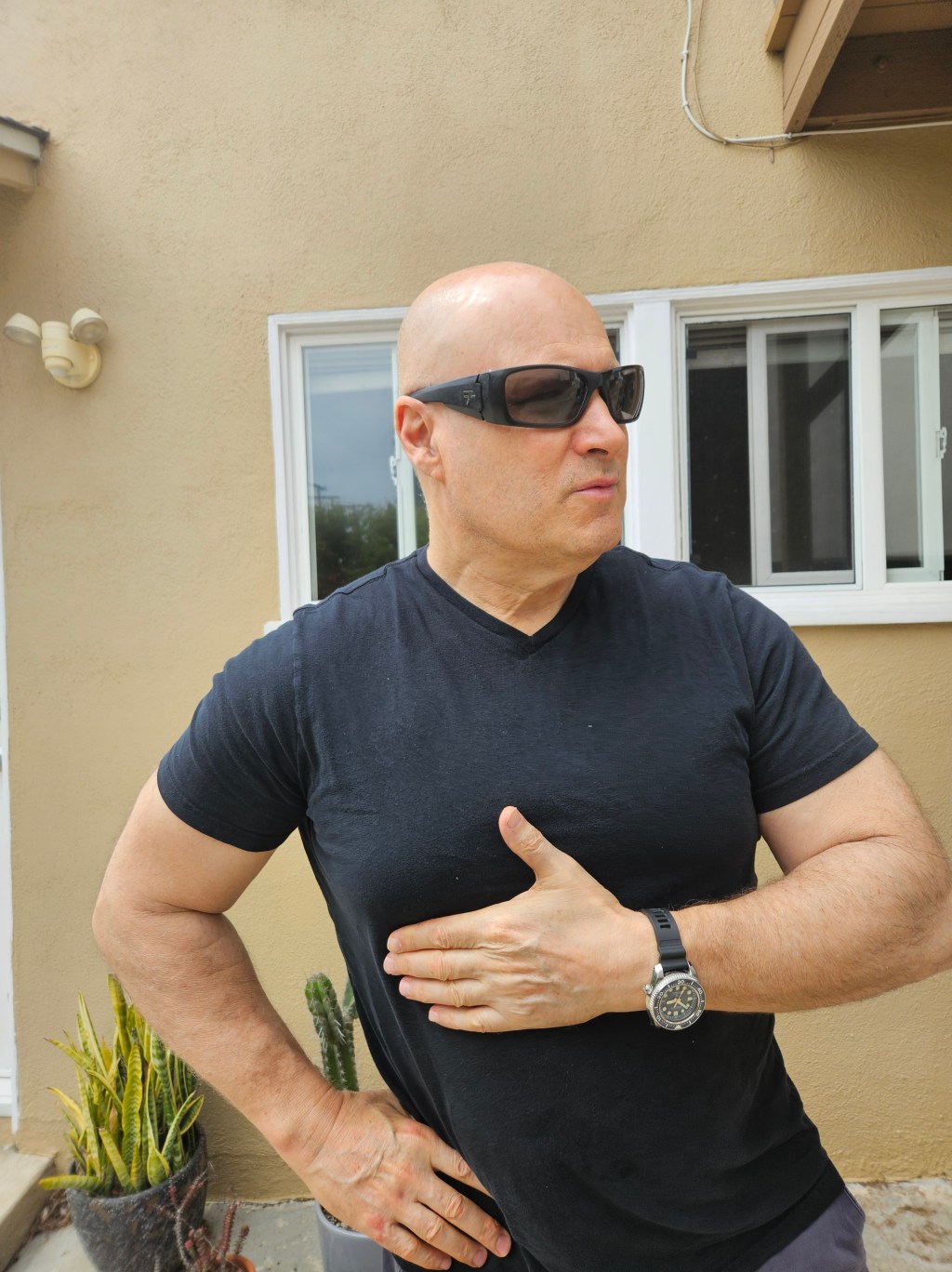
    Today I strapped on my Seiko Tuna diver, a hulking slab of steel that announces itself the moment you walk into a room. I don’t exactly want the attention, but let’s be honest: the watch is a radar blip that keeps me from fading into the wallpaper, just another suburban relic limping through the final trimester of existence.

    This fear of invisibility gnawed at me after my cousin Pete’s 75th birthday party in Studio City. His brother-in-law Jim, a retired ophthalmologist at 77, leaned in and muttered, “The worst part of aging is people stop seeing you.” Those words have been rattling around in my skull ever since. Old age, it seems, is less about wisdom and more about turning into a frayed recliner everyone resents but no one wants to haul to the curb.

    I’ll be 64 soon, and I know the rules: Father Time has a master plan, and it doesn’t include my vanity. Sure, you can still play piano with arthritic fingers, hike with a knee brace and a back girdle, and keep a smartwatch ready to call in helicopter rescue if you tumble into a viper-filled canyon. But invisibility is baked into the contract. You can fight it with kale salads and kettlebells, but in the end, your processor slows, your refresh rate lags, and the world swipes past you at 5G speed.

    Take the Samsung QLED my wife bought at Sam’s Club in 2021. Four years later, the picture is fine, but the processor is a fossil. Menus freeze, apps take two minutes to load, and the whole thing wheezes like a Pentium II running Windows 11. Samsung cheaped out on the chip, and now I’m stuck with a dinosaur. My solution? Upgrade to an LG OLED, not because I need perfect pixels, but because I want a TV with an AI 4K processor that doesn’t choke when I click Netflix. The irony isn’t lost on me: I’m furious at Samsung for selling me a laggy processor, yet here I am, trudging through life as a laggy processor. My younger colleagues adapt to new tech in a snap; I freeze and buffer. I’m a Boomer Samsung in a Gen Z OLED world.

    Nature is no kinder than tech. Watch the documentaries: Scar the lion rules the pride until Skip, the younger challenger, finally takes him down. Scar hobbles into the brush, invisible, forgotten, licking his wounds. That’s the arc. You don’t argue with it; you acknowledge it, maybe laugh about it, then go buy a $50 German Chocolate Cake at Torrance Bakery and eat the whole delicious thing. Because if invisibility is inevitable, you might as well go out with frosting on your face.

  • Radical Boring: The Oatmeal-Based Lifestyle Brand No One Asked For

    Radical Boring: The Oatmeal-Based Lifestyle Brand No One Asked For

    Next month I’ll be 64, which apparently means my taste buds have joined AARP. My diet is now narrower than my tolerance for small talk: buckwheat groats, oatmeal (rolled or steel-cut, because why not keep things spicy), Greek yogurt with berries and honey, and peanut butter-and-honey sandwiches on dark bread. While normal humans dream of steak and champagne on a Paris-bound jet, I fantasize about oatmeal for dinner. Forget first class—I’m on the Oatmeal Express, and my only beverage service is dark roast coffee, soy milk, and sparkling water, which is just soda pretending it went to finishing school.

    I know what’s happening. I’m regressing. I crave mush, porridge, pablum—the kind of food that comes in jars with smiling cartoon fruit. My kettlebell workouts, five days a week, are my only defense. I sweat buckets, swing heavy weights, and imagine I look like a Viking—but in truth, it’s just a grown man clinging to his giant metal pacifier. Exercise has become my lullaby. When I collapse afterward, I feel less like a warrior and more like a sedated infant.

    Of course, at a family birthday party, one cousin reminded me that growth only happens when we leave our comfort zones. I nodded while thinking, No thanks, I’ve had enough character development for one lifetime. At this stage, I don’t want adventure. I want oatmeal. I don’t want novelty. I want predictability. I’m not only becoming a baby—I’m pioneering a whole new lifestyle brand called Radical Boring.

    My big act of rebellion? When my twins turn sixteen in six months, they will take my wife’s 2014 Accord, she’ll inherit my 2018 Accord, and I’ll step into the future—so long as the future, a 2026 Accord that comes in “canyon river blue.” My wife begged me not to get silver or gray again, so this is me living dangerously. Of course, I’ll rarely drive it. I’ll open the garage, admire the shiny paint, then close the door and scuttle back inside for a soothing bowl of oatmeal.

    My family laughs at me. They think I’m absurd, predictable, hopelessly domestic. But at least I’m consistent. And if authenticity means being true to yourself, then yes—I am authentically a 64-year-old content with my porridge, my pacifier workouts, and my canyon river blue Honda. Call it returning to the womb if you want. I call it destiny.

    And now, having confessed this ridiculous self-revelation, I find myself thinking of my literary kindred Ariel Levy and her An Abbreviated Life—a memoir I clearly need to revisit, if only to confirm that my brand of absurdity has precedents.

  • Maybe There’s a Friendship Renaissance Waiting for Retirees, Or Maybe There Isn’t

    Maybe There’s a Friendship Renaissance Waiting for Retirees, Or Maybe There Isn’t

    In a recent conversation with Mike Moynihan on The Moynihan Report, media analyst Doug Rushkoff described social media life as a kind of self-inflicted madness: we willingly lobotomize ourselves into shrill binaries, flattening nuance until the “other side” is little more than a demon enemy. His words echoed Jaron Lanier’s decade-long dirge about how the online hive mind debases us into cheap caricatures.

    After fifteen years inside this funhouse, I can vouch for Rushkoff. Chasing likes and subs is a direct pipeline to despair. The algorithm isn’t designed for truth or connection — it’s a slot machine that spits out dopamine crumbs in exchange for outrage and hype. And yet, podcasters like Rushkoff and Moynihan point to a counterargument: in the right hands, social media can host intelligent conversations. But it’s a fragile victory, like surviving on a vegan diet — possible, but you’ll work twice as hard and swallow twice as much chalk.

    Socially, though, the medium is barren. Scroll long enough and the promise of “connection” curdles into loneliness.

    This hits me harder as retirement creeps closer — twenty-one months and counting. I’ve spent forty years teaching face-to-face, and I’ll miss it desperately. This semester I have student-athletes: sharp, disciplined, driven, engaging. Those classroom connections have been the marrow of my career, and they won’t be replicated by a Facebook feed.

    I’ll still have a family. I’ll still have two best friends in Torrance. But unlike my wife, who maintains a weekly social circuit of concerts, trips, dinners, and parties, my friendships are skeletal. Months-long “friendship fasts” punctuated by rare meetups. Husbands, as the cliché goes, lean too heavily on their wives for connection — a weight she may already feel pressed under. An isolated husband becomes a burden.

    You reap what you sow. Neglect friendships for decades, and you retire into isolation, wondering if you can still course-correct. Maybe it’s too late. Maybe habit calcifies into solitude.

    Or maybe not. Maybe there’s a friendship renaissance waiting out there: gray-haired amateur philosophers huddled at gritty diners, pickleball warriors at dawn, retirees solving the world over coffee. Maybe the beach yoga crowd will embrace me.

    Or maybe that’s just wishcasting. We’ll see.

  • The Lobster That Lifted Kettlebells

    The Lobster That Lifted Kettlebells

    Last night, I slipped into a dream where I was less man and more detective cliché: trench coat, team at my side, the whole noir package. We prowled the tiled underworld of a health club, where women lay dead in the shower stalls. The air carried a rank perfume—pungent, briny, unmistakable. It was the signature of our quarry, The Alligator Man, a serial killer who apparently marinated in fish guts before slaughter.

    Our trap was absurd but effective. We laced another health club’s showers with his own scent, as if baiting him with eau de swamp monster. Sure enough, the predator slithered into the stall, and I lunged. But instead of the hulking brute I expected, I clutched a young, handsome man, small enough to vanish in a crowd. His boyish face said innocent; his stench said otherwise. I locked eyes with him and announced, with grim satisfaction, that he was evil—and that evil was about to rot in a cell forever.

    Then, with dream logic’s usual whiplash, I found myself at a holiday party with my family. My wife had crafted me a lobster costume: claws for hands, a scarlet exoskeleton, and a hat shaped like a boiled crustacean’s head. I looked like a seafood platter at a masquerade ball. I ate cake while dodging feline landmines—the hosts’ cats had redecorated the house with cat mess. The carpet was stained with these “accidents.” With cake fork in hand, I declared this exhibit A for my lifelong “no pets policy.”

    The party oozed past midnight into the pale gray of morning. Bored stiff and craving endorphins, I trudged home. Still zipped inside my lobster suit, I cranked up a kettlebell workout in the living room. My claws clacked as I swung iron, the sweat pooling beneath my polyester shellfish skin.

    Headlights swept across the window. My wife and twin daughters walked in. I assumed they, too, had abandoned the litter-box bacchanal. She spotted me mid-squat, lobster claws snapping, and didn’t so much as flinch. I worried she’d rage over my soaking her handmade costume in salt and sweat. Instead, she simply yawned, brushed past my lobster theatrics, and announced she was going to bed. Evil had been vanquished, cats had soiled carpets, and the lobster workout was apparently just another Tuesday in her world.