Tag: love

  • The Voice of Glum: Watch Addiction, Loudermilk, and the Daily Battle Within

    The Voice of Glum: Watch Addiction, Loudermilk, and the Daily Battle Within

    The TV show Loudermilk is part sitcom, part group therapy, and part existential smackdown. Ron Livingston plays Sam Loudermilk, a grizzled music critic and recovering alcoholic with the face of a hungover basset hound and the social graces of a man allergic to kindness. He barrels through life offending everyone within a five-foot radius, insulting his fellow addicts with toxic flair. But beneath the wreckage lies a strange tenderness—a story not just about addiction, but about people trying to survive themselves.

    Loudermilk lives in a halfway house with a cast of human tire fires, and the comedy burns hot: irreverent, profane, and deeply affectionate. The show loves its damaged characters even as it roasts them alive. Naturally, I love Loudermilk. Love it like a convert. I’ve become a low-key evangelist, promoting it to anyone within earshot—including the assistant at my local watch shop.

    This isn’t just any watch shop. I’ve been going there for 25 years. The Owner and the Assistant know me well—well enough to have witnessed the slow, expensive progression of my watch addiction, including the day I came in twice because the first bracelet adjustment “didn’t feel quite right.” It’s my barbershop. My confessional. My dopamine dispensary.

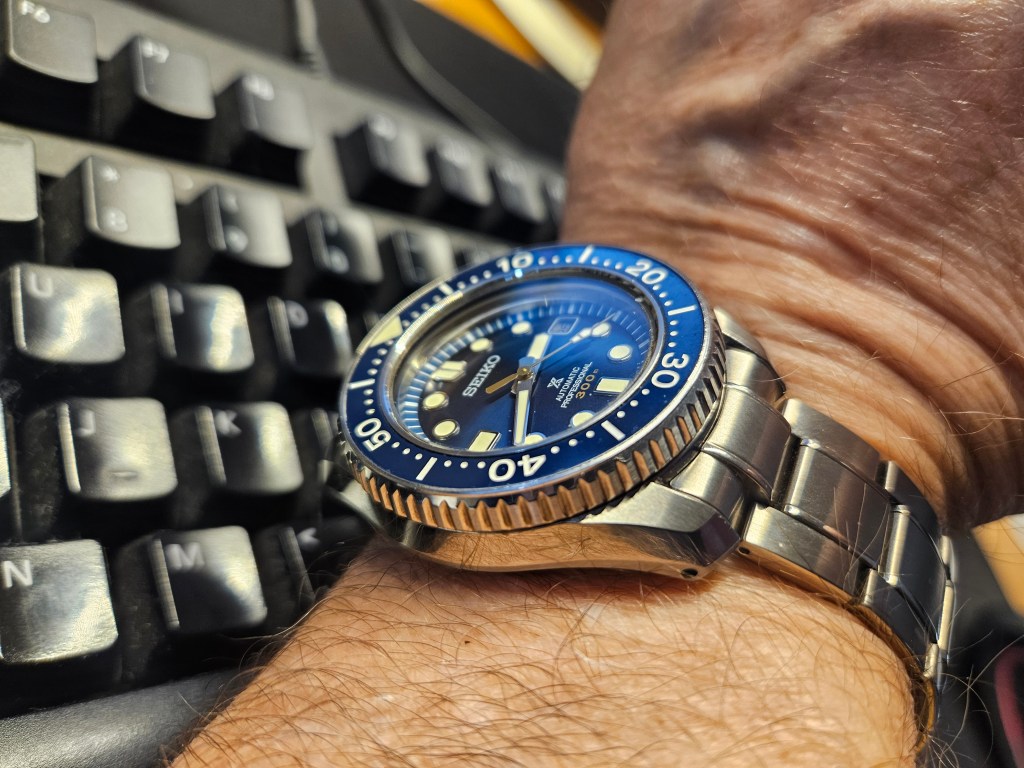
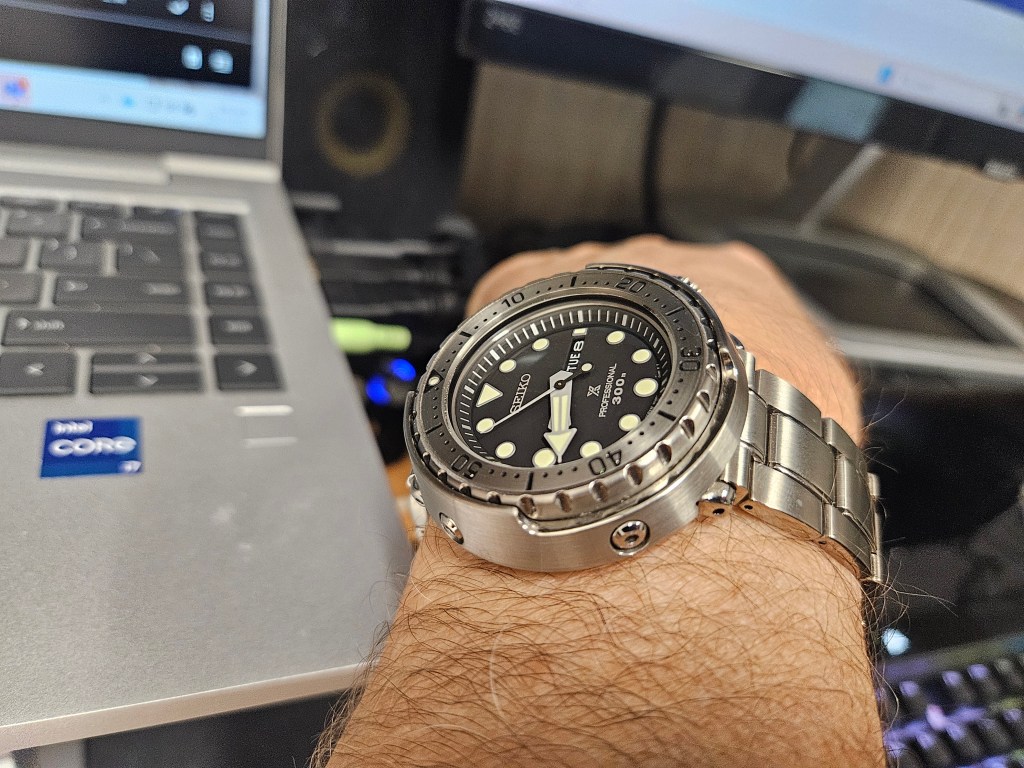
    So one afternoon, I’m there getting a link removed from my Seiko diver and I bring up Loudermilk. I describe the show’s gallery of screwups—addicts clawing toward redemption by way of insults, setbacks, and semi-functional group hugs. The Assistant looks up from his tools and tells me something personal. He watches Loudermilk too. And he gets it. He’s thirteen days sober and goes to five meetings every morning—not because he’s a morning person. He tells me that in his culture, drinking into one’s eighties is just called “living.” But for him, it was a slow-motion self-immolation. Now, he’s trying to claw his way back.

    Before I can respond, a woman with a chihuahua tucked under her arm chimes in from across the shop. She too is a Loudermilk fan. “What a shame it got canceled after three seasons,” she laments. The Assistant counters—there’s still hope for a revival. They argue lightly, both fully engaged, two strangers momentarily bonded over their shared love of a comedy about pain.

    I say goodbye and step out of the store. That’s when it hits me.

    I love Loudermilk because I see myself in it. I am an addict. Not just of watches, but of distraction, validation, control—whatever lets me delay the moment when I must confront the snarling voice inside me.

    Writers like Steven Pressfield and Phil Stutz describe this inner saboteur with chilling clarity. Pressfield calls it Resistance, the destructive force that undermines your better self. Stutz names it Part X, the anti-you that wants you to abandon meaning and pursue comfort. Both insist the enemy must be fought daily.

    And I know that voice. It’s lived in my head for decades.

    Once, at an English Department Christmas party, a colleague called me “Captain Comedown.” I don’t remember what I said to earn the nickname, but it tracks. I’ve got that bleak edge, the voice that sees futility everywhere and calls it wisdom. But a better name than Captain Comedown comes from my childhood: Glum, the joyless little pessimist from The Adventures of Gulliver, whose go-to phrase was: “It will never work. We’ll never make it. We’re doomed.”

    That’s my inner monologue. That’s my Resistance. That’s my Glum.

    Every day I wrestle him. He tells me not to bother, not to try, not to hope. That joy is a scam and effort is for suckers. And some days, I believe him. Other days, I don’t. But the battle is constant. It doesn’t end. As Pressfield says, the dragon regenerates. My job is to keep swinging the sword.

    And maybe, just maybe, buying a new watch is my way of telling Glum to shut up. It’s a shiny, ticking middle finger to despair. A symbolic declaration: The world still contains wonder. And precision. And brushed stainless steel.

    But there must be cheaper ways to silence Glum. A walk. A song. A friend. A laugh. Even a half-hour with Loudermilk.

    Because, irony of ironies, what addicts like me really want isn’t the next hit. It’s relief from the craving.

  • Arm-Wrestling My Way into Belonging

    Arm-Wrestling My Way into Belonging

    Last night, I had a dream so vivid it might as well have come with a recruitment brochure. Word had spread—apparently my reputation as the guy who could teach college football players to write sentences that didn’t cause nosebleeds had reached mythical status. Somewhere in South Carolina, perched on a beach with the casual arrogance of a luxury condo, a university decided they needed me. Urgently.

    Some guy—I don’t remember his name, only that he had the calm urgency of a cult recruiter—convinced me to hop on a bus. The ride took five seconds. Not metaphorically. Five actual seconds. Blink and boom: there I was, standing on a beach so perfect it made the California coast look like an overhyped sandbox.

    The air was humid but in a sensual, Southern Gothic sort of way. The kind of air that makes you forgive mosquitoes and contemplate linen pants. The sun was melting into the Atlantic like it had nowhere better to be. I was home, or something like it.

    Coaches greeted me like I’d just been drafted into sainthood. Players clapped me on the back and called me “Coach,” which I didn’t correct because, frankly, it felt good. Then came the arm wrestling. One by one, I took them down like some middle-aged Hercules hopped up on tenure and protein powder. Elbow to the table, bicep to the heavens. I wasn’t just respected—I was essential.

    It wasn’t about strength. It was about belonging. Every laugh, every handshake, every ridiculous display of masculine absurdity made me feel needed in a way that was almost embarrassing. I wasn’t just part of the team. I was the team.

    I wanted to call my wife back in California, to tell her we were moving. I had found the Promised Land, and it came with free gym access and a faculty parking permit. But the joyous noise around me was too loud. The players were hooting, the coaches were laughing, and the ocean kept slapping the shore like it had something to prove. I’d call her later, I told myself.

    Then I woke up.

    The ceiling fan was rattling. My desire for dark roast coffee was pressing. And I was back in the real world, where my inbox was probably filled with late assignments and vague threats from the IT department.

    Still, the dream stuck with me. Not because of the location, or the humidity, or the freakish arm strength—but because of the feeling. That feeling of being wanted. Of being part of something. Of mattering.

    There is no substitute for that. None.

  • False Prophets with Great Abs

    False Prophets with Great Abs

    You remembered the first episode of I Dream of Jeannie. Major Tony Nelson—square-jawed astronaut, man of science—crash-landed on a remote island after his space capsule, Stardust One, veered off course. There, buried in the sand like a cursed treasure, he found a mysterious bottle. And then—whoosh—a plume of bluish vapor, and out popped Jeannie: blonde, barefoot, bewitching, and hell-bent on fulfilling his every wish. Tony blinked. Maybe it was a hallucination. Maybe his oxygen-deprived brain was conjuring fantasies. Whatever the case, he wasn’t buying it. He was trained to distrust magical thinking, and Jeannie, glittering and obedient, was the definition of a dangerous shortcut.

    You, on the other hand, were no Tony Nelson. You were a teenage Olympic weightlifter and amateur bodybuilder, sprawled out in your bedroom flipping through a muscle magazine, fully hypnotized by the promise of the next miracle breakthrough. You had just finished an article on “progressive resistance training”—a phrase that gave you a warm little shiver of purpose. You divided the world into two kinds of people: those who were progressing and those who were stagnating in mediocrity. You were dead-set on being in the first camp.

    The article ended, but the real magic was in the ads: potions, powders, pulleys, and contraptions promising titanic biceps, superhuman abs, and the sculpted torso of a Greek statue. One ad hit you right in the hypothalamus—the Bullworker. A three-foot rod of steel and plastic, with green-handled grips and bowstring cables. It looked like a cross between a medieval torture device and a Jedi weapon. A bodybuilder in the ad flexed beside it, veins like roadmaps and pecs like dinner plates. It cost forty-five bucks—a king’s ransom. You had to have it.

    So you marched into the living room where your dad was nursing a beer and watching football. You handed him the ad.

    “What do you think?”

    Your dad—a flinty ex-infantryman with a buzz cut, a jaw like a chisel, and a fading “MICHAEL” tattoo on his biceps—glanced at the page like it was a bar tab he didn’t remember running up. “You want muscles?” he said. “Pull weeds. Mow the lawn. Clean gutters. Chop wood.”

    “Dad, I’m serious. This would supplement my real workouts.”

    He looked again, then sighed. “It’s junk. Slick marketing. But if you want to waste your allowance, it’s your choice.”

    You told him you were short on cash.

    “Then save up. Make sacrifices. And do your research. If you dig a little deeper, I bet you’ll want it less.”

    “Why?”

    “Haven’t you heard of Sturgeon’s Law?”

    “No.”

    “Ninety-nine percent of everything is bullshit. That includes this gadget. Remember that martial arts program you ordered? Twenty bucks for a pamphlet with stick figures doing karate poses. Bullshit. Due diligence, son—that’s your shield.”

    “What’s due diligence?”

    “Thorough investigation. Weighing the pros and cons. Kicking the tires before you buy the clunker. Most things don’t survive scrutiny. Always be quick to save your money and slow to spend it. You got that?”

    “Yes, Dad.”

    Not exactly in the mood for football after that, you trudged back to your room and cracked open another muscle magazine, drinking in the endless parade of promises. “Gain more muscle than you ever dreamed of,” one ad proclaimed.

    And Jeannie was back. Not in her bottle—she was in your brain now. She was the fantasy of every easy answer, every too-good-to-be-true claim. The allure of Jeannie wasn’t just her beauty or her servility—it was her offer of instant gratification, with no price tag except your dignity.

    That was the whole premise of the show: Tony Nelson didn’t trust Jeannie because he was smart enough to know that panaceas always come with fine print. But you weren’t that smart yet. You still believed—just a little—that this or that device, powder, or program might turn you into a demigod.

    You wanted your gains. 

    The Bullworker failed you–but it wasn’t just a piece of overpriced cable-tension nonsense. It was a monument to your teenage fantasy: that somewhere, somehow, a portable contraption could carve you into Hercules without the burden of sweat, setbacks, or iron plates. The device itself was a dud—a clunky plastic rod with big promises and no payoff—but the idea of the Bullworker had teeth. A chiseled physique, ready to go, no gym required? It was the dream distilled. What you got instead was a hard truth: even when an idea crashes and burns in practice, some illusions are simply too seductive to abandon.

  • Watch Island: Where Grown Men Click Bezels and Call It Meaning

    Watch Island: Where Grown Men Click Bezels and Call It Meaning

    After twenty years tumbling down the horological rabbit hole, I’ve come to one conclusion: the watch hobby is a paradoxical fever dream held together by delusion, desire, and just enough self-awareness to laugh before crying.

    If Alec Baldwin’s mantra in Glengarry Glen Ross was “Always be closing,” then the watch nerd’s version is: “Always be laughing at yourself.” Because let’s be clear—none of this is serious. And yet, it’s also deathly serious. That’s the contradiction we live in: a tension between cosplay and existential weight.

    At its core, watch collecting is elaborate roleplay. Grown men strapping on wrist-bound fantasies, each timepiece a character costume in a rotating lineup of imaginary lives. We cosplay as deep-sea divers, fighter pilots, Arctic explorers, NASA engineers, rugged survivalists, or minimalist monks of Japanese restraint. We don’t just wear watches. We become them. Just as fans dress as superheroes at Comicon, we show up to Bezel-Palooza with Seikos and Sinns, flexing our sapphire crystals and ceramic inserts like badges of forged identity.

    And don’t get me started on the straps. We favor models named after desserts: waffles, chocolate bars, and tropic vanilla-scented rubber. We’re just high-functioning children in the horological wing of Willy Wonka’s Chocolate Factory. But instead of licking the wallpaper, we post lume shots under moody lighting and argue about clasp tolerances.

    It’s cosplay for the emotionally overcommitted.

    But the strangest contradiction? For something so clearly un-serious, we treat our collections with a kind of medical gravity. The annual “State of the Collection” post feels like a cholesterol screening—an attempt to gauge whether we’re healthy, balanced, evolving, or simply delusional. We don’t just love watches. We debate the proper ways to love them. We agonize over whether we’re rebuying the Willard out of longing or self-sabotage. We assign spiritual weight to which dial shade of blue best reflects our soul.

    This isn’t just madness. It’s structured madness. With forums.

    We are a niche tribe of adult males—many of us husbands, some of us fathers—who transform into Man-Babies the moment we utter the words “bezel action” or “ghost patina.” Our wives, bless them, want no part in our obsessive monologues about case thickness and end-link articulation. To them, we are overgrown children clinging to our G.I. Joes and Tinker Toys, slowly sprouting donkey ears like Pinocchio and Lampwick on Watch Island, while they look on with bemused pity.

    We know we’re ridiculous. That’s the beautiful tragedy. And still, we dive deeper. Because in a world that often lacks identity, silence, and meaning, we find it in brushed stainless steel and micro-adjust clasps.

    And yes—we’re probably overdue for an intervention.

  • A Portrait of the Artist as a Sweaty Young Man

    A Portrait of the Artist as a Sweaty Young Man

    In the fall of 1979, I was seventeen years old, a freshman in college, and already trapped in the tragicomic theater of my own self-regard. My deltoids were large, my ego fragile, and my sense of fashion—catastrophic. I had shown up that day to the cafeteria in a tight black turtleneck, the kind of garment that might look sleek on a Parisian intellectual but looked positively deranged on a teenage bodybuilder seated alone under sun-drenched plate-glass windows. The sun baked through the glass like a punishment from Apollo himself, and there I sat, moping in a puddle of my own sweat and self-loathing while Jimmy Buffett’s “Margaritaville” chirped mockingly from the jukebox.

    The song, a hymn to sloth and sangria, might as well have been composed to ridicule me personally. I didn’t know how to be carefree. I didn’t sip margaritas or laugh at spilled salt. I sat there glowering at my hamburger like it owed me money.

    College wasn’t a choice; it was a parental ultimatum. My mother, newly divorced and perpetually exasperated, had threatened to eject me from the house if I didn’t enroll. My father, who fed me barbecued steak at his bachelor pad and treated my emotions like a disease he couldn’t contract, declared that my ego—his exact word—was too “delicate” for a job with the sanitation crew. “You’re not built for trash,” he said between bites. “You need a title.” I agreed. I said I needed something white-collar, something that sounded mobile—like it wore loafers and got invited to cocktail parties.

    Yet there I sat, jobless, broke, sweating through a wool turtleneck like a fool in a Russian novel. Just a few weeks earlier, I had been juggling job offers like a hustler on the make. One gig was as a bouncer at a teenage disco called Maverick’s in San Ramon, a temple of polyester and hormonal chaos where high schoolers writhed to the anesthetizing thump of K.C. and the Sunshine Band. I hated everything about that job—the music, the fake glamour, the pretense of authority as I stalked the aisles flexing my lats like I was auditioning for a sequel to Saturday Night Fever: The Security Guard Chronicles.

    My mother’s revolving door of boyfriends didn’t help. One, a Raiders defensive coordinator, had promised me a job moving pianos, which somehow never materialized. Another, Sid Briggs, was allegedly a “businessman” with Teamsters connections and the vague scent of federal indictment. He too promised me a job managing a health club. That never happened either. The only real employment I had was at Maverick’s, which came to a dramatic end during a riot. My fellow bouncer Martino and I decided we were too precious to die for three bucks an hour, so we walked out mid-melee and drove off down Crow Canyon Road. Martino repeated like a monk reciting scripture, “I’m not going to risk my life for three dollars an hour.”

    We were fired. Unceremoniously. I was left with $300 in my checking account and a 1971 metallic brown Ford Galaxy that had just drained me dry with repairs. That car had the elegance of a Soviet tank and handled like one too.

    And now here I was, sulking under the cruel sunlight, marinating in Buffet’s faux-Carribbean nihilism. “Wasting away,” he sang. No kidding.

    At six feet tall and 210 pounds of resentful muscle, I radiated a kind of lonely menace. My professors were afraid of me. People steered clear. I was a human bug zapper. But then came John O’Brien.

    He walked right up to my isolated table like he was planting a flag. Set down his tray, extended a hand, and introduced himself. A compact redhead from Boston with the kind of fast-twitch charisma that usually belongs to politicians or cult leaders. He had moxie, confidence, and a girlfriend who looked like a shampoo commercial. But unlike most people with that kind of glow, he wasn’t a narcissist. He had radar. And he picked up my signal loud and clear: lost kid, no job, no love life, no clue.

    John decided to fix me.

    First, he got me a job. He worked at Jackson’s Wine & Spirits in Berkeley and said, “They need a guy. You’re the guy.” He called me that night with the details. Two days later, I was on the floor learning about merlot and discount vodka.

    Then, with the subtlety of a Vegas magician, he decided to address my romantic failure. He looked across the cafeteria, spotted two stunning nineteen-year-olds, and summoned them with a whistle so loud and precise it could’ve herded cattle. They glided over—one blonde, one with honey-colored hair—and I immediately began sweating like a man having a cardiac episode in church. It was flop sweat, and I couldn’t stop it. I tugged at the neck of my turtleneck like it was trying to strangle me and muttered, “It’s not hot in here.”

    The girls smiled politely, and I squirmed in my own skin like a teenage werewolf caught mid-shift. John watched it all with the amused detachment of a man inspecting a fixer-upper. He had found a dilapidated house—me—and now he was assessing the structural damage.

    He had his work cut out for him.

  • Lost at the Light: A Dream of Unfinished Witness

    Lost at the Light: A Dream of Unfinished Witness

    Last night I dreamed I was flung through time to witness the Crucifixion—not once, but over and over again, as if history were caught in an eternal loop. It wasn’t a single event but a kaleidoscope of perspectives: I viewed it from the ground, from a hillside, even from above. The landscape shifted with each new angle—sometimes the sky was slate gray, sometimes scorched bronze, sometimes bruised with orange light like an eternal dusk.

    I was obsessed with seeing it clearly, as though clarity itself were salvation. But the method of execution began to morph. The Cross, once tall and stark on a mountaintop, gave way to a giant catapult. I watched as faceless figures were hurled skyward like rag dolls flung by fate. I couldn’t tell if they were victims, martyrs, or simply vanishing into the void.

    There was mention—or maybe just a sensation—of a third method of sacrifice, one hidden, unnamed, and deeply unsettling. Its very vagueness gnawed at me, filling me with a dread I couldn’t explain.

    Realizing that perfect understanding was impossible—that I would never grasp the full shape of this cosmic agony—I finally surrendered. The moment I did, I was somewhere else.

    Now I was behind the wheel of a car, trying to follow a caravan of friends along an unfamiliar road. They all made it through a green light; I didn’t. I was left behind, lost beneath a concrete overpass, disoriented and doubting whether these friends were friends at all.

    Eventually, I caught up. We arrived at our destination: a picnic by the sea. No one spoke of what had happened. We passed around barbecued trout and fresh fruit, relieved more than joyful. We were just glad to be there, to eat together in silence. The chaos of the journey was forgiven in the quiet rhythm of chewing and the sound of waves.

  • Don’t Feed the Soul-Hole: 4 Rules for Making YouTube Content Without Losing Your Mind

    Don’t Feed the Soul-Hole: 4 Rules for Making YouTube Content Without Losing Your Mind


    Here’s what I’ve learned while preparing my latest YouTube video essay—”Don’t Confuse a Watch Collector with a Watch-Hoarding Demon”—which, by the way, still sits unrecorded because I haven’t found a quiet moment required to talk to a camera.

    Lesson One: Open with Housekeeping—But Make It Deranged.
    Begin your video not with a dry agenda but with something ridiculous and revealing. Tell your viewers how a simple search for watch straps turned into a midnight rabbit hole of vintage Camry trim packages or why you contemplated buying a Tudor Pelagos just to avoid folding laundry. Let them see your obsessions in their full neurotic bloom. Self-disclosure laced with comedy is more potent than any clickbait title.

    Lesson Two: Stop Feeding the Soul-Hole.
    The point of making videos is not to audition for emotional validation from strangers on the internet. That’s a black hole with no floor and no mercy. Seeking approval from the algorithmic gods only deepens the void. Instead, aim to share something real—stories, absurdities, and small slices of insight—with humility, clarity, and a firm grip on the absurdity of it all. You’re not here to be liked. You’re here to connect.

    Lesson Three: In the Age of Dopamine Overload, Be Useful.
    We live in an attention economy that’s basically a carnival of shrieking hucksters promising eternal youth through vitamin gummies and AI lifehacks. Most of it ends up being digital noise. Your job isn’t to out-scream them; it’s to offer substance. My strength is argumentative essays, so that’s where I stake my claim. Find your strong suit, sharpen it, and share it—preferably without a TikTok dance.

    Lesson Four: Welcome Dissent Like a Grown-Up.
    The comment section should not be a food fight. It should be a place where people can politely disagree without biting each other’s heads off. We live in a culture where disagreement is taken as a personal attack—like someone spit in your oat milk latte. But real disagreement, handled well, is a gift. It forces us to clarify, refine, and rethink. Without opposition, your ideas become flabby and self-congratulatory. Iron sharpens iron—just make sure it’s civil.

  • Demoted Dad: A Suburban Fall from Instructional Grace

    Demoted Dad: A Suburban Fall from Instructional Grace

    This morning, mid-swing in a blissful kettlebell session in my garage—a sacred temple of sweat, steel, and solitude—I glanced out to see a domestic drama playing out on the asphalt stage of my street.

    There he was: a dad in safari shorts and a floppy bucket hat, walking ten feet behind his five-year-old son, who was waging war with a two-wheeled bike. The boy had the wild energy of someone determined to conquer balance through sheer will. He fell. Got up. Fell again. But on the third tumble, he’d had enough. He plopped down in the middle of the road like a pint-sized union striker, arms crossed, lips pursed, radiating silent defiance. He wasn’t hurt. He was done.

    The dad—poor man—begged him to rise. Pleaded. Offered bribes, probably. But the child had entered the iron-willed resistance phase that all seasoned parents recognize: the Sit-In of Doom.

    I considered emerging from my kettlebell cave to offer peace offerings. Coffee for the dad. Lemonade for the boy. Something to cut the tension. But reason—and David French’s podcast on the masculinity crisis—pulled me back into my dungeon. I resumed my Turkish Get-Ups as the father stood in the street, trying to lead someone who refused to be led.

    Thirty minutes passed.

    When I looked again, the scene had shifted.

    Now the father was on his own bike, trailing behind his son and wife. The boy, steadier now, was pedaling confidently while the mother jogged beside him, holding the handlebars like a Secret Service agent shielding the President. The boy beamed, triumphant. The mother wore a face that said, without saying a word, “This is how it’s done.”

    And the father?

    He wore the same sullen expression his son had half an hour earlier. He looked demoted. Not from fatherhood, but from a very specific rank: Lead Bike Instructor.

    He was now an observing sidekick. A support staffer. An unpaid intern in his own household. Whether he’ll regain his instructor’s license remains to be seen, but one suspects the road back will involve bureaucratic hoops, penance, and perhaps a formal review board chaired by his wife.

    Such is the quiet theater of suburbia—played out between fallen bikes, bruised egos, and the eternal struggle for parental credibility.

  • Don’t Let Brotoxification Ruin Your Watch Hobby

    Don’t Let Brotoxification Ruin Your Watch Hobby

    I’ve been both a watch enthusiast and a watch addict for over two decades—long enough to know the difference between a genuine passion and a performance art piece in a wrist-sized frame.

    Some of my collecting history is noble. Some of it’s embarrassing. I’ve chased watches for the right reasons: fascination with engineering, aesthetics, a deeply personal sense of style. But I’ve also chased them for the wrong reasons: hero cosplay, status projection, and the sad, sweaty hope that someone—anyone—might think I was cool for wearing a submersible chunk of steel on my wrist.

    Let’s call it what it is: I’ve bought watches to feel like a man. That instinct isn’t always authentic—it’s often a costume. And in the world of collecting, nothing poisons the well faster than performative masculinity dressed up as personal style.

    So I started trying to pare things down. Simplify. Get to the core of what I actually like, and keep a small, personal collection that reflects who I am—not who I want Instagram to think I am.

    Easier said than done.

    Because in today’s world, “authenticity” has become just another algorithmic trend, another pantomime we perform for likes and approval. The word phony doesn’t even do justice to the industrial-strength fakery we’re marinating in. It’s beyond phony. It’s Olympic-level insincerity with corporate backing and PowerPoint slides.

    We now live in a cultural ecosystem where people are so fake, their attempts at being authentic create new layers of fakery. It’s not just that they’re inauthentic—they’re meta-inauthentic. They study authenticity like it’s a language exam, and the harder they try to sound fluent, the more their accent bleeds through.

    Take, for example, the great frauds of my TV-watching youth.

    Eddie HaskellLeave It to Beaver’s oily teenage suck-up—mastered the art of smiling at your mother while plotting your destruction behind the garage. He didn’t just imitate politeness; he weaponized it.

    Then there was Dr. Smith from Lost in Space—the preening, verbose con man who brought zero medical skills to the spaceship but still managed to insult the robot with Shakespearean flair:
    “You clumsy, colossal clod!”
    “You insidious ignoramus!”
    “You bubble-headed booby!”

    Ironically, Dr. Smith’s insults turned me on to language itself. I owe the man my English degree. Which just proves: sometimes even a fraud can inspire something real.

    Fast-forward to today’s most delicious case of catastrophic phoniness: the political operatives who realized they had alienated the male vote. After years of condescension, virtue signaling, and high-minded lectures, they finally realized men were tuning them out—if not outright recoiling.

    So what did they do?

    They flew to Half Moon Bay, checked into a luxury resort, and held a think tank retreat to rebrand masculinity. Picture it: Ivy League consultants in cashmere sweaters eating lobster rolls and sipping Pinot Noir while spitballing ways to reconnect with the “working man.” They treated young men like they were a rare species of jungle ape. Field notes were probably taken.

    This level of cluelessness isn’t just tone-deaf—it’s operatic. If the writers of Succession pitched this as a storyline, HBO would tell them to tone it down for realism.

    We need a name for this kind of oblivious, polished, self-defeating fakery. I call it Brotoxification: the act of rebranding yourself to appeal to men—but doing it with such manicured insincerity that you repel the very people you’re trying to win back.

    I work with young men every day—college football players, ex-military students, guys grinding through school because life didn’t hand them a shortcut. They don’t want coddling. They want three things: structure, discipline, and real-life skills. The last thing they need is a smug consultant in designer sneakers telling them how to “be seen.”

    And this circles back to watches.

    A few ground rules for keeping your watch hobby clean:

    1. Don’t overthink it.
    If a watch keeps whispering to you at 2 a.m., it probably belongs on your wrist. Trust your gut. You don’t need a panel of experts or a YouTube breakdown.

    2. Never buy a watch because you think it’ll earn you applause.
    If you’re trying to impress the crowd, the crowd will sniff out your desperation and laugh behind your back. Buying a “manly watch” to look tough is like buying cologne to smell rich. It doesn’t fool anyone.

    3. You don’t need to be rich.
    A $200 G-Shock Rangeman, worn with conviction, beats a $10,000 showpiece worn like a rented tux. Living within your means isn’t just practical—it’s masculine. It’s called integrity.


    In the end, authenticity can’t be strategized. It’s not something you workshop in a resort ballroom between keynote speakers and complimentary wine pairings. It’s not a brand refresh. And it sure as hell isn’t something you can outsource to consultants.

    Whether we’re talking about politics, masculinity, or watch collecting, the minute you start performing sincerity is the minute you’ve already lost it.

    So do yourself a favor: Keep your hobby honest. Reject the Brotox. And wear your damn watch because you love it—not because you’re hoping someone else will.

  • The Farmer’s Carry and Other Acts of Suburban Defiance

    The Farmer’s Carry and Other Acts of Suburban Defiance

    Last night I had dinner at The Kebab Shop with an old friend—a former boxing champion turned engineer, the kind of guy who looks like he could build a bridge in the morning and break your nose that afternoon, all while discussing Tolstoy.

    He recently broke up with his girlfriend and confessed something strange and honest:

    “I feel like I’m chasing the sad,” he said. “Just so I’ll feel better about myself.”

    I told him not to worry—he’s sad, alright. Sometimes pain is too large to register. Like being so exhausted you can’t fall asleep, or so depleted you can’t even feel tired.
    He nodded, then casually dropped the bomb: he just bought a Lexus. I assumed an SUV—some respectable adult-mobile with storage. Nope. He turned his phone toward me and grinned. It was an obsidian black Lexus RC350 coupe, a low-slung, 311-horsepower statement of rebellion against mediocrity and middle age. Price tag? A cool $70,000.

    Why? Because he gets bored. Easily. He’s cursed with a mind that needs friction. His current job is too easy, and when things get too easy, life feels mechanical. He’s planning to move on—to another job, another city, more challenge, more money, more meaning.
    He told me staying home to watch TV feels like soul rot. So instead, he journals (in a real book, with prompts—who knew that was a thing?), plays soccer on weekends, and takes private dance lessons. Yes, dance. This man has better time management than most monasteries.

    I told him I admire him. I mean it. He’s not surrendering to entropy; he’s interrogating it with pen, ball, and motion. He’s writing his way out of the void. I might need to follow his lead when I retire in two years. No matter our age, we either rage our fists at mortality or we start sinking into the upholstery.

    I then told my friend that I nearly bought a $2,000 recliner last week. A magnificent beast of engineered comfort. But the moment I imagined myself melting into it, day after day, I envisioned not rest—but early burial. A leather sarcophagus with cupholders. I backed away like it was a cursed object.

    I was inspired by my friend’s hunger for adventure, so the next morning I punished myself with a new exercise: the Farmer’s Carry–two kettlebells, one in each hand, pacing in circles across my front lawn like a rogue warlord in gym shorts. Neighbors peeked through their blinds to watch this 63-year-old Larry Csonka doppelgänger lumbering across the grass like I was either training for something… or losing a very public battle with aging.

    The exercise nearly broke me. I’ll keep it in rotation, but with moderation. I train to feel alive, not to hemorrhage my last remaining Life Force into the turf of suburban California.

    And now, I wait for my friend to pull up and take me for a ride in his Lexus. He’s earned it. The man’s been driving the same Corolla for thirteen years. Now it’s his turn to live a little. And me? I’ll tag along, a passenger for a while, enjoying the ride through this strange, accelerating cycle of life.