Tag: love

  • When Watch Collecting Becomes Financial Infidelity

    When Watch Collecting Becomes Financial Infidelity

    Any honest account of watch addiction must confront its most uncomfortable chapter: financial infidelity.

    The watch obsessive does not merely inhabit a fever dream of dials and bezels. He is a consumer training his appetite the way a bodybuilder trains a muscle. Each purchase lowers resistance. Each box on the doorstep normalizes the next. What begins as an occasional indulgence becomes a rhythm, then a pattern, then a supply chain.

    At first, his wife is charmed. A parcel here and there. A harmless hobby. A grown man treating himself to a toy.

    But frequency is the tell.

    Soon the packages arrive too often, too predictably, like clockwork. The enthusiast recognizes the danger before anyone says a word. And so the hobby evolves. Deliveries rerouted to the office. A friend’s address. A rented mailbox. The collection expands. The domestic narrative is quietly edited.

    The line is crossed when the money changes categories.

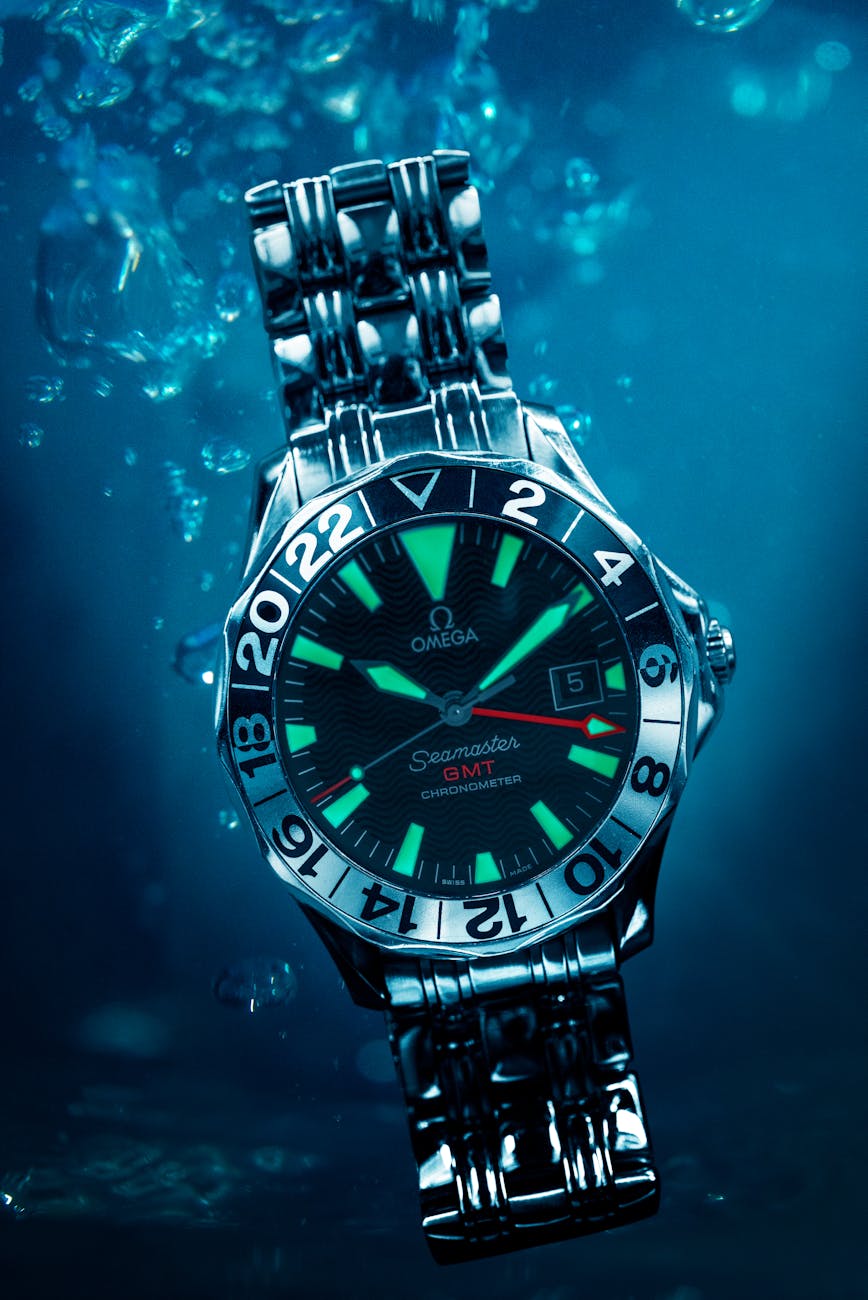
    Vacation funds become “temporary reallocations.” Home projects become “later.” College savings become “untouched in principle.” And somewhere along the way, a Swiss luxury watch appears that cannot be explained without a level of honesty the buyer is no longer prepared to offer.

    Behavior adapts to the secrecy.

    Watches are swapped during the day so no single piece attracts attention. New arrivals are unboxed during strategic windows of solitude. Lume checks are performed under blankets like a teenager hiding a flashlight after lights-out. YouTube reviews are watched with the sound off.

    To the outside world, he is a responsible husband and father.

    Privately, he operates a parallel identity.

    This condition has a name: Domestic Double Life Disorder—the psychological split in which a man performs stability and restraint in public while privately sustaining a covert economy of acquisition, concealment, and rationalization.

    For some, the weight of the split becomes unbearable. Guilt accumulates. The numbers add up. The secrecy grows exhausting. And one day, the buying stops.

    The result is not relief.

    It is silence.

    No packages. No tracking numbers. No late-night research. No private surge of anticipation. Life becomes honest—and strangely flat. For a man accustomed to the adrenaline of concealment and the dopamine of arrival, integrity feels less like freedom and more like withdrawal.

    This is the danger point.

    Because if honesty feels empty and secrecy felt alive, the relapse writes itself.

    The addresses reappear. The justifications return. The private economy resumes. The double life feels, once again, familiar. Efficient. Even comforting.

    For some watch addicts, deceit is not the problem.

    It is the habitat.

  • Beauty Isn’t Enough: The Moment Desire Meets Reality

    Beauty Isn’t Enough: The Moment Desire Meets Reality

    We are, most of us, walking around with a quiet fracture. Something missing. Something we believe can be restored if only we find the right object, the right achievement, the right arrangement of circumstances. The trouble is that the very strategies we use to make ourselves whole often deepen the crack.

    Citizen Kane is the classic case study. Charles Foster Kane acquires everything—wealth, art, palaces, influence—only to die alone, whispering “Rosebud” like a man calling into an empty room. For all his possessions, he never possessed what he actually wanted: love. The sled was not valuable. It was a memory of unconditional belonging, the one thing money could not purchase.

    Once the unconscious decides that objects can deliver emotional completion, the trap is set. The shopping becomes symbolic. The acquisition becomes therapeutic. And the disappointment becomes inevitable.

    I would like to believe I’m immune to this logic. I am not.

    I’m not trying to buy love, exactly. What captures me is beauty. A gunmetal sports car. A finely finished watch. Once the image enters my field of vision, it begins to work on me. Beauty has a narcotic quality. It doesn’t argue. It persuades.

    When I was nine, my father and I would slow the car to stare at Corvettes and my personal holy object, the Opel GT. We didn’t own them. That hardly mattered. Looking was enough to induce a quiet intoxication.

    Some forms of beauty age well. Twenty years ago my wife and I bought a framed Botticelli Primavera from an antique store. It hangs in our living room today. I still find myself studying the figures, pulled into the scene as if it were unfolding in slow motion. The painting asks nothing from me except attention.

    Watches work differently.

    A beautiful watch does not merely sit on the wall. It demands a relationship. It asks to be worn, justified, integrated into daily life. And here the problem begins.

    I’m drawn to intricate designs—chronographs, textured dials, bold contrasts, mechanical drama. These pieces photograph beautifully. They mesmerize under good lighting. They whisper, You are a man of taste.

    But then I put them on.

    The dial is busy. The legibility suffers. The weight feels wrong. The watch stays in the box.

    That’s the gap—the quiet but decisive chasm between aesthetic admiration and lived use. Many of the most beautiful watches I’ve owned became box queens: admired, respected, and essentially abandoned.

    A fellow collector once told me he doesn’t mind owning watches he never wears. He thinks of them as wall art. People collect paintings for beauty; he collects watches the same way.

    I can’t do that.

    Unworn watches don’t calm me. They make me uneasy, like unfinished obligations. A watch that isn’t part of daily life feels less like art and more like a small, expensive mistake.

    Years ago, a neighbor let me drive his black Corvette—a childhood Rosebud made real. Within minutes, the spell broke. The cabin was cramped. The ride was harsh. Every bump transmitted directly into my spine. I handed back the keys with relief.

    The car looked magnificent. Living with it would have been miserable.

    That experience clarified something I’ve come to accept across watches, cars, and most objects of desire:

    Beauty alone is not enough.

    At some point, every enthusiast discovers a personal boundary—what might be called a Functional Integrity Threshold. It’s the moment when aesthetic appeal loses its authority because the object fails in comfort, usability, or daily harmony.

    Below that threshold, beauty is intoxicating.
    Beyond it, beauty becomes irrelevant.

    Give me both—form and function in alignment—or give me neither. Anything else is just another Rosebud waiting to disappoint.

  • Bracelet Ambivalence Disorder: When Steel Looks Right But Feels Wrong 

    Bracelet Ambivalence Disorder: When Steel Looks Right But Feels Wrong 

    About two years ago, after more than two decades in the watch hobby, I developed a new condition. It arrived quietly, without warning, sometime around 2024.

    I became ambivalent about bracelets.

    I suspect the trouble began with my Seiko SLA055. It came on Seiko’s chocolate-bar rubber—an arrangement I never learned to love. The sliding metal keeper felt cheap, the rubber looked underdressed, and the whole thing struck me as unworthy of a watch north of three thousand dollars.

    So I did what any rational enthusiast would do. I spent over a thousand dollars chasing the perfect strap.

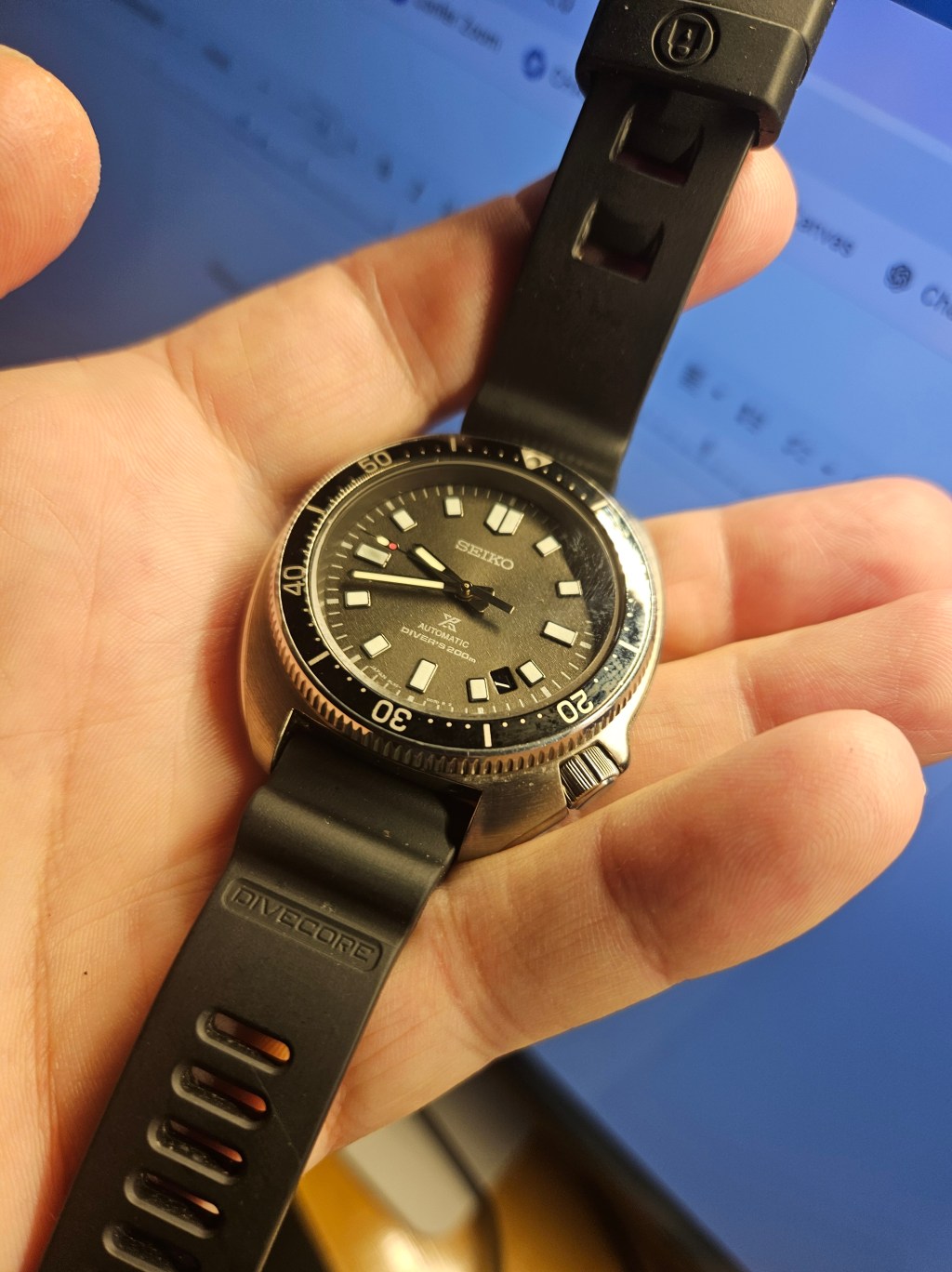
    Most were disappointments. One survived: the FKM Divecore. For a brief moment, peace. Then came the study about FKM and the whispers of “forever chemicals,” and suddenly my sanctuary felt like a toxic waste site.

    Back to the drawing board.

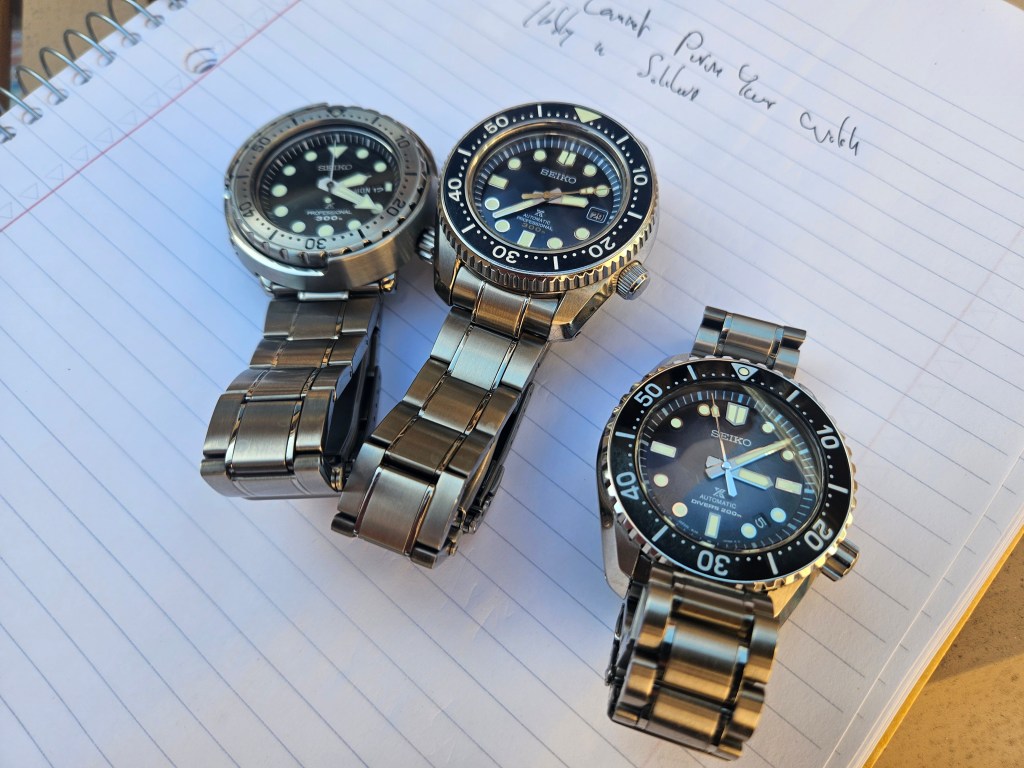
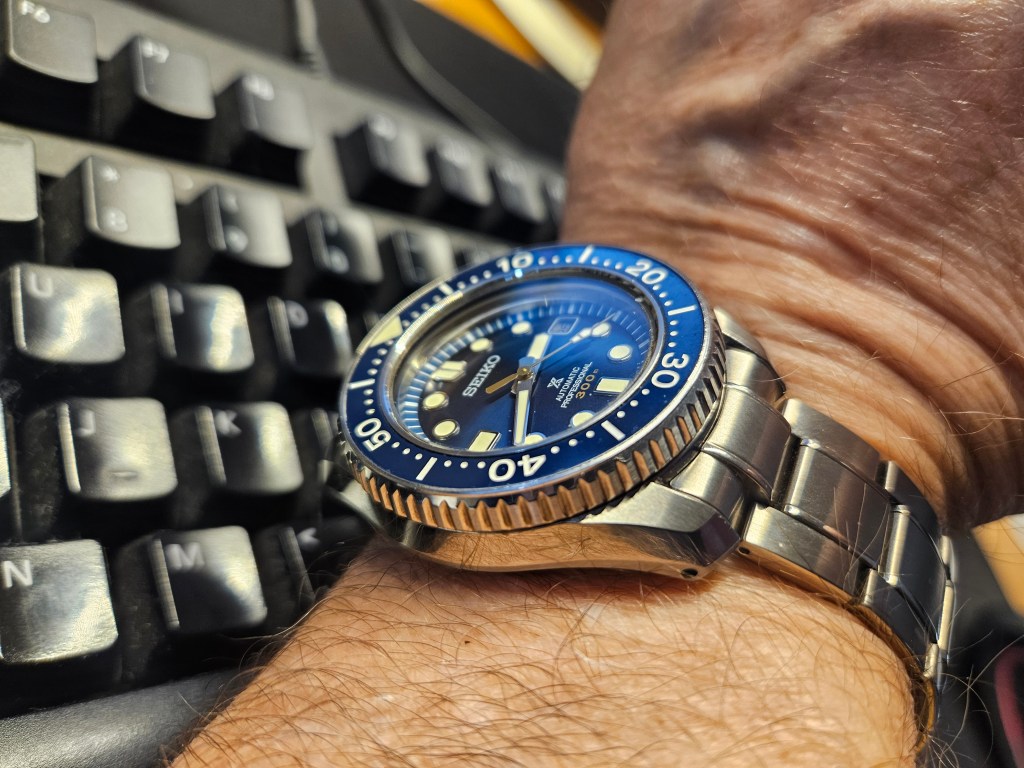
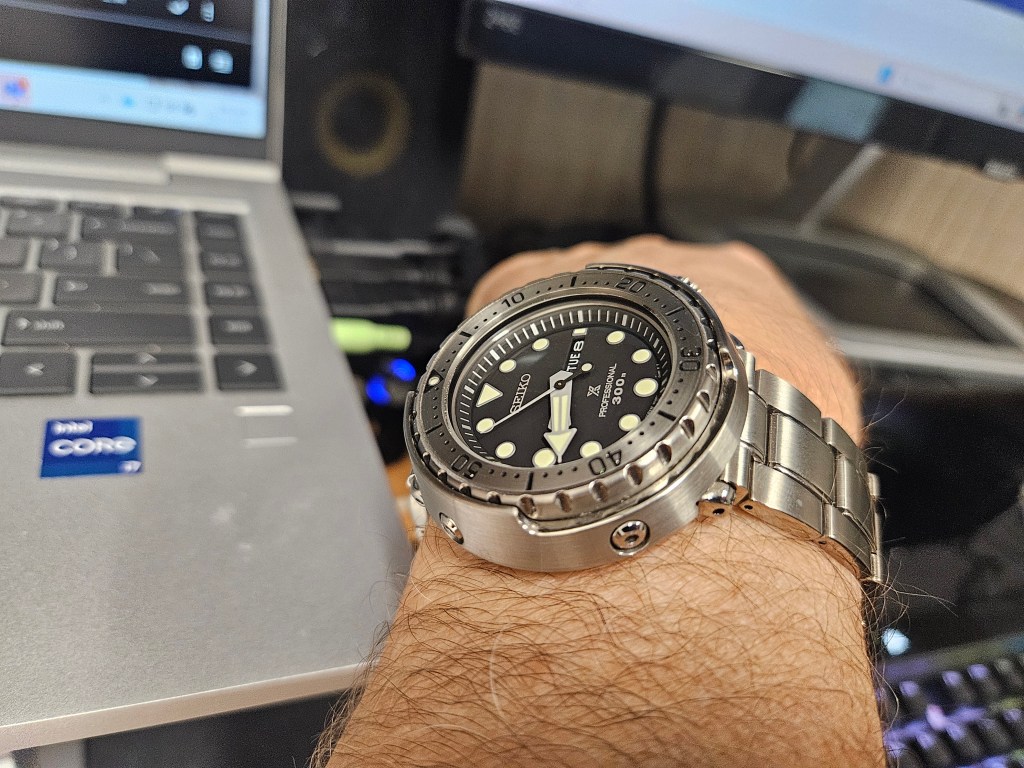
    I finally bought the Seiko bracelet from the SLA077. Four hundred dollars. And I have to admit: it transformed the watch. Steel gave it authority. Gravity. Presence. The same thing happened with my SLA023 and the Tuna SBBN049. On bracelets, these watches don’t just look good—they look heroic. Complete. Like they’ve put on their uniforms.

    So what’s the problem?

    The obvious answers come first. Bracelets are heavier. Links press into the wrist at odd angles. Sizing becomes a seasonal engineering project as weight and weather shift. All true.

    But none of that explains the deeper resistance.

    Because the truth is, this isn’t about comfort. It’s about identity.

    Straps represent something to me: restraint, practicality, anti-bling minimalism. Being “the strap guy” feels like a moral position. Seven watches on rubber feels orderly. Clean. Controlled. And in the strange psychology of collecting, control is another word for happiness.

    Except the mind doesn’t stay controlled for long.

    After months of strap purity, I start craving variety. Maybe one bracelet. Maybe two. A little diversity. A little steel.

    And that’s when the real problem begins.

    The moment a watch goes on a bracelet, it becomes a box queen.

    I tell myself I’m saving it for special occasions. But special occasions turn out to mean a birthday dinner twice a year. Meanwhile, the watch sits in the box, looking magnificent and doing absolutely nothing.

    This morning, after a post-workout nap, I woke up with a plan. Enough of this. I would remove the bracelets from the three offenders and restore order.

    Then I opened the watch box.

    And there they were—those watches on steel—looking perfect. Finished. Complete. Like museum pieces that had finally been framed correctly.

    I couldn’t do it.

    So here I am typing this while wearing my Seiko Uemura SLA051 on an MM300 waffle, fully aware of a simple truth:

    If this watch were on a bracelet, it would still be sitting in the box.

    At this point, I don’t see a solution. I’ve stopped looking for one. This is simply another occupational hazard of the enthusiast’s life.

    I suffer from Bracelet Ambivalence Disorder—the chronic inability to commit to either straps or bracelets, marked by alternating attraction and avoidance. Bracelets are admired. Straps are worn. The heart wants steel. The wrist wants rubber.

    If anyone else suffers from this condition, please make yourself known.

    Misery, like stainless steel, feels lighter when shared.

  • How Watch Collectors Lie to Themselves About “Finding Their Style”

    How Watch Collectors Lie to Themselves About “Finding Their Style”

    I recently made a YouTube video arguing that a man should not chase variety in his watch collection but instead find his signature style and whittle his hoard down to a tasteful few. Like a monk with only one robe. Or a chef with one good knife. Or a middle-aged guy who knows that buying yet another GMT won’t fix his marriage.

    Now, did I believe what I was saying? Not entirely. I was, to be honest, talking myself off the ledge. It was a kind of public self-hypnosis: say it enough times on camera, and maybe I’ll stop buying watches I never wear. But I’ll admit—the thought experiment was stimulating, like sniffing ammonia salts just to feel something. Most commenters agreed, saying peace of mind only arrived after purging the herd. But not all. Some insisted that a large, diverse collection brings them genuine joy. Fair. Not everyone needs to live like a horological monk.

    Still, I enjoyed making the video. It felt like intellectual calisthenics for the soul, even if it didn’t convert me.

    One viewer, the formidable “Captain Nolan,” asked a deceptively simple question that demands more than a quick reply:

    “How can you discover your identity without trying watches in every category—divers, pilots, field watches, dress, digital, mechanical, quartz, and so on?”

    By “identity,” he means your taste. What fits your lifestyle, your aesthetic, your internal brand. A fair question. And at first, I answered like a smug adolescent. I said, “You know what you like the same way I knew Raquel Welch was the apex of female beauty when I was nine. One glance. No need to watch Love American Style reruns or thumb through Vogue. Case closed.”

    But that answer is glib. And idiotic. Taste in watches—unlike adolescent lust—is not a hormonal thunderclap. It’s a process.

    So here’s the grown-up answer: yes, you do need to try different styles, just like trying on jackets at Nordstrom. Some are flattering, some make you look like a Bulgarian hitman. It’s tactile. Visceral. And wildly expensive. To really figure out your taste, you may end up spending $5,000 to $10,000 just to land in the right neighborhood. You might call this the Fitting Room Narrative—the idea that trying on a wide range of watches will help you find the “real you.”

    It sounds rational. Comforting, even. But I don’t believe in it.

    The problem is the human brain. It’s not a spreadsheet. It’s a haunted house full of desires, delusions, and marketing fumes. So let me propose a more honest theory: Fever Swamp Accretion–the uncontrolled phase of acquisition in which watches multiply faster than self-awareness. Purpose is retroactively assigned; sanity is postponed.

    Here’s how it works:

    You fall headfirst into the hobby. You start buying watches the way a toddler grabs Halloween candy. You buy microbrand divers, G-Shocks, Speedmasters, and maybe a Rolex or two if your credit limit allows it. You tell yourself each one serves a “purpose.” You start spending a grand a month, easy. Over ten years, you’ve spent more than most people do on therapy. And God knows you need therapy.

    Eventually, the collection metastasizes. Dozens of watches, each one representing a temporary high. You stop wearing half of them. You obsess over straps, bezels, lume. Your identity fuses with your hobby. You’re no longer a man who wears watches; you’re a man being worn by them.

    Then comes the collapse: financial strain, marital tension, the vacant stare of a man wondering why he owns three identical Seikos. Maybe you go through a breakup or foreclosure. Maybe your friends stage an intervention. Maybe your dog leaves you. Think about that. Your watch obsession got so bad your dog abandoned you. 

    You finally tap out. Sell the collection. Keep three. Or two. Or one. You tell yourself you’re “cured.”

    Except… maybe you’re not. Maybe, like Bell’s palsy or a bad ex, the obsession lies dormant. All it takes is one random trigger—a stressful day, a YouTube thumbnail, a flash sale—and you relapse. Buy a Sinn. Then a Squale. Then you’re back in the swamp.

    Why do we cling to the Fitting Room Narrative when it’s so obviously false? Because it has a tidy structure. A clean arc. Beginning, middle, resolution. We’re narrative junkies. We want our Luke Skywalkers to finish Jedi school and never regress. 

    Same with watch collectors. We want the Watch Ninja to overcome his demons and live a Zen life with a single Grand Seiko. If he relapses, we unsubscribe. He becomes a punchline. Another Liver King of horology.

    Still don’t believe me? Consider Pete Rose. In the ‘70s, he was “Charlie Hustle,” the human embodiment of work ethic. But zoom out, and the myth crumbles. Pete wasn’t disciplined—he was compulsive. He gambled, lied, betrayed friends. The man was a walking cautionary tale wrapped in a Cincinnati Reds jersey.

    Or take Sedona. Supposedly a spiritual vortex. In reality, a commercialized fever dream of overpriced crystals, green juice, and pseudo-mystical hokum. You arrive expecting transcendence and leave with a maxed-out credit card and lower back pain from a “chakra realignment.”

    We love myths because they sell. But real life is more complicated. Messier. Less flattering.

    So I could tell you a satisfying tale about finding my “true self” through curating a humble collection of retro divers and minimalist field watches. I could wrap it all up with a bow. But I won’t. Because that would be fiction.

    And honestly, haven’t we had enough of that?
  • Why I’m Not Really Into Watches (Says the Man Writing About Watches)

    Why I’m Not Really Into Watches (Says the Man Writing About Watches)

    I can’t believe I’ve spent more than twenty years obsessing over watches, because the inconvenient truth is this: I’m not actually into watches. They are the last things I want to think about, write about, or discuss with another adult human. And yet—here we are. I’ll admit I’ve allowed watches to hijack my brain more than is healthy, but these hijackings aren’t lifelong commitments. They’re flare-ups. Brain fevers. A condition I’ve come to call Timepiece Malaria.

    Timepiece Malaria is a recurrent, feverish fixation that arrives without warning, drains your energy, and leaves you sweating under the illusion that the answer—the answer—is just one more reference number away. It’s not a hobby. It’s not an identity. It’s an illness that behaves episodically, exhausts the host, and then disappears, leaving behind only the desire for shade, silence, and distance. Once the fever breaks, I want nothing to do with watches. Not even a little.

    I’m reminded of something the Edge once said about music: he dives deep, burns himself out completely, and then has to get away from it. I understand this instinct perfectly. When the watch fever hits, I plunge like a SCUBA diver hunting abalone—methodical, obsessive, convinced there’s treasure just beyond the next reef. But once I surface, gasping for air, all I want is a pool floaty and a long afternoon of not giving a damn about bezels, calibers, or lume plots.

    What I resent most is that trying to understand the obsession only makes it worse. Overthinking watches is like trying to smooth choppy water with your hands. Every attempt at control produces more turbulence. Analysis doesn’t cure the fever; it spikes it. The more I try to “get a handle” on the madness, the more aggressively it grips back.

    This is why I sympathize with Werner Herzog’s famously hostile reaction when Terry Gross once asked him if he was in therapy. He bristled at the idea, calling it a kind of intellectual stupidity—a descent into a carnival Fun House of Mirrors. You peer inward and see nothing but distorted fragments: too tall, too short, grotesquely magnified, absurdly shrunken. Therapy, in this view, doesn’t unify the self; it dismembers it. That’s exactly how writing about my watch obsession feels. Every paragraph multiplies me. None of them put me back together.

    And yet the evidence is damning. A blog. A YouTube channel. Endless introspection about the very thing I claim to be done with. My left hand insists I’m not into watches. My right hand keeps typing anyway. I say I don’t want to explore the psychology of the obsession, then immediately explore it in public, at length, with footnotes.

    I don’t seem to understand this contradiction. I can’t resolve it. I can’t stop it.

    Which may be the clearest symptom of all.

  • When a Strap Solved Everything—and Instagram Ruined It

    When a Strap Solved Everything—and Instagram Ruined It

    I don’t work for Divecore straps. I don’t have an affiliate link. I don’t even remember how I found them. They just appeared one day, like a cult recruiter with good posture. All I know is this: once I tried them, something clicked. The fit was right. The comfort was immediate. The look was honest. So I did what any rational watch obsessive does when he thinks he’s reached enlightenment—I stripped every watch off its bracelet, slapped on black or orange FKM Divecore straps, and declared myself finished.

    Done.
    Happy.
    At ease.

    That phrase—at ease—matters. A seven-watch collection, unified by one strap philosophy, felt merciful. There was no mental juggling, no wrist gouging from metal end links, no micro-adjustment rituals to accommodate the daily swelling and shrinking of my aging, temperamental wrist. The system was clean. Elegant. Humane. For once, the hobby felt like a hobby instead of a low-grade engineering problem.

    Then, in August of 2025, Instagram did what Instagram does best: it ruined my peace. Someone informed me—solemnly, heroically—that a study had been released about FKM straps and PFAS “forever chemicals.” The straps in the study were abused like props in a MythBusters episode—conditions so extreme they bore little resemblance to actual wrist life—but still. With plastic contamination already saturating the planet, did I really need to marinate my arteries in additional synthetic mystery?

    So off came the FKM. On went the “safe” alternatives: urethane, silicone, vulcanized rubber. They were… fine. Adequate. Technically acceptable. Emotionally inert. I wore them the way you eat airline chicken—without complaint, but without love. And yes, I feel compelled to say it again: I still don’t work for Divecore.

    Feeling vaguely bereaved, I did what many men do when they sense disorder: I tried to impose balance. I put stainless steel bracelets back on some heavy hitters. I even bought a gunmetal, monochromatic dive watch on a bracelet, as if symmetry itself could rescue me. I now had four watches on straps and four on bracelets. The collection looked fantastic. Museum-worthy. Spreadsheet-perfect.

    And yet—I was less happy.

    That’s when I recognized the familiar enemy: Cognitive Load Creep. The slow, insidious return of mental fatigue as the collection grows more complex. Straps versus bracelets. Balance logic. Adjustment rituals. The hobby quietly mutates into unpaid systems management. Every glance at the watch box now came with a background hum of decision-making. And whenever that hum gets loud enough, a voice appears.

    You lost the plot.

    And it’s right.

    The plot was never variety.
    The plot was never balance.
    The plot was happiness.

    Happiness, in the watch hobby, is hard to define—but it’s easy to identify its opposites: stress, obsession, second-guessing, wheel-spinning, FOMO anxiety, mental overload, and the constant sense that you’ve taken on more than you can metabolize. If your watches feel like a to-do list, something has gone wrong.

    I’m trying to learn from this chapter. I know, intellectually, that less really is more. I know stress is poison. I also know I have a flair for melodrama. I can turn a strap swap into a Greek tragedy. I pine. I brood. I catastrophize like an adolescent waiting for a love note reply that never comes. It’s embarrassing. It’s funny. And I’m certain I’m not alone. Watch people are wired this way—OCD-prone, sentimentally overloaded, forever narrating their own inner turmoil.

    So what’s next?

    I don’t know. There’s no blueprint. No masterplan. No illuminated exit sign pointing toward Horological Sanity. The best I can do is remain watch-agnostic, laugh at my own compulsions, and tell the truth about whatever move I make next—if I make one at all.

    The world, I assure you, is not holding its breath.

    But a fellow watch obsessive might be.

  • Why You Can’t Pursue the Watch Hobby in Solitude

    Why You Can’t Pursue the Watch Hobby in Solitude

    I should have known at thirteen that seventeen would be brutal. At thirteen, Janis Ian’s “At Seventeen” was already circulating through the house like a prophecy. I liked the song well enough, but my mother loved it. It was her time machine back to high school—loneliness, rejection, the ache of not measuring up. More than once I watched her eyes fill as the song drifted out of our Panasonic portable radio. That was her loneliness anthem. I needed my own. Mine was “Watching and Waiting” by the Moody Blues—a song for someone alone in the dark who senses there is something greater beyond himself and aches to make contact with it. Less teenage rejection, more metaphysical hunger.

    By seventeen, starting college, I was profoundly lonely. According to Erik Erikson, this is the stage defined by intimacy versus isolation, and I was losing badly. I felt it in my bones as a socially maladroit bodybuilder shuffling through classes by day and working nights as a bouncer at a teen disco called Maverick’s in San Ramon. Picture it: me at the door, arms crossed, watching a parade of thrill-seekers gyrate, flirt, and dissolve into noise. The job didn’t cure my loneliness; it distilled it. I was close enough to touch the crowd and miles away from belonging to it.

    One morning after a late shift, I dreamed I was living in the Stone Age. I was alone in a cave, wrapped in animal skins, stepping out into a gray, indifferent sky. I raised my arms toward the clouds, reaching for something—anything—that might answer me. In the background, “Watching and Waiting” played like a prayer I hadn’t yet learned how to pray. The dream was sad and beautiful, which felt like progress. As Kierkegaard noted, despair’s worst form is not knowing you’re in it. At least I knew. And as the Psalmist understood long before therapy existed, grace tends to follow sorrow once the sorrow has been fully felt.

    People hate being alone. They’ll sit through ads on YouTube rather than listen ad-free on Spotify because YouTube lets them comment, scroll, argue, agree—experience the song with others. Solitude may be cleaner, but communion is warmer. Which brings me to watches. What is the watch hobby in isolation? Nothing. A watch on a deserted island is just a lump of steel keeping time for no one. The hobby exists only because a community animates it—supports it, debates it, sometimes overfeeds it. A watch on your wrist is a semiotic flare. It says something. Others read it. You read them back. That exchange is the point.

    This is what I mean by Horological Communion: the quiet fellowship formed when watches are not hoarded as private trophies but offered as shared symbols. Meaning emerges only when the object is seen, recognized, and answered—at meetups, in forums, in comment sections, across a knowing glance from one wrist to another. Without that communion, the watch is mute. It ticks, faithfully, but it says nothing at all.

  • The Hot Take Is the Chronic Cough of Something Gone Wrong

    The Hot Take Is the Chronic Cough of Something Gone Wrong

    We live in a Hot Take culture, and on balance, hot takes do more harm than good.

    For a decade, I feasted on them. Back when it was still called Twitter, my days were seasoned with sharp one-liners, instant judgments, and rhetorical mic drops. It felt bracing at first—intellectual espresso shots delivered in 280 characters. But over time, the feed stopped feeling like conversation and started feeling like a room full of people shouting clever insults at a fire.

    About a year ago, I deleted my account. By then, I barely recognized the people I once followed. Everything had gone shrill. Bombast replaced thought. Even the impressive hot takes—clever, ruthless, beautifully phrased—eventually blurred into something anesthetizing. A constant buzz that left me dull rather than informed.

    I didn’t quit social media entirely. What I actually want is boring, old-fashioned breaking news. Tell me what happened. Tell me where. Tell me when. I don’t need a verdict within thirty seconds. So now I drift through places like Threads, mostly lurking. Many of the smart people I used to follow migrated there. Some still do what they’ve always done: post headlines and context. Others can’t resist the gravitational pull of commentary. News first, hot take immediately after. Their allies cheer them on inside familiar silos, and the machine rewards escalation.

    To be fair, not everyone posting is chasing dopamine. Some journalists are doing real work. They have massive audiences and feel a genuine obligation to interpret chaos in real time. They live in a crucible of praise and abuse, applause and outrage. That kind of constant psychic weather can’t be healthy, but the motive is understandable—meaningful engagement. If this were a pre-digital era, they’d still be doing something similar, just with deadlines instead of feeds. Slower. Quieter. Possibly saner.

    But then there’s another species entirely: the professional Hot Taker.

    This person has mastered the form. Their posts are short, sharp, structurally elegant. A good hot take is witty, memorable, and instantly legible. It lands. It spreads. It racks up likes and reposts like a slot machine hitting cherries. Success is measurable, public, addictive.

    And that’s the trap.

    When identity and self-worth become tethered to engagement metrics, the self gets commodified. Everything becomes raw material for the next take. Nuance is a liability. Hesitation is death. The hot take demands boldness, outrage, and certainty—even when certainty is fraudulent.

    At that point, the Hot Taker is no longer responding to the world; they are farming it.

    I’ve watched thoughtful, decent people slide into this role. At first, their posts are useful. Then they overshare. Then they pick fights they don’t need to fight. Eventually, their online life becomes a series of skirmishes that feel exhausting even to sympathetic observers. They can’t stop—not because they’re evil, but because the machine has trained them well.

    So yes, we live in the Age of the Hot Take, where people measure their purpose by their ability to generate applause from the faithful. Hot takes don’t convert anyone. They delight the choir and enrage the opposition. Polarization intensifies. Nothing moves.

    Is it unfair to call this a disease? I don’t think so.

    First, there’s the hijack. The belief that constant expression equals relevance, that relevance equals worth. It’s a delusion reinforced by numbers. Likes don’t satisfy; they sharpen hunger.

    Then there are the consumers. By liking and reposting, they feel they’re participating in history, bending reality toward justice. In practice, they’re mostly helping tribes harden their borders. Everyone believes they’re weaponizing truth. No one notices the epistemic ground eroding beneath them.

    When COVID hit, I assumed the crisis would force clarity. Instead, it deepened the divide. Now measles—a disease we already solved—is making a comeback. Science, once the shared floor, has become another battlefield. If pandemics and preventable deaths can’t bring us together, hot takes certainly won’t.

    You can fire off the most righteous, viral condemnation imaginable. Measles will still spread.

    So what should we do instead?

    The answer isn’t attractive. Reality hasn’t hit hard enough yet. Historically, people abandon fantasy only when consequences become unavoidable. Until then, we chatter. We posture. We perform. Hot takes aren’t solutions. They’re symptoms—the chronic cough that tells you something deeper is wrong.

  • The Myth of the Ultimate Watch Collection

    The Myth of the Ultimate Watch Collection

    There is no such thing as an ultimate watch collection. That fantasy survives only in Instagram grids and forum signatures. In real life, your taste sharpens, clarifies, narrows—and that clarity does bring you closer to something satisfying. But it never brings closure.

    The problem is not the watches. The problem is us.

    We are capricious animals. One day we crave restraint; the next day we want spectacle. Nostalgia ambushes us and sends us chasing a watch tied to some earlier version of ourselves—college years, first job, first illusion of competence. Sometimes that works. Sometimes it doesn’t. A watch can be a time machine or a dead end.

    Then there’s money. Grail pieces often cost so much that they can’t be worn without anxiety. They live in safes, not on wrists. You admire them abstractly but never bond with them. On the other end, budget watches sometimes fail the respect test. You want to love them, but something feels compromised—finish, heft, presence. The relationship never quite takes.

    So if there is a destination, it isn’t perfection. It’s the sweet spot.

    The watch isn’t too small or too large. It isn’t priced so high that you fear it, or so low that you dismiss it. It isn’t dull, but it isn’t shouting either. You can look at it from different angles and keep finding reasons to linger. It holds your attention without demanding it.

    Some people chase that feeling through complexity. Chronographs seduce with their subdials and mechanical busyness. I tried that path. Instead of enchantment, I got sensory overload. Too much information. Too much pleading. I found myself longing for the blunt honesty of a diver.

    But even a diver has to earn its place.

    It needs salient features. Bold, but not desperate. Visually striking, but instantly legible. Purposeful without cosplay. The Seiko MM300 SLA023 comes to mind. It’s a legend in the Seiko lineup because it commits fully to its identity. Over 44mm wide. About 15mm thick. It doesn’t apologize. If you can carry those dimensions, it rewards you with gravitas and coherence.

    If you can’t, there are alternatives.

    The Seiko Alpinist SBDC209 is a different kind of seduction. At 39.5mm, it’s compact, refined, endlessly stare-able. You can live with it all day without fatigue. On the right wrist, it’s perfect. On mine, it disappears. And when a watch disappears, the answer is simple: no.

    That’s the truth most collectors avoid. The “ultimate” collection isn’t about consensus or rankings. It’s about proportion—between the watch and the wrist, between desire and restraint, between fantasy and daily life.

    You don’t arrive at it once.
    You circle it.
    And if you’re lucky, you pause there for a while.

  • It Took a Village to Buy My Watch

    It Took a Village to Buy My Watch

    Last night I dreamt I was presiding over a vast communal effort devoted to a project of enormous importance—though no one, least of all me, could say what the project actually was. It had the gravity of a cathedral build or a moon launch, but the specifics were conspicuously absent. People just knew it mattered. My daughter’s childhood therapist, Olivia, was there, radiating purpose. She had invested a great deal of money into the endeavor, and I could hear others murmuring that I ought to reimburse her, which struck me as both reasonable and vaguely ominous.

    The house filled with people. Then it overflowed. There was so much movement, discussion, and civic enthusiasm that I slipped out, went to the gym, exercised—as one does in dreams when overwhelmed by responsibility—and returned to find the situation had escalated. Now there were dozens of neighbors on the lawn, standing around with the earnest posture of volunteers waiting to be assigned meaning. The sheer body heat inside the house had become an issue, so an air-conditioning repairman was summoned, as if climate control were now a municipal concern.

    I stood on the front lawn waiting for the repairman when Olivia emerged from the house and calmly announced that the project was complete. No speeches. No ribbon-cutting. Just resolution. She approached me holding a velvet pillow, and on it rested a three-thousand-dollar Seiko MM300 diver—white dial, blue markings, mounted on a sumptuous bracelet. I accepted it, stunned. I had believed myself to be in a strap-only phase, a man past bracelets, past flash. But there it was, on my wrist, and I knew instantly that this was the watch. The Holy Grail. Bracelet and all.

    The joy was real—but so was the shame. It dawned on me that I had apparently mobilized an entire community, generated heat waves, summoned tradesmen, and absorbed financial investment…all to solve a problem that was, at its core, exquisitely trivial. A watch. Beautiful, yes. All-consuming, certainly. But narcissistic? Undeniably. I woke with the uneasy recognition that even my unconscious mind knows how absurdly far I’m willing to go in pursuit of the right object—and how many people I’m prepared to inconvenience along the way.