Tag: mental-health

  • Discontinued at the Light

    Discontinued at the Light

    At a red light yesterday, ferrying my daughters home from school, my car-spotter’s radar pinged. I scan traffic the way birders scan treelines, always hoping for the rare specimen with that elusive look. Something unusual flashed past—and in a beat I clocked it: a 2023 Nissan Maxima, the model’s final year. A voice in my head muttered, “Discontinued.” The word tolled like a small funeral bell, as if it weren’t about the Nissan at all but about me. You’re nearly sixty-four. You are discontinued.

    I refuse to go out like that. Aging is one thing; embalming yourself in morbid commentary is another. I don’t want to spend the next twenty years muttering “discontinued” at traffic, toast, or mirrors. That’s not wisdom. That’s a tantrum with better vocabulary.

    Let’s call morbidity what it is: the childish whining of a narcissist. Who escapes aging? Only the people who don’t get the privilege. Getting old means you’ve been alive for a long time and you’re still here. The refrain—“Discontinued,” “You’re washed up,” “It’s all over”—isn’t just bleak; it’s lugubrious, a mental ailment missing from the DSM-5-TR. Fine, I’ll name it myself: narcissistic morbidity. You moan about your age until you bore everyone around you, including the poor soul trapped inside your skull. You act like you invented birthdays.

    What makes my case extra ridiculous is that I’m in decent shape. I work out. I eat a high-protein diet. Yes, I’m fifteen pounds over fighting weight, but I don’t look like a cautionary tale. I should be grateful, robust, hearty, glad. And yet the diseased little sportscaster in my cranium keeps calling the game: I’ll be driving my daughters, spot a car out of production, and use it as my cue to point at myself—“Discontinued.”

    If I were a comedian, this would be a layup: a man in his sixties drowning in self-pity, heckled by his own internal voice. There’s material for days. But punchlines only work if you know your heckler’s origin story.

    Here’s the reveal: the voice isn’t new. I’ve had it since childhood, a fog machine that kept me holed up drawing and reading while calamity forecasts scrolled across my mind. “The circus will be closed. A lion will escape. There’ll be a riot. Let’s not go. Don’t worry about me; I’ll entertain myself.” “The ice-cream place won’t have my flavor. Let’s stay home; I’ll eat cereal.” “If I throw a party, no one will come. Cancel my birthday this year—and the years after. Who needs a birthday anyway?”

    My gloomy companion even had a cartoon avatar: Glum, the tiny pessimist from The Adventures of Gulliver, late ’60s. Dressed in green, eternally peckish, and permanently resigned—“It’s hopeless.” “We’ll never make it.” “It’ll never work.” “We’re doomed.” He was my first soulmate: snack-oriented, catastrophe-forward.

    Back then TV specialized in a certain archetype—the Dead Weight Character—the one who drags the mission, sandbags morale, and sabotages the plan by simply existing. Land of the Giants fielded Commander Alexander Fitzhugh, a selfish criminal who once gnawed a giant scientist’s rabbit pellets and urged his tiny crew to feast with him because of “nutrition,” a word he repeated over and over as he consumed rabbit pellets. They saw humiliation; he saw survival. Dead Weight comes in many flavors.

    And then there was the greatest Dead Weight of them all: Dr. Zachary Smith of Lost in Space, immortalized by Jonathan Harris, patron saint of theatrical dread. His alliterative insults aimed at the Robot taught me that language could purr, hiss, and bite. Dr. Smith is, frankly, the reason I went to college and became an English major. If you’re going to sabotage a mission, at least do it with diction.

    So if I must live with an inner prophet of doom, I might as well upgrade his elocution. If the voice insists on heckling—calling me discontinued at stoplights and breakfast tables—then give it rhetorical muscle and meter. Let it speak in crafted sentences, not groans. Aging will still arrive right on schedule, but at least the narration won’t be dead weight.

  • State of the Misalignment Situation

    State of the Misalignment Situation

    I had hoped my blog, Cinemorphosis, would feed my video essays—serve as a compost heap of half-baked thoughts that could later bloom into something cinematic and worthy of making video essays. Instead, the blog has swallowed the energy that once went into my videos. What was meant to be a support system has become a rival ecosystem. The crossover I imagined—the blog fueling the videos and the videos enriching the blog—never happened. It turns out writing and filming come from different parts of the brain, and those parts refuse to share the same neural conference room.

    Friends say, “Don’t sweat it, McMahon. Just lean into the blog and let the videos go.” Easy advice for people who aren’t haunted by the specter of irrelevance. I can’t shake the feeling that the video essays keep me sharper—more visible, more alive. The blog satisfies my mind; the camera keeps me from turning into dust.

    Sam Harris once said he can spend five years writing a book, agonizing over edits and the publishing gauntlet, only to reach a few thousand readers—if he’s lucky. Meanwhile, a one-hour podcast can reach millions overnight, and snippets of it go viral before the author’s espresso cools. That line haunts me. The medium matters. The way we reach people has become part of the message.

    I see the same logic in my own small way. A blog post I’m proud of might earn a few dozen engagements. A decent video essay? Thousands of views, maybe more. But numbers only tell part of the story. The real draw is the vitality the videos demand—something performative, almost athletic. When I’m on camera, I feel like I’m “getting my reps in,” keeping mentally limber. The blog is therapy; the videos are training.

    Still, there’s a fine line between vitality and vanity. Part of me believes the videos keep me youthful, engaged, even relevant. Another part suspects it’s all just a resistance workout against mortality. Staying fit is one thing; refusing to age gracefully is another. Desperation doesn’t wear well on men over sixty, even under good lighting.

    So maybe writing suits me better now. Maybe the written word is the right pace for a man learning to accept that his eyesight, patience, and tech literacy are all in slow retreat. Maybe I should only return to video when I have something worth saying—something that isn’t just a performance of endurance.

    Which brings me to the real question: what do I still have to contribute?

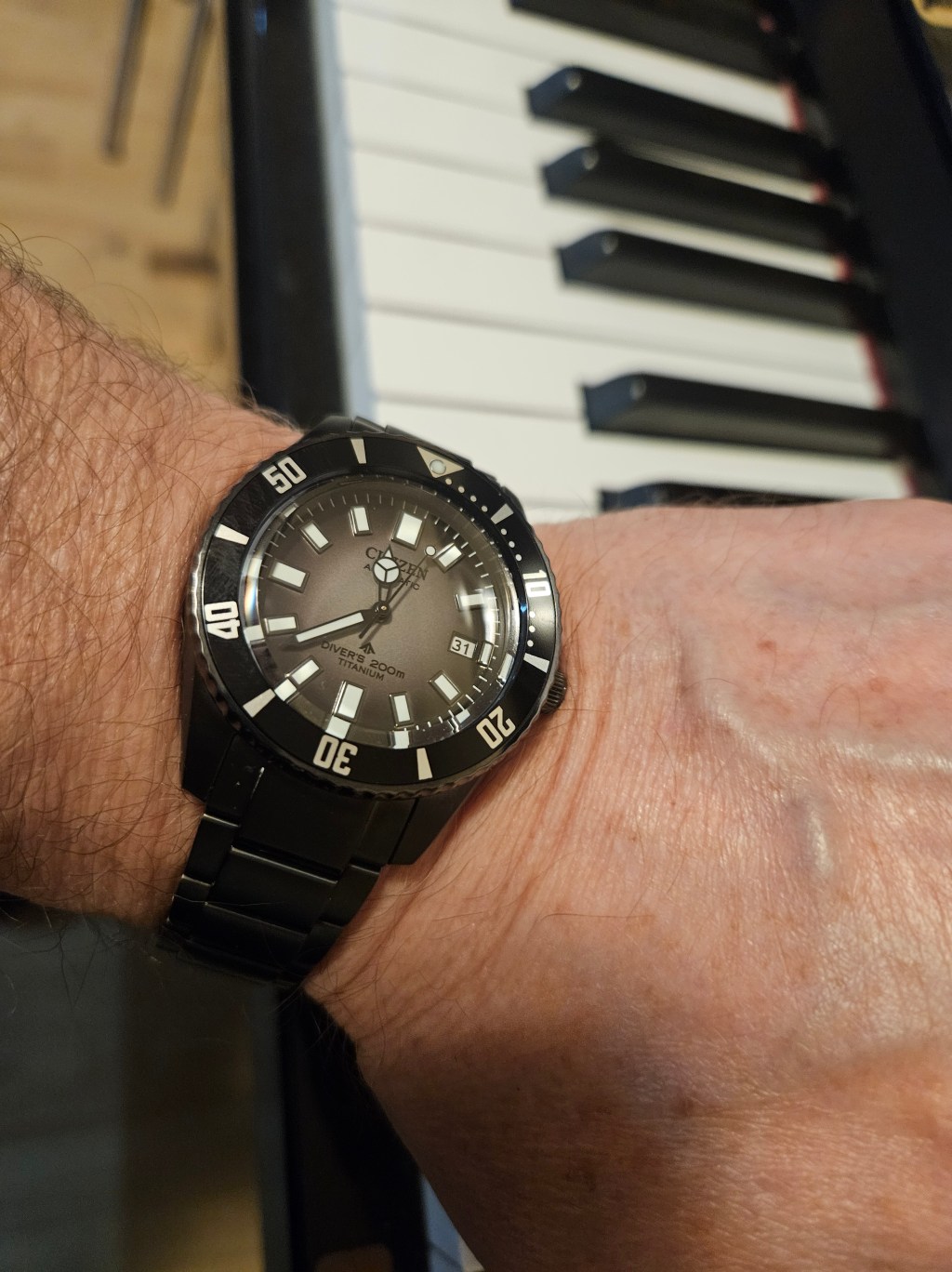
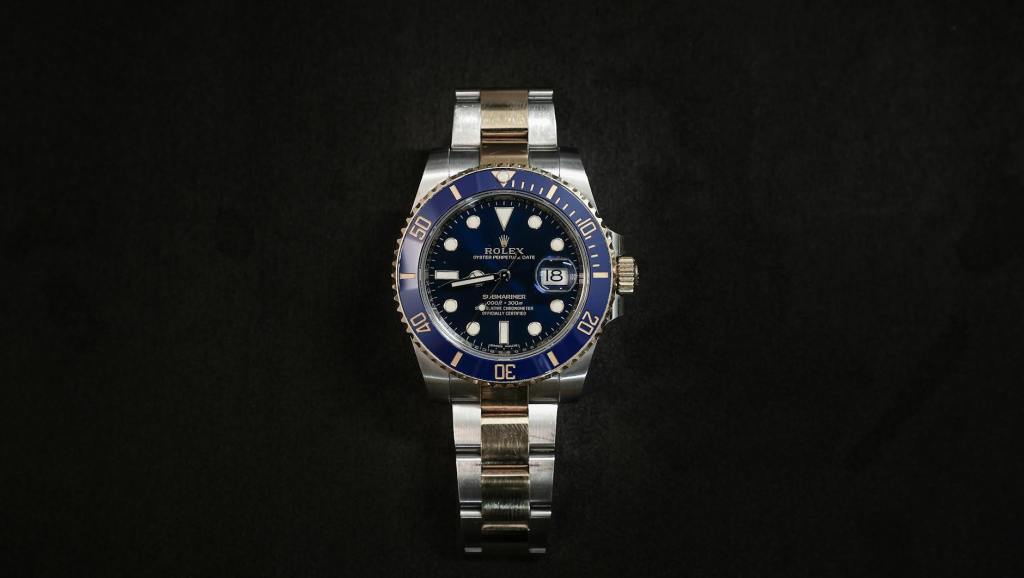
    For over a decade, my YouTube channel orbited around my watch obsession. That obsession gradually narrowed until it became monastic—just diver watches, all on straps. I convinced myself that a collection larger than seven would doom me to spiritual ruin. I also stopped flipping watches like a Wall Street day trader, deciding it was bad for my mental health. That slowdown siphoned the manic energy that used to fuel my videos. The creative rush didn’t vanish—it simply rerouted into blog posts about my newest fixation: alignment. Or more precisely, misalignment.

    Because if I’m honest, I feel increasingly out of sync with the modern world. I adapt to new technology at the pace of continental drift. TikTok bewilders me. Smartphones offend my thumbs. Driving at night now feels like a scene from Apocalypse Now. My relevance, visibility, and patience are fading in a culture that worships youth and touchscreens.

    My anxieties about self-worth and mortality are now on the front burner, while watch collecting—the “Watch Potency Principle,” the “wrist-rotation anxiety”—has been moved to the back burner where it is simmering to a lukewarm stew.

    To illustrate my current state: two weeks ago, I bought a new LG OLED TV, which was fine—until I broke two Samsungs in one day trying to move them. I manhandled the first 55-inch like it was a kettlebell, frying half its pixels in a single jerk. Then I jammed my thumb straight through the second screen while relocating it from my daughter’s room. My wife, the household adult, had to carry the new Roku replacement into our bedroom as I stood there looking like a Neanderthal who’d just discovered electricity—and promptly electrocuted himself.

    My war with technology didn’t end there. The new garage door opener came with instructions written in a dialect of cruel mockery. The installer vanished without explaining how to sync it with my phone, so my wife once again had to step in and figure it out. Now I open the garage door through an app, and every time I hear the alert that the door is moving, I step back in awe—half-terrified, half-mesmerized—like a caveman who’s just invented fire.

    I feel both too old for this world and too infantile to function in it. A man-baby marveling at his gadgets, bewildered by his own house. Think about that. My house has become a museum for technology of the future while I wander through it like a mesmerized tourist. My mouth is agape and my daughters say to me, “Relax, Dad, this is our house.” I respond by saying, “No it’s not. It’s a museum of strange and wonderful things that I don’t know how to use.” 

    These are the moments that give me content for my blog Cinemorphosis. I post almost daily, while it takes me weeks to metabolize these experiences into something coherent enough for a video essay. Writing helps me think; filming helps me pretend I’m still current.

    So that’s my current state of affairs. This channel used to be State of the Watch Collection. Now it’s more like State of the Man Who Can’t Sync His Garage Door Opener.

  • Comparison Is the Mother of Misery

    Comparison Is the Mother of Misery

    The mother of misery is comparison. In fourth grade I plunged into despair because I couldn’t draw like Joseph Schidelman, the illustrator of Charlie and the Chocolate Factory. About the same time, baseball humbled me: my bat speed wasn’t in the same galaxy as Willie Mays, Dick Allen, or Henry Aaron. In my teenage bodybuilding years, I had muscles, but nothing like that of Arnold Schwarzenegger, Sergio Oliva, and Frank Zane; I wisely retired the fantasy of becoming Mr. Universe and managing a gym in the Bahamas. In college, as an aspiring intellectual, I flogged myself for lacking Vladimir Nabokov’s wit and velocity. My chances of becoming a famous novelist were equal to my odds of winning Mr. Olympia. Later, when I flirted with composing and singing, I heard Jeff Buckley’s soul pour through the speakers and realized my voice would mainly trigger a neighborhood dog-barking contest and a chorus of angry neighbors. Decades passed. My classroom persona faced a generation handcuffed to smartphones and ChatGPT. I scrambled for “edutainment” tricks to dodge irrelevance, but the gap widened no matter how I danced.

    The sting doubled when I watched Earthquake (Nathaniel Stroman) flatten an audience with a preacher’s cadence and bulletproof wisdom. His special Joke Telling Business left me muttering, “If I had Earthquake’s power, I could resuscitate my teaching career and stroll into old age with a shred of dignity.”

    Meanwhile, fresh incompetencies arrived like junk mail. I broke two Samsung TVs in one day. I failed to sync my new garage door opener to my phone. My wife had to rescue me from my own maladroit tech spiral. The result was predictable: I was condemned to the Shame Dungeon.

    Down in the basement of depression, I noticed another casualty: my YouTube channel. I usually post once a week and have for over a decade—mostly about my obsession with diver watches. But as sanity demanded I stop flipping watches, I ran out of new divers to discuss. I tried pivoting—open with a little watch talk, then segue to a wry misadventure with a morsel of human insight. If I nailed the landing, I’d get a few thousand views and enough comment energy to believe the enterprise mattered.

    But with my sixty-fourth birthday closing in, the doubts got loud. I don’t want to do “watch talk,” and I’m too mortified to perform a perky, self-deprecating monologue about my misalignment with the universe.

    I keep hearing Mike Birbiglia in my head: you must process your material before you present it; the set has to be a gift, not your live catharsis. The healing happens before you step onstage. You speak from the far shore, not mid-drowning. Otherwise, you’re asking the audience to be your therapist.

    So I’m stuck at a fork: Will this current fear and anxiety about age and disconnection pass through the refinery of my psyche and emerge as something worthy? Or will I remain in the Shame Dungeon, comparing myself to Earthquake, and decide that with talent like his prowling the earth, my best move is to hide under a rock?

    Here’s the dilemma plain: Hiding isn’t viable; it starves the soul. But serving the world a plate of unprocessed mediocrity is just as unforgivable. If I’m going to tell a story about breaking two TVs and my garage-opener meltdown, I have to deliver it with Earthquake’s power and confidence. Otherwise I’ll stay home, mope on the couch, and binge crime documentaries—losing myself in bigger, cleaner tragedies than my own.

  • What If the Cranky Old Man on the Lawn Has a Point?

    What If the Cranky Old Man on the Lawn Has a Point?

    I’ve kept in touch with one of my former colleagues who retired from the college where she taught French for thirty years. She is close to eighty now. She told me she was already starting to feel a lack of engagement in her classroom at the end of her teaching days in 2016. Even though phones had to be turned to silent and be stowed away during class, she felt that the kids were just waiting until class was over to get back to their phones and social media. Their brains had changed, their attention spans had been truncated, and they needed to be constantly entertained.

    “Edutainment” was already influencing the way we teach, but the situation grew worse. Now, the addiction to screens has sucked the students into a black hole. Without their phones, they are detached, disengaged, and sullen. 

    It is a cliche that old people are annoying as hell because they are prone to reminisce about a golden age while lecturing the modern world for its recently acquired pathologies. They wax nostalgic for some mythical past that was full of grotesque prejudices, ignorance, and chicanery. To be a scold telling the world that you came from a better place is to be a pompous ass and a bore. I will concede all of that. But objectively speaking as someone who has taught over five decades, I can say there was a Before Times when life in the analog world wasn’t in competition with the digital world. Objectively speaking, something gets lost when we vacillate between the analog and the digital worlds. Public intellectuals such as Sam Harris and Jaron Lanier have made it clear that the digital landscape has become about commerce, addiction, loss of privacy, surveillance, fragmentation, and outrage. In other words, the Internet has had dehumanizing effects on us. 

    Parents who saw their children lying in bed scrolling over TikTok videos during the pandemic can tell you their children have been damaged, and that nothing makes them happier than to see their children hanging out with other kids–without their phones–and hanging out at the park, playing sports, taking walks at the beach, and finding respite from their screen existence. Parents wept with relief. 

    I enjoyed my youth without screens and curating my life on social media. Every summer between 1975 and 1979 when I was a high school teen, my family and ten other families and friends made the sojourn to Pt. Reyes Beach where the Johnson’s Oyster farm provided us with what seemed like bottomless truck beds of oysters. From noon to sunset, hundreds of us ate an infinite amount of barbecued oysters served with garlic butter and Tabasco sauce, thousands of loaves of garlic bread, and colossal slices of moist chocolate cake. Ignoring warnings of nearby great white shark sightings, we’d punctuate our feasting with forays into the waves before emerging from the ocean. Our muscular pecs shiny with rivulets of salt water, we returned to the picnic tables and had another serving of barbecued oysters. In the summer of 78, I opted to have my parents drive home without me. I got a ride home in the back of a truck with a bunch of random people I had met that day. Full from a day of feasting and feeling like King Neptune, we stared into the stars with our glazed lizard eyes and entertained each other with crazy stories. We had a healthy disregard for chronicling our experiences on social media, for monitoring the enormous food we consumed, and for time itself. Those were happy days indeed and pointed to an era gone and lost forever. 

    I would not have had that memory had I lived such a life with a smartphone. My memories would have been filtered through a prism of digital curation and a rewired brain that needs to filter my experience in such a way. We don’t grasp the depth of our brain’s rewiring because, like fish, we don’t know we are wet when all we know is the ocean around us. We have been rewired for this new oceanic environment.

    The screen has rewired the brains of young people. They don’t read. Many college instructors don’t assign books, or if they do, the books are on the short side. In the place of books, instructors assign short essays. When it comes to writing assignments, some high schools and colleges don’t assign essays anymore. They have the students hand-write paragraphs in class. 

    Of course, as you get older, you don’t want to be a bore and lecture the world on the way things were during Before Times. At the same time, if you taught in the 1980s to the 2020s and have seen the way technology has affected the human brain, self-esteem, addiction, reading comprehension, and critical thinking skills, you may have a lot to offer by contrasting the Screen Brain with the Pre-Screen Brain. You can can write academic books about this subject full of graphs and statistics, or you can give anecdotal narrative accounts, or some combination of the two, but it would be absurd to keep your mouth shut because you feared being reduced to the grumpy old person on the lawn arms akimbo screaming that the world is going to hell. Better to risk sounding like a crank than to watch silently as an entire generation scroll itself into oblivion.

  • His Last Words: “Too Much Trouble”

    His Last Words: “Too Much Trouble”

    No one wants the following carved into their headstone:
    “He really liked convenience.”
    Or:
    “He really knew how to wind down after a long day.”
    Or the ultimate in mediocrity:
    “He was quite the expert at calmly not answering the door when strangers knocked.”

    Yet I can’t lie—those epitaphs could summarize me with cruel efficiency. I should be ashamed. If the highlight reel of my life is craving convenience and dodging conflict, then I’m a sloth, a coward, and a comfort-zone junkie. Guilty as charged.

    Of course, apologists for my particular brand of laziness will insist there’s wisdom in centering life on convenience: you save time, conserve resources, and maximize efficiency. But let’s not kid ourselves. “Optimization” is just a euphemism for avoiding reality. And then come the even shinier euphemisms: “life hacks.” If all you’ve done is engineer a way to dodge effort, that’s not a hack—it’s a confession.

    Not that every convenience is unworthy. I won’t step foot in a gym: too expensive, too crowded, too germy, and far too drenched in bad pop music. I prefer my garage—cheap iron, good podcasts, and zero chance of catching COVID off the lat pulldown machine. That’s not clever; it’s survival.

    Same with my diet: when I’m home alone, dinner is steel-cut oats or buckwheat groats with protein powder and soy milk. It’s not innovation; it’s five minutes of apathy in a bowl. To call it a “hack” would be grandiose.

    The pandemic hardened this streak. Three-fourths of my classes went online in 2020, and they’ve never returned to campus. Everything lives on Canvas now. I barely drive 3,000 miles a year. Efficiency became narcotic. Once you’ve tasted it, going back to inefficiency feels like shoving rocks in your shoes for nostalgia’s sake.

    Even my piano habit has become infected. Cecil, my seventy-eight-year-old tuner, has warned me: when he’s gone, so is my piano’s soul. Skilled tuners are rare. My solution? Buy an electric keyboard. Sure, the sound won’t have the magical sound of my acoustic Yamaha, but it’ll move easily from room to room and never need Cecil. Convenience conquers music too.

    I’m also a poor excuse for a parent in the Uber era. Driving my teen daughters to football games, birthday parties, and amusement parks feels like sacrilege to my convenience creed. Honestly, if I were truly committed to convenience, I never would’ve had children. Or cats. Litter boxes, flea treatments, vet visits—each one an affront to my principles of time-saving and efficiency.

    Convenience can metastasize into pathology. Violations of my “policies” breed resentment. Aging itself infuriates me because it’s inconvenient. Doctor appointments and funerals snarl my schedule. Death doesn’t just terrify; it inconveniences.

    Routine is the bride to the groom of convenience, and together they dominate. 

    Even my relationship to religion is seen through the lens of convenience. I wish I could slam the door on doubt and join the ranks of militant atheists—or zealous believers. Either extreme would be neat, clean, convenient. Instead, I’m stuck in agnostic purgatory, forced to read philosopher Elizabeth Anderson’s critiques of scripture, Saint Paul, and every thinker in between. Anderson reduces morality to evolution; Paul calls us fractured, fallen souls, a mirror I dislike but recognize. I want a bow on the present of certainty, but instead, I get the knot of doubt.

    Jesus, of course, preached a gospel of uncompromising inconvenience. His very life was a rebuke to comfort. Following him means picking up a cross, not a La-Z-Boy. For disciples of the gospel of ease, his way is impossible—requiring nothing less than a Damascus-level conversion to set a new course.

    When I think of convenience, I think of Chris Grossman, my co-worker at a Berkeley wine shop in the 1980s. He was the store’s golden boy—popular with customers, armed with quick wit and easy charm—and utterly allergic to human entanglements. Girlfriends, he explained, weren’t worth the trouble. Not because of their flaws, but because the whole enterprise of romance reeked of inconvenience: compromise, obligation, scheduling. He lived alone, ate the same meals on repeat, and once a year drove his Triumph to Carmel for a car show. I adored him. He was my kind: a fellow monk in the Church of Convenience.

    Some of us are more diseased than others, and the infection corrodes standards. I loathe factory farming, dream of veganism, but recoil at the social cost. Every vegan I’ve spoken with admits the hardest part isn’t the kale; it’s the cold shoulder. I already wear the family badge of black sheep. If I imposed tofu bakes on my wife and daughters, I’d be ostracized. They want meat; I want peace. When I mention plant-based dinners, they shoot me a side-eye sharp enough to slice seitan. Push it further, and I can see my tenuous connection with them unravel thread by thread until exile is complete. And clawing my way back into their good graces would be the most inconvenient penance imaginable.

    I’m already a neurotic who alienates people more often than I’d like. Rebuilding broken ties is grueling work—humiliating, exhausting, inconvenient. So I stay walled up in my fortress of convenience, half-proud, half-ashamed, imagining my epitaph chiseled in granite: He preferred the easy way.

  • My Lifelong Marriage to Convenience

    My Lifelong Marriage to Convenience

    There is much to admire about centering our lives on convenience. We save time and resources, avoid wasted effort, and maximize efficiency in the name of what is too often called “optimization.” A life built around convenience often becomes a quest for “life hacks.” But if our behavior is less inventive, we don’t call it a hack at all—just a preference.

    For example, I refuse to go to the gym. It’s inconvenient, time-consuming, costly, and exposes me to airborne illnesses. I prefer to work out in the garage. That’s not a life hack—it’s just easier. The same goes for meals: having a bowl of oatmeal with protein powder and soy milk instead of lunch or dinner isn’t clever or innovative. It’s simply what I do when my family is out and I’m eating alone. Spending more than five minutes on a meal under those circumstances feels unnecessary. Calling a bowl of steel-cut oats or buckwheat groats a “life hack” would be grandiose.

    During the pandemic, three-fourths of my classes moved online through Canvas, a Learning Management System (LMS). Hard copies disappeared. Graded documents were uploaded to the platform, which was remarkably efficient. I didn’t have to drive to campus. The college saved on electricity. That was five years ago, and my classes remain online. I now drive less than 3,000 miles a year. Online classes have made me very efficient. Once you taste efficiency, it’s nearly impossible to go back to inefficiency.

    I admit I’m a less than admirable parent. I don’t like driving my teen daughters to their social functions—birthday parties, football games, dance practices, amusement parks. I find it all inconvenient. That’s my choice. If I were truly devoted to convenience, I wouldn’t have become a parent at all. And certainly not a cat owner. Kitty litter, flea control, vet visits, and travel arrangements are an affront to any serious commitment to convenience.

    As desirable as convenience is, some personalities—mine included—turn it into a pathology. We center our lives around it, and any violation of our convenience policies breeds resentment. Many of these resentments are unreasonable. I resent old age and death, primarily because they are inconvenient. Doctor appointments and funerals interfere with my routine.

    Convenience culture also makes us adore routine. I suspect routine is the groom to the bride of convenience.

    Even my worldview is infected by this impulse. I am an agnostic, which I despise, because it is inconvenient. Agnosticism demands reading and constant reflection. I’ve consumed books by agnostics, atheists, universalists, infernalists, and the post-mortem-salvation curious. While Elizabeth Anderson’s critique of scripture has many compelling points, her notion of morality as nothing more than evolution feels inadequate. Paul’s vision of humanity as fallen and divided is more persuasive and mirrors my own psychology. I wish I could settle happily into Anderson’s worldview. It would be so convenient.

    Speaking of religion, Jesus preached a gospel of inconvenience. His willingness to sacrifice his life in such a manner stands as the very opposite of convenience. For devotees of the gospel of ease, following Jesus is nearly unthinkable—a path that demands nothing less than a Damascus-level upheaval like Paul’s.

    When I think of convenience, I’m reminded of Chris Grossman, a wine salesman I worked with in the 1980s. He was brilliant and affable but had no close relationships. He admitted he didn’t care much for life. He had tried having a girlfriend once and said it was awful—not because of her, but because it was too inconvenient. By his late thirties, he was a bachelor. He ate the same foods every day for simplicity’s sake and once a year drove his Triumph to a car show in Carmel. I loved him for it, because I knew we were both soulmates in convenience culture.

    Some of us are more diseased by this devotion to convenience than others, and it often lowers our standards. I am appalled by factory farming and would like to be vegan. Perhaps if I lived alone, I could do it. But in a family of omnivores, that move would not go over well. I could prepare plant-based meals for myself, but I don’t—partly because of the inconvenience. Vegans I’ve spoken to say the hardest part isn’t the food but the social ostracism.

    I’m already the black sheep in my family—the anti-social shut-in whose quirks are laughed at on good days and resented on bad ones. If I imposed a vegan diet, I fear it would alienate me further, and I’d have to grovel my way back into some semblance of connection.

    As a lifelong neurotic who already alienates people more than I’d like, I know that repairing frayed relationships is an excruciating, arduous task. And it’s so inconvenient.

  • On Watches, Aging, and Invisibility

    On Watches, Aging, and Invisibility

    Today I strapped on my Seiko Tuna diver, a hulking slab of steel that announces itself the moment you walk into a room. I don’t exactly want the attention, but let’s be honest: the watch is a radar blip that keeps me from fading into the wallpaper, just another suburban relic limping through the final trimester of existence.

    This fear of invisibility gnawed at me after my cousin Pete’s 75th birthday party in Studio City. His brother-in-law Jim, a retired ophthalmologist at 77, leaned in and muttered, “The worst part of aging is people stop seeing you.” Those words have been rattling around in my skull ever since. Old age, it seems, is less about wisdom and more about turning into a frayed recliner everyone resents but no one wants to haul to the curb.

    I’ll be 64 soon, and I know the rules: Father Time has a master plan, and it doesn’t include my vanity. Sure, you can still play piano with arthritic fingers, hike with a knee brace and a back girdle, and keep a smartwatch ready to call in helicopter rescue if you tumble into a viper-filled canyon. But invisibility is baked into the contract. You can fight it with kale salads and kettlebells, but in the end, your processor slows, your refresh rate lags, and the world swipes past you at 5G speed.

    Take the Samsung QLED my wife bought at Sam’s Club in 2021. Four years later, the picture is fine, but the processor is a fossil. Menus freeze, apps take two minutes to load, and the whole thing wheezes like a Pentium II running Windows 11. Samsung cheaped out on the chip, and now I’m stuck with a dinosaur. My solution? Upgrade to an LG OLED, not because I need perfect pixels, but because I want a TV with an AI 4K processor that doesn’t choke when I click Netflix. The irony isn’t lost on me: I’m furious at Samsung for selling me a laggy processor, yet here I am, trudging through life as a laggy processor. My younger colleagues adapt to new tech in a snap; I freeze and buffer. I’m a Boomer Samsung in a Gen Z OLED world.

    Nature is no kinder than tech. Watch the documentaries: Scar the lion rules the pride until Skip, the younger challenger, finally takes him down. Scar hobbles into the brush, invisible, forgotten, licking his wounds. That’s the arc. You don’t argue with it; you acknowledge it, maybe laugh about it, then go buy a $50 German Chocolate Cake at Torrance Bakery and eat the whole delicious thing. Because if invisibility is inevitable, you might as well go out with frosting on your face.

  • Exit Stage Left: A Teacher’s Final Act

    Exit Stage Left: A Teacher’s Final Act

    I’m fewer than four semesters away from retirement—June 2027, the final curtain—and I’d be lying if I said I wasn’t scared. For nearly forty years I’ve worn the armor of a college classroom persona: bigger, bolder, more disciplined than the fragile, fumbling man who hides inside. Teaching gave me a stage and a referee’s whistle. Without it, who am I? Just the broken man-child without a supervisor, left to his own devices.

    During the pandemic, when colleagues were clawing to get out, I puffed out my chest and declared I was born ready for retirement. I pictured myself a disciplined Renaissance man: mornings at the piano, afternoons writing, evenings lifting kettlebells in the garage, book in hand before bed. A gilded schedule, as though I were independently wealthy. Now those boasts feel like hot air. Structure is one thing. The man animating that structure is another. In the classroom, the stakes were high: thirty pairs of eyes asking, Are you boring? Do you know what you’re talking about? The pressure kept me sharp, funny, and, occasionally, wise. No one lets you coast when you’re trapped under fluorescent lights for two hours with judgmental twenty-year-olds.

    Bitter irony: I’m leaving just as I finally got it right. It took me decades to balance theater with approachability, to drop the drill-sergeant persona that once scared students into silence, to actually build a classroom where people learned and laughed. Now I can scaffold essays like an architect and coax timid students into crafting arguments brick by brick. And just as the machinery is humming, I’m stepping offstage. Melancholy doesn’t begin to cover it.

    And then retirement makes you pay with loads of endless paperwork. Work forms that warn you that you cannot rescind your decision. Medicare forms with their cryptic alphabet soup (A, B, C, D), switching to my wife’s insurance, navigating private plans that read like IKEA instructions translated from Martian. I’ve joked I’d rather do faculty assessment reports than wrestle with retirement forms, and I meant it.

    Meanwhile, time itself heckles me. I’ll be sixty-four in six weeks. At my cousin’s seventy-fifth birthday, the guests—all seventysomethings—mingled like ghosts of futures to come. One cousin, seventy-eight, told me that old age makes you invisible. You still occupy space, but people’s eyes skip over you, as if you’re furniture. Old age is rude like that: the world resents you for hogging resources after your best years are spent. You should apologize for existing. Step aside, old man.

    So here I am, staring down a three-headed monster: paperwork, invisibility, and the slow evaporation of the job that kept me sane. What’s the plan? At six years old, I invented a companion—James, my imaginary friend. I’d knock on the apartment wall and tell my parents James wanted to play. They laughed, which only confirmed that James and I were onto something.

    Now, on the cusp of retirement, I feel his absence. Because when I think of retirement, I think of loneliness, and when I think of loneliness, I think of Gollum—squatting in the cave, muttering “precious” as he caresses the ring. Only for me, the ring isn’t a piece of jewelry. It’s youth. Precious, lost youth. I stroke it with nostalgia and curse it with bitterness. How dare people treat me like I’m invisible, when old age has taught me more than their Google searches ever will? And yet—I know this bitterness is the opposite of wisdom.

    So maybe I do need James back. But not the sweet, knock-on-the-wall James of childhood. I need James 2.0: a drill-sergeant life coach who will slap me across the face and bark: Stop whining. You’ve got love. You’ve got lights on in the house. You’re walking into retirement with more than most people ever dream of. Be grateful. And don’t you dare let this next chapter kick your ass.

  • The Tabloid Mind Vs. The Thoughtful Mind

    The Tabloid Mind Vs. The Thoughtful Mind

    The verdict is in: after fifteen years of running their experiment on us, social media has mangled the human psyche. It has sandblasted away nuance, turned civility into snarling, and left us performing as shrill tribal mascots. The trouble begins with its essence: an Attention Machine. Every scroll is a sugar hit for the brain—quick spike, hard crash. We learn the trick ourselves, spitting out content like human Pez dispensers, packaging our thoughts as candy for the feed.

    Belonging is rationed out in likes and retweets, and the cost is subtlety. To win attention, you don’t weigh both sides—you crank the volume, you caricature, you inflame. What begins as a hook metastasizes into belief. We develop the Tabloid Mind: the reflex to turn every notion into a screaming headline. And once we inhabit the Tabloid Mind, we degrade, becoming not better humans but better performers for the algorithm.

    The Thoughtful Mind never stood a chance. A Tabloid platform attracts tens of millions; the Thoughtful Mind, if lucky, limps along with scraps. Yet the difference is stark. The Thoughtful Mind asks, listens, considers contradictions, and cools the room so clarity can thrive. The Tabloid Mind, by contrast, thrives on panic and rage, reducing discourse to a lizard-brain cage match where opponents are demons and the fire must never go out.

    A culture enthroned by the Tabloid Mind breeds paranoia, extremism, conspiracy, and violence. And violence doesn’t need to be shouted—it can be winked into existence by the constant drip of toxic adrenaline.

    I know the alternative exists because I live it daily in the classroom. When my students wrestle with bro culture, influencer fakery, or the cultural fallout of GLP-1 drugs, they do so with humor, nuance, and critical thought. The Thoughtful Mind lives there, in the room, face to face. No one is frothing at the dopamine mouth. No one is shitposting for clout. We disagree, we wrestle, we laugh—but we think.

    The Tabloid Mind is not sustainable. It’s a toxin, and unchecked, it will kill us. Our survival depends on choosing the Thoughtful Mind instead. The fight between them—clickbait versus clarity, heat versus light—is not just cultural noise. It’s the defining battle of our age.

  • I’m in a YouTube Video Slump and I Don’t Know Why

    I’m in a YouTube Video Slump and I Don’t Know Why

    My WordPress dashboard tells me I’ve posted on Cinemorphosis for 152 days in a row, as if it’s awarding me the Blogging Olympics medal for “Most Neurotic Streak.” I don’t post daily out of discipline so much as survival. Writing is my mental hygiene—my daily scrub against chaos. Free therapy without the billable hours.

    YouTube, however, is another story. I haven’t made a video essay in over two weeks, and the gap feels like a cyst growing on my confidence. The longer I wait, the heavier the silence becomes, like trying to deadlift after skipping the gym for a month. I want to post, but not just to feed the beast. I don’t want to churn out recycled monologues about my watch obsession or let YouTube’s algorithm turn me into a carnival barker with clickbait headlines and fake urgency.

    It’s not as if I lack material. College just started, and I’m teaching the entire athletic department. A room full of goal-driven athletes who actually follow instructions? For a writing professor, that’s better than tenure. And as a relic from the muscle era of the 70s—Olympic lifts, protein shakes, and the occasional posing oil—I feel a strange kinship with them. We’ve already launched into our first essay assignment: the crisis of masculinity and how Bro influencers like the Liver King peddle snake oil dressed in bison liver. These guys exploit the anxieties of young men the way payday lenders exploit the broke. Can’t buy a house? Don’t worry, kid, buy abs. Tongue-tied around women? No problem, creatine is your Cyrano de Bergerac. The students are eating it up, and for once, their feedback has been better than protein pancakes.

    So why can’t I translate this into a video essay? Maybe because my brain recently short-circuited over something ridiculous: watch straps. I fell down the rabbit hole of FKM rubber straps after reading a study claiming they leach chemicals into your skin. My beloved Divecore straps—once the apex of wrist comfort—suddenly looked like toxic bracelets. I agonized for days, debating whether to bin them, keep them, or wrap my wrists in cheesecloth. The obsession drained me like a bad relationship. In protest, my mind and body staged a walkout, shutting down further watch chatter. For now, I’m taking a mental break. I’m grateful for the watches I have, but I don’t want to rejoin the strap wars or churn out videos about my latest dive into consumer madness.

    So here I am, taking a mental breather, trying to avoid the treadmill of compulsive content. It’s humbling to admit that the blogging streak hides a creative stall. But I know the video essays will return. They always do. Once I shake off the chemical paranoia and algorithm anxiety and process my thoughts, I’ll be back in the groove—hopefully with something worth watching.