Tag: mental-health

  • Radical Boring: The Oatmeal-Based Lifestyle Brand No One Asked For

    Radical Boring: The Oatmeal-Based Lifestyle Brand No One Asked For

    Next month I’ll be 64, which apparently means my taste buds have joined AARP. My diet is now narrower than my tolerance for small talk: buckwheat groats, oatmeal (rolled or steel-cut, because why not keep things spicy), Greek yogurt with berries and honey, and peanut butter-and-honey sandwiches on dark bread. While normal humans dream of steak and champagne on a Paris-bound jet, I fantasize about oatmeal for dinner. Forget first class—I’m on the Oatmeal Express, and my only beverage service is dark roast coffee, soy milk, and sparkling water, which is just soda pretending it went to finishing school.

    I know what’s happening. I’m regressing. I crave mush, porridge, pablum—the kind of food that comes in jars with smiling cartoon fruit. My kettlebell workouts, five days a week, are my only defense. I sweat buckets, swing heavy weights, and imagine I look like a Viking—but in truth, it’s just a grown man clinging to his giant metal pacifier. Exercise has become my lullaby. When I collapse afterward, I feel less like a warrior and more like a sedated infant.

    Of course, at a family birthday party, one cousin reminded me that growth only happens when we leave our comfort zones. I nodded while thinking, No thanks, I’ve had enough character development for one lifetime. At this stage, I don’t want adventure. I want oatmeal. I don’t want novelty. I want predictability. I’m not only becoming a baby—I’m pioneering a whole new lifestyle brand called Radical Boring.

    My big act of rebellion? When my twins turn sixteen in six months, they will take my wife’s 2014 Accord, she’ll inherit my 2018 Accord, and I’ll step into the future—so long as the future, a 2026 Accord that comes in “canyon river blue.” My wife begged me not to get silver or gray again, so this is me living dangerously. Of course, I’ll rarely drive it. I’ll open the garage, admire the shiny paint, then close the door and scuttle back inside for a soothing bowl of oatmeal.

    My family laughs at me. They think I’m absurd, predictable, hopelessly domestic. But at least I’m consistent. And if authenticity means being true to yourself, then yes—I am authentically a 64-year-old content with my porridge, my pacifier workouts, and my canyon river blue Honda. Call it returning to the womb if you want. I call it destiny.

    And now, having confessed this ridiculous self-revelation, I find myself thinking of my literary kindred Ariel Levy and her An Abbreviated Life—a memoir I clearly need to revisit, if only to confirm that my brand of absurdity has precedents.

  • Maybe There’s a Friendship Renaissance Waiting for Retirees, Or Maybe There Isn’t

    Maybe There’s a Friendship Renaissance Waiting for Retirees, Or Maybe There Isn’t

    In a recent conversation with Mike Moynihan on The Moynihan Report, media analyst Doug Rushkoff described social media life as a kind of self-inflicted madness: we willingly lobotomize ourselves into shrill binaries, flattening nuance until the “other side” is little more than a demon enemy. His words echoed Jaron Lanier’s decade-long dirge about how the online hive mind debases us into cheap caricatures.

    After fifteen years inside this funhouse, I can vouch for Rushkoff. Chasing likes and subs is a direct pipeline to despair. The algorithm isn’t designed for truth or connection — it’s a slot machine that spits out dopamine crumbs in exchange for outrage and hype. And yet, podcasters like Rushkoff and Moynihan point to a counterargument: in the right hands, social media can host intelligent conversations. But it’s a fragile victory, like surviving on a vegan diet — possible, but you’ll work twice as hard and swallow twice as much chalk.

    Socially, though, the medium is barren. Scroll long enough and the promise of “connection” curdles into loneliness.

    This hits me harder as retirement creeps closer — twenty-one months and counting. I’ve spent forty years teaching face-to-face, and I’ll miss it desperately. This semester I have student-athletes: sharp, disciplined, driven, engaging. Those classroom connections have been the marrow of my career, and they won’t be replicated by a Facebook feed.

    I’ll still have a family. I’ll still have two best friends in Torrance. But unlike my wife, who maintains a weekly social circuit of concerts, trips, dinners, and parties, my friendships are skeletal. Months-long “friendship fasts” punctuated by rare meetups. Husbands, as the cliché goes, lean too heavily on their wives for connection — a weight she may already feel pressed under. An isolated husband becomes a burden.

    You reap what you sow. Neglect friendships for decades, and you retire into isolation, wondering if you can still course-correct. Maybe it’s too late. Maybe habit calcifies into solitude.

    Or maybe not. Maybe there’s a friendship renaissance waiting out there: gray-haired amateur philosophers huddled at gritty diners, pickleball warriors at dawn, retirees solving the world over coffee. Maybe the beach yoga crowd will embrace me.

    Or maybe that’s just wishcasting. We’ll see.

  • The Influenza of the Mind

    The Influenza of the Mind

    Last week, one of my teen daughters caught a cold. She shrugged it off with the stoicism of a soldier, and I barely noticed she was sick. Then my wife came down with it five days ago. It hit her harder, but she still managed to run errands, wrangle housework, and conquer the Everest of six laundry baskets stuffed with clothes that needed folding.

    Then there was me. Yesterday, after my afternoon nap, I felt aches and pains and immediately began writing my obituary. Sprawling out on the couch in the living room, I put on the docuseries The Kingdom on ESPN but had to close my eyes, then take another nap because I was “so unwell.” 

    Convinced I was succumbing to something sinister, I staggered into the kitchen and cooked dinner. The salmon, broccoli, and rice all came out overcooked—not because I was incapacitated, but because I was deep into Internet articles about PFAS “forever chemicals.” Nothing like a side of toxic paranoia with your charred protein.

    My family tolerated the burnt offering, attributing it to my alleged illness. But once I slumped onto the couch after dinner to watch Below Deck, I went full opera tenor: sighs, groans, complaints, the whole libretto of impending doom. My family, unimpressed, mocked me. “Illness always makes me morbid and lugubrious,” I explained, as if quoting from a Victorian diary.

    My daughters laughed. My wife rolled her eyes: “Here we go. The man flu.” I thought about citing research suggesting men actually suffer more with the flu, but even I knew I’d already overshared.

    “Maybe you’re just tired,” my wife said. “Maybe you shouldn’t work out tomorrow.”

    I declared that one missed workout would cause my muscles to shrivel like neglected houseplants. “I’m doomed,” I muttered, then retreated to bed before nine like a bereft invalid.

    This morning, I awoke braced for catastrophe—a full-blown cold, a fever, the Grim Reaper at my door. Instead, I felt…fine. Perfectly fine. My wife and daughter had been right. I wasn’t sick. I was just tired.

    The truth is, when I sense illness creeping in, I go from zero to tragic opera in seconds. I suffer from Influenza of the Mind, a performance illness that turns me into a paranoid man-baby. Last night’s theatrics were not the noble struggle of a fading patriarch, but the wailings of a melodramatic hypochondriac in need of nothing more than eight hours of sleep.

  • No Age Is for Cowards: Worry as Full-Time Employment

    No Age Is for Cowards: Worry as Full-Time Employment

    When I was six, my Grandma Mildred came to visit us at the Royal Lanai apartments in San Jose. This was around 1967. Like any neurotic little kid, I peppered her with endless questions about an upcoming event. Most of them revolved around food: what would we eat, would there be enough, and what if the deviled eggs ran out? Eventually, Grandma sighed and told me, “You worry too much.”

    Really? Another thing to worry about? Thanks, Grandma. Now I could add “chronic worrying” to my list of anxieties. Would it turn me into a puddle like the Wicked Witch? Would I self-destruct under the sheer weight of my own nerves?

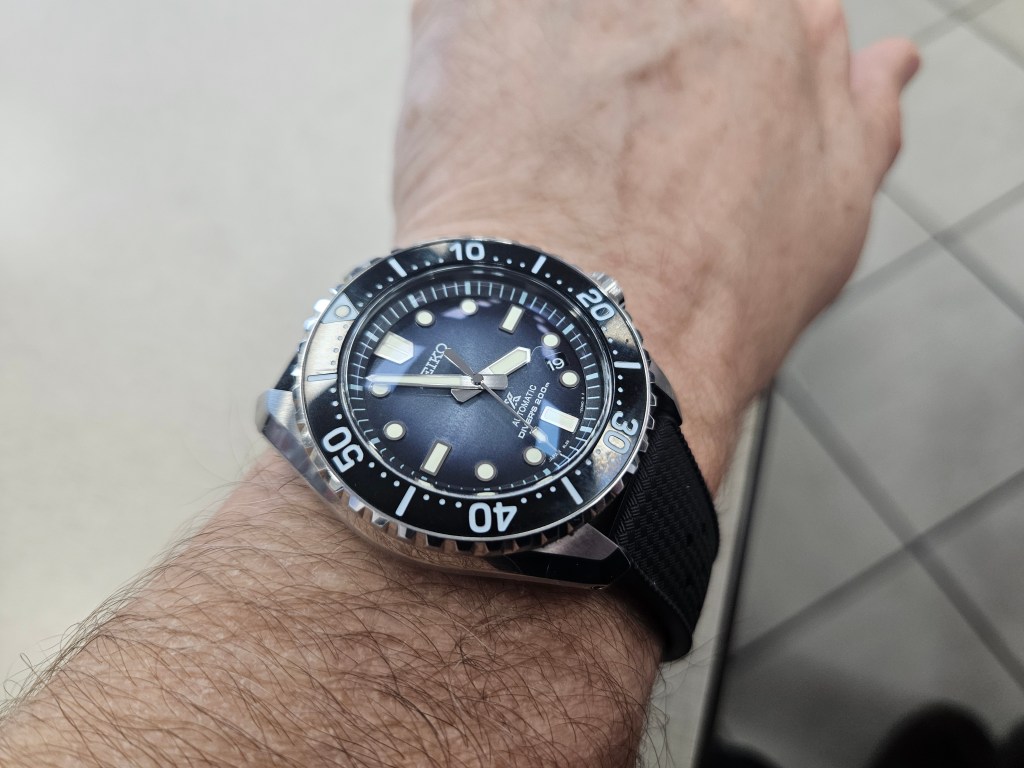
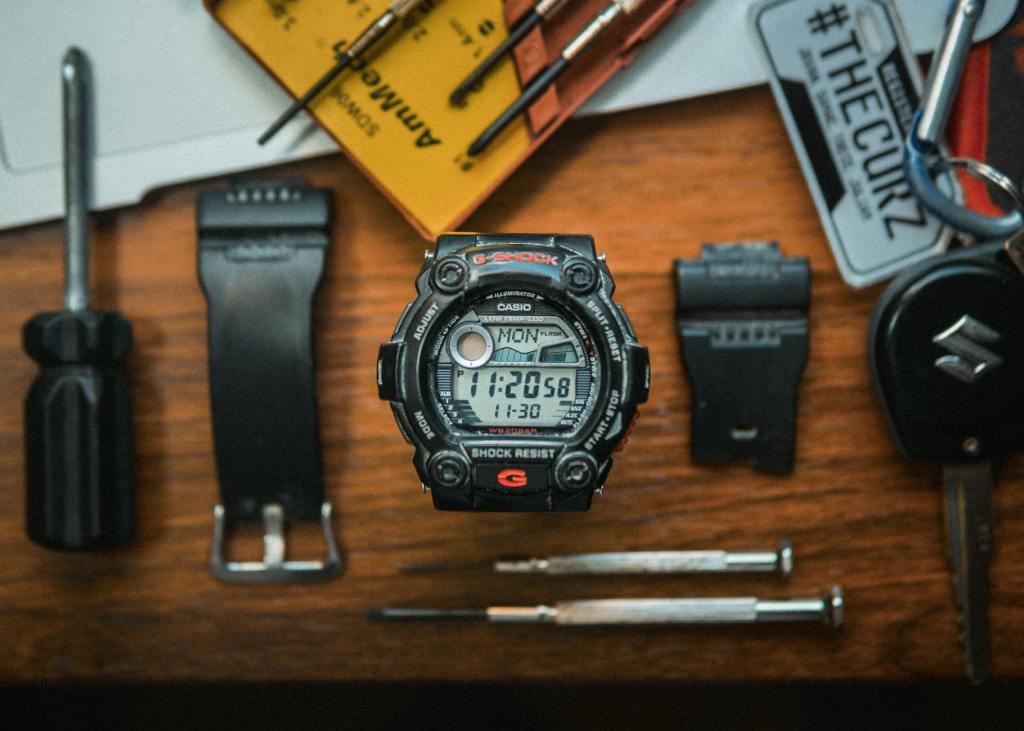
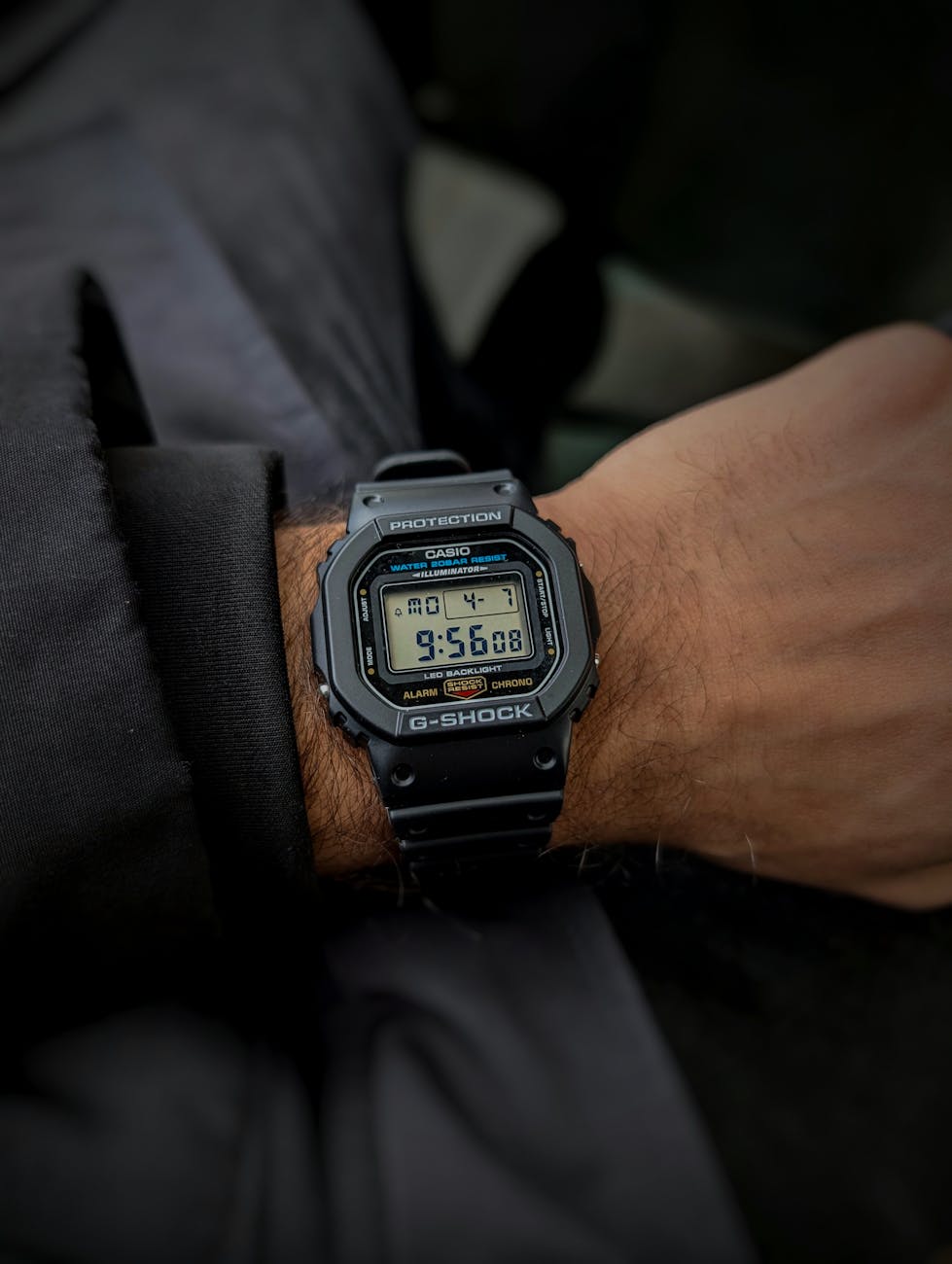
    Flash forward fifty-eight years. Spoiler: I still worry like a professional. My bandwidth jams up with the dumbest obsessions—like finding the right rubber strap for my Seiko diver. I’ll lose sleep and dive so deep into Internet rabbit holes you’d think I was chasing doctorates in linguistics and ophthalmological physics simultaneously.

    Food isn’t any easier. Reading How Adam Smith Can Change Your Life, I encountered Hillel’s famous line: “If I am not for myself, who will be for me? If I am only for myself, who am I?” Roberts added that anyone who would sacrifice millions of lives to save a finger is “a monster of inhuman proportions.” Cue existential panic: If I chow down on Greek yogurt and whey protein while ignoring the industrial torture of animals, what kind of person does that make me?

    That question dredged up a memory. Years ago, while doing valet duty at my twins’ school, I chatted with Lucianna, a Brazilian parent. She told me about growing up on her uncle’s dairy farm, where calves were torn from their mothers so humans could have their milk. She remembered the calves wailing all night, a sound so haunting she’s sworn off dairy for life. Her story still rings in my ears.

    So here I am, designing my new plant-based meal plan: buckwheat groats, tofu, tempeh, nut butter, soy milk, a stack of supplements, and protein powder. I’m ready to begin. But, of course, my inner worry machine kicks in:

    • What about my omnivore family? My tofu will feel like an accusation on their dinner table.
    • What about my friends and relatives? I’ll be dismissed as a moral buzzkill, banished to the Lonely Dungeon.
    • What about vacations? Hunting for vegan options in Miami or Oahu will turn relaxation into reconnaissance.
    • What about protein and Omega-3s? My muscles will wither, my brain will curdle, and I’ll be left a vegan husk.
    • What about cheating? What if, in a moment of weakness, I scrape a lemon-pepper shrimp into my mouth while clearing plates? Then I’ll hate myself, because I’ll have violated both my morals and my macros.

    And so the worrying goes. Yet maybe this is the point. Doing the right thing rarely comes gift-wrapped in comfort. It comes with sweat, tension, and plenty of struggle.

    My grandfather once told me when he was eighty and drowning in doctor visits: “Old age is not for cowards.” I’ll amend that. No age is for cowards. Living—really living—means confronting fears, fighting cowardice, and resisting the bondage of compulsive worrying. And if anyone has the secret sauce for escaping this mental hamster wheel, I’m all ears.

  • The Fix-It Myth: Why Self-Help is Just a Car Manual for Broken Humans

    The Fix-It Myth: Why Self-Help is Just a Car Manual for Broken Humans

    In her essay “Improving Ourselves to Death,” Alexandra Schwartz skewers our obsession with “setting goals” and the self-help prophets who profit by defining them. These gurus peddle life hacks as if they were cheat codes for existence, promising that with the right app, cue, or wearable gadget, you too can become a shiny human upgrade—an iPhone with abs.

    Their gospel is simple: optimization. A body that runs like a Swiss watch. A brain that hums like a Tesla battery. The result is a consumer barrage of homilies, buzzwords, and dopamine-chasing gadgets—all in service of transforming you into the ultimate product: yourself.

    But Schwartz argues that self-help is nothing more than a mirror, reflecting our dreams, neuroses, and insecurities. And one illusion persists like an American birthright: the Fix-It Myth. The fantasy that we are just machines—cars in need of a tune-up. Find the right manual, grab the right tools, and presto: you’re repaired, maybe even upgraded, ready to roar back onto the freeway of productivity.

    This myth has metastasized in the gig economy, where survival depends on perpetual hustle. We’ve convinced ourselves we must be perfectly fine-tuned—capable of juggling three jobs, dabbling in day trading, and hoarding enough cash to claw our way into a coveted zip code.

    At the core of this delusion is what therapist Phil Stutz calls the “Moment Frozen in Time”: a fantasy snapshot where everything is perfect—you look flawless, your soulmate is flawless, your calendar is conflict-free, and every day is a spa day in Shangri-La. The billion-dollar self-help industry feasts on this fantasy, offering secret codes that promise to deliver the life of a minor deity.

    Gwyneth Paltrow plays High Priestess of the Perfection Myth, hawking jade eggs and kale smoothies as though they were Eucharist wafers. On the Manosphere side, we’ve endured the spectacle of the Liver King—reduced from ancestral beef oracle to fallen fraud—and the smirking jiu-jitsu bodybuilder Mike Israetel, who at least delivers his advice with more honesty than theatrics.

    Stutz, however, refuses to sell the dream. His blunt counter-sermon: life is pain, uncertainty, and work. The faster you accept this, the happier you’ll be—because reality, not fantasy, is the only terrain where resilience and joy can actually grow. Otherwise, you’re just another maladapted child clinging to the hope of effortless bliss.

    And all the while, we’ve marinated in two decades of social media’s dopamine fever swamp: the endless scroll of FOMO, flexing, and fraudulence. Maybe the truest life hack isn’t another app or guru, but closing the laptop, lacing up your shoes, pounding out a five-mile run, and letting endorphins—not Instagram—clear your head.

  • Building a Bulwark Against Dopamine

    Building a Bulwark Against Dopamine

    Charles Duhigg, in The Power of Habit, insists that the real magic of self-improvement isn’t magic at all—it’s repetition, consistency, and time. Muscle memory married to good habits rewires the brain so that willpower stops being a daily knife fight. Instead, habits act as a bulwark, a fortification that keeps temptation outside the walls.

    Take my relationship with German Chocolate Cake. I adore it. But I eat it once a year because I never buy it. The thought of driving downtown, circling for parking, and elbowing through bakery lines kills the craving faster than broccoli. If people on TV are flaunting cake, I’ve trained myself to default to popcorn and an apple, which is like swapping bourbon for chamomile tea. Still, despite this culinary Maginot Line, I live fifteen pounds heavier than I want to be—proof that the fortress has weak spots.

    The Internet, however, is a stronger adversary than cake. Social media rewires the brain more ruthlessly than sugar. Twitter/X trained me to think in quips, Facebook taught me to beg for likes like a starving dog scratching at the door. I finally quit both. I post on Facebook once a month and promptly forget about it. I’m saner for it.

    But YouTube? That’s my heroin. I’ve been making watch-obsession videos for over a decade and built a modest following of 10,000. When a video pops, YouTube showers me with fireworks like a slot machine jackpot. When it flops, I get a scolding message: “This video isn’t bringing in as many of your subscribers as usual.” It’s the algorithm wagging its finger like a principal telling me I’ve failed society.

    YouTube has rewired my brain in both noble and grotesque ways. On the one hand, I’m sharper at public speaking, better at spinning essays into expositions, and more skilled at civil engagement with various personalities. On the other hand, I care too much about metrics, let them colonize my self-worth, and live half my life inside the algorithm’s funhouse mirror. I now inhabit parallel universes—the physical world and the YouTube world—fleeing one when the other displeases me.

    The problem is that the Internet’s temptations can’t be quarantined. My work machine is also my dopamine slot machine. One new tab, one click, and I’m plunging into a carnival of junk content, drenched in FOMO syrup and neon distraction. Cal Newport is right: when you toggle between focused work and dopamine junk food, the brain leaves behind a sticky residue that smothers concentration. I’ve felt that sludge firsthand, and I despise myself for swimming in it.

    As Duhigg notes, the brain is “constantly looking for ways to save effort” by making routines automatic. That’s useful for the monk who wakes at dawn to meditate, but disastrous for someone whose screen offers the New Tab to Nowhere. If only I could build a stronger bulwark against the carnival in my browser, I might actually live lighter, work deeper, and—dare I say it—be happier.

  • Autopilot or Choice: The Battle Beneath Our Habits

    Autopilot or Choice: The Battle Beneath Our Habits

    In The Power of Habit, Charles Duhigg challenges the comforting illusion that we live as fully self-possessed beings. Our existence, he argues, is far more random than we’d like to admit. Take the man who staggers home from work and pours himself a gin and tonic. The drink delivers its fleeting pleasure, but the deeper harm lies not only in the alcohol—it lies in the complacency of unexamined rituals, the sleepwalking habits that shape a life. Duhigg leans on William James to make the point: “All our life, so far as it has definite form, is but a mass of habits.”

    By contrast, when I come home, I reach for sparkling water or diet 7-Up over ice. I probably get the same sensory refreshment as the martini drinker—minus the alcohol. What matters most is that I asserted a choice instead of slipping into autopilot.

    I apply this principle elsewhere. Because I know I tend to drive more aggressively than I’d like, I deliberately leave ten minutes earlier than most people would. That way, I don’t have to be a jackass on the road. Every time I make a conscious choice like this, I chip away at the pull of mindless behavior.

    Duhigg presses us to do the same: make deliberate decisions, rewire our routines, and stop letting unseen patterns run our lives. He cites a Duke study revealing that more than 40 percent of people’s daily actions aren’t conscious choices at all, but habits. From Aristotle onward, philosophers puzzled over why habits exist; now, neuroscience explains not only how they form but how they can be reshaped.

    The book’s central claim is hopeful: we aren’t doomed by our bad habits. We can change them, reprogram our brains, and redirect our lives—if we understand how the mechanics of habit work. I’d assume that anyone picking up Duhigg’s book already has the self-awareness and motivation to attempt change. In the short run, thoughtful people can transform themselves. The greater challenge comes later, when complacency sneaks back after the initial enthusiasm fades. That’s when I wonder if Duhigg’s manifesto offers not just inspiration, but a lasting answer.

  • The Keystone Habit: How One Change Rewires the Rest of Us

    The Keystone Habit: How One Change Rewires the Rest of Us

    Charles Duhigg’s The Power of Habit: Why We Do What We Do in Life and Business argues that vice, self-indulgence, and addiction operate on a neurological level. If we can deliberately rewire those pathways, we can free ourselves from much of our self-destructive behavior. Written more than a decade ago, the book anticipates the same themes that now surface in places like Reddit’s “Nofap” movement, where porn addicts admit their compulsions damage relationships and stunt growth, so they commit to abstinence—except with their partner. Anna Lembke’s Dopamine Nation makes a similar case, charting how dopamine overload leads to the inevitable crash of pleasure into misery.

    Duhigg opens with Lisa, an addict whose husband left her, likely exhausted by her behavior. When she finally saw how deranged her habits had become, she had the spark to change. She replaced her old compulsions with exercise and healthy eating. It’s the familiar “rock bottom” story: you face yourself stripped of illusions. Or as Marc Maron puts it, “Life hands you your ass on a stick.” Only when pride dissolves are you ready for answers.

    As someone who has wrestled with addictions and grown up with alcoholic parents, I read this story with recognition. The researchers studying Lisa’s brain found something striking: her old neural patterns were still visible, but they had been overridden by new ones. The impulses hadn’t vanished—they’d simply been crowded out. And while she overhauled many habits, it was quitting smoking that made the real difference. Duhigg calls this a “keystone habit.” In his words: “By focusing on one pattern…Lisa had taught herself how to reprogram the other routines in her life, as well.”

    The same principle applies to organizations: find the keystone habit, nurture it, and the ripple spreads across the whole system.

    I learned another useful term from the book: “behavioral inhibition.” It resonates painfully, because from 7 to 10 p.m. I suffer relentless food cravings. By then I’ve usually reached 2,300 calories, and eating more destroys my calorie deficit. But television sabotages my self-control—everywhere I look, people are drinking rosé, eating pizza, ice cream, carrot cake. Triggers, triggers everywhere. If I hid in an igloo, maybe I’d get ripped abs, though the view would be grim.

    Still, I’ve seen the power of a keystone habit. My mornings begin with coffee and buckwheat groats mixed with protein powder. Then I study a book and take notes, as I’m doing now. If I skip this, I get swallowed by the Internet, a dopamine carnival of watches, consumer temptations, and FOMO. I unfollow Instagram “safari” channels that inevitably mutate into half-naked influencers shaking their butts in gym close-ups. Once seen, such images can’t be unseen. Now I choose carefully.

    Replacing bad habits with good—writing, piano, exercise—changes not only my productivity but my temperament. I become friendlier, more patient with my family. But when I binge on Internet dopamine, I snap at people. I become “that guy.”

    The contrast reminds me of something Dallas Cowboys wide receiver Michael Irvin confessed in America’s Team: “We are all imperfect people. And each of us has at least two people in all of us; the person you show everybody and that person you never show to anybody.”

    We curate public personas and believe our own polished lies, all while a darker self hides in the shadows. But once life hands you your ass on a stick, integrity becomes your only way forward. Rewiring the brain isn’t just a neurological project. It’s a moral one.

  • Dopamine Nation: Self-Help Without the Fairy Dust

    Dopamine Nation: Self-Help Without the Fairy Dust

    I’ve never trusted the mythology of self-help books—the fairy tale that you identify Problem X, buy a book, read a few hundred pages, and Problem X vanishes. What I do believe is that a self-help book, at best, can make you stare harder at your demon, dull its sharper edges, and maybe hand you a strategy or two to keep it from devouring you whole.

    That’s why Anna Lembke’s Dopamine Nation: Finding Balance in the Age of Indulgence punched me in the gut. Her blunt lesson: dopamine addiction—whether through scrolling, swiping, shopping, or vaping—doesn’t lead to pleasure but to misery, pain, and the hollowing-out of your agency. Reading her, I shuddered at the years I wasted feeding my brain with Internet sugar highs.

    Lembke makes no bones about the world we live in: a digital carnival of “overwhelming abundance.” She puts it starkly: “The smartphone is the modern-day hypodermic needle, delivering digital dopamine 24/7 for a wired generation. If you haven’t met your drug of choice yet, it’s coming soon to a website near you.” Pleasure and pain, she reminds us, are processed in the same brain circuitry—and the more dopamine that flows, the stickier the addiction.

    The horror story isn’t abstract. Her case studies peel the skin off addiction’s double life: secret compulsions, corrosive shame, shattered relationships. Some people are more vulnerable—those with addictive parents, those with mental illness in the family—but Lembke insists access is the true accelerant. The Internet puts a casino in our pocket; supply breeds demand. Worse, social media monetizes outrage until we mistake 24/7 hair-on-fire hysteria for “normal.”

    Lembke’s most grotesque example is Jacob, a sex addict who literally builds himself a “Masturbation Machine.” She confesses she feels horror, compassion—and dread that she herself is not immune. Her verdict is bleak: “Not unlike Jacob, we are all at risk of titillating ourselves to death.” Seventy percent of global deaths, she notes, stem from modifiable behaviors like smoking, gluttony, and sloth. Addiction, in short, is a slow suicide dressed up as entertainment.

    Part of the problem is philosophical. As Philip Rieff noted in The Triumph of the Therapeutic, “Religious man was born to be saved; psychological man is born to be pleased.” We’ve traded the pursuit of goodness for the pursuit of good feelings. Jeffrey Rosen put it more bluntly: classical wisdom insists we should aim to be good, not simply to feel good. Instead, we’re anesthetizing ourselves with meds, therapy-lite, dopamine drip-feeds, and hedonism. And as Lembke observes, hedonism curdles into its opposite: anhedonia, the inability to enjoy anything at all.

    Her prescription? The brutal reset of a “dopamine fast.” Four weeks off your drug of choice to force your brain back to balance. She offers a framework—DOPAMINE (data, objectives, problems, abstinence, mindfulness, insight, next steps, experiment). It’s clever, but the hard truth runs underneath: most addicts, myself included, are not “moderators.” We’re all-or-nothing. For me, the Internet isn’t moderation-friendly; it’s a rabbit hole with no bottom.

    Lembke knows willpower is not enough. She prescribes “self-binding”: physical, chronological, and categorical walls between you and your poison. But in the digital economy—where work and addiction ride on the same Internet rails—such barriers are fragile. Moderation may be the fantasy; abstinence the only real survival strategy.

    So yes, I’m glad I read Dopamine Nation. It clarified the trap, exposed the double life, and framed the fight as both biological and spiritual. But let’s not be naïve. Like all self-help, it’s not a magic pill. At best, it’s a mirror, a warning flare, and a rough map out of the dopamine swamp. The walking out is still on you.

  • The Infinite Hole: Addiction, Part X, and the Fight for the Higher Channel

    The Infinite Hole: Addiction, Part X, and the Fight for the Higher Channel

    A friend once told me that when he was nine, hanging out after school, some boys insisted they had to walk across the neighborhood to watch “a girl fight.” He assumed the girls were older, maybe middle schoolers. The boys were giddy: they claimed clothes would rip, and they’d get the thrill of seeing girls half-dressed.

    My friend refused to join them. He didn’t want to see a fight. But in that moment he was struck by a recurring fantasy: the wish to be invisible, to slip into girls’ rooms and spy. That impulse stayed with him for years.

    Decades later, YouTube would grant him such invisibility. Millions of young women had become willing exhibitionists. He became addicted. The voyeurism consumed him, draining his time, corroding his relationships, creating a double life thick with shame and self-loathing. He even dreamed of damnation, his soul circling a pit dug by his own compulsions.

    Addiction ruins us because it hijacks our agency. Urges swell until they dictate every move. Writing about this in Lessons for Living, Phil Stutz explains: “When you behave as if there are no consequences, you’ve lost your sense of the future. Immediate pleasure is all there is. Without a future, life becomes meaningless.”

    Stutz names the inner saboteur “Part X.” This demon convinces us that we can’t survive without indulging our urges. But Part X is a liar.

    Why do we fall for it? Stutz argues that it’s simple: “It’s human nature to want a reward for our pain and effort.” We grow restless waiting for pleasure to arrive. Faith and patience feel intolerable. Part X whispers that we are special, entitled to gratification now, free from universal law. Faith is unnecessary.

    And so the cycle begins. Faith collapses, the urges tighten, and soon we are hooked, yoked to Part X. Stutz warns:

    “Unstopped, this force turns your impulses into addictions. Every lower-channel impulse takes you outside yourself for gratification. But we are spiritual beings, and the only real satisfaction comes from connecting to higher forces. What you call these forces—God or flow or the unconscious—doesn’t matter. These are infinite forces, found only inside ourselves. The more you go out into the material world, the further you get from these forces and the emptier you feel. To one degree or another, we all feel this inner emptiness, this hole inside. Part X lies, telling us to go outside ourselves for one more joint or piece of cake or outburst of rage—this will finally fill up the hole. Then we take ourselves even further from the inner forces that could actually satisfy the emptiness. It’s an escalating cycle. The more we act out our impulse, the bigger the hole gets.”

    This is addiction’s essence: trying to fill an infinite hole with finite scraps.

    Freedom doesn’t come cheap. Stutz insists that change is brutal because deprivation feels unbearable. Part X insists suffering is intolerable. The only way forward is to flip the script: to see deprivation itself as reward. To starve the demon is to grow strong. As he puts it, “Each time you retrain your impulses, you close off the lower channel. A dynamic inversion occurs—when you curb the impulse you invert its energy, holding it inside yourself. This energy gets transformed and then emerges in a more powerful form through the higher channel.”

    The difference is palpable. In the lower channel, you rot in a swamp of shame, fatigue, and alienation. In the higher channel, you live with integrity, vitality, and connection. One road leads to corrosion, the other to grace.

    To walk the higher path requires humility: admit your condition, seek higher forces—God, Flow, your own language for the divine—and retrain your impulses. The more you resist, the stronger you become. Each act of resistance is an investment in yourself, a deposit of energy and purpose.

    The strategy includes visualization. Stutz recommends imagining not only your degraded state after indulgence—the lizard eyes in the mirror, the soul hollowed by shame—but also your rescue: “Imagine that a host of spiritual guides descend to lift you out of the lower channel. I see them in white robes; you can use any image that works. If the concept of guides bothers you, think of them as pure forces from out of your own unconscious. Finally, imagine yourself walking out into the world with these guiding figures. Your purpose is to be of service to the world. Again, teach yourself to quickly create this feeling of being of service. Service is the most direct way to open the higher channel.”

    This is Stutz’s religion: service as salvation, energy as grace, the higher channel as the place of renewal. It mirrors Judeo-Christian patterns of death and rebirth: die to the old self, be born into the new. Paul himself would likely reject it as a man-made scheme, but the parallels are striking.

    Whether believer or skeptic, the conclusion remains: renounce the lower channel, resist Part X, and live in the higher one. Only then can you taste true courage, creativity, and purpose.