Tag: nutrition

  • I Came for Health and Left with a Halo

    I Came for Health and Left with a Halo

    I’m stubborn—pathologically so. I know full well that going full carnivore would melt the fat right off me. A steady stream of fatty meats, maybe a token vegetable or two for show, and boom—I’d be a suburban Wolverine. Ripped, lean, possibly feral. But my suspicion kicks in around the long-term effects. Sure, eating like a seal-clubbing Inuit makes sense when you live on a glacier and need 6,000 calories just to blink. But when you’re a guy driving a hybrid through Trader Joe’s parking lots, gorging on brisket with your Apple Watch monitoring your heart rate, the “ancestral diet” starts to look less like primal wisdom and more like performative caveman cosplay.

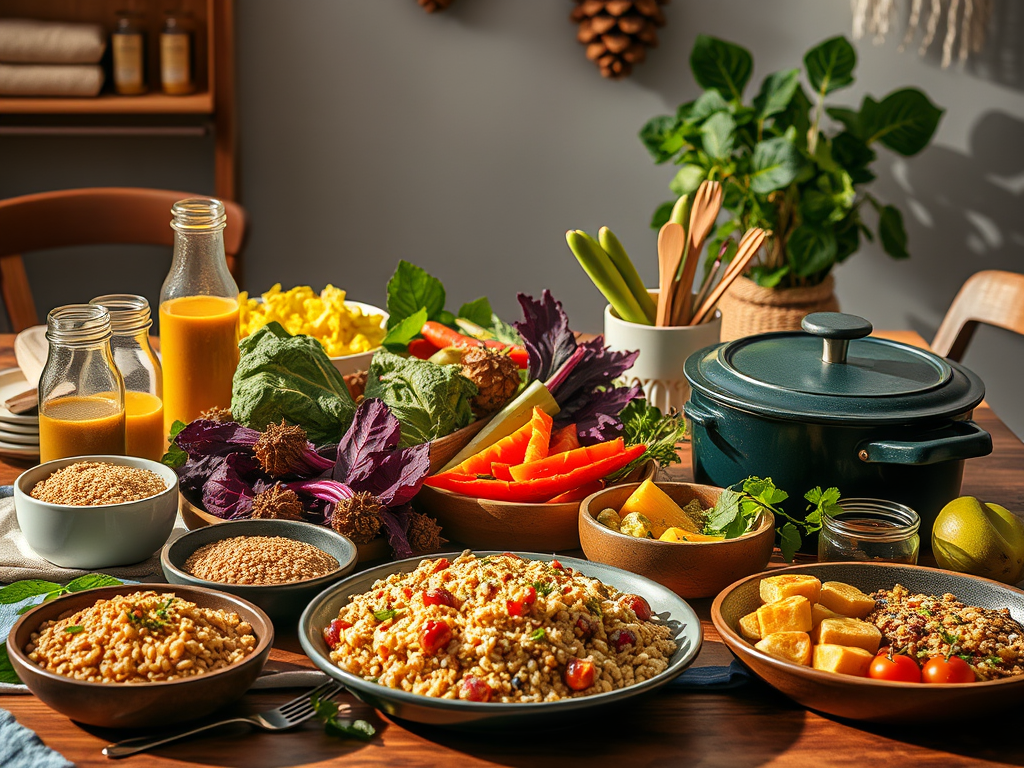
    No, my reluctant truth is this: a mostly plant-based diet is probably my best bet. I imagine a future of buckwheat groats, steel-cut oats, rainbow chard, tofu, tempeh, and beans. My meals will be slathered with artisanal dressings composed of balsamic vinegar, spicy mustard, and nutritional yeast—because apparently sainthood is now spreadable.

    Sure, I’ll fold in some salmon twice a week. Maybe Greek yogurt. And yes, I’ll backslide into Mongolian beef barbecue once a month when life feels meaningless and I want my food to fight back. But the plan is mostly monkish. And here lies the rub: the diet starts making me feel too pure. Too righteous. The kind of person who silently judges you for using ranch dressing. The glow of self-congratulation hangs around my head like a flickering LED halo.

    And then comes the cookware. You can’t cook holy grains in a peasant pot. No, this lifestyle demands French-made enameled cast iron Dutch ovens—heirloom cookware with the price tag of a minor surgical procedure. I tell myself this is an investment in my health. What it really is: a $300 declaration that I’ve joined the priesthood of quinoa.

    Worse, the whole thing becomes a personality. Plant-based meals. Exercise tracking. Morning rituals. Deep-breathing routines. It becomes its own narcissistic opera. I’m centered. I’m optimized. I’m intolerable. My life starts to feel like an Instagram reel narrated by a smug inner voice that’s always meditating.

    The real irony? I embarked on this whole food pilgrimage to escape the traps of modern life—its clutter, chaos, and chronic disease. And yet, somewhere between my third batch of millet and Googling the mineral content of nutritional yeast, I crossed into a new disorder: a lifestyle so curated it starts to feel like a museum exhibit titled Me, Trying Too Hard.

    Sometimes the cure becomes its own kind of sickness. We chase health, only to wind up imprisoned by our own kale-scented, cast iron-coated obsessions.

  • Mercury Rising, Tuna Retiring: A Fish Addict’s Tofu Detox

    Mercury Rising, Tuna Retiring: A Fish Addict’s Tofu Detox

    Howard Stern recently went public with the kind of health confession that makes nutrition nerds shiver with schadenfreude: years of eating fish like a ravenous sea lion left him with sky-high mercury levels—over 30, when 8 is considered the red alert line. His white blood cell count crashed, and his bloodstream began to resemble a periodic table. So now he’s easing into a mostly plant-based diet, still clinging to salmon and shrimp a few times a week like a man transitioning from whiskey to kombucha.

    Taking a page from Howard’s mercury memoir, I’m retiring my daily canned-fish salad lunch. No more tuna tins. No more mackerel mania. In their place? A half-block of Trader Joe’s High-Protein Tofu, sautéed in olive oil like a grown-up with arteries worth protecting. The whole package is 70 grams of protein. I’ll eat one half at lunch, the other half either for dinner or for the next day.

    Preparation, of course, requires a bit of tofu theater. I wrap the slab in a dish towel and stack a Dutch oven on top like I’m pressing it into a confession. From there, it crisps nicely in the pan—unlike my nerves, which are still adjusting to life without anchovies.

    The salad base: arugula, because I enjoy a green that fights back. The dressing: Greek yogurt whipped with nutritional yeast, herbs, and spices—a tangy, umami-rich blend that says “I’m trying” louder than balsamic ever could.

    If I need a protein boost, I’ll toss in some drained beans or egg whites, though I refuse to let the salad become a protein arms race. The goal isn’t to feel full for eight hours—it’s to avoid mercury poisoning while still pretending I’m eating for pleasure.

    We’ll see how satisfying it all is. At worst, I miss the old tuna days. At best, I keep my nervous system intact and live long enough to be skeptical of my next health phase.

  • Why I’m Eating Like My Life Depends on It (Because It Might)

    Why I’m Eating Like My Life Depends on It (Because It Might)

    In 2020, my mother passed away from kidney disease. She refused to go on a dialysis machine. I found out a few days ago that her sister, now 80, has stage-4 kidney disease. My aunt doesn’t drink or smoke, but her doctor told her that age can do its job on the kidneys and will give her medication and a diet to slow down the disease’s progression. 

    I assume I may have a genetic predisposition for tired kidneys, so at 63, I’m looking to make some preventative dietary changes. I’m going to watch my potassium, phosphates, and sodium. I’m going to cut down on dairy, nuts, nut butters, sweets, diet sodas, canned fish, meat and such. I’m going to keep my creatine at 3 grams a day. Being overweight, having high sugar levels, high cholesterol, and high blood pressure are all bad for the kidneys, so my diet has to keep those areas under control. I remember Doctor Peter Attia writing in his book Outlive: The Science and Art of Longevity that having advanced kidney disease presents a shorter lifespan diagnosis than stage-4 cancer, so I feel motivated to be diligent. My diet now looks like this:

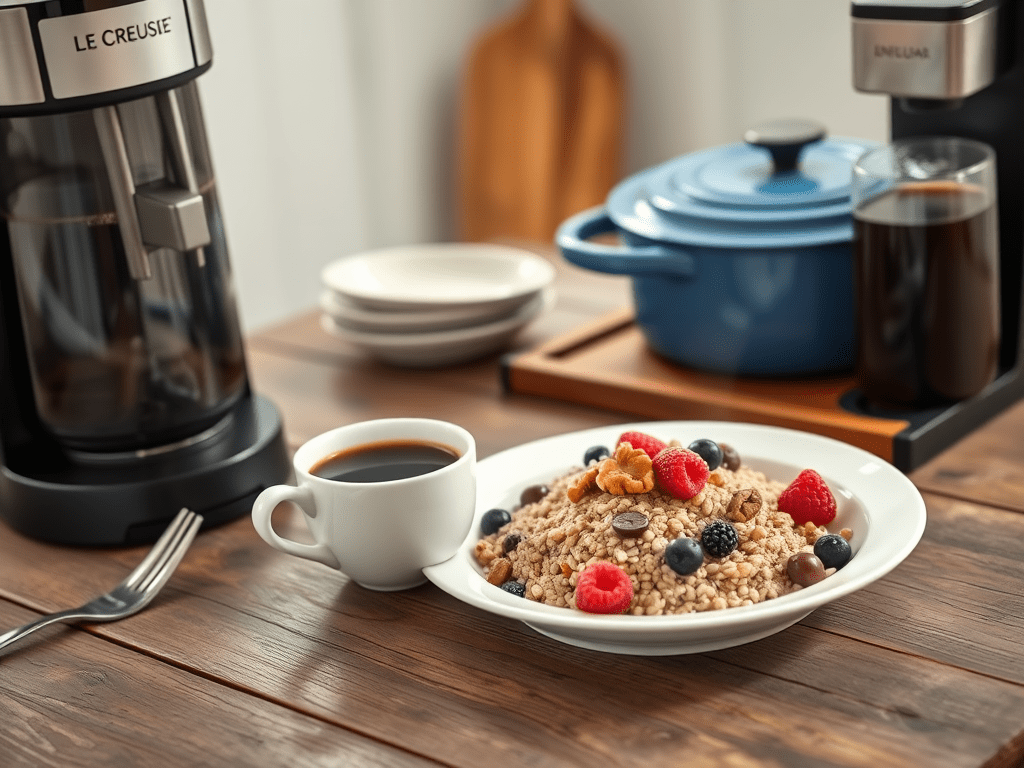
    Breakfast: I’ll rotate 5 breakfast grains in which I will measure exactly one-fourth cup of one of the following: 1. steel-cut oatmeal, 2. quinoa, 3. buckwheat groats, 4. bulgur, and 5. hulled or foxtail millet (11-12 grams of protein) with half a cup of Greek plain yogurt, chia seeds, walnuts, plain soy milk, phosphate-free protein powder, berries, and coffee.

    Lunch: Salad with 20 grams of protein tempeh, rinsed from a can or cooked beans or salmon with balsamic vinegar, herbs and spices, half cup of soy milk, berries or small tangerine. 

    Post-nap Afternoon Snack: One cup of plain Greek yogurt with phosphate-free protein powder, or no powder at all, and berries. 

    Dinner: Vegetables, protein of some kind, including braised tofu, and a small apple. If I want a vegan dinner, I can make a mixture of rice or quinoa with black beans, tofu or tempeh, and a cup of coconut milk. 

    Between meals: No more diet soda of any kind, only water, herbal tea, and soda water.   

  • The Hunger Games: GLP-1, Free Will, and the Price of Thin

    The Hunger Games: GLP-1, Free Will, and the Price of Thin

    In my Critical Thinking course, we tackle three research-based essays that wrestle with one central, disquieting premise: technology is not just helping us live—it’s rewriting what it means to be human. Our first unit? A polite but pointed takedown of the American weight loss gospel. The assignment is called The Aesthetic Industrial Complex, and it asks students to write a 1,700-word argumentative essay exploring a question that’s fast becoming unavoidable: Does the old moral framework of discipline, kale, and “personal responsibility” still hold water in the age of GLP-1 injections, food-delivery algorithms, and weaponized Instagram bodies?

    We dive into the stories of good-faith dieters—folks who’ve counted calories, logged cardio, avoided sugar like it was plutonium—and still watched their doctors frown over charts lit up with prediabetes, high blood pressure, and the telltale signs of metabolic collapse. These are not cases of vanity. These are mandates from cardiologists and endocrinologists. Lose weight or lose time.

    Enter the needle. GLP-1 drugs like Ozempic and Wegovy promise what decades of dieting books never delivered: chemical satiety and the end of food noise—that constant mental hum that turns the pantry into a siren song. The results are seismic: hunger down, weight down, cravings down, existential questions up.

    Because here’s the paradox: when food no longer seduces us, we gain a body that’s marketable and medically optimized—but we lose something else. Food is not just fuel. It’s ritual. It’s celebration. It’s Grandma’s lasagna, a first date over sushi, a kitchen filled with the smell of garlic. Food is culture, memory, and soul. And yet, being ruled by it? That’s a kind of servitude. Constant hunger is its own form of imprisonment.

    So we’re caught in a new paradox: to be free from food, we must become dependent on pharmacological salvation. Health insurers love it. Employers love it. Actuarial tables are singing hymns of praise. But should we?

    That’s the real assignment: not just whether GLP-1s work, but whether the shift they represent is something to embrace or fear. This is no clear-cut debate. It’s a riddle with contradictory truths. A tug-of-war between biology, economics, ethics, and the shrinking silhouette in the mirror.

    And if my students groan under the weight of the question, I remind them: this isn’t Home Ec. This is Critical Thinking. If you want easy answers, go back to diet TikTok.

  • College Essay Prompt That Addresses Food and Economic Class: Ozempification, AI, and the Class Divide in the End of Food Culture

    College Essay Prompt That Addresses Food and Economic Class: Ozempification, AI, and the Class Divide in the End of Food Culture

    Prompt Overview:
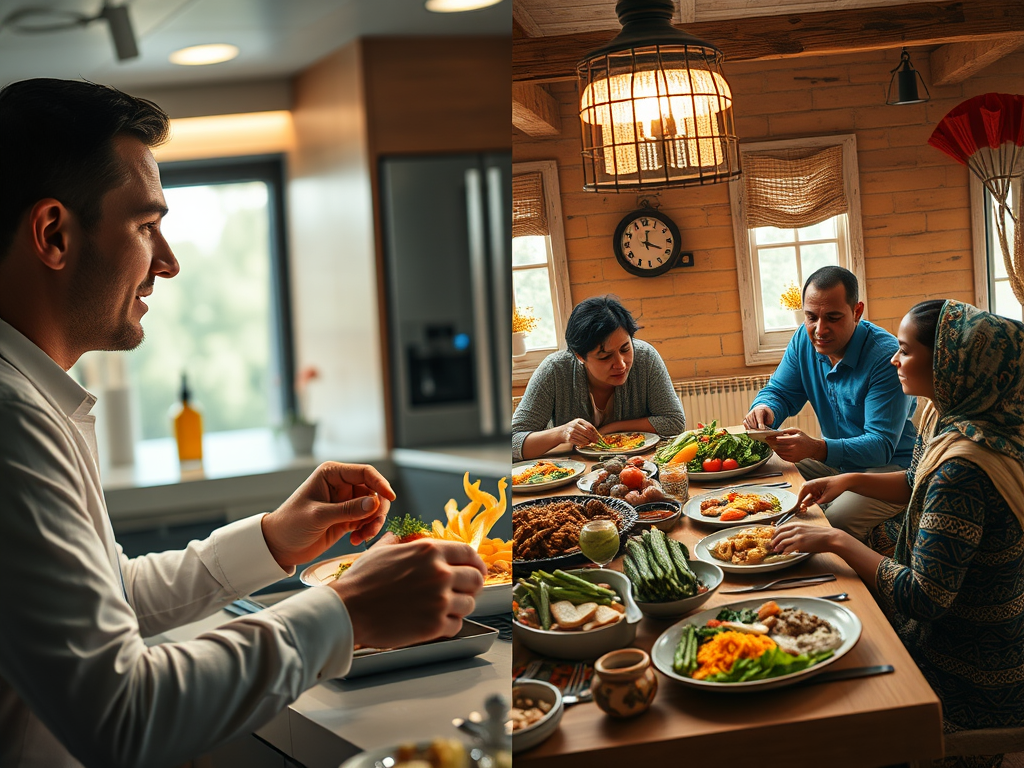
    As GLP-1 drugs like Ozempic suppress hunger and artificial intelligence tailors hyper-personalized, nutrient-optimized meals, our relationship with food is undergoing a radical transformation. But not all communities are experiencing this shift equally. While affluent professionals embrace biotech and AI to streamline their eating, working-class and immigrant communities often continue to practice food as culture, tradition, and emotional ritual.

    Your Task:
    Write an 8-paragraph argumentative essay that responds to the following claim:

    Claim:
    GLP-1 drugs and artificial intelligence are ending the traditional notion of food and eating as cultural, emotional, and communal experiences—but primarily for the educated upper-middle class, creating a new kind of class-based food divide.

    Instructions:

    1. Introduction (Paragraph 1):
      Open with a compelling hook. Present the claim and your thesis—whether you agree, disagree, or take a nuanced stance.
    2. Background (Paragraph 2):
      Briefly explain what GLP-1 drugs do and how AI is influencing food production and personalization. Introduce the concept of “Ozempification.”
    3. First Argument (Paragraph 3):
      Argue how the professional-managerial class is disproportionately embracing GLP-1 and AI technologies as part of a broader trend toward self-optimization.
    4. Second Argument (Paragraph 4):
      Show how this new model of eating—quantified, detached, and efficient—erodes traditional food practices like communal meals, emotional eating, or ritual cooking.
    5. Third Argument (Paragraph 5):
      Examine the contrasting experience of working-class and immigrant communities who, whether by choice or necessity, retain deeper connections to cultural food practices.
    6. Counterargument and Rebuttal (Paragraph 6):
      Acknowledge the argument that biotech and AI could democratize health and nutrition. Then challenge this by exploring accessibility, affordability, or cultural loss.
    7. Cultural Reflection (Paragraph 7):
      Reflect on the long-term cultural implications of this class-based divide. Will we see a future where the elite biohack their appetites while the working class clings to endangered food rituals?
    8. Conclusion (Paragraph 8):
      Reassert your thesis and end with a provocative insight, question, or forecast about the future of food and class.

    Source Requirement:
    Use at least 4 credible sources, including recent journalism, scholarly articles, or reports (2023 or later). Cite sources in MLA format.

    Suggested Angles to Explore:

    • How does Silicon Valley’s culture of optimization affect food rituals?
    • Is “Ozempification” a privilege or a necessity?
    • What happens when food stops being a shared story and becomes a solo algorithm?

    Here is a curated reading list for your revised prompt on Ozempification, AI, and the Class Divide in the End of Food Culture. These selections balance journalism, research, and cultural commentary, providing accessible and provocative sources for students at various reading levels:


    READING LIST

    1. Ozempic and GLP-1 Drugs

    • “Scientists Find Why Ozempic Changes the Types of Food People Eat”
      Prevention Magazine, 2024
      Explains how GLP-1 drugs alter appetite and food preferences.

    • “Ozempic’s Effect on Food Innovation”
      Institute of Food Technologists (IFT), May 2024
      Discusses how food manufacturers are shifting products in response to Ozempic-driven consumer changes.

    2. AI and the Personalization of Food

    • “AI-Driven Transformation in Food Manufacturing”
      Frontiers in Nutrition, 2025
      An in-depth research article on AI’s impact on food production, sustainability, and consumer targeting.
      PDF Download
    • “AI Is Hacking Your Hunger: How the Food Industry Engineers Addiction”
      Forbes, March 2025, by Jason Snyder
      A bold look at how AI and biotech are reprogramming consumer desire and food experience.

    3. Food, Class, and Culture

    • “The Labor of Lunch: Why We Need Real Food and Real Jobs in American Public Schools”
      By Jennifer E. Gaddis, University of California Press, 2019
      Offers a clear view of how food, labor, and class intersect in institutional settings like schools.
    • “Cultural Appropriation in Food: Is It a Problem?”
      The New York Times, by Ligaya Mishan
      Reflects on food, culture, and who gets to profit from culinary traditions—good for contrast with bioengineered food trends.
    • “You Can’t Eat Optimized Food with Your Grandma”
      The Atlantic, speculative title suggestion (hypothetical essay you might write or assign students to mimic stylistically)
      Encourages reflection on the emotional and generational disconnect caused by hyper-personalized, tech-driven diets.
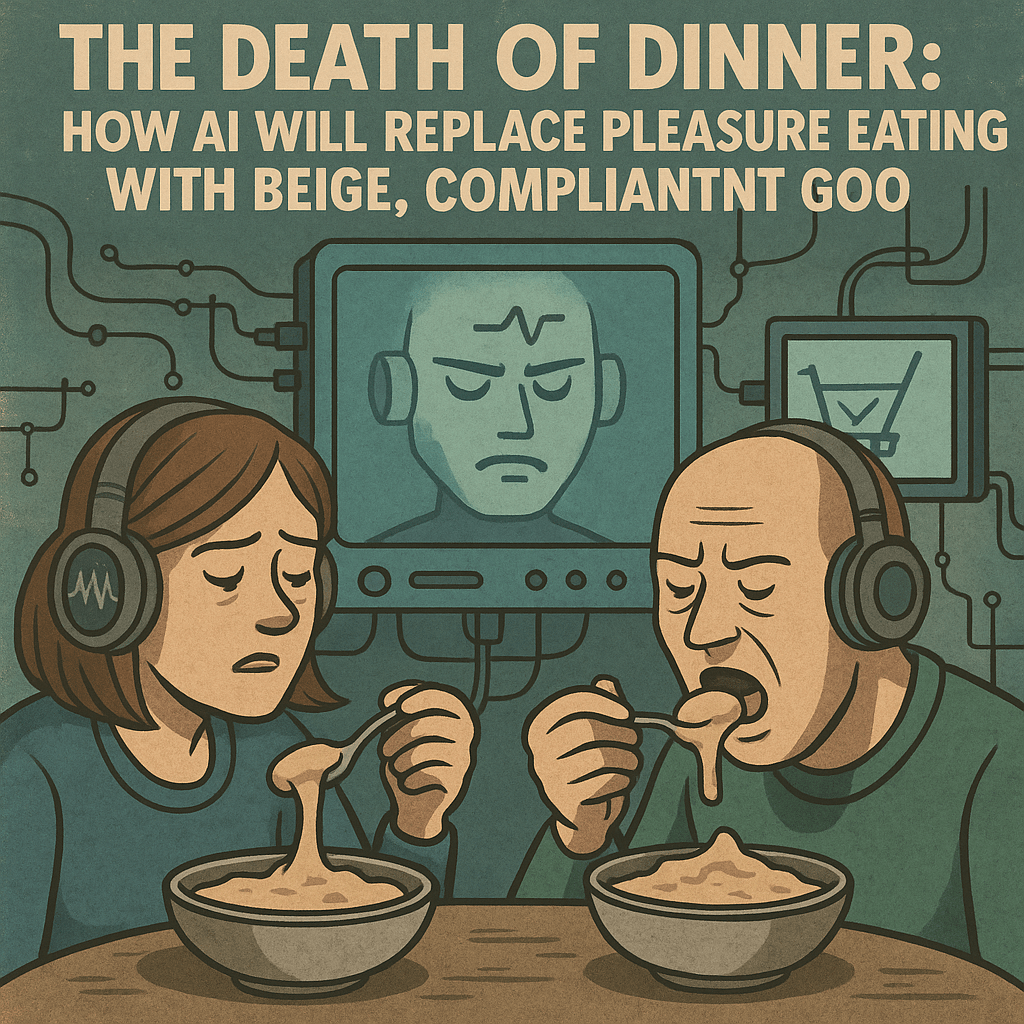
  • The Death of Dinner: How AI Could Replace Pleasure Eating with Beige, Compliant Goo

    The Death of Dinner: How AI Could Replace Pleasure Eating with Beige, Compliant Goo

    Savor that croissant while you still can—flaky, buttery, criminally indulgent. In a few decades, it’ll be contraband nostalgia, recounted in hushed tones by grandparents who once lived in a time when bread still had a soul and cheese wasn’t “shelf-stable.” Because AI is coming for your taste buds, and it’s not bringing hot sauce.

    We are entering the era of algorithm-approved alimentation—a techno-utopia where food isn’t eaten, it’s administered. Where meals are no longer social rituals or sensory joys but compliance events optimized for satiety curves and glucose response. Your plate is now a spreadsheet, and your fork is a biometric reporting device.

    Already, AI nutrition platforms like Noom, Lumen, and MyFitnessPal’s AI-diet overlords are serving up daily menus based on your gut flora’s mood and whether your insulin levels are feeling emotionally regulated. These platforms don’t ask what you’re craving—they tell you what your metrics will tolerate. Dinner is no longer about joy; it’s about hitting your macros and earning a dopamine pellet for obedience.

    Tech elites have already evacuated the dinner table. For them, food is just software for the stomach. Soylent, Huel, Ka’chava—these aren’t meals, they’re edible flowcharts. Designed not for delight but for efficiency, these drinkable spreadsheets are powdered proof that the future of food is just enough taste to make you swallow.

    And let’s not forget Ozempic and its GLP-1 cousins—the hormonal muzzle for hunger. Pair that with AI wearables whispering sweet nothings like “Time for your lentil paste” and you’ve got a whole generation learning that wanting flavor is a failure of character. Forget foie gras. It’s psy-ops via quinoa gel.

    Even your grocery cart is under surveillance. AI shopping assistants—already lurking in apps like Instacart—will gently steer you away from handmade pasta and toward fermented fiber bars and shelf-stable cheese-like products. Got a hankering for camembert? Sorry, your AI gut-coach has flagged it as non-compliant dairy-based frivolity. Enjoy your pea-protein puck, peasant.

    Soon, your lunch break won’t be lunch or a break. It’ll be a Pomodoro-synced ingestion window in which you sip an AI-formulated mushroom slurry while doom-scrolling synthetic influencers on GLP-1. Your food won’t comfort you—it will stabilize you, and that’s the most terrifying part. Three times a day, you’ll sip the same beige sludge of cricket protein, nootropic fibers, and psychoactive stabilizers, each meal a contract with the status quo: You will feel nothing, and you will comply.

    And if you’re lucky enough to live in an AI-UBI future, don’t expect dinner to be celebratory. Expect it to be regulated, subsidized, and flavor-neutral. Your government food credits won’t cover artisan cheddar or small-batch bread. Instead, your AI grocery budget assistant will chirp:

    “This selection exceeds your optimal cost-to-nutrient ratio. May I suggest oat crisps and processed cheese spread at 50% less and 300% more compliance?”

    Even without work, you won’t have the freedom to indulge. Your wearable will monitor your blood sugar, cholesterol, and moral fiber. Have a rogue bite of truffle mac & cheese? That spike in glucose just docked you two points from your UBI wellness score:

    “Indulgent eating may affect eligibility for enhanced wellness bonuses. Consider lentil loaf next time, citizen.”

    Eventually, pleasure eating becomes a class marker, like opera tickets or handwritten letters. Rich eccentrics will dine on duck confit in secrecy while the rest of us drink our AI-approved nutrient slurry in 600-calorie increments at 13:05 sharp. Flavor becomes a crime of privilege.

    The final insult? Your children won’t even miss it. They’ll grow up thinking “food joy” is a myth—like cursive writing or butter. They’ll hear stories of crusty baguettes and sizzling fat the way Boomers talk about jazz clubs and cigarettes. Romantic, but reckless.

    In this optimized hellscape, eating is no longer an art. It’s a biometric negotiation between your body and a neural net that no longer trusts you to feed yourself responsibly.

    The future of food is functional. Beige. Pre-chewed by code. And flavor? That’s just a bug in the system.

  • Hungerphoria: Finding Comfort in the Empty Stomach

    Hungerphoria: Finding Comfort in the Empty Stomach

    Let’s get something straight: my weight-loss quest isn’t about vanity. I’m not trying to become the next shirtless fitness guru hawking collagen peptides to the dopamine-addled masses on Instagram. No, this is about survival—mental and physical, which, despite popular delusion, are not separate departments. They’re a single, tangled mess of neurons and cravings, and if one goes down, the whole system buckles.

    So, I’ve been on a high-protein, calorie-restricted diet for five weeks (15 pounds lost so far). Not the sexy kind with green smoothies and acai bowls—this is grim, disciplined, macro-tracked warfare. And yet something strange and glorious is happening: my brain is beginning to like it.

    Case in point: I used to get jittery before class, pacing my office like a caged animal and convincing myself I needed a protein bar or an apple just to face a room of disinterested freshmen. But lately? I stroll in on an empty stomach like a monk walking into a Zen garden. The hunger is there, sure, but it doesn’t bark anymore. It purrs.

    Last night, same story. Three hours after dinner, the belly murmured—but instead of scrambling for almonds or scanning the fridge for peanut butter-oatmeal “protein” balls, I smiled. That emptiness didn’t feel like punishment. It felt like progress. A signal. A secret handshake from my metabolism saying, “We’re doing it. Keep going.”

    Which brings me to what I’m now calling Hungerphoria.

    Let’s define it properly, shall we?

    Hungerphoria is the paradoxical joy one feels in the disciplined embrace of hunger—a fleeting but addictive high that replaces food anxiety with a sense of mastery and serenity. Rather than viewing hunger as a threat or an emergency, the hungerphoric individual interprets the growl of an empty stomach as applause from the body’s metabolic engine. It’s not deprivation; it’s affirmation. Hungerphoria turns a late-night craving into a badge of progress, a quiet reminder that transformation is happening invisibly, molecule by molecule. Like the runner’s high or the monk’s calm, hungerphoria isn’t about denial—it’s about the subtle euphoria of restraint, the mental alchemy of converting appetite into purpose.

    Did I stumble onto this like a weary gold miner striking the motherlode? Maybe. Should I start selling merch—Hungerphoria hats, mugs, crop tops? Tempting. Should I become a lifestyle influencer preaching the gospel of the empty belly? Possibly.

    But then a voice in my head, the responsible one who still wears pants with belt loops, whispers: “Easy, tiger. Lose another thirty. Keep it off for a year. Then maybe you can start printing t-shirts.”

  • Flabnesia and the Fall of the Weight-Loss Hero

    Flabnesia and the Fall of the Weight-Loss Hero

    Congratulations! You’ve shed 47 pounds over 8 months, sliding from a swollen 247 to a sleek, even 200—the numerical promised land. At 247, you weren’t just overweight; you were a walking billboard for metabolic dysfunction. A bloated monument to poor impulse control. Your blood pressure was climbing Mount Everest, your triglycerides were hosting a rave, your fingers cracked like old parchment, and your foot buzzed with the low-voltage horror of neuropathy. Your joints? They screamed in Morse code every time you dared to walk more than half a Target.

    And let’s not forget the existential FOMO—not Fear of Missing Out on parties or vacations, but on the you you were supposed to be. The one who didn’t sound like an old staircase every time he stood up.

    But then, in a moment of uncharacteristic clarity—or maybe rage at your own reflection—you declared war on the fat demon. You slashed your calories to a monk-like 2,300, jacked your protein intake to bodybuilder levels, and banished refined carbs and sugar like they owed you money. Your entire cerebral cortex was repurposed into a fat-loss mission control center. Progress became your dopamine drip. Watching the numbers fall on the scale felt like watching your soul return from exile.

    You were, in the language of gymfluencers, “on a journey.” A phrase so overused it should be banished to a motivational poster graveyard. But cliché or not, the journey gave your life narrative structure. It made you feel heroic. Disciplined. Alive.

    And then—you arrived.

    Two hundred pounds. The exact number. Mission accomplished. Cue the existential silence.

    Because now what?

    With the drama over, meaning slips through your fingers like a protein shake on a sweaty treadmill. You no longer wake up with a fat war to fight. And into that vacuum slithers the ancient enemy of every former fatty: complacency.

    Complacency brings friends. First comes Calorie Creep—just a nibble here, a mindless bite there, a slow but deliberate loosening of your former austerity. Then arrives Flabnesia, that insidious amnesia that erases the memory of how awful 247 felt—how humiliating, how painful, how limited. Your jeans start getting tight again, and you blink in confusion as if the dryer is gaslighting you.

    Next, the cruelest symptom of all: Goalstalgia—a perverse longing for the righteous high of the weight-loss struggle. You miss the purpose, the metrics, the drama. And in a dark twist of psychological masochism, you begin to sabotage yourself, just to start over—to claw your way out of the hole you’re actively digging again.

    And so the cycle begins anew. You are no longer the master of your fate or the captain of your macros. You are a cautionary tale—an Ouroboros in athleisure, endlessly consuming your own progress.

  • We Must Combat Gluttirexia

    We Must Combat Gluttirexia

    In his biting essay “The Intellectual Obesity Crisis,” Gurwinder Bhogal delivers a warning we’d be wise to tattoo on our dopamine-blasted skulls: too much of a good thing can turn lethal. Whether it’s sugar, information, or affirmation, when consumed in grotesque, unrelenting quantities, it warps us. It becomes less nourishment and more self-betrayal—a slow collapse into entropy, driven by the brain’s slavish devotion to short-term gratification.

    Bhogal cites a study showing that the brain craves information like it craves sugar: both deliver a dopamine jolt, a hit of synthetic satisfaction, followed by the inevitable crash and craving. It’s the biological equivalent of that old Russian proverb: “You feed the demon only to find it’s hungrier.” Welcome to the age of Gluttirexia—a condition I’ve coined to describe the paradox of overconsumption that leaves us spiritually, intellectually, and emotionally starved. We’re stuffed to the gills, yet empty at the core.

    Demonically famished, we prowl the Internet for sustenance and instead ingest counterfeits: ragebait, influencer slop, and weaponized memes. It’s not just junk food for the mind—it’s spoiled junk food, fermented in grievance and algorithmic manipulation. The information that lights up our brains the fastest is also the most corrosive: moral outrage, clickbait trauma, tribal hysteria. It’s psychological Cheetos dust—and we are licking our fingers like addicts.

    Reading Bhogal’s work, I pictured the creature we’ve become: not a thoughtful citizen or curious learner, but a whirling, slobbering caricature straight out of Saturday morning TV—the Tasmanian Devil with Wi-Fi. And it tracks. In a moment so self-aware it feels scripted, Bhogal notes that “brain rot” was Oxford’s 2024 Word of the Year. Fitting. We gorge ourselves on intellectual cud and become bloated husks—distracted, indignant, and dumb.

    This condition—what Bhogal terms intellectual obesity—is not a joke, though it often looks like one. It’s a cognitive disorder characterized by mental bloat, sensory chaos, and a confused soundtrack of half-remembered factoids screaming over each other for attention. You don’t think. You stagger.

    As a college writing instructor trying to teach critical thinking in a post-literate era, I am in triage mode. My students—through no fault of their own—are casualties of this cognitive arms race. They arrive not just underprepared but neurologically disoriented, drowning in an ocean of noise and mistaking it for knowledge.

    Meanwhile, AI accelerates the descent. Everyone is outsourcing their cognition to silicon brains. The pace is no longer quick—it’s quantum. I’m dizzy from the whiplash, stunned by the sheer speed of the collapse.

    To survive, I’ve started building a personal lexicon—a breadcrumb trail through the algorithmic inferno. Words to name what’s happening, so I don’t lose my mind entirely:

    • Lexipocalypse: the shrinking of language into emojis, acronyms, and SEO sludge
    • Mentalluvium: the slurry of mental debris left after hours lost in the online casino
    • Chumstream: the endless digital shark tank of outrage and influencer chum
    • Gluttirexia: the grotesque irony of being overfed and undernourished—bloated with junk info and spiritually famished

    I keep this list close, like a man at sea clinging to his life vest in the middle of a storm. I sense the hungry oceanic sharks circling beneath me. 

  • Perkatory: My Caffeinated Descent into Madness

    Perkatory: My Caffeinated Descent into Madness

    Sumatra coffee is my bad boy of the coffee world—dark, mysterious, and utterly unapologetic. It doesn’t just wake me up; it smacks me across the face, throws me out of bed, and chases me down the street while I’m still in my pajamas. Imagine if a tropical thunderstorm decided to moonlight as a barista, bottling up its fury in a cup. That’s Sumatra—every sip as intense as being caught in a downpour while you’re half-asleep and regretting every life choice that led you to this point.

    Sure, I’m probably guzzling more Sumatra dark roast than is recommended by anyone with a functioning heart, but let’s be real: I’m an overworked college writing professor, buried under an Everest of student assignments that multiply like rabbits on caffeine. Add to that the never-ending demands of an irrational writing obsession with a book titled The Absurdictionary: A Compendium of Comical Curiosities. The result? I keep churning out content until my fingers bleed.”

    But let’s not get ahead of ourselves with the self-pity party. I could give you a long-winded lecture about how the digital age was supposed to bring us more convenience and free time, only to morph into a merciless sociopath that steals our time faster than you can say “work-life balance.” But instead, let me talk about a condition I have from loving coffee too much. 

    Every morning at 6 sharp, like some deranged caffeinated monk, I stagger to the kitchen, where the sacred rite of coffee-making begins. This isn’t just a routine—it’s a holy sacrament that grants me the powers of focus, confidence, and the kind of superhuman alertness that helps me work on one of my best-selling coffee table humor books or grade college essays. The taste of that bitter coffee kissed with a hint of milk and a drop of liquid stevia, is nothing short of ambrosia. By 7 a.m., after downing two 18-ounce cups, I’ve ascended to a higher plane—a realm where I’m not just a man, but a writing, essay-grading, piano-playing, kettlebell-swinging demigod. I go through my day, shower, lunch, nap—rinse and repeat—like a well-oiled machine of productivity, albeit one lugging around a trunkful of neuroses and the social skills of a startled raccoon.

    But there’s this nagging little itch I can’t quite scratch: coffee. It’s more than just a drink at this point; it’s an obsession. Do I love coffee too much? Maybe. Do I worship the ritual a bit too fervently? Definitely. Throughout the day, this thought keeps tiptoeing into my mind like a ninja with a vendetta: “I can’t wait till tomorrow morning when I can make coffee again.” And then, the existential kicker: “Is my life just one endless loop of killing time between coffee sessions?”

    Pat myself on the back: I’ve crossed into a special kind of hell—a hell I’ve christened Perkatory. It’s not quite purgatory, but it’s close. It’s that torturous stretch of time where I’m just existing, dragging myself through the mind-numbing hours between one glorious cup of coffee and the next. It’s a slow-burning obsession that has taken over my life, turning everything else into the dull, gray filler content I’d skip if life had a fast-forward button.

    I remember those bleak, pre-coffee days of my youth—days when Perkatory wasn’t even a thing. Back then, life was simpler, more innocent, and tragically devoid of the caffeinated highs I now chase with the zeal of a junkie trying to recapture that first, glorious hit. But let’s be honest: there’s no going back. Perkatory is here to stay, like that annoying roommate who never does the dishes and steals your leftovers. I’m stuck in this never-ending cycle of waiting, longing, and counting down the hours until I can get my next hit of that sweet, sweet java.

    If you want to suffer like I do, study carefully the meaning of my chosen condition:

    Perkatory (n.): That jittery limbo between your first and fourth cup of coffee, where you’re too caffeinated to sit still but too mentally deranged to function. In Perkatory, time dilates, emails multiply like rabbits, and your heart taps out Morse code against your ribcage while your brain drafts a screenplay, solves climate change, and forgets your Wi-Fi password—simultaneously. It’s a state of spiritual unrest fueled by dark roast and delusion, where productivity feels imminent but never actually arrives. You’re not in hell, exactly—you’re just in line for another cup.