Tag: poetry

  • Ozempification and DeBrandification in Black Mirror

    Ozempification and DeBrandification in Black Mirror

    In the dystopian funhouse mirror that is Black Mirror, two episodes—”Joan Is Awful” and “Rachel, Jack and Ashley Too”—serve as cautionary tales about the perils of Ozempification and the arduous journey toward DeBrandification. These narratives dissect how individuals relinquish their identities to external forces, only to embark on a tumultuous quest to reclaim them.

    Ozempification, much like the quick-fix weight loss drug it’s named after, represents the seductive allure of outsourcing personal agency for immediate gratification. In “Joan Is Awful,” Joan’s passive acceptance of Streamberry’s invasive terms leads to her life being broadcasted without consent, morphing her into a grotesque caricature for public consumption. Similarly, in “Rachel, Jack and Ashley Too,” Ashley O’s acquiescence to her aunt’s overbearing control transforms her into a commodified pop puppet, her authentic self suppressed beneath layers of marketable artifice.

    The consequences of Ozempification are stark. Joan becomes a prisoner of her own life, scrutinized and vilified by an audience oblivious to her reality. Ashley O’s existence is hijacked, her consciousness commodified into AI dolls like Ashley Too, symbolizing the extreme exploitation of her identity. Both women find themselves trapped in narratives dictated by others, their true selves obscured by the demands of an insatiable audience.

    Enter DeBrandification: the messy, rebellious process of dismantling the curated personas imposed upon them. Joan’s revolt against Streamberry’s AI-driven exploitation and Ashley O’s defiance against her aunt’s manipulative machinations epitomize this struggle. Their battles underscore the difficulty of reclaiming authenticity in a world that thrives on manufactured images.

    However, DeBrandification is not a seamless endeavor. Joan’s attempt to obliterate the quantum computer orchestrating her televised torment results in legal repercussions, highlighting the societal resistance to such acts of defiance. Ashley O’s liberation, while cathartic, leaves her navigating an industry that may still view her as a product rather than a person. Their stories illuminate the complexities and potential fallout of shedding a commodified identity.

    Black Mirror masterfully illustrates that while Ozempification offers the tantalizing ease of relinquishing control, it leads to an existence dictated by external forces. Conversely, DeBrandification, though fraught with challenges, paves the path toward genuine selfhood. Joan and Ashley O’s journeys serve as stark reminders that in the age of digital commodification, reclaiming one’s identity is not just an act of rebellion, but a necessary step toward true autonomy.

  • 3 College Essay Prompts for the Theme of the Erasure of the Real Self in Black Mirror

    3 College Essay Prompts for the Theme of the Erasure of the Real Self in Black Mirror

    Prompt 1:

    The Algorithm Made Me Do It: Ozempification and the Erasure of the Authentic Self in Black Mirror

    Prompt:
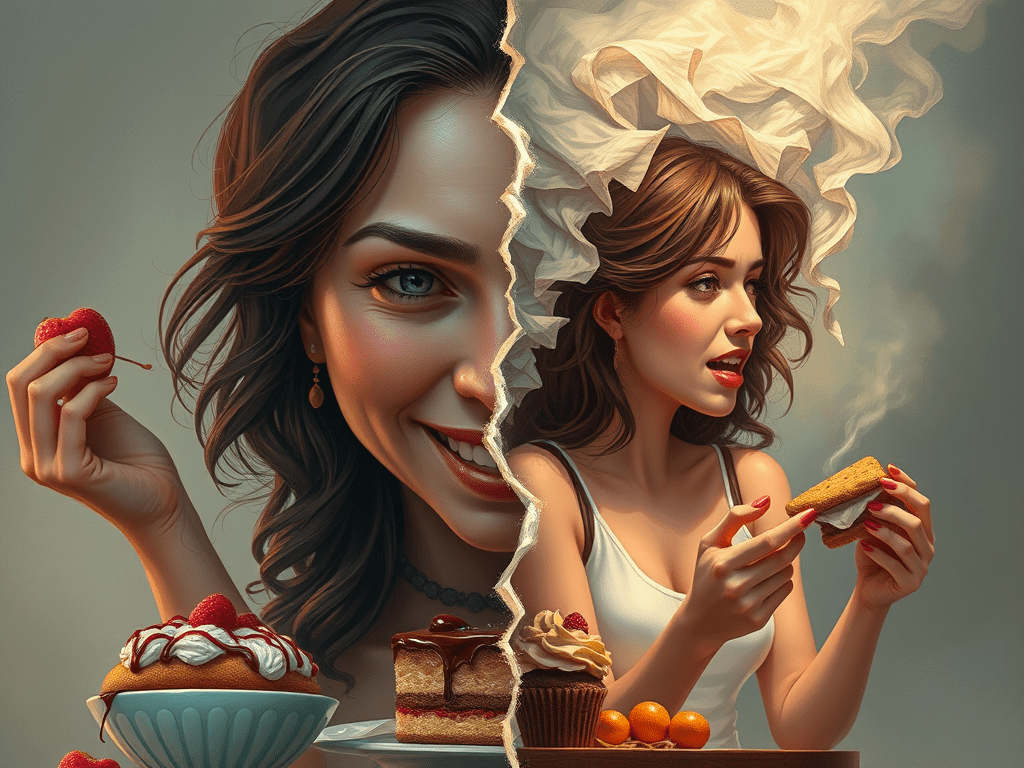
    Ozempification, a term drawn from the meteoric rise of the weight-loss drug Ozempic, refers not merely to physical transformation, but to the cultural obsession with algorithmic self-optimization—a reduction of the self into something that fits marketable templates of desirability, productivity, and visibility. In this sense, Ozempification is not about becoming one’s “best self,” but about conforming to the statistical average of social approval—a bland, performative version of humanity sculpted by metrics, surveillance, and commercial algorithms.

    In Black Mirror’s “Joan Is Awful” and “Rachel, Jack and Ashley Too,” examine how the process of Ozempification is portrayed as a crisis of identity and autonomy. How do these episodes dramatize the pressure to optimize or streamline one’s personality, body, or narrative to fit the expectations of corporate systems, streaming audiences, or digital avatars? And what is lost when the self is outsourced to algorithms or AI proxies?

    Sample Thesis Statement:
    While “Joan Is Awful” explores Ozempification through the algorithmic flattening of a woman’s messy humanity into a sanitized, marketable character, “Rachel, Jack and Ashley Too” presents a pop star whose real self is chemically sedated and algorithmically exploited to maintain a corporate-friendly brand—together, the episodes argue that Ozempification is not just an aesthetic pressure but a moral one, in which authenticity is sacrificed for compliance with machine-readable norms.


    Prompt 2:

    Plastic People: Ozempification, Femininity, and the Commodification of Pain

    Prompt:
    Ozempification, in its broader cultural usage, reflects a condition in which human identity is compressed into a palatable, profitable, and programmable version of itself, often mediated by AI, performance metrics, or pharmaceutical enhancements. Particularly for women, Ozempification demands that not only the body but also emotions, voice, and even pain must be flattened into consumable, cheerful data.

    Compare “Joan Is Awful” and “Rachel, Jack and Ashley Too” through the lens of Ozempification and its gendered implications. How are the women in these episodes coerced into performing streamlined versions of themselves for media systems that extract value from emotional trauma? How is rebellion framed—not as a revolution—but as a glitch in the system?

    Sample Thesis Statement:
    Both “Joan Is Awful” and “Rachel, Jack and Ashley Too” depict Ozempification as a uniquely gendered assault, in which female characters are turned into content-producing avatars that erase the messiness of their real emotions; the episodes critique a culture that demands women’s suffering be aestheticized, compressed, and sold back to audiences as inspirational entertainment.


    Prompt 3:

    Terms and Conditions Apply: Ozempification and the Surrender of Consent

    Prompt:
    In its metaphorical use, Ozempification speaks to a larger cultural trend in which people willingly or unknowingly sign away their depth, contradictions, and agency to systems that promise optimization. Whether through weight-loss drugs, algorithmic recommendations, or AI-generated personas, this phenomenon signals a loss of human autonomy dressed up as empowerment.

    In Black Mirror’s “Joan Is Awful” and “Rachel, Jack and Ashley Too,” analyze how Ozempification is less about force and more about engineered consent. How do these characters end up surrendering their identities to systems that claim to liberate them? What role does illusion—of control, of relevance, of success—play in facilitating that surrender?

    Sample Thesis Statement:
    Through Joan’s unwitting agreement to a soul-stripping user license and Ashley O’s drug-induced compliance with her brand’s transformation, both episodes reveal Ozempification as a process that cloaks dispossession in the illusion of choice, suggesting that in the age of algorithmic consent, autonomy is not taken—it’s given away in exchange for belonging.

  • Fear, Fat, and the Fickle Gods of Appetite: A Diet Writer’s Tale

    Fear, Fat, and the Fickle Gods of Appetite: A Diet Writer’s Tale

    Rebecca Johns spent decades whispering sweet, slimming nothings into the ears of women’s magazine readers—low-fat gospel by day, seductive chocolate cake recipes by night. In her Atlantic essay, “A Diet Writer’s Regrets,” she confesses the irony that while readers gobbled up her diet advice like SnackWell’s cookies, she was losing the battle against her own body. At twenty-three, fresh out of college and desperate to shrink her waistline, Johns eagerly volunteered for the magazine’s diet beat. She got the gig—and with it, a front-row seat to her own unraveling.

    As her writing career expanded, so did she. The more she advised others on portion control, the more food tightened its psychological grip on her. She became the oracle of thinness while secretly bingeing and self-loathing. And her audience? They were just as eager to read about lemon-water detoxes as they were molten lava cakes for their next dinner party. The entire racket, she realized, was built on contradiction and fantasy.

    By 2017, she weighed 298 pounds, with a BMI in “Call the doctor” territory. She had tried every acronym on the dieting menu—WW, keto, IF, CICO—but none of them stuck. Then, like a miracle in an injector pen, came Mounjaro. Prescribed in 2023, this GLP-1 wonder drug rewired her hunger like a tech support call for the brain. No more food noise. No more gnawing obsession. Eighty pounds evaporated. At last, she became the kind of person she had written about for thirty years but never met—herself, only thinner.

    But here’s the twist: now that she’s tasted liberation, she’s terrified. Insurance may soon ghost her, and Mounjaro, priced like a luxury car lease, will slip from reach. She knows too much to let herself go back, and not enough to know how to stay the course without her miracle molecule. The horror? She might have to white-knuckle her way through celery sticks and willpower.

    Johns doesn’t mince words when she calls body acceptance a euphemism for surrender. “If skinny were truly optional,” she writes, “we’d all choose it.” And she’s not wrong. If college is driven by fear of poverty, maybe dieting is driven by fear of dying too soon—or worse, returning to a body you fought so hard to escape.

    If fear gets the job done, Johns suggests, then let it. After all, if love won’t keep you away from the donuts, maybe dread will.

  • The First Cut is the Deepest: A Childhood Steeped in FOMO

    The First Cut is the Deepest: A Childhood Steeped in FOMO

    FOMO is never stronger than in childhood, when imagination stretches farther than reality can reach and the world feels just beyond our grasp. To a child, magic is real, enchantment is tangible, and some hidden paradise always seems just out of reach—close enough to see, impossible to touch. And nothing stings quite like realizing that somewhere, right now, a better world exists, and you are not in it.

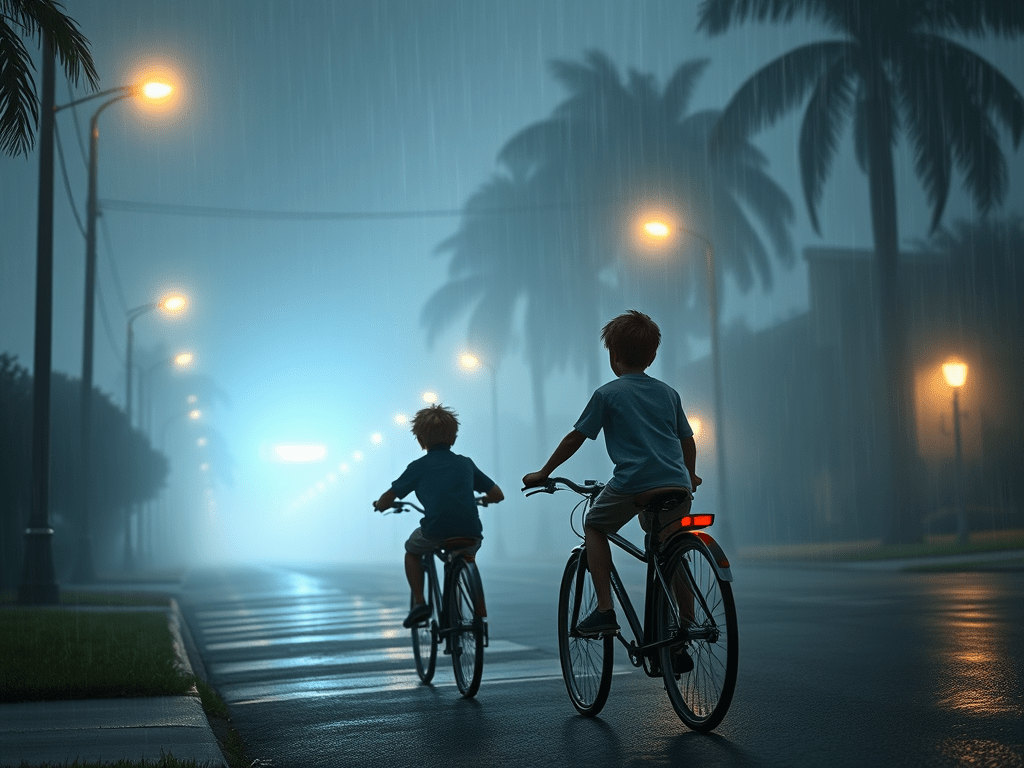
    I learned this lesson in the summer of 1968 in San Jose, California, while riding bikes with my neighbor, Billy Cantambay. We were two six-year-olds, circling Venado Court as a fine mist of summer rain fell around us, making the streetlights glow and the air smell like wet pavement and possibility.

    Then we saw it:

    A single blue light flickering in the distance, hovering above the unfinished housing developments at the edge of the neighborhood. It twinkled through the fog like a Christmas bulb detached from time, a spectral glow that neither of us could explain.

    “Christmas lights!” one of us shouted.

    “Christmas lights!” the other echoed.

    But why was Christmas happening over there and not here? Whose house was that? What kind of people lived beneath that glow? In my mind, I pictured a lone man inside—not lonely, just content—waking up to Christmas every day.

    For a week, Billy and I worshipped the light, riding our bikes in endless circles, pointing, speculating, longing. Then one evening, it was gone. No explanation. No goodbye. Just a vanishing act, leaving behind nothing but an ache—an inexplicable sadness, as if we had been denied entry into something greater than ourselves.

    Four years later, another dream slipped through my fingers, and this time, I cried about it.

    My fifth-grade friend Marc Warren had invited me to Piper’s Smorgasbord in San Leandro, California—a kingdom of pizza, fried chicken, and blueberry pie, where gluttony was not just encouraged but a sacred ritual. By the time we left, we were bloated with triumph.

    Driving home, still drunk on sugar and grease, we talked about our flying dreams.

    Not figurative flying—not ambition, not success—actual flying. The kind where you jump off a cliff and just go, gliding over the ocean, effortless, weightless, free.

    The dreams were so vivid—we could remember the wind in our faces, the rush of air under our arms, the certainty that we would never fall.

    And then, reality crashed down.

    We weren’t flying. We would never fly.

    The grief was immediate, existential, crushing.

    Two fifth-graders, staring out the car window, weeping over the cosmic injustice of gravity.

    That’s the cruelty of FOMO—it isn’t just about missing an event. It’s about missing a world, a place so real inside your imagination that its absence hurts like a phantom limb.

    Every culture has its own version of this unreachable paradise—a place forever close but forever out of reach.

    For me, it was Bali Ha’i.

    The song, sung so hauntingly by Juanita Hall in South Pacific, tells of an island just across the water—visible, tantalizing, but never quite attainable.

    I first heard it as a toddler in the Flavet Villages—a cluster of old military barracks repurposed as student housing in Gainesville, Florida, where my family lived near an alligator swamp and a stretch of forest.

    Most people would have found the place bleak. I found it enchanted.

    At dusk, my father and I would walk to the edge of the forest to visit a Mynah bird, which perched on the same branch every evening, watching us with an intelligence I couldn’t explain.

    The swamp smelled of alligator dung, a rank, pungent stench that somehow filled me with a sense of cosmic belonging.

    One night, as we stood beneath the Mynah bird, a distant radio played “Bali Ha’i.”

    The melody wove itself into the moment, perfectly harmonizing with the humid night air, the bird’s quiet watchfulness, and the unseen creatures shifting in the darkness.

    For the first time, I understood the ache of paradise lost.

    In 1965, another world out of reach found me.

    Her name was Barbara Eden.

    She lived inside a genie bottle—a glowing jewel of a home, lined with pink and purple satin, circular sofas, and mother-of-pearl inlays.

    To five-year-old me, this was the peak of human civilization.

    I didn’t just want to watch I Dream of Jeannie. I wanted to live inside that bottle.

    I imagined myself curled up on the velvet cushions, bathed in the warm glow of genie magic, whispering secrets with Jeannie as the outside world became irrelevant.

    When it hit me—really hit me—that I would never live in that bottle, that the closest I’d ever get was a TV screen and my own relentless imagination, I felt crushed in a way I had no words for.

    Even crueler?

    That gorgeous genie home was just a painted Jim Beam whiskey decanter.

    That’s what FOMO really is: intoxication by illusion.

    And long before Instagram, long before airbrushed vacations and curated feeds, I was already intimately familiar with its sting.