Tag: recipes

  • Why Good Salsa Matters

    Why Good Salsa Matters

    In 1967, my father took me to the grand opening of a Taco Bell in San Jose, California. This was my first encounter with fast food as spectacle—and with teenagers as a category of human being. They stood behind the registers in a loose formation, and every one of them appeared to be afflicted with the same alarming facial condition. Spots everywhere. An outbreak.

    I was five. I did the math available to me. Had a disease swept through the workforce? Did Taco Bell exposure cause lesions? Were the refried beans radioactive?

    I asked my father what was wrong with their faces.

    “They’re pimples,” he said. Then, without hesitation, he added, “According to Aristotle, God gives pimples to teenagers to teach them humility.”

    I knew immediately this was untrue. Not because I had read Aristotle—I hadn’t—but because I knew my father. This was him doing what he loved most: inventing authority on the spot. He also harbored a low-grade contempt for teenagers, whom he regarded as overconfident and undercooked. Acne, in his view, was divine pushback. Cosmic slapstick.

    The pimples unsettled me, but they did not interfere with my appetite. I ate my tacos and frijoles under the Taco Bell canopy, admiring the beige stone “Mexican” architecture—the aesthetic equivalent of a sombrero on a filing cabinet. The food itself was a novelty. We didn’t eat Mexican food, and Taco Bell certainly wasn’t Mexican food, but it was a portal. A gateway drug.

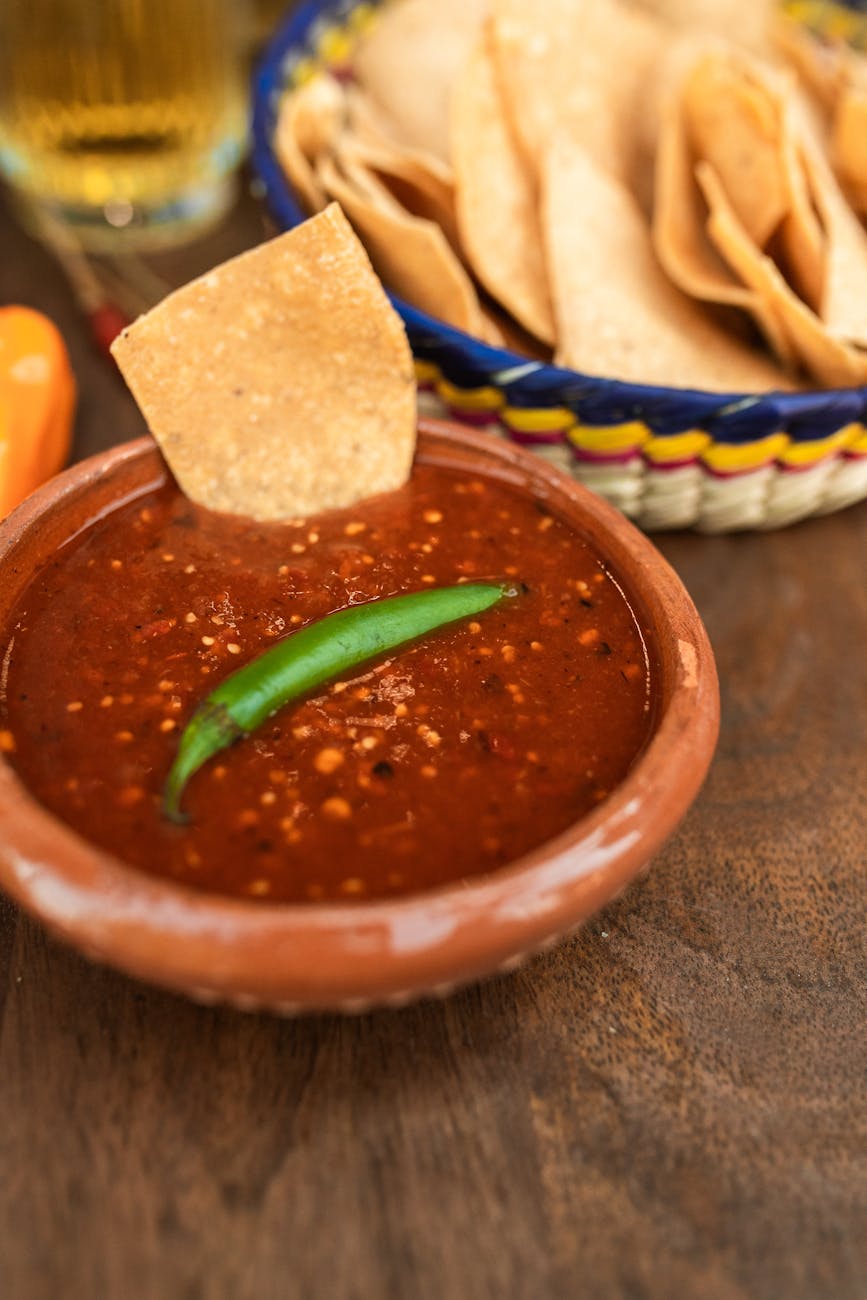
    Within a few years, my mother was making tacos, burritos, and enchiladas at home. Our Mexican-American neighbors, Mike and Felice Orozco, made salsa from ingredients grown in our own backyards. The salsa lived on the coffee table in a volcanic tureen, like something sacred and faintly dangerous. You could smell it the moment you walked into the living room—chilies, onions, garlic, alive and unapologetic.

    The color stopped you. A deep ruby red. Not restaurant red. Not industrial red. Real red. I have eaten excellent salsa over the decades, but nothing has ever matched the salsa Felice Orozco taught my mother to make in the late 1960s. Even now, if a Mexican restaurant brings out a pre-meal salsa that approaches that standard—even halfway—I take it as a sign of moral seriousness.

    Felice Orozco’s salsa wasn’t just delicious. It was philosophical. It carried an unspoken argument about what survives and what matters. When families pass down food traditions, they’re saying something quietly radical: some knowledge deserves care, repetition, and fidelity. This isn’t about novelty or performance. It’s not about artisanal swagger or bragging rights. It’s about love made practical. Wisdom with onions.

    So what was Taco Bell to me as a child? A desecration of Mexican food? No. It was a signpost. A crude outpost with a faint aroma of the real thing. It pointed toward a richer city beyond itself—a place where food meant connection, where flavors carried memory and generosity.

    The sign didn’t point south.
    It pointed to Felice Orozco’s house.
  • Bland Is My Brand: Confessions of a Simplicity Addict

    Bland Is My Brand: Confessions of a Simplicity Addict

    All I want is a simple life. Not monk-on-a-mountain simple—just orderly, disciplined, and quietly adult. The kind of life where the tools around me signal that I’ve stopped auditioning for chaos. My shaving ritual is a 1959 Gillette Fatboy and cheap double-edge blades. My coffee comes from freshly ground dark roast, brewed slow enough to qualify as a character-building exercise. On my wrist: a diver on rubber, because I value function over flash. My workouts happen in the garage with kettlebells. My wardrobe is a uniform—black athletic pants, dark T-shirts, sherpa sweatshirts when the temperature drops. My car is a Honda Accord: bland, boring, and unkillable. People mock its white-bread styling. I embrace it. Bland is my brand.

    Food, however, is where simplicity turns into a group project. My own diet dreams of sweet potatoes, steel-cut oats, buckwheat groats, millet, tofu sautéed in Trader Joe’s curry or peanut sauce, nutritional yeast sprinkled like the Parmesan of moral superiority. I’ll toss in tuna or salmon a few nights a week for variety. My family, meanwhile, wants chicken tenders and taco meat—organic, sure, but flown in from Australia and Argentina like first-class beef. I made a sincere pitch for a mostly plant-based household. It failed spectacularly. Democracy has spoken, and it wants ground beef.

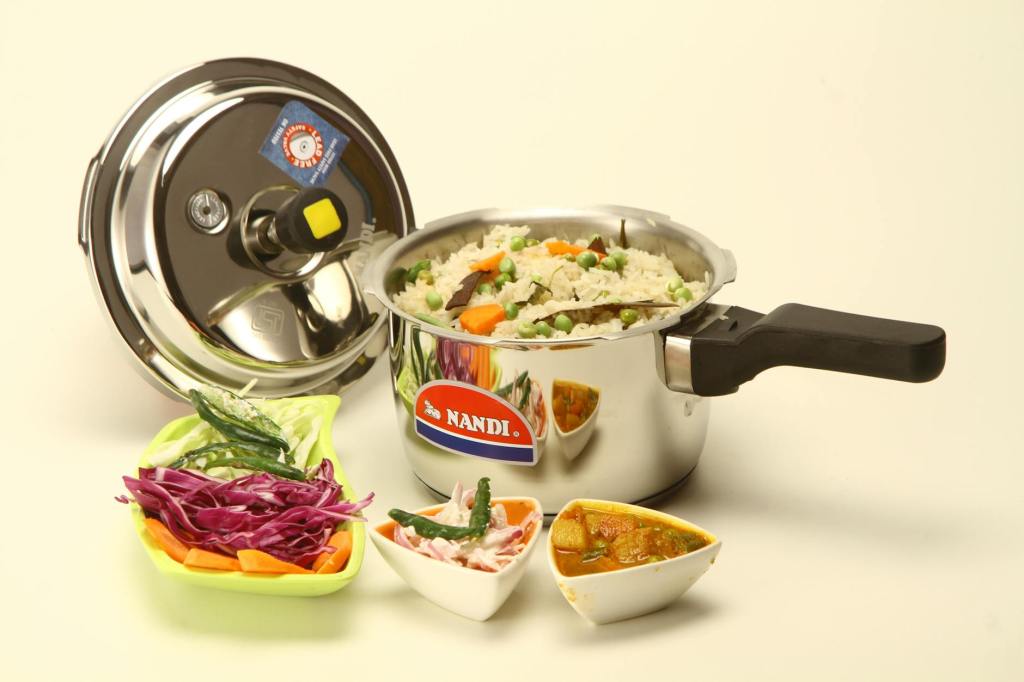
    Appliance-wise, I’m at a crossroads of excess. I own a rice cooker I never use and a giant Instant Pot I never use. They sit there like bulky monuments to abandoned ambition. I could use them for oats, groats, rice, and millet—or I could do what my soul really wants: get rid of both and buy one small pressure cooker that doesn’t hog the counter. Two out, one in. The math thrills me. My wife has approved the purchase. Now comes the real drama: do we donate the old machines, exile them to the garage, or perform the ritual drive to Goodwill? These are the kinds of ethical dilemmas that define modern minimalism.

    Of course, I feel a pang of guilt every time I buy something in the name of owning less. Nothing complicates a simplicity quest like consumer remorse. Forgive me my first-world angst. I suspect this whole project—paring down razors, beans, watches, and appliances—is really a coping mechanism. It’s easier to optimize your oatmeal workflow than confront the madness of the world. So here I am, scrolling Reddit, reading debates about rice cookers versus pressure cookers, pretending that the right appliance might finally bring me peace. Spoiler: it won’t. But it might make better millet.

  • Stir-Free Peanut Butter and the Slow Death of Self-Control

    Stir-Free Peanut Butter and the Slow Death of Self-Control

    Frictionless Consumption is the pattern by which ease replaces judgment and convenience overrides restraint. When effort is removed—no stirring, no waiting, no resistance—consumption accelerates beyond intention because nothing slows it down. What once required pause, preparation, or minor inconvenience now flows effortlessly, inviting repetition and excess. The danger is not the object itself but the vanished friction that once acted as a governor on behavior. Frictionless consumption feels like freedom in the moment, but over time it produces dependency, overuse, and decline, as appetite expands to fill the space where effort used to be. In eliminating difficulty, it quietly eliminates self-regulation, leaving users wondering how they arrived at excess when nothing ever felt like too much.

    ***

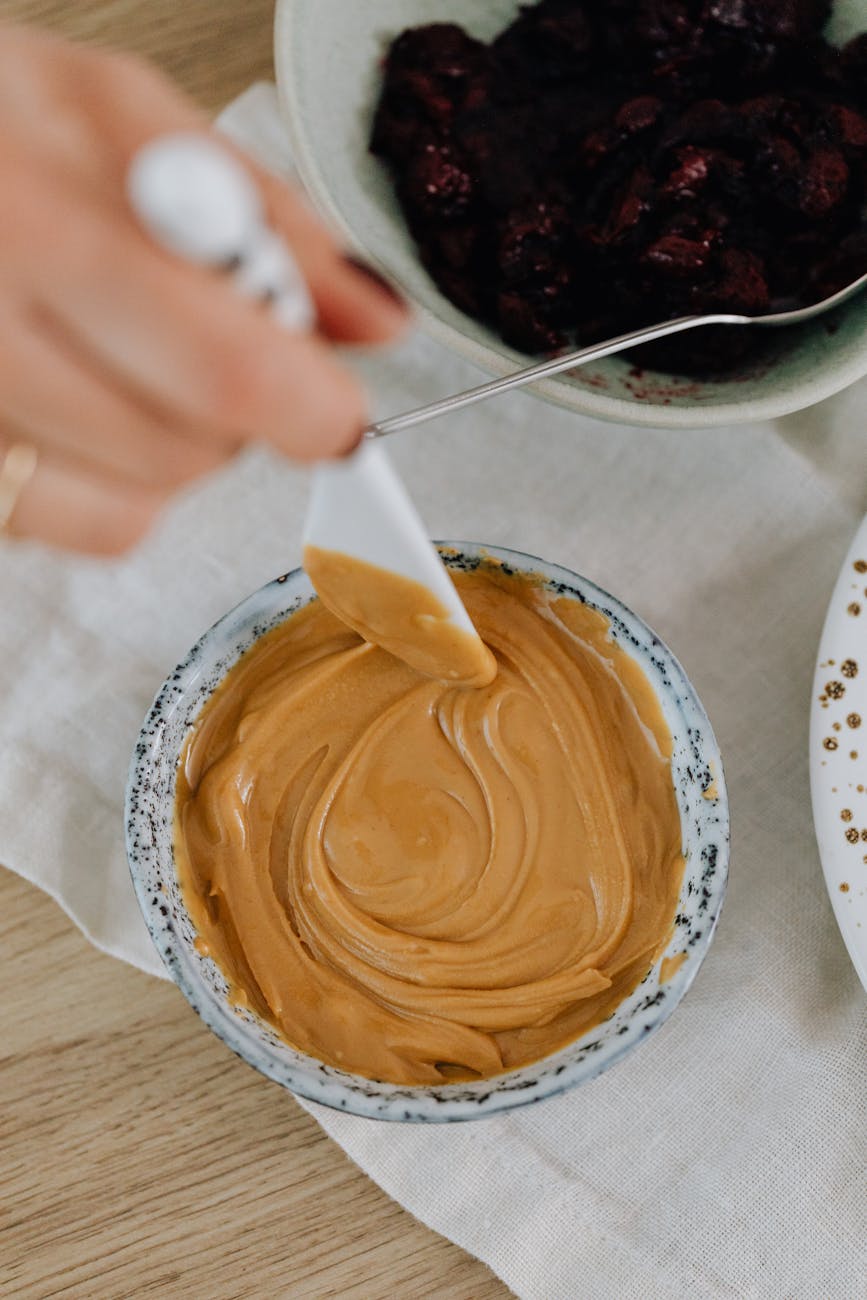
    For decades, I practiced the penitential ritual of mixing organic peanut butter. I wrapped a washcloth around a tablespoon for traction and churned as viscous globs of nut paste and brown sludge slithered up the sides of the jar. The stirring was never sufficient. No matter how heroic the effort, you always discovered fossilized peanut-butter boulders lurking at the bottom, surrounded by a moat of free-floating oil. The jar itself became slick, greasy, faintly accusatory. Still, I consoled myself with the smug glow of dietary righteousness. At least I’m natural, I thought, halo firmly in place.

    Then one day, my virtue collapsed. I sold my soul and bought Stir-Free. Its label bore the mark of the beast—additives, including the much-maligned demon, palm oil—but the first swipe across a bagel was a revelation. No stirring. No resistance. No penance. It spread effortlessly on toast, waffles, pancakes, anything foolish enough to cross its path. The only question that remained was not Is this evil? but Why did I waste decades of my life pretending the other way was better?

    The answer arrived quietly, in the form of my expanding waistline. Because peanut butter had become frictionless, I began consuming it with abandon. Spoonfuls multiplied. Servings lost their meaning. I blamed palm oil, of course—it had a face, a name, a moral odor—but the real culprit was ease. Stir-Free was not just a product; it was an invitation. When effort disappears, consumption accelerates. I didn’t gain weight because of additives. I gained weight because nothing stood between me and another effortless swipe.

    Large Language Models are Stir-Free peanut butter for the mind. They are smooth, stable, instantly gratifying, and always ready to spread. They remove the resistance from thinking, deliver fast results, and reward you with the illusion of productivity. Like Stir-Free, they invite overuse. And like Stir-Free, the cost is not immediately obvious. The more you rely on them, the more your intellectual core softens. Eventually, you’re left with a cognitive physique best described as a pencil-neck potato—bulky output, no supporting structure.

    The promise of a frictionless life is one of the great seductions of the modern age. It feels humane, efficient, enlightened. In reality, it is a trap. Friction was never the enemy; it was the brake. Remove it everywhere—food, thinking, effort, judgment—and you don’t get progress. You get collapse, neatly packaged and easy to spread.

  • Breakfast Grains and Other Existential Threats As I Embark Upon a Two-Month Vacation

    Breakfast Grains and Other Existential Threats As I Embark Upon a Two-Month Vacation

    Today is my last day of class before I’m loosed into a two-month intermission—a stretch of time that must be handled like a late-arrival character in a film. This visitor has a history with me, knows my flaws, and demands that I greet him with something better than the usual slouch and shrug.

    Naturally, I’ll rehab the shoulder, write, and play the piano. Exercise will take care of itself; addiction is nothing if not reliable. Food, however, is the saboteur lurking in my blind spot. My emotional attachments to breakfast grains would make a Freudian blush: buckwheat groats, steel-cut oats, rolled oats, vanilla protein powder, cinnamon, berries, nuts. The whole wholesome choir. Trouble is, those virtuous bowls can turn caloric faster than a Hallmark plot twist.

    These cereals, if I’m honest, are less about hunger and more about the psychic umbilical cord. They point back to Mother, the Womb, or—in Phil Stutz’s terms—the Comfort Zone, the Warm Bath. Linger too long in that morning porridge spa, and the scale begins to stage an intervention. Add in my peculiar habit of finding solace in true-crime documentaries—an activity best described as athletic only in its couch commitment—and the trajectory is clear: weight gain, sloth, entropy.

    Fortunately, I do maintain countermeasures. Kettlebells and the Schwinn Airdyne stand ready like loyal foot soldiers. Reading, writing, and piano practice also help stave off the creeping rot. And yes, I’ll continue shaving, if only to avoid becoming the bearded oracle wandering the streets muttering about glycemic index.

    This two-month hiatus is really a dress rehearsal for retirement, which is now only eighteen months and three semesters away. It would be dishonest to pretend the prospect doesn’t rattle me. Maintaining purpose without the scaffolding of a teaching schedule is its own moral test. I’m fortunate to have reached this threshold, but fortune alone won’t keep me from misusing it. All I can do is stay awake, practice discipline, and ask my Maker for the humility to spend the limited time left with intention rather than drift.

  • How to Shut Up a Yacht Critic: Feed Them Into Oblivion

    How to Shut Up a Yacht Critic: Feed Them Into Oblivion


    My wife and I have been watching the current season of Below Deck Mediterranean and have been impressed with the consistent food preparation of the eccentric chef Josh Bingham. He stormed off the boat when one of the charter guests, Carlos, lectured Josh on his inferior vegan fare. Too much starch, not enough creativity, not enough this, not enough that. One of the excruciating pleasures of this show is watching people whose expectations run so high that they become obnoxious. They spent so much money, they feel entitled to push the chef and other crew members to extremes in order to justify the price of a premium yacht adventure. 

    Josh’s food on this charter looked disappointing, a melange of mediocrity. The meals had no identity. He was trying to please too many palates. 

    One thing occurred to me: There are always a few vegans who charter these yachts. Some are more fake than others. They want the vegan halo but not the vegan austerity. In other words, they want rich, decadent meals, just as inviting as steak and lobster. They crave butter-rich sauces, glazed proteins, and seductive textures, only delivered via tofu and oat milk so their consciences remain stainless.

    Therefore, if I were Josh or any chef on one of these luxury yachts, I would have an emergency toolkit of go-to rich and decadent vegan meals. One that immediately comes to mind would be Thai peanut Satay with fried tofu and white rice. Serve it with Sichuan green beans and broccoli lacquered in sesame oil, give them some fresh sesame rolls dipped in olive oil and garlic, and that would surely shut them up and induce them into a long, satisfying nap. 

    If I were a chef on this show, I would want to create food so luxurious, decadent, and soothing, it would induce the charters into a deep sleep and thereby allow me and my fellow crew members to take a well-deserved break. 

  • Essay Prompt: Innovation, Identity, and the Meaning of “Authentic” Food

    Essay Prompt: Innovation, Identity, and the Meaning of “Authentic” Food

    In Chef’s Table: Pizza, Ann Kim rebuilds her life after a failed acting career by reinventing pizza through the lens of her Korean-American identity. Her dishes fold together memory, rebellion, shame, pride, and the complicated love between immigrant parents and their children. Yet the moment she alters traditional recipes or refuses rigid cultural expectations, she steps into a debate that surrounds many immigrant chefs:
    Does innovation honor one’s heritage—or distort it?

    In this 1,700-word argumentative essay, you will explore that tension by comparing Ann Kim’s story with the themes found in Ugly Delicious (Season 1, “Tacos”), selected episodes of The Taco Chronicles, Gustavo Arellano’s “Let White People Appropriate Mexican Food,” and Kelley Kwok’s “‘Not Real Chinese’: Why American Chinese Food Deserves Our Respect.” Your goal is to craft an argument that responds to the following question:

    When immigrant chefs remix, adapt, or modernize traditional dishes, are they betraying cultural authenticity—or creating a new form of belonging that honors their past in a more personal way?

    To answer this question, analyze how each show or essay portrays the cultural meaning of food—its connection to heritage, shame, pride, memory, and the immigrant experience. Pay close attention to visual rhetoric (music, tone, pacing, imagery), and consider how these choices shape our sense of what counts as “authentic.”

    Include at least two scholarly secondary sources on food studies, cultural identity, or immigrant narratives to deepen your analysis. These sources should help you place the shows and essays within broader academic conversations about authenticity, assimilation, and innovation.

    Your essay must include a counterargument-rebuttal section. Address the view that innovation leads to “tourist food” or watered-down Americanization, and explain whether these cases justify a purist stance toward food traditions—or whether purity itself is an illusion shaped by nostalgia, nationalism, or fear of cultural loss.

    Ultimately, your task is to show how food becomes a form of storytelling—and to argue whether storytelling requires faithful preservation, bold revision, or something in between.

  • The Day the German Chocolate Cake Lost Its Throne

    The Day the German Chocolate Cake Lost Its Throne


    The plan for my birthday was simple: a German Chocolate Cake from Torrance Bakery—rich, decadent, predictable, the sugary punctuation mark to another year survived. My wife, Carrie, placed the order, and I considered the matter settled. But on Sunday, three days before the big event, she blindsided me with an unsolicited miracle: a homemade hummingbird cake. It’s carrot cake’s tropical cousin—bananas and pineapple mingling like exiled fruits at a Southern potluck.

    She confessed she wanted to get me a “real” present, not something outsourced, so she compensated with butter, flour, and a whole lot of love. I ate three thick slices that Sunday afternoon, each forkful blurring the line between nourishment and seduction. “This is so wholesome,” I told her, “it doesn’t even count as cheating on my diet. It’s morally superior to carrot cake—and so dangerously good it might ruin Tuesday’s German Chocolate encore.”

    Carrie laughed, apologized for my impending existential crisis, and on Tuesday returned with the official cake: the grand Torrance Bakery specimen. We performed the ritual—candles, singing, obligatory family cheer—and I consumed an 800-calorie slice with the reverence of a man honoring tradition.

    It was moist. It was glossy. It was… fine. The caramel layer, usually the German Chocolate’s battleground of decadence, seemed to have surrendered before the fight began. I chewed, waiting for transcendence that never came. It struck me then: German Chocolate Cake is unreliable—half the time glorious, half the time cafeteria bland.

    The verdict arrived between bites. My lifelong allegiance had shifted. My mother’s German Chocolate Cake once ruled the birthday throne, but the crown has passed. The hummingbird cake reigns supreme—a moist, fragrant coup d’état led by pineapple and banana insurgents. The old guard has fallen. Long live the new confectionary monarch.

  • Self-Interest with Sauce: Why Your Finger Isn’t Worth a Million Lives

    Self-Interest with Sauce: Why Your Finger Isn’t Worth a Million Lives

    In How Adam Smith Can Change Your Life, Russ Roberts quotes the Talmudic sage Hillel: “If I am not for myself, who will be for me? If I am only for myself, who am I?” Roberts riffs on this by pointing out Smith’s hard edge: if you would sacrifice millions of lives to save a single finger, you are “a monster of inhuman proportions.”

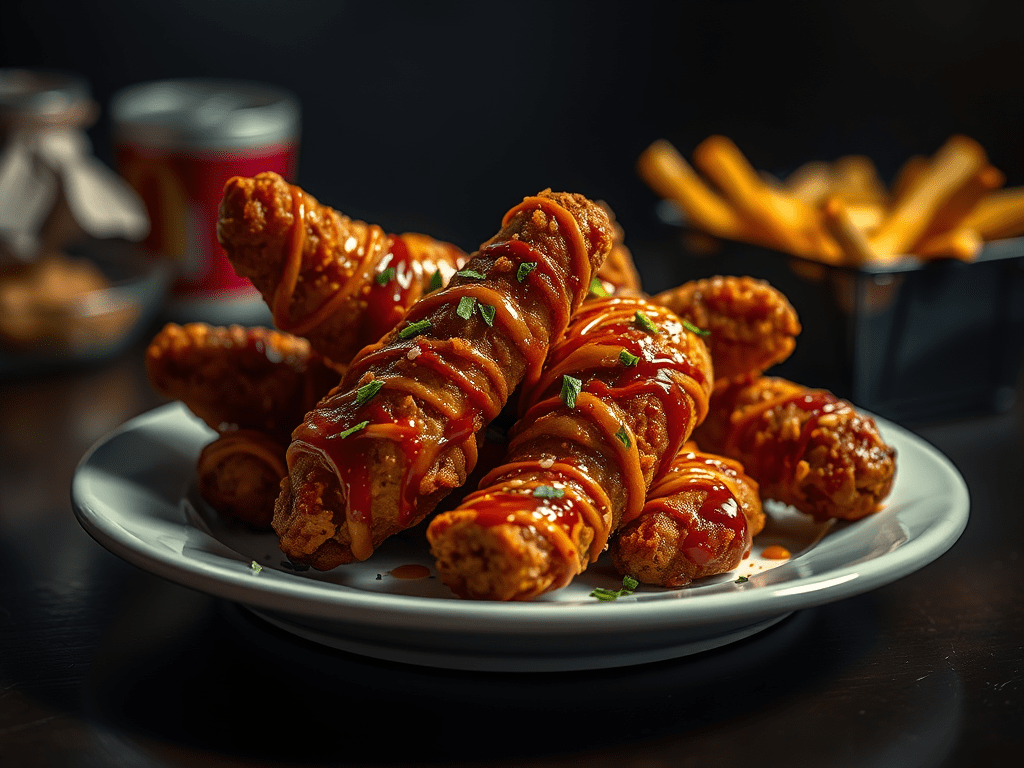
    Which, of course, made me think of chicken tenders. A few nights ago I had the Sweet Thai Glazed chicken at Starbird—fast food so transcendent it felt like a religious conversion, crispy shallots and herb aioli included. I wanted to go back the next day. And the next. My self-interest is crystal clear: eat more Starbird. The problem? My pursuit of gustatory bliss comes at the expense of chickens. Just as my hunt for bioavailable whey protein powders comes at the expense of cows.

    So—am I a monster? If I turned vegan, would that absolve me, or would I just uncover a longer list of moral failings still clinging to my name tag? Because the world isn’t eating less meat. It’s eating more, mostly factory-farmed, while pretending not to notice the conveyor-belt cruelty behind the menu. Ignore it long enough and moral numbness sets in, the kind that doesn’t just ruin animals but corrodes us too, spreading in ripples like bird flu, mad cow, or the next “mystery wet market disease.”

    And cruelty isn’t the only place where “self-interest” mutates into its evil twin. Consider America’s sacred cow: gun freedom. Other nations see mass shootings, change laws, and reduce tragedies. America, however, doubles down—choosing an idea of freedom that keeps killing us. Here, “self-interest” looks less like wisdom and more like suicide with better branding.

    That’s the trouble with self-interest. It’s a slippery little devil with at least two sharp horns. First: it lets us rationalize immoral behavior until we become monsters congratulating ourselves for our appetites. Second: it convinces us that policies which maim us—like endless guns, endless meat—are somehow in our “best interest.”

    In reality, self-interest is a hornet’s nest: buzzing passions, compulsive hungers, warped myths, and counterfeit happiness. To live in true self-interest means sorting out the destructive impulses from the behaviors that actually make us moral and happy. But most people never attempt the sorting, because the road to ruin is wide, comfortable, and paved with chicken tenders, while the road to virtue is narrow, steep, and has terrible Yelp reviews.

  • The Gospel of Broccoli

    The Gospel of Broccoli

    For the last two decades, I’ve gorged myself on a certain genre of book: part self-help, part pop psychology, part personal confession, and part armchair sociology. They’re all cut from the same cloth. Sometimes the title is blunt and monosyllabic—Grit, Flow, Blink. The kind of title that slaps you with FOMO and whispers: you’re missing out on the one great discovery of our age.

    The author inevitably casts themselves as an intellectual Indiana Jones, unearthing some dark corner of human frailty—our laziness, our compulsions, our doomscrolling brains—and holding it aloft like a cursed artifact. But don’t worry: they’ll swap your vice for a virtue. Where once was sloth, you’ll now install grit. Replace despair with tenacity, chaos with routine, cowardice with courage. Each quality is presented as if it were a rare mineral dug from the Earth’s molten core, not something your grandmother muttered at you over meatloaf.

    I’ll grant them this: these books are smooth. The anecdotes are lively, the arguments persuasive, the storytelling slick enough to convince you that eating your vegetables is an act of revolution. And yet—I wince. These books are built on a template so predictable you can spot the seams. They’re self-help in disguise, draped in academic robes to save the reader the shame of browsing the “Inspiration” aisle.

    Their authors remind me of medieval minstrels and troubadours, wandering into our living rooms and cubicles to hose down our cobwebbed souls with disinfectant. They don’t strum lutes anymore—they host podcasts, deliver TED Talks, and keynote conferences. We line up for their sermons because they make us feel clean. They are the secular priests of our age, baptizing us in chapter-length homilies and promising to purge our modern sins.

    The journey they lead us on is as predictable as a Disney ride: first the dark woods of dysfunction, then the bright meadows of redemption. The simplicity borders on smugness, and yet—I still buy the ticket. Why? Because sometimes I need to be scolded into eating my broccoli. These books are broccoli dressed up in filet mignon plating: familiar, obvious, slightly sanctimonious, but undeniably good for me in small, bitter doses.

  • The French Toast Zone and Other Dangerous Places

    The French Toast Zone and Other Dangerous Places

    Recently, I watched the new King of the Hill, where the gang has aged into the gentle patina of later life. In one scene, Hank, Peggy, and Bobby are seated at the kitchen table, devouring what looked like French toast or chocolate chip pancakes—something golden, sweet, and unapologetically bad for you. It was an ordinary family breakfast, the kind you imagine smelling from three houses away. Watching it felt like slipping into a warm bath of contentment. These were normal people, enjoying themselves, at ease in the sacred space I call the French Toast Zone.

    The French Toast Zone is the place where life is easy, breakfast is decadent, and you’re at peace with your waistline, your arteries, and your eventual mortality. But step into the biomarker minefield—calories counted, protein ratios calibrated, insulin spikes plotted like military campaigns—and you’re in the Restriction Zone. The mood shifts. Every bite is an act of negotiation with your cholesterol, your bathroom scale, and the grim actuarial math of your lifespan.

    Real life, of course, is not an all-inclusive stay in either zone. Most of us shuttle back and forth—half saint, half sinner—forever bargaining between the delights of German chocolate cake and the promise of three extra years of foggy-eyed longevity. Too much denial, and you die having lived as a monk in a bakery you never entered. Too much indulgence, and you’re trapped on the hedonic treadmill, sprinting after pleasures that get smaller the closer you get.

    Some people manage this dance effortlessly. They live in homeostasis, exercising moderation as naturally as breathing. I have never been one of these blessed creatures. As a teenage bodybuilder who saw biceps as salvation from low self-esteem, I learned early that moderation was for other people. My internal wiring is a one-way circuit from obsession to burnout and back again. I am, in short, Extreme Man.

    Extreme Man has his own archetype—a tragic, sweaty figure charging at his chosen folly until he mutates into something grotesque. Then comes the epiphany, the Damascus jolt that scrambles his molecules and sends him hurtling into a new life mission. It could be religion, music, bodybuilding, stamp collecting—doesn’t matter. Once the lightning strikes, moderation becomes an obscenity. He must convert the world.

    When I was a teenage Olympic weightlifter, I preached squats with the fervor of a street-corner prophet, convinced proper form could change lives. My audience—bewildered, politely nodding—failed to share my revelation. Some Extremes get written off as harmless cranks. Others, gifted with charisma, build religions followed by millions.

    The homeostatic types are often immune to these evangelists. They are already content. But for those of us who never knew balance, the siren call of radical change is intoxicating. We cling to the hope that the right transformation will lift us out of our malaise.

    Neither camp is wholly admirable. The balanced can model moderation—or smug mediocrity. The Extremes can inspire reinvention—or display unhinged egotism. The truth is in the messy middle, where both tendencies collide, and if you’re lucky, you learn from both without being consumed by either.