Tag: reviews

  • The Gospel According to Fran Lebowitz

    The Gospel According to Fran Lebowitz

    To stay young, I don’t just need a healthy body—I need a mind that isn’t turning into attic storage. My role model in this department is Fran Lebowitz, the humorist who travels the world armed with nothing but her brutally honest intelligence. Her worldview is diamond-cut: she adores New York and despises technology. She refuses to drive a car, touch a smartphone, or even acknowledge a laptop’s existence. Writer’s block? She treats it like a houseguest who overstays for a few decades. Talking is her chosen weapon, so potent that publishing books has become optional.

    Fran is an atheist—not the timid, hedging kind, but a certifiably confident one. She has no worries about the soul, no anxieties about the afterlife, no guilt about her misanthropy. Her biggest spiritual concern is locating a decent bagel.

    Her lack of religiosity hasn’t hindered her friendship with Martin Scorsese, the Catholic titan of cinema. They linger in New York together, trading stories about the old city and reveling in their shared devotion to art—and to complaining eloquently about everything else.

    My mind would be far less cluttered if I possessed Fran’s secular serenity, but I’m built more like Scorsese. I’m a tormented soul, forever plunging into questions about sacrifice, guilt, depravity, and redemption. I couldn’t live like Fran even with a decade of training. I’m hopelessly Marty. But at least I can imagine that if I ever met Fran, she wouldn’t dismiss me for my melancholic leanings. She might dismiss me for my mediocrity or any bland remark that escaped my mouth, but at least her reasons would be earthly.

    To spend an hour at dinner listening to Fran Lebowitz would be a balm—more philosophically satisfying than any bestselling thinker’s 700-page tome. It will never happen, of course. But fortunately, I can find Fran Lebowitz on YouTube. 

  • In Defense of Watching True Crime

    In Defense of Watching True Crime

     A couple of weeks ago my wife DMed me an Instagram reel: one reviewer, dozens of true-crime docuseries. I pressed play and fell down the shaft. I binged everything—some episodes like gravel in the throat, others slick as a thriller—and realized I was hooked the way novels used to hook me: late nights, one more chapter, living on cliffhangers and bad coffee.

    A year ago I would’ve dismissed the whole genre as tabloid embalming fluid: pain turned into programming. That was the lazy take, the one you reach for when you haven’t looked long enough. The better work in this space isn’t cheap; it’s meticulous. At its best, it has social value.

    Watch the detectives. The strong series showcase minds like scalpels—profilers knitting together motive and method, investigators reconstructing a life from fibers and timestamps. The good ones don’t myth-make; they interrogate reality. Their craft can outstrip a screenwriter because the stakes aren’t applause—they’re truth and, sometimes, prison.

    Credit the pursuit, too. The suspect is slippery, the evidence thin, and still the chase continues—phone records, shoe tread, the geography of a lie. You can see how the work rewires them. They read a face like a ledger. They separate panic from performance. They carry that calibration into ordinary life, for better and worse.

    But the badge isn’t a halo. Some episodes show coercive interrogations, tunnel vision, a theory clung to past its sell-by date while exculpatory facts stack up in the corner. Those missteps belong in the record. A genre that can praise tenacity should also indict certainty when it curdles.

    What keeps me watching, beyond craft and cautionary tales, is the way communities assemble under pressure—search parties in neon vests, casseroles and candles, volunteers mapping creek beds while the cameras spin. These stories remind you how much ordinary goodness survives the worst day a town can have.

    Then there are the perpetrators, often undone by their own theater. The vanity is operatic: cryptic boasts, trophies kept, shoplifting while on the run because entitlement feels bulletproof. Not all are violent; some are artists of fraud whose lies cascade through bank accounts, marriages, and nervous systems. The harm is quieter, not smaller.

    The hardest stretch is the parents—the permanent gray in the eyes, the architecture of a life collapsed on one missing pillar. They stay decent, they organize scholarships and vigils, they become advocates—but you can see the subtraction. A part of them is gone, and the camera can’t restore it.

    I do feel the moral splinter: I’m consuming narratives built from someone else’s worst night. There’s a voice that hisses, How dare you. And a voice that answers: Then look harder. Don’t watch for spectacle; watch to learn—about procedure, about predation, about how to be a better neighbor and a sharper juror. The difference between voyeur and witness is attention and intent.

    So here I am, converted, with reservations. The good series map the borderlands between justice and error, courage and vanity, community and collapse. They don’t restore innocence; they invoice it. If I keep watching, it’s because the genre—at its best—insists on seeing clearly, and because clarity, though it stings, is a civic skill worth practicing.

  • The Shock Jock Who Forgot to Pivot

    The Shock Jock Who Forgot to Pivot

    I still tune in to Howard Stern now and then, but most of what I hear these days sounds like a half-hearted reprise of his old shtick—sophomoric gags, body-function chatter, and adolescent innuendo that once jolted the airwaves but now just sag. In his prime, Stern was combustible: he blended pranks, irreverence, and enough genuine insight to keep his circus from collapsing. He earned his Radio Hall of Fame status by kicking down doors no one else dared touch.

    Now, as rumors of his retirement bubble and I endure his weary, autopilot banter with Robin, three thoughts claw at me. First: they don’t sound like they’re having fun anymore. This is a zombie act, plodding through the motions. Second: filling three hours of airtime every single day is a Sisyphean curse—nobody has that much worth saying without stuffing the sausage with sawdust. Third: we all have a shelf life. Relevance expires, and dignity demands a graceful exit.

    Stern’s curse is worse than most. His career persona—edgy, raunchy, forever pandering to prurience—has gone stale, but he’s trapped in it. The irony is brutal: a man smart enough to evolve chose to calcify. A decade ago, he could have pivoted, shed the shock-jock skin, and re-emerged as the wise veteran with conversations that mattered. Instead, while podcasts multiplied like caffeinated rabbits, he let himself be left behind.

    But maybe it isn’t too late. Imagine Howard 2.0: no longer the carnival barker of Sirius, but the philosopher-in-residence of his own café, sipping coffee and musing about culture, mortality, and meaning. Not fifteen hours of filler a week, but four hours of distilled insight—an hour twice a week, sharp and substantive. Podcasting is radio’s heir, and radio is in his DNA. Reinvention is the only antidote to irrelevance, and if he can summon the nerve, Stern could still surprise us.

  • C.Crane Solar Radio: Attention to Details Makes It a Winner

    C.Crane Solar Radio: Attention to Details Makes It a Winner

    20250115_153540

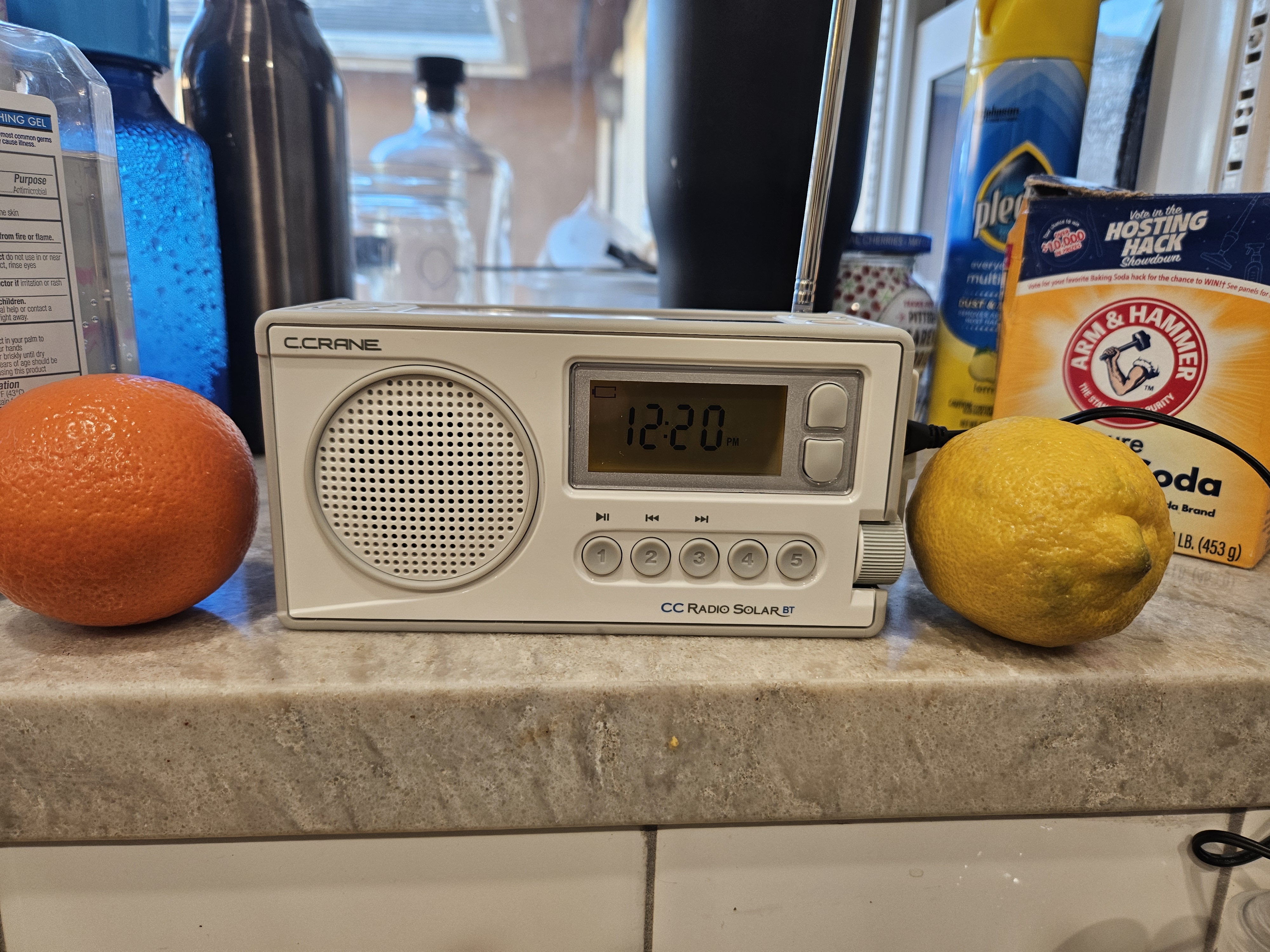
    The C. Crane Solar Radio, paired with the optional AC adapter, arrived on Day 9 of the Los Angeles fires—perfect timing for some disaster preparedness. My first impression? Surprisingly compact and, dare I say, stylish. Its buttons and controls are refreshingly intuitive, a rare quality in emergency gadgets that usually look like they were cobbled together by paranoid survivalists.

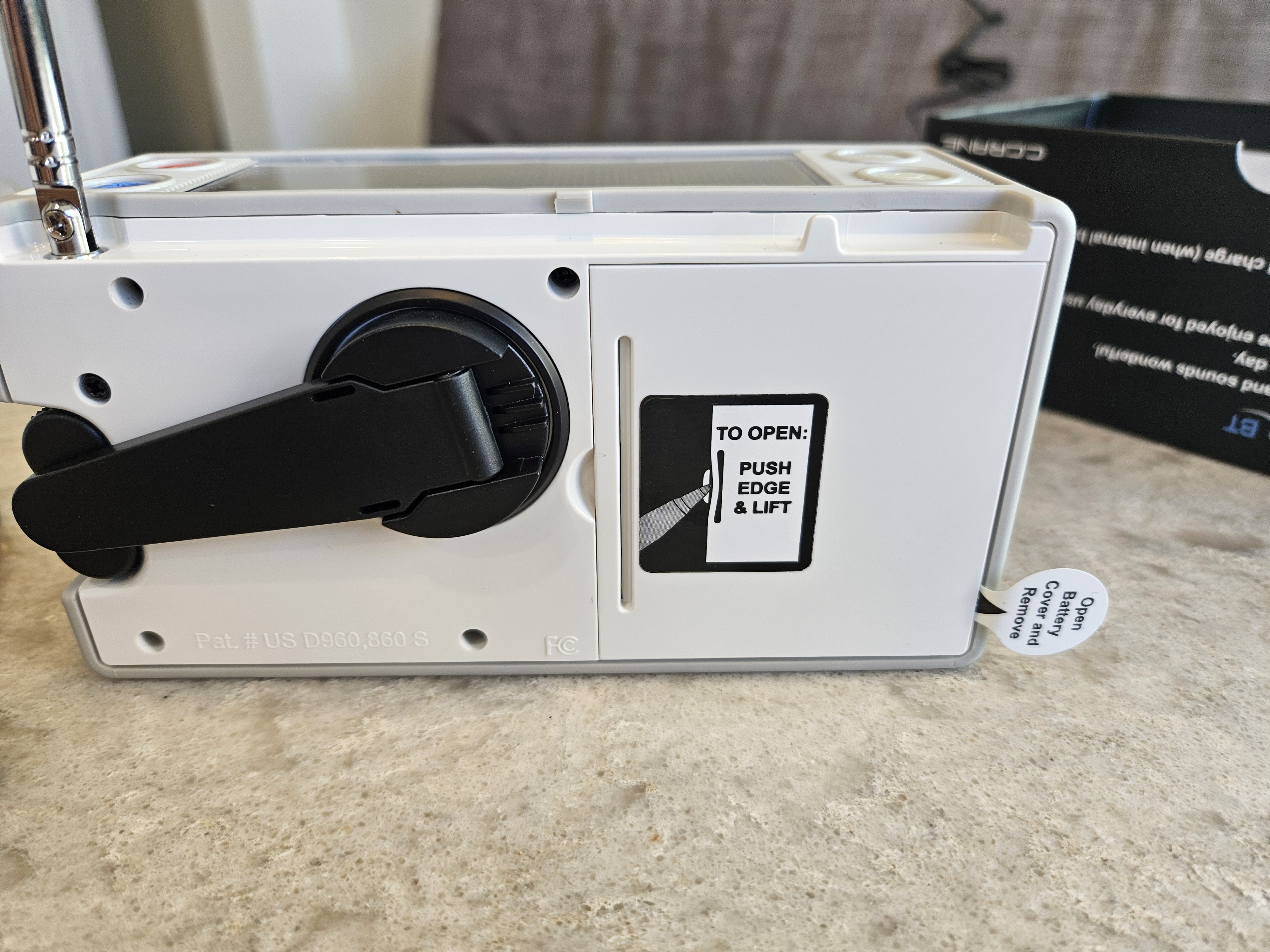
    Then I met the battery door—a stubborn slab of plastic that wouldn’t budge. My fingers failed, so out came the Swiss Army knife, turning what should’ve been a simple battery swap into minor surgery.

    20250115_150949

    Once powered up (on batteries, to avoid interference), I tested FM reception. Not bad. It’s sensitive, though slightly weaker than my Sangean PR-D12 when pulling in 89.3, a notoriously tricky station here in Torrance. Still, it handled it well. KUSC 91.5, though, was a lost cause—same as the PR-D12. Odd, since during my obsessive radio blogging days in the mid-2000s, 91.5 was crystal clear. Maybe it’s not the radios. Maybe it’s today’s electromagnetic smog choking the airwaves.

    Later that evening, as I tackled the dishes, the FM sound impressed me. 89.3 came through loud and clear, delivering crisp voices on the news.

    AM performance? Initially disappointing—distant, hollow, like voices echoing from a well. My friend Mark reminded me that modern homes are electronic war zones. Between Wi-Fi routers, smart devices, and God knows what else, AM hardly stands a chance.

    But then I tweaked the settings. Switching the bandwidth filter from 2.5kHz to 4kHz transformed the AM performance. Suddenly, it shined.

    The speaker is pleasant but modest. This is a small radio, after all. Luckily, the hidden High Power Audio Mode (press buttons 1 and 5) gives it a subtle boost—not exactly concert hall quality, but enough to rise above kitchen noise.

    Where the C. Crane Solar Radio really excels is in its power versatility—two battery types, a solar panel, and a hand crank. Practical, yet it doesn’t scream apocalypse gear.

    So, where does it fit in my collection? The PR-D12 stays in the garage for kettlebell workouts. The Solar Radio earns a spot over the kitchen sink, likely becoming my wife’s go-to. With solid FM performance, customizable AM tuning, and thoughtful design, the C. Crane Solar Radio gets the details right—and comes out a winner.

    20250115_150937
  • Watch What Implodes: Andy Cohen’s Domestic Cinematic Universe

    Watch What Implodes: Andy Cohen’s Domestic Cinematic Universe

    As Stephen Colbert’s tenure winds down on CBS—another headstone in the graveyard of “Late Night”—one might conclude that the talk show format, with its recycled monologues and tepid celebrity banter, is quietly expiring in a corner somewhere, clutching its blue cards and mug. But while traditional television gasps for relevance, the Andy Cohen Empire on Bravo is not merely surviving—it’s reproducing. Rapidly. Like reality TV kudzu.

    Welcome to the Bravo Matrix, where the camera never blinks and no martini goes unslurped. This isn’t scripted television, not officially. But let’s not be naïve—these shows are engineered with the precision of a Swiss watch, albeit one dipped in rosé and glitter. The “reality” may be cooked, but it’s a soufflé audiences devour by the season.

    Each cast member, whether they’re a Botoxed real estate maven, a Charleston trust-fund Casanova, or a spiritual advisor with a skincare line, is cast not for depth but for maximum combustion. These people may or may not be exceptional, but they do one thing very well: live out their personal chaos on camera while clawing for love, status, clarity, and closet space. We watch, transfixed, as they spiral, rebound, or occasionally evolve—all in HD.

    And let’s not forget the ambiance. These shows are drenched in lifestyle pornography: rooftop bars, poolside lounges, candlelit dinners served with sizzling gossip and artisanal side-eye. If television is the new hearth, Bravo is the scented candle flickering at its center—equal parts relaxing and mildly toxic.

    The producers, ever mindful of narrative drag, inject chaos agents—new cast members with just enough lip filler and latent sociopathy to blow up the group chat. This keeps the plot moving and the blood-pressure elevated. If a character becomes too boring or too stable, they’re exiled with the same indifference one might apply to expired yogurt.

    But for the chosen few—those rare personalities who deliver madness with consistency—tenure is real. A Bravo veteran can live a decade on screen, morphing from wide-eyed ingenue to meme-fodder matriarch, all while cultivating their social media following like a side hustle with God-complex benefits. We watch them grow, or don’t. We root for them, or we don’t. Either way, we’re still watching.

    And then there’s Watch What Happens Live, where Cohen himself presides like a smirking Zeus on a pleather throne, guiding reunion specials, feuds, and audience thirst with a cocktail in hand. What started with The Real Housewives of Orange County in 2006 has mushroomed into 75 interwoven shows, with spin-offs, reunion shows, and cameos that make the Marvel Universe look like a provincial theater company.

    In the end, what Vince McMahon did for wrestling—turning it into a steroidal psychodrama of spectacle and tribal allegiance—Andy Cohen has done for domestic warfare. And if the ratings are any clue, Cohen’s steel-clad battalion of brunch brawlers and dinner-party divas is winning.

  • Gene Wilder’s Prelude to Mischief and Mayhem

    Gene Wilder’s Prelude to Mischief and Mayhem

    In fourth grade at Anderson Elementary in San Jose, our teacher cracked open Charlie and the Chocolate Factory and unleashed a literary sugar bomb on the classroom. The characters didn’t just leap off the page—they kicked down the door of our imaginations and set up shop. The book hijacked our brains. Good luck checking it out from the library—there was a waiting list that stretched into eternity.

    A year later, the film Willy Wonka and the Chocolate Factory hit theaters, but my parents, apparently operating under some moral suspicion of Hollywood whimsy, refused to take me. I wouldn’t see it until the VHS era, when cultural consensus finally upgraded it to “beloved classic” status. That’s when I met Gene Wilder’s Wonka—equal parts sorcerer, satirist, and deranged uncle.

    The best moment? Easy. He hobbles out, leaning on a cane like a relic of Victorian fragility—then suddenly drops the act, executes a flawless somersault, and stands up with a gleam that says, I know exactly what game I’m playing, and so should you. That glint in his eye, equal parts wonder and judgment, has haunted me for decades. His entire persona is a velvet-gloved slap to the smug, the spoiled, and the blissfully ignorant. He isn’t just testing children—he’s taking society’s moral pulse and finding a weak, sugary beat.

    That gleam stayed with me. So much so that I wrote a piano piece inspired by Wilder’s performance. I called it Gene Wilder’s Prelude to Mischief and Mayhem. The first movement was a nightmare—rewritten more times than I care to admit. Oddly, the second and third movements came first, composed together in the aftermath of my mother’s passing on October 1, 2020. Nearly five years later, I finally completed the first movement, like some strange reverse birth.

    The result? A tribute in three acts to the sly grin, the righteous mischief, and the bittersweet brilliance of Gene Wilder—a man who, like the best artists, never let kindness become cowardice or magic become a mask for mediocrity.

  • My Midyear Top 5 Music Obsessions of 2025 (So Far)

    My Midyear Top 5 Music Obsessions of 2025 (So Far)

    Let’s call this what it is: a midyear soundtrack to my emotional needs, taste refinement, and irrational belief that a great song can still restore one’s faith in the universe. Below are five songs from 2025 that didn’t just catch my ear—they staged a full occupation of my psyche.

    1. Billie Eilish – “Wildflower”

    Boomers love to chant, “They don’t make music like this anymore,” usually while polishing their vinyl copies of Rumours and sipping overpriced Malbec. To which I say: Have you heard “Wildflower”? Billie Eilish wrote a melody so hauntingly beautiful and emotionally precise it might just slap Stevie Nicks across the astral plane. “Wildflower” isn’t nostalgic—it’s timeless, and it makes the whole “they don’t make ‘em like they used to” argument sound like a radio station that’s lost its signal.

    2. Miley Cyrus – “Flowers” (Demo Version)

    Forget the radio-polished, empowerment-anthem version designed for spin class playlists and morning talk shows. The demo is the real deal. Stripped down and raw, it sounds like Miley walked into the studio, ripped her ribcage open, and hit record. It’s not just about self-love—it’s a reckoning. A breakup song without the mascara, just bone-deep clarity and vocal grit. If the original was a brand campaign, the demo is the heartbreak behind it.

    3. Lana Del Rey & Father John Misty – “Let the Light In”

    This track is so beautiful it feels like eavesdropping on two fallen angels trying to talk each other back into heaven. I’m humbled, elated, and borderline offended by how good it is. If I’d played this song for Anthony Bourdain who once told KCRW’s Evan Kleinman that during his Applebee’s-induced existential spiral he lost faith in the human soul. I wish I could have played him “Let the Light In.” Perhaps he would have reconsidered the cosmic bleakness of mediocre mozzarella sticks. Lana and Misty have composed a shimmering argument for the existence of the human soul. It should be piped into the waiting room between this world and the next.

    4. Strawberry Guy – “As We Bloom”

    Strawberry Guy continues his gentle tyranny over my playlists. “As We Bloom” is another heart-melting, dew-soaked track that could have been transmitted from the dream-state of a lonely Victorian poet. He has the rare talent of making everything feel sacred and a little tragic, like a faded birthday card found in a drawer during a move. In vibe and texture, he’s a spiritual cousin to The Innocence Mission, and I say that with reverence.

    5. Olivia Dean – “Touching Toes”

    This song made me forget my age, my responsibilities, and that I’m not, in fact, swaying in slow motion through a desert cantina in the 1970s. “Touching Toes” is sultry, jazzy, and unselfconsciously whimsical—pure auditory flirtation. It gives me the same odd, disorienting confidence that Maria Muldaur’s “Midnight at the Oasis” once offered: a delusion of magnetism and a sudden desire to wear silk and speak in metaphors. Olivia Dean makes me feel like maybe I am the moment.

  • The Sundays Can’t Come Back—They Never Wanted to Be Here

    The Sundays Can’t Come Back—They Never Wanted to Be Here

    I estimate there are maybe 50,000 diehard fans of The Sundays left on Earth—middle-aged romantics who imprinted on their music in their twenties like baby ducks and have carried that delicate soundscape in their bones ever since. These are the ones still haunting Reddit threads and aging fan forums, half-pleading, half-praying for Harriet Wheeler and David Gavurin to reemerge from their English countryside exile and record something—anything—before they fully dissolve into myth.

    I count myself among them. I think “You’re Not the Only One I Know” is the most beautiful song ever written, full stop. And yes, I have complicated feelings about its sudden afterlife on TikTok. On one hand, I’m glad new ears are discovering it. On the other, I want to slam the door and shout, “Get off my lawn—it’s my song.” Like any relic of private beauty, it feels stolen once it trends.

    But here’s the thing: The Sundays aren’t coming back. And they shouldn’t. Their music is a love letter to solitude. It’s woven from the threads of retreat, quiet heartbreak, and the refusal to participate in the world’s noisy charade. Every line aches with the voice of someone who’d rather be home. A comeback would be a contradiction—like resurrecting Greta Garbo to guest on a reality show. Their brilliance was their withdrawal.

    Take “You’re Not the Only One I Know”—the narrator, calmly stationed in a chair, shooing people away like pigeons. Or “Here’s Where the Story Ends,” where every attempt at connection curdles in the air. Or “My Finest Hour,” which ends not in triumph but in a gentle surrender to domestic retreat. These aren’t anthems for a reunion tour. They’re hymns of hibernation.

    The Sundays were never built for comebacks. Their art was a form of aesthetic convalescence, a music of shy resilience. Their narrators, like the band itself, are Edward Scissorhands types—fragile, inward, best left unbothered in their Victorian turret. If they returned, they wouldn’t be The Sundays. They’d be Tuesday Afternoon.

  • Manchild Mail Euphoria: A Case Study in Horological Regression

    Manchild Mail Euphoria: A Case Study in Horological Regression

    If you’re a watch obsessive—and let’s face it, if you’re reading this, you probably are—then you need to come to terms with a condition known as Manchild Mail Euphoria: the dizzying, slightly shame-soaked high of waiting for your grown-up toy to arrive in the mail, fully aware that you’re a functional adult behaving like a child hopped up on Capri Sun and Saturday morning cartoons.

    Here’s how it manifests:

    A man—chronologically mature, fiscally semi-responsible, and in possession of at least one mortgage calculator app—orders a watch. Not just any watch. A timepiece so beautiful, so precise, so him, that he spirals into a state of pre-delivery delirium. He begins checking the tracking number with the devotion of a Wall Street analyst watching a volatile stock. “Shipment departed Osaka.” His soul ascends.

    But it doesn’t stop there. To sustain his anticipation, he re-watches YouTube reviews of the very watch he just purchased. Multiple times. Same watch, same narrator, same B-roll of gloved hands rotating the bezel in soft lighting. He knows it’s ridiculous. He watches anyway. It’s horological foreplay.

    As the days crawl by, he regresses—emotionally, spiritually, perhaps hormonally—back to the age of nine, when he mailed seven cereal boxtops to Battle Creek, Michigan, in exchange for a “free” plastic submarine that arrived six to eight weeks later in a box of dreams. Except now, the stakes are higher and the shame is real. Because unlike the submarine, this watch costs $1,500 and he’ll be explaining it to his spouse with a sentence that begins, “Well, technically, I sold two others…”

    He feels the absurdity of it all, of course. He knows that waiting for this package is giving him the same endorphin rush as a contestant winning a brand-new car on Let’s Make a Deal. But he can’t help it. The heart wants what it wants, and in this case, the heart wants sapphire crystal, applied indices, and 200 meters of water resistance he’ll never actually test.

    Manchild Mail Euphoria is real. It’s irrational, embarrassing, and deeply human. And the worst part? The moment the package arrives and he slices open the box like it contains the Ark of the Covenant… he’s already thinking about the next one.

    Because nothing tells time quite like your own arrested development.

  • The Beautiful Unwearable

    The Beautiful Unwearable

    Do you own a Beautiful Unwearable? If so, you already know the cruel paradox: the watch that steals your breath every time you look at it, yet somehow never makes it onto your wrist.

    Picture this: you’re hypnotized by a $2,000 Seiko Astron—a stunner whose build quality punches well above its weight class, easily rivaling watches priced four digits higher. Every gleam of that GPS-synced, zirconia ceramic bezel sends a little burst of dopamine through your bloodstream. So you do what any horological romantic would do: you pull the trigger. A week later, it’s in your hands, fresh from Japan, glinting like a Bond villain’s cufflink.

    And then… nothing.

    You stare at it. You admire it. You photograph it from five angles under different lighting conditions. But when it’s time to choose a watch to wear—on a walk, to the store, or even to teach class—it’s always your rugged dive watch that gets the call. The Astron? It’s too dressy, too refined, too… aspirational. Like buying a tuxedo when your calendar is a wasteland of Costco runs and Zoom meetings.

    So it sits. Day after day. In its cushioned little coffin, gorgeous and neglected, whispering, “You’re not worthy of me.” Unlike wall art, it can’t be displayed; unlike a tool watch, it doesn’t beg to be worn. It becomes horological purgatory—a $2,000 museum piece trapped in a drawer.

    Personally? I’ve never bought an Astron. Why? Because I’ve already mentally lived this scenario. I’ve played out the whole Shakespearean arc in my head: love at first sight, the impulsive purchase, the honeymoon glow… followed by guilt, alienation, and silent shame. I don’t need a Beautiful Unwearable in my collection to know it would haunt me like a luxury ghost.