Tag: reviews

  • If You Only Watch One Black Mirror episode, Let It Be “Joan Is Awful”

    If You Only Watch One Black Mirror episode, Let It Be “Joan Is Awful”

    If you only watch one episode of Black Mirror, let it be Joan Is Awful—especially if you have a low tolerance for tech-dystopian fever dreams involving eye-implants, social scores, or digital consciousness uploaded to bees. This one doesn’t take place in a dark tomorrow—it’s about the pathology of right now. It skewers the Curated Era we already live in, where selfhood has been gamified, privacy is casually torched, and we’re all trapped in the compulsion to turn our lives into content—often awful, but clickable content.

    Joan, the title character, is painfully ordinary: a mid-level tech worker trying to swap out one man (her manic ex) for another (her milquetoast fiancé) and coast into a life of retail therapy and artisanal beverages. Her existence—Instagrammable, calibrated, aggressively average—is exactly the kind of raw material the in-universe Netflix clone Streamberry is looking for. They turn her life into a show called “Joan Is Awful,” starring a CGI deepfake Salma Hayek version of Joan, who reenacts her life with heightened melodrama and algorithmically-optimized awfulness.

    This isn’t speculative fiction. It’s just fiction.
    Streamberry’s vision of a personalized show for everyone—one that amplifies your worst traits and pushes them out for mass consumption—is barely an exaggeration of what Instagram, TikTok, and YouTube are already doing. We’ve all become our own showrunners, stylists, and publicists. Every TikTok tantrum and curated dinner plate is an audition for relevance, and the platforms reward us for veering into the grotesque. The more unhinged you become, the more “engagement” you earn.

    “Joan Is Awful” works both as a laugh-out-loud satire and as a metaphysical gut-punch. It invites us to contemplate the slippery nature of selfhood under surveillance capitalism. At its core is the concept of “Fiction Level 1”: the dramatized version of Joan’s life generated by AI, crafted from data scraped from her phone, her apps, her browsing history. Joan doesn’t write the script. She doesn’t even get to protest. She’s just the original dataset—fodder for narrative extraction. Her real self is mined, exaggerated, and repackaged for mass appeal.

    Sound familiar?

    In the real world, we all star in our own low-budget version of “Joan Is Awful,” plastered across social media feeds. These platforms don’t need deepfakes. We willingly create them, editing ourselves into marketable parodies. We offer up a polished persona while our actual selves starve for air—authenticity traded for audience, spontaneity traded for algorithmic approval.

    You can enjoy “Joan Is Awful” as slick satire or you can unpack its metafictional mind games—it rewards both approaches. Either way, it’s easily one of Black Mirror’s top-tier episodes, alongside “Nosedive,” “Rachel, Jack and Ashley Too,” and “Smithereens.” It’s not science fiction. It’s just a very well-lit mirror.

  • Headphone Mode: How We Rewired Ourselves to Escape Reality

    Headphone Mode: How We Rewired Ourselves to Escape Reality

    In the summer of 2023, during a family odyssey through Las Vegas and the Grand Canyon — a trip defined by heat, dehydration, and regrettable buffet choices — I noticed my then-13-year-old daughter entering what I can only describe as her Headphone Phase.
    Once she slipped on her wireless headphones, she ceased to be a participant in family life and transformed into a sealed capsule of teenage autonomy.

    The headphones weren’t just streaming music — they were constructing a perimeter, a force field against the chaos of the outside world and the more treacherous chaos within.
    Wearing them allowed her to filter reality through a private soundtrack, to shrink the overwhelming noise of adolescence into something manageable and rhythmic.
    For those six months, she was rarely spotted without them, a small island of basslines and daydreams moving among us.

    By fifteen, she abandoned the habit. Now the headphones make rare appearances, the way childhood toys do after the magic has leaked out of them.
    But that long season of constant headphone use stuck with me — especially yesterday, when I slipped on my own new pair of Sony noise-canceling headphones for a nap.
    The experience was ridiculous: pure luxury, pure oblivion. I was catapulted into a faraway world of softness and distance, so relaxed I half-expected to wake up with a boarding pass to another galaxy.
    I understood at last how Headphone Mode could become addictive — not just helpful, but a crutch, or worse, a replacement for unmediated existence.

    This thought kept circling as I recently lost hours reading headphone reviews online.
    At first, I encountered the usual suspects — audiophiles earnestly parsing treble decay, bass extension, and soundstage geometry.
    But then I fell into a stranger subculture: headphone reviews written not as technical evaluations, but as love letters to support animals.
    Some reviewers described wearing their headphones all day, every day, as if they had permanently grafted the devices to their skulls, forming a new biological organ.
    These weren’t mere tech accessories anymore — they were portable cocoons.

    The reviews lavished obsessive praise on tactile details: the pillowy yield of the earcups, the tension of the headband, the specific heat footprint generated after six hours of wear.
    Weight, texture, elasticity — it read less like consumer advice and more like audition notes for adopting a service animal that hums quietly in your ear while you disappear from the world.

    It made me think of my old satin blanket from toddlerhood, a filthy, beloved scrap of fabric I once clung to so fiercely my father eventually hurled it out the car window during a drive past the Florida swamps.
    He didn’t consult me. He simply decided: enough.
    I wonder if some of these headphone obsessives are at the same crossroads — but with no father figure brave enough to wrest their adult security blanket away.
    They may have crossed a threshold where life without permanent auditory sedation has become not merely unpleasant, but unthinkable.

  • Obscurity Without Shame: The Enduring Beauty of the Trash Can Sinatras’ “Obscurity Knocks”

    Obscurity Without Shame: The Enduring Beauty of the Trash Can Sinatras’ “Obscurity Knocks”

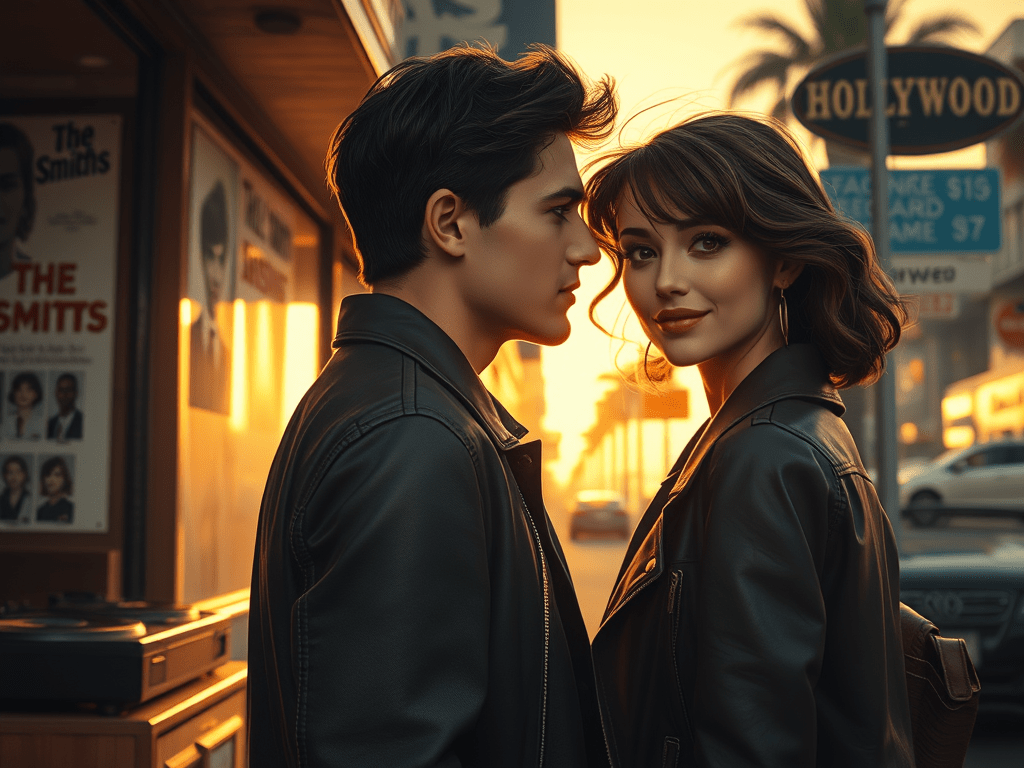
    It was 1990, and there I was — strutting down Hollywood Boulevard with my girlfriend, a walking cliché in a secondhand leather jacket, pretending to be too jaded for the tourists but secretly hoping to be discovered by a roving talent scout. We ducked into some grim little shrine to adolescent misery, shopping for Smiths T-shirts and anything else that might broadcast our manufactured melancholy.

    That’s when the store’s sound system offered up “Obscurity Knocks” by the Trash Can Sinatras — a song I was too full of myself to recognize as a direct warning shot.
    At the time, I was a preening, would-be screenwriter and novelist, drunk on my own imaginary press clippings, convinced that obscurity was a fate reserved for lesser mortals. I didn’t realize that the bright, bittersweet melody washing over those racks of ironic despair was, in fact, my personal horoscope: You, sir, will toil unseen. You will remain a hidden draft in life’s file cabinet. And — shocking plot twist — it will not kill you.

    Decades later, “Obscurity Knocks” still sits at the top of my all-time favorites list, not because it flatters ambition, but because it gently demolishes it.
    It’s a hymn to living for the work itself, to making peace with invisibility, to resisting the cheap, sugary high of external validation.

    It is one of those rare songs that manages to be both wistful and liberating at once — a graceful acceptance letter to a life lived outside the gravitational pull of fame. Far from being a bitter anthem of failure, it’s a clear-eyed celebration of choosing the harder, more honest road: living for one’s art rather than living off it.

    At first listen, the jangly guitars and breezy melody almost betray the lyrical gravity beneath. The music is light, but the words carry the weight of a reckoning. The narrator stands at the border between youthful ambition and mature resignation, surveying the life he has actually lived versus the life he once imagined. And yet, there is no rage, no tantrum, no grasping for lost relevance. Instead, there is something far healthier and more beautiful: an elegy without self-pity, a conscious decision to stay faithful to the things that matter.

    The song’s real bravery lies in its refusal to dress obscurity up as defeat. It suggests that real integrity means loving what you do even when the spotlight points elsewhere — when the record deals dry up, when the critics stop caring, when the audience forgets. In an era addicted to metrics — clicks, likes, views — “Obscurity Knocks” remains a defiant refusal to reduce one’s life to a scoreboard.

    Mortality hums quietly underneath the entire track. It’s not explicit, but it’s there, felt in the weariness behind certain lines, the subtle wear and tear of a life measured not by trophies but by quieter, richer achievements: loyalty to craft, private joy, the bittersweet pleasure of simply carrying on. It accepts the inevitable fading without collapsing into nihilism.

    There is longing, yes — the song aches with it — but it’s a clean, unsentimental kind of longing. It isn’t the longing for public adoration or manufactured relevance; it’s the deeper human longing to matter, to create something true before the clock runs out. In this way, “Obscurity Knocks” isn’t just about a music career. It’s about the universal experience of learning to live meaningfully in a world that will not give you a standing ovation for it.

    The Trash Can Sinatras don’t rage against the dying of the light; they tip their hats to it, shrug, and keep playing. And in that shrug, that beautifully unvarnished acceptance, they find a kind of glory that fame could never offer.

    Do the Trash Can Sinatras have a song more beautiful than “Obscurity Knocks”? Technically, yes — but only one, and finding it is like trying to locate the Holy Grail in a used CD bin. It’s a B-side called “My Mistake,” a painfully perfect little anthem about a young fool so drunk on love he trips over his own heart like it’s a barstool in a dark room.

    It’s a song that captures, with ridiculous precision, the exquisite humiliation of thinking you’re the protagonist in a grand romance when you’re actually just a blip on someone else’s radar — a mistake you won’t stop making until life has finished sanding the delusions off your bones.

    Postscript:

    After writing this post, I felt compelled to listen to “Obscurity Knocks” on YouTube and someone asked in the comment section: “Any other songs like this?” I answered: “Yes, ‘My Finest Hour’ by The Sundays.”

  • Velvet Fists: Sentimentality, Violence, and the Lie of the Crappy Love Song

    Velvet Fists: Sentimentality, Violence, and the Lie of the Crappy Love Song

    In the early ’90s, screenwriter Dennis Potter—whose haunting 1980 film Blade on a Feather once grabbed my imagination by the throat—sat across from Charlie Rose, passionately defending one of humanity’s most derided cultural artifacts: the “crappy love song.”

    Potter’s argument was simple and oddly noble:
    In a world where we grovel like pigs at the trough of materialism, even the cheesiest love ballad points, however clumsily, toward something higher—a yearning for transformative love, the kind that rattles the soul and redeems our miserable existence.
    And that, Potter insisted, should be celebrated, not sneered at.

    I see his point.
    But I can’t quite choke it down.

    What happens when the music is even crasser than life itself?
    Forgive the offense, but Kenny G springs to mind—a man whose saxophone emits what can only be described as the ambient soundtrack of lobotomized love.
    Millions swoon to his treacly squeals, convinced they’re tasting transcendence.
    But what they’re really swallowing is sentimentality in its most lethal form: syrupy, infantilizing, and vaguely unhinged.

    While I love Potter for wanting to defend the human need for transcendent emotion, I can’t ignore the underlying rot.
    These “crappy love songs,” much like Kenny G’s ambient anesthesia, often peddle not real love, but an emotionally stunted counterfeit—sentimentality, a soft mask stretched tight over something far uglier.

    Sentimentality terrifies me because it is not benign.
    It is childish emotion weaponized.
    It is the refusal to mature, to engage with the complicated ambiguities of real love, real pain, real life.
    And because these stunted feelings are defended with the ferocity of a cornered child, sentimentality often harbors its dark twin: violence.

    Saul Bellow, with his characteristic unsparing clarity in Herzog, nailed it:
    It’s the most sentimental people who are the most violent.

    Why?
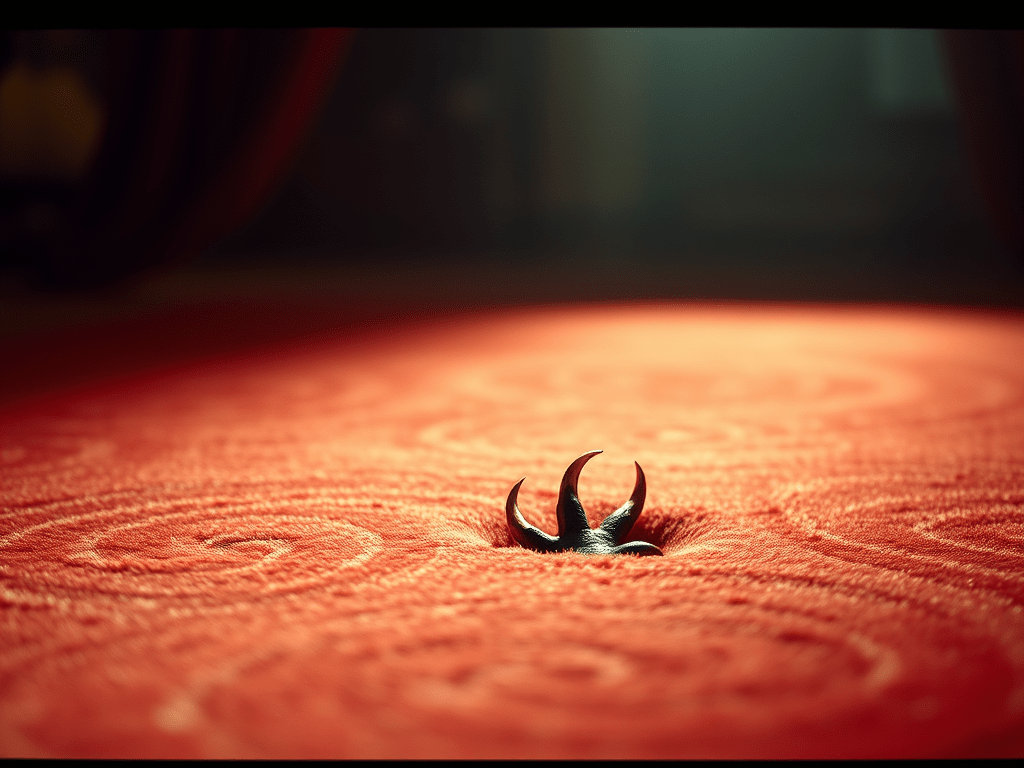
    Because sentimentality is a velvet carpet stretched precariously over a tiger’s claw.
    It’s the illusion of sweetness clinging desperately to a subterranean rage—the rage of people who cannot tolerate having their fragile, maudlin dreams challenged.
    To question sentimentality is to trigger a defensive violence, a panicked fury at the idea that real adulthood demands something sterner, braver, and infinitely less sweet.

    So no, Dennis Potter, I can’t fully join you in your defense of the crappy love song.
    Because too often, beneath that soaring key change and saccharine lyric, I hear not the longing for transcendent love—
    but the faint, snarling growl of a soul that refuses to grow up.

  • Left Behind in a Dream: How Grunge Crushed My Jangle-Pop Heart

    Left Behind in a Dream: How Grunge Crushed My Jangle-Pop Heart

    In 1990, I was standing under the humming fluorescents of a dusty T-shirt and poster shop on Hollywood Boulevard, flipping through faded images of Morrissey, when a song hit me like a velvet brick: Obscurity Knocks by the Trashcan Sinatras.

    A wall of shimmering guitars spilled out of the speakers—jangly, melancholic, and so clearly descended from the holy Johnny Marr school of emotional resonance. It was as if Heaven Knows I’m Miserable Now had been reincarnated in a Scottish bedroom, passed through a reverb pedal, and handed to someone just wounded enough to understand.

    That same year, I fell headfirst into The Sundays’ Reading, Writing, and Arithmetic, and I’ve never quite crawled out. You’re Not the Only One I Know” may still be my favorite song of all time—part lullaby, part confessional, sung by someone who sounded like they were trying not to wake the ghosts in the room.

    In those moments, I was sure I was witnessing the dawn of a new musical epoch—an era where introspective, literate guitar pop would inherit the emotional crown left by The Smiths. I imagined mixtapes stretching into the next decade, filled with chiming guitars and lyrics that quoted Yeats and quietly ruined you.

    But then the mood changed.

    Nirvana showed up, kicked in the door, and everyone suddenly wanted to scream into the void instead of whisper into the ache. Nevermind dropped, and within what felt like minutes, everyone moved to Seattle, grew out their hair, and baptized themselves in feedback and flannel. The dreamy pop I loved didn’t just fall out of fashion—it was buried in a landslide of Grunge.

    The prophecy had already been written in “Obscurity Knocks”—and it delivered.

    But I refused to let go. While the world air-guitared to “Smells Like Teen Spirit,” I doubled down on Lloyd Cole, The Cocteau Twins, Lush, Chapterhouse, and The Go-Betweens. I curated sadness. I polished it. I stayed loyal to the bands that sounded like rain and minor chords and unspoken longing.

    Grunge? Too growly. Too aggro. Too much boot-stomping and not enough sighing into the mist.

    So what carries the flickering torch of that era for me today? What band whispers instead of roars, dreams instead of demands? One song comes to mind: Love Yourself by Lovejoy.

    It’s not a perfect mirror of those early ’90s tracks, but it has the same fragile DNA—the ache, the beauty, the subtle drama folded into melody. It’s as if someone reached back into my old shoebox of mixtapes, pulled out a strand of sound, and stitched it into something new.

    Call me stubborn. Call me sentimental. But I’ll be here, still thumbing through my old CDs, still worshipping at the altar of bittersweet jangle-pop, long after the amplifiers of Grunge have gone quiet.

  • Performance Anxiety: The Liver King and Joan, Both Awful in Their Own Way

    Performance Anxiety: The Liver King and Joan, Both Awful in Their Own Way


    The Liver King and Joan from Black Mirror’s “Joan Is Awful” walk into the same existential trap, only one is greased in raw liver and the other in algorithmic despair. Both become victims of their own performance, trapped in personas crafted for mass consumption. One flexes in loincloths to sell ancestral supplements, the other finds her life commodified by a streaming service that turns her every ethical failure into entertainment. What they share is the slow, public realization that the self they’ve been performing isn’t just unsustainable—it’s a lie with consequences.

    The Liver King, with veins like tree roots and an ego to match, built his brand on being the living embodiment of primal masculinity. Turns out, his liver was natural, but his abs were not. When the steroid truth came out, so did the emptiness behind the brand: a man so addicted to being a character that he forgot how to be a person. Similarly, Joan discovers she is both the protagonist and product of a Netflix-style show that mirrors her life in real time. Her public image becomes so divorced from her private self that the two are no longer distinguishable. In both cases, performance replaces identity—and eventually consumes it.

    Both characters suffer a mental breakdown not because they’ve failed, but because they’ve succeeded—at becoming the thing they thought the world wanted. The Liver King was adored until he wasn’t, and Joan was forgettable until she became a meme of moral failure. The irony is brutal: success, for them, is the trapdoor. Their audiences don’t want authenticity—they want a spectacle, a scapegoat, someone to mock or idolize, preferably both at once. And when the curtain is pulled back, the applause turns to outrage.

    There’s also the matter of control—or rather, the delusion of it. The Liver King believed he could manipulate his public image through primal storytelling and ab workouts. Joan believed she had autonomy until she saw Salma Hayek’s CGI avatar doing unspeakable things in her name. Both lose control of their narratives, and the horror isn’t just public shame—it’s the recognition that their true selves have been outsourced, packaged, and sold. They become strangers to their own lives.

    In the end, the Liver King and Joan are case studies in performative collapse. They remind us that the pursuit of a curated, amplified self—whether through steroids or streaming—leads not to greatness but to existential whiplash. When you spend your life trying to be a brand, don’t be surprised when you’re treated like a product: disposable, replaceable, and, eventually, outdated. Joan may be awful, and the Liver King may be absurd, but their breakdowns are brutally, unmistakably human.


  • The Maudlin Man: On Watches, Social Media, and the Narcissism of Meaningless Eagerness

    The Maudlin Man: On Watches, Social Media, and the Narcissism of Meaningless Eagerness

    There is no sound more pathetic than the cry of the maudlin man—the self-appointed tragic hero of his own YouTube channel, sobbing between cuts of B-roll footage of his watch collection, mistaking emotional leakage for authenticity. He clutches his diver watches like talismans, convinced that the right lume or bezel action will finally make him whole. But his affliction is deeper than poor taste or consumer excess. He is in love with his own sorrow. And worse, he films it.

    Cicero had a word for this spectacle: maudlin. It was not meant kindly. The maudlin man is drunk on his own emotional silliness, addicted to contrived drama, and tragically proud of his displays of overstated sorrow and giddy exuberance. In his pursuit of happiness, he has mistaken cheap feeling for moral virtue, dopamine for character, sentiment for wisdom. He is not mature. He is a teenager with a $5,000 Tudor.

    The watch hobby, for all its mechanical beauty and aesthetic value, has become a theater of narcissistic self-performance. The YouTube wrist-roll has replaced the confessional. The thumbnail becomes the new sacred icon: face frozen mid-epiphany, a timepiece held up like a religious relic. Each upload, each gushing review, is a digital Rolex—plucked, examined, and consumed with trembling fingers and tears in the eyes. The tragedy is not that the watch community is ridiculous (though it often is), but that it has devolved into a factory of performative adolescence.

    It wasn’t always this way. There was a time when the pursuit of happiness, as Jeffrey Rosen in The Pursuit of Happiness reminds us, meant the cultivation of moral character. Rosen draws from Franklin, Jefferson, and ultimately Cicero, who taught that happiness came not from pleasure but from the tranquil soul: one unbothered by fear, ambition, or maudlin eagerness. The watch obsessive is none of these things. His soul is rattled, consumed by longing, shaken by regret. He mistakes every new acquisition for a cure, every unboxing for a rebirth. But he is not reborn. He is merely re-dramatizing the same pathology.

    Enter the maudlin man, the inner saboteur. He mocks, he sneers, and he tells the truth: that the maudlin man has no real restraint. That his self-recrimination is as performative as his self-praise. The maudlin man is cruel. He exaggerates the regret that comes from flipping watches like penny stocks; the hollow boast of self-control while our eBay watchlist grows longer by the hour; the dopamine crashes masked by overproduced videos and fake enthusiasm. We are not collectors. We are addicts with ring lights.

    To be addicted to the watch hobby is to be afflicted with a thousand tiny regrets. We regret what we bought, what we sold, what we didn’t buy fast enough. We suffer from wrist rotation anxiety, Holy Grail delusions, false panic, and the creeping horror that we are just men who talk too much about case diameter. Our collections become mausoleums of past mistakes. We are haunted, not healed.

    The only cure—if one exists—is a form of philosophical sobriety. Cicero called it temperance. Franklin called it moral perfection. Phil Stutz calls it staying out of the lower channel. It is the refusal to feed the drama. It is the decision not to narrate your regret as if it were wisdom. It is stepping back, stepping away, and recognizing that sometimes, the most radical act of self-possession is to stop filming.

    This maudlin sickness isn’t limited to the horological hellscape. Social media itself is a dopamine machine engineered to keep us emotionally drunk. We live in a world of curated personas, algorithmic affirmation, and the self-cannibalizing loop of outrage and euphoria. As Kara Swisher notes in Burn Book, the tech elite have weaponized this environment for profit, fueling sociopathy with likes and retweets. They are not gods. They are billionaires who behave like wounded teenagers in private jets.

    It is not a coincidence that the watch obsessive and the tech mogul share the same pathology: a hunger for affirmation masquerading as taste. They are the same creature, only one wears a G-Shock and the other a Richard Mille. Both are drunk on maudlin emotion. Both mistake attention for meaning.

    What, then, is the alternative? It is to shut off the camera. To read. To walk. To live a life not curated but inhabited. To pursue virtue, not validation. To wear one watch and be content. To see, finally, that maudlin self-display is not depth, but decadence.

    So here is the diagnosis, bitter but true: The maudlin man must die. Not literally, but spiritually. He must be silenced so the adult may speak. He must be buried so the man of character can rise. He must be mocked, dissected, exposed, and ultimately exorcised.

    Only then, perhaps, will we stop crying over something as silly as the regret of sold watches we can never get back.

    And maybe—just maybe—stop filming them.
  • The Algorithm Will See You Now: Joan’s Collapse in a Funhouse Mirror World: Sample Thesis and Outline for Analysis of Black Mirror’s “Joan Is Awful”

    The Algorithm Will See You Now: Joan’s Collapse in a Funhouse Mirror World: Sample Thesis and Outline for Analysis of Black Mirror’s “Joan Is Awful”

    Sample Thesis Statement:


    In Joan Is Awful,” the titular character stumbles into ruin not because she’s evil, but because she’s deluded—clinging to a flattering self-image while ignoring the yawning chasm between how she sees herself and how others do. Her desperate need for approval blinds her to the hollow spectacle of parasocial fame, where the Streamberry audience gorges on her curated misery with slack-jawed glee and not an ounce of empathy. Meanwhile, Joan’s passive embrace of digital convenience—those sleek platforms that promise connection, ease, and relevance—costs her everything: privacy, agency, even identity. As her most intimate moments are vacuumed into the cloud, diced into monetizable data, and reassembled into lurid entertainment, Joan learns the hard way that algorithms don’t care about narrative nuance—they just want content. In the end, she’s not the star of her own life. She’s tech industry chum, chewed up and streamed.


    Outline (9 Paragraphs):

    1. Introduction: The Mirror Cracks
    Set the tone by describing Joan’s glossy, curated digital life as a carefully lit Instagram photo—harmless on the surface, but riddled with cracks. Preview the idea that Joan Is Awful isn’t just a satire about tech—it’s a psychological horror story about self-delusion, digital exploitation, and the death of narrative control.

    2. The Selfie Delusion: Joan’s Inflated Self-Perception
    Explore Joan’s internal image of herself as a reasonable, competent, kind professional. Contrast this with the version that appears on Streamberry: vain, passive-aggressive, and spineless. Argue that the episode’s central irony lies in Joan’s shock—not at being watched, but at being seen too clearly.

    3. The Streamberry Effect: Fame Without Love
    Analyze the parasocial dimension: Joan’s life is turned into a binge-worthy drama, but there’s no affection in the audience’s gaze. They’re not fans; they’re voyeurs. The more humiliating the content, the more addicted they become. This is the dopamine economy, and Joan is its punchline.

    4. Compliance and Convenience: How She Handed Over the Keys
    Joan doesn’t get hacked—she clicks “Accept Terms and Conditions.” Show how the episode weaponizes our own tech complacency. Her ruin begins with a shrug. She wanted frictionless tech. What she got was soul extraction via user agreement.

    5. Raw Data, Real Damage: The Monetization of Intimacy
    Dig into the idea that Joan’s emotions, her breakups, her therapist visits, even her sex life—all become commodities. They’re no longer private moments, but digital product. The episode skewers the idea that tech is neutral. It’s a vampire, and your heart is just another bite-sized upload.

    6. Algorithmic Authoritarianism: The Tyranny of Predictive Systems
    Focus on the moment when Joan realizes she’s been living inside a nested simulation created by AI. Explain how this metaphor extends beyond science fiction—it mirrors the way our lives are shaped, nudged, and pre-written by recommendation engines, targeted ads, and invisible code.

    7. Narrative Collapse: When You’re No Longer the Main Character
    Explore the existential horror of losing narrative control. Joan’s identity dissolves not just because she’s surveilled, but because she can no longer steer the story. She’s overwritten by code, versioned into oblivion, rendered into a flattened character in someone else’s plot.

    8. Final Descent: From Star to Spectacle to Scrub
    Track Joan’s downward spiral as she tries to fight the system, only to discover that her rebellion has already been commodified. Even her attempts to resist are folded into more content. Her final fate isn’t tragic—it’s product placement.

    9. Conclusion: A Warning Disguised as Entertainment
    Tie everything back to the real world. We are all Joan to some degree—curating, consenting, surrendering. Streamberry may be fictional, but the forces it parodies are not. End with a sharp jab: the next time you agree to terms of service without reading, remember Joan. She clicked too.

  • Adolescence: Joins The Pitt as a Triumph of Hyper-Realism

    Adolescence: Joins The Pitt as a Triumph of Hyper-Realism

    If you listen to The Watch with Chris Ryan and Andy Greenwald, you’ve probably heard the buzz: Netflix’s four-part series Adolescence isn’t just good—it’s the best thing on TV right now.

    So, naturally, my wife and I sat down to see if it lived up to the hype. Spoiler alert: It does.

    Without giving away essential plot points, let me put it this way: this isn’t just a crime procedural—it’s a ruthless autopsy of institutional failure. Each episode dissects a different system that was designed to impose order but instead collapses under the weight of human chaos.

    • Episode 1: The Police Station – The series kicks off inside a sterile, fluorescent-lit hellscape, where well-meaning officers attempt to process and interrogate thirteen-year-old Jamie Miller, the boy accused of murdering a classmate. The problem? The system is dehumanizing. Jamie’s family is kept in the dark, procedural red tape trumps human empathy, and every interaction feels like a slow, grinding march toward inevitability. Jamie himself—angelic-faced, soft-spoken, seemingly incapable of violence—makes us question everything.
    • Episode 2: The School – If you thought the police station was bad, welcome to Lord of the Flies with a morning bell. Detectives attempt to interview students, only to be met with a circus of chaos. The kids are feral, emotionally volatile, and wired for destruction. The teachers? Comically powerless. Every attempt at authority is met with blank stares, open defiance, or performative outrage.
    • Episode 3: The Juvenile Facility – A bureaucratic nightmare masquerading as rehabilitation. Here, troubled teens are sorted into neat categories based on data and psych evaluations, as if behavior can be reduced to a spreadsheet. Therapists cycle through sterile, one-size-fits-all interventions, while administrators act like zookeepers who have given up. It’s depressing, absurd, and terrifyingly real.
    • Episode 4: The Suburbs – The final episode shifts from institutions to family itself, portraying domestic life as its own kind of prison. Jamie’s father, a man drowning in wounded male ego, rules his home with simmering rage and a rigid belief in his own moral authority. His suburban world, meant to be safe and orderly, feels just as oppressive as the police station, the school, or the juvenile facility.

    Hyper-Realism That Sticks With You

    The series’ hyper-realistic approach reminds me of The Pitt—the brutally compelling Max series that drags you into the chaos of an ER with unflinching detail. Adolescence does the same thing for the crime procedural, pulling you so deep into its world that you almost feel suffocated by its bleak authenticity.

    If you’re a fan of TV that rattles your nerves and forces you to stare into the abyss of systemic collapse, Adolescence is not to be missed.

  • Magical Thinking #5: The Delusional Art of Repeating the Same Disaster and Expecting a Miracle

    Magical Thinking #5: The Delusional Art of Repeating the Same Disaster and Expecting a Miracle

    If insanity is doing the same thing over and over while expecting different results, then we are all a little insane—especially when it comes to our worst habits, our most toxic relationships, and our dumbest obsessions.

    Take the vampire relationship—a toxic, soul-sucking romance that drains you dry every time, yet you keep crawling back, convinced that this time it will be different. It never is. The fangs sink in, the life force drains out, and you’re left staring at the ceiling at 3 a.m., wondering how you let yourself get bit again.

    And if love isn’t your particular poison, maybe watch collecting is.

    Watch guys (myself included) have perfected a very specific brand of lunacy—thinking that selling a watch will cure our addiction. We convince ourselves: If I sell this, I’ll be free. This is the last one. I’m done. But before the ink on the eBay transaction dries, we’re rebuying it. And then reselling it. And then rebuying it again. It’s a closed-loop system of self-inflicted torment, a never-ending maze of false hope and regret.

    Dude. You need help. Read Phil Stutz, escape the Maze, and put your life in Forward Motion before your retirement fund turns into a pile of resale receipts and buyer’s remorse.

    If you think this brand of self-destruction through repetition is new, think again.

    F. Scott Fitzgerald saw it decades ago in Winter Dreams, where Dexter Green is hopelessly addicted to the walking emotional Ponzi scheme that is Judy Jones. She is his drug, his illusion, his vampire. She is untrustworthy, indifferent, and incapable of meaning what she says, yet he keeps coming back for more.

    Dexter isn’t just in love with Judy Jones—he’s in love with the idea of her, the fantasy that someday she’ll become what he wants her to be. She won’t. And as he wastes years orbiting her gravitational pull of destruction, real life passes him by. By the time he wakes up from the dream, it’s too late.

    Sound familiar? It should.

    Because whether it’s a vampire relationship, a doomed watch-buying cycle, or a delusional romance straight out of Fitzgerald’s nightmares, the result is always the same: life keeps moving forward while we stay stuck, trapped in our own bad decisions.