Tag: short-story

  • Thanksgiving Heart Attack

    Thanksgiving Heart Attack

    Thanksgiving Day, 2025. My wife and twin daughters were applying their final cosmetic and sartorial flourishes before we drove to Los Alamitos for the obligatory family pageant, and I had a half-hour window of solitude. I sat at my Yamaha piano, eager to play a song I’d written years ago—“The Heartbreak of Micky Dolenz”—a melancholic tribute to a Monkees episode that shattered my five-year-old psyche. In it, Micky pumps iron to steal a blonde beach goddess from a sun-bleached bodybuilder, only to discover she has evolved into a Proust-reading aesthete and now prefers intellectuals who collect first editions. It was my first lesson in the absurdity of desire: you can train, sweat, and transform yourself into a bronze Adonis only to watch beauty run away with a man who hides behind Remembrance of Things Past. That moment was my first crack in the façade of childhood—when I faintly understood life might be crueler and more ambiguous than birthday cake and Saturday morning cartoons.

    Halfway through the song, I felt a stabbing pressure in my left chest—an alarm bell that whispered, “heart attack.” It was the kind of pain you ignore for twenty seconds until the fear gets loud. Maybe it was simple anxiety: I am sixty-four, three semesters from retirement, and just endured Sam Harris complimenting Christian fundamentalist Doug Wilson for possessing the courage of his biblical barbarities. As an agnostic torn between admiration and nausea, I crave certainty the way addicts crave relapse—but God gives me ambiguity, Paul gives me guilt, and the afterlife gives me indigestion.

    Ethics don’t spare me, either. I eat yogurt and whey protein while pretending I don’t hear the screams behind factory-farmed supply chains. My “plant-leaning” diet is a moral performance piece—vegan cosplay with a dairy chaser. Every spoonful tastes like cognitive dissonance.

    The day before, a sports doctor diagnosed my left shoulder with rotator cuff syndrome and biceps tendinopathy. She promised I might avoid surgery if I did her rehab exercises. She printed out eleven medieval torture movements, most of which lit my shoulder up like a Roman candle. Should I push through the pain, I wondered, or was I already guilty of kettlebell blasphemy—retracting the tendon until I doomed myself to the orthopedic gulag?

    So I sat there, convinced the pain in my chest was an omen. But when my wife stepped into the living room and asked me—without ceremony—whether her boots matched her dress, the pain evaporated. The piano, the Monkees, Sam Harris, Paul, vegan sins, and torn tendons all vanished. Her question grounded me. It was the kind of mundane interruption that reminds you the world is still here, indifferent to your melodramas. My imaginary heart attack surrendered to domestic reality.

  • The Monster in the Ravine and the Moon Over the Suburbs

    The Monster in the Ravine and the Moon Over the Suburbs

    Last night I dreamed I was wandering through a house I didn’t recognize. The world outside was pitch black. A small family dog pressed its nose to the sliding glass door and barked toward the backyard, desperate to escape. I opened the door and watched the little creature trot behind the bushes to relieve itself. That’s when a monster rose out of the ravine—some hulking mastiff with the skull of a bull, as if a guard dog from the underworld had crawled up to inspect the living. It ignored the pet and fixed its gaze on me. Without hesitation, it entered the house and began to contort into different shapes of malice. At first, I trembled. Then anger boiled in me like a furnace. This thing wasn’t just ugly; it was the source of suffering and rot in the world. I begged God to purify me so I could destroy it, but heaven stayed silent. What I received instead was a strange consolation: a feeling that at least my rage was righteous, and that I still knew where my moral compass pointed.

    Eventually the creature disappeared and daylight arrived. I made a long trek back toward what I understood to be “home.” Across the street, my neighbors were ecstatic, pointing skyward. Hovering above their house was a massive white dome—like a camper shell the size of a Costco, a fallen moon with decorative crenellations. Soon crowds formed. It was a city attraction, a spectacle engineered to “bring excitement.” Snowflakes—artificial, slow-motion confetti—drifted through the air. People gasped, laughed, and posed for photos, thrilled by the distraction.

    The beast was gone, but the problem of evil remained unsolved. In its place, my city embraced pageantry, gimmicks, and civic cheerleading. I touched my aching left shoulder, the one crippled by a three-month rotator cuff tear, and wondered what I would become—a broken man, a burden, a questionable member of society. Fake snow drifted onto the jubilant crowd, and their rosy smiles suggested that change, or at least the illusion of it, was already underway.

  • The Day My Wife Met the Quietest Refugees

    The Day My Wife Met the Quietest Refugees

    Before our twins were even born—more than fifteen years ago—my wife told me a story that still sits in the back of my mind like a ghost that refuses to leave. She and her best friend, A, drove to Long Beach to visit what would soon be A’s new home. She and her partner had bought it a month earlier, but escrow delays, termite fumigation, and bureaucratic nonsense kept the place stuck in a strange limbo: theirs legally, but uninhabitable in practice. The house was technically empty—no furniture, no boxes—just an address waiting for its owners to arrive.

    Inside, my wife and A heard voices drifting from somewhere near the kitchen. They followed the sound and found a couple, perhaps in their early fifties, sitting at the counter with steaming cups of bouillon broth. They were calm, unthreatening, even dignified. Two shopping carts stood beside them like faithful dogs, packed with precision: folded clothes, cans of food, hygiene supplies, diabetic needles, prescription bottles—everything arranged with military neatness. My wife used the word squatters, but they looked more like survivors who had finally found a safe harbor.

    They spoke kindly. They’d been living there for nearly a month, they said. The house sheltered them from the cold; they cooked simple meals, washed, slept. They didn’t pretend it was theirs—only that it was a rare oasis in a city allergic to mercy. My wife described them as being sweet, especially toward one another. More than anything, my wife was moved by their sweetness and tenderness.

    Then A told them in a gentle tone that she was the homeowner. The couple apologized, almost embarrassed. The man rolled his cart out first, down the hallway and out through the front door. His companion followed—until she stopped mid-stride, panic rippling across her face. He had forgotten one of his medications. She sprinted back to the kitchen, grabbed the bottle, and hurried after him.

    That moment—her urgency, her loyalty, the fragile bond of two people clinging to each other against the world—burned itself into my heart. Even now, whenever I remember it, my eyes well with tears.

  • Rising From the Sunken Place: Heroism, History, and the Evolution of the Black Quarterback

    Rising From the Sunken Place: Heroism, History, and the Evolution of the Black Quarterback

    Essay Prompt: 

    Drawing on Jordan Peele’s concept of the Sunken Place in Get Out, write a 1,700-word essay examining the heroic effort required not only to lift oneself out of the Sunken Place, but to help others rise as well—an arc vividly captured in the three-part docuseries The Evolution of the Black Quarterback. What does it mean for Black quarterbacks to break the race barrier in the NFL? What forces tried to hold them back, and how do these forces echo the Sunken Place? Consider also the story of Wilbur Dungy—Tony Dungy’s father—who served as a war hero only to return home to the indignities of Jim Crow. How did his dignity, endurance, and moral clarity shape his son’s rise as both an athlete and a coach?

    Your essay will be divided into two major sections.

    Part I (Four Paragraphs): Define the Sunken Place
    Write a four-paragraph definition of the Sunken Place, with each paragraph offering a different lens:

    1. The Sunken Place as depicted in Get Out
    2. The Sunken Place through the writings of Frederick Douglass
    3. The Sunken Place as represented in the Jim Crow Museum, curated by David Pilgrim
    4. The Sunken Place as reflected in The Evolution of the Black Quarterback

    Each paragraph should show how the Sunken Place functions as a metaphor for psychological confinement, social domination, and the struggle for agency.

    Part II (Four Paragraphs): Rising From the Sunken Place
    After your definition section, pivot to your thesis. Explain how early Black quarterbacks in the NFL rose from the Sunken Place and built a legacy that opened doors for future generations. In four paragraphs, analyze their courage and composure in the face of rejection, demoralization, racist taunts, structural exclusion, and even death threats. Show how their resilience and excellence expanded the possibilities for Black athletes who followed.

    Conclusion:
    Close by addressing the broader implications. What life lessons can we draw from these trailblazing quarterbacks? How does their story speak to endurance, leadership, and the ongoing work of lifting others out of the Sunken Places they confront?

    Include a Works Cited page in MLA format with at least four sources.

  • The Gospel of the Honey Bear: Worshipping at the Altar of Limited Edition

    The Gospel of the Honey Bear: Worshipping at the Altar of Limited Edition

    My wife has always been immune to fads—the sort of person who can scroll past influencer hysteria without so much as a pulse flutter. So when she announced yesterday that she had to have a Starbucks Honey Bear Straw Cup, I thought she was joking. “A cup?” I asked, as though she’d confessed a crush on a cartoon mascot. She showed me the photo. There it was: a cherubic bear with a straw sticking out of its head, beaming with the smug innocence of a cult leader. My daughters chimed in, voices rising in unison. Clearly, I was outnumbered.

    So at six in the morning, I trudged to our local Starbucks, noble fool that I am, hoping to secure the sacred totem. The barista, barely conscious, looked up with eyes that had seen too much. “Sold out at three a.m.,” he murmured, his voice the verbal equivalent of burnt espresso. “Ten minutes. Line out the door.” He added that a new shipment would arrive Monday—but those too would vanish at three a.m., devoured by the same nocturnal zealots. When I asked if people were scalping them on eBay, he sighed. “That’s part of it. Also… limited edition.”

    This wasn’t my first brush with late-capitalist hysteria. Just two weeks earlier, I’d witnessed a pre-dawn mob outside Trader Joe’s clawing for Halloween Mini Canvas Tote Bags as if they contained the blood of youth. They sold out in an hour. Civilization, I concluded, now runs on collectible anxiety.

    Perhaps our daily routines have become so numbing that people need the ritual thrill of scarcity to feel alive. A talisman, a honey bear, a tote bag—anything to simulate transcendence for ten blessed minutes. It’s the new spiritual economy: redemption through limited edition.

    Empty-handed, I returned home from Starbuck’s this morning, brewed my own dark roast, and read Stephen Marche’s On Writing and Failure—his autopsy of ambition and futility—while reflecting on my own lifelong hunt for literary honey bears: the bright, unattainable chimeras that promise meaning but mostly sell out before dawn.

  • Thou Shalt Remember That All First Dates End in Either Ecstasy or Insurance Claims

    Thou Shalt Remember That All First Dates End in Either Ecstasy or Insurance Claims

    It was my sophomore year, and I was about to experience that sacred American ritual—the first date. My friends, those benevolent saboteurs, set me up with Elizabeth Lane, a British exchange student whose accent alone made her sound too sophisticated for our zip code. Six of us crammed into Gil Gutierrez’s orange Karmann Ghia, a car roughly the size of a lunchbox. Rick Galia and his girlfriend, Cheryl Atkins, volunteered to ride in the trunk, which should’ve been an omen that this night would go sideways.

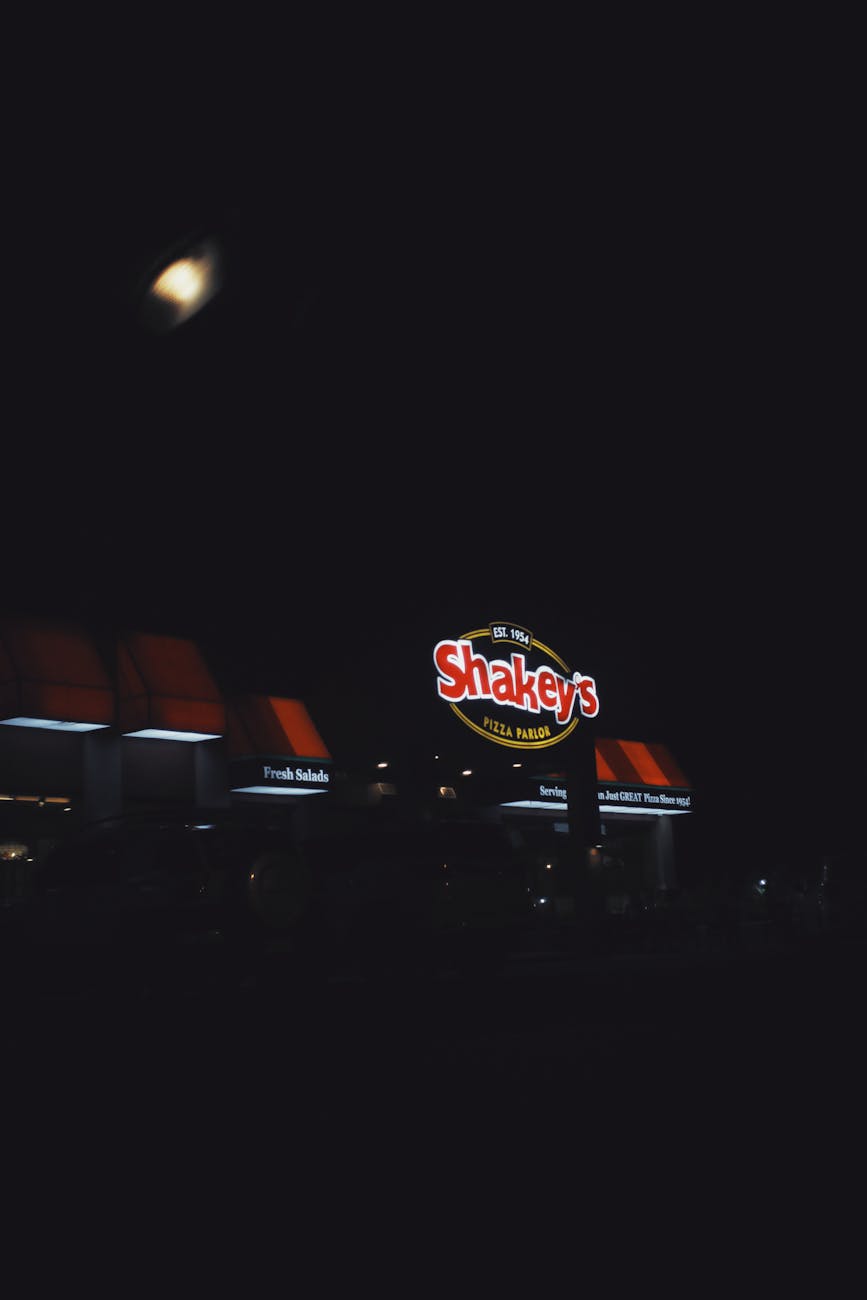
    Dinner was at a pizza chain—where all romance goes to die—and then we saw One Flew Over the Cuckoo’s Nest at a theater in Hayward. It took me about ten minutes to realize that a film set in a psychiatric ward wasn’t ideal for stirring teenage lust. Meanwhile, I was sweating through my shirt like a man auditioning for Fear Factor. I couldn’t stop thinking about a puberty documentary I’d seen in biology class—the one where a trembling boy on the phone with a girl exposed a massive pit stain to the audience. The thought haunted me.

    Midway through the film, Elizabeth rubbed her boot against the metal back of the chair in front of her. The sound—sticky, squealing, soda-coated—was the mating call of mortification. She did it again. Heads turned. Shushes hissed. I sank into my seat, spiritually liquefied, praying for the mercy of a stroke.

    To my left, Rick and Cheryl were making out like postwar lovers at a train station. When the credits rolled, Rick announced, “I have no idea what that movie was about, but I sure had a great time.”

    Back in the car, Gutierrez drove while Rick and Cheryl wedged themselves into the back seat with Elizabeth and me, a sardine orgy of hormonal chaos. As we climbed Greenridge Road, my heart was pounding in that dumb, hopeful way teenage hearts do. When we reached my house—an Eichler with glass walls, juniper bushes, and a kumquat tree that never bore fruit—I told Elizabeth I’d had a good time.

    She removed her gum, leaned in, and kissed me. Her tongue entered my mouth like a diplomatic envoy. The flavor was cinnamon, fierce and chemical, like a fireball candy soaked in gasoline. It was the first real kiss of my life—and possibly the last before divine punishment intervened.

    Suddenly, something primal overtook me. I emitted a guttural scream—a noise that belonged in the fossil record—and shot upright so violently that my head ripped through the fabric roof of the convertible. The others stared in awe as my torso protruded from the car like a deranged periscope.

    Gutierrez was horrified. “What the hell did you do, McMahon?”

    “I don’t know,” I said. “But I think I’m stuck.”

    Neighbors emerged, lured by my banshee howl. Thor, Cal Stamenov’s monstrous Great Dane, barked with glowing eyes like Cerberus guarding the gates of Hell.

    “You destroyed my brother’s car!” Gutierrez shouted.

    “The car can be repaired,” I said. “But my psychological damage is irreversible.”

    He glared. “What are you talking about?”

    “In what world do I come out of this with a shred of dignity?”

    The crowd laughed. My father arrived with a police flashlight, his expression hovering between despair and amusement. “Jeff, is that you?”

    “Unfortunately.”

    He extracted me from the car like a sword from the stone. I brushed flecks of torn fabric off my shirt and muttered, “Don’t worry, I’ll pay the deductible.”

    Gutierrez sighed. “Forget it. Migliore’s dad owns an auto shop.”

    Galia grinned. “That must’ve been one hell of a kiss, McMahon. Sent you straight to the moon.”

    I went inside, dignity in shreds, adrenaline still sizzling. In bed, reading a bodybuilding magazine for moral repair, I confessed my disaster to Master Po.

    “Grasshopper,” he said, “you must treat yourself gently.”

    “What the hell is that supposed to mean?”

    “You are a sacred vessel, yet you try to manhandle your emotions like barbells. Control is your idol. But The Way requires grace.”

    “Grace?” I said. “I just decapitated a convertible.”

    “Then perhaps,” he said, “next time, breathe gently and let go.”

    “I can’t,” I said. “I’m a control freak. Controlled by the need to control.”

    “That,” said Master Po, “is why you tear through roofs. You follow the path of excess, not balance.”

    I stared at the ceiling, still tasting cinnamon gum. “I’d love to ponder that,” I said. “But right now, I’m too busy chewing on the flavor of humiliation.”

  • Thou Shalt Remember That Silence Can Wound More Deeply Than Cruelty

    Thou Shalt Remember That Silence Can Wound More Deeply Than Cruelty

    It was a Friday night at Castro Valley High, that weekly pageant of teenage aggression disguised as school spirit. The bleachers were packed with hormonal thunder; the air reeked of nacho cheese and Axe body spray. And then the rain came, that democratic force that flattens everyone’s hair and dignity alike.

    Across the stands, I saw her—the girl the boys called Tasmanian Devil. I didn’t know her name. No one did. She was a broad-shouldered girl with a face that inspired the cruel kind of laughter—the kind that hides insecurity behind volume. Her twin brother was in the special ed class with her, and their father, the school’s enormous janitor, lumbered around campus in denim overalls so faded they looked ghostly. His ears were so large they could have doubled as warning flags—and he had passed them on to his children, a hereditary curse of ridicule.

    They lived in a trailer next to the football field, an eternal reminder that some people never get to leave campus. That night she sat alone in the bleachers while the rain came down in cold, merciless sheets. Her hair clung to her forehead like seaweed, and black mascara streamed down her face like ink from a wounded pen.

    She stared out at the field with a look that broke something inside me—a look that said, I know the joke, and I know I’m the punchline. I know no one will ever love me, and I will always be an outsider.

    I wanted to call her over, to hand her my jacket, to do anything that resembled decency—but I did nothing. I sat there with my friends, pretending to watch the game, while she drowned in rain and loneliness.

    That night, guilt chewed through me like battery acid. I told Master Po about it—my silence, my self-loathing.

    “Master Po, I can’t forgive myself for doing nothing.”

    He looked at me the way only the wise can—equal parts compassion and indictment.

    “Grasshopper,” he said, “being angry with yourself achieves nothing. Flogging yourself achieves nothing. Shoveling hatred over yourself achieves nothing. If you wish to help those who have no place in this world, you must first make peace with yourself. The wise help others not because they are saints, but because they are whole.”

    I lay awake that night thinking about the girl in the rain—how she seemed to know her fate, and how I had rehearsed mine: a spectator of suffering, paralyzed by self-awareness. It was the night I learned the cruelest sin isn’t mockery. It’s inaction dressed up as reflection.

  • Thou Shalt Not Mistake Thy Biceps for Enlightenment

    Thou Shalt Not Mistake Thy Biceps for Enlightenment

    It was June, the last day of my sophomore year at Canyon High, and the temperature had staged a coup. The campus was no longer a school but a human sauna—heat shimmering off asphalt, the smell of suntan lotion and hormones hanging thick in the air. Education had fled.

    Students drifted across the courtyard in various stages of undress: shorts, bikini tops, cutoffs, tank tops. The place looked less like an academic institution and more like a rehearsal for a Beach Boys video. Even the teachers had surrendered. Lesson plans were tossed aside like molting skin; the day was given over to signing yearbooks, gossip, and the open display of what could only be called collective infatuation disorder.

    Love had broken out like a rash. Everywhere I looked, couples were holding hands, whispering into each other’s ears, stroking hair, rubbing shoulders, and gazing into each other’s eyes with the same expression of caffeinated bliss. Even the nerds—the pale, calculator-clutching tribe of outcasts—had been swept into the delirium. It was an egalitarian apocalypse of affection. Everyone was paired off, melting together in the heat.

    Everyone except me.

    Apparently, I hadn’t received the memo that June 12 was Love Day at Canyon High. While the rest of the student body was basking in hormonal radiance, I sat alone on a bench near the cafeteria, marinating in my solitude and trying to figure out how romance had managed to skip my ZIP code.

    I sighed, stared at the ground, and summoned Master Po—the inner voice of my sarcastic conscience.

    “Grasshopper,” he began, “your lonely condition should be obvious to you.”

    “To you, maybe,” I said, “but to me, it’s as mysterious as algebra.”

    “Let’s begin,” said Po. “First, you spend too much time staring into your own navel. You are self-centered.”

    “Guilty,” I said. “Next?”

    “You talk too much. You deliver speeches when you should be listening.”

    “Double guilty.”

    “If you wish to see the humanity in others, you must first see the humanity in yourself. True transformation begins within.”

    “Master Po,” I said, “I’m already transforming. Six days a week in the gym, three hundred grams of protein a day. I’m practically evolving into another species.”

    “I meant transformation of the soul,” he said.

    “Oh. Right. The invisible muscle group.”

    “Your self-deprecation is merely cowardice dressed as humility. You fear your own potential.”

    “Maybe. But I’m warning you—every time I meditate, Raquel Welch rides through my mind on horseback in slow motion. I can’t stop her.”

    “Your distractions,” said Po, “are the result of an undisciplined mind. Seek silence.”

    “You mean meditate.”

    “Yes, Grasshopper.”

    “Then prepare yourself,” I said. “Because after Raquel Welch, the whole cast of Charlie’s Angels usually shows up.”

    Po sighed, the eternal sound of a teacher realizing his student is hopeless.

    And there I sat, the only unloved, unseduced, untransformed soul on the Canyon High campus—a bench-bound philosopher surrounded by teenage Aphrodites, sweating through his solitude while Raquel Welch galloped through his brain.

  • The Wise Man Must Polish His Soul Before Critiquing Someone Else’s Plumbing

    The Wise Man Must Polish His Soul Before Critiquing Someone Else’s Plumbing

    It was a Saturday afternoon, and I was trapped in my bedroom, waiting for the plumber to leave so I could sneak into the kitchen and make a protein shake. I could still hear him grunting and groaning under the sink like a walrus in a crawlspace. Through my bedroom window—across the little atrium separating me from the scene of domestic violation—I could see his open toolbox: a chrome battlefield of wrenches, pipes, and filthy rags sprawled across the linoleum like the aftermath of a plumbing apocalypse.

    My mother tiptoed into my room and whispered, “It’s so nice of him to do this.”
    I frowned. “What’s that supposed to mean?”
    “He’s not charging me,” she said with the glee of someone who’d just gamed capitalism.
    “Of course he’s charging you.”
    She shook her head. “He’s a friend.”
    “You just met him.”
    “His name is Paul Bergdorf. One of my girlfriends introduced me.”
    “Mom,” I said, “this isn’t going to end well.”
    “Keep your voice down,” she hissed, which is parental shorthand for I know you’re right but don’t ruin it.

    Bergdorf shouted from the kitchen that he was finished. My mother floated toward the sound of her rescuer while I picked up my barbell and started doing reverse curls—the exercise of choice for sons on the verge of moral intervention.

    From my vantage point through the sliding glass door, I saw the man emerge from under the sink. Paul Bergdorf was a specimen of middle-aged decay: a big gut pressing against his jeans like bread dough rising from its pan, grease-slick hair combed over his scalp in defiance of reality, and a face red and puffy as if carved from boiled ham. His eyes were glazed, his nose bulbous, his stubble crawling toward his ears. The man radiated cologne, sweat, and failure.

    He wiped his hands on a rag, tested the faucet, and said proudly, “All fixed. Now before I go, I may not be the best-looking man in town, but I can make a hell of a steak. I’m talking big, thick, juicy steaks—barbecue the way it’s meant to be done.”
    “That’s nice,” my mother said, “but no thanks.”

    I continued curling, the barbell becoming heavier with every syllable of his pitch. My forearms burned, but my fury was burning hotter.

    “I’ll get the best cuts,” he said, grinning. “You’ve never had steak like mine.”
    “That’s very kind, but I’m busy.”
    “Just pick a weekend. I’ll do the rest.”

    That did it. I charged down the hallway, forearms pumped, veins bulging, looking like an interventionist deity of adolescent righteousness.

    “How many times,” I asked, “does she have to say no?”

    Bergdorf stepped back, rag in hand, suddenly less swaggering. “Hey, let’s cool it, kid. I just wanted to ask your mom out. I’ve been working on this sink all day—it’s the least you could let me do.”

    “If you want to fix sinks for free, that’s your business,” I said, “but you’re entitled to nothing—not steak, not gratitude, not my mother.”

    “I just wanted to barbecue,” he mumbled.
    “Congratulations,” I said. “You’ve told everyone within a five-mile radius that you’re a steak virtuoso. Now leave.”

    Bergdorf, perspiring and wounded, gathered his tools, slammed the toolbox shut, and stomped out to his truck. The engine roared, the tires squealed, and the house filled with the lingering scent of sweat, smoke, and Stetson cologne.

    My mother stood in the kitchen, arms crossed. “You scared him away.”
    “Damn right.”
    “The neighbors say you’re getting too big and too scary. Maybe you should cool it for a while.”
    “I’m not cooling anything.”
    “Sal Tedesco says his son sees you working out with some crazy football player.”
    “His name is John Matuszak,” I said. “And he’s not crazy.”

    I could still smell Bergdorf’s presence hanging in the air like a curse. “God, he stinks,” I said. “That smell’s never leaving this house. Just hire a plumber next time, okay?”

    I retreated to my room, slammed the door, and sat on the bed. My forearms throbbed. My conscience twitched. I turned to Master Po, my invisible therapist and ancient Chinese philosopher in exile.

    “Was I wrong to drive that man away?” I asked.
    “Your mother was managing the situation,” said Po, his voice calm as incense smoke. “You intervened because you lack patience—and because control soothes your fear.”
    “But he wouldn’t leave.”
    “Everything leaves in time,” said Po. “You must learn the difference between protecting and meddling. The sage does not seize control of others’ lives; he tidies his own.”

    He glanced around my room: dirty gym clothes strewn across the floor, cracked tiles, a broken window patched with a Cap’n Crunch cereal box.

    “Grasshopper,” he said, “before you become your mother’s moral custodian, try cleaning your own temple. It is written: the wise man polishes his soul before critiquing someone else’s plumbing.”

  • Thou Shalt Honor the Monster Who Shows Mercy

    Thou Shalt Honor the Monster Who Shows Mercy

    At sixteen, I thought I knew what a monster was. Then I met one—an authentic, breathing specimen of mythic proportions: John Matuszak, defensive lineman for the Oakland Raiders, the kind of man who made other men rethink their species.

    I’d seen him on TV—hulking, bearded, snarling—but television flattened him into two dimensions. In person, at The Weight Room in Hayward, California, Matuszak looked like evolution had taken a brief detour toward the gods. Nearly seven feet tall, close to 300 pounds, he was a paradox of mass and grace—slender by geometry, enormous by gravity. His hair was a feral snarl, his beard an ecosystem, and his eyes had the predatory focus of a hawk scanning for something foolish enough to move.

    One afternoon, the gym speakers played England Dan and John Ford Coley’s “Love Is the Answer”—a ballad so syrupy it could give insulin shock to a diabetic. Matuszak’s lips curled. “Bullshit,” he muttered, then grabbed the barbell loaded with 400 pounds and began to press, growling his blasphemy with each rep as if the song itself had personally insulted his testosterone.

    Between sets, he asked if I played football.
    “No,” I said, “I’m a bodybuilder—sort of.”
    He raised an eyebrow. “How old are you?”
    “Sixteen.”
    “Good for you,” he said, clapping a hand on my shoulder that felt like a catcher’s mitt made of stone. “Keep training, my brother.”

    Then he disappeared into the locker room, leaving me with the distinct impression that Zeus himself had just offered career advice.

    The kindness startled me. I’d heard the legends—Matuszak the maniac, Matuszak the ungovernable animal who devoured offensive linemen and bar fights with equal ferocity. Yet here he was, treating me, a lost, self-conscious teenager, with decency and warmth. The other pros at the gym wouldn’t even glance at me, but Matuszak talked to me like I mattered. He looked me in the eye. He saw me.

    When he emerged from the locker room later, showered and reborn as a gentleman—a sports coat, slacks, mirrored sunglasses—he’d point at me and say, “See you later, kid.” Then he’d vanish, as if returning to Mount Olympus by way of Interstate 880.

    I couldn’t reconcile it: this colossal madman known as The Tooz, destroyer of quarterbacks, showing kindness to a scrawny sixteen-year-old who barely knew what he was doing in life, much less the gym. That night, puzzled, I asked Master Po what it meant.

    “Grasshopper,” he said, “the Tooz is drawn to you for two reasons. First, your innocence. You want nothing from him. Everyone else approaches him with hidden motives—flattery, exploitation, self-interest. You are too young to be calculating, and he finds that purity refreshing. Second, you remind him of himself before he was devoured by fame and its demons. When he looks into your eyes, he sees the ghost of his younger self, a version unspoiled by appetite. The innocent, Grasshopper, give the fallen hope. They are proof that a life before corruption still exists.”

    “But Master Po,” I said, “I’m not innocent. I’m corrupt. I feel it.”

    He smiled that maddening, merciful smile. “Perhaps. But corruption is relative, Grasshopper. What feels like depravity to you may seem like mere dust on the soul to others. Never forget: even the fallen recognize light, and sometimes, they bow before it.”