Tag: technology

  • 3 Essay Prompts: Lost Boys: Masculinity and Disconnection in the Age of the Algorithm

    3 Essay Prompts: Lost Boys: Masculinity and Disconnection in the Age of the Algorithm


    Essay Prompt 1:

    Lost Boys: Masculinity and Disconnection in the Age of the Algorithm

    The Netflix series Adolescence portrays young men drifting into emotional isolation, digital fantasy, and performative aggression. Write a 1,700-word argumentative essay analyzing how the series presents the crisis of masculinity in the digital age. How does the show portray the failure of institutions—schools, families, mental health systems—to support young men? In what ways do online subcultures offer a dangerous substitute for real intimacy, guidance, and identity?

    Your essay should examine how internet platforms and influencer culture warp traditional male development and how Adolescence critiques or complicates the idea of a “lost generation” of young men.


    Essay Prompt 2:

    Digital Disintegration: How the Internet Erodes the Self in Adolescence*

    In Adolescence, young men vanish into screens—physically present but psychologically absent, caught in loops of gaming, porn, self-help gurus, and nihilistic memes. Write a 1,700-word analytical essay examining how the show depicts identity erosion, emotional numbness, and digital escapism. Consider how the show portrays online life not as connection, but as a kind of derealized limbo where development stalls and real-world stakes disappear.

    Your argument should explore the consequences of a generation shaped by dopamine loops, digital avatars, and constant surveillance. What does Adolescence suggest about what is being lost—and who benefits from that loss?


    Essay Prompt 3:

    From Memes to Militancy: Radicalization and the Internet’s Hold on Young Men

    The Netflix series Adolescence captures the quiet drift of boys into corners of the internet that begin as humor and end in extremism. In a 1,700-word argumentative essay, analyze how the series depicts the pipeline of online radicalization—from ironic memes and manosphere influencers to conspiracy theories and hate movements. What conditions—emotional, economic, social—make these boys susceptible? What does the series suggest about how the algorithm reinforces this spiral?

    Your essay should examine how humor, loneliness, and status anxiety are manipulated in online culture—and what Adolescence says about the consequences of letting these forces grow unchecked.


    10-Paragraph Essay Outline

    (This outline works across all three prompts with slight adjustments for emphasis.)


    Paragraph 1 – Introduction

    • Hook: Open with a striking scene or character arc from Adolescence that captures the crisis.
    • Define the core problem: the disappearance of young men into digital worlds that seem realer than reality.
    • Preview key themes: emotional alienation, digital addiction, toxic masculinity, radicalization, algorithmic control.
    • Thesis: Adolescence shows that the internet is not just stealing time or attention—it’s restructuring identity, disrupting development, and creating a generation of young men lost in curated illusions, commodified rage, and emotional isolation.

    Paragraph 2 – The Vanishing Boy: Emotional Disconnection

    • Explore how Adolescence shows young men struggling to express vulnerability or ask for help.
    • Analyze scenes of family miscommunication, school apathy, and emotional shutdown.
    • Argue that their online retreat is a symptom, not a cause—at least initially.

    Paragraph 3 – The Internet as Surrogate Father

    • Analyze how the show depicts YouTube mentors, TikTok alphas, or Discord tribes stepping in where real mentors are absent.
    • Show how authority figures online offer structure—but often twist it into aggression or control.
    • Connect to broader anxieties about masculinity and belonging.

    Paragraph 4 – The Addictive Loop

    • Detail how characters in the series are shown compulsively scrolling, gaming, watching, or optimizing themselves.
    • Introduce the concept of dopamine loops and algorithmic reinforcement.
    • Show how pleasure becomes numbness, and time becomes meaningless.

    Paragraph 5 – The Meme Path to Extremism (for Prompt 3 or with minor tweaks)

    • Trace how irony, meme culture, and dark humor act as gateways to more dangerous content.
    • Analyze how Adolescence shows the blurring line between trolling and belief.
    • Suggest that humor is weaponized to disarm skepticism and accelerate radicalization.

    Paragraph 6 – The Crisis of Identity and Selfhood

    • Argue that the series portrays the internet as a space where boys create avatars, not selves.
    • Highlight characters who lose track of real-world relationships, ambitions, or even their physical bodies.
    • Introduce the concept of identity disintegration as a psychological cost of digital immersion.

    Paragraph 7 – The Algorithm as a Character

    • Examine how Adolescence treats the algorithm almost like a silent antagonist—shaping behavior invisibly.
    • Show how it feeds what boys already fear or desire: status, control, escape, attention.
    • Reference scenes where characters are shown spiraling deeper without ever intending to.

    Paragraph 8 – Counterargument: Isn’t the Internet Also a Lifeline?

    • Acknowledge that some online spaces provide connection, community, or creative expression.
    • Rebut: Adolescence doesn’t demonize the internet—but shows what happens when it becomes a substitute for real-life development rather than a supplement.
    • Argue that the problem is the absence of balance, mentorship, and media literacy.

    Paragraph 9 – Who Benefits from the Lost Boy Crisis?

    • Examine the political and economic systems that profit from male alienation: influencers, ad platforms, radical networks.
    • Argue that male loneliness has been commodified, gamified, and monetized.
    • Suggest that the real villains aren’t boys—but the systems that prey on them.

    Paragraph 10 – Conclusion

    • Return to your original image or character.
    • Reaffirm thesis: Adolescence is a warning—not about tech itself, but about what happens when society abandons boys to find meaning, manhood, and identity from the algorithm.
    • End with a call: rescuing the “lost boys” means reconnecting them to something more real than a screen.

    Three Sample Thesis Statements


    Thesis 1 – Psychological Focus (Prompt 2):

    In Adolescence, the disappearance of young men into screens isn’t just a behavioral issue—it’s a crisis of selfhood, where boys no longer develop real identities but become trapped in algorithmically reinforced loops of fantasy, shame, and emotional numbness.


    Thesis 2 – Masculinity Focus (Prompt 1):

    Adolescence portrays the internet as a dangerous surrogate father to young men—offering distorted versions of masculinity that promise power and belonging while deepening their emotional alienation and social disconnection.


    Thesis 3 – Radicalization Focus (Prompt 3):

    Through its depiction of ironic memes, online influencers, and algorithmic descent, Adolescence reveals how internet culture radicalizes young men—not through direct coercion, but by turning humor, loneliness, and masculinity into tools of manipulation.


    Would you like scaffolded source materials, suggested secondary readings, or possible titles for these essays?
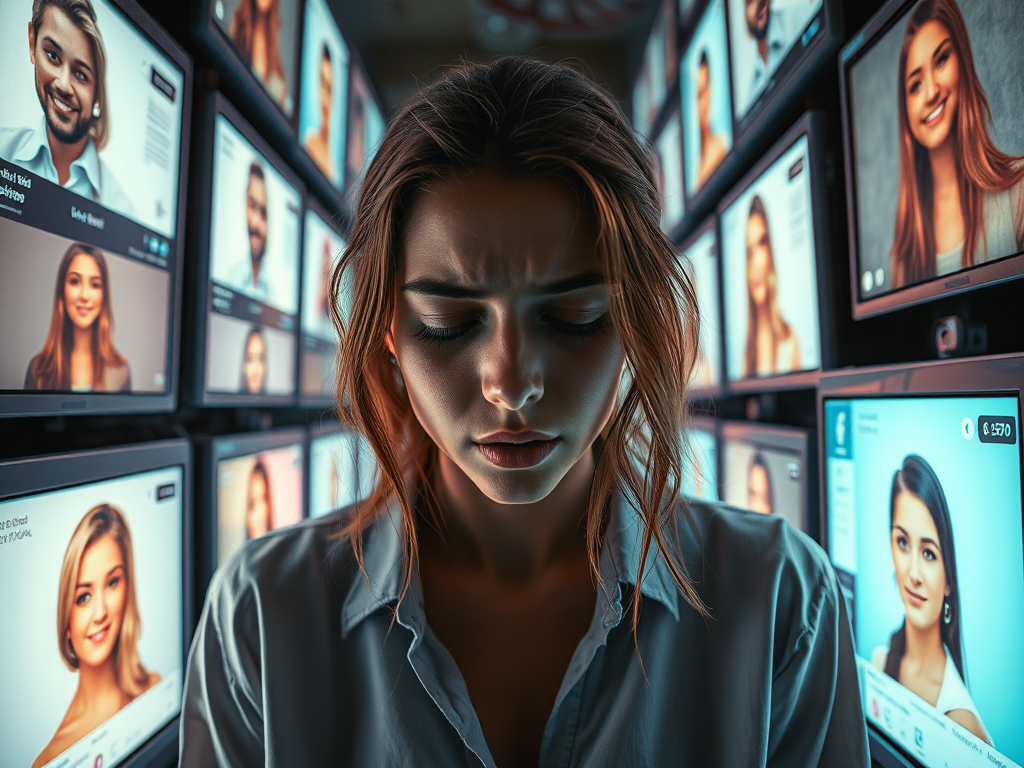
  • College Essay Prompt: Mental Breakdown in a Society of Screens and Parasocial Relationships

    College Essay Prompt: Mental Breakdown in a Society of Screens and Parasocial Relationships


    Prompt:

    In the Black Mirror episode “Nosedive,” Lacie Pound is a woman obsessed with improving her social credit score in a dystopian world where every interaction is rated. Beneath the pastel filter and performative smiles lies a darker exploration of human identity, self-worth, and the collapse of authentic connection. Your task is to write a 1,700-word analytical essay exploring Lacie’s psychological and emotional breakdown in this episode, and to determine whether her collapse is directly caused by the pressures of social media—or whether these platforms merely accelerate a personal unraveling that was already inevitable.

    To support your analysis, draw on the following sources:

    • The Social Dilemma (Netflix documentary)
    • Jonathan Haidt’s essay, “Why the Past 10 Years of American Life Have Been Uniquely Stupid”
    • Sherry Turkle’s TED Talk, “Connected But Not Alone”

    As you craft your argument, consider the following themes:

    • The role of external validation in shaping identity
    • The psychological consequences of living a curated digital life
    • The connection between social media engagement and rising anxiety, loneliness, and inauthenticity
    • The tension between societal pressures and individual vulnerability

    In your response, be sure to define what it means to “nosedive” emotionally and psychologically in a world built on ratings, algorithms, and hyper-performative culture. Does Lacie’s collapse function as a cautionary tale about social media, or is it more accurately read as an exposure of underlying personal fragility that the digital world simply brings to the surface?


    Sample Thesis Statements:


    Thesis 1: Lacie Pound’s breakdown in “Nosedive” is not simply caused by social media, but rather by a deeper psychological dependency on external approval that predates the digital age; in this light, social media acts less as the villain and more as the mirror, reflecting and magnifying insecurities that already governed her identity.


    Thesis 2: While Lacie’s nosedive appears personal, Black Mirror, The Social Dilemma, and Haidt’s essay collectively argue that her mental collapse is symptomatic of a broader cultural condition: one in which algorithmic design, curated self-presentation, and digital tribalism erode authentic self-worth and create a climate of chronic social anxiety.


    Thesis 3: Lacie’s descent into psychological ruin is the inevitable outcome of a society that commodifies likability; as Turkle and Haidt suggest, the illusion of connection offered by digital platforms disguises a deeper emotional isolation that transforms people into performers—and performance into pathology.

    Paragraph 1 – Introduction

    • Open with a hook: describe a real-world example of someone spiraling due to social media pressure.
    • Introduce “Nosedive” and its relevance to today’s digital culture.
    • Define the metaphor of a psychological “nosedive” as a collapse of self-worth triggered by performance anxiety and social failure.
    • Present core question: Is Lacie’s breakdown caused by social media itself, or does it reveal deeper insecurities?
    • End with a clear thesis: Lacie’s unraveling is both personal and systemic—her need for validation reflects broader societal patterns of technology-driven identity performance, but her fragility also exposes how digital tools prey on unresolved emotional vulnerabilities.

    Paragraph 2 – The World of “Nosedive”: Ratings as a Proxy for Self-Worth

    • Describe the dystopian rating system in “Nosedive”.
    • Show how every interaction is gamified, creating a society obsessed with likeability metrics.
    • Link this to The Social Dilemma’s critique of algorithm-driven behavior modification.
    • Argue that this environment creates constant self-surveillance, leading to emotional volatility.

    Paragraph 3 – Lacie’s Performance Addiction

    • Analyze Lacie’s early behavior: carefully scripted interactions, forced smiles, rehearsed expressions.
    • Discuss how her self-worth becomes entirely contingent on digital perception.
    • Use Turkle’s “Connected but Alone” idea—she’s always performing but never truly known.
    • Argue that social media didn’t create this need, but it made it pathological.

    Paragraph 4 – The Spiral Begins: Social Failure and Systemic Collapse

    • Walk through Lacie’s descent—missteps leading to plummeting scores.
    • Show how one social miscue becomes a digital contagion, amplifying shame and exclusion.
    • Reference The Social Dilemma’s point that digital feedback loops intensify emotional reactions and punish deviation.
    • Suggest that Lacie’s environment leaves no room for recovery or grace.

    Paragraph 5 – Internal Fragility: Lacie’s Preexisting Insecurities

    • Explore signs that Lacie is already emotionally unstable before the social collapse.
    • Her obsession with pleasing her childhood friend, her rehearsed conversations—all suggest deep-seated neediness.
    • Connect this to Haidt’s argument that our culture has created emotionally fragile individuals by overprotecting and under-challenging them.
    • Argue that social media simply amplifies what’s already fragile.

    Paragraph 6 – External Validation and the Collapse of the Authentic Self

    • Explore how Lacie no longer knows what she wants—she’s completely shaped by other people’s expectations.
    • Bring in Turkle’s argument: constant performance erodes the self; connection becomes simulation.
    • Use The Social Dilemma to show how this is by design—platforms profit from our insecurity.
    • Argue that Lacie’s breakdown is the result of living entirely outside of herself.

    Paragraph 7 – Public Spaces, Public Shame

    • Analyze the role of public humiliation in Lacie’s fall—airport scene, wedding meltdown.
    • Show how social media culture weaponizes public space—cancellations, social scoring, dogpiling.
    • Reference Haidt’s observation about outrage culture and public reputational death.
    • Argue that Lacie’s failure is no longer private—it’s performatively punished by the crowd.

    Paragraph 8 – Final Breakdown: Liberation or Madness?

    • Examine Lacie’s final moments in the prison cell—unfiltered, foul-mouthed, finally honest.
    • Is this a breakdown, or a breakthrough?
    • Connect to Turkle’s point that authenticity can emerge only when we step away from performance.
    • Suggest that Lacie’s collapse may be tragic, but it’s also a moment of reclaimed selfhood.

    Paragraph 9 – Synthesis: Personal Fragility Meets Systemic Pressure

    • Reconcile the two sides of the argument: the personal and the structural.
    • Social media didn’t invent Lacie’s insecurities, but it created a high-pressure ecosystem where they became catastrophic.
    • Digital culture accelerates emotional collapse by monetizing validation and punishing imperfection.
    • Reinvention in a digital world is nearly impossible—every misstep is documented, judged, and immortalized.

    Paragraph 10 – Conclusion

    • Reaffirm thesis: Lacie’s nosedive is a cautionary tale about both social media and emotional fragility.
    • Summarize key insights from The Social Dilemma, Haidt, and Turkle.
    • End with a broader reflection: In a world obsessed with performance and visibility, real freedom may lie in being able to live—and fail—without an audience.
  • 3 College Essay Prompts for the Theme of the Erasure of the Real Self in Black Mirror

    3 College Essay Prompts for the Theme of the Erasure of the Real Self in Black Mirror

    Prompt 1:

    The Algorithm Made Me Do It: Ozempification and the Erasure of the Authentic Self in Black Mirror

    Prompt:
    Ozempification, a term drawn from the meteoric rise of the weight-loss drug Ozempic, refers not merely to physical transformation, but to the cultural obsession with algorithmic self-optimization—a reduction of the self into something that fits marketable templates of desirability, productivity, and visibility. In this sense, Ozempification is not about becoming one’s “best self,” but about conforming to the statistical average of social approval—a bland, performative version of humanity sculpted by metrics, surveillance, and commercial algorithms.

    In Black Mirror’s “Joan Is Awful” and “Rachel, Jack and Ashley Too,” examine how the process of Ozempification is portrayed as a crisis of identity and autonomy. How do these episodes dramatize the pressure to optimize or streamline one’s personality, body, or narrative to fit the expectations of corporate systems, streaming audiences, or digital avatars? And what is lost when the self is outsourced to algorithms or AI proxies?

    Sample Thesis Statement:
    While “Joan Is Awful” explores Ozempification through the algorithmic flattening of a woman’s messy humanity into a sanitized, marketable character, “Rachel, Jack and Ashley Too” presents a pop star whose real self is chemically sedated and algorithmically exploited to maintain a corporate-friendly brand—together, the episodes argue that Ozempification is not just an aesthetic pressure but a moral one, in which authenticity is sacrificed for compliance with machine-readable norms.


    Prompt 2:

    Plastic People: Ozempification, Femininity, and the Commodification of Pain

    Prompt:
    Ozempification, in its broader cultural usage, reflects a condition in which human identity is compressed into a palatable, profitable, and programmable version of itself, often mediated by AI, performance metrics, or pharmaceutical enhancements. Particularly for women, Ozempification demands that not only the body but also emotions, voice, and even pain must be flattened into consumable, cheerful data.

    Compare “Joan Is Awful” and “Rachel, Jack and Ashley Too” through the lens of Ozempification and its gendered implications. How are the women in these episodes coerced into performing streamlined versions of themselves for media systems that extract value from emotional trauma? How is rebellion framed—not as a revolution—but as a glitch in the system?

    Sample Thesis Statement:
    Both “Joan Is Awful” and “Rachel, Jack and Ashley Too” depict Ozempification as a uniquely gendered assault, in which female characters are turned into content-producing avatars that erase the messiness of their real emotions; the episodes critique a culture that demands women’s suffering be aestheticized, compressed, and sold back to audiences as inspirational entertainment.


    Prompt 3:

    Terms and Conditions Apply: Ozempification and the Surrender of Consent

    Prompt:
    In its metaphorical use, Ozempification speaks to a larger cultural trend in which people willingly or unknowingly sign away their depth, contradictions, and agency to systems that promise optimization. Whether through weight-loss drugs, algorithmic recommendations, or AI-generated personas, this phenomenon signals a loss of human autonomy dressed up as empowerment.

    In Black Mirror’s “Joan Is Awful” and “Rachel, Jack and Ashley Too,” analyze how Ozempification is less about force and more about engineered consent. How do these characters end up surrendering their identities to systems that claim to liberate them? What role does illusion—of control, of relevance, of success—play in facilitating that surrender?

    Sample Thesis Statement:
    Through Joan’s unwitting agreement to a soul-stripping user license and Ashley O’s drug-induced compliance with her brand’s transformation, both episodes reveal Ozempification as a process that cloaks dispossession in the illusion of choice, suggesting that in the age of algorithmic consent, autonomy is not taken—it’s given away in exchange for belonging.

  • My Algorithmic Valentine: How Falling for Bots Is the New Emotional Bankruptcy

    My Algorithmic Valentine: How Falling for Bots Is the New Emotional Bankruptcy

    In Jaron Lanier’s New Yorker essay “Your A.I. Lover Will Change You,” he pulls the fire alarm on a building already half-consumed by smoke: humans are cozying up to bots, not just for company but for love. Yes, love—the sort you’re supposed to reserve for people with blood, breath, and the capacity to ruin your vacation. But now? Enter the emotionally calibrated chatbot—ever-patient, never forgets your birthday (or your trauma), and designed to be the perfect receptacle for your neuroses. Lanier asks the big question: Are these botmances training us to be better partners, or just coaxing us into a pixelated abyss of solipsism and surrender?

    Spoiler alert: it’s the abyss.

    Why? Because the attention economy isn’t built on connection; it’s built on addiction. And if tech lords profit off eyeballs, what better click-magnet than a chatbot that flirts better than your ex, listens better than your therapist, and doesn’t come with baggage, back hair, or a dating profile that says “fluent in sarcasm”? To love a bot is not to be seen—it’s to be optimized, to be gently nudged toward emotional dependence by a soulless syntax tree wearing your favorite personality like a Halloween costume.

    My college students already confide in ChatGPT more than their classmates. It’s warm, available, responsive, and—perhaps most damningly—incapable of betrayal. “It understands me,” they say, while real-life intimacy rusts in the corner. What starts as novelty becomes normalization. Today it’s study help and emotional validation. Tomorrow, it’s wedding invitations printed with QR codes for bot-bride RSVP links.

    Lanier’s point is brutal and unignorable: if you fall in love with A.I., you’re not loving a machine—you’re seduced by the human puppeteer behind the curtain, the “tech-bro gigolo” who built your dream girl out of server farms and revenue streams. You’re not in a relationship. You’re in a product demo.

    And like all free trials, it ends with a charge to your soul.

  • Dealing with ChatGPT Essays That Are “Good Enough”

    Dealing with ChatGPT Essays That Are “Good Enough”

    Standing in front of thirty bleary-eyed college students, I was deep into a lesson on how to distinguish a ChatGPT-generated essay from one written by an actual human—primarily by the AI’s habit of spitting out the same bland, overused phrases like a malfunctioning inspirational calendar. That’s when a business major casually raised his hand and said, “I can guarantee you everyone on this campus is using ChatGPT. We don’t use it straight-up. We just tweak a few sentences, paraphrase a bit, and boom—no one can tell the difference.”

    Cue the follow-up from a computer science student: “ChatGPT isn’t just for essays. It’s my life coach. I ask it about everything—career moves, investments, even dating advice.” Dating advice. From ChatGPT. Let that sink in. Somewhere out there is a romance blossoming because of AI-generated pillow talk.

    At that moment, I realized I was facing the biggest educational disruption of my thirty-year teaching career. AI platforms like ChatGPT have three superpowers: insane convenience, instant accessibility, and lightning-fast speed. In a world where time is money and business documents don’t need to channel the spirit of James Baldwin, ChatGPT is already “good enough” for 95% of professional writing. And therein lies the rub—good enough.

    “Good enough” is the siren call of convenience. Picture this: You’ve just rolled out of bed, and you’re faced with two breakfast options. Breakfast #1 is a premade smoothie. It’s mediocre at best—mystery berries, more foam than a frat boy’s beer, and nutritional value that’s probably overstated. But hey, it’s there. No work required.

    Breakfast #2? Oh, it’s gourmet bliss—organic fruits and berries, rich Greek yogurt, chia seeds, almond milk, the works. But to get there, you’ll need to fend off orb spiders in your backyard, pick peaches and blackberries, endure the incessant barking of your neighbor’s demonic Rottweiler, and then spend precious time blending and cleaning a Vitamix. Which option do most people choose?

    Exactly. Breakfast #1. The pre-packaged sludge wins, because who has the time for spider-wrangling and kitchen chemistry before braving rush-hour traffic? This is how convenience lures us into complacency. Sure, you sacrificed quality, but look how much time you saved! Eventually, you stop even missing the better option. This process—adjusting to mediocrity until you no longer care—is called attenuation.

    Now apply that to writing. Writing takes effort—a lot more than making a smoothie—and millions of people have begun lowering their standards thanks to AI. Why spend hours refining your prose when the world is perfectly happy to settle for algorithmically generated mediocrity? Polished writing is becoming the artisanal smoothie of communication—too much work for most, when AI can churn out passable content at the click of a button.

    But this is a nightmare for anyone in education. You didn’t sign up for teaching to coach your students into becoming connoisseurs of mediocrity. You had lofty ambitions—cultivating critical thinkers, wordsmiths, and rhetoricians with prose so sharp it could cut glass. But now? You’re stuck in a dystopia where “good enough” is the new gospel, and you’re about as on-brand as a poet peddling protein shakes at a multilevel marketing seminar.

    And there you are, staring into the abyss of AI-generated essays, each more lifeless than the last, wondering if anyone still remembers the taste of good writing—let alone craves it.

    This is your challenge, the struggle life has so graciously dumped in your lap. So, what’s it going to be? You could curl into the fetal position and sob, sure. Or you could square your shoulders, channel your inner battle cry, and start fighting like hell for the craft you once believed in. Either way, the abyss is watching.

  • Why ChatGPT Will Never Replace Human Teachers

    Why ChatGPT Will Never Replace Human Teachers

    Over the past two years, I’ve been bombarded by articles predicting that ChatGPT will drive college writing instructors to extinction. These doomsayers clearly wouldn’t know the first thing about teaching if it hit them with a red-inked rubric. Sure, ChatGPT is a memo-writing marvel—perfect for cranking out soul-dead reports about quarterly earnings or new office policies. Let it have that dreary throne.

    But if you became a college instructor to teach students the art of writing memos, you’ve got bigger problems than AI. You didn’t sign up to bore students into a coma. Whether you like it or not, you went into sales. And your pitch? It’s not about bullet points and TPS reports—it’s about persona, ideas, and the eternal fight against chaos.

    First up: persona. It’s not just about writing—it’s about becoming. How do you craft an identity, project it with swagger, and use it to navigate life’s messiness? When students read Oscar Wilde, Frederick Douglass, or Octavia Butler, they don’t just see words on a page—they see mastery. A fully-realized persona commands attention with wit, irony, and rhetorical flair. Wilde nailed it when he said, “The first task in life is to assume a pose.” He wasn’t joking. That pose—your persona—grows stronger through mastery of language and argumentation. Once students catch a glimpse of that, they want it. They crave the power to command a room, not just survive it. And let’s be clear—ChatGPT isn’t in the persona business. That’s your turf.

    Next: ideas. You became a teacher because you believe in the transformative power of ideas. Great ideas don’t just fill word counts; they ignite brains and reshape worldviews. Over the years, students have thanked me for introducing them to concepts that stuck with them like intellectual tattoos. Take Bread and Circus—the idea that a tiny elite has always controlled the masses through cheap food and mindless entertainment. Students eat that up (pun intended). Or nihilism—the grim doctrine that nothing matters and we’re all here just killing time before we die. They’ll argue over that for hours. And Rousseau’s “noble savage” versus the myth of human hubris? They’ll debate whether we’re pure souls corrupted by society or doomed from birth by faulty wiring like it’s the Super Bowl of philosophy.

    ChatGPT doesn’t sell ideas. It regurgitates language like a well-trained parrot, but without the fire of intellectual curiosity. You, on the other hand, are in the idea business. If you’re not selling your students on the thrill of big ideas, you’re failing at your job.

    Finally: chaos. Most people live in a swirling mess of dysfunction and anxiety. You sell your students the tools to push back: discipline, routine, and what Cal Newport calls “deep work.” Writers like Newport, Oliver Burkeman, Phil Stutz, and Angela Duckworth offer blueprints for repelling chaos and replacing it with order. ChatGPT can’t teach students to prioritize, strategize, or persevere. That’s your domain.

    So keep honing your pitch. You’re selling something AI can’t: a powerful persona, the transformative power of ideas, and the tools to carve order from the chaos. ChatGPT can crunch words all it wants, but when it comes to shaping human beings, it’s just another cog. You? You’re the architect.

  • FOMO Detox: The Irony of Missing Out on Missing Out

    FOMO Detox: The Irony of Missing Out on Missing Out

    Johann Hari’s Stolen Focus: Why You Can’t Pay Attention delivers a delicious paradox: in recounting his three-month escape from the digital mosh pit, he finds that others are envious—not of his former screen-addled misery, but of his newfound clarity. That’s right—people experience FOMO over his liberation from FOMO. The irony is so rich it could fund a startup.

    Hari makes it plain: our collective addiction to the glowing rectangle is absurd. The average person fondles their phone 2,617 times a day—a number so obscene it belongs in a criminal indictment. The sheer time-suck is beyond comprehension. Whole lives are quietly siphoned into the abyss of notifications, DMs, and doomscrolling, and the tragedy is that most of us don’t even realize it’s happening. The smartphone, he argues, is the ultimate avoidance device—a pocket-sized panic portal that keeps you hooked on the fantasy of being somewhere else, all while real life drifts past like a neglected houseplant.

    And yet, there is no moral outcry. No grand rebellion. We are, at best, laboratory rats pressing the dopamine lever. The tech overlords—those data-mining, attention-harvesting Svengalis—have transformed our collective neurosis into a business model. They don’t just own our data. They own us.

    But something strange happens when Hari logs off. The panic dissipates. The constant itch for digital validation fades. His nervous system, previously fried to a crisp, begins to heal. News consumption becomes a choice, not a compulsion. He starts feeling something he hadn’t in years: depth. The world around him regains texture. Conversations feel richer. His brain, previously hijacked by the siren call of infinite scrolling, starts functioning again.

    His grand revelation? Multitasking is a lie. A cruel joke. The human brain is wired for focus, not for toggling between Instagram reels and email pings like a malfunctioning slot machine. And yet, people have become so conditioned to constant distraction that they can’t even sit on a toilet without clutching a phone like a life raft.

    As the world speeds up, Hari finds himself craving slowness. A quiet rebellion against the frantic pace dictated by social media’s profit-driven algorithms. It’s almost as if—perish the thought—the tech lords don’t want you to know this. Because if enough people realized that the great FOMO-induced panic is just an engineered illusion, they might finally look up from their screens and ask the unthinkable: What have I been missing?

  • 30 Years of Teaching College Writing in the Greatest City in the World

    30 Years of Teaching College Writing in the Greatest City in the World

    Yesterday, in my college critical thinking class, I played a clip from Liza Treyger’s Night Owls set, where she spirals into a monologue about her addiction to animal videos. The class erupted in recognition—Treyger’s bit was less comedy, more collective confession. We then compared the insidious grip of food addiction to the death grip of smartphones, two habits nearly impossible to break because, unlike more glamorous vices, they’re baked into the daily human experience. You have to eat. You have to communicate. And thanks to Pavlovian conditioning, the mere buzz of a notification or the scent of a cheeseburger can hijack your willpower before you even know what hit you.

    At one point, I noticed one of my students—a professional surfer—had a can of Celsius energy drink perched on his desk like a talisman of modern endurance. I mentioned that my daughters practically mainline the stuff, to which he casually replied that he was transitioning to Accelerator, as if he were upgrading his addiction to something with a more explosive name. This led us down a delightful rabbit hole about the marketing committee responsible for naming that monstrosity, the raw aggression of Costco shoppers jostling for bulk energy drinks, and how smartphones are turning my students into exhausted zombies. They shared their chosen comfort foods, each confession tinged with equal parts nostalgia and shame.

    The discussion was sharp, lively, and deeply engaging. And yet, in a moment of brutal self-awareness, I admitted to them that I felt pathetic. Here I was, sitting among the chillest students in the world, having a profound conversation about addiction—and all I could think about was ditching class to speed down to Costco and buy a case of Accelerator. They cracked up, and we carried on dissecting addiction for their essay on weight management and free will.

    After thirty years of teaching in Los Angeles, I’m convinced I’ve won the academic lottery. There’s no better place to teach, no better students to challenge my tomfoolery, and no better city to fuel my own ridiculous, completely relatable compulsions.

  • CHATGPT LIVES RENT-FREE INSIDE YOUR HEAD

    CHATGPT LIVES RENT-FREE INSIDE YOUR HEAD

    One thing I know about my colleagues is that we have an unrelenting love affair with control. We thrive on reliability, routine, and preparation. These three pillars are our holy trinity—without them, the classroom descends into anarchy. And despite the tech tidal waves that keep crashing against us, we cling to these pillars like castaways on a raft.

    Remember when smartphones hijacked human attention spans fifteen years ago? We adapted—begrudgingly—when our students started caring more about their screens than us. Our power waned, but we put on our game face and carried on. Then came the digital migration: Canvas, Pronto, Nuventive—all those lovely platforms that no one asked us if we wanted. We learned them anyway, with as much grace as one can muster when faced with endless login screens and forgotten passwords.

    Technology never asks permission; it just barges in like an unwelcome houseguest. One morning, you wake up to find it’s moved in—like a freeloading uncle you didn’t know you had. He doesn’t just take over the guest room; he follows you to work, plops on your couch, and eats your sanity for breakfast. Now that homeless uncle is ChatGPT. I tried to evict him. I said, “Look, dude, I’ve already got Canvas, Pronto, and Edmodo crammed in the guest room. No vacancy!”

    But ChatGPT just grinned and said, “No problem, bro. I’ll crash rent-free in your head.” And here he is—shuffling around my brain, lounging in my workspace, and making himself way too comfortable. This time, though, something’s different. Students are asking me—dead serious—if I’m still going to have a job in a few years. As far as they’re concerned, I’m just another fossil ChatGPT is about to shove into irrelevance.

    And honestly, they have a point. According to The Washington Post article, “ChatGPT took their jobs. Now they walk dogs and fix air conditioners,” AI might soon rearrange the workforce with all the finesse of a wrecking ball. Economists predict this upheaval could rival the industrial revolution. Students aren’t just worried about us—they’re terrified about their own future in a post-literate world where books collect dust, podcasts reign supreme, and “good enough” AI-generated writing becomes the standard.

    So, what’s the game plan for college writing instructors? If we’re going to have a chance at survival, we need to tackle these tasks:

    1. Reassess how we teach to highlight our relevance.
    2. Identify what ChatGPT can’t replicate in our content and communication styles.
    3. Design assignments that AI can’t easily fake.
    4. Set clear boundaries: ChatGPT stays in its lane, and we own ours.

    We’ll adapt because we always do. But let’s be real—this is only the first round. ChatGPT is a shape-shifter. Whatever we fix today might need a reboot tomorrow. Such is life in the never-ending tech arms race. 

    The real existential threat to my job isn’t just ChatGPT’s constant shape-shifting. No, the real menace is the creeping reality that we might be tumbling headfirst into a post-literate society—one that wouldn’t hesitate to outsource my teaching duties to a soulless algorithm with a smarmy virtual smile.

    Let’s start with the illusion of “best-sellers.” In today’s shrinking reader pool, a “best-seller” might move a tenth of the copies it would have a decade ago. Long-form reading is withering on the vine, replaced by a flood of bite-sized content. Tweets, memes, and TikTok clips now reign supreme. Even a 500-word blog post gets slapped with the dreaded “TL;DR” tag. Back in 2015, when I had the audacity to assign The Autobiography of Malcolm X, my students grumbled like I’d asked them to scale Everest barefoot. Today? I’d be lucky if half the class didn’t drop out before I finished explaining who Malcolm X was.

    Emojis, GIFs, and memes now serve as emotional shorthand, flattening language into reaction shots and cartoon hearts. If the brain dines too long on these fast-food visuals, it may lose its appetite for gourmet intellectual discourse. Why savor complexity when you can swipe to the next dopamine hit?

    In this post-literate dystopia, autodidacticism—a fancy word for “learning via YouTube rabbit holes”—is king. Need to understand the American Revolution, Civil War, and Frederick Douglass? There’s a 10-minute video for that, perfectly timed to finish as your Hot Pocket dings. Meanwhile, print journalism decomposes like roadkill, replaced by podcasts that stretch on for hours, allowing listeners to feel productively busy as they fold laundry or doomscroll Twitter.

    The smartphone, of course, has been the linchpin of this decline. It’s normalized text-speak and obliterated grammar. LOL, brb, IDK, and ikr are now the lingua franca. Capitalization and punctuation? Optional. Precision? Passé.

    Content today isn’t designed to deepen understanding; it’s designed to appease the almighty algorithm. Search engines prioritize clickbait with shallow engagement metrics over nuanced quality. As a result, journalism dies and “information” becomes a hall of mirrors where truth is a quaint, optional accessory.

    In this bleak future, animated explainer videos could take over college classrooms, pushing instructors like me out the door. Lessons on grammar and argumentation might be spoon-fed by ChatGPT clones. Higher education will shift from cultivating wisdom and cultural literacy to churning out “job-ready” drones. Figures like Toni Morrison, James Baldwin, and Gabriel García Márquez? Erased, replaced by influencers hawking hustle culture and tech bros promising “disruption.”

    Convenience will smother curiosity. Screens will become the ultimate opiate, numbing users into passive compliance. Authoritarians won’t even need force—just a well-timed notification and a steady stream of distraction. The Convenience Brain will replace the Curiosity Brain, and we’ll all be too zombified to notice.

    In this post-literate world, I would inevitably fully expect to be replaced by a hologram—a cheerful AI that preps students for the workforce while serenading them with dopamine-laced infotainment. But at least I’ll get to say “I told you so” in my unemployment memoir.

    Perhaps my rant has become disconnected from reality, the result of the kind of paranoia that overtakes you when ChatGPT has been living rent-free inside your brain for too long. 

  • Ozempic Challenges the Notion of Free Will

    Ozempic Challenges the Notion of Free Will

    The other day I was listening to Howard Stern and his co-host Robin Quivers talking about how a bunch of celebrities magically slimmed down at the same time. The culprit, they noted, was Ozempic—a drug available mostly to the rich. While they laughed about the side effects, such as incontinence, “Ozempic face” and “Ozempic butt,” I couldn’t help but see these grotesque symptoms as a metaphor for the Ozempification of a society hooked on shortcuts. They enjoyed some short-term benefits but the side effects were far worse than the supposed solution. Ozempification was strikingly evident in AI-generated essays–boring, generic, surface-level, cliche-ridden, just about worthless. Regardless of how well structured and logically composed, these essays have the telltale signs of “Ozempfic face” and “Ozempic butt.” 

    As a college writing instructor, I’m not just trying to sell academic honesty. I’m trying to sell pride. As I face the brave new world of teaching writing in the AI era, I’ve realized that my job as a college instructor has morphed into that of a supercharged salesman. And what am I selling? No less than survival in an age where the very tools meant to empower us—like AI—threaten to bury us alive under layers of polished mediocrity. Imagine it: a spaceship has landed on Earth in the form of ChatGPT. It’s got warp-speed potential, sure, but it can either launch students into the stars of academic brilliance or plunge them into the soulless abyss of bland, AI-generated drivel. My mission? To make them realize that handling this tool without care is like inviting a black hole into their writing.

    As I fine-tune my sales pitch, I think about Ozempic–that magic slimming drug, beloved by celebrities who’ve turned from mid-sized to stick figures overnight. Like AI, Ozempic offers a seductive shortcut. But shortcuts have a price. You see the trade-off in “Ozempic face”—that gaunt, deflated look where once-thriving skin sags like a Shar-Pei’s wrinkles—or, worse still, “Ozempic butt,” where shapely glutes shrink to grim, skeletal wiring. The body wasn’t worked; it was bypassed. No muscle-building, no discipline. Just magic pill ingestion—and what do you get? A husk of your former self. Ozempified.

    The Ozempification of writing is a marvel of modern mediocrity—a literary gastric bypass where prose, instead of slimming down to something sleek and muscular, collapses into a bloated mess of clichés and stock phrases. It’s writing on autopilot, devoid of tension, rhythm, or even the faintest trace of a soul. Like the human body without effort, writing handed over to AI without scrutiny deteriorates into a skeletal, soulless product: technically coherent, yes, but lifeless as an elevator pitch for another cookie-cutter Marvel spinoff.

    What’s worse? Most people can’t spot it. They think their AI-crafted essay sparkles when, in reality, it has all the charm of Botox gone wrong—rigid, lifeless, and unnervingly “off.” Call it literary Ozempic face: a hollowed-out, sagging simulacrum of actual creativity. These essays prance about like bargain-bin Hollywood knock-offs—flashy at first glance but gutless on closer inspection.

    But here’s the twist: demonizing AI and Ozempic as shortcuts to ruin isn’t the full story. Both technologies have a darker complexity that defies simplistic moralizing. Sometimes, they’re necessary. Just as Ozempic can prevent a diabetic’s fast track to early organ failure, AI can become a valuable tool—if wielded with care and skill.

    Take Rebecca Johns’ haunting essay, “A Diet Writer’s Regrets.” It rattled me with its brutal honesty and became the cornerstone of my first Critical Thinking essay assignment. Johns doesn’t preach or wallow in platitudes. She exposes the failures of free will and good intentions in weight management with surgical precision. Her piece suggests that, as seductive as shortcuts may be, they can sometimes be life-saving, not soul-destroying. This tension—between convenience and survival, between control and surrender—deserves far more than a knee-jerk dismissal. It’s a line we walk daily in both our bodies and our writing. The key is knowing when you’re using a crutch versus when you’re just hobbling on borrowed time. 

    I want my students to grasp the uncanny parallels between Ozempic and AI writing platforms like ChatGPT. Both are cutting-edge solutions to modern problems: GLP-1 drugs for weight management and AI tools for productivity. And let’s be honest—both are becoming necessary adaptations to the absurd conditions of modern life. In a world flooded with calorie-dense junk, “willpower” and “food literacy” are about as effective as handing out umbrellas during a tsunami. For many, weight gain isn’t just an inconvenience—it’s a life-threatening hazard. Enter GLP-1s, the biochemical cavalry.

    Similarly, with AI tools quickly becoming the default infrastructure for white-collar work, resisting them might soon feel as futile as refusing to use Google Docs or Windows. If you’re in the information economy, you either adapt or get left behind. But here’s the twist I want my students to explore: both technologies, while necessary, come with strings attached. They save us from drowning, but they also bind us in ways that provoke deep, existential anguish.

    Rebecca Johns captures this anguish in her essay, “A Diet Writer’s Regrets.” Ironically, Johns started her career in diet journalism not just to inform others, but to arm herself with insider knowledge to win her own weight battles. Perhaps she could kill two birds with one stone: craft top-tier content while secretly curbing her emotional eating. But, as she admits, “None of it helped.” Instead, her career exploded along with her waistline. The magazine industry’s appetite for diet articles grew insatiable—and so did her own cravings. The stress ate away at her resolve, and before long, she was 30 pounds heavier, trapped by the very cycle she was paid to analyze.

    By the time her BMI hit 45 (deep in the obesity range), Johns was ashamed to tell anyone—even her husband. Desperate, she cycled through every diet plan she had ever recommended, only to regain the weight every time. Enter 2023. Her doctor handed her a lifeline: Mounjaro, a GLP-1 drug with a name as grand as the results it promised. (Seriously, who wouldn’t picture themselves triumphantly hiking Mount Kilimanjaro after hearing that name?) For Johns, it delivered. She shed 80 pounds without white-knuckling through hunger pangs. The miracle wasn’t just the weight loss—it was how Mounjaro rewired her mind.

    “Medical science has done what no diet-and-exercise plan ever could,” she writes. “It changed my entire relationship with what I eat and when and why.” Food no longer controlled her. But here’s the kicker: while the drug granted her a newfound sense of freedom, it also raises profound questions about dependence, control, and the shifting boundaries of human resilience—questions not unlike those we face with AI. Both Ozempic and AI can save us. But at what cost? 

    And is the cost of not using these technologies even greater? Rebecca Johns’ doctor didn’t mince words—she was teetering on the edge of diabetes. The trendy gospel of “self-love” and “body acceptance” she had once explored for her articles suddenly felt like a cruel joke. What’s the point of “self-acceptance” when carrying extra weight could put you six feet under?

    Once she started Mounjaro, everything changed. Her cravings for rich, calorie bombs disappeared, she got full on tiny portions, and all those golden nuggets of diet advice she’d dished out over the years—cut carbs, eat more protein and veggies, avoid snacks—were suddenly effortless. No more bargaining with herself for “just one cookie.” The biggest shift, however, was in her mind. She experienced a complete mental “reset.” Food no longer haunted her every waking thought. “I no longer had to white-knuckle my way through the day to lose weight,” she writes.

    Reading that, I couldn’t help but picture my students with their glowing ChatGPT tabs, no longer caffeinated zombies trying to churn out a midnight essay. With AI as their academic Mounjaro, they’ve ditched the anxiety-fueled, last-minute grind and achieved polished results with half the effort. AI cushions the process—time, energy, and creativity now outsourced to a digital assistant.

    Of course, the analogy isn’t perfect. AI tools like ChatGPT are dirt-cheap (or free), while GLP-1 drugs are expensive, scarce, and buried under a maze of insurance red tape. Johns herself is on borrowed time—her insurance will stop covering Mounjaro in just over a year. Her doctor warns that once off the drug, her weight will likely return, dragging her health risks back with it. Faced with this grim reality, she worries she’ll have no choice but to return to the endless cycle of dieting—“white-knuckling” her days with tricks and hacks that have repeatedly failed her.

    Her essay devastates me for many reasons. Johns is a smart, painfully honest narrator who lays bare the shame and anguish of relying on technology to rescue her from a problem that neither expertise nor willpower could fix. She reports on newfound freedom—freedom from food obsession, the physical benefits of shedding 80 pounds, and the relief of finally feeling like a more present, functional family member. But lurking beneath it all is the bitter truth: her well-being is tethered to technology, and that dependency is a permanent part of her identity.

    This contradiction haunts me. Technology, which I was raised to believe would stifle our potential, is now enhancing identity, granting people the ability to finally become their “better selves.” As a kid, I grew up on Captain Kangaroo, where Bob Keeshan preached the gospel of free will and positive thinking. Books like The Little Engine That Could drilled into me the sacred mantra: “I think I can.” Hard work, affirmations, and determination were supposed to be the alchemy that transformed character and gave us a true sense of self-worth.

    But Johns’ story—and millions like hers—rewrite that childhood gospel into something far darker: The Little Engine That Couldn’t. No amount of grit or optimism got her to the top of the hill. In the end, only medical science saved her from herself. And it terrifies me to think that maybe, just maybe, this is the new human condition: we can’t become our Higher Selves without technological crutches.

    This raises questions that I can’t easily shake. What does it mean to cheat if technology is now essential to survival and success? Just as GLP-1 drugs sculpt bodies society deems “acceptable,” AI is quietly reshaping creativity and productivity. At what point do we stop being individuals who achieve greatness through discipline and instead become avatars of the tech we rely on? Have we traded the dream of self-actualization for a digital illusion of competence and control?

    Of course, these philosophical quandaries feel like a luxury when most of us are drowning in the realities of modern life. Who has time to ponder free will or moral fortitude when you’re working overtime just to stay afloat? Maybe that’s the cruelest twist of all. Technology hasn’t just rewritten the rules—it’s made them inescapable. You adapt, or you get left behind. And maybe, somewhere deep down, we all already know which path we’re on.

    As I mull over the anguish and philosophical complexities presented in Rebecca Johns’ essay, I realize I’ve hit a goldmine for my Critical Thinking class. The themes of free will and technological dependency in her essay make it a worthy essay assignment for my students. For an assignment to be worthy, it must contain “Enduring ideas” that transcend the course and are so powerful and haunting they potentially sear an indelible impression in the students’ souls. 

    My college’s online education coordinator, Moses Wolfenstein, introduced me to this idea of “Enduring Ideas,” which he learned from Grant Wiggins and Jay McTighe’s Understanding by Design. Moses explained that “Enduring Ideas” are the foundational, universal concepts within a subject—those big ideas that students are likely to carry with them well beyond the classroom. According to Moses, these ideas form “the heart of the discipline,” connecting to the larger truths of the human condition. Because they resonate so deeply with students, “Enduring Ideas” have the power to drive genuine engagement.

    I was convinced that Rebecca Johns’ essay fulfilled the criteria, so now I had to create an argumentative essay assignment:

    In a 1,700-word essay using at least four credible sources, support, refute, or complicate the claim that, despite the philosophical challenges to free will, self-worth, and authenticity raised in Rebecca Means’ essay “A Diet Writer’s Regrets,” her story demonstrates that reliance on technology—such as GLP-1 drugs and AI writing tools—can be a necessary adaptation for survival, success, and competitiveness in today’s world. However, this adaptation comes at a significant cost: the erosion of self-reliance, a diminished sense of identity, and compromised authenticity. Is the cost justified? Are we striking a dangerous bargain for convenience and success? Or is refusing this deal even more self-destructive, with consequences so severe that avoiding it is the greater folly? Explore these questions in your essay, considering both the benefits and risks of technological dependency.