Tag: travel

  • The Abbot’s Misfits

    The Abbot’s Misfits

    I arrived at the Palos Verdes trails just before ten, and the heat was already doing its best impression of a convection oven. The mountainous trails, baking under the relentless sun, were separated from the street by a chain-link fence that looked like it had given up on life years ago. Inside the confines of this makeshift pen, several dozen goats were having the time of their lives munching on dry grass as if it were the most gourmet hay in existence. Their faces were a mix of innocent curiosity and that absurd kind of adorableness that makes you momentarily consider swearing off lamb chops forever. I made a mental note to “consider veganism” again, a notion I promptly squashed with vivid memories of my O-positive blood rejoicing every time I indulged in a perfectly seared ribeye. Hello, goats—you’re safe because it looks like I’ll stick with beef.

    By the goats, a white tent had been pitched like some sort of mirage, and under it, a circle of chairs was arranged with the precision of a cult meeting—or worse, a corporate team-building exercise. The man who had the audacity to call himself the Abbot greeted me with a grin that suggested we were about to embark on a day of carefree yachting rather than whatever bizarre ritual he had planned. Forget the flowing robes and monastic aura—I was greeted by a fitness model straight out of an overenthusiastic health magazine. Neatly pressed cargo shorts hugged his cycler’s thighs like they had been tailored for the occasion, and his olive T-shirt clung to a body sculpted by what could only be an unholy alliance with a CrossFit gym. 

    A cross-body sling bag was slung over one of his thin yet annoyingly muscular arms, which were covered in veins that seemed to be competing in an under-skin relay race. His jawline could have cut glass, and his neatly sculpted silver hair made him look like he’d stepped out of an L.L.Bean catalog. But it was his eyes that really got me—blazing blue orbs that looked like they belonged on the figurehead of a Viking ship, ready to plunder and pillage. 

    “Graham, come join us,” he said with the kind of enthusiasm that suggested we were minutes away from sipping mimosas on a luxury yacht. “We are just moments away from the interrogation.” The way he said “interrogation” made it sound like a delightful little jaunt instead of, you know, something that involved possible torture or at least a really awkward group discussion.

    The most striking thing about the Abbot wasn’t his absurdly chiseled jawline or his militant posture; it was the overwhelming stench of lavender and rose water that assaulted my senses the moment I got within a hundred yards of him. This man hadn’t just splashed himself with these fragrances—he’d practically marinated in them. It was as if he’d decided to pickle himself in a floral potpourri so potent that it probably had bees tailing him for miles. I half-expected to find petals stuck to his skin.

    As I reluctantly made my way under the tent, I was greeted by the sight of six people slumped in those classic, soul-crushing folding chairs that practically shriek, “We’re only here for the free food.” These weren’t just any ordinary folks. No, these were the future friends, foes, and backstabbers who would weave themselves into the disaster that would soon be my life—though at that moment, they all just looked like they were wondering when the punchline of this bizarre setup was going to drop. Spoiler: It never did.

    Behind them, a table stood like a beacon of false hope. A giant pitcher of cucumber water glistened in the sunlight, promising hydration that would do nothing to wash away the impending madness. But what truly caught my eye was the stack of cakes beside it. They looked innocent enough, these little golden blocks, but I would soon discover that they were the Abbot’s specialty—cornbread cakes made with applesauce, honey, and some vanilla-flavored soy protein powder that tasted suspiciously delicious. These cakes weren’t just a snack; they were a trap, a gateway drug that would soon have me spiraling into a carb-induced dependency I hadn’t seen coming. But let’s not jump ahead—there’s plenty of time to explore how these seemingly harmless cakes would drag me into the Abbot’s world of sweet-smelling insanity.

    For now, let’s just say that in that moment, my biggest mistake wasn’t walking into the tent—it was deciding to stay. But hey, who could resist free “light refreshments”?

    With one arm draped around my back like a used car salesman about to seal a shady deal, the Abbot steered me toward the motley crew assembled under the tent. He flashed a benevolent smile, the kind that makes you wonder if he’s about to offer you enlightenment or swindle you into buying a timeshare in Cancun. “My friends,” he announced with all the pomp of a second-rate cult leader, “Graham has graced us with his presence. He is a college writing instructor with many gifts, though I’ll let him elaborate on those special talents later.” His smile suggested that whatever “gifts” I possessed were about to be squeezed out of me like juice from a lemon.

    He pointed at each member of the ragtag group, starting with Abigail, a woman in her early fifties who looked like she’d been carved out of a block of pale, pasty clay by a very angry sculptor. Her squat frame and monkish haircut didn’t do her any favors, but she smiled with the kind of pride usually reserved for people who’ve just completed their first marathon, despite the fact that she hailed from Gorman—a town so small it might as well not exist—where she’d spent her youth dodging aggressive chickens on her parents’ farm. Abigail proudly raised three fingers, showcasing them as if they were battle scars, and regaled us with tales of surviving on a teeth-rotting diet of PayDay bars and orange Fanta until she discovered The Abbot’s life-altering cornbread cakes. You’d think she’d found the Holy Grail, but instead, it was just some glorified baked goods.

    Next up was Larry, a man in his late forties who had apparently modeled his look on a 1970s mafia reject. His long, slicked-back hair and tinted sunglasses made him look like he was auditioning for the role of “Skeevy Casino Manager” in an off-off-Broadway production. Dressed in black jeans and a too-tight white T-shirt that clung to his muscular upper body like a bad decision, he had the kind of physique that screamed “I skipped leg day,” with spindly legs that looked like they’d snap under the weight of his overly pumped chest. Larry had once been a professional gambler until every casino in the area wisely decided he was bad for business. Now, he managed an upscale Mexican restaurant at Del Amo Mall—a stone’s throw from my house—where he spent his days chain-drinking Red Bull and dreaming of the good old days. “I was probably killing myself drinking all those chemicals and caffeine,” he said, “but thanks to the Abbot and his cornbread cakes, I’m learning the true path.” 

    Larry’s brother Stinky, who looked like he’d just crawled out of the primordial ooze, sat next to him. With shaggy blond hair, deep pockmarks, and a forehead that could have been used as a Neanderthal fossil exhibit, Stinky was the kind of guy who seemed to wear his heartbreak on his sleeve—and his face. In his late thirties and still stuck in a dead-end job at a Costco warehouse, he was the embodiment of a bad country song. His high school sweetheart had skipped town with his engagement ring and now worked as a “hostess” at various questionable establishments in Miami. “Self-pity is my addiction,” he confessed, as if he’d just admitted to a crippling heroin habit. But don’t worry—the Abbot was going to give him a “second shot at life,” presumably with a side of cornbread cakes.

    Maurice shuffled forward, a short, wiry guy with a dark complexion. Looking much younger than his age of forty, his kid’s face was set in a permanent grimace, like he’d just stepped in something nasty and couldn’t shake the stench. He was dressed with the precision of a man who either had nowhere else to go or was meticulously planning his escape. His crisp, white-collared sports shirt and navy blue shorts looked fresh out of the package as if he had bought them specifically for this occasion, only to instantly regret his decision. The sandals on his feet were so spotless they might as well have come with a warning label: “For display purposes only.”

    Maurice radiated the enthusiasm of someone attending a surprise tax audit. If this were a beach day, he’d be the guy hunched under a too-small umbrella, clutching a lukewarm beer like it was his only friend, and glaring daggers at the carefree seagulls circling above, as if they were personally responsible for all the miseries in his life. Every inch of him screamed that he’d rather be anywhere but here, and the irony was that he looked like he was dressed for a casual day out, just not one that involved other human beings.

    To Maurice, this gathering was less of a spiritual intervention and more of a cruel and unusual punishment. His body language said, “I’m here under duress,” and his eyes, narrowed to slits, darted around the group as if calculating the quickest exit. It was clear that Maurice wasn’t here to bare his soul—he was here to endure the ordeal with as much stoic misery as possible. With a degree in computer science and the personality of a dial-up modem, Maurice was the poster child for disillusionment. Recently divorced and demoted from homeowner to condo dweller in Harbor City, he shared this nugget of personal failure with all the enthusiasm of someone recapping their latest colonoscopy. His intro was short, sour, and dripping with enough bitterness to make a lemon blush. You could tell Maurice wasn’t here to find inner peace—he was here because the thought of a one-on-one with the Abbot made him more uncomfortable than the idea of being stuck in a dentist’s chair.

    Sitting next to Maurice was Jason, the group’s designated eye candy. With his languid gray eyes, full lips, and high cheekbones, Jason looked like he’d just stepped off the set of a Calvin Klein ad. But beneath the chiseled exterior was a life insurance salesman and mixed martial arts fighter who’d spent his formative years studying jiu-jitsu and muay thai to protect his siblings from their alcoholic father. His good looks and business success were a smokescreen for the social anxieties and commitment issues that plagued him. “I’m here to find answers,” he said, his voice dripping with the kind of melodrama usually reserved for soap operas.

    Finally, there was Howard Burn, the Abbot’s right-hand man, who looked like he’d been assembled from spare parts left over from a mad scientist’s experiment. Tall and lanky with a head of perfectly coiffed black hair, Howard had the angular, contemplative face of someone who took himself way too seriously. He clutched a notebook in his lap, furiously scribbling notes like a star student at Cult Leader 101. When he introduced himself, it was with all the joy of a man who’d just been informed his house was on fire. “It has been my great pleasure to work for the Abbot for the last three years,” he said, his tone suggesting that “pleasure” was a foreign concept to him. Before joining the Abbot’s merry band of misfits, Howard’s life had been a blur, a meaningless existence spent wandering from one menial job to the next. But the Abbot had changed all that, and for the first time, Howard felt like he had purpose—presumably one that involved handing out a lot of cornbread cakes.

    The Abbot beamed at Howard like a proud father, the kind who gives his kid a pat on the back for finally tying his own shoes. “Well said, my son,” his smile seemed to convey as if the entire room was one big happy family. 

    But then the interrogation began, and any illusion of a cozy kumbaya moment evaporated faster than a politician’s promise after election day.

    The Abbot, who’d suddenly transformed from a benevolent guru into a reality TV judge on a power trip, fixed his steely gaze on Abigail. “We’ll start with you,” he declared, like a dentist about to extract a tooth without anesthesia. “Small-town girl, former fast-food overlord, now a landscaper, and you’re still spiraling from that breakup. Jennifer, wasn’t it? She moved in with someone else—someone you actually considered a friend—and now you’re wallowing in betrayal like a sad country song. All this wallowing has blinded you from your gifts.”

    Abigail blinked, probably wishing she could shrink into her cargo shorts and disappear. “I don’t have any gifts that I know of,” she muttered, clearly hoping that modesty might serve as an escape hatch.

    The Abbot’s smile was as sharp as a guillotine. “Oh, but there’s the matter of your left pinkie, now a charming little hook, thanks to your early attempts at butchering a pumpkin with a serrated knife. What were you, eight years old? Trying to carve a jack-o’-lantern or auditioning for a role in Sweeney Todd?”

    Abigail nodded meekly.

    “Show them,” the Abbot commanded as if this was the grand unveiling of some macabre art piece.

    Obediently, Abigail held out her hand, and there it was: her pinkie, eternally frozen in a grotesque hook. The finger, sliced at the joint below the knuckle, was now more calcified appendage than human flesh—a monument to bad luck and worse kitchen skills.

    “Yes, the hook,” the Abbot intoned, as if he were introducing the world’s eighth wonder. “A marvel, truly. It saved your life during that robbery in Barstow, blinded your would-be thief like a weaponized claw, and has been a godsend for lugging groceries into the house. You’ve even used it to hook tools while landscaping, but you’ve been missing out on its real potential.”

    Abigail stared at the Abbot like he’d just told her she could time travel with her toenails.

    “What you don’t realize,” he continued, his voice dripping with condescension, “is that your little pinkie isn’t just a handy-dandy grocery hook. It’s a supernatural antenna. Whenever you’re near something or someone steeped in dark secrets or supernatural energy, your pinkie will tingle, twitch, or maybe even do the macarena—whatever it does to warn you that you’re in the presence of danger. You’ve got a sixth sense attached to your hand, my dear.”

    The Abbot then motioned for her to stand up. “Go on, stand next to Maurice and wave your pinkie in front of him like you’re dowsing for water. But don’t actually touch him; just let your psychic appendage do its thing.”

    Abigail, clearly wondering what sort of circus act she’d signed up for, obliged. As she moved her pinkie around Maurice’s head, she wrinkled her nose. “There’s something off about his head,” she announced, as Maurice stared ahead with the same enthusiasm as a DMV clerk.

    “Something wrong? With Maurice’s head?” the Abbot said, feigning shock like a bad soap opera actor. “You don’t say! But you’re right. His head is literally messed up.”

    Maurice, looking like he’d just been told his dog died, barely reacted.

    The Abbot turned to Maurice, his tone shifting to that of a doctor delivering a grim prognosis. “Maurice, my boy, you suffer from migraines, but not just any migraines. No, your headaches are like the universe’s cruel joke—they’re precursors to natural disasters, the kind of catastrophes people write disaster movies about. They’re called Black Swan Events. You’ve got the power to sense them before they happen, but until you harness this gift, you’re just a walking, talking barometer of doom. Learn to control it, and you might just be able to save us from the next apocalypse—or at least predict when we’ll need to evacuate.”

    Maurice’s expression remained blank, perhaps pondering whether he’d wandered into a cult or just the world’s weirdest self-help group.

    Abigail, meanwhile, looked at her pinkie like it was a divining rod, realizing that in this absurd reality, even her freakish hook might have its own twisted kind of magic.

    The Abbot, with an air of condescending benevolence, motioned to Abigail to walk toward Stinky. She raised her pinkie—now more hook than finger—over the simian-faced warehouse worker, who stared at it like it was a deranged bumblebee. 

    “His nose,” she declared with the gravitas of someone revealing the cure for cancer. “He can smell things.”

    “Very good,” the Abbot crooned as if speaking to a particularly dim-witted child.

    “But not normal things,” she added, turning to the Abbot for reassurance. “He can smell evil!”

    The Abbot nodded, his eyes twinkling with mock seriousness.

    “He can smell it in people. He knows when they’re lying.”

    “And what does it smell like, pray tell?” The Abbot asked, leaning in as if the answer might be the meaning of life.

    “Ammonia,” she said, wrinkling her nose.

    Stinky chimed in, “I smell ammonia all the time.”

    “Of course, you do,” the Abbot said, as if this were the most natural thing in the world.

    Stinky turned to his brother Larry with a smirk. “When you said you couldn’t loan me that money, I smelled ammonia. You were lying to me!”

    The Abbot, now in full guru mode, said, “Your nose, Stinky, is a lie detector.”

    Stinky’s face twisted into a look of bewildered relief. “All my life, I thought I had some kind of medical condition. When I was a kid, they ran all these tests because I kept saying everything smelled like cleaning supplies.”

    “Of course they found nothing,” the Abbot said, taking a languid sip of cucumber water as if he were above such pedestrian concerns.

    “But if the world is full of evil, why don’t I smell ammonia all the time?” Stinky asked, clearly not understanding the subtlety of his “gift.”

    “Evil, my dear boy, comes in shades,” the Abbot said, like he was explaining quantum physics to a toddler. “You need to fine-tune your nose to detect varying levels of malevolence.”

    He then turned his attention to Larry, who looked like he’d rather be anywhere but here. The Abbot motioned for Abigail to wave her pinkie hook over him, and she did so with all the enthusiasm of someone stirring a pot of gruel. She looked baffled. “I’m not getting anything… wait, there’s a pulse, like a two-four beat.”

    Larry grinned, “That’s ‘Float On’ by The Floaters. I listen to it whenever I’m anxious. Helps me chill.”

    The Abbot’s face soured at Larry as if his disciple’s slow thinking were testing his patience. “You don’t feel pain, do you?”

    “Not really,” Larry said, shrugging. “Last year, I had a root canal. Brought my earbuds and played ‘Float On’ on repeat, and it was like I wasn’t even in the chair.”

    The Abbot sighed, clearly disappointed. “You rely too much on your phone. You must learn to summon the song within your mind. Only then can you truly suppress pain.”

    Larry’s face twisted in confusion. “But isn’t pain a good thing? Like, a warning system?”

    The Abbot’s patience wore thin. “Most humans crumble at the slightest discomfort. Your power allows you to transcend pain, to unlock your full potential. Or would you rather remain a common oaf?”

    Larry still didn’t look convinced, but the Abbot wasn’t one to be deterred by something as trivial as logic. His gaze slid over to Jason, a guy who looked vaguely familiar, like one of those retail cashiers you always see but never remember where. Jason was already fidgeting like a kid caught sneaking candy, his nerves practically screaming “Get me out of here.” 

    “Now, let’s see what our friend Abigail can sense about you,” the Abbot said, leaning in with the kind of enthusiasm usually reserved for people about to tell you you’re in for the deal of a lifetime—if you just hand over your credit card first.

    Abigail, that beacon of confidence, hovered her pinkie in the air like she was trying to tune into Jason’s internal radio. Finally, her pinkie landed somewhere near his waist. “Your back… it’s messed up,” she declared, like she was diagnosing a flat tire.

    Jason winced. “Chronic pain from a car accident two years ago. Acupuncture helps, but it’s still pretty bad.”

    The Abbot sneered like Jason had just admitted to preferring instant coffee. “Acupuncture? Weakness incarnate. Your pain is a gift, Jason. Embrace it, and you’ll become five times stronger than the strongest man alive. Ignore it, and you’ll remain the pathetic creature you are.”

    Jason blinked, trying to process the avalanche of nonsense the Abbot had just unloaded. “So, my back pain is… super strength?” He looked like he was about to ask if this whole thing was an elaborate prank.

    “Precisely,” the Abbot said, with the smug satisfaction of a man who just solved the world’s energy crisis by suggesting we all power our homes with good intentions. “But only if you stop running from it.”

    I realized, with a sudden jolt, that Jason wasn’t just vaguely familiar—I knew him. But from where? Fidgeting in my seat, I blurted out, “Jason, do we know each other?”

    Before Jason could answer, the Abbot’s gaze swung toward me with all the subtlety of a wrecking ball. His nostrils flared like a bull about to charge, and I was suddenly sure he could smell my fear. “You’ll get your turn, but do not speak out of place,” he snapped, like a third-grade teacher reprimanding a kid for talking during recess.

    He turned back to Abigail, clearly eager to get back to his performance of “Mystical Leader Extraordinaire.” “See what you can find out about Graham,” he instructed, as though I were next in line at a spiritual deli counter.

    Abigail moved her magical pinkie over me, her face twisting in confusion like she was trying to figure out a Sudoku puzzle with half the numbers missing. “I’m getting… flapping. Like wings. Bats? No… crows! Huge crows!” She said this with the conviction of someone announcing the discovery of a new planet.

    The Abbot’s eyes gleamed like a kid who just found the last Golden Ticket. “Yes, Graham has an affinity for crows—Gravefeathers, to be exact. They bring him messages from the other side, but he must learn to listen.”

    I raised an eyebrow, now officially in *what the hell* territory. “Gravefeathers? Is this some kind of joke?”

    “Far from it,” the Abbot said with a smile so condescending it could curdle milk. “The Gravefeathers have chosen you. Your task is to decode their messages, to fulfill our mission.”

    “And what exactly is this mission?” I asked, now thoroughly regretting every life choice that had led me to this tent.

    “All in good time,” the Abbot said, his tone so patronizing it was a wonder he didn’t pat me on the head. “For now, you must prepare.”

    As if on cue, Howard Burn—looking like a villainous butler from a B-movie—emerged from the shadows carrying trays covered in tinfoil, like a waiter in some dystopian restaurant. “As a token of your commitment,” the Abbot intoned, “I offer you each a cornbread cake.”

    My skepticism reached new heights. “What’s the catch?” I asked, eyeing the tray like it might contain some kind of mind-control device. “Is this cake magic?”

    The Abbot’s face twisted into that all-too-familiar condescending smirk. “Magic? No. But consuming it is a test of trust, a way to align yourselves with the universe’s energies. And it tastes pretty damn good, too.”

    Howard handed me a slice, and against my better judgment, I took a bite. To my horror, it was delicious. The cake was a golden, moist masterpiece, with a caramelized top that hinted at hidden sweetness. The flavors of honey and vanilla danced with almond and cornmeal, while a subtle cinnamon undertone lingered just long enough to make me question all my life choices up to this point.

    I devoured the cake like a starving man, only to find myself choking on my own gluttony. The Abbot, ever the gracious host, handed me a glass of cucumber water, which I gulped down as if my life depended on it. 

    “I could eat this for breakfast, lunch, and dinner,” I mumbled, wiping crumbs from my face like the classy individual I am.

    Out of the corner of my eye, I noticed a large black crow perched on the gate post, its fiery eyes boring into me with the unmistakable message: Enjoy your cake, you idiot. You’re in for one hell of a ride.

  • Cultural Fusion or Culinary Fraud?

    Cultural Fusion or Culinary Fraud?

    My Critical Thinking students are grappling with the sacred and the sacrilegious—namely, tacos.

    Their final essay asks a deceptively simple question: When it comes to iconic dishes like the taco, should we cling to tradition as if it were holy writ, treating every variation as culinary heresy? Or is riffing on a recipe a legitimate act of evolution—or worse, an opportunistic theft dressed up in aioli?

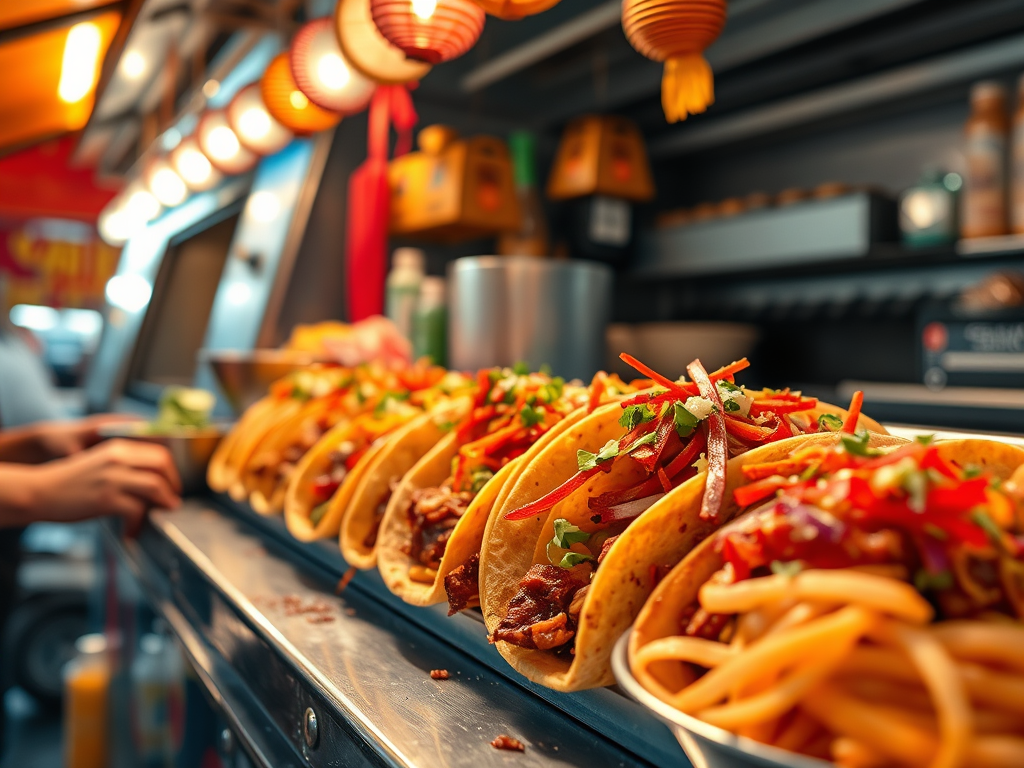
    To dig into this, we turn to Netflix’s Ugly Delicious, where chef David Chang hosts an episode simply titled “Tacos.” The episode plays like a beautifully constructed argumentative essay by Gustavo Arellano, who dismantles the idea of “Mexican food” as a static monolith. Instead, he presents it as a glorious, shape-shifting culture of flavor—one that thrives because of its openness to the outside world.

    Arellano celebrates Mexico’s culinary curiosity: how Lebanese immigrants brought shawarma and inspired tacos al pastor, a perfect example of cultural fusion that became canon. He contrasts this with the United States’ suspicious, xenophobic posture—a country that historically snarls at outsiders until they open a food truck and sell $2 magic on a paper plate.

    Roy Choi, creator of the legendary Kogi taco trucks, takes this further. He speaks of cooking as a street-level negotiation for dignity: Korean-Mexican fusion forged in the heat of shared kitchens, shaped by the scorn of American culture, and perfected not out of trendiness but out of survival. These tacos aren’t just delicious; they’re resistance with a salsa verde finish.

    But this isn’t just a story of open minds and flavor-blending utopias. There’s also the hard truth of survival and adaptation. Take Lucia Rodriguez, who immigrated from Jalisco and had to recreate her recipes using whatever ingredients she could find in San Bernardino. Her efforts became the foundation of Mitla Cafe, a restaurant still thriving since 1937. It also became the blueprint for Glen Bell—yes, that Glen Bell—who reverse-engineered her food to create Taco Bell, which is to Mexican cuisine what boxed wine is to Bordeaux.

    Still, not all spin-offs are sins. Rosio Sanchez, a Michelin-level chef, began her journey by mastering traditional Mexican food. Only then did she begin to improvise, like a jazz virtuoso honoring the standards before going off-script. Her reinvention is rooted in love, not opportunism. It’s a tribute, not a theft.

    And therein lies the moral fault line: intent, respect, and—let’s not forget—execution. As one student noted with appropriate outrage, white TikTok influencers once rebranded agua fresca as “spa water,” a cultural mugging wrapped in Pinterest aesthetics. And let’s not ignore the corporate vultures who buy beloved local chains only to gut their soul with frozen ingredients and bottom-line mediocrity.

    The lesson? Not all innovation is appropriation. But if your food disrespects its roots, dilutes its meaning, or simply tastes like disappointment, it’s not fusion—it’s a felony.

    The rule is simple: Make great food that honors its lineage and blows people away. Otherwise, what you’re serving is not cuisine. It’s edible disrespect.

  • Pillar of Salt: Why I Turned My Back on Bulk

    Pillar of Salt: Why I Turned My Back on Bulk

    As I trudged through the cavernous aisles of Costco, I felt less like a shopper and more like an explorer hacking through a consumerist rainforest with a mental machete. Everywhere I turned, industrial towers of peanut butter jars loomed like ancient ruins, and battalions of quinoa-based snack items assaulted me with their deceptive health halos. I wasn’t shopping—I was spelunking into the subconscious of the American appetite.

    Then came the Free Sample Fairies—syrupy-smiling heralds of indulgence—beckoning me toward thimble-sized offerings of strawberry smoothies, sushi rolls, and the inevitable ostrich jerky. It was a fever dream: a child’s fantasy of Eden where all cravings are granted instantly and without consequence. Except the consequences were vast, and they waited for me at home like angry creditors—an overflowing fridge, a groaning freezer, cupboards stuffed like hoarders’ closets. To make room for the new bounty, I had to speed-eat the old. Thus began the glutton’s loop: buying, bingeing, repenting, repeating. Costco wasn’t a store. It was an engine of expansion—of appetite, of girth, of existential despair.

    And I wept. Not just for myself but for my people. I wept because we worshipped this oversized temple of abundance as if our very worth hinged on how many gallons of mayonnaise we could carry home. We treated the act of bulk-buying like a civic virtue, a weekly pilgrimage that proved we were living the American Dream. But it wasn’t a dream. It was a performance. A flex. A suburban smoke screen designed to conceal the quiet desperation of too much, too often, too fast.

    So I returned home, hollow-eyed and bloated, and declared to my family that I could no longer continue this pilgrimage. Costco, I announced, was my personal Sodom—dangerous, seductive, and destined for dietary doom. I would henceforth shop only at Trader Joe’s: the humble monastery of portion control, the temple of restraint. My salvation, I told them, would be lined with frozen cauliflower gnocchi and 8-ounce jars of almond butter.

    My family wept. Not out of joy or agreement, but out of grief for the Costco bounty they would no longer see. No more colossal trays of croissants or five-pound bags of trail mix. I watched them mourn the death of excess. I saw it in their faces: longing for the Costco of yore. But I warned them—look back, and you become like Lot’s wife: bloated and salty.

    And then a miracle: They adapted. Slowly, painfully, they embraced the modesty of Trader Joe’s, portioned their expectations, and learned to live with less. They traded abundance for love, proving their devotion not with words but with fewer carbs. In their sacrifice, I found my strength.

    As I penned these reflections, a single tear rolled down my cheek. Whether it was sorrow, gratitude, or sodium withdrawal, I couldn’t say.

  • The Fisherman’s Stew Massacre: One Man’s Descent into Bibless Madness

    The Fisherman’s Stew Massacre: One Man’s Descent into Bibless Madness

    I still feel the stink of embarrassment from three years ago when we celebrated our twin daughters’ birthday by venturing to an upscale seafood joint—the kind of place where the prices are more bloated than the waitstaff’s sense of self-importance. As usual, I asked the waiter for his recommendation. His eyes lit up with the kind of zeal you usually reserve for cult leaders and pyramid scheme recruiters. He practically waxed poetic about the Fisherman’s Stew, describing it as if it had been lovingly ladled straight from a beautiful peasant’s cauldron of culinary magic in some idyllic coastal Italian village. Like a sucker, I bought into the fantasy, completely unaware that I’d just ordered a one-way ticket to an all-you-can-eat nightmare served with a heaping side of public humiliation.

    When the dish finally arrived, I didn’t get the warm, comforting bowl of seafood nirvana I’d envisioned. Instead, I was presented with what can only be described as a DIY surgery kit. This wasn’t silverware—they handed me actual surgical tools. A scalpel? Check. Serrated forceps? Check. Shell-crusher and lancet knife? Double check. At that moment, I wasn’t sure if I was supposed to eat the meal or perform an emergency appendectomy on a crab.

    Naturally, I asked for a bib because even gladiators need armor before going into battle. But no, they were fresh out of bibs. So there I was, defenseless and metaphorically naked, staring down a bowl that looked like it had been dredged up from the deepest, darkest corner of the ocean—probably after losing a fight with Cthulhu. The stew was a boiling pit of doom, brimming with spiky, hostile shellfish that seemed to have a stronger will to live than I did at that moment.

    What followed wasn’t so much a meal as a desperate struggle for survival. I found myself locked in mortal combat with crabs that clung to their shells like they were auditioning for a role in Jurassic Park: The Seafood Edition. I stabbed at shrimp with the precision of a neurosurgeon on his fifth Red Bull, and I tried to crush lobster claws that mocked my feeble human strength. Sweat poured down my face, mingling with brine, cioppino sauce, and random bits of squid that had escaped their doomed fate. By the end, I looked like I’d just gone twelve rounds with a giant squid—and lost every single one of them.

    The waiter, blissfully oblivious to the war zone he’d created, strolled over and had the audacity to ask how my meal was going. With my face and bald head smeared in a ghastly mix of perspiration, tomato sauce, and assorted shellfish shrapnel, I told him I’d be happy to provide feedback as soon as I finished the American Gladiators obstacle course that apparently came with my entrée. I then kindly asked him to fetch me a spare pair of pants, a T-shirt, a power drill, and some safety goggles, because clearly, I had gravely underestimated the intensity of this dining experience.

    Meanwhile, my daughter—bless her little heart—had commandeered my wife’s phone and was gleefully documenting my descent into madness. She snapped photos like some twisted paparazzo, each one capturing another level of my mental disintegration. Naturally, these shots were uploaded to Snapchat in real-time, complete with captions that probably read, “Watch Dad Lose His Dignity, One Crab Claw at a Time.”

    The whole point of taking your family out to dinner is to relax, to enjoy a pleasant evening, right? Wrong. Instead, I found myself in what felt like a cage match with an octopus that had no intention of going down without a fight. By the end of it all, I wasn’t just exhausted—I was a shell-shocked survivor of the Great Seafood Massacre of 2024, wondering how what was supposed to be a simple dinner had turned into an episode of Survivor: Shellfish Edition.

    But the true coup de grâce of the evening? My daughter proudly showed me the photos she’d posted online. In every shot, my face looked like it had been smeared with an abstract painting made entirely of sauces and cheeses. My chin had tripled, my eyes were glazed over like a stale doughnut, and I resembled nothing less than a bloated corpse that had washed ashore after a particularly rough night. The image I once held of myself as a halfway decent human being? Long gone. In its place, a digital monstrosity for all the world to see.

  • I Need to Talk to You About Neighborplexity

    I Need to Talk to You About Neighborplexity

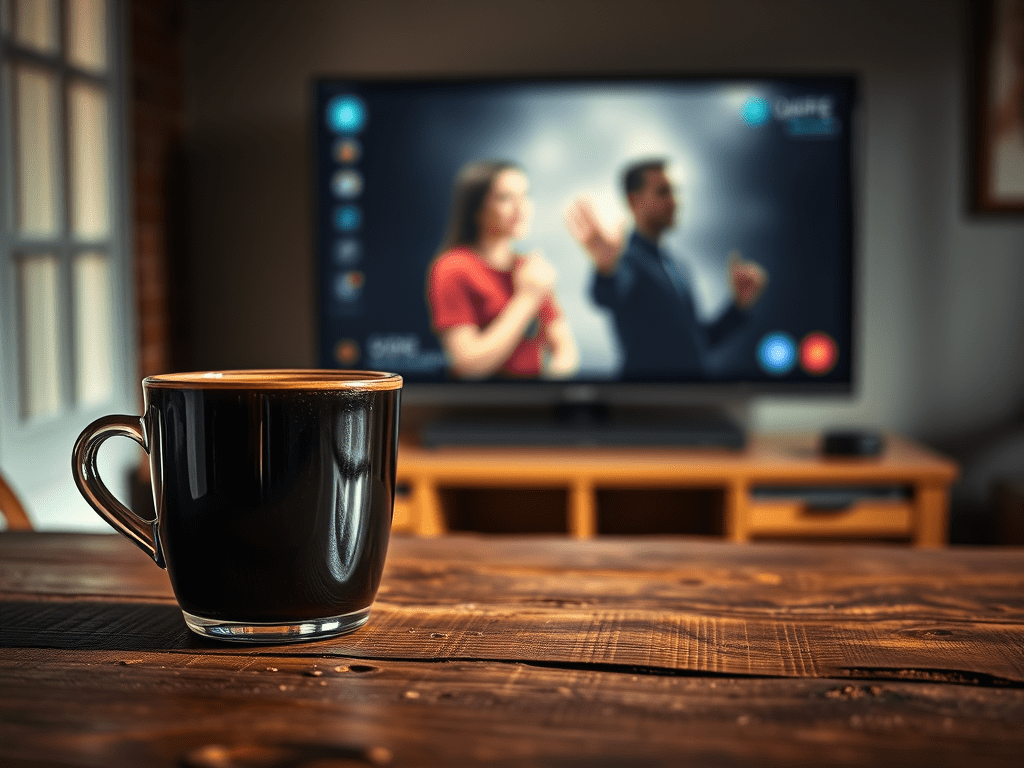
    Sumatra coffee is my bad boy of the coffee world—dark, mysterious, and utterly unapologetic. It doesn’t just wake me up; it smacks me across the face, throws me out of bed, and chases me down the street while I’m still in my pajamas. Imagine if a tropical thunderstorm decided to moonlight as a barista, bottling up its fury in a cup. That’s Sumatra—every sip as intense as being caught in a downpour while you’re half-asleep and regretting every life choice that led you to this point.

    Sure, I’m probably guzzling more Sumatra dark roast than is recommended by anyone with a functioning heart, but let’s be real: I’m an overworked college writing professor, buried under an Everest of student assignments that multiply like rabbits on caffeine. Add to that the never-ending demands of being an author of coffee table humor books—books that, according to my editors, need constant revision and expansion to “stay relevant” and “generate a healthy revenue stream.” Translation: “Jeff, we need you to keep churning out content until your fingers bleed and your soul shrivels up like a raisin.”

    But let’s not get ahead of ourselves with the self-pity party. I could give you a long-winded lecture about how the digital age was supposed to bring us more convenience and free time, only to morph into a merciless sociopath that steals our time faster than you can say “work-life balance.” But instead, let me start my story before the Sumatra kicks in too hard, and I start ranting like a madman on a caffeine bender. Buckle up, because this ride is about to get bumpy.

    My tale begins with the Pattersons, my dear, respectable neighbors. For years, I lived in blissful harmony with these upstanding citizens—the kind of people who proudly displayed their New Yorker subscriptions and NPR tote bags like badges of intellectual honor. We had an unspoken pact, a mutual understanding that we were members of the Smart People’s Society, where the TV was reserved for documentaries, award-winning dramas, and the occasional indie film that required subtitles and a dictionary to understand.

    But then, one evening, as I casually glanced out my window—just a harmless peek, really—I saw something so grotesque, so utterly incomprehensible, that it shook me to my core. There, through the open window of my once-revered neighbors, I saw them glued to the screen—not just any screen, but one streaming a TV show so mind-numbingly lowbrow it made reality itself seem like a parody. My brain went into full-blown meltdown. Could it be? Were they actually watching Love Island?

    I blinked, hoping I’d misinterpreted the scene, but no—the horror was all too real. My neighbors, those paragons of taste and intellect, were indulging in what could only be described as televised garbage. I was struck down by a case of Neighborplexity: that gut-wrenching, mind-twisting moment when you realize you might not know the people next door at all. Suddenly, my world was flipped upside down. Had they always been this way? Were those book club meetings just a ruse, a clever cover-up for their secret love affair with trash TV? I felt like I’d just discovered that the Michelin-starred chef who lived down the block actually preferred dining on Spam straight out of the can.

    I thought we were united in our disdain for anything that wasn’t at least 95% fresh on Rotten Tomatoes. But now? Now, I wasn’t so sure. How could they betray me like this? Was every dinner party, every casual chat about the latest literary masterpiece, just a well-orchestrated charade? My mind spun as I tried to reconcile the image of these seemingly cultured, well-spoken people with the reality of them willingly watching—gasp—that show.

    What do I do now? How do I move forward? Can I ever look them in the eye again, or will I be forever haunted by this dark revelation, this unraveling of the fabric of my once-idyllic neighborhood? All because of one dreadful, unforgivable act of poor taste on TV. Love Island, of all things. The horror! The betrayal! The absolute audacity! I might need more Sumatra just to get through this.

  • Return to Purgatory: A Packing Dream from Hell

    Return to Purgatory: A Packing Dream from Hell

    Last night, I found myself trapped in a sprawling compound of crumbling houses that looked like they were built during the Carter administration and never cleaned since. A communal frenzy was underway: the packing of thousands—yes, thousands—of food items and random clothing for a temporary exodus. Why the mass exodus? Unclear. Fumigation? Apocalypse? A reboot of The Grapes of Wrath? Whatever the reason, it was purgatorial.

    The mood? Moronic cheer. My fellow inmates—let’s not flatter them by calling them neighbors—were sipping drinks, cackling, and treating this Herculean labor like a godforsaken block party. Meanwhile, I hovered at the edge of the scene, paralyzed by the Sisyphean logistics of it all. Every cabinet I opened unleashed another avalanche of expired beans and mismatched Tupperware lids. The collective merriment felt obscene, as if they were toasting the Titanic’s elegant descent into the sea.

    And just when I thought salvation had arrived—in the form of a 2 a.m. bathroom break—I awoke, staggered to the toilet, and stumbled back to bed hoping to reset my brain. No such luck. The dream resumed exactly where I left off, like I’d hit pause on Netflix and walked back into my own streaming nightmare. There I was again, back in the compound, surrounded by half-drunk revelers blissfully ignoring the sheer futility of their packing, while I stood, a one-man FEMA unit, dreading every box and can like they were symbols of existential despair.

    I suppose, in some Jungian corner of my subconscious, this was meant to be cathartic. Maybe a soul purge. Maybe a late-night psychological CrossFit session designed to wring out my nervous system like a filthy sponge. All I know is, I woke up feeling like I’d done emotional burpees for eight hours straight—but to my surprise, I was eager to get out of bed, made a pot of coffee like it was a holy sacrament, and gleefully planned a one-hour kettlebell workout. 

  • How Fake Food Mirrors AI Writing

    How Fake Food Mirrors AI Writing

    Like most people, I have an unbreakable bond with food—a bond so primal that when the food industry dares to present me with a counterfeit, I might taste it out of politeness or morbid curiosity, but love it? Never. Inferior substitutes, especially those concoctions posing as “creative alternatives,” are my culinary kryptonite. My first encounter with such deceit came in 1970, courtesy of my stint in the YMCA’s Indian Guides (now rebranded as Adventure Guides). We were part of “tribes,” each made up of eight father-son pairs, with one dad dubbed “Chief” and the rest relegated to “Assistant Chiefs.” The real highlight, of course, was the weekly rotation to a different family’s home, where the moms—our unsung heroes—served dessert.

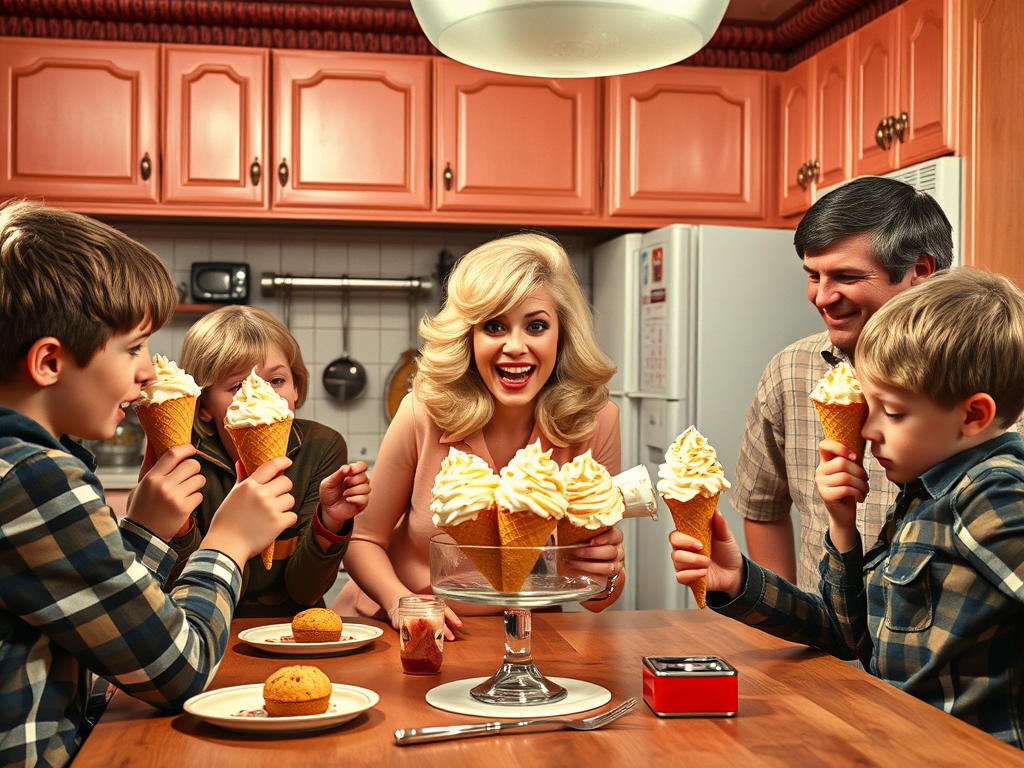
    But one evening, dessert took a turn for the worst. Our host mother, a vision of 70s flair with her blonde spun-sugar hair and white go-go boots, had stumbled upon what she must have thought was the recipe of the century. There it was, in plain sight on her kitchen counter: an open Ladies’ Home Journal or some equally menacing tome of domestic innovation. She cheerfully announced her culinary coup—a dessert she was calling “ice cream” but with no actual ice cream in it. Instead, the concoction was an unholy alliance of canned frosting and Cool Whip.

    She served it in cones with an enthusiasm that could have powered the disco lights at Studio 54. But when I took a bite, the illusion shattered. It wasn’t ice cream; it was a crime scene. The texture was gritty, like someone had blended sand with modeling clay. It was lukewarm—room temperature, for God’s sake—and tasted like the sugary sludge dentists use to polish your teeth before hitting you with the guilt trip about flossing. I glanced around and saw my fellow boys and their dads wearing identical expressions of barely-contained horror—the same grimace detectives on TV crime procedurals make when they have to pull out a hanky to block the stench of a decomposing corpse. One by one, we all quietly set our cones down as though handling evidence at a murder trial.

    The poor woman, sensing the full weight of her failure, blushed beet-red and stammered out a series of apologies, swearing on everything holy that she would never again darken a dessert table with this abomination. We forgave her, of course—some crimes are too absurd to punish. But to this day, whenever I see Cool Whip, I feel a pang of existential dread and hear the faint echo of tribal laughter masked by suppressed gagging.

    My second traumatic encounter with fake food came years later, sometime in the early 90s. I was living alone in the barren expanse of the California desert, surrounded by nothing but dust, lizards, and my questionable life choices. Thanksgiving rolled around, and rather than go full Norman Rockwell with a solo turkey feast, I decided to spare myself the hassle and opted for something “easy.” Enter the boxed abomination known as tofurkey—a vegetarian horror show complete with a pouch of dubious “gravy.”

    The first bite was a betrayal of taste and texture. My jaw slowed in protest, grinding against the dense, rubbery mass like I was chewing on a tire patch. The spongy gluten monstrosity refused to yield, as if daring my teeth to break first. The flavor? Imagine licking a salted yoga mat that’s been marinated in vague artificial regret. I eyed another slice, its pallid, lifeless complexion daring me to continue. With the enthusiasm of a condemned man, I stabbed the fork into it, hoping for some hidden culinary salvation. Nope. The taste was as bland and soul-crushing as the first bite—less “holiday cheer,” more “processed despair.”

    Finally, I’d had enough. With a sigh that could’ve put out a candle, I carried my plate to the trash and scraped the entire crime scene into the garbage, where it belonged. Dignity had to be reclaimed. I poured myself a bowl of Cheerios, sliced a banana over the top, and drizzled on some honey. As I savored each crunchy, sweet spoonful, I felt a small but vital spark of culinary joy return. It wasn’t just a meal—it was a rescue mission for my self-respect. And let me tell you, a bowl of cereal has never tasted so victorious.

    The self-abasement and insult to others from eating and serving fake food was captured brilliantly in the early 1980s when comedian Bob Sarlatte took aim at the pièce de résistance of culinary chicanery: the Ritz Crackers recipe for Mock Apple Pie. Sarlatte was on a mission to uncover the absurdity behind Ritz’s audacious claim of making apple pie with, wait for it, crackers instead of apples. He was incredulous, practically frothing at the mouth as he dissected this travesty. “Why on earth,” he demanded, “would Ritz, in all their cracker-clad glory, boast about a recipe that doesn’t even remotely involve apples?” According to Sarlatte, this so-called “apple pie” was like calling a desert a beach because it had sand—except the sand was made of crushed Ritz crackers, and the beach was a figment of your imagination. The comedian was in no mood for Ritz’s grandstanding. To him, this wasn’t a culinary innovation; it was a culinary catastrophe. He took Ritz to task for attempting to pass off a cracker conglomeration as apple pie, as if the lack of fruit was a feature, not a flaw. “Who,” Sarlatte railed, “are you going to serve this Mock Apple Pie to? Your mock friends? People who enjoy mockery served with a side of disappointment?” Sarlatte’s razor-sharp wit wasn’t just about lampooning a recipe—it was about exposing a greater travesty: the shameless elevation of a subpar substitute as a triumph of creativity. This wasn’t a clever culinary trick; it was an insult wrapped in a cracker crust. Bob Sarlatte laid bare the staggering lack of self-awareness and the brazen audacity required to serve such an ersatz “apple” pie with a smug smile. It was a masterclass in how to serve up an insult with a cherry on top, minus the apple, of course.

    Sarlatte’s takedown resonates because food is sacred territory. Our connection to it is primal. Unlike AI-generated text, fake food assaults the senses in ways you can’t ignore. And while AI hasn’t (yet) encroached on the culinary world with soulless meal simulations, the market’s rejection of fake meat shows just how little tolerance we have for edible counterfeits. Sales of plant-based protein substitutes have tanked, a clear signal that consumers aren’t ready to trade their ribeye for a rubbery simulacrum. Simply put, there’s only so much culinary mockery we’re willing to stomach—literally.

    Fake foods fail 90% of the time with 90% of the people, but in the realm of writing, AI-generated prose seems to enjoy the opposite fate: it’s “good enough” 90% of the time for 90% of situations. So perhaps fake food isn’t the right comparison. When it comes to our slow surrender to mediocrity in writing, convenience food may be a more apt metaphor. Sure, a Hot Pocket isn’t a Russian piroshki, but its ham and cheese filling is technically real. The danger isn’t the outright fakery of fake food—it’s the insidious appeal of convenience that gradually numbs our taste for anything better. The same flattening effect occurs in writing, where AI churns out serviceable but soulless content, lowering our appetite for higher-level craftsmanship.

    Let’s be real: when you bite into a Big Mac, you’re not searching for the subtle interplay of flavors or the delicate dance of textures. You’re there for the holy trinity of fat, protein, and salt—instant gratification, hold the sophistication. Likewise, when you fire up ChatGPT, you’re not chasing literary immortality. You’re after a fast, serviceable product so you can free up time to hit the drive-thru. Convenience becomes king, and both your palate and prose pay the price. Before you know it, you’ve traded filet mignon for fast food and Shakespeare for shallow clickbait. Standards? Those eroded long ago, somewhere between the special sauce and the soulless syntax.

    We’ve already seen this erosion over the last fifteen years. Smartphones have replaced thoughtful correspondence with texts full of abbreviations and emojis. My students now submit essays littered with “LOL” and lowercase “i” like punctuation’s gone on permanent strike. But maybe it doesn’t matter. Maybe this linguistic infantilization is the new standard, and business communication will one day be indistinguishable from TikTok captions. Still, I don’t entirely despair. Higher-level writing—like Joan Didion’s piercing cultural reportage—exists in a category of its own and doesn’t compete with the memos and press releases AI is destined to take over.

    What worries me more is that fewer people will seek out writers like Didion, Zadie Smith, or Hunter S. Thompson. Without readers, the appetite for great writing—and with it, deep thinking—shrinks. The flattening of taste becomes a flattening of consciousness, a slow bleed of our shared humanity. Look at our growing dependence on technology: GLP-1 drugs manage our weight, AI shapes our communication, streaming algorithms filter our music, and nutrition powders substitute for food. The result is a bland middle ground, a life devoid of both high peaks and deep valleys. We stop noticing the dehumanization because we’ve acclimated to it.

    But not all hope is lost. I remember hearing an interview on Fresh Air with Tiffany Haddish. Early in her career, Haddish struggled to find her comedic voice—until Eddie Murphy gave her a piece of advice that changed everything. He told her to have fun on stage, to genuinely enjoy herself. If she was having fun, the audience would feel it and respond. That human moment of mentorship transformed her career.

    This story reassured me for two reasons. First, Tiffany Haddish wasn’t mentored by ChatGPT—she was guided by Eddie Murphy, a living legend. Second, comedy itself is proof that people will always crave voices that cut through the emotional numbness of modern life. Great comedians, like great writers, are the axes that Kafka said could break the frozen sea within us. They shatter our tech-induced monotony and return us to the raw, messy experience of being human. As long as there are voices like Haddish and Murphy to remind us of that, there’s still hope that humanity won’t flatline into a dull, digital abyss.

    We may live in a world where powdered meal replacements pose as dinner and AI-generated text poses as thought, but the human appetite—whether for flavor or for meaning—can’t be faked for long. Just as we spit out Cool Whip cones and tofurkey slabs with a shudder, our souls eventually revolt against the flattening effects of machine-made language. We remember what real texture feels like, in food and in prose. We remember what it means to laugh at a story that stings because it’s true. And even if convenience wins most days, there will always be those who crave the messy, glorious excess of a banana split or the searing honesty of a well-told tale. As long as people continue to gag on mediocrity—be it edible or literary—there’s hope that the hunger for something real, soulful, and defiantly human will keep coming back.

  • Headphone Mode: How We Rewired Ourselves to Escape Reality

    Headphone Mode: How We Rewired Ourselves to Escape Reality

    In the summer of 2023, during a family odyssey through Las Vegas and the Grand Canyon — a trip defined by heat, dehydration, and regrettable buffet choices — I noticed my then-13-year-old daughter entering what I can only describe as her Headphone Phase.
    Once she slipped on her wireless headphones, she ceased to be a participant in family life and transformed into a sealed capsule of teenage autonomy.

    The headphones weren’t just streaming music — they were constructing a perimeter, a force field against the chaos of the outside world and the more treacherous chaos within.
    Wearing them allowed her to filter reality through a private soundtrack, to shrink the overwhelming noise of adolescence into something manageable and rhythmic.
    For those six months, she was rarely spotted without them, a small island of basslines and daydreams moving among us.

    By fifteen, she abandoned the habit. Now the headphones make rare appearances, the way childhood toys do after the magic has leaked out of them.
    But that long season of constant headphone use stuck with me — especially yesterday, when I slipped on my own new pair of Sony noise-canceling headphones for a nap.
    The experience was ridiculous: pure luxury, pure oblivion. I was catapulted into a faraway world of softness and distance, so relaxed I half-expected to wake up with a boarding pass to another galaxy.
    I understood at last how Headphone Mode could become addictive — not just helpful, but a crutch, or worse, a replacement for unmediated existence.

    This thought kept circling as I recently lost hours reading headphone reviews online.
    At first, I encountered the usual suspects — audiophiles earnestly parsing treble decay, bass extension, and soundstage geometry.
    But then I fell into a stranger subculture: headphone reviews written not as technical evaluations, but as love letters to support animals.
    Some reviewers described wearing their headphones all day, every day, as if they had permanently grafted the devices to their skulls, forming a new biological organ.
    These weren’t mere tech accessories anymore — they were portable cocoons.

    The reviews lavished obsessive praise on tactile details: the pillowy yield of the earcups, the tension of the headband, the specific heat footprint generated after six hours of wear.
    Weight, texture, elasticity — it read less like consumer advice and more like audition notes for adopting a service animal that hums quietly in your ear while you disappear from the world.

    It made me think of my old satin blanket from toddlerhood, a filthy, beloved scrap of fabric I once clung to so fiercely my father eventually hurled it out the car window during a drive past the Florida swamps.
    He didn’t consult me. He simply decided: enough.
    I wonder if some of these headphone obsessives are at the same crossroads — but with no father figure brave enough to wrest their adult security blanket away.
    They may have crossed a threshold where life without permanent auditory sedation has become not merely unpleasant, but unthinkable.

  • Luxury Is Relative: Tales from the Desert of Almost

    Luxury Is Relative: Tales from the Desert of Almost

    Fresh off the bus from the bustling Bay Area, I found myself marooned in Bakersfield, a sun-bleached corner of California that could only generously be described as a town. With zero friends and even fewer social obligations, I embraced my solitude like a monk embracing a vow of silence. My one-bedroom apartment became my sanctuary—no roommates, no forced small talk, just me and the sweet luxury of never having to negotiate over chores or TV channels.

    My companions? A stack of CDs featuring Morrissey, The Smiths, and other bands that sounded like a group therapy session set to a minor key. I was working on a novel Herculodge, my dystopian magnum opus in which society punishes the overweight with Orwellian fervor for failing to meet state-mandated body standards.

    When I wasn’t writing, I’d plink away on my Yamaha ebony upright, conjuring up self-indulgent sonatas that only the most pretentious of muses could appreciate. I didn’t read music so much as let it ooze out of me—luscious chords here, shameless glissandos there—while imagining some ethereal goddess materializing in my living room to stroke my ego as I struck a soulful pose.

    Compared to the misery of my college days in the Bay Area, my Bakersfield digs were practically a five-star resort. Back then, I wasn’t so much living as squatting in a hovel that had the audacity to pretend it was a room. The place featured a gaping hole in the wall strategically located at bed level, inviting in gusts of cold air so fierce they felt like the Bay’s fog had developed a personal vendetta against me. Sleeping wasn’t just uncomfortable; it was a survival sport. I’d huddle under layers like I was gearing up for an Everest expedition—jacket, hat, and sometimes gloves if the wind got particularly sassy.

    My diet was a tragicomedy in three acts: breakfast, lunch, and dinner. Cheerios were the headliner, while bean-and-cheese burritos played the understudy whenever I was feeling particularly adventurous. These “burritos” were nothing more than refried sludge wrapped in a tortilla that had all the elasticity of cardboard. The cheese? It was the kind that refused to melt out of sheer spite, clinging to the tortilla like it was serving a life sentence. Each bite was a bleak reminder that I wasn’t starving, but I wasn’t thriving either.

    Transportation was another chapter in my tale of woe. My chariot was a ten-year-old Toyota Tercel that was less a car and more a mobile disaster waiting to happen. It rattled like a haunted maraca, and driving it felt like piloting a coffin with wheels. The brakes let out a tortured groan every time I approached a stop sign, as if they were begging me to put the poor thing out of its misery. On the infamous Bay Area hills, I clung to the steering wheel with a white-knuckled grip, praying the Tercel wouldn’t decide to pack it in and roll backward into oblivion, taking out a few unsuspecting cyclists along the way. Fixing it was a twisted game of financial Russian roulette: repair the brakes or eat for a week—one of us had to suffer.

    Money was as scarce as warmth in that drafty hole I called a room. Every broken item (and there were many) required a DIY fix involving duct tape, a prayer, and whatever scraps I could scavenge. Even gathering enough change for a trip to the laundromat felt like winning the lottery. “Luxury” back then meant adding an extra spoonful of salsa to my sad burritos—living on the edge by upping the spice in a meal that was otherwise flavorless and depressing.

    Looking back, it’s a miracle I escaped that purgatory with my sanity—or whatever passed for sanity. That cold, drafty hole taught me resilience, but more than anything, it taught me how to laugh at the sheer absurdity of trying to survive in a city that demands gold while you’re barely scraping together tin.

    So here I was, newly settled in this desert hideaway, craving a hint of the luxury I’d been denied. On weekends, I tanned my lean, 195-pound frame by The Springs’ apartment pool—a so-called “luxury” pool that only deserved the title because the sign said so. No real friendships blossomed at that pool—friendships are messy and overrated—but I did collect some “acquaintances,” a bizarre cast of characters who could only exist in this sun-scorched limbo.

    I wasn’t thriving, but at least I wasn’t freezing or eating cardboard masquerading as food. And in a place like Bakersfield, that was about as close to paradise as you could hope for.

  • Cork Dorks and the Road to Nowhere

    Cork Dorks and the Road to Nowhere

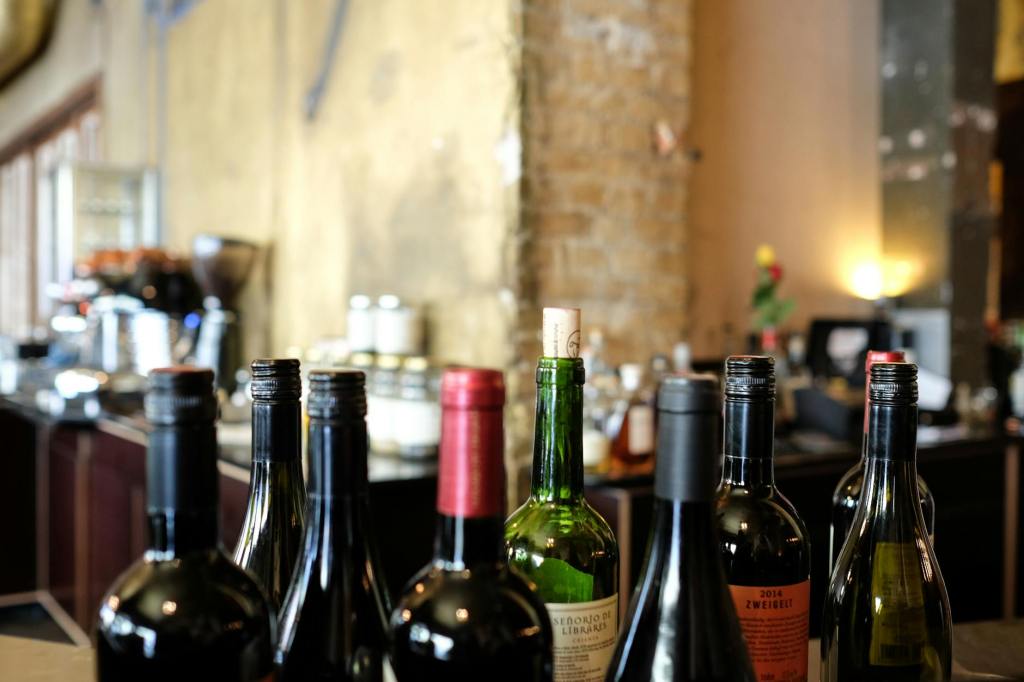
    In the mid-1980s, I funded my so-called college education as an English major by slinging bottles at Jackson’s Wine & Spirits in Berkeley, strategically nestled near the ritzy Claremont Hotel on Ashby Avenue. The job itself was an exercise in absurdity, not because of the work, but because of my coworkers—an ensemble of walking encyclopedias who were grossly overqualified to stock shelves and ring up Chardonnay. We’re talking PhDs in linguistics, anthropology, chemistry, physics, philosophy, and musicology—each degree worth less than a tenured spot in a clown college, yet brandished like medals in an intellectual arms race. These were people who read Flaubert in the original French and practically spat on anyone who dared pick up an English translation. The mere thought of working for a corporation or any institution that might impose a dress code or, heaven forbid, expect them to “synergize” was beneath their dignity. Selling fine wines and imported beers became their ironic playground, a place where they could cultivate a sense of elitism thicker than the crust on a neglected wheel of Brie. Their unofficial motto? “Service with a smirk.”

    These intellectual peacocks, not particularly rich or buff, took immense pride in flexing the one muscle they deemed worthy: the brain. Their idea of a power pose wasn’t a bulging bicep but a razor-sharp quip delivered with surgical precision. For them, intellectual one-upmanship was the true path, with the mind as the muscle to be sculpted. Their version of bodybuilding legend Sergio Oliva’s “Myth Pose” was a finely tuned discussion about Adorno’s critique of culture or a multi-hour debate comparing two French Beaujolais, all sprinkled with quotes from Camus. They taught me that flexing didn’t require dumbbells; it just needed the right amount of pretension and a willingness to alienate everyone around you.

    During slow hours, we gathered near the cash registers like a cabal of cynical sages, dissecting the philosophical curiosities of Nietzsche, the overwrought bombast of Wagner, and the labyrinthine despair of Kafka. The job became less of an occupation and more of a sanctuary for delusional self-importance. I found myself believing that I was somehow smarter than most, despite the glaring fact that I was working in a retail wine store with zero career prospects. But who needed money when you could live on the heady fumes of intellectual superiority? The longer I marinated in that environment, the more I realized I was becoming gloriously, irreparably unemployable.

    While shuffling between dead-end teaching gigs at various colleges—where my enthusiasm quickly flatlined—I always found solace in returning to my wine snob cocoon. There, surrounded by these proud misfits who’d traded ambition for esoteric chatter, I could pretend that debating the nuances of Hegel was more fulfilling than climbing any traditional career ladder. Truth be told, I might’ve happily stagnated in that dead-end job forever if fate hadn’t intervened in the form of an administrator at Merritt College who inexplicably liked my teaching style. He pulled me aside one day and whispered that there was a full-time gig open at some desert outpost called Bakersfield. He and his colleagues were prepared to write me “sterling letters of recommendation” to ensure I got the job.

    “What’s Bakersfield like?” I asked, a vague unease bubbling up as memories of my family stopping there to gas up our station wagon drifted into my mind like a bad smell.

    “Don’t worry about that,” he replied, his tone thick with the kind of unearned confidence that only comes from never having to live in a place like Bakersfield. “Just move your butt down there and take things as they come.”

    And so, in the span of a few short months, I traded intellectual elitism for a one-way ticket to the middle of nowhere, chasing a full-time paycheck while my wine store days—and the delusions that came with them—slowly receded into the rearview mirror.