Tag: writing

  • “Raindrops Keep Fallin’ On My Head” and the Art of Being Nine

    “Raindrops Keep Fallin’ On My Head” and the Art of Being Nine

    When I was nine, in the summer of ’71, my family and three others camped on a tiny island near Mount Shasta—an experiment in frontier optimism that involved water skiing, fishing, and waging daily war against yellow jackets. We built traps from jars and funnels, which is what passes for science when you’re a child and the enemy has wings. Whenever the social noise became too loud, I retreated into a tent with Archie comics and a portable radio, my private bunker of paper jokes and AM static. Outside, the sun blazed and my friends howled with laughter. Inside, I lay on my stomach, flipping pages, while two songs drifted through the thin canvas walls—“Riders on the Storm” and “Uncle Albert/Admiral Halsey.” They were gorgeous. They were devastating. Their beauty did nothing to soften their sadness. They didn’t cheer me up; they baptized me into melancholy.

    I survived that summer gloom by clinging to the holy trinity of comic-book escapism: X-ray vision glasses, Sea Monkeys, and Charles Atlas promising to turn scrawny boys into beach legends. But I had known a better kind of sadness before that—eighteen months earlier, in fourth grade, when B.J. Thomas’s “Raindrops Keep Fallin’ on My Head” became the soundtrack to a winter of biblical rain in San Jose. That rain didn’t feel like inconvenience; it felt like permission. We walked in it. We built forts in it. We sang in it. Wet sneakers were badges of honor. Mud was a small price to pay for enchantment.

    After school, we took the longest possible route home, not because we were lost, but because we didn’t want the day to end. I think children are natural pantheists. We don’t worry about tracking dirt through the house; we worry about missing the miracle. One afternoon, in a downpour that looked like it had been personally arranged by the weather gods, I saw two middle school girls walking arm in arm, kicking their legs and singing like they were auditioning for joy itself. They weren’t performing happiness. They were inhabited by it. I don’t think I’ve seen human beings that unselfconsciously alive since.

    We eventually reached the edge of Anderson Elementary, where a park spilled into trees and bushes and, hidden like contraband, our cardboard fort waited. I crawled underneath it, stared through a gap in the walls at the rain-swollen sky, and sang “Raindrops Keep Fallin’ on My Head” to no one in particular. I remember feeling drunk on the depth of that sky, stunned by the sheer extravagance of being alive. I wasn’t happy because something good had happened. I was happy because everything had happened—and I was inside it. For a moment, I felt infinite. And, at nine, infinite felt the same as immortal.

  • Doing Everything, Feeling Nothing: The Age of Engagement Dilution

    Doing Everything, Feeling Nothing: The Age of Engagement Dilution

    In “Ebooks Are an Abomination,” Ian Bogost delivers a needed slap across the face of our collective reading habits. His charge is simple and devastating: ebooks haven’t expanded reading—they’ve hollowed it out. People believe they’re reading because their eyes are sliding across a screen, but most of what’s happening is closer to grazing. The scandal isn’t that we skim; it’s that we’ve started calling skimming “reading” and don’t even blush. Bogost nails the fraud when he points out that the word reading has become a linguistic junk drawer—used to describe everything from doomscrolling Instagram captions to actually wrestling with dense prose. If the same word covers both scanning memes and grappling with Dostoevsky, then the word has lost its spine.

    It reminds me of people who announce they’re going to the gym to “work out.” That phrase now covers a heroic range of activity—from Arnold-style flirtations with death to leaning on a treadmill while watching Jeopardy! and gossiping about coworkers. Same building, radically different realities. One is training. The other is loitering with athletic accessories.

    Reading and working out have this in common: they are not activities so much as states of engagement. And the more soaked we become in technology, the more that engagement drains away. Technology sells convenience and dependency—the kind where you feel faintly panicked if you’re five feet from a device and not being optimized by something. But being a reader is the opposite of that nervous dependence. It’s happy solitude. It’s the stubborn pleasure of being absorbed by a book, of sinking into hard ideas—the epistemic crisis, substitutionary atonement, moral ambiguity—without needing an app to pat you on the head and tell you how you’re doing. Real readers don’t need dashboards. Real lifters don’t need Fitbits. If you’re truly engaged, you feel the work in your bones.

    And yet technology keeps whispering the same seduction: optimization. Track it. Measure it. Quantify it. But what this gospel of efficiency often delivers is something uglier—disengagement dressed up as progress, laziness rebranded as smart living. The name for this decay is Engagement Dilution: the slow thinning of practices that once demanded effort—reading, training, thinking—into low-grade approximations that still wear the old labels. What once meant immersion now means mere exposure. We haven’t stopped doing these things. We’ve just stopped doing them seriously, and we’re calling that evolution.

    To help you interrogate the effects of Engagement Dilution, you will do the following writing prompt.

    600-Word Personal Narrative That Addresses Engagement Dilution

    We live in an age where everything looks like participation—but very little feels like engagement. We “read” by skimming. We “work out” by standing near machines. We “study” by copying and pasting. We “connect” by reacting with emojis. The actions remain, but the depth is gone. This condition has a name: Engagement Dilution—the process by which practices that once demanded sustained attention, effort, and presence are thinned into low-effort versions that keep the same labels but lose the same meaning.

    For this essay, you will write a 600-word personal narrative about a time when you realized you were going through the motions without being truly engaged. Your story should focus on a specific experience in which you believed you were participating in something meaningful—school, work, fitness, relationships, creativity, reading, faith, activism, or personal growth—only to later recognize that what you were doing was a diluted version of the real thing.

    Begin with a concrete scene. Put the reader inside a moment: a classroom where you nodded but didn’t think, a gym session where you scrolled more than you lifted, a relationship where you listened with your phone in your hand, a book you “read” but can’t remember, a goal you claimed to care about but never truly invested in. Use sensory detail—what you saw, heard, felt, avoided—to make the dilution visible. Don’t explain the idea yet. Show it happening.

    Next, introduce the realization. When did it dawn on you that something essential was missing? Was it boredom? Frustration? Guilt? Emptiness? Did someone confront you? Did you fail at something you thought you had prepared for? Did you suddenly notice how different real engagement feels—how tiring, how uncomfortable, how demanding it is compared to the easy version you had settled for?

    Then widen the lens. Reflect on why engagement diluted in the first place. Was it technology? Fear of failure? Desire for comfort? Pressure to appear productive? Lack of confidence? The culture of optimization? Be honest here. Avoid blaming abstract forces alone. This essay is not about what society did to you; it is about the choices you made within that environment.

    Finally, confront the cost. What did engagement dilution take from you? Skill? Confidence? Meaning? Relationships? Momentum? And what did it teach you about the difference between looking active and actually being alive inside your actions? End not with a motivational slogan but with clarity—what you now recognize about effort, attention, and the price of avoiding difficulty.

    Guidelines

    • This is a narrative, not a sermon. Let the story do the thinking.
    • Avoid clichés about “finding balance” or “doing better next time.”
    • Do not turn this into a tech rant or a productivity essay. Keep it human.
    • Use humor if it fits—but don’t hide behind it.
    • Your goal is not self-improvement branding. Your goal is insight.

    What this Essay Is Really About

    Engagement Dilution is not laziness. It is the quiet substitution of comfort for commitment, convenience for courage, motion for meaning. Your task is to show how that substitution happened in your own life—and what it revealed about what real engagement actually costs.

    Write the essay only you could write. The more specific you are, the more universal the insight becomes.

  • Obsolescence With Benefits: Life in the Age of Being Unnecessary

    Obsolescence With Benefits: Life in the Age of Being Unnecessary

    Existential Redundancy is what happens when the world keeps running smoothly—and you slowly realize it no longer needs you to keep the lights on. It isn’t unemployment; it’s obsolescence with benefits. Machines cook your meals, balance your passwords, drive your car, curate your entertainment, and tuck you into nine hours of perfect algorithmic sleep. Your life becomes a spa run by robots: efficient, serene, and quietly humiliating. Comfort increases. Consequence disappears. You are no longer relied upon, consulted, or required—only serviced. Meaning thins because it has always depended on friction: being useful to someone, being necessary somewhere, being the weak link a system cannot afford to lose. Existential Redundancy names the soft panic that arrives when efficiency outruns belonging and you’re left staring at a world that works flawlessly without your fingerprints on anything.

    Picture the daily routine. A robot prepares pasta with basil hand-picked by a drone. Another cleans the dishes before you’ve even tasted dessert. An app shepherds you into perfect sleep. A driverless car ferries you through traffic like a padded cell on wheels. Screens bloom on every wall in the name of safety, insurance, and convenience, until privacy becomes a fond memory you half suspect you invented. You have time—oceans of it. But you are not a novelist or a painter or anyone whose passions demand heroic labor. You are intelligent, capable, modestly ambitious, and suddenly unnecessary. With every task outsourced and every risk eliminated, the old question—What do you do with your life?—mutates into something colder: Where do you belong in a system that no longer needs your hands, your judgment, or your effort?

    So humanity does what it always does when it feels adrift: it forms support groups. Digital circles bloom overnight—forums, wellness pods, existential check-ins—places to talk about the hollow feeling of being perfectly cared for and utterly unnecessary. But even here, the machines step in. AI moderates the sessions. Bots curate the pain. Algorithms schedule the grief and optimize the empathy. Your confession is summarized before it lands. Your despair is tagged, categorized, and gently rerouted toward a premium subscription tier. Therapy becomes another frictionless service—efficient, soothing, and devastating in its implication. You sought human connection to escape redundancy, and found yourself processed by the very systems that made you redundant in the first place. In the end, even your loneliness is automated, and the final insult arrives wrapped in flawless customer service: Thank you for sharing. Your feelings have been successfully handled.

  • Experience Has Left the Building: Teaching Writing After Representational Displacement

    Experience Has Left the Building: Teaching Writing After Representational Displacement

    Christine Rosen’s The Extinction of Experience names the quiet catastrophe of our moment: experience itself has been replaced by its press release. We no longer meet the world face-to-face; we encounter its avatar—curated, quantified, filtered, and politely optimized for consumption. Reality arrives pre-processed. Life is no longer lived so much as represented. We scroll through it, measure it, track it, and somehow wonder why it feels thin. This is what I call Representational Displacement: a condition in which lived reality is steadily displaced by its mediated substitutes—screens, metrics, feeds, dashboards—until experience is filtered before it is even felt. The world is not encountered but managed, not inhabited but previewed. We live one remove away from our own lives, alienated not by scarcity but by overrepresentation.

    Rosen is clear about the cost. “Experiences,” she writes, “are the ways we become acquainted with the world. Direct experience is our first teacher.” Strip that away and education becomes a simulation of learning rather than the thing itself. And that is precisely what is happening in classrooms. Direct experience is contracting. AI-driven functions are expanding. Students are increasingly trained to manage outputs, assemble responses, and comply with systems rather than grapple with ideas, language, and uncertainty. The result is a generation at risk of becoming well-behaved functionaries—NPCs with decent syntax—rather than human beings engaged in Higher Learning as a transformative act. As a writing instructor, I refuse to let the classroom collapse into a content farm staffed by polite machines. My job now is counterinsurgency: designing assignments that restore friction, embodiment, memory, and lived encounter—work that forces experience back into the center of learning, where it belongs.

     One such counterinsurgency is the Memory-Specific Writing Prompt. It is deliberately designed to anchor writing in lived experience rather than transferable knowledge, requiring details that arise from a writer’s embodied past and cannot be convincingly generated by pattern recognition alone. It demands concrete, localized specificity—named places, obsolete objects, idiosyncratic rituals, sensory impressions, and personal contradictions—that exist only because the writer was physically present at a particular time. By tying meaning to unrepeatable memory rather than generalizable insight, the assignment makes fluency insufficient and forces authorship to matter. The result is writing that values presence over polish, consequence over coherence, and recollection over reproduction—conditions under which AI tools become at best marginal assistants and at worst obvious impostors.

    Dismissing this assignment as “merely creative writing” misunderstands both its purpose and its rigor. Memory-specific writing trains the same cognitive skills demanded by the so-called real world: sustained attention, accurate observation, causal reasoning, ethical self-representation, and the ability to translate raw experience into accountable language. Professionals do not succeed by producing generic prose; they succeed by noticing what others miss, explaining complex situations clearly, and grounding claims in evidence that can withstand scrutiny. This assignment treats memory as data, description as analysis, and narrative as a method for testing meaning rather than decorating it. In an economy saturated with frictionless text generation, the capacity to produce precise, credible, experience-based writing is not ornamental—it is a core competency, and one that cannot be automated away.

    One such prompt I’ll give you is titled “The Unlikely Happy Place”: Write an 800-word personal narrative essay about a place that was not designed to make anyone happy. The place was ugly, uncomfortable, mundane, or even faintly miserable—yet it became a genuine source of refuge or joy for you. The power of the essay should come from the contradiction between the place’s surface qualities and the deep meaning it held for you. Ground your writing in dense sensory detail and memory-specific facts: textures, smells, sounds, named people, obsolete objects, routines, and rituals that could only belong to that place at that time. Do not smooth over its flaws. Show how this unlikely happiness allowed you to escape, rehearse, or become. The goal is to show what your connection to this place said about your character, values, and personality. Here is a sample based on a gym that still haunts me from my teens:

    My Unlikely Happy Place–Walt’s Gym

    By the time I hit fourteen, my sacred sanctuary was none other than Walt’s Gym in Hayward, California—a temple of iron that had started its inglorious life as a chicken coop in the 1950s. The place was a veritable swamp of fungus and bacteria, a thriving petri dish of maladies eager to latch onto the unsuspecting. Members whispered in hushed tones about incurable athlete’s foot, the kind that made dermatologists throw up their hands in defeat. Some swore that the strains of fungus and mold festering in the corners were so exotic they had yet to be classified by the most intrepid of mycologists. Roosting among the fungal shower stalls was an oversized frog that the pro wrestlers had affectionately named Charlie. I never saw Charlie myself, but I often wondered if he was a real creature or a figment of the wrestlers’ imagination, birthed by too many concussions and late-night benders.

    The locker room was perpetually occupied by a rotating cast of characters who looked like they’d been plucked straight out of a grimy noir film. There was always some bankrupt divorcee draped in a velour tracksuit and a gold chain thick enough to anchor a ship, hogging the payphone for marathon sessions with his attorney. He’d discuss his sordid life choices and the staggering attorney fees required to sweep his past under a rug large enough to cover the entire state of California.

    Out back, an unused swimming pool lurked, its water murky and black—a cauldron of plague, dead rats, and God knows what else. Walt, the gym’s owner and part-time crypt keeper, had a peculiar ritual. Every so often, he’d saunter outside, brandishing a pool net like a scepter, and scoop up some unfortunate deceased creature. He’d hold it aloft for all to see, like a demented priest presenting an unholy sacrament. This grim ceremony was invariably met with a thunderous round of applause from the gym-goers, who treated Walt’s rodent exorcisms like a halftime show. Walt would then toss the cadaver into a nearby dumpster with all the flourish of a Shakespearean actor delivering a monologue, bowing deeply as if he’d just conquered a dragon.

    Walt’s Gym showcased a walking fossil named Wally, an octogenarian who swore he was the original model for human anatomy textbooks—perhaps ones etched on cave walls. We all loved Wally. He was a beloved gym fixture even though he could be a pain in the butt. Wally’s routine was the stuff of myth: He’d righteously correct everyone’s form whether they asked for his advice or not. He’d monopolize the gym for hours, his workout punctuated by monologues worthy of an Oscar about his deadbeat relatives who “borrowed” money, his former lovers who once graced the silver screen, and his eternal battle with arthritis. Between sets, he’d often deliver a Ted Talk on muscle inflammation and the sorry state of the national economy. He delivered these soliloquies with the gravitas of a news anchor, then spent an eternity in the sauna and shower, emerging like a phoenix from the ashes only to douse himself head-to-toe in talcum powder, turning into a spectral beacon of gym dedication. When Wally spoke, he was engulfed in such a thick talcum haze you’d swear a lighthouse was about to blare its foghorn warning.

    The radio played the same hits on a relentless loop, as if the DJ had been possessed by the spirit of a broken record. Elvin Bishop’s “Fooled Around and Fell in Love,” The Eagles’ “New Kid in Town,” and Norman Connors’ “You Are My Starship” echoed through the gym like a soundtrack to my personal purgatory. As a kid navigating this adult world, the gym was my barbershop, my public square, where I eavesdropped on conversations about divorces, hangovers, gambling addictions, financial ruin, the exorbitant costs of sending kids to college, and the soul-sucking burdens of caring for elderly parents.

    It dawned on me then that I was at fourteen the perfect age: old enough to start building biceps like bowling balls, yet young enough to be spared the drudgery and tedium of adult life. The Road to Swoleville, I realized, was all about sidestepping the real world entirely. Why bother with mortgages and 401(k)s when I could disappear into my true paradise, the gym? As Arnold himself wrote in Arnold: The Education of a Bodybuilder, the gym was the ultimate Happy Place: “The weight lifters shone with sweat; they were powerful looking. Herculean. And there it was before me—my life, the answer I’d been seeking. It clicked. It was something I suddenly just seemed to reach out and find, as if I’d been crossing a suspended bridge and finally stepped off onto solid ground.”

    My “solid ground” was the 1976 incarnation of Walt’s Gym, a germ-infested, rat-plagued wonderland where dreams of muscle-bound glory were forged—and quite possibly the greatest place I’ve ever visited on this planet.

  • The Sleepwalking Student: Why Friction, Not Optimization, Reawakens Learning

    The Sleepwalking Student: Why Friction, Not Optimization, Reawakens Learning

    Academic Anhedonia is what it feels like to keep advancing through your education while feeling absolutely nothing about it. The assignments get done. The rubrics are satisfied. The credentials inch closer. And yet curiosity never sparks, pride never arrives, and learning registers as a faint neurological hum—like an appliance left on in another room. You move forward without momentum, effort without appetite. AI language machines make this easier, smoother, quieter. The result is not rebellion but compliance: efficient, bloodless, and hollow.

    When I started teaching college writing in the 1980s, this condition didn’t exist. Back then, I suffered from a different affliction: the conviction that I was destined to be the David Letterman of higher education—a twenty-five-year-old irony specialist armed with a chalkboard, a raised eyebrow, and impeccable timing. For a while, the bit landed. A well-placed joke could levitate a classroom. Students laughed. I mistook that laughter for learning. If I could entertain them, I told myself, I could teach them. For two decades, I confused engagement with applause and thought I was winning.

    That illusion began to crack around 2012. Phones lit up like votive candles. Attention splintered. Students weren’t bored; they were overclocked—curating identities, performing themselves, measuring worth in metrics. They ran hot: anxious, stimulated, desperate for recognition. Teaching became a cage match with the algorithm. Still, those students were alive. Distracted, yes—but capable of obsession, outrage, infatuation. Their pulses were fast. Their temperatures high.

    What we face now is colder. Around 2022, a different creature arrived. Not overstimulated, but under-responsive. Years of screen saturation, pandemic isolation, dopamine-dense apps, and frictionless AI assistance collapsed the internal reward system that once made discovery feel electric. This isn’t laziness. It’s learning-specific anhedonia. Students can assemble essays, follow scaffolds, and march through rubrics—but they do it like sleepwalkers. Curiosity is muted. Persistence is brittle. Critical thinking arrives pre-flattened, shrink-wrapped, and emotionally inert.

    The tragedy isn’t inefficiency; it’s emptiness. Today’s classrooms hum with quiet productivity and emotional frost—cognition without hunger, performance without investment, education stripped of its pulse.

    If there is a way forward, it won’t come from louder performances, cleverer prompts, or better optimization. Those are the same tools that bleached learning in the first place. Academic anhedonia cannot be cured with stimulation. It requires friction: slow reading that refuses to skim, sustained writing that will not autocomplete itself, intellectual solitude that feels mildly wrong, and work that denies the cheap dopamine hit of instant payoff. The cure is not novelty but depth; not entertainment but seriousness. Struggle isn’t a design flaw. It is the design.

    To interrupt academic anhedonia, I use an AI-resistant assignment that reintroduces cost, memory, and embodiment: The Transformative Moment. Students write 400–500 words about an experience that altered the trajectory of their lives. The assignment demands sensory precision—the one domain where AI reliably produces fluent oatmeal. It insists on transformation, which is what education is supposed to enact. And it drags students back into lived experience, away from the anesthetic glow of screens.

    I offer a model from my own life. When I was sixteen, visiting my recently divorced father, he asked what I planned to do after high school. I told him—without irony—that I intended to become a garbage man so I could finish work early and train at the gym all day. He laughed, then calmly informed me that I would go to college and join the professional class because I was far too vain to tell people at cocktail parties that I collected trash for a living. In that instant, I knew two things: my father knew me better than I knew myself, and my future had just been decided. I walked out of that conversation college-bound, whether I liked it or not.

    I tell them about a friend of mine, now a high school principal, who has been a vegetarian since his early twenties. While working at a deli during college, he watched a coworker carve into a bleeding slab of roast beef. In that moment—knife slicing, flesh yielding—something inside him snapped shut. He knew he would never eat meat again. He hasn’t. Transformation can be instantaneous. Conversion doesn’t always send a memo.

    My final example is a fireman I trained with at a gym in the 1970s. He was a recent finalist in the Mr. California bodybuilding contest: blond shag, broom-thick mustache, horn-rimmed glasses—Clark Kent with a bench press habit. One afternoon, after repping over three hundred pounds, he stood before the mirror, flexed his chest, and watched his muscles swell like they were auditioning for their own sitcom. “When I first saw Arnold,” he said, reverent, “I felt I was in the presence of the Lord. ‘There stands the Messiah,’ I said to myself. ‘There stands God Almighty come to bring good cheer to this world.’”

    He wasn’t speaking only for himself. He spoke for all of us. We wanted to be claimed by something larger than our small, awkward lives. Arnold was the messiah—the Pied Piper of Pecs—leading us toward the promised land of biceps, triceps, and quads capable of crushing produce.

    I assign The Transformative Moment because I want students to recreate an experience no machine can counterfeit. I want them to remember that education is not credential management but metamorphosis. And I want them to interrogate the conditions under which real change occurred in their lives—what they were paying attention to, what they risked, what it cost.

    Transformation—actual forward movement—is the antidote to anhedonia. And it cannot be outsourced.

  • Bezel Clicks and Sentence Cuts: On Watches, Writing, and the Discipline of Precision

    Bezel Clicks and Sentence Cuts: On Watches, Writing, and the Discipline of Precision

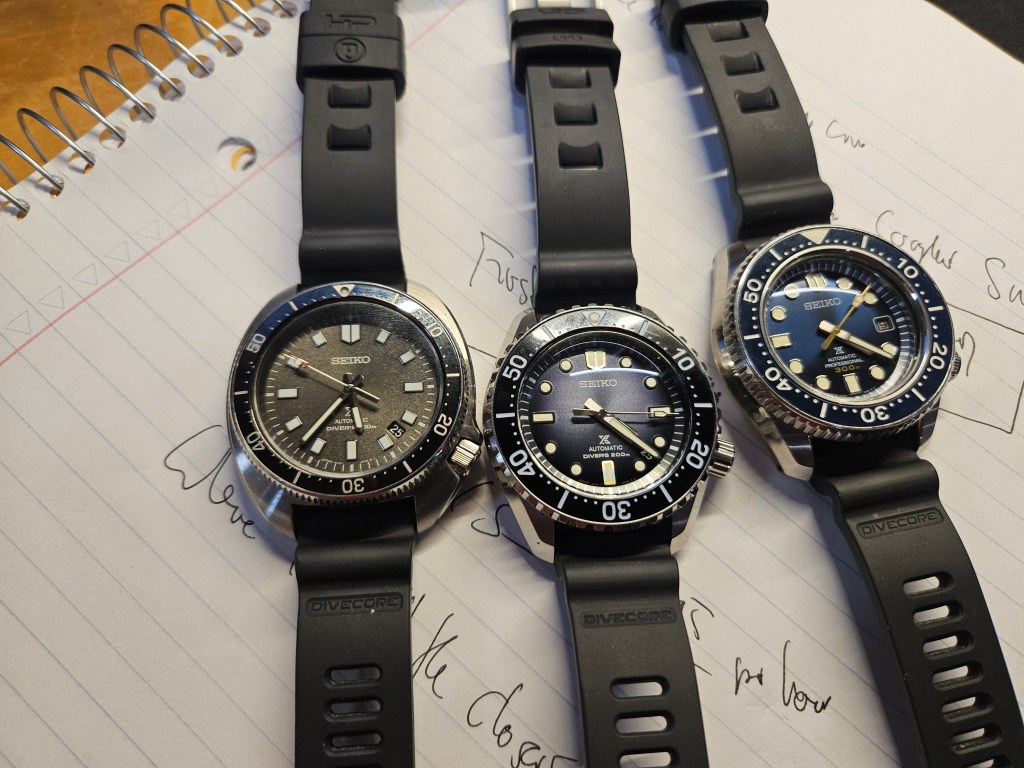
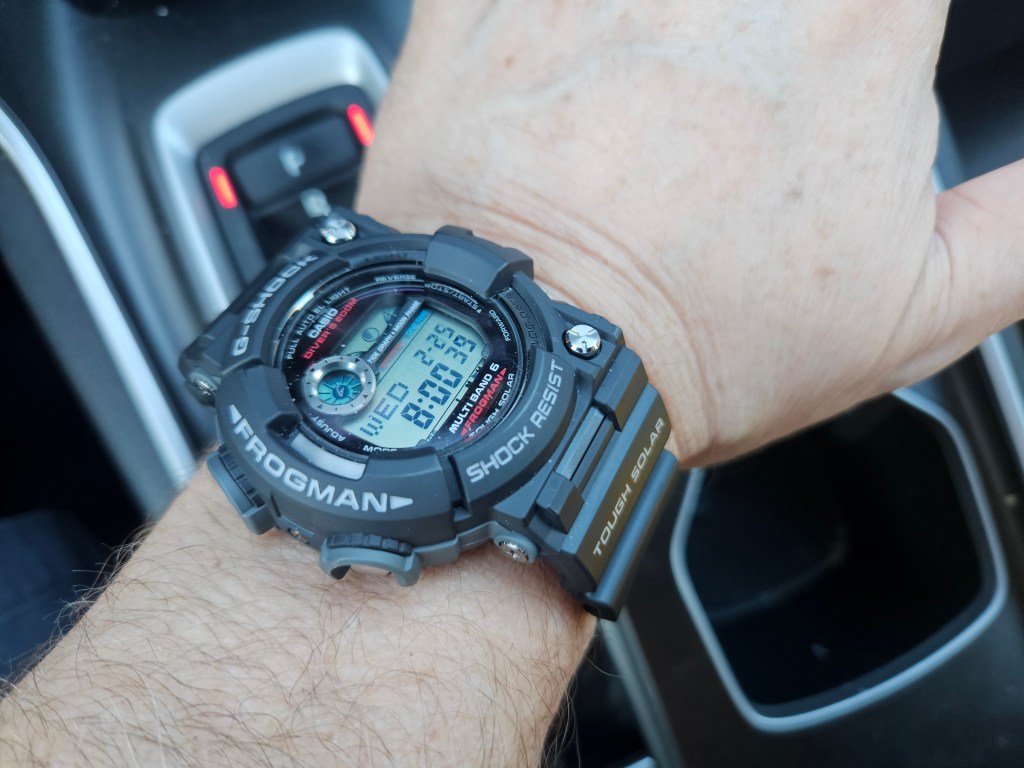
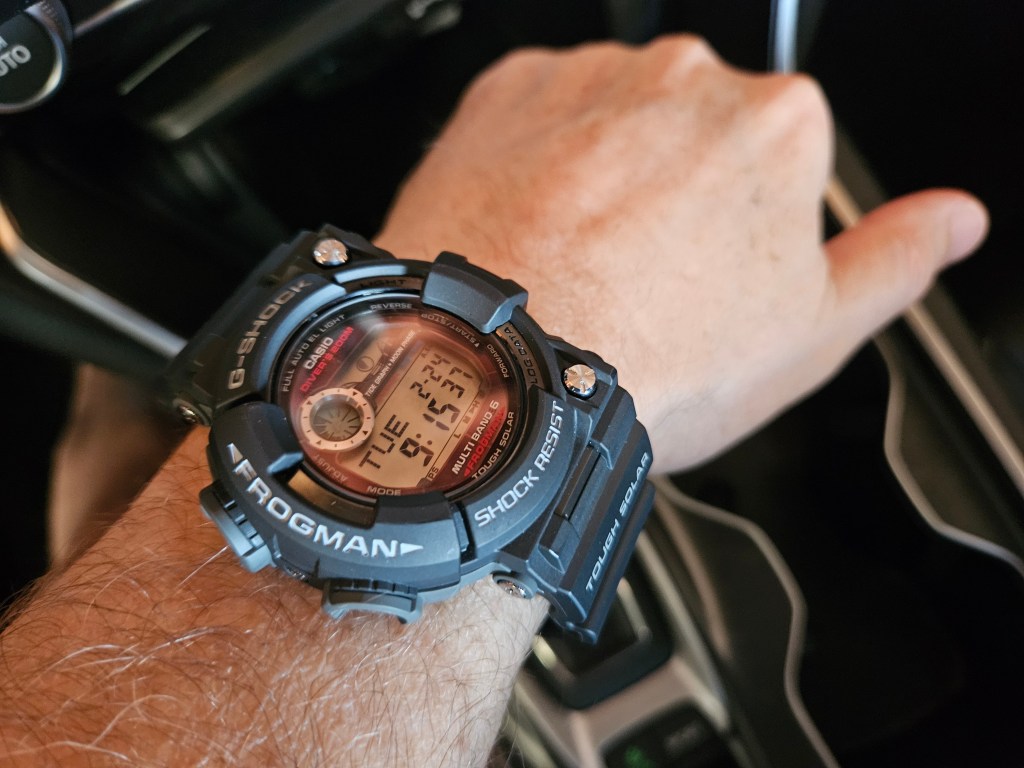
    I am a connoisseur of fine timepieces. I notice the way a sunray dial catches light like a held breath, the authority of a bezel click that says someone cared. I’ve worn Tudor Black Bays and Omega Planet Oceans as loaners—the horological equivalent of renting a Maserati for a reckless weekend—exhilarating, loud with competence, impossible to forget. My own collection is high-end Seiko divers, watches that deliver lapidary excellence at half the tariff: fewer theatrics, just ruthless execution. Precision doesn’t need a luxury tax.

    That same appetite governs my reading. A tight, aphoristic paragraph can spike my pulse the way a Planet Ocean does on the wrist. I collect sentences the way others collect steel and sapphire. Wilde. Pascal. Kierkegaard. La Rochefoucauld. These writers practice compression as a moral discipline. A lapidary writer treats language like stone—cuts until only the hardest facet remains, then stops. Anything extra is vanity.

    I am not, however, a tourist. I have no patience for writers who mistake arch tone for insight, who wear cynicism like a designer jacket and call it wisdom. Aphorisms can curdle into poses. Style without penetration is just a shiny case housing a dead movement.

    This is why I’m unsentimental about AI. Left alone, language models are unruly factories—endless output, hollow shine, fluent nonsense by the ton. Slop with manners. But handled by someone with a lapidary sensibility, they can polish. They can refine. They can help a sentence find its edge. What they cannot do is teach taste.

    Taste precedes tools. Before you let a machine touch your prose, you must have lived with the masters long enough to feel the difference between a gem and its counterfeit. That discernment takes years. There is no shortcut. You become a jeweler by ruining stones, by learning what breaks and what holds.

    Lapidary sensibility is not impressed by abundance or fluency. It responds to compression, inevitability, and bite. It is bodily: a tightening of attention, a flicker of pleasure, the instant you know a sentence could not be otherwise. You don’t acquire it through mimicry or prompts. You acquire it through exposure, failure, and long intimacy with sentences that refuse to waste your time.

    Remember this, then: AI can assist only where judgment already exists. Without that baseline, you are not collaborating with a tool. You are feeding quarters into a very expensive Slop Machine.

  • AI as Tool, Toy, or Idol: A Taxonomy of Belief

    AI as Tool, Toy, or Idol: A Taxonomy of Belief

    Your attitude toward AI machines is not primarily technical; it is theological—whether you admit it or not. Long before you form an opinion about prompts, models, or productivity gains, you have already decided what you believe about human nature, meaning, and salvation. That orientation quietly determines whether AI strikes you as a tool, a toy, or a temptation. There are three dominant postures.

    If you are a political-sapien, you believe history is the only stage that matters and justice is the closest thing we have to salvation. There is no eternal kingdom waiting in the wings; this world is the whole play, and it must be repaired with human hands. Divine law holds no authority here—only reason, negotiation, and evolving ethical frameworks shaped by shared notions of fairness. Humans, you believe, are essentially good if the scaffolding is sound. Build the right systems and decency will follow. Politics is not mere governance; it is moral engineering. AI machines, from this view, are tools on probation. If they democratize power, flatten hierarchies, and distribute wealth more equitably, they are allies. If they concentrate power, automate inequality, or deepen asymmetry, they are villains in need of constraint or dismantling.

    If you are a hedonist-sapien, you turn away from society’s moral drama and toward the sovereign self. The highest goods are pleasure, freedom, and self-actualization. Politics is background noise; transcendence is unnecessary. Life is about feeling good, living well, and removing friction wherever possible. AI machines arrive not as a problem but as a gift—tools that streamline consumption, curate taste, and optimize comfort. They promise a smoother, more luxurious life with fewer obstacles and more options. Of the three orientations, the hedonist-sapien embraces AI with the least hesitation and the widest grin, welcoming it as the ultimate personal assistant in the lifelong project of maximizing pleasure and minimizing inconvenience.

    If you are a devotional-sapien, you begin with a darker diagnosis. Humanity is fallen, and no amount of policy reform, pleasure, or purchasing power can make it whole. You don’t expect salvation from governments, markets, or optimization schemes; you expect it only from your Maker. You may share the political-sapien’s concern for justice and enjoy the hedonist-sapien’s creature comforts, but you refuse to confuse either with redemption. You are not shopping for happiness; you are seeking restoration. Spiritual health—not efficiency—is the measure that matters. From this vantage, AI machines look less like neutral tools and more like idols-in-training: shiny substitutes promising mastery, insight, or transcendence without repentance or grace. Unsurprisingly, the devotional-sapien is the most skeptical of AI’s expanding role in human life.

    Because your orientation shapes what you think humans need most—justice, pleasure, or redemption—it also shapes how you use AI, how much you trust it, and what you expect it to deliver. Before asking what AI can do for you, it is worth asking a more dangerous question: what are you secretly hoping it will save you from?

  • Too Much RAM, Not Enough Transcendence

    Too Much RAM, Not Enough Transcendence

    At sixty-four, time no longer strolls; it sprints, and I feel myself shrinking as it passes. Not dramatically—no tragic collapse—just a steady narrowing. Fewer friends than before. A smaller social orbit. My internal clock drifting farther out of sync with my wife’s and daughter’s, who are younger, livelier, and still tuned to daylight. They love me and make heroic efforts to lure me out of my cave, but by eight o’clock I’m asleep in the back seat, hibernating like a cartoon grizzly bear who misunderstood the invitation.

    Part of the shock is how badly my expectations were mis-set. I grew up marinated in television commercials that catechized me into a childish theology of consumerism: play by the rules, buy the right things, and you’ll be lifted onto a magic carpet of perpetual happiness and glowing health. The American Dream, as advertised, looked frictionless and eternal. Paradise was a purchase away. Then generative AI arrived and supercharged the fantasy. I didn’t just get a magic carpet—I became the magic carpet. Like Superman, I could optimize myself endlessly. If immortality wasn’t on the table, surely a close approximation was.

    And yet here I am. The house is nearly paid off in a premium Southern California neighborhood. My computer has more SSD, RAM, and CPU than I could have imagined as a kid. AI tools respond instantly, obedient and tireless. And still—no glory. No transcendence. Even my healthcare provider got in on the myth, emailing me something grandly titled “Your Personal Action Plan.” I arrived at the doctor’s office expecting revelation. He handed me a cup and asked for a urine sample.

    The gap between the life I was promised by the digital age and the life I’m actually living is soul-crushing in its banality. So I retreat to a bowl of steel-cut oats, drowned in prunes, molasses, and soy milk. It’s not heroic. It’s not optimized. But it’s warm, predictable, and faintly medicinal. “At least I’m eating clean,” I tell myself—clinging to this small, beige consolation as proof that even if the magic carpet never showed up, I can still manage a decent breakfast.

    Like millions before me, I have allowed myself to fall into Optimization Afterlife Fantasy–the belief that continuous self-improvement, technological upgrades, and algorithmic assistance can indefinitely postpone decline and approximate transcendence in a secular age. It replaces older visions of salvation with dashboards, action plans, and personalized systems, promising that with enough data, discipline, and tools, one can out-optimize aging, finitude, and disappointment. The fantasy thrives on the language of efficiency and control, encouraging the illusion that mortality is a solvable design flaw rather than a human condition. When reality intrudes—through fatigue, misalignment, or the body’s quiet refusals—the fantasy collapses, leaving behind not enlightenment but a sharper awareness of limits and the hollow ache of promises made by machines that cannot carry us past time.

  • Feedback Latency Intolerance

    Feedback Latency Intolerance

    Feedback Latency Intolerance is the conditioned inability to endure even brief gaps between action and response, produced by prolonged immersion in systems that reward instantaneous acknowledgment. Under its influence, ordinary delays—seconds rather than minutes—register as emotional disturbances, triggering agitation, self-doubt, or irritation disproportionate to the circumstance. The condition collapses temporal perspective, converting neutral waiting into perceived absence or rejection. What is lost is not efficiency but patience: the learned capacity to exist without immediate validation. Feedback latency intolerance reveals how algorithmic environments retrain emotional regulation, replacing mature tolerance for delay with a reflexive demand for constant confirmation.

    The extent of my deterioration revealed itself recently at a new pancake house. I took my daughter, asked the server what he actually liked on the menu, and obediently ordered the fried chicken biscuit sandwich. Then—already overplaying the moment—I texted my wife to announce my choice, as if this were actionable intelligence. I stared at my phone, waiting for the small red numeral to appear, the sacred 1 that would certify my existence. Forty seconds passed. Forty. I refreshed my screen like a lab rat pressing a lever, convinced something had gone wrong with the universe.

    In that absurd interval, it dawned on me: I had entered a state of pathological impatience, the natural byproduct of prolonged residence in the dopamine swamp of algorithmic life, where self-worth is measured by speed and volume of response. The sensation felt disturbingly familiar. My mind snapped back to stories my mother told about feeding me as a baby. The spoon, freshly loaded with mashed potatoes, would leave my mouth for a brief, necessary refill—and I would erupt in fury, unable to tolerate the unbearable injustice of the spoon’s absence. I screamed not from hunger, but from interruption. Sitting there in the pancake house, refreshing my phone, I realized I had simply upgraded the spoon. This is what too much time inside these machines does to a person: it doesn’t make you faster or smarter—it makes you an adult who can’t survive a forty-second gap between bites.

  • Stop Selling Books Like Vitamins: Reading as Pleasure, Not Duty

    Stop Selling Books Like Vitamins: Reading as Pleasure, Not Duty

    Literary Vice names the framing of reading as a private, absorbing, and mildly antisocial pleasure rather than a civic duty or self-improvement exercise. It treats books the way earlier cultures treated forbidden novels or disreputable entertainments: as experiences that tempt, distract, and pull the reader out of alignment with respectable schedules, market rhythms, and digital expectations. Literary vice rejects the language of virtue—empathy-building, résumé enhancement, democratic hygiene—and instead emphasizes immersion, obsession, and pleasure for its own sake. As a countervailing force against technology-induced anhedonia, reading works precisely because it is slow, effortful, and resistant to optimization: it restores depth of attention, reawakens desire through sustained engagement, and reintroduces emotional risk in a landscape flattened by frictionless dopamine delivery. Where screens numb by over-stimulation, literary vice revives feeling by demanding patience, solitude, and surrender to a single, uncompromising narrative consciousness.

    ***

    Adam Kirsch’s essay “Reading Is a Vice” makes a claim that sounds perverse until you realize it is completely sane: readers are misaligned with the world. They miss its rhythms, ignore its incentives, fall out of step with its market logic—and that is precisely the point. To be poorly adapted to a cultural hellscape is not a bug; it is the feature. Reading makes you antisocial in the healthiest way possible. It pulls you off screens, out of optimization mode, and away from the endless hum of performance and productivity that passes for modern life. In a culture engineered to keep us efficient, stimulated, and vaguely numb, misalignment is a form of resistance.

    Kirsch notes, of course, that reading builds critical thinking, individual flourishing, and democratic capacity. All true. All useless as marketing slogans. Those are not selling points in a dopamine economy. No one scrolls TikTok thinking, “I wish I were more civically responsible.” If you want young people to read, Kirsch argues, stop pitching books as moral medicine and start advertising them as pleasure—private, absorbing, and maybe a little disreputable. Call reading what it once was: a vice. When literature was dangerous, people couldn’t stop reading it. Now that books have been domesticated into virtue objects—edifying, wholesome, improving—no one can be persuaded to pick one up.

    You don’t eat baklava because it’s good for you. You eat it because it is an indecent miracle of sugar, butter, and culture that makes the rest of the day briefly irrelevant. Books work the same way. There are baklava books. Yours might be Danielle Steel. Mine isn’t. Mine lives closer to Cormac McCarthy. When I was in sixth grade, my literary baklava was Herman Raucher’s Summer of ’42. That book short-circuited my brain. I was so consumed by the protagonist’s doomed crush on an older woman that I refused to leave my tent for two full days during a perfect Yosemite summer. While everyone else hiked through actual paradise, I lay immobilized by narrative obsession. I regret nothing. My body was in Yosemite; my mind was somewhere far more dangerous.

    This is why you don’t tell students to read the way you tell people to take cod liver oil or hit their protein macros. That pitch fails because it is joyless and dishonest. You tell students to read because finding the right book feels like dessert—baklava, banana splits, whatever ruins your self-control. And yes, you can also tell them what Kafka knew: that great writing is an ax that breaks the frozen sea inside us. Stay frozen long enough—numb, optimized, frictionless—and you don’t just stagnate. You risk not coming back at all.