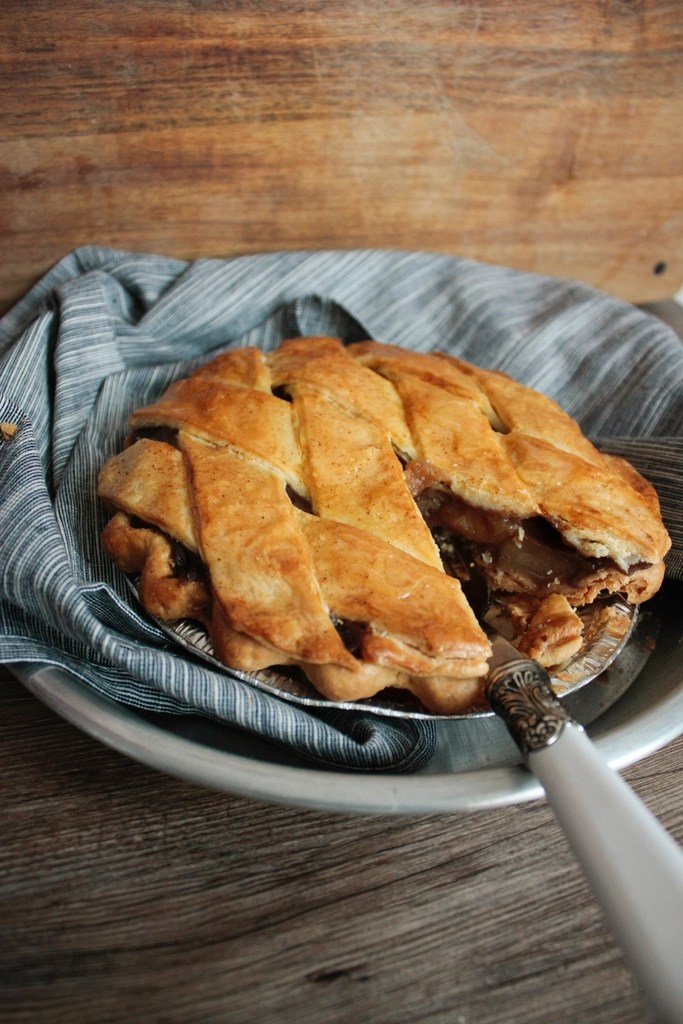
Many moons ago, my wife and I watched the 2006 HBO documentary Thin, which chronicles the tragic existence of girls in a Florida rehab clinic for eating disorders. These poor souls were ensnared in a vicious cycle of depression, self-loathing, and lies, their recovery rates abysmally low and fatality rates tragically high. After this emotional gut-punch, we desperately needed a palate cleanser, so we turned to a pie-baking contest featuring Midwestern women in Christmas sweaters, lovingly toiling over pie crusts. These wholesome warriors of the kitchen were a stark contrast to the aforementioned sufferers. It dawned on me that pie baking is the antithesis of anorexia—a condition of solipsism where one disappears into the self, whereas pie baking is a testament to community, love, and selfless devotion to butter and flour.
Imagine, if you will, a world where the kitchen isn’t just a hub of culinary creation but a sacred temple of love, where pie-baking is the highest form of devotion. In this sanctified realm, every Midwestern woman in a Christmas sweater is a culinary high priestess, her rolling pin a scepter of affection, her pie crust a canvas for heartfelt artistry. The Pie Baking Contest is an epic battleground where these valiant women gather, their aprons fluttering like superhero capes, ready to channel pure, unadulterated love into their pies. The stakes are absurdly high, the competition fierce, but the atmosphere? Pure camaraderie and joy.
Here, pie baking is not just a quaint pastime; it’s an epic saga of love, community, and unyielding devotion. These heroines approach their craft with the precision of neurosurgeons and the passion of Renaissance artists. Flour fills the air like enchanted snow, butter is blended into dough with the deftness of a master illusionist, and apples are peeled and sliced with the ferocity of a seasoned samurai. Each pie is a labor of love, a tangible expression of their deepest affections. As they sweat and toil over their creations, the kitchen morphs into a bustling hub of warmth and connection.
Baking pies, slinging spaghetti and garlic bread, or whipping up a dish of hot and sour Tom Yum Goong soup demands a healthy soul, one that’s plugged into the matrix of family and community. We therefore don’t journey solo but soar with a merry band of culinary adventurers, armed with spatulas and mixing bowls, ready to conquer the next great feast. So, skip the guilt and embrace the butter—life’s too short for bland food and empty kitchens.
Baking pies points us to the valuable custom of Crustodianism–the sacred, soul-healing act of cooking not merely for sustenance, but as a devotional rite—an expression of love, fellowship, and culinary redemption. Born at the crossroads of Midwest Christmas sweater sincerity and battle-hardened pie crust tenacity, Crustodianism elevates the domestic act of baking into a communal liturgy. The Crustodian is no mere cook; she (or he, apron optional) is a caretaker of tradition, a therapist armed with a rolling pin, a high priest of carbs performing ritual alchemy with butter, flour, and tears of joy.
In contrast to the solipsistic void of disordered eating, where nourishment is seen as the enemy, the Crustodian sees food as communion. A warm casserole becomes a life raft. A triple-layer coconut cream pie becomes a bridge to the lonely. A pot of stew bubbles with the echoes of ancestral affection. Cooking, in this frame, is the antidote to isolation—the proof that one has not given up on the world but doubled down on its delicious potential.
Crustodianism isn’t just about the food. It’s about saying, “I made this for you,” and meaning it with your whole buttery soul. It’s about reclaiming joy, reclaiming appetite, and yes, reclaiming your place at the table—preferably next to someone you love, with a second helping on the way.
 Cinemorphosis
Leave a comment