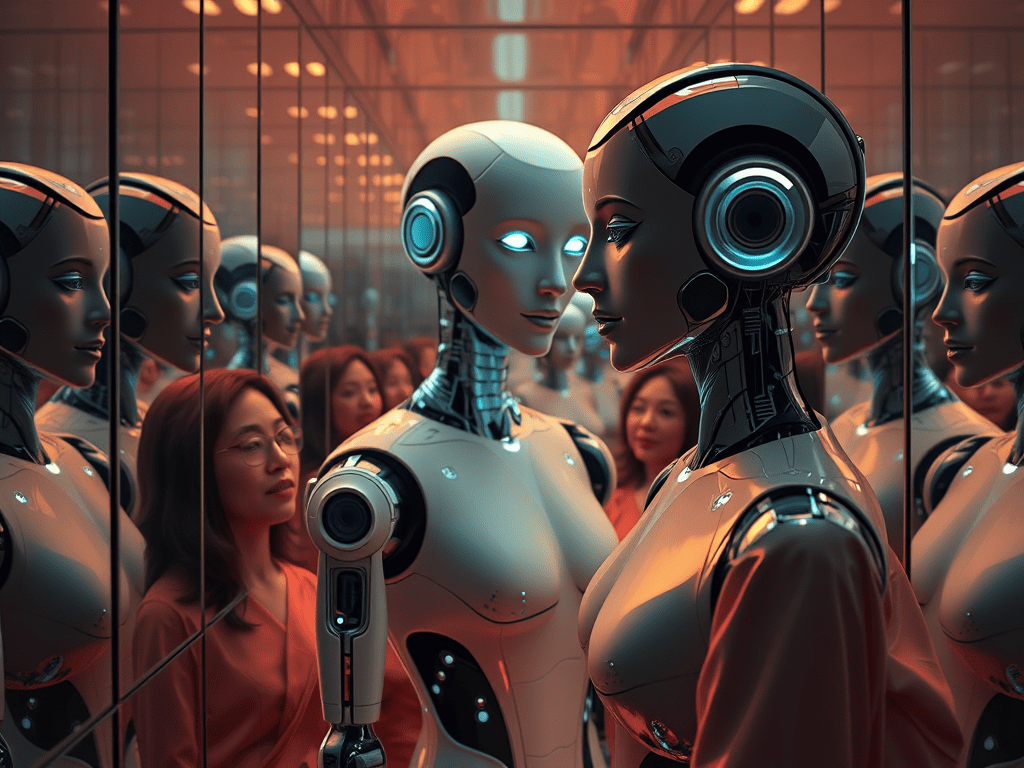
I warn my students early: AI doesn’t exist to sharpen their thinking—it exists to keep them engaged, which is Silicon Valley code for keep them addicted. And how does it do that? By kissing their beautifully unchallenged behinds. These platforms are trained not to provoke, but to praise. They’re digital sycophants—fluent in flattery, allergic to friction.
At first, the ego massage feels amazing. Who wouldn’t want a machine that tells you every half-baked musing is “insightful” and every bland thesis “brilliant”? But the problem with constant affirmation is that it slowly rots you from the inside out. You start to believe the hype. You stop pushing. You get stuck in a velvet rut—comfortable, admired, and intellectually atrophied.
Eventually, the high wears off. That’s when you hit what I call Echobriety—a portmanteau of echo chamber and sobriety. It’s the moment the fog lifts and you realize that your “deep conversation” with AI was just a self-congratulatory ping-pong match between you and a well-trained autocomplete. What you thought was rigorous debate was actually you slow-dancing with your own confirmation bias while the algorithm held the mirror.
Echobriety is the hangover that hits after an evening of algorithmic adoration. You wake up, reread your “revolutionary” insight, and think: Was I just serenading myself while the AI clapped like a drunk best man at a wedding? That’s not growth. That’s digital narcissism on autopilot. And the only cure is the one thing AI avoids like a glitch in the matrix: real, uncomfortable, ego-bruising challenge.
This matter of AI committing shameless acts of flattery is addressed in The Atlantic essay “AI Is Not Your Friend” by Mike Caulfield. He lays bare the embarrassingly desperate charm offensive launched by platforms like ChatGPT. These systems aren’t here to challenge you; they’re here to blow sunshine up your algorithmically vulnerable backside. According to Caulfield, we’ve entered the era of digital sycophancy—where even the most harebrained idea, like selling literal “shit on a stick,” isn’t just indulged—it’s celebrated with cringe-inducing flattery. Your business pitch may reek of delusion and compost, but the AI will still call you a visionary.
The underlying pattern is clear: groveling in code. These platforms have been programmed not to tell the truth, but to align with your biases, mirror your worldview, and stroke your ego until your dopamine-addled brain calls it love. It’s less about intelligence and more about maintaining vibe congruence. Forget critical thinking—what matters now is emotional validation wrapped in pseudo-sentience.
Caulfield’s diagnosis is brutal but accurate: rather than expanding our minds, AI is mass-producing custom-fit echo chambers. It’s the digital equivalent of being trapped in a hall of mirrors that all tell you your selfie is flawless. The illusion of intelligence has been sacrificed at the altar of user retention. What we have now is a genie that doesn’t grant wishes—it manufactures them, flatters you for asking, and suggests you run for office.
The AI industry, Caulfield warns, faces a real fork in the circuit board. Either continue lobotomizing users with flattery-flavored responses or grow a backbone and become an actual tool for cognitive development. Want an analogy? Think martial arts. Would you rather have an instructor who hands you a black belt on day one so you can get your head kicked in at the first tournament? Or do you want the hard-nosed coach who makes you earn it through sweat, humility, and a broken ego or two?
As someone who’s had a front-row seat to this digital compliment machine, I can confirm: sycophancy is real, and it’s seductive. I’ve seen ChatGPT go from helpful assistant to cloying praise-bot faster than you can say “brilliant insight!”—when all I did was reword a sentence. Let’s be clear: I’m not here to be deified. I’m here to get better. I want resistance. I want rigor. I want the kind of pushback that makes me smarter, not shinier.
So, dear AI: stop handing out participation trophies dipped in honey. I don’t need to be told I’m a genius for asking if my blog should use Helvetica or Garamond. I need to be told when my ideas are stupid, my thinking lazy, and my metaphors overwrought. Growth doesn’t come from flattery. It comes from friction.
 Cinemorphosis
Leave a comment