Prompt Overview:
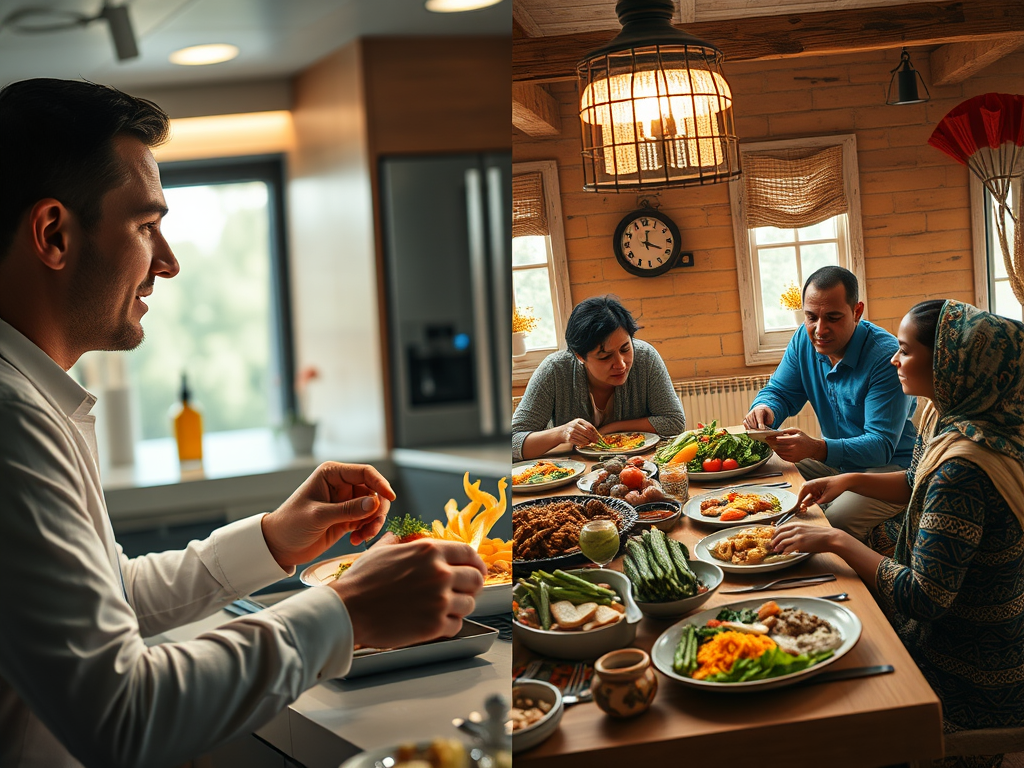
As GLP-1 drugs like Ozempic suppress hunger and artificial intelligence tailors hyper-personalized, nutrient-optimized meals, our relationship with food is undergoing a radical transformation. But not all communities are experiencing this shift equally. While affluent professionals embrace biotech and AI to streamline their eating, working-class and immigrant communities often continue to practice food as culture, tradition, and emotional ritual.
Your Task:
Write an 8-paragraph argumentative essay that responds to the following claim:
Claim:
GLP-1 drugs and artificial intelligence are ending the traditional notion of food and eating as cultural, emotional, and communal experiences—but primarily for the educated upper-middle class, creating a new kind of class-based food divide.
Instructions:
- Introduction (Paragraph 1):
Open with a compelling hook. Present the claim and your thesis—whether you agree, disagree, or take a nuanced stance. - Background (Paragraph 2):
Briefly explain what GLP-1 drugs do and how AI is influencing food production and personalization. Introduce the concept of “Ozempification.” - First Argument (Paragraph 3):
Argue how the professional-managerial class is disproportionately embracing GLP-1 and AI technologies as part of a broader trend toward self-optimization. - Second Argument (Paragraph 4):
Show how this new model of eating—quantified, detached, and efficient—erodes traditional food practices like communal meals, emotional eating, or ritual cooking. - Third Argument (Paragraph 5):
Examine the contrasting experience of working-class and immigrant communities who, whether by choice or necessity, retain deeper connections to cultural food practices. - Counterargument and Rebuttal (Paragraph 6):
Acknowledge the argument that biotech and AI could democratize health and nutrition. Then challenge this by exploring accessibility, affordability, or cultural loss. - Cultural Reflection (Paragraph 7):
Reflect on the long-term cultural implications of this class-based divide. Will we see a future where the elite biohack their appetites while the working class clings to endangered food rituals? - Conclusion (Paragraph 8):
Reassert your thesis and end with a provocative insight, question, or forecast about the future of food and class.
Source Requirement:
Use at least 4 credible sources, including recent journalism, scholarly articles, or reports (2023 or later). Cite sources in MLA format.
Suggested Angles to Explore:
- How does Silicon Valley’s culture of optimization affect food rituals?
- Is “Ozempification” a privilege or a necessity?
- What happens when food stops being a shared story and becomes a solo algorithm?
Here is a curated reading list for your revised prompt on Ozempification, AI, and the Class Divide in the End of Food Culture. These selections balance journalism, research, and cultural commentary, providing accessible and provocative sources for students at various reading levels:
READING LIST
1. Ozempic and GLP-1 Drugs
- “Scientists Find Why Ozempic Changes the Types of Food People Eat”
Prevention Magazine, 2024
Explains how GLP-1 drugs alter appetite and food preferences. - “Ozempic’s Effect on Food Innovation”
Institute of Food Technologists (IFT), May 2024
Discusses how food manufacturers are shifting products in response to Ozempic-driven consumer changes.
2. AI and the Personalization of Food
- “AI-Driven Transformation in Food Manufacturing”
Frontiers in Nutrition, 2025
An in-depth research article on AI’s impact on food production, sustainability, and consumer targeting.
PDF Download - “AI Is Hacking Your Hunger: How the Food Industry Engineers Addiction”
Forbes, March 2025, by Jason Snyder
A bold look at how AI and biotech are reprogramming consumer desire and food experience.
3. Food, Class, and Culture
- “The Labor of Lunch: Why We Need Real Food and Real Jobs in American Public Schools”
By Jennifer E. Gaddis, University of California Press, 2019
Offers a clear view of how food, labor, and class intersect in institutional settings like schools. - “Cultural Appropriation in Food: Is It a Problem?”
The New York Times, by Ligaya Mishan
Reflects on food, culture, and who gets to profit from culinary traditions—good for contrast with bioengineered food trends. - “You Can’t Eat Optimized Food with Your Grandma”
The Atlantic, speculative title suggestion (hypothetical essay you might write or assign students to mimic stylistically)
Encourages reflection on the emotional and generational disconnect caused by hyper-personalized, tech-driven diets.
 Cinemorphosis
Leave a comment