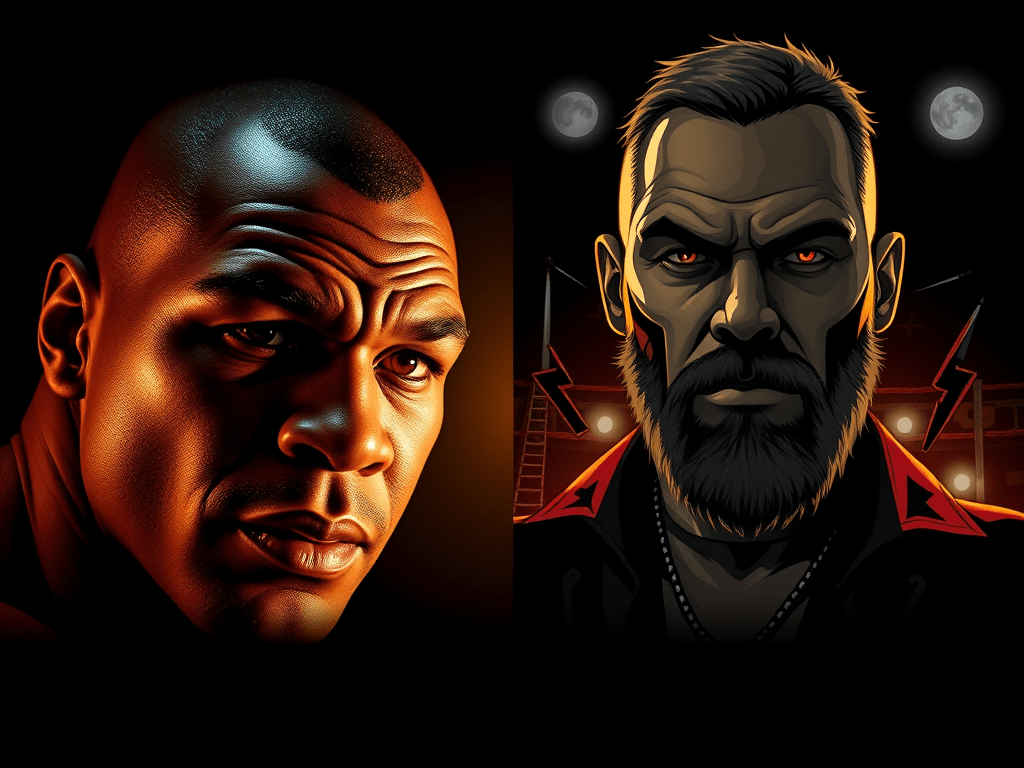
Essay Prompt:
In the HBO Max special Mike Tyson: Undisputed Truth, Tyson delivers a raw, emotionally charged monologue in which he recounts the highs and lows of his life—abuse, addiction, fame, disgrace, and grief—with moments of striking self-awareness and brutal candor. The performance walks a fine line between personal catharsis and public spectacle.
In contrast, the Netflix documentary Untold: The Liver King exposes Brian Johnson—a self-styled primal lifestyle influencer—as a constructed persona built on lies, steroid use, and performative masculinity. Johnson’s brand sells authenticity while hiding calculated deception, ultimately revealing the blurred line between self-expression and grift.
In a 1,700-word essay, analyze and compare how these two figures—Tyson and Johnson—use storytelling as performance, and to what extent their narratives can be seen as acts of truth-telling versus brand management.
Consider the following questions to shape your argument:
- What makes storytelling feel “authentic,” and how is that authenticity earned or staged?
- How do vulnerability and confession function differently in Tyson’s monologue vs. Johnson’s documentary revelation?
- To what extent are both men grifters—selling pain, performance, or redemption to maintain relevance or profit?
- Where does the audience’s complicity come into play? Are we consuming truth, or just another curated persona?
Support your argument with close analysis of both documentaries, and engage at least two secondary sources on authenticity, performance, media, or masculinity.
Three Sample Thesis Statements (with Mapping Components):
1. Performance vs. Persona
While Mike Tyson: Undisputed Truth offers a raw, emotionally grounded form of storytelling that embraces contradiction and vulnerability, Untold: The Liver King reveals a carefully curated identity rooted in deception and spectacle, showing how authenticity can be performed—and faked—for commercial gain.
Mapping:
- Tyson’s emotional transparency and narrative arc
- Liver King’s constructed masculinity and hidden steroid use
- The commodification of pain and image in public life
2. Redemption as Product
Both Tyson and the Liver King use storytelling to shape redemptive narratives, but where Tyson uses confession to reconcile with past chaos, Johnson’s confession serves primarily to preserve his brand—revealing how vulnerability, when monetized, can become just another form of grift.
Mapping:
- Redemption arc as performance
- Strategic confession vs. genuine self-reckoning
- The role of audience sympathy in validating narrative authenticity
3. The Grift We Applaud
Tyson and Johnson exemplify the thin line between storyteller and hustler in modern media culture, where charisma and spectacle blur truth. Ultimately, both rely on the audience’s desire to believe in transformation—whether real or manufactured—making us complicit in their self-mythologies.
Mapping:
- The myth of the fallen hero vs. the primal guru
- Audience complicity in enabling the performance
- Spectacle as the currency of truth in influencer culture
Suggested Reading List
On Authenticity & Performance:
- Erving Goffman – The Presentation of Self in Everyday Life
Classic text on how individuals perform identity for social audiences. - Lionel Trilling – Sincerity and Authenticity
A deeper philosophical look at how authenticity has evolved as a moral and aesthetic concept. - Andrew Potter – The Authenticity Hoax
A critique of how “authenticity” has been commodified and repackaged as lifestyle branding.
On Grift, Media, and Branding:
- Chris Hedges – Empire of Illusion
Sharp cultural critique on how entertainment has replaced reality, and spectacle has displaced truth. - Naomi Klein – No Logo (selections)
On the rise of personal branding and the corporatization of identity—relevant to the Liver King’s monetization of lifestyle. - Alissa Quart – Branded: The Buying and Selling of Teenagers
Helps contextualize how audiences, especially younger ones, are trained to consume personality as product.
On Masculinity and Image:
- Susan Faludi – Stiffed: The Betrayal of the American Man
Explores how modern men feel disconnected from authentic purpose and turn to performance and power narratives. - Michael Kimmel – Guyland: The Perilous World Where Boys Become Men
Useful for analyzing the Liver King’s appeal to adolescent masculine ideals rooted in tribalism, strength, and dominance.
 Cinemorphosis
Leave a comment