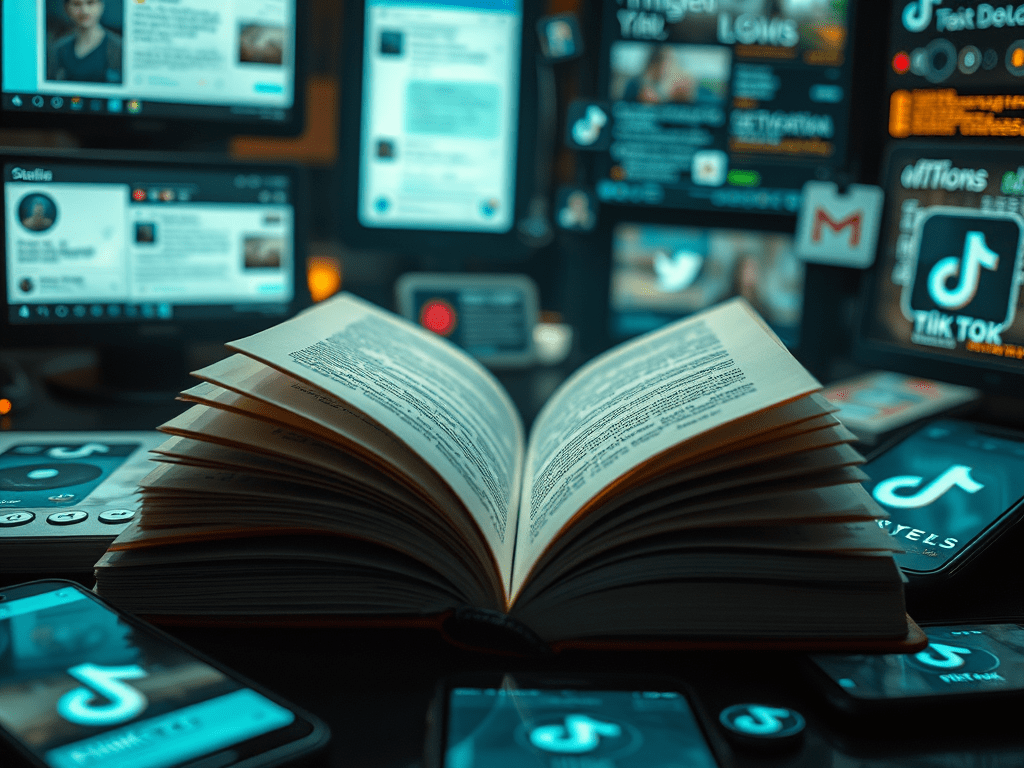
In his New York Times column “When Novels Mattered,” David Brooks laments the slow vanishing of the novelist as a public figure. Once, the release of a new novel—especially by the likes of Saul Bellow or Toni Morrison—was a cultural event. Now it barely causes a ripple.
The novel no longer commands attention. The digital age has crushed the reader’s patience, fractured our attention span, and flooded our minds with the shallow stimuli of TikTok, endless texts, and algorithmic rabbit holes. Where once we waited for a new Roth novel with the same anticipation reserved today for a Marvel sequel, we now swipe past literature as if it were spam.
For Brooks, this is not just a loss—it’s a tragedy. The decline of the novel signals something deeper: a society losing its capacity for moral complexity, nuance, and emotional depth. The great literary writers, he argues, once served as our secular prophets, our social conscience. They told the truth—harsh, beautiful, layered. They gave us characters who were flawed, human, and real—not two-dimensional avatars chasing dopamine hits on social media.
One of Brooks’ most compelling insights is that this decline is not simply the result of technological distraction, but of cultural timidity. Great literature, he reminds us, requires audacity. The ability to speak outside the safe lanes. To challenge the dominant orthodoxy. And today, particularly among the liberal elite, that audacity is wilting. Brooks argues that young people, especially on college campuses, whisper their opinions in fear. The social cost of independent thinking has grown too high.
Interestingly, Brooks—who has recently skewered the excesses of the political right—spares them from scrutiny here. His focus is firmly on the left, on the performative virtue and self-censorship that, while well-meaning, suffocates creative risk. In this climate, it’s easier to be righteous than original. Virtue signaling may win you applause online, but it doesn’t lead to great art.
Yet the most persuasive moment in the essay arrives late, when Brooks describes the collective psychic damage of the last decade. “Our interior lives,” he writes, “are being battered by the shock waves of public events. There has been a comprehensive loss of faith.” That line lands hard. It names something many of us feel: that we are living in a Bosch-like hellscape of noise, cruelty, and absurdity—a fever dream of moral exhaustion.
Brooks doesn’t say this, but I will: perhaps literature isn’t dead, just stunned. In shock. In digestion. Maybe we can’t write the great novels of this era because we haven’t fully metabolized the era itself. The story hasn’t ended, and we’re still trying to make sense of the firestorm.
Is the novel dead? I doubt it. It’s sleeping off the chaos. There are still serious novelists out there—unhyped, uncelebrated—doing the slow, unsexy work. One who deserves more recognition is Sigrid Nunez, whose clear, intimate prose hits as hard as anything in Bellow’s canon.
The talent remains. The novels are still being written. What’s missing is the cultural infrastructure that once elevated them to necessity. We don’t need more influencers—we need readers with stamina. We need a culture willing to wrestle with meaning again.
 Cinemorphosis
Leave a comment