Academic Friction is the intentional reintroduction of difficulty, resistance, and human presence into the learning process as a corrective to academic nihilism. Academic friction rejects the premise that education should be frictionless, efficient, or fully mediated by machines, insisting instead that intellectual growth requires struggle, solitude, and sustained attention. It is created through practices that cannot be outsourced or automated—live writing, oral presentations, performance, slow reading, and protected time for thought—forcing students to confront ideas without the buffer of AI assistance. Far from being punitive, academic friction restores agency, rebuilds cognitive stamina, and reawakens curiosity by making learning consequential again. It treats difficulty not as an obstacle to be removed, but as the very medium through which thinking, meaning, and human development occur.
Greatness is born from resistance. Depth is what happens when something pushes back. Friction is not an obstacle to meaning; it is the mechanism that creates it. Strip friction away and you don’t get excellence—you get efficiency, speed, and a thin satisfaction that evaporates on contact. This is as true in food as it is in thinking.
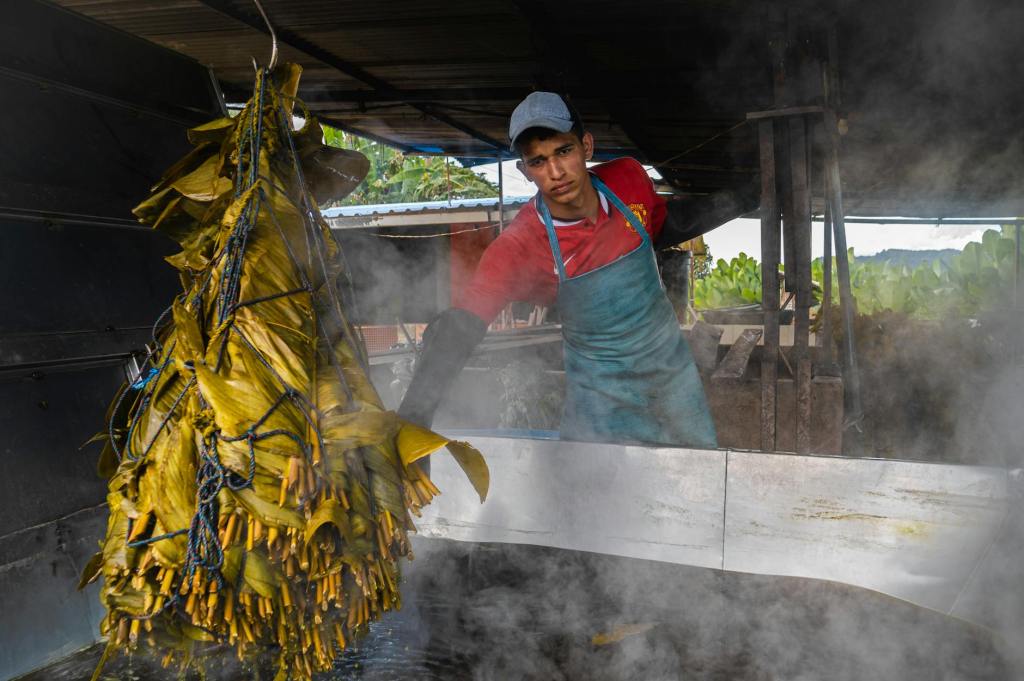
Consider cochinita pibil, a dish that seems to exist for the sole purpose of proving that greatness takes time. Nothing about it is casual. Pork shoulder is marinated overnight in achiote paste, bitter orange juice, garlic, cumin, oregano—an aggressive, staining bath that announces its intentions early. The meat doesn’t just absorb flavor; it surrenders to it. Traditionally, it is wrapped in banana leaves, sealed like contraband, and buried underground in a pit oven. Heat rises slowly. Smoke seeps inward. Hours pass. The pork breaks down molecule by molecule, fibers loosening until resistance gives way to tenderness. This is not cooking as convenience; it is cooking as ordeal. The reward is depth—meat so saturated with flavor it feels ancient, ceremonial, earned.
Now here’s the confession: as much as I love food, I love convenience more. And convenience is just another word for frictionless. I will eat oatmeal three times a day without hesitation. Not because oatmeal is great, but because it is obedient. It asks nothing of me. Pour, stir, microwave, done. Oatmeal does not resist. It does not demand patience, preparation, or attention. It delivers calories with monk-like efficiency. It is fuel masquerading as a meal, and I choose it precisely because it costs me nothing.
The life of the intellect follows the same fork in the road. There is the path of cochinita pibil and the path of oatmeal. One requires slow reading, sustained writing, confusion, revision, and the willingness to sit with discomfort until something breaks open. The other offers summaries, shortcuts, prompts, and frictionless fluency—thought calories without intellectual nutrition. Both will keep you alive. Only one will change you.
The tragedy of our moment is not that people prefer oatmeal. It’s that we’ve begun calling it cuisine. We’ve mistaken smoothness for insight and speed for intelligence. Real thinking, like real cooking, is messy, time-consuming, and occasionally exhausting. It stains the counter. It leaves you unsure whether it will be worth it until it is. But when it works, it produces something dense, resonant, and unforgettable.
Cochinita pibil does not apologize for the effort it requires. Neither should serious thought. If we want depth, we have to accept friction. Otherwise, we’ll live well-fed on oatmeal—efficient, unchallenged, and never quite transformed.
 Cinemorphosis
Leave a comment