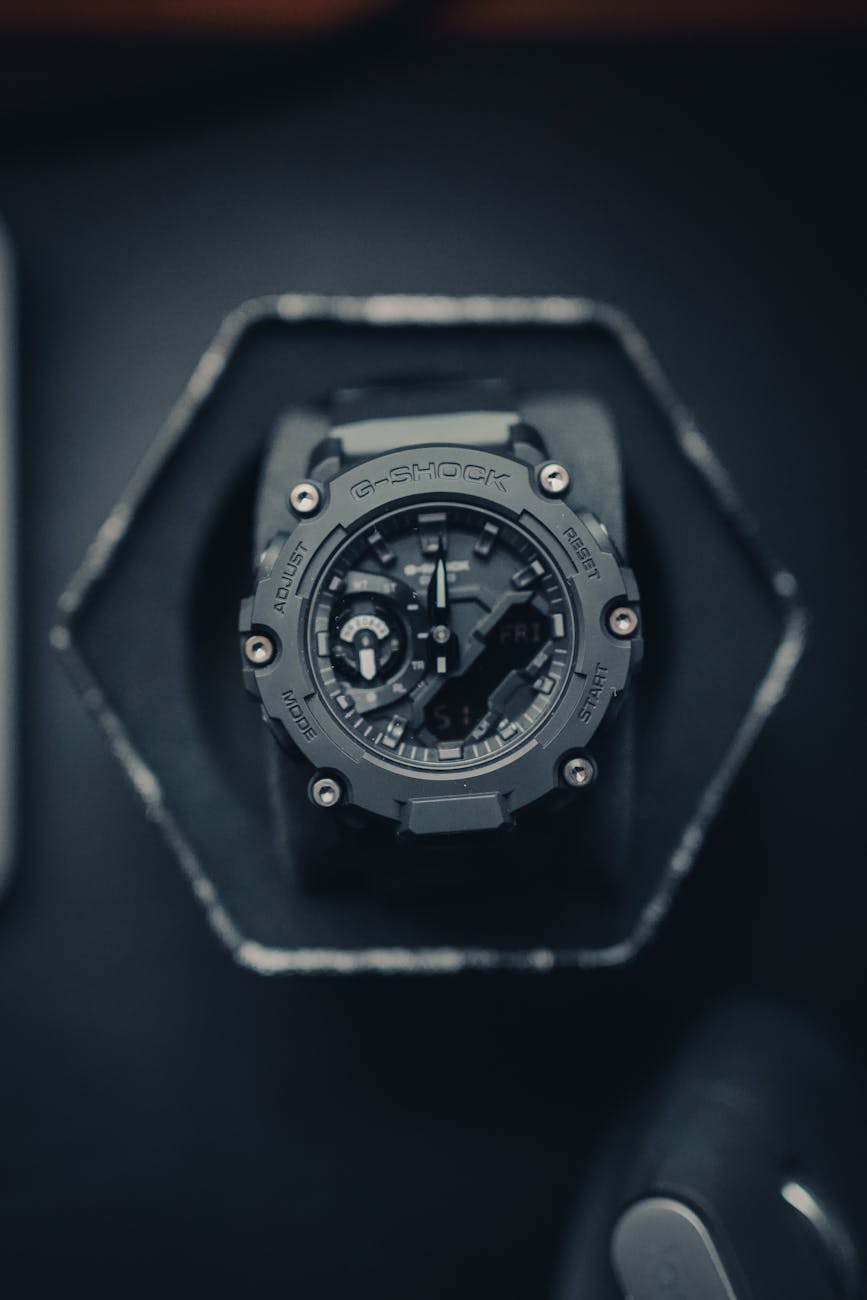
You encounter a Rangeman owner who worships the stealth blacked-out model with a devotion bordering on performance art. He will tell you, calmly and without irony, that he can’t actually read the time on the negative display. It doesn’t matter. The watch stays on the wrist because it looks lethal—pure shadow, pure attitude, pure presence. Time, apparently, is now a secondary feature.
Think about the pivot this represents. The man did not buy a timepiece; he bought an image. The geometry, the matte darkness, the tactical aura—these are the real functions. The digits exist somewhere inside the case, like a ceremonial appendix. If the light is right and the wrist is angled just so, the hour may reveal itself. But that’s incidental. The watch is no longer consulted. It is displayed.
He resembles the fellow who once insisted he read glossy magazines for the articles, only to admit later that the articles had become irrelevant long ago. Content is gone. Only the visuals remain. In the same way, this enthusiast has crossed the line from horology to aesthetic intoxication. The watch no longer tells time. It tells a story about the man wearing it.
Such a man is suffering from Function Abandonment Syndrome—the condition that sets in when a watch enthusiast quietly releases the expectation that the watch perform its basic task and begins wearing it purely for appearance, mood, or identity. Legibility becomes optional. Accuracy becomes theoretical. The time is technically available somewhere—under ideal lighting, at a cooperative angle—but that’s no longer the point. The owner has crossed the invisible threshold where tool becomes sculpture and utility becomes a nostalgic rumor. He doesn’t check the watch anymore; he acknowledges it. Function Abandonment Syndrome is what happens when style overwhelms purpose and the job description is politely retired without ceremony.
Is there a cure for his condition? Yes. Imagine this: He lives happily in the glow of his blacked-out Rangeman until the day function suddenly matters again. Picture this: he’s driving a lonely stretch of highway at dusk when the fuel light comes on and the next gas station is closing in five minutes. His phone is dead. The dashboard clock is gone. All he has is the watch he chose for its “presence.” He lifts his wrist. Tilts. Squints. Rolls it toward the fading light like a man trying to read smoke signals from the wrist. The digits hover there, shy and evasive, revealing nothing but his own poor life choices. The station lights flicker off in the distance. In that moment—heart rate climbing, range dropping, darkness settling—he experiences the cold, clarifying terror that ends Function Abandonment Syndrome forever. Because style is thrilling in the showroom. But when the world gets real, the most beautiful watch on earth is the one that will tell you the time the first time you ask.
 Cinemorphosis
Leave a comment