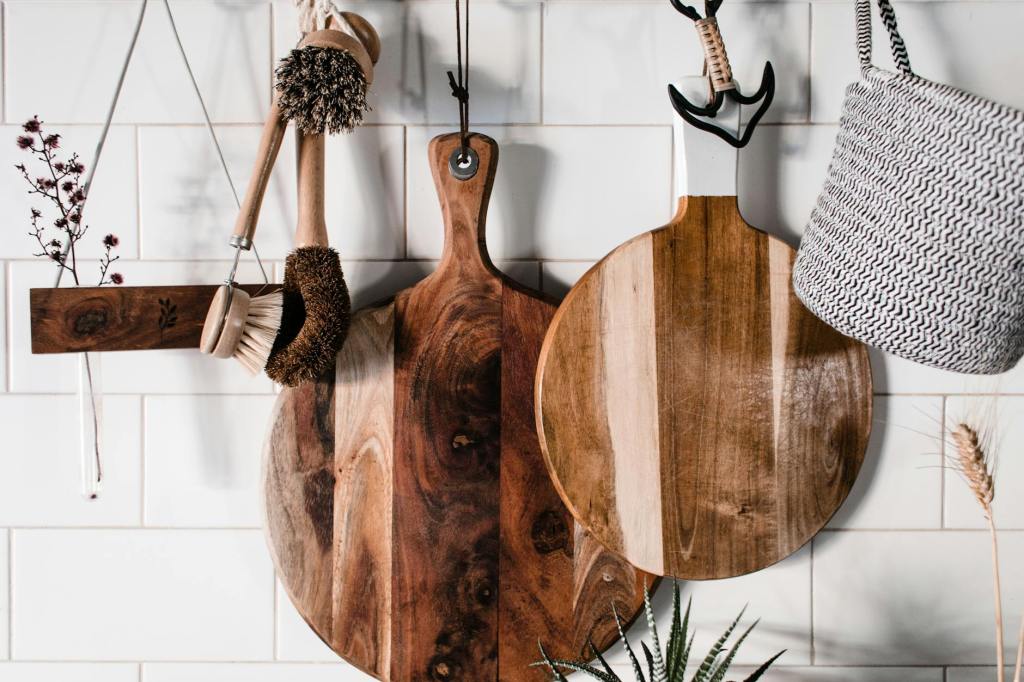
After watching a documentary on microplastics—the kind that makes you feel like you’ve been chewing on a credit card your entire adult life—I purged my kitchen of polymer cutting boards with the zeal of a man burning cursed artifacts. In their place, I installed three bamboo boards: handsome, virtuous, and morally superior. They gleamed with the smugness of objects that require hand-washing. No dishwasher. No shortcuts. You don’t clean them; you tend to them. I accepted this as the price of purity.
A month later, domestic reality intervened. We needed a larger board. Naturally, I upgraded—not to another bamboo slab, but to a teak charcuterie board thick enough to stop a bullet and elegant enough to host a minor European summit. When I opened the box, however, I discovered that teak is less a cutting surface and more a lifestyle commitment. It must be moisturized. Neglect it, and it dries, cracks, and becomes a microbial timeshare. The bamboo boards, I learned, share this delicate temperament. So much for rugged simplicity.
Now, once a month, I conduct what can only be described as a ritual. I anoint each board—front and back—with a tablespoon of mineral oil, as if preparing it for a minor sacrament. They sit overnight, absorbing their glossy absolution while I contemplate the path that brought me here.
The plot thickened when I discovered that plain mineral oil, while admirable, is apparently the beginner’s drug. The connoisseur graduates to a blend of mineral oil and beeswax—a two-in-one elixir promising water resistance, durability, and, one suspects, moral clarity. Another twenty dollars vanished. The boards, I was assured, would now repel moisture with aristocratic disdain.
I like to think of myself as a man who values simplicity. Reality suggests otherwise. Without meaning to, I slid down the polished banister of the healthy lifestyle rabbit hole. It begins with a reasonable fear—microplastics—and ends with a cabinet of oils, waxes, and maintenance schedules that would make a museum curator nod in approval. There’s a name for obsessive food purity—orthorexia nervosa—but this feels broader, more ambitious. This is what I would call Total Purity Syndrome: the quiet transformation of daily habits into sacred rites, where deviation carries the faint odor of moral failure.
To be clear, I haven’t sealed myself in a sterile dome, subsisting on filtered air and ethically sourced chia seeds. I’m not auditing my oxygen intake. I’ve simply spent about a hundred dollars on cutting boards and would prefer they not crack, warp, or harbor microscopic civilizations. That’s not pathology. That’s stewardship.
Still, there is something revealing in the arc: a man who set out to eliminate plastic and ended up with a monthly oiling ceremony. Progress, it seems, has a way of recruiting you into its maintenance plan.


Leave a comment