Category: Confessions

  • The No Consequences Era of Education

    The No Consequences Era of Education

    It’s been a bruising semester. I’m teaching a class full of student-athletes—big personalities, bigger social circles. I like them; I even feel protective of them. But they’re driving me halfway to madness. They sit in tight cliques, chattering through lectures like it’s a locker room between drills. Every class, I play the same game of whack-a-murmur: redirect, refocus, remind them that the material matters for their essays. I promise them mercy—“just give me 30 minutes of focus before we watch the documentary or workshop your drafts”—but my voice competes with the hum of conversation and the holy glow of smartphones.

    The phones are the true sirens of the classroom—scrolling, snapping, texting, attention atomized into pixels. Maybe it’s my fault for not collecting them in a basket like contraband. I thought I was teaching adults. I thought athletes, of all people, would bring discipline and drive. Instead, I’ve got a team that treats class like study hall with Wi-Fi. My essay topics that have created engagement in past semesters—like Jordan Peele’s Sunken Place—barely register. The irony: I’m showing them the metaphor for psychological paralysis, and half the room is literally sinking into their screens.

    After thirty years of teaching, this is the hardest semester I’ve had. I kept telling myself, Five more weeks and the storm will pass. Next semester, you’ll have your groove back. Today I spoke with a colleague who teaches the same class to the general population—same disengagement, same cell phones, same glazed eyes. He added one more grim diagnosis: the rise of fragility. When he points out errors, missing citations, too much AI-speak, or low effort, students protest that his feedback “hurts their feelings.” They’re not defiant—they’re delicate. Consequences have become cruelty.

    That word—consequences—haunted me as I walked to class. I thought about my own twin daughters at their highly rated high school, where late work flows freely, “self-esteem” trumps rigor, and parental complaints terrify administrators more than failing grades. It hit me: this isn’t an athlete problem—it’s a generational shift. The No Consequences Era has arrived. Students no longer fear failure; they resent it. And the tragedy isn’t that they can’t handle criticism—it’s that they’ve never been forced to build the muscle for it.

  • How Not To Turn Into a Pillar of Salt in the Internet Age

    How Not To Turn Into a Pillar of Salt in the Internet Age

    Anna Lembke’s Dopamine Nation didn’t teach me anything comforting. It confirmed what I already suspected: addiction isn’t a habit; it’s a ravenous creature with a bottomless stomach. The more you feed it, the louder it howls. It storm-raids your mental vaults, looting the energy you need for your work, your relationships, and your sense of self. And your family feels the theft—spiritually, emotionally, domestically. Addiction doesn’t just eat you; it nibbles at everyone near you.

    Even with self-awareness, even with a clear understanding of triggers and a sincere desire for freedom, you don’t get a clean fight. The casino is rigged. Modern dopamine doesn’t drip from a bottle or a needle—it streams through fiber-optic cable. Our phones and laptops, the same devices we use to create, to earn, and to connect, also serve as the slot machines we keep in our pockets. The house never closes, and the drinks are free.

    Lembke tells us to avoid triggers, but what do you do when your trigger is baked into your professional life, disguised as “productivity” and “connection”? Avoidance becomes theater. You can only tiptoe around the swamp for so long before some lonely hour arrives, and curiosity knocks like an old vice with freshly polished shoes. A hit of self-pity, a twitch of boredom, a flicker of FOMO—and suddenly you’re back in the feed trough, gulping pixels like syrup. The crash comes fast: shame, exhaustion, vows of purity. Then the next impulse, the next relapse, the same ancient ritual. Lot’s wife didn’t want to look back; she simply couldn’t resist. Neither can we, sometimes. Salt is surprisingly modern.

    So the task becomes stark: learn to live in this world without turning yourself into a monument of regret. Train your gaze forward. Build the strength to resist that backward glance. The modern life mission isn’t to slay the demon—he regenerates too easily. It’s to starve him, inch by inch, while protecting the scarce, bright energy that makes you human.

    Becoming a human being is a high-stakes game. Learning to live a life in which you don’t become a pillar of salt is one of life’s chief endeavors.

  • I Will Not Let the Foot-Shamers Win

    I Will Not Let the Foot-Shamers Win

    Last night over salmon bowls, my teenage twins informed me that today’s high-school generation considers bare feet a social felony. To expose toes in public, they say, is to reveal yourself as a swamp creature—an outlaw of etiquette, a barbarian with no awareness of modern civilization. The vocabulary to describe bare feet is vicious: “grippers,” “trotters,” “dogs,” “plates of meat.” Because I live in Southern California and wear flip-flops year-round like a semi-retired island hermit, I am now a walking scandal. One of my daughter’s friends reportedly whispered, “I saw your dad’s dogs. Gross.” And just like that, I became the suburban boogeyman haunting teenage group chats—Toejack the Footed Menace.

    My generation also hates bare feet, but we limit our disgust for airplanes, where shoeless passengers press their fungal feet against the communal air vents. Writer Tom Nichols posts photos like he’s covering war crimes, and comedian Sebastian Maniscalco calls overgrown toenails “machetes” with the intensity of a man who has suffered. So yes, the barefoot debate spans generations—but where Boomers see in-flight terrorism, Gen Z sees any exposed foot as a moral collapse, a failure of hygiene and personal branding.

    Personally, I think the hysteria is absurd. My deepest fantasy involves moving to a tropical beach, walking the shore barefoot at sunrise, and not being cyber-executed by teenagers over my phalanges. Yet here I am, contemplating pedicures. I want buffed nails like polished shells and heels so moisturized they could star in a coconut-oil commercial. If I must defend the barefoot lifestyle, I will do it in gleaming style. I will not let the foot-shamers win. I will make going barefoot beautiful again—one jojoba-glazed toe at a time.

  • When Mortality Breaks the Watch Hobby Spell

    When Mortality Breaks the Watch Hobby Spell

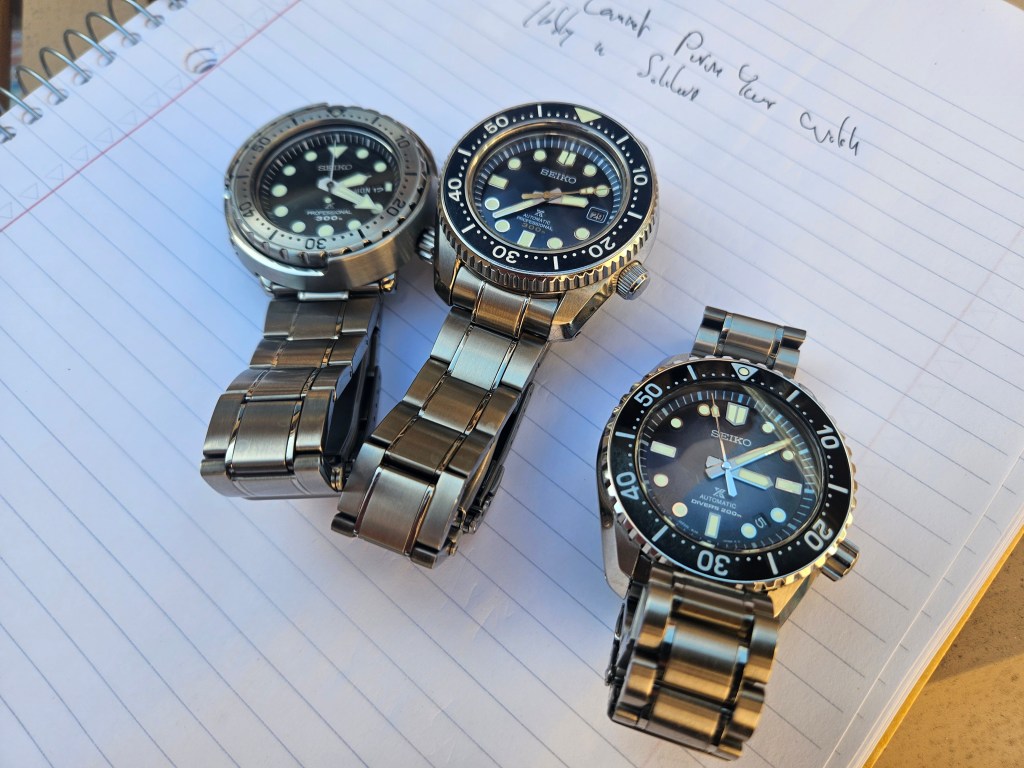
    I’ve forged more friendships online over watches than I ever expected — grown adults bonded by steel bracelets, dial colors, and the feverish belief that the “perfect collection” is one watch away. It’s a strange brotherhood: half enthusiasm, half rehab circle. We compare scars from impulse buys and premature flips; we laugh at the madness and whisper, half-serious, that maybe this time we’re cured.

    My own watch delirium began in 2005, when I was 43 and convinced mechanical timekeepers were little machines that could somehow fix the machinery inside me. Twenty years vanished in a blur of rotating bezels and just-in-case divers. Then, at 63, mortality tapped my shoulder. Suddenly the hobby’s siren call softened. The obsession didn’t die — it continued to burn brightly. But after 20 years, desire finally dimmed, replaced by a quiet awareness that timepieces were no match for time itself.

    The feeling reminds me of a scene from Battlestar Galactica: a traitor is sealed behind glass, pleading as the airlock hisses and the crew looks on, solemn and unmovable. A ritual exile. That’s what aging feels like — not tragic, not pitiful, just inevitable. There comes a point when people still inside the warm illusion of endless tomorrows unconsciously edge away from those who’ve glimpsed life’s shrinking horizon.

    A pane descends — not hostile, just real. You tap the glass and wave, wanting back into the cockpit of youth’s delusions, but the craft has sealed. No reentry. Only the quiet work of dignity: embracing your season, building meaning instead of collections, and being useful to the younger travelers who can’t yet see the void but will one day meet it too.

  • My White Stallion from Hell

    My White Stallion from Hell

    Last night I dreamed someone repossessed my sensible car and swapped it for a giant white truck — part Tonka toy, part overcaffeinated stallion. This thing didn’t drive so much as impose its will, snorting diesel and self-actualization. It anticipated my needs, turned on by itself, and barreled toward destinations like it had read my calendar and resented my free will. Worst of all, it absorbed my own impulses, amplifying my compulsive streak like a steroidal spirit animal with road rage.

    It respected nothing. Barriers, fences, construction zones — all mere suggestions. The truck treated civic infrastructure like bubble wrap: there to be popped for pleasure.

    Then the fever dream deepened. The truck stretched, swelled, and reinvented itself as a boat, because why limit your delusions? It ferried my wife and me to Newport Beach and slid us over a canal toward some sleek restaurant where every entrée probably came with a life coach. The sunset was cinematic; my subconscious apparently has a generous production budget.

    After dinner, my wife asked for a beach walk. Romance, surf, a soft breeze — what could go wrong? I swapped my dress boots for sneakers. That’s when the truck, apparently offended I could ambulate without it, snatched me like a jealous cyborg Labrador and plopped me behind the wheel. Off we launched, fishtailing across the coast like a toddler steering a cruise ship. I mashed the brake pedal; the truck laughed and kept accelerating — a mechanical id with horsepower and zero boundaries.

    We plowed through so many barricades I’m amazed dream-me didn’t receive a lifetime ban from California. When I finally woke up, grinding beans and stirring steel-cut oats felt like absolution. Nothing like coffee and civilized porridge to remind you you’re still in charge — at least until your subconscious reschedules its next rebellion.

  • The Day the German Chocolate Cake Lost Its Throne

    The Day the German Chocolate Cake Lost Its Throne


    The plan for my birthday was simple: a German Chocolate Cake from Torrance Bakery—rich, decadent, predictable, the sugary punctuation mark to another year survived. My wife, Carrie, placed the order, and I considered the matter settled. But on Sunday, three days before the big event, she blindsided me with an unsolicited miracle: a homemade hummingbird cake. It’s carrot cake’s tropical cousin—bananas and pineapple mingling like exiled fruits at a Southern potluck.

    She confessed she wanted to get me a “real” present, not something outsourced, so she compensated with butter, flour, and a whole lot of love. I ate three thick slices that Sunday afternoon, each forkful blurring the line between nourishment and seduction. “This is so wholesome,” I told her, “it doesn’t even count as cheating on my diet. It’s morally superior to carrot cake—and so dangerously good it might ruin Tuesday’s German Chocolate encore.”

    Carrie laughed, apologized for my impending existential crisis, and on Tuesday returned with the official cake: the grand Torrance Bakery specimen. We performed the ritual—candles, singing, obligatory family cheer—and I consumed an 800-calorie slice with the reverence of a man honoring tradition.

    It was moist. It was glossy. It was… fine. The caramel layer, usually the German Chocolate’s battleground of decadence, seemed to have surrendered before the fight began. I chewed, waiting for transcendence that never came. It struck me then: German Chocolate Cake is unreliable—half the time glorious, half the time cafeteria bland.

    The verdict arrived between bites. My lifelong allegiance had shifted. My mother’s German Chocolate Cake once ruled the birthday throne, but the crown has passed. The hummingbird cake reigns supreme—a moist, fragrant coup d’état led by pineapple and banana insurgents. The old guard has fallen. Long live the new confectionary monarch.

  • What True Crime Teaches That Fiction Won’t

    What True Crime Teaches That Fiction Won’t

    For the past few months, I’ve been devouring true crime docuseries with tireless fascination. The more I watch, the deeper my appetite grows—not for gore, but for the raw human stories that unspool behind every case. There is, of course, a price for such voyeurism. Nearly every episode revisits the same dark origins: homes scarred by domestic abuse, children numbed by neglect, and adults who turn to drugs and alcohol to quiet the pain. Whole worlds of criminality form around these wounds—ecosystems where cruelty becomes normal, even rational.

    Then there’s law enforcement. Most detectives and officers I see in these stories are decent, sharp-minded people pursuing justice through an endless fog of human wreckage. They face so much depravity that it exacts a psychic toll. They carry the collective sorrow of others, walking the earth with hearts cracked open by everything they’ve witnessed.

    There’s a strange repetition to these lives of crime—an awful sameness—but also a singular fingerprint on each story. Some criminals are narcissists, intoxicated by their own chaos. Others are the broken offspring of violence, haunted by demons they now unleash on others. Many strike out in panic, wielding a mallet where a scalpel would have sufficed.

    I’m reminded of Tolstoy’s line: “All happy families are alike; each unhappy family is unhappy in its own way.” I’d transpose it this way: All paths to decency share a pattern—discipline, love, structure—but the paths to ruin twist in countless variations, each marked by a wound that never healed.

    This is what keeps me watching. Too many fictionalized crime dramas can’t resist the tidy seduction of redemption—some tearful confession, some sentimental coda of forgiveness. True crime spares me that. It denies me comfort. No background music softens the horror, no clever dialogue redeems it. These stories show the human condition not as we wish it to be but as it is: excruciating, broken, and endlessly complex.

    In that sense, I find myself siding less with Steven Pinker’s optimism and more with Robert Kaplan’s realism. Pinker argues that humanity is improving—that violence is receding and irrational behavior is on the decline. Kaplan, in Wasteland: A World in Permanent Crisis, sees something else entirely: that the struggle between good and evil is eternal, and evil often enjoys the advantage because it fights without restraint and acts as if it has nothing to lose. Kaplan isn’t a pessimist. He’s a realist.

    If I’m to prepare for life, I’d rather confront the world as Kaplan does—without illusion, without sentimentality, without anesthetic. Pinker’s optimism feels like comfort food for the mind. Kaplan, like true crime, gives me the bitter taste of reality—and that’s the kind of nourishment that lasts.

  • Thou Shalt Remember That All First Dates End in Either Ecstasy or Insurance Claims

    Thou Shalt Remember That All First Dates End in Either Ecstasy or Insurance Claims

    It was my sophomore year, and I was about to experience that sacred American ritual—the first date. My friends, those benevolent saboteurs, set me up with Elizabeth Lane, a British exchange student whose accent alone made her sound too sophisticated for our zip code. Six of us crammed into Gil Gutierrez’s orange Karmann Ghia, a car roughly the size of a lunchbox. Rick Galia and his girlfriend, Cheryl Atkins, volunteered to ride in the trunk, which should’ve been an omen that this night would go sideways.

    Dinner was at a pizza chain—where all romance goes to die—and then we saw One Flew Over the Cuckoo’s Nest at a theater in Hayward. It took me about ten minutes to realize that a film set in a psychiatric ward wasn’t ideal for stirring teenage lust. Meanwhile, I was sweating through my shirt like a man auditioning for Fear Factor. I couldn’t stop thinking about a puberty documentary I’d seen in biology class—the one where a trembling boy on the phone with a girl exposed a massive pit stain to the audience. The thought haunted me.

    Midway through the film, Elizabeth rubbed her boot against the metal back of the chair in front of her. The sound—sticky, squealing, soda-coated—was the mating call of mortification. She did it again. Heads turned. Shushes hissed. I sank into my seat, spiritually liquefied, praying for the mercy of a stroke.

    To my left, Rick and Cheryl were making out like postwar lovers at a train station. When the credits rolled, Rick announced, “I have no idea what that movie was about, but I sure had a great time.”

    Back in the car, Gutierrez drove while Rick and Cheryl wedged themselves into the back seat with Elizabeth and me, a sardine orgy of hormonal chaos. As we climbed Greenridge Road, my heart was pounding in that dumb, hopeful way teenage hearts do. When we reached my house—an Eichler with glass walls, juniper bushes, and a kumquat tree that never bore fruit—I told Elizabeth I’d had a good time.

    She removed her gum, leaned in, and kissed me. Her tongue entered my mouth like a diplomatic envoy. The flavor was cinnamon, fierce and chemical, like a fireball candy soaked in gasoline. It was the first real kiss of my life—and possibly the last before divine punishment intervened.

    Suddenly, something primal overtook me. I emitted a guttural scream—a noise that belonged in the fossil record—and shot upright so violently that my head ripped through the fabric roof of the convertible. The others stared in awe as my torso protruded from the car like a deranged periscope.

    Gutierrez was horrified. “What the hell did you do, McMahon?”

    “I don’t know,” I said. “But I think I’m stuck.”

    Neighbors emerged, lured by my banshee howl. Thor, Cal Stamenov’s monstrous Great Dane, barked with glowing eyes like Cerberus guarding the gates of Hell.

    “You destroyed my brother’s car!” Gutierrez shouted.

    “The car can be repaired,” I said. “But my psychological damage is irreversible.”

    He glared. “What are you talking about?”

    “In what world do I come out of this with a shred of dignity?”

    The crowd laughed. My father arrived with a police flashlight, his expression hovering between despair and amusement. “Jeff, is that you?”

    “Unfortunately.”

    He extracted me from the car like a sword from the stone. I brushed flecks of torn fabric off my shirt and muttered, “Don’t worry, I’ll pay the deductible.”

    Gutierrez sighed. “Forget it. Migliore’s dad owns an auto shop.”

    Galia grinned. “That must’ve been one hell of a kiss, McMahon. Sent you straight to the moon.”

    I went inside, dignity in shreds, adrenaline still sizzling. In bed, reading a bodybuilding magazine for moral repair, I confessed my disaster to Master Po.

    “Grasshopper,” he said, “you must treat yourself gently.”

    “What the hell is that supposed to mean?”

    “You are a sacred vessel, yet you try to manhandle your emotions like barbells. Control is your idol. But The Way requires grace.”

    “Grace?” I said. “I just decapitated a convertible.”

    “Then perhaps,” he said, “next time, breathe gently and let go.”

    “I can’t,” I said. “I’m a control freak. Controlled by the need to control.”

    “That,” said Master Po, “is why you tear through roofs. You follow the path of excess, not balance.”

    I stared at the ceiling, still tasting cinnamon gum. “I’d love to ponder that,” I said. “But right now, I’m too busy chewing on the flavor of humiliation.”

  • Thou Shalt Remember That Silence Can Wound More Deeply Than Cruelty

    Thou Shalt Remember That Silence Can Wound More Deeply Than Cruelty

    It was a Friday night at Castro Valley High, that weekly pageant of teenage aggression disguised as school spirit. The bleachers were packed with hormonal thunder; the air reeked of nacho cheese and Axe body spray. And then the rain came, that democratic force that flattens everyone’s hair and dignity alike.

    Across the stands, I saw her—the girl the boys called Tasmanian Devil. I didn’t know her name. No one did. She was a broad-shouldered girl with a face that inspired the cruel kind of laughter—the kind that hides insecurity behind volume. Her twin brother was in the special ed class with her, and their father, the school’s enormous janitor, lumbered around campus in denim overalls so faded they looked ghostly. His ears were so large they could have doubled as warning flags—and he had passed them on to his children, a hereditary curse of ridicule.

    They lived in a trailer next to the football field, an eternal reminder that some people never get to leave campus. That night she sat alone in the bleachers while the rain came down in cold, merciless sheets. Her hair clung to her forehead like seaweed, and black mascara streamed down her face like ink from a wounded pen.

    She stared out at the field with a look that broke something inside me—a look that said, I know the joke, and I know I’m the punchline. I know no one will ever love me, and I will always be an outsider.

    I wanted to call her over, to hand her my jacket, to do anything that resembled decency—but I did nothing. I sat there with my friends, pretending to watch the game, while she drowned in rain and loneliness.

    That night, guilt chewed through me like battery acid. I told Master Po about it—my silence, my self-loathing.

    “Master Po, I can’t forgive myself for doing nothing.”

    He looked at me the way only the wise can—equal parts compassion and indictment.

    “Grasshopper,” he said, “being angry with yourself achieves nothing. Flogging yourself achieves nothing. Shoveling hatred over yourself achieves nothing. If you wish to help those who have no place in this world, you must first make peace with yourself. The wise help others not because they are saints, but because they are whole.”

    I lay awake that night thinking about the girl in the rain—how she seemed to know her fate, and how I had rehearsed mine: a spectator of suffering, paralyzed by self-awareness. It was the night I learned the cruelest sin isn’t mockery. It’s inaction dressed up as reflection.

  • Thou Shalt Remember That Unsolicited Advice Is a Sacred Path to Humiliation

    Thou Shalt Remember That Unsolicited Advice Is a Sacred Path to Humiliation

    It was junior year, and I was inspecting the high school football team’s weight room—a dank temple of testosterone and tobacco spit. As a self-anointed expert (and Junior Olympic Weightlifting champion, lest anyone forget), I felt entitled to critique everything: the dumbbell selection, the ergonomics, the hygiene, the very air of the place. The floor looked like it had been carpeted with sunflower shells and Copenhagen runoff.

    I had just begun my sermon on the spiritual poverty of their equipment when the team’s starting linebacker, Erik Simonson—a slab of muscle with the conversational subtlety of a freight train—paused mid–military press. His gray-blue eyes locked on me like radar.

    “Is someone paying you to be an asshole,” he said evenly, “or are you doing volunteer work?”

    The weight room erupted. Even I laughed, because the line was perfect—surgical in its cruelty, poetic in its timing. But laughter has an aftertaste, and when I got home that night, the sting of public mockery still clung to me. I turned to my spiritual advisor, Master Po.

    “Master Po,” I said, “why did I invite that kind of humiliation? My criticisms were valid.”

    “Grasshopper,” he said, sipping tea with an aggravating serenity, “you must not go through life believing people crave your opinions. You are not a paid social commentator, though I know your heart yearns to be one.”

    “But weren’t my criticisms legitimate?” I persisted.

    “Legitimacy,” said Po, “is irrelevant. The truth is like chili powder—best applied sparingly. Even those who beg for feedback rarely mean it. They desire flattery dressed as honesty. Therefore, you must learn the art of selective silence. Speak briefly, and when possible, not at all.”

    I sighed. “But I love the sound of my own voice.”

    Po smiled the smile of a man who’s been disappointed by many students before me. “Yes,” he said, “but what sounds like sweet music to your ears may strike others as the shriek of ignorance, emotional poverty, and uninvited arrogance.”

    The next day, I returned to the weight room and said nothing. The linebackers grunted and lifted. I stood in silence, spiritually enlightened and socially intact—a monk in a monastery of iron plates.