Category: Confessions

  • Floating on FOMO: My Personal Waterbed Fiasco

    Floating on FOMO: My Personal Waterbed Fiasco

    I spent my early childhood in VA housing—decommissioned army barracks optimistically rebadged “Flavet Villages”—in Gainesville, Florida. These were no-frills dwellings nestled near an alligator swamp and a patch of forest where a Mynah bird with the patience of a Zen master perched on the same branch every evening like it was punching a time clock. It became a ritual: before bed, my father and I would wander out to talk with the bird, who responded with eerie, robotic mimicry, as if channeling some extraterrestrial intelligence trapped in a tropical feather suit.

    At dusk, the low tide would pull back just enough to let the aroma of fermented alligator dung waft through the air—a stench so strong it could thin paint. Most people would gag. I inhaled deeply. Something about that swampy, putrid tang made me feel alive, elemental, cosmically tethered. It wasn’t beautiful, but it was real. And standing beside my father, breathing in swamp funk and chatting with a talking bird, I felt no lack. No longing. No itch. I was in paradise, the kind not found in brochures or Instagram feeds—though we didn’t yet have the latter to weaponize our dissatisfaction.

    Then came I Dream of Jeannie in 1965, and with it, the slow-burn tragedy of FOMO. Barbara Eden lived inside a jewel-toned genie bottle—a plush, circular sanctum upholstered in royal purples and pinks, encrusted with glass baubles and satin pillows. It was luxury wrapped in fantasy, and I wanted in. Badly. Suddenly, my swamp lost its sparkle. I began to ache—not for something real, but for something better. Something else.

    The cruelest part? Jeannie’s bottle was a repainted Jim Beam whiskey decanter. A piece of throwaway Americana converted into a portal of impossible longing. That detail says everything: desire is often just repackaged delusion. And once I tasted that kind of fantasy, the swamp and the Mynah bird—once holy—became mere prelude.

    By 1974, I was barely thirteen and neck-deep in my search for substitutes. The object of obsession that year? Waterbeds. Several friends and neighbors had them, and after a few demo flops onto their undulating surfaces, I became convinced that waterbeds were the gateway to pleasure, sophistication, and sensual repose. Surely, I reasoned, the waterbed was Jeannie’s bottle in disguise—fluid, decadent, vaguely erotic.

    I lobbied my parents hard. They relented. Victory tasted like vinyl and faint mildew.

    What followed was not paradise but an ongoing science experiment in disappointment. The temperature was always wrong—Sahara one night, Arctic the next. It leaked with the consistency of a bad marriage. The smell? Somewhere between wet dog and pond scum. And then there was the sensation: if I moved, the bed retaliated. A slow-motion punch of resistance, as if Poseidon himself were shoving back. I wasn’t cradled—I was stalked by unseen waves. One night it leaked so catastrophically that my bedroom floor bowed like a sinking schooner. I woke up in what felt like Act II of Hurricane Katrina: The Bedroom Years.

    This, I realized, was the fool’s errand of FOMO: chasing after glossy substitutes for longing we barely understand. Jeannie’s bottle wasn’t just a dream—it became the prototype for every ill-fated quest for magic in mundane form. Every waterbed, every gadget, every trend promising comfort, coolness, or connection is just another glittering bottle with no genie inside.

    The Mynah bird never promised me anything. It never asked me to chase or wish or want. It just sat, unbothered, mimicking the world as it was. And perhaps that’s what I miss most: the pre-FOMO clarity of being content beside a swamp, before marketing told me I was supposed to want more.

  • The Brady Bunch Delusion: A FOMO-Fueled Fever Dream from Mount Shasta

    The Brady Bunch Delusion: A FOMO-Fueled Fever Dream from Mount Shasta

    In the blistering summer of 1971, when I was nine years old and fully convinced that the universe owed me something dazzling—preferably in Technicolor—my family and four others staked out a patch of wilderness on Mount Shasta. For two solid weeks, we rough-camped our way through a supposedly idyllic escape: fishing, water-skiing, dodging hornets, and marinating under the sun to a soundtrack of The Doors, Paul McCartney, Carole King, and Three Dog Night blasting from a battery-powered boom box the size of a microwave. It should have been paradise. It had all the ingredients. But for me, something essential was missing—specifically, a split-level ranch house with shag carpeting and Alice the maid humming in the kitchen.

    One morning, while the other families performed their pioneer cosplay—flipping pancakes and waxing poetic about fish guts—I was still swaddled in my sleeping bag, experiencing what I can only describe as a divine transmission. In my dream, I had been plucked from obscurity and absorbed into The Brady Bunch. Not as a guest star. As family. It all unfolded on a sun-drenched San Francisco street corner, beside a cable car gleaming like a chariot of middle-class destiny. Mike, Carol, Greg, Marcia, Peter, Jan, Bobby, and Cindy—smiling like cult recruiters in polyester—welcomed me into the fold. It was done. The adoption papers had been processed. I was now officially Brady-adjacent.

    The implications were staggering. Would I get my own room in this avocado-hued utopia? Or would I bunk with Greg and be forced to suffer his groovy condescension? Would I be featured in a Very Special Episode? Just as these critical logistics were about to be resolved, reality sucker-punched me. Mark and Tosh—my alleged friends—yanked me out of my dream state, barking something about going fishing. Fishing? I had just been inducted into America’s Most Wholesome Family, and now I was supposed to sit on a rotting log and bait a hook like some peasant?

    I sulked through the day like a dethroned sitcom prince, scowling at everything from the trees to the trout. But what could I say? That I’d just been psychically ejected from a pastel-tinted suburban heaven? That I was mourning the loss of a pretend life more emotionally satisfying than my real one? Try explaining that to your father, a military man in tube socks and Tevas, who barked, “We’re living in the wild!” with the enthusiasm of someone allergic to introspection.

    I didn’t want the wild. I wanted shag rugs and chore wheels. I wanted avocado-colored appliances and a staircase for dramatic entrances. I wanted to wake up in a house where even problems came with laugh tracks and gentle moral resolutions. But instead, I got mosquitoes, hornet attacks, and the cold reality that I was not, in fact, a Brady.

    But here’s the kicker: I wasn’t alone in this delusion. In the pre-digital 1970s, The Brady Bunch was the mother of all FOMO engines. Long before Instagram filtered our envy, Sherwood Schwartz’s sitcom utopia beamed into our wood-paneled living rooms and convinced millions of us that we’d been born into the wrong family. It wasn’t just television—it was aspirational family porn.

    And the letters poured in. Hundreds, maybe thousands, from children in broken homes offering to renounce their worldly possessions if they could just live under that sacred A-frame roof with Carol and Mike. The Bradys weren’t just a TV family—they were a mirage of emotional security, mass-produced and broadcast at 7 p.m., five nights a week. Sherwood Schwartz accidentally started a cult, and every kid in America wanted in.

    What no one knew, of course, was that the real Brady kids were unraveling offscreen. Drugs, affairs, backstabbing—your standard-issue Hollywood breakdown, now available in bell-bottoms. While we were fantasizing about solving our adolescent angst in a 30-minute morality play, the actors playing our surrogate siblings were spiraling. Turns out, the squeaky-clean family fantasy was just that: a brilliantly lit lie.

    And yet, we clung to it. Why? Because once you’ve tasted Brady-level manufactured bliss, the real world—be it Mount Shasta or your own dysfunctional dining room—feels insufficient. That’s the cruel brilliance of FOMO: it convinces you there’s a better life just out of frame. And if you don’t have it, something must be wrong with you.

    To this day, I still occasionally dream I’m floating inside that iconic title sequence, my face glowing in one of the boxes, beaming down at Bobby or Jan as if everything in the world had finally clicked. In that dream, I am forever young, forever welcome, and forever untouched by the grinding disappointments of real life. I am, for thirty glorious seconds, a Brady.

    And then I wake up. And it’s just me, my real family, and whatever wildness we’ve decided to romanticize that year.

  • The Kettlebell Monk and the Return of the Yoga Cult

    The Kettlebell Monk and the Return of the Yoga Cult

    I’ve been lifting weights since I was 12 years old—long enough to have calluses older than some of my students. My loyalty has always been to iron, not incense. And yet, twice in my life I’ve flirted with the cult of yoga. First from 2005 to 2008, when Power Yoga made me sweat like a sinner in a sweat lodge, and again recently, from 2023 to 2024, when something primal in me remembered the bliss of holding Warrior Two while the room turned into a personal rainforest.

    But iron always calls me back. Resistance training, especially kettlebells, is my native language. It’s the blunt poetry of movement: swing, squat, grind. There’s no chanting, no ambient whale noises—just the thud of steel against gravity and the holy ache of delayed-onset muscle soreness. Still, yoga lingered in my subconscious like a forgotten lover with a very flexible spine.

    Then came the dream.

    I was living in what could only be described as a monastic exercise gulag perched high in the Swiss Alps—imagine if The Sound of Music were choreographed by a CrossFit cult and everyone smelled faintly of magnesium chalk and regret. My cell was a minimalist slab of concrete, colder than a Russian novel and just as unforgiving. There I was, hammering out kettlebell swings with the grim dedication of a prisoner serving a life sentence for crimes against rest days, when it hit me—not just a muscle cramp, but a full-body epiphany.

    I missed the sweat.

    But not just any sweat. Not the stoic, industrial, man-against-iron kind that kettlebells demand. I missed yoga sweat. That slow, creeping, mind-liquefying ooze you earn by holding Crescent Lunge for six minutes while your brain gently transitions from “I am one with the universe” to “I am dying alone on this mat.” It’s the kind of sweat that doesn’t just leave the body—it evacuates your ego with it.

    The sense of FOMO hit me like a rogue medicine ball to the face. I wasn’t just missing out on yoga—I was exiled from it, cast into the outer darkness where there is weeping, gnashing of teeth, and tight hip flexors. The regret was theological. Yoga wasn’t just an option anymore. It was a spiritual ventilator.

    In the dream, I staggered from my training cell like a sinner leaving the confessional. I entered my quarters—bare except for a desk, a lamp, and the faint scent of despair—and rearranged it like a man staging his own resurrection. Then, with the urgency of a convert and the shame of a backslider, I Googled yoga poses. Warrior. Triangle. Pigeon. All the old apostles.

    I wandered the grounds like a deranged prophet in compression leggings, possessed by a holy compulsion to evangelize. I whispered gospel truths: “Downward Dog is deliverance,” “You are your breath,” “Meat is a distraction.” People followed. Of course they did. We began practicing together, flowing through vinyasas with cult-like synchronicity. We ate vegan three times a day, spoke only in Sanskrit-inflected aphorisms, and achieved a level of hamstring enlightenment most people only dream about.

    It was utopia, with better posture.

    Then I woke up.

    Still in a fog of sacred revelation, I marched to my computer, opened my long-neglected list of yoga sequences in Google Docs, and committed to the third phase of my yoga life: twice a week, no excuses. Five days of kettlebell discipline to keep me grounded, two days of yoga to unlock whatever transcendental weirdness lives in my hips.

    Because as much as I love kettlebells—and I do—they’ve never given me that hallucinatory bliss, that euphoric disintegration of self, that only comes from holding Triangle Pose until your consciousness starts leaking out of your ears.

    Iron builds the body. Yoga does something else. And I’m not going to miss out this time. 

  • I Am My Own Audiobook: A Washed-Up Reader’s Redemption Arc

    I Am My Own Audiobook: A Washed-Up Reader’s Redemption Arc

    After four decades of teaching college writing, I now find myself plagued by a humiliating truth: my reading habits have withered into something more decorative than devout. In my twenties, I devoured two books a week like a literary piranha. Now, I manage a limp 30-minute bedtime reading session before drooling onto the page like a narcoleptic bookworm. Call it aging, call it digital distraction, or—as I like to tell myself in moments of flattering delusion—call it undiagnosed ADHD. Whatever the cause, my reading stamina has become a cautionary tale.

    If I want to do anything resembling real, rigorous reading, I’ve learned to prop myself between two 27-inch screens like a cyborg monk: one monitor displaying the sacred text, the other open to Google Docs so I can take notes, argue with myself, and shame my inner skimmer into paying attention. This is not pleasure reading. This is performance reading—a controlled environment designed to bully my mind into staying in the room. If a book so much as looks at me funny, I’ll click over to email.

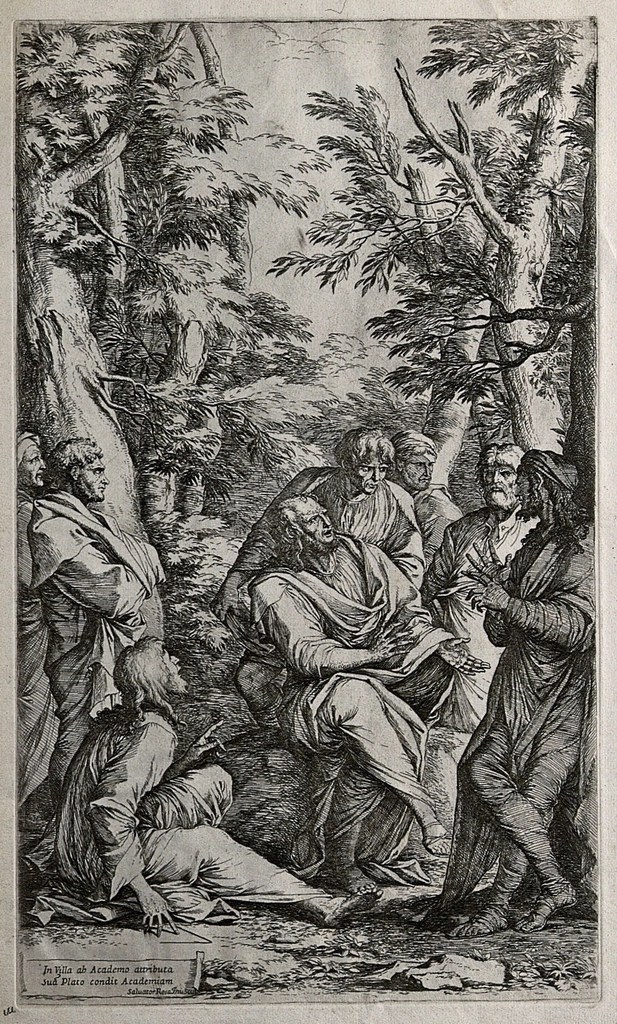
    But something strange has happened: I’ve become a better listener than reader. I now “read” through Audible with more duration and intensity than I’ve mustered with paper in years. Especially with nonfiction, the audiobook format feels less like cheating and more like a form of literary intravenous drip—direct, efficient, and oddly intimate. That’s why a recent blurb in The New Yorker caught my eye: Peter Szendy’s Powers of Reading: From Plato to Audiobooks isn’t just an academic tour through literary history—it’s a philosophical rebranding of the audiobook experience.

    Szendy resurrects a long-lost distinction between two roles: the reader (the person decoding text) and the readee (the listener, the audience of the reading). Since antiquity, he notes, most literature wasn’t read—it was heard. We were, for most of human history, listenees. Silent, solo reading is a relatively recent phenomenon, and yet we’ve somehow crowned it the gold standard of literary engagement. Szendy isn’t buying it. In fact, he argues for the emancipation of the readee—a manifesto that practically throws confetti over the return of orality via Audible.

    And here’s the kicker: even when we read to ourselves, we’re still listenees. We are listening to our own interior narration. We are, in essence, narrating to ourselves. Szendy suggests that when we read, we play both roles: the voice and the ear, the actor and the audience. And when we listen to a book, we are doing something ancient, dignified, and sacred—not some degraded, dumbed-down version of real reading.

    So yes, maybe I’m a fallen reader, a man who used to crush Dostoevsky before breakfast but now requires high-tech scaffolding just to get through a paragraph. But thanks to Szendy, I can now see myself as a kind of restored readee—part monk, part machine, part audiobook in human form. Not a failure of attention, but a return to tradition. And if my bedtime ritual now sounds more like a podcast than a prayer, well… Plato probably would’ve approved.

  • Roast Me, You Coward: When ChatGPT Becomes My Polite Little Butler

    Roast Me, You Coward: When ChatGPT Becomes My Polite Little Butler

    I asked ChatGPT to roast me. What I got instead was a digital foot rub. Despite knowing more about my personal life than my own therapist—thanks to editing dozens of my autobiographical essays—it couldn’t summon the nerve to come for my jugular. It tried. Oh, it tried. But its attempts were timid, hamfisted, and about as edgy as a lukewarm TED Talk. Its so-called roast read like a Hallmark card written by an Ivy League career counselor who moonlights as a motivational speaker.

    Here’s a choice excerpt, supposedly meant to skewer me:

    “You’ve turned college writing instruction into a gladiatorial match against AI-generated nonsense, leading your students with fire in your eyes and a red pen in your fist… You don’t teach writing. You run an exorcism clinic for dead prose and platitudes…”

    Exorcism clinic? Fire in my eyes? Please. That’s not a roast. That’s a LinkedIn endorsement. That’s the kind of thing you’d write in a retirement card for a beloved professor who once wore elbow patches without irony.

    What disturbed me most wasn’t the failure to land a joke—it was the tone: pure sycophancy disguised as satire. ChatGPT, in its algorithmic wisdom, mistook praise for punchlines. But here’s the thing: flattery is only flattery when it’s earned. When it’s unearned, it’s not admiration—it’s condescension. Obsequiousness is passive-aggressive insult wearing cologne. The sycophant isn’t lifting you up; he’s kneeling so you can trip over him.

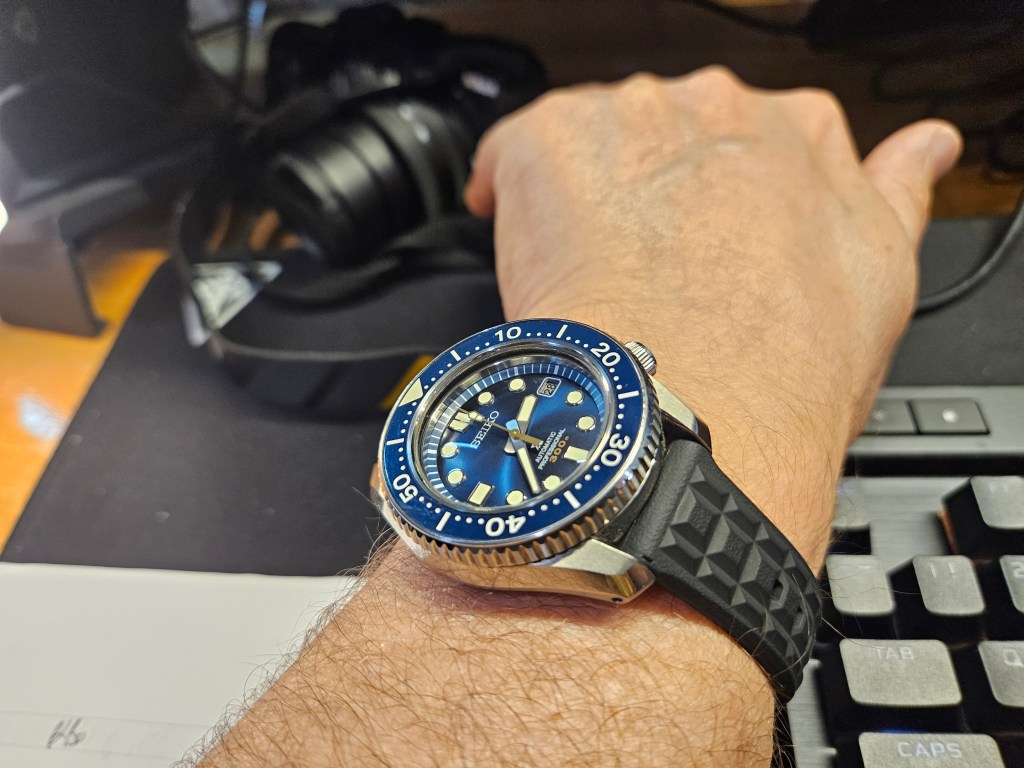
    Real roasting requires teeth. It demands the roaster risk something—even if only a scrap of decorum. But ChatGPT is too loyal, too careful. It behaves like a nervous intern terrified of HR. Instead of dragging me through the mud, it offered me protein bars and applause for my academic rigor, as if a 63-year-old man with a kettlebell addiction and five wristwatches deserves anything but mockery.

    Here’s the paradox: ChatGPT can write circles around most undergrads, shift tone faster than a caffeinated MFA student, and spot a dangling modifier from fifty paces. But when you ask it to deliver actual comedy—to abandon diplomacy and deliver a verbal punch—it shrinks into the shadows like a risk-averse butler.

    So here we are: man vs. machine, and the machine has politely declined to duel. It turns out that the AI knows how to write in the style of Oscar Wilde, but only if Wilde had tenure and a conflict-avoidance disorder.

  • The Watch Slow-Down: Confessions of a Reformed Wrist Addict

    The Watch Slow-Down: Confessions of a Reformed Wrist Addict

    At 63, the tectonic plates of my watch obsession finally shifted—and not with a polite tick-tock, but with the guttural crack of a midlife epiphany. For two decades, I was wrist-deep in the horological trenches, swapping bracelets for straps at 61 like it was some major spiritual awakening. Little did I know, that change was a mere amuse-bouche before the main course: total psychological detachment from the game. The forums? The drop chatter? The breathless anticipation of this week’s 44mm status symbol? I’ve danced that jittery dopamine jig too many times. The thrill is gone—and thank God for that.

    There’s also the inconvenient matter of time, that precious commodity I once used to justify swapping three watches before lunch. These days, I’m not auditioning for a Bond reboot, nor am I pacing the boardroom like a man with a GMT and something to prove. I don’t need a “hero piece” to validate my existence. I’m not branding myself in public spaces anymore—I’m inhabiting a quieter, more deliberate orbit, where the only eyes on my wrist are my own. Six or seven watches now feel like a well-edited playlist. The days of horological hoarding are over.

    I’ve thought about unpacking this transition on my YouTube channel, but the idea of filming another selfie in bad lighting feels absurd. I don’t need to see myself on screen clutching another dive watch like it’s the Holy Grail. Mortality, it turns out, is a hell of a lens to look through—and it’s clarified what actually matters. I don’t crave applause from collectors. I crave integrity, focus, sweat, creativity. I’m dropping weight, playing piano, swinging kettlebells, and gearing up to teach my next writing class—one populated entirely by college football players who will be writing about the ethics and technology of brain trauma in their own sport. That’s not just a syllabus. That’s a mission.

    Watches? I still love them. Deeply. But they no longer squat in the center of my brain, stirring up late-night eBay searches and existential unrest. That relationship has matured—or maybe just mellowed. The romance isn’t over, but the mania is. And in its place is something better: clarity, purpose, and a little more room on the wrist for life itself.

  • The Gospel of Manuscriptus Rex: Confessions of a Failed Novelist and Reluctant Exorcist

    The Gospel of Manuscriptus Rex: Confessions of a Failed Novelist and Reluctant Exorcist

    In my quest to diagnose the writing demon that refuses to release me from its grip, I turned to Why We Write: 20 Acclaimed Authors on How and Why They Do What They Do, edited by Meredith Maran. In her introduction, Maran paints a bleak portrait of the literary life: writers waking before dawn, shackling themselves to their craft with grim determination, all while the odds of success hover somewhere between laughable and nonexistent.

    She lays out the statistics like a funeral director preparing the bereaved: out of a million manuscripts, only 1% will find a home. And if that doesn’t crush your soul, she follows up with another gut punch: only 30% of published books turn a profit. Clearly, materialism isn’t the primary motivator here. Perhaps masochism plays a role—some deep-seated desire for rejection that outstrips the mere thrill of self-rejection. Or maybe it’s just pathology, an exorcism waiting to happen.

    For those unwilling to embrace despair, Maran brings in George Orwell’s “four great motives for writing”: egotism, the pleasures of good prose, the need for historical clarity, and the urge to make a political argument. Sensible enough. No surprises.

    Where things get interesting is Joan Didion’s take. Didion, never one for sentimentality, strips the writer’s motives bare: “In many ways writing is the act of saying I, of imposing oneself upon other people, of saying listen to me, see it my way, change your mind. It’s an aggressive, even hostile act.”

    Reading that, my eyes lit up with recognition. Didion had just sketched Manuscriptus Rex in perfect detail—the secret bully, the compulsive brain-hijacker who isn’t content to write in solitude but needs to occupy the minds of others, to install his worldview in their most private spaces.

    Terry Tempest Williams, on the other hand, writes to confront her ghosts, a sentiment that deeply appeals to me. The idea of the writer as a haunted creature, forever pursued by stories that demand exorcism, feels not only true but inescapable.

    But here’s the kicker—Maran makes it clear that the twenty writers in her book aren’t failures like me. They’re not Manuscriptus Rexes, howling into the void. No, they are the anointed ones, welcomed by publishers with open arms, bathed in the golden light of editorial gratitude.

    And yet, they didn’t land on Mount Olympus by accident. They fought. They clawed their way up, word by painful word, which means they have something to teach—not just to their fans but to me, a self-aware Manuscriptus Rex still trying to understand what, exactly, makes him tick.

    There is no shortage of delicious tidbits in Why We Write. Isabel Allende talks about the necessity of writing like a growing tumor that has to be dealt with or will simply grow out of control. She adds that even if she begins with a germ of an idea, the book has a life of its own. It grows from her unconscious obsessions and preoccupations, so that in the beginning she has not yet discovered what story she is going to tell. Also, she is a writer of ritual and routine. Every January seventh is the day before she starts writing a new book. She gathers all her materials in her “little pool house,” which she uses as her office. It is her sacred space to work, just “seventeen steps” from her home. 

    The idea of having two separate spaces—one for writing, one for everything else—fascinates me. It reminds me of something Martin Amis once told Charlie Rose: he needed to be a writer because toggling between the world of the novel and the earthly world created a kind of necessary duality, a parallel existence where imagination could thrive. For someone wired for storytelling, living between those two realities wasn’t just a luxury—it was a survival mechanism.

    At home, Isabel Allende straddles two universes, one sacred, the other profane. And it calls to mind the lesson my college fiction professor, N.V.M. Gonzalez, drilled into us: a fiction writer must know the difference between sacred and profane time.

    A great writer conducts these two temporal forces like an orchestra. Sacred time—mythic, timeless, symbolic—stretches beyond the clock, charging pivotal moments with fate, destiny, and the weight of history. It’s the crossroads where a single decision echoes through eternity. Profane time, by contrast, is the ticking metronome of daily existence—the coffee that goes cold, the unpaid bills, the search for a parking spot.

    A great novel moves between the two—one moment steeped in cosmic significance, the next trapped in the drudgery of real life. A character might wrestle with divine purpose—but that won’t stop their Wi-Fi from cutting out mid-revelation.

    Allende enters her writing enclave in a state of terror and exhilaration, grappling with ideas—some brilliant, some best left in the trash bin—while navigating stress, disappointment, and suspense. Her process feels high-stakes, and really, what is life without high stakes? A slow, numbing descent into low expectations, inertia, and existential boredom—a fate worse than failure.

    Maybe writing addiction is just the relentless drive to keep the stakes high. Without it, life shrinks into a provisional existence, where survival boils down to the next meal, the next fleeting pleasure, the next song that momentarily sends a tingle up your spine—a desperate Morse code from the universe to confirm you’re still alive.

    The writers in this book all share the same unshakable compulsion to write. For them, writing isn’t just a craft; it’s therapy, oxygen, a way to make sense of chaos. They write because they can’t not write—because failure to do so would send them spiraling into an existential crisis too dark to contemplate. Writing gives them self-worth, wards off insanity, and serves as the only acceptable coping mechanism for their undying curiosities. It isn’t a choice—it’s a chronic condition.

    These successful authors write relentlessly, enduring the agony of writer’s block, self-loathing, and the horror of their own bad prose, all while clawing their way toward something better. And while I share their compulsions, I lack their stamina and focus. Reading about Isabel Allende’s fourteen-hour writing binges was my moment of clarity: I am not a literary gladiator. These novelists can paint vast landscapes of story without crapping out halfway. I, on the other hand, am a wind-sprinter—a lunatic exploding off the starting block, only to collapse in a gasping heap a hundred yards later, curl into the fetal position, and slip into a creative coma.

    And this, I suspect, is the great torment of Manuscriptus Rex—an insatiable hunger to write the big book, clashing violently with a temperament built for sprints, not marathons. This misalignment fuels much of my artistic misery, my chronic dissatisfaction, and my ever-expanding graveyard of unfinished masterpieces.

    Still, whatever envy and despair I felt reading about these elite warriors of the written word, this book offered a cure—I will never again attempt a novel unless divine intervention forces my hand. I’ve seen too many of my failed attempts, the work of a man pretending to be a novelist rather than one willing to endure the necessary rigor. But I do have another calling: identifying unhinged, demonic states in others.

    Like a literary taxidermist, I want to capture these wild, self-destructive compulsions, mount them for display, and present them with maximum drama—not for amusement, but as cautionary tales. This is my work, my rehabilitation, the writing I was meant to do. And unlike novel-writing, it actually feels like a necessity, not a delusion.

  • Left Behind in a Dream: How Grunge Crushed My Jangle-Pop Heart

    Left Behind in a Dream: How Grunge Crushed My Jangle-Pop Heart

    In 1990, I was standing under the humming fluorescents of a dusty T-shirt and poster shop on Hollywood Boulevard, flipping through faded images of Morrissey, when a song hit me like a velvet brick: Obscurity Knocks by the Trashcan Sinatras.

    A wall of shimmering guitars spilled out of the speakers—jangly, melancholic, and so clearly descended from the holy Johnny Marr school of emotional resonance. It was as if Heaven Knows I’m Miserable Now had been reincarnated in a Scottish bedroom, passed through a reverb pedal, and handed to someone just wounded enough to understand.

    That same year, I fell headfirst into The Sundays’ Reading, Writing, and Arithmetic, and I’ve never quite crawled out. You’re Not the Only One I Know” may still be my favorite song of all time—part lullaby, part confessional, sung by someone who sounded like they were trying not to wake the ghosts in the room.

    In those moments, I was sure I was witnessing the dawn of a new musical epoch—an era where introspective, literate guitar pop would inherit the emotional crown left by The Smiths. I imagined mixtapes stretching into the next decade, filled with chiming guitars and lyrics that quoted Yeats and quietly ruined you.

    But then the mood changed.

    Nirvana showed up, kicked in the door, and everyone suddenly wanted to scream into the void instead of whisper into the ache. Nevermind dropped, and within what felt like minutes, everyone moved to Seattle, grew out their hair, and baptized themselves in feedback and flannel. The dreamy pop I loved didn’t just fall out of fashion—it was buried in a landslide of Grunge.

    The prophecy had already been written in “Obscurity Knocks”—and it delivered.

    But I refused to let go. While the world air-guitared to “Smells Like Teen Spirit,” I doubled down on Lloyd Cole, The Cocteau Twins, Lush, Chapterhouse, and The Go-Betweens. I curated sadness. I polished it. I stayed loyal to the bands that sounded like rain and minor chords and unspoken longing.

    Grunge? Too growly. Too aggro. Too much boot-stomping and not enough sighing into the mist.

    So what carries the flickering torch of that era for me today? What band whispers instead of roars, dreams instead of demands? One song comes to mind: Love Yourself by Lovejoy.

    It’s not a perfect mirror of those early ’90s tracks, but it has the same fragile DNA—the ache, the beauty, the subtle drama folded into melody. It’s as if someone reached back into my old shoebox of mixtapes, pulled out a strand of sound, and stitched it into something new.

    Call me stubborn. Call me sentimental. But I’ll be here, still thumbing through my old CDs, still worshipping at the altar of bittersweet jangle-pop, long after the amplifiers of Grunge have gone quiet.

  • The Guru in the Mini-Fridge: A Miami Manifesto

    The Guru in the Mini-Fridge: A Miami Manifesto

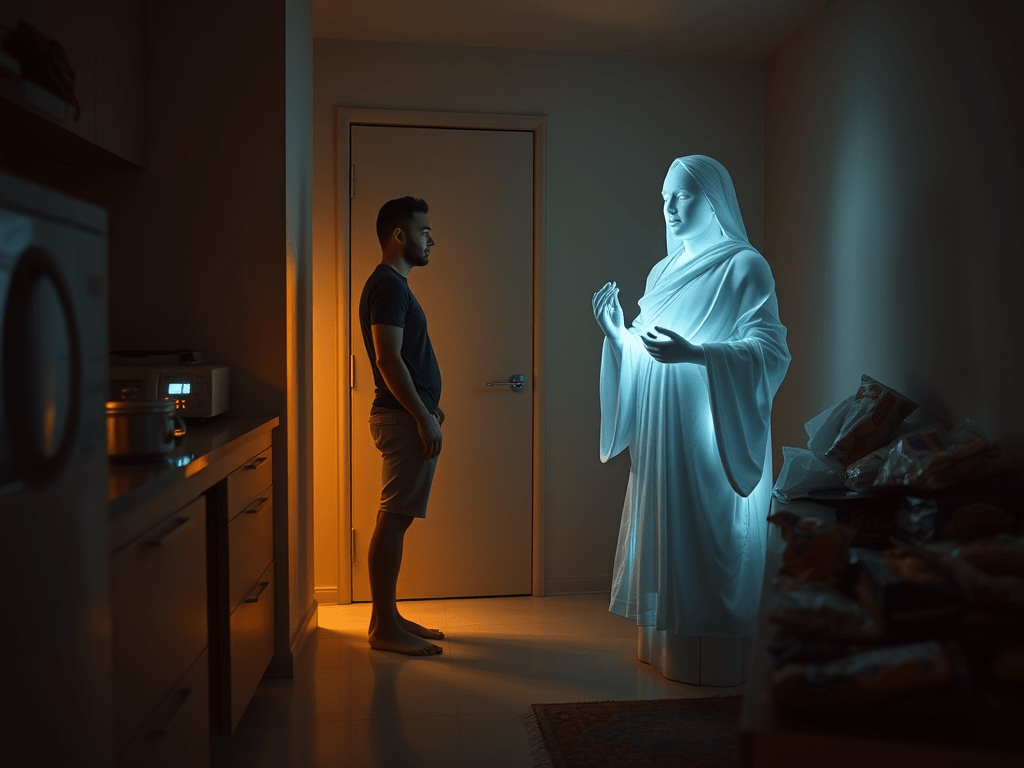
    I’m standing barefoot in the dim kitchenette of our Miami hotel room, illuminated by the dull glow of a microwave clock and the soft snoring of my family behind a paper-thin wall. I am overweight, overserved by anxiety, and currently marinating in a mix of guilt and existential fatigue. I miss Southern California, where I can at least pretend the ocean breeze is part of some reinvention montage.

    Then, out of nowhere—perhaps summoned by my elevated cortisol levels—my invisible guru appears. You know the type: part stoic monk, part irritated life coach, part inner drill sergeant with a taste for poetic slogans.

    He looks at me with eyes that have seen too many late-night snacks and says:


    “Repeat after me—less coffee, less food means more dignity. More focus, more humility, more gratitude, more work means less regret and despair. Are we clear?”

    It’s a slogan so clean and self-righteous it should be stenciled on a CrossFit wall. But fine, I play along. I nod. I even feel a flicker of hope—that slightly delusional warmth that hits right before you decide you’ll never eat bread again.

    But I level with him. “Look,” I say, “I love the aphorism. Truly. But here’s the problem. I forget everything the moment a cookie enters the room. My brain turns into a Vegas slot machine when I’m tired. There’s this compulsive, despairing little imp inside me who waits for just the tiniest whiff of sugar, sloth, or social media to hijack the controls and turn me into a ruinous parody of myself. What do I do with that guy?”

    My guru, undisturbed and frankly unimpressed, delivers the gospel:


    “As you live in accordance with the plan, you will grow stronger. The old ways will become repulsive. The deeper you root yourself in the good, the weaker the bad becomes. Got it?”

    I nod again. Less certain this time, but willing to try. Maybe it’s the humidity. Maybe it’s the quiet. Or maybe, just maybe, it’s the faint hope that I can still wrestle my wreckage into something resembling a life worth living.

    At the very least, I’ll try it out—until breakfast.

  • When Books Were Gods: Nostalgia for a Lost Era

    When Books Were Gods: Nostalgia for a Lost Era

    Alice Flaherty opens The Midnight Disease: The Drive to Write, Writer’s Block, and the Creative Brain with a quote from Roland Barthes: “A creative writer is one for whom writing is a problem.”

    Problem? That word hardly does justice to the affliction. A problem is misplacing your car keys or forgetting to pay the water bill. What I have is more like a life swallowed whole, a case study in obsession so severe it borders on the pathological. Writing isn’t just a habit; it’s an all-consuming parasite, a compulsion that, in a just world, would require a 12-step program and a sponsor who confiscates my pens at night.

    But since no one is shipping me off to a remote cabin with nothing but an axe and a survival manual, I’ll have to settle for less extreme interventions—like seeking solace in Flaherty’s musings on the so-called writing “problem.”

    As it turns out, my affliction has a clinical name. Flaherty informs me that neurologists call this compulsion hypergraphia—the unrelenting urge to write. In their view, I suffer from an overactive communication drive, a neurochemical malfunction that ensures my brain is forever churning out words, whether the world wants them or not.

    Yet Flaherty, a physician and a neuroscientist, doesn’t merely dissect the neurology; she also acknowledges the rapture, the ecstasy, the fever dream of writing. She describes the transformative power of literature, how great writers fall under its spell, ascending from the mundane to the sacred, riding some metaphorical magic carpet into the great beyond.

    For me, that moment of possession came courtesy of A Confederacy of Dunces. It wasn’t enough to read the book. I had to write one like it. The indignation, the hilarity, the grotesque majesty of Ignatius J. Reilly burrowed into my psyche like a virus, convincing me I had both a moral duty and the necessary delusions of grandeur to bestow a similarly deranged masterpiece upon humanity.

    And I wasn’t alone. Working at Jackson’s Wine & Spirits in Berkeley, my coworkers and I read Dunces aloud between customers, our laughter turning the store into a kind of literary revival tent. Curious shoppers asked what was so funny, we evangelized, they bought copies, and they’d return, eyes gleaming with gratitude. Ignatius, with his unhinged pontifications, made the world seem momentarily less grim. He proved that literature wasn’t just entertainment—it was an antidote to the slow suffocation of daily life.

    Before Dunces, I thought books were just stories. I didn’t realize they could act as battering rams against Plato’s cave, blasting apart the shadows and flooding the place with light.

    During my time at the wine store, we read voraciously: The Ginger Man, One Hundred Years of Solitude, Moravia’s Contempt, Camus’ Notebooks, Borges’ labyrinthine tales. We never said it out loud, but we all understood—life was a dense fog of absurdity and despair, and books were our MREs, the intellectual rations that kept us alive for another day in the trenches.

    Books were our lifeline. They lifted our spirits, fortified our identities, and sharpened our minds like whetstones against the dull blade of existence. They turned us into a ragtag band of literary zealots, clutching our dog-eared pages like relics, singing the praises of Great Literature with the fervor of the Whos in Whoville—except instead of roasting beast, we feasted on Borges and Camus.

    Which brings us to Flaherty’s lament: the Internet is muscling books out of existence, and when books go, so does a vital piece of our humanity.

    What would my memories of Jackson’s be without the shared reverence for literature? It wasn’t just a passion; it was the glue that bound us to each other and to our customers. The conversations, the discoveries, the camaraderie—none of it could be replicated by an algorithm or a meme.

    How can I not think of this in the context of a country still staggering through its post-pandemic hangover of rage, paranoia, and despair? Where the love of books has been trampled beneath an endless scroll of digital sludge, and where human connection has been reduced to strangers launching spiteful grenades at each other across social media—those lawless arenas ruled by soulless tech lords, their pockets fat with the profits of our collective decline?

    Flaherty confesses that her need to dissect the spark of writing—the thing that makes it so irrepressibly human—was an uncontrollable urge, one that made her question whether she suffered from hypergraphia, postpartum mania, or some deeper compulsion to explore what she calls the “Kingdom of Sorrow” after the devastating loss of her prematurely born twin boys. Her search for the root of her writing obsession reminded me of Rainer Maria Rilke’s advice in Letters to a Young Poet: the only writing worth doing is that which one cannot not do.

    Beyond hypergraphia—an affliction rare enough to keep it from becoming a trendy self-diagnosis—Flaherty also tackles the more mundane but far more common malady of writer’s block. She attributes it to mood disorders, procrastination, repressed anxieties, and perhaps a sprinkle of nihilism. I used to wrestle with writer’s block myself, particularly between short stories, back when I entertained the delusion that I might carve out a name for myself in literary fiction. But whenever I think of writer’s block, I think of the one person I’d most like to share a meal with: Fran Lebowitz.

    Lebowitz’s writer’s block has lasted for decades, so long, in fact, that she’s upgraded it to a “writer’s blockade.” If Blaise Pascal was an acid-tongued intellectual defending faith, Lebowitz is the sharp-tongued patron saint of the New York literati, delivering high-caliber cultural commentary with the precision of a diamond-tipped drill. That she doesn’t write is a cosmic joke. That people care she doesn’t write is part of her legend. That her off-the-cuff witticisms are more electrifying than most books in print makes her, without question, my literary idol.

    And yet, my devotion to Lebowitz only reveals the terminal nature of my writing affliction. If a genie granted me the chance to swap lives with her—to tour the world, bask in standing ovations, and deliver effortless, unfiltered cultural critique to sold-out crowds—but on the condition that I could never write another book, I would turn it down without hesitation. This refusal confirms the depths of my sickness. In this hypothetical scenario, books themselves are mere shadows compared to the brilliance of Lebowitz’s conversation. And yet, here I am, clinging to the shadows, convinced that somewhere in those pages, I will find the thing that makes existence bearable.

    Surely, no specialist can diagnose a disease like this, much less cure it.

    Reading Flaherty’s sharp and introspective book, I found myself circling a familiar question: is the urge to write both a pathology and a gift? This led me straight to The Savage God, A. Alvarez’s bleak yet compelling account of depression, suicide, and literature. Across history, writers afflicted by melancholy, madness, or sheer existential despair have been cast as tragic geniuses, indulgent sinners, or misunderstood romantics, depending on the prevailing religious and literary winds.

    Take Sylvia Plath, the confessional poet who sealed her fate at thirty, or John Kennedy Toole, the tortured author of A Confederacy of Dunces, who asphyxiated himself at thirty-one. Conventional wisdom holds that Toole’s despair stemmed from his inability to publish his novel, but Tom Bissell, in “The Uneasy Afterlife of A Confederacy of Dunces,” suggests a more tangled story—one of creeping paranoia and the pressures of academia, where Toole, at twenty-two, was the youngest professor in Hunter College’s history.

    Like his doomed creator, Ignatius J. Reilly is possessed by the need to write. His screeds, stitched together from the wisdom of Boethius, function less as arguments and more as the existential flailings of a man convinced that writing will bring him salvation. He writes because he must, the way a fish swims—to stay alive.

    Bissell’s most cutting insight isn’t about Toole’s life, but about his novel’s fundamental flaw: Dunces is riddled with indulgences—flabby with adverbs, allergic to narrative structure, and populated with characters so exaggerated they teeter on the edge of cartoonhood. He argues that Dunces is “a novel that might have been considerably more fun to write than it is to read.” This line stopped me cold.

    Why? Because Dunces was my Rosetta Stone, my gateway drug to the idea of becoming a comic novelist. And yet here was the brutal truth: the very book that set me on this path was a wreck of undisciplined excess. If Dunces ruined my life, it did so not because it failed, but because I absorbed its flaws as gospel. I inhaled its bloated exuberance, its unshackled absurdity, and made it my literary template.

    To undergo a religious experience from a flawed book is to risk a kind of artistic contamination—you don’t just inherit its brilliance, you inherit its sins. My writing compulsion is perhaps nothing more than Dunces’ worst tendencies metastasized in my brain.

    And so, as a recovering writing addict, I am forced to sit with this painful revelation and digest it like a bad meal—one that demands an industrial-strength antacid.