Category: FOMO and Its Discontents

  • The Salma-Hayek-ification of Beauty and the Algorithmic Flattening of Everything (And Why Your Weirdness Is Now Sacred)

    The Salma-Hayek-ification of Beauty and the Algorithmic Flattening of Everything (And Why Your Weirdness Is Now Sacred)

    If technology can make us all look like Salma Hayek, then congratulations—we’ve successfully killed beauty by cloning it into oblivion. Perfection loses its punch when everyone has it on tap. The same goes for writing: if every bored intern with a Wi-Fi connection can crank out Nabokovian prose with the help of ChatGPT, then those dazzling turns of phrase lose their mystique. What once shimmered now just… scrolls.

    Yes, technology improves us—but it also sandblasts the edges off everything, leaving behind a polished sameness. The danger isn’t just in becoming artificial; it’s in becoming indistinguishable. The real challenge in this age of frictionless upgrades is to retain your signature glitch—that weird, unruly fingerprint of a soul that no algorithm can replicate without screwing it up in glorious, human ways.

    If technology can make us all look like Brad Pitt and Selma Hayak, then none of us will be beautiful. Likewise, if we can all use ChatGPT to write like Vladimir Nabokov, then florid prose will no longer have the wow factor. Technology improves us, yes, but it also makes everything the same. Retaining your individual fingerprint of a soul is the challenge in this new age. 

  • Johnny Carson Was Prozac Before Big Pharma Perfected the Formula

    Johnny Carson Was Prozac Before Big Pharma Perfected the Formula

    I’m listening to Carson the Magnificent on Audible, Bill Zehme’s lush tribute to the King of Late Night. Zehme is a skilled writer, no doubt—but he suffers from an affliction familiar to many stylists: chronic purple prose. His descriptions don’t sparkle; they sprawl. Reading him is like eating an entire wedding cake when a slice would have sufficed. He’s so enamored with his own flourishes that Johnny Carson occasionally vanishes behind the velvet curtain of Zehme’s adjectives.

    Still, what he lacks in restraint, he makes up for in ardor. Zehme clearly loves his subject, and his affection pulses through the pages. Carson emerges as a sort of secular priest of television, delivering nightly benedictions of laughter for thirty years. He wasn’t edgy or groundbreaking—he was dependable, a soothing presence at 11:30 PM, like a warm bath or a glass of room-temperature white wine. He was comfort food for the collective American psyche, Prozac before Big Pharma perfected the formula. A totem from a time when a single man in a suit could stand at the crossroads of politics, culture, and showbiz and crack wise to a nation that hadn’t yet shattered into a million niche audiences.

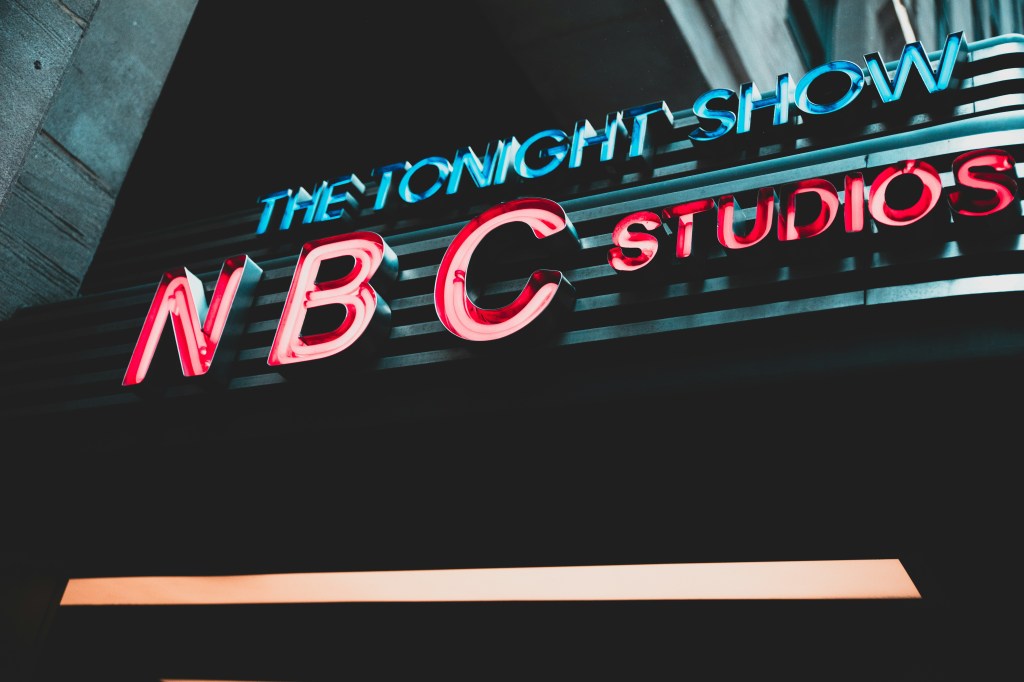
    I was never much of a Carson acolyte myself. Dick Cavett had the brain. Letterman had the bite. Carson? He had commercials. What I remember most is that the show seemed designed to lull you into a trance of polite chuckles and bland banter. It wasn’t bad, exactly—it was just relentlessly there. Watching The Tonight Show felt less like a choice and more like a ritual, a nightly genuflection before the glow of the TV set. People tuned in not out of excitement, but out of habit. He was the head caveman, murmuring jokes by firelight, while the rest of us nodded and laughed, grateful to not be alone in the dark.

    To skip Carson was to risk social exile. You didn’t want to be the one who missed what the country’s collective subconscious had passively absorbed.

    As I listen to Carson the Magnificent, I find myself pining—not for Carson, but for the era he ruled. A time when a singular voice could still cut through the noise and hold the country’s wandering attention. That cultural unity is gone now, and maybe for the best, but I can’t help mourning it a little.

    Zehme will, I’m sure, delve into the darker recesses of Carson’s psyche—and I’m ready for it. I’ve already mainlined The Larry Sanders Show three times, with a fourth round likely on the way. That show remains the gold standard for peeling back the sequined curtain to reveal the neurotic, solipsistic soul of late-night television. If Zehme gets even halfway there, I’ll consider the audiobook time well spent—even if I have to wade through another paragraph that reads like a thesaurus suffered a head injury.

  • 12 Essential Lexicon Terms for Understanding Social Media-Spawned Pathologies

    12 Essential Lexicon Terms for Understanding Social Media-Spawned Pathologies

    #1: Doppelganger Effect

    When your online double becomes hotter, louder, meaner—and more successful than you.

    #2 Likelepsy

    A convulsive need for validation triggered by spikes in engagement and followed by a crushing dopamine crash.

    #3 Privacide

    The voluntary and cheerful execution of your privacy in exchange for predictive weather, curated playlists, and targeted ads for pants you only thought about.

    #4 TMI-rrhea

    An unstoppable stream of personal disclosures that nobody asked for and everyone wishes they could unsee.

    #5 Confessistan

    A nation where every citizen is legally required to document their feelings, bowel movements, and brunch choices for public consumption.

    #6 Cringe Fatigue

    A pang of cringe, sadness, and vicarious embarrassment experienced mid-scroll as you witness your friend’s dignity dissolve into hashtags and hot takes.

    #7 Narrativitis

    The chronic compulsion to turn real life into a curated, melodramatic storyline, complete with mood lighting and sad indie music.

    #8 FOMOblivion

    A cognitive blackout where the fear of missing out completely eclipses the joy of being present, addressing your real needs, and the real needs of others because you’re constantly seething in envy and anxiety over hyped-up trifles.

    #9 Scrolloticism

    The act of finding emotional pleasure in self-inflicted torment via outrage consumption and doomscrolling and compensatory self-aggrandizing content posing.

    #10 The Narrative Trap

    When your life becomes a story written by everyone else, and the only thing you can’t do is rewrite your part.

    #11 Feedgret

    A soul-curdling regret triggered by the realization that you’ve been publicly cosplaying as your best self while quietly decaying inside.

    #12 InstaShame Spiral

    A violent emotional plunge brought on by rereading your old captions and realizing you’ve been subtweeting your own dignity for years.

  • Performance Anxiety: The Liver King and Joan, Both Awful in Their Own Way

    Performance Anxiety: The Liver King and Joan, Both Awful in Their Own Way


    The Liver King and Joan from Black Mirror’s “Joan Is Awful” walk into the same existential trap, only one is greased in raw liver and the other in algorithmic despair. Both become victims of their own performance, trapped in personas crafted for mass consumption. One flexes in loincloths to sell ancestral supplements, the other finds her life commodified by a streaming service that turns her every ethical failure into entertainment. What they share is the slow, public realization that the self they’ve been performing isn’t just unsustainable—it’s a lie with consequences.

    The Liver King, with veins like tree roots and an ego to match, built his brand on being the living embodiment of primal masculinity. Turns out, his liver was natural, but his abs were not. When the steroid truth came out, so did the emptiness behind the brand: a man so addicted to being a character that he forgot how to be a person. Similarly, Joan discovers she is both the protagonist and product of a Netflix-style show that mirrors her life in real time. Her public image becomes so divorced from her private self that the two are no longer distinguishable. In both cases, performance replaces identity—and eventually consumes it.

    Both characters suffer a mental breakdown not because they’ve failed, but because they’ve succeeded—at becoming the thing they thought the world wanted. The Liver King was adored until he wasn’t, and Joan was forgettable until she became a meme of moral failure. The irony is brutal: success, for them, is the trapdoor. Their audiences don’t want authenticity—they want a spectacle, a scapegoat, someone to mock or idolize, preferably both at once. And when the curtain is pulled back, the applause turns to outrage.

    There’s also the matter of control—or rather, the delusion of it. The Liver King believed he could manipulate his public image through primal storytelling and ab workouts. Joan believed she had autonomy until she saw Salma Hayek’s CGI avatar doing unspeakable things in her name. Both lose control of their narratives, and the horror isn’t just public shame—it’s the recognition that their true selves have been outsourced, packaged, and sold. They become strangers to their own lives.

    In the end, the Liver King and Joan are case studies in performative collapse. They remind us that the pursuit of a curated, amplified self—whether through steroids or streaming—leads not to greatness but to existential whiplash. When you spend your life trying to be a brand, don’t be surprised when you’re treated like a product: disposable, replaceable, and, eventually, outdated. Joan may be awful, and the Liver King may be absurd, but their breakdowns are brutally, unmistakably human.


  • The Maudlin Man: On Watches, Social Media, and the Narcissism of Meaningless Eagerness

    The Maudlin Man: On Watches, Social Media, and the Narcissism of Meaningless Eagerness

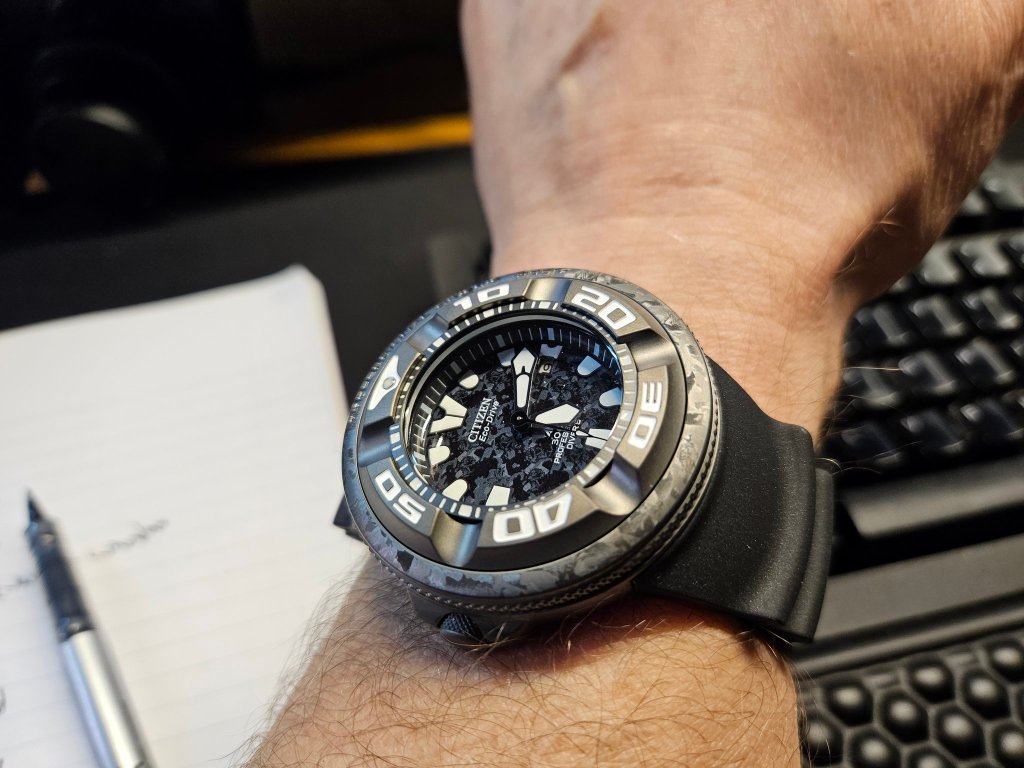
    There is no sound more pathetic than the cry of the maudlin man—the self-appointed tragic hero of his own YouTube channel, sobbing between cuts of B-roll footage of his watch collection, mistaking emotional leakage for authenticity. He clutches his diver watches like talismans, convinced that the right lume or bezel action will finally make him whole. But his affliction is deeper than poor taste or consumer excess. He is in love with his own sorrow. And worse, he films it.

    Cicero had a word for this spectacle: maudlin. It was not meant kindly. The maudlin man is drunk on his own emotional silliness, addicted to contrived drama, and tragically proud of his displays of overstated sorrow and giddy exuberance. In his pursuit of happiness, he has mistaken cheap feeling for moral virtue, dopamine for character, sentiment for wisdom. He is not mature. He is a teenager with a $5,000 Tudor.

    The watch hobby, for all its mechanical beauty and aesthetic value, has become a theater of narcissistic self-performance. The YouTube wrist-roll has replaced the confessional. The thumbnail becomes the new sacred icon: face frozen mid-epiphany, a timepiece held up like a religious relic. Each upload, each gushing review, is a digital Rolex—plucked, examined, and consumed with trembling fingers and tears in the eyes. The tragedy is not that the watch community is ridiculous (though it often is), but that it has devolved into a factory of performative adolescence.

    It wasn’t always this way. There was a time when the pursuit of happiness, as Jeffrey Rosen in The Pursuit of Happiness reminds us, meant the cultivation of moral character. Rosen draws from Franklin, Jefferson, and ultimately Cicero, who taught that happiness came not from pleasure but from the tranquil soul: one unbothered by fear, ambition, or maudlin eagerness. The watch obsessive is none of these things. His soul is rattled, consumed by longing, shaken by regret. He mistakes every new acquisition for a cure, every unboxing for a rebirth. But he is not reborn. He is merely re-dramatizing the same pathology.

    Enter the maudlin man, the inner saboteur. He mocks, he sneers, and he tells the truth: that the maudlin man has no real restraint. That his self-recrimination is as performative as his self-praise. The maudlin man is cruel. He exaggerates the regret that comes from flipping watches like penny stocks; the hollow boast of self-control while our eBay watchlist grows longer by the hour; the dopamine crashes masked by overproduced videos and fake enthusiasm. We are not collectors. We are addicts with ring lights.

    To be addicted to the watch hobby is to be afflicted with a thousand tiny regrets. We regret what we bought, what we sold, what we didn’t buy fast enough. We suffer from wrist rotation anxiety, Holy Grail delusions, false panic, and the creeping horror that we are just men who talk too much about case diameter. Our collections become mausoleums of past mistakes. We are haunted, not healed.

    The only cure—if one exists—is a form of philosophical sobriety. Cicero called it temperance. Franklin called it moral perfection. Phil Stutz calls it staying out of the lower channel. It is the refusal to feed the drama. It is the decision not to narrate your regret as if it were wisdom. It is stepping back, stepping away, and recognizing that sometimes, the most radical act of self-possession is to stop filming.

    This maudlin sickness isn’t limited to the horological hellscape. Social media itself is a dopamine machine engineered to keep us emotionally drunk. We live in a world of curated personas, algorithmic affirmation, and the self-cannibalizing loop of outrage and euphoria. As Kara Swisher notes in Burn Book, the tech elite have weaponized this environment for profit, fueling sociopathy with likes and retweets. They are not gods. They are billionaires who behave like wounded teenagers in private jets.

    It is not a coincidence that the watch obsessive and the tech mogul share the same pathology: a hunger for affirmation masquerading as taste. They are the same creature, only one wears a G-Shock and the other a Richard Mille. Both are drunk on maudlin emotion. Both mistake attention for meaning.

    What, then, is the alternative? It is to shut off the camera. To read. To walk. To live a life not curated but inhabited. To pursue virtue, not validation. To wear one watch and be content. To see, finally, that maudlin self-display is not depth, but decadence.

    So here is the diagnosis, bitter but true: The maudlin man must die. Not literally, but spiritually. He must be silenced so the adult may speak. He must be buried so the man of character can rise. He must be mocked, dissected, exposed, and ultimately exorcised.

    Only then, perhaps, will we stop crying over something as silly as the regret of sold watches we can never get back.

    And maybe—just maybe—stop filming them.

  • Confessions of a Washed-Up Watchfluencer: Dreaming of Leaving YouTube and Instagram

    Confessions of a Washed-Up Watchfluencer: Dreaming of Leaving YouTube and Instagram

    For the better part of a decade, I’ve been a talking head on YouTube—waxing unpoetic about dive watches, flipping Seikos like pancakes, and freefalling into endless spirals of horological self-loathing. My channel was never slick. No fancy cuts, no drone shots over crashing waves, no ominous music swelling over macro shots of ceramic bezels. Just me: a man, a camera, and the slow erosion of his dignity.

    I didn’t edit. I didn’t storyboard. I didn’t build a brand. I just rambled into the void, a kind of wristwatch confessional booth where I shared my joy, my shame, and my madness with an audience of fellow obsessives. For a while, it was exhilarating. Like catching your own reflection in a funhouse mirror and mistaking it for truth.

    At my pathological peak, I owned sixty-three “TV-brand” watches—any brand that looked good on camera and bad for your soul. I knew I had a problem when I started hiding watches in drawers and pretending I hadn’t bought another diver. Getting the collection down to five felt like detox. Like crawling out of a swamp in ripped jeans, clutching a G-Shock and whispering, never again.

    And now? I haven’t filmed in a month. The idea of making another video fills me with dread. My subscriber count has flatlined around 10,000. I’m not growing. I’m not evolving. I’m the guy in the garage band who still thinks the right lighting will disguise the fact that he’s 63, wearing a wig, and flexing in a tank top with a fake tan and a borrowed swagger.

    More than stagnation, it’s the cost of content creation that’s choking me. Every video drags me deeper into the watch swamp. I obsess. I fantasize. I compare. I scroll forums at 2 a.m. and start building mental spreadsheets of specs I’ll forget by morning. The longer I film, the more I think about watches, and the more I think about watches, the less I think about anything else.

    Then there’s Instagram—my other digital vice. The cigarette break I take between grading student essays and questioning my life choices. One minute I’m watching a documentary; the next I’m styling a wrist shot, spreading digital envy like cologne. Watch porn. FOMO fuel. I’m not sharing insight. I’m spreading existential rot disguised as lifestyle content.

    The breaking point came last week when two Instagram friends—good guys, honest guys—messaged me with admiration-tinged despair. They loved my collection but felt ashamed of their own modest $300 watches. That’s when I saw it: I wasn’t inspiring anyone. I was curating a highlight reel of hollow indulgence, turning craftsmanship into competition. I don’t want to be that guy. The one whose joy costs others their peace.

    So yes—I’ve been dreaming of leaving. Leaving YouTube. Leaving Instagram. Leaving the digital masquerade where likes masquerade as affection and comments stand in for connection. But here’s the kicker: I don’t want to announce my departure. I don’t want to post some faux-epic “farewell” video where I stare off into the middle distance like a monk who’s just discovered minimalism. That’s not liberation—that’s branding.

    And yet, here I am. Writing this.

    The irony is suffocating.

    What’s my future on YouTube and Instagram? I honestly don’t know. But I’ve caught the scent of something better—something that smells like freedom, like sanity, like the first breath of fresh air after crawling out of a sealed vault.

    In the meantime, there’s the blog. Nine subscribers. Twenty hits a day. Basically the sound of a tree falling in the woods while everyone’s at brunch. But unlike video, writing helps me think. It gives shape to the noise in my head. Like kettlebell workouts or noodling on a keyboard, it’s therapy with fewer side effects and no recurring subscription fee.

    So no, I don’t care about metrics. Not anymore. I just want to be true to myself, however unmarketable that truth might be.

    And if you’re still reading this—thanks. I’m guessing you get it.

  • The Tie-Dye Bikini Apocalypse: A Story of Regret

    The Tie-Dye Bikini Apocalypse: A Story of Regret

    Regret is the cruelest kind of haunting. It doesn’t just linger in the shadows; it moves in, redecorates, and turns your soul into its permanent residence. Regret doesn’t just trap people in the past—it embalms them in it, like a fly in amber, forever twitching with regret. I remain haunted by the fate of three men I know who, decades later, are still gnashing their teeth over a squandered romantic encounter so catastrophic in their minds, it may as well be their personal Waterloo.

    It was the summer of their senior year, a time when testosterone and bad decisions flowed freely. Driving from Bakersfield to Los Angeles for a Dodgers game, they were winding through the Grapevine when fate, wearing a tie-dye bikini, waved them down. On the side of the road, an overheated vintage Volkswagen van—a sunbaked shade of decayed orange—coughed its last breath. Standing next to it? Four radiant, sun-kissed Grateful Dead followers, fresh from a concert and still floating on a psychedelic afterglow.

    These weren’t just women. These were ethereal, free-spirited nymphs, perfumed in the intoxicating mix of patchouli, wild musk, and possibility. Their laughter tinkled like wind chimes in an ocean breeze, their sun-bronzed shoulders glistening as they waved their bikinis and spaghetti-strap tops in the air like celestial signals guiding sailors to shore.

    My friends, handy with an engine but fatally clueless in the ways of the universe, leaped to action. With grease-stained heroism, they nursed the van back to health, coaxing it into a purring submission. Their reward? An invitation to abandon their pedestrian baseball game and join the Deadhead goddesses at the Santa Barbara Summer Solstice Festival—an offer so dripping with hedonistic promise that even a monk would’ve paused to consider.

    But my friends? Naïve. Stupid. Shackled to their Dodgers tickets as if they were golden keys to Valhalla. With profuse thanks (and, one imagines, the self-awareness of a plank of wood), they declined. They drove off, leaving behind the road-worn sirens who, even now, are probably still dancing barefoot somewhere, oblivious to the tragedy they unwittingly inflicted.

    Decades later, my friends can’t recall a single play from that Dodgers game, but they can describe—down to the last bead of sweat—the precise moment they drove away from paradise. Bring it up, and they revert into snarling, feral beasts, snapping at each other over whose fault it was that they abandoned the best opportunity of their pathetic young lives. Their girlfriends, beautiful and present, might as well be holograms. After all, these men are still spiritually chained to that sun-scorched highway, watching the tie-dye bikini tops flutter in the wind like banners of a lost kingdom.

    Insomnia haunts them. Their nights are riddled with fever dreams of sun-drenched bacchanals that never happened. They wake in cold sweats, whispering the names of women they never actually kissed. Their relationships suffer, their souls remain malnourished, and all because, on that fateful day, they chose baseball over Dionysian bliss.

    Regret couldn’t have orchestrated a better long-term psychological prison if it tried. It’s been forty years, but they still can’t forgive themselves. They never will. And in their minds, somewhere on that dusty stretch of highway, a rusted-out orange van still sits, idling in the sun, filled with the ghosts of what could have been.

    Humans have always craved stories of folly, and for good reason. First, there’s the guilty pleasure of witnessing someone else’s spectacular downfall—our inner schadenfreude finds comfort in knowing it wasn’t us who tumbled into the abyss of human madness. Second, these stories hold up a mirror to our own vulnerability, reminding us that we’re all just one bad decision away from disaster.

    Finally, this tale of missed hedonism, of men forever ensnared in the amber of their own foolishness, is biblical writing in its purest form. Not because it involves scripture or saints, but because it operates on a grand, mythic scale. Here, regret isn’t just an emotion—it’s a cosmic punishment, an exile from paradise so severe it echoes through decades. Like Lot’s wife turning to salt, these men made the fatal error of looking back too late, realizing only in hindsight that they had forsaken a divine gift. Their sorrow is eternal, their torment unrelenting. Even now, they wander through the wasteland of their own remorse, spiritually marooned on that sun-scorched highway, the spectral van idling in their subconscious like a rusted-out relic of their squandered youth. 

  • FOMO and the Mythical Past Can Ruin You

    FOMO and the Mythical Past Can Ruin You

    I remain haunted by three men who, decades later, are still gnashing their teeth over a squandered romantic encounter so catastrophic in their minds, it may as well be their personal Waterloo.

    It was the summer of their senior year, a time when testosterone and bad decisions flowed freely. Driving from Bakersfield to Los Angeles for a Dodgers game, they were winding through the Grapevine when fate, wearing a tie-dye bikini, waved them down. On the side of the road, an overheated vintage Volkswagen van—a sunbaked shade of decayed orange—coughed its last breath. Standing next to it? Four radiant, sun-kissed Grateful Dead followers, fresh from a concert and still floating on a psychedelic afterglow.

    These weren’t just women. These were ethereal, free-spirited nymphs, perfumed in the intoxicating mix of patchouli, wild musk, and possibility. Their laughter tinkled like wind chimes in an ocean breeze, their sun-bronzed shoulders glistening as they waved their bikinis and spaghetti-strap tops in the air like celestial signals guiding sailors to shore.

    My friends, handy with an engine but fatally clueless in the ways of the universe, leaped to action. With grease-stained heroism, they nursed the van back to health, coaxing it into a purring submission. Their reward? An invitation to abandon their pedestrian baseball game and join the Deadhead goddesses at the Santa Barbara Summer Solstice Festival—an offer so dripping with hedonistic promise that even a monk would’ve paused to consider.

    But my friends? Naïve. Stupid. Shackled to their Dodgers tickets as if they were golden keys to Valhalla. With profuse thanks (and, one imagines, the self-awareness of a plank of wood), they declined. They drove off, leaving behind the road-worn sirens who, even now, are probably still dancing barefoot somewhere, oblivious to the tragedy they unwittingly inflicted.

    Decades later, my friends can’t recall a single play from that Dodgers game, but they can describe—down to the last bead of sweat—the precise moment they drove away from paradise. Bring it up, and they revert into snarling, feral beasts, snapping at each other over whose fault it was that they abandoned the best opportunity of their pathetic young lives. Their girlfriends, beautiful and present, might as well be holograms. After all, these men are still spiritually chained to that sun-scorched highway, watching the tie-dye bikini tops flutter in the wind like banners of a lost kingdom.

    Insomnia haunts them. Their nights are riddled with fever dreams of sun-drenched bacchanals that never happened. They wake in cold sweats, whispering the names of women they never actually kissed. Their relationships suffer, their souls remain malnourished, and all because, on that fateful day, they chose baseball over Dionysian bliss.

  • FOMO Detox: The Irony of Missing Out on Missing Out

    FOMO Detox: The Irony of Missing Out on Missing Out

    Johann Hari’s Stolen Focus: Why You Can’t Pay Attention delivers a delicious paradox: in recounting his three-month escape from the digital mosh pit, he finds that others are envious—not of his former screen-addled misery, but of his newfound clarity. That’s right—people experience FOMO over his liberation from FOMO. The irony is so rich it could fund a startup.

    Hari makes it plain: our collective addiction to the glowing rectangle is absurd. The average person fondles their phone 2,617 times a day—a number so obscene it belongs in a criminal indictment. The sheer time-suck is beyond comprehension. Whole lives are quietly siphoned into the abyss of notifications, DMs, and doomscrolling, and the tragedy is that most of us don’t even realize it’s happening. The smartphone, he argues, is the ultimate avoidance device—a pocket-sized panic portal that keeps you hooked on the fantasy of being somewhere else, all while real life drifts past like a neglected houseplant.

    And yet, there is no moral outcry. No grand rebellion. We are, at best, laboratory rats pressing the dopamine lever. The tech overlords—those data-mining, attention-harvesting Svengalis—have transformed our collective neurosis into a business model. They don’t just own our data. They own us.

    But something strange happens when Hari logs off. The panic dissipates. The constant itch for digital validation fades. His nervous system, previously fried to a crisp, begins to heal. News consumption becomes a choice, not a compulsion. He starts feeling something he hadn’t in years: depth. The world around him regains texture. Conversations feel richer. His brain, previously hijacked by the siren call of infinite scrolling, starts functioning again.

    His grand revelation? Multitasking is a lie. A cruel joke. The human brain is wired for focus, not for toggling between Instagram reels and email pings like a malfunctioning slot machine. And yet, people have become so conditioned to constant distraction that they can’t even sit on a toilet without clutching a phone like a life raft.

    As the world speeds up, Hari finds himself craving slowness. A quiet rebellion against the frantic pace dictated by social media’s profit-driven algorithms. It’s almost as if—perish the thought—the tech lords don’t want you to know this. Because if enough people realized that the great FOMO-induced panic is just an engineered illusion, they might finally look up from their screens and ask the unthinkable: What have I been missing?

  • The FOMO Frequency: How I Tried to Tune Back into Real Life

    The FOMO Frequency: How I Tried to Tune Back into Real Life

    As I clawed my way out of my addiction to writing doomed novels (which were really short stories in disguise), a strange thing happened: buried emotions clawed back. It wasn’t pleasant. It was like peeling off a bandage only to discover that underneath was raw, exposed nerve endings. Turns out, the grandiose fever dream of writing had insulated me from reality. Now, stripped of that delusion, I was left unprotected, vulnerable, and completely awake to the world.

    And the world, in 2025, was on fire.

    Literally. The Los Angeles wildfires turned the sky into an apocalyptic hellscape—a choking haze of smoke and fury. The inferno forced me into an act I hadn’t performed in years: I dusted off a radio and tuned into live news.

    That’s when I had two epiphanies.

    First, I realized I despise my streaming devices. Their algorithm-fed content is an endless conveyor belt of lukewarm leftovers, a numbing backdrop of curated noise that feels canned, impersonal, and utterly devoid of gezelligheid, a sense of shared enjoyment. Worst of all, streaming had turned me into a passive listener, a zombie locked inside a walled garden of predictability. I spent my days warning my college students about AI flattening human expression, yet here I was, letting an algorithm flatten my own relationship with music.

    But the moment I switched on the radio, its warmth hit me like an old friend I hadn’t seen in decades. A visceral ache spread through my chest as memories of radio’s golden spell came rushing back—memories of being nine years old, crawling into bed after watching Julia and The Flying Nun, slipping an earbud into my transistor radio, and being transported to another world.

    Tuned to KFRC 610 AM, I was no longer just a kid in the suburbs—I was part of something bigger. The shimmering sounds of Sly and the Family Stone’s “Hot Fun in the Summertime” or Tommy James and the Shondells’ “Crystal Blue Persuasion” weren’t just songs; they were shared experiences. Thousands of others were listening at that same moment, swaying to the same rhythms, caught in the same invisible current of sound.

    And then I realized—that connection was gone.

    The wildfires didn’t just incinerate acres of land; they exposed the gaping fault lines in my craving for something real. Nostalgia hit like a sucker punch, and before I knew it, I was tumbling down an online rabbit hole, obsessively researching high-performance radios, convinced that the right one could resurrect the magic of my youth.

    But was this really about better reception?

    Or was it just another pathetic attempt to outrun mortality?

    Streaming didn’t just change my relationship with music; it hollowed it out.

    I had been living in a frictionless digital utopia, where effort was obsolete and everything was available on demand—and I was miserable. Streaming devices optimized convenience at the cost of discovery, flattening music into algorithmic predictability, stripping it of its spontaneity, and reducing me to a passive consumer scrolling through pre-packaged soundscapes.

    It was ironic. I had let technology lull me into the very state of mediocrity I warned my students about.

    Kyle Chayka’s Flatworld spells out the horror in precise terms: when you optimize everything, you kill everything that makes life rich and rewarding. Just as Ozempic flattens hunger, technology flattens culture into a pre-digested slurry of lifeless efficiency.

    I didn’t need Flatworld to tell me this. I had lived it.

    The day I flipped on a real radio again, I didn’t just hear a broadcast—I heard my brain rebooting. The warmth, the spontaneity, the realness of people talking in real time—it was the sonic equivalent of quitting Soylent and biting into a perfectly seared ribeye.

    If Flatworld taught me anything, it’s that aliveness is exactly what convenience culture is designed to eradicate.

    Once I abandoned streaming, I filled every room in my house with a high-performance multiband radio. My love of music returned. A strange peace settled over me.

    The problem? My addictive personality latched onto radios with a zeal that bordered on the irrational.

    I began gazing at them with the kind of reverence normally reserved for religious icons. When I spotted a Tecsun PL-990, PL-880, PL-680, or PL-660, something in my brain short-circuited. I was instantly enchanted, as if I had just glimpsed an old friend across a crowded room. At the same time, I was comforted, as if that friend had handed me a warm cup of coffee and told me everything was going to be alright.

    But a radio isn’t just a device. It’s a symbol, though I’m still working out of what exactly.

    Maybe it represents the lost art of slowing down—of sitting in a quiet room, wrapped in a cocoon of music or familiar voices. Or maybe it’s something deeper, a sanctuary against the relentless noise of modern life, a frequency through which I can tune out the profane and tune into something sacred.

    The word that comes to mind when I hold a radio is cozy—but not in the scented-candle, novelty-mug kind of way. This is something deeper, something akin to the Dutch word gezelligheid—a feeling of warmth, belonging, and ineffable connection to the present moment.

    Radios don’t just play sound; they create atmosphere. They transport me back to Hollywood, Florida, sitting on the porch with my grandfather, the air thick with the scent of an impending tropical storm, the crackle of a ball game playing in the background like the heartbeat of another era.

    That’s the thing about gezelligheid—it isn’t something you can program into an algorithm. It isn’t something you can optimize. It’s a byproduct of presence, community, and shared experience—the very things convenience culture erodes.

    Many have abandoned radio for the cold efficiency of streaming and smartphones.

    I tried to do the same for over a decade.

    I failed.

    Because some things, no matter how old-fashioned, still hum with life.

    And maybe that’s what replacing streaming devices with radios is about—not just recovering from my addiction to writing abysmal novels, but recovering life itself from the grip of Flatworld.